Reviewed by Michael R. · How we review
Honeysuckle is a shrub or vine in the genus Lonicera, and in the United States the name covers both a native hummingbird plant and some of the most widespread woodland invaders. Coral (trumpet) honeysuckle, Lonicera sempervirens, is native to the eastern half of the country. Japanese honeysuckle and the Amur, Morrow’s and Tatarian bush honeysuckles are not. Break a twig of a shrub: a hollow center points to an invasive, a solid one to a native. Most Lonicera berries are mildly poisonous; blue haskap berries are the edible exception.
Key Takeaways
- Native: coral/trumpet (L. sempervirens), limber (L. dioica) and yellow (L. flava). Invasive: Japanese (L. japonica) and the shrubs Amur, Morrow’s, Tatarian and Bell’s. The native “bush honeysuckle” in the genus Diervilla is not a Lonicera.
- Invasive shrub honeysuckles have a hollow pith; native Lonicera have a solid pith, per University of Maryland Extension.
- Coral honeysuckle is a hummingbird flower; Japanese honeysuckle opens at dusk for hawkmoths. Honey bees cannot reach the nectar in a deep coral flower from the front, a point worked out below from two measured lengths.
- Sucking nectar from a Japanese honeysuckle flower is harmless, per NC State Extension. Berries of most species should not be eaten. For a child who swallows berries, call Poison Control at 1-800-222-1222.
- In the iNaturalist data we pulled, Japanese honeysuckle has 4.5 times as many US research-grade observations as coral honeysuckle.
Table of Contents
- What Honeysuckle Is: Vines, Shrubs and a Look-Alike Genus
- Native vs Invasive Honeysuckle Species Compared
- Which States List Honeysuckle as Invasive
- How to Tell Native Honeysuckle From Invasive
- Honeysuckle Pollinators: Hummingbirds, Moths and Bees
- What iNaturalist Records Show: When and Where
- Can You Eat Honeysuckle? Nectar, Berries and Haskap
- Growing Native Coral Honeysuckle
- Removing Invasive Honeysuckle and What to Plant Instead
- Frequently Asked Questions
What Honeysuckle Is: Vines, Shrubs and a Look-Alike Genus
Honeysuckles are arching shrubs or twining vines in the genus Lonicera, in the family Caprifoliaceae. Wikipedia counts 158 species, native to northern latitudes in North America, Eurasia and North Africa. Most have opposite leaves and paired, tubular flowers that hold sweet nectar, which is where the name comes from. The fruit is a red, blue or black berry.
In practice, US gardeners meet two growth habits. Vines twine up supports: native coral honeysuckle and invasive Japanese honeysuckle. Shrubs form arching thickets: the invasive Amur, Morrow’s, Tatarian and Bell’s honeysuckles, which University of Maryland Extension says were introduced from Eastern Asia in the 1800s for ornament, wildlife cover and erosion control.
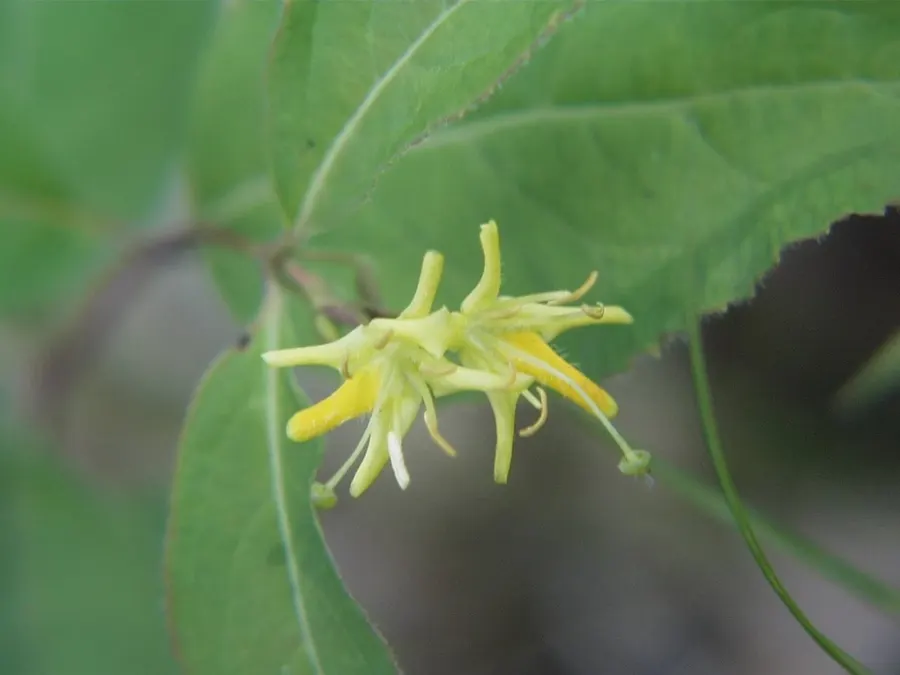
One more name causes confusion. Plants in the genus Diervilla are also sold as “bush honeysuckle,” but UMD Extension says they should not be confused with Lonicera. Northern bush honeysuckle (Diervilla lonicera) is native; it has yellow flowers that age to orange-red, toothed leaf edges and dry seed capsules instead of juicy berries.
Native vs Invasive Honeysuckle Species Compared
“Invasive” here means the sources in the last column describe or regulate the plant as invasive; the next section covers which states list each one.
| Species | Common name | Native or invasive (US) | Vine or shrub | Flower | Berries | Where it is a problem | Source |
|---|---|---|---|---|---|---|---|
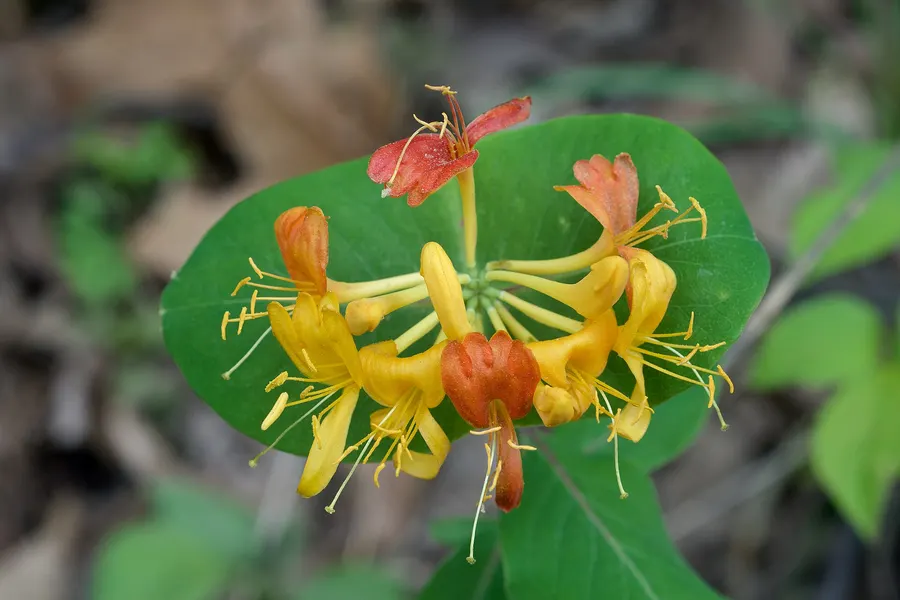
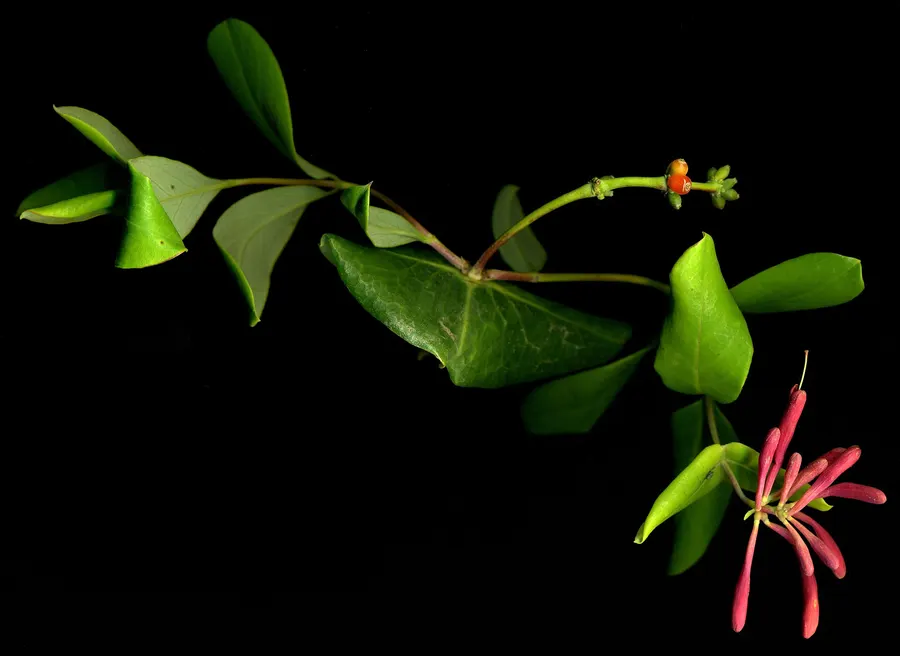
| Lonicera sempervirens | Coral or trumpet honeysuckle | Native, eastern US | Twining vine, 10-20 ft | Scarlet to orange-red outside, yellowish inside, 1.5-2 in long, not fragrant | Red, inedible for people | Not described as invasive | NC State Extension; Invasive Plant Atlas of the US |
| Lonicera dioica | Limber honeysuckle | Native, Canada to NC and the central plains | Loosely twining shrub or vine | Red tubular (colors vary), 0.5-1 in | Red to orange-red | Not invasive; rare in NC | NC State Extension |
| Lonicera flava | Yellow honeysuckle | Native, central and southeastern US | Twining vine | Gold to orange, fragrant, 1.25 in | Orange-red | Not invasive | NC State Extension |
| Diervilla lonicera (not a Lonicera) | Northern bush honeysuckle | Native, Newfoundland to Saskatchewan, south to the NC and TN mountains | Low shrub spreading by rhizomes | Yellow, bell-shaped, aging orange-red | None: dry capsules | Not invasive | UMD Extension; USDA Forest Service |
| Lonicera japonica | Japanese honeysuckle | Invasive, from Japan, Korea and China | Twining vine or groundcover, 16-29 ft | White aging to yellow, very fragrant, 1-1.5 in | Glossy black | Forest edges, roadsides, gardens; smothers plants and shades trees (NC rated it highly invasive) | NC State Extension; UMD Extension |
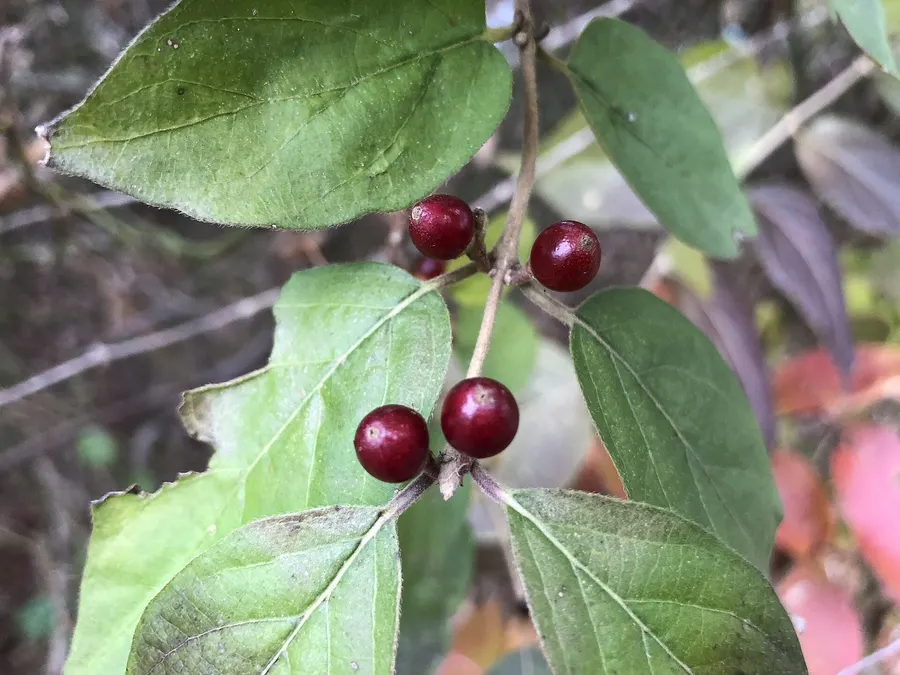
| Lonicera maackii | Amur honeysuckle | Invasive, from East Asia | Shrub, 10-20 ft | White (rarely pink) aging to yellow, in pairs | Red, paired | Forest understory across the eastern US; early leaf-out | UMD Extension; University of Kentucky |
| Lonicera morrowii | Morrow’s honeysuckle | Invasive, from East Asia | Shrub, 6-10 ft | White (sometimes pink) aging to yellow | Red to orange | Fields, edges, open woods; some wet sites | UMD Extension; Penn State Extension |
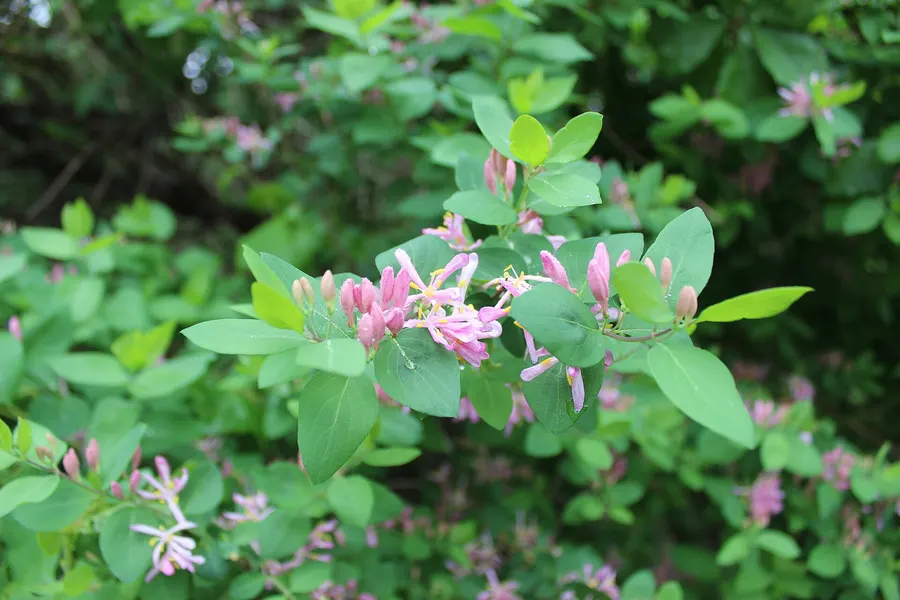
| Lonicera tatarica | Tatarian honeysuckle | Invasive, from Central Asia and southern Russia | Shrub, 6-10 ft | Pink (sometimes white), little yellowing | Red to orange | Edges of woodlots, fields and rights-of-way (New York) | UMD Extension; NY Invasive Species Info |
Bell’s honeysuckle (Lonicera x bella) is the hybrid of Morrow’s and Tatarian honeysuckle, and Penn State Extension notes that these shrubs hybridize and are not distinct enough in identification or treatment to be handled separately. UMD Extension also names winter honeysuckle (L. fragrantissima), a shrub with small white flowers from late winter to mid-spring, among Maryland’s widespread non-native honeysuckles.
Which States List Honeysuckle as Invasive
There is no one national rule; each state decides. The table shows what the state sources we read say, with the species they name. Check your own state’s current list before buying or removing plants, because these lists change.
| State | Species named | What the source says | Source |
|---|---|---|---|
| Minnesota | Tatarian, Morrow’s, Bell’s, Amur | Restricted Noxious Weeds: illegal to import, sell or transport | Minnesota DNR (citing Dept. of Agriculture) |
| Vermont | Amur, Morrow’s, Tatarian, Bell’s | Quarantined as Class B Noxious Weeds | Vermont Invasives |
| Maryland | Amur; Japanese is on the list prioritized for assessment | Amur is a prohibited species under Maryland law | UMD Extension |
| Massachusetts | Amur, Bell’s, Japanese, Morrow’s | Prohibited Plant List: importation banned July 1, 2006, propagation banned January 1, 2009 | Mass.gov |
| Ohio | Japanese, Amur, Morrow’s, Tatarian | Declared invasive plants under rule 901:5-30-01 (effective February 13, 2023) | Ohio Administrative Code |
| North Carolina | Japanese | Described as an invasive species in North Carolina and classified as highly invasive | NC State Extension |
| New York | Morrow’s, Tatarian, Amur, Japanese | Characterized as invasive in the state | NY Invasive Species Information |
Connecticut’s invasive plant list from its Agricultural Experiment Station (the edition we read dates from 2018) also names Amur, Bell’s, Morrow’s, Tatarian and Japanese honeysuckle. We did not find these species on a federal noxious weed list in the sources we read, so the practical rules are state by state. Native coral honeysuckle is the opposite case: the Invasive Plant Atlas of the United States lists it as native, growing wild from Connecticut to Nebraska and south to Texas and Florida.
How to Tell Native Honeysuckle From Invasive
Flower color is unreliable, because both groups come in several colors and flowers fade from white to yellow. Use these checks in order.
1. Is it a vine or a shrub?
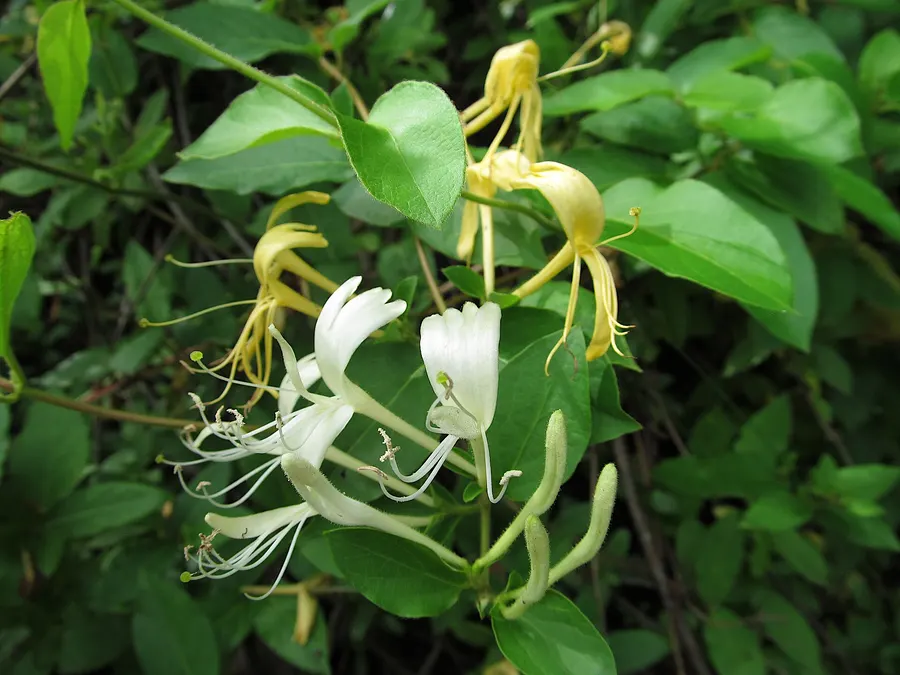
A twining vine with large red-orange trumpets is almost certainly native coral honeysuckle. A twining vine with white to yellow flowers and black berries is Japanese honeysuckle. A freestanding arching shrub is one of the bush honeysuckles.
2. For shrubs, cut a twig and look at the pith
“The stem pith (the spongy tissue at the core of the branch) is hollow in non-native Lonicera shrubs, compared to the solid pith of native Lonicera.”
Penn State Extension and Vermont Invasives say the same, and add that native look-alikes such as American fly honeysuckle (Lonicera canadensis) and Diervilla have solid pith. One trap: Penn State warns that native snowberry also has a hollow pith, but its flowers are small and pink and its fruit is white. Hollow pith is a test for shrubs. NC State describes the older stems of vining Japanese honeysuckle as hollow too, so for the vine, rely on habit, flowers and berries.
3. Check the leaves, flowers and berries
- Leaf edges: invasive shrub honeysuckles have smooth edges; Diervilla leaves are toothed.
- Berries: invasive shrubs carry paired red to orange berries, Japanese honeysuckle glossy black ones, Diervilla dry capsules.
- Timing: Penn State notes shrub honeysuckles leaf out early and drop leaves late compared with most native woody plants, which makes them easy to spot early in spring and late in fall.
- Flower color: Amur and Morrow’s start white, Tatarian is usually pink; Diervilla flowers turn from yellow to orange-red as they age.
Honeysuckle Pollinators: Hummingbirds, Moths and Bees
Most honeysuckle flowers are tubes with nectar at the bottom, which sorts visitors by tongue length. That is the textbook logic of pollination syndromes, covered in our guide to which flower traits match which pollinators.
Hummingbirds and coral honeysuckle
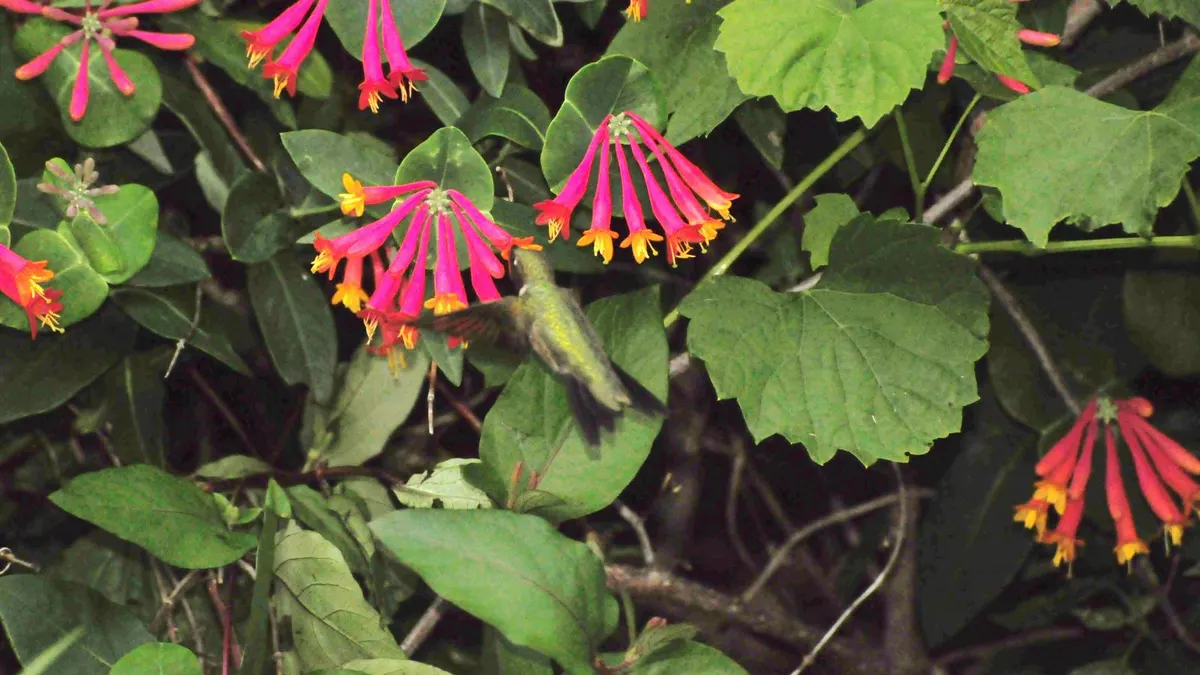
NC State Extension says coral honeysuckle’s non-fragrant blooms attract hummingbirds, “who are the pollinators of this species,” and lists it as a nectar source for ruby-throated hummingbirds. The Invasive Plant Atlas calls the flowers a favorite nectar source for hummingbirds. Red, scentless tubes are the standard bird signal. If you want a second hummingbird plant that is also native, bee balm (Monarda) fills the same role in a sunny bed.
Night-flying moths and Japanese honeysuckle
Japanese honeysuckle works the night shift. The USDA Forest Service’s Fire Effects Information System reports that research in Japan indicates flowers often do not open until dusk, probably to conserve pollen for nocturnal hawkmoths, which take only nectar and are more efficient pollinators than bees. A 2023 study in the Journal of Systematics and Evolution found more scent emitted at night than by day. The same review has a US twist: in Arkansas and Oklahoma, naturally pollinated plants set 0 to 36% fruit against 78.7% when hand pollinated, which low visitation likely explains. NC State lists coral honeysuckle as a larval host of the snowberry clearwing moth. Our hummingbird moth guide shows how to identify the clearwings and white-lined sphinx, and a moon garden for moths is the way to plant for them.
Bumble bees and nectar robbing
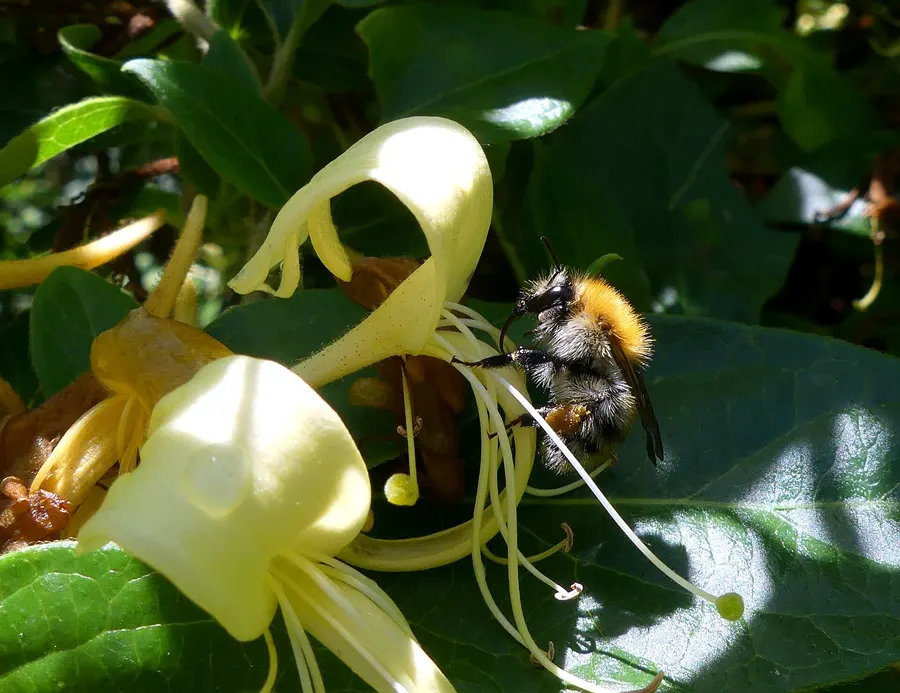
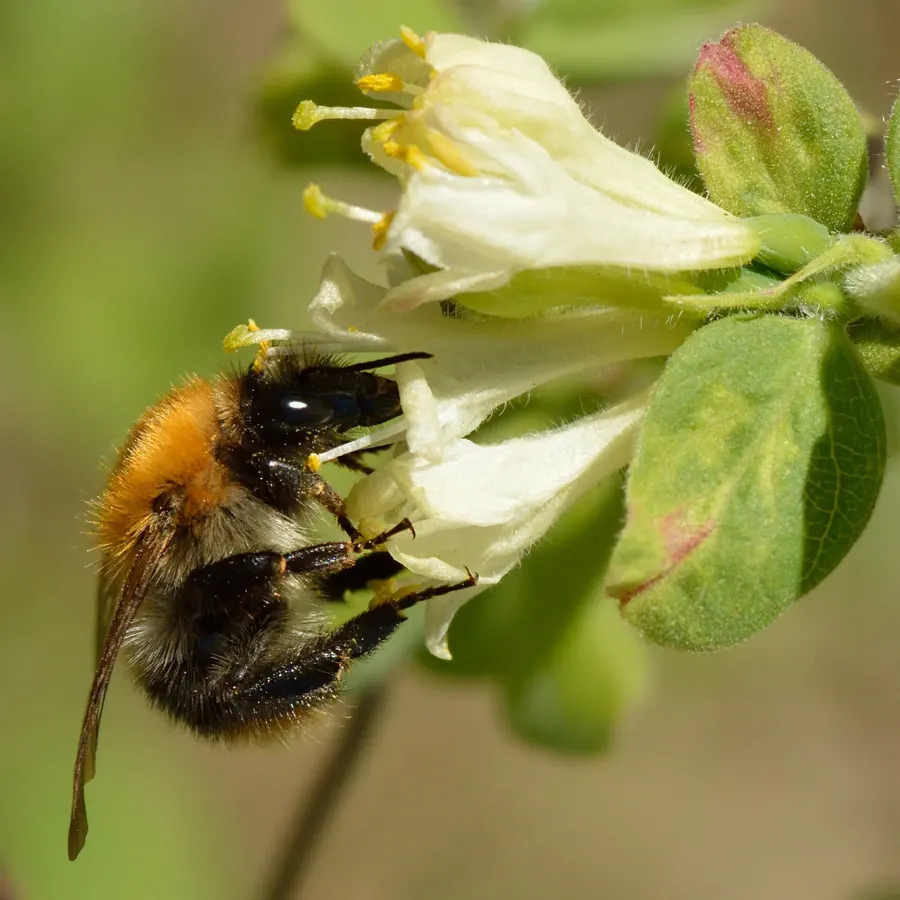
Bumble bees are the bees most often credited with honeysuckle. The USDA Forest Service says bumblebees are the most important pollinators of Diervilla lonicera in Michigan, and NC State lists bumblebees, large carpenter bees, mason bees and leaf-cutting bees among the pollinators of Tatarian honeysuckle, whose flowers are under an inch long. For deeper flowers, a long tongue decides whether a bumble bee can drink from the front. SARE, the USDA’s sustainable agriculture program, explains the alternative:
“Honey bees and bumble bees with shorter tongues, which are unable to reach the nectar, will sometimes bite a hole at the bottom of the flower to access the nectar.”
That is nectar robbing: the bee gets the nectar without touching the anthers. SARE calls these bees “cheating the flowers.” A review by Maloof and Inouye in Ecology adds nuance: robbers, at least bumble bee robbers, are as likely to be beneficial to the flowers they visit as detrimental. We found no honeysuckle-specific field count of robbing, so treat any claim about how often it happens on a given vine with caution. Our bumble bee guide covers the species you are likely to see.
Can honey bees reach the nectar?
Two measured numbers answer it. SARE gives a honey bee tongue of about 5.9 to 6.25 millimeters. The Flora of the Southeastern United States key gives the coral honeysuckle corolla tube as 10 to 35 millimeters long, and another flora quoted by Discover Life puts it at 3 to 5 centimeters. So a honey bee, drinking from the front, cannot reach the nectar at the base of a typical coral honeysuckle flower. That is our inference from those two lengths, not a field study of honey bees on coral honeysuckle, and the SARE passage above is what a short-tongued bee may do instead.
Shrub honeysuckles are different. NC State lists Amur and Tatarian flowers at under an inch, and Penn State Extension says:
“While they appear to be attractive to pollinators, they largely appeal to generalists such as the European honey bee (Apis mellifera).”
Penn State adds that many native bees are specialists on particular native plants and do not use honeysuckle blossoms, which is one reason invasive thickets are not a fair swap for native forage; see how honey bees and native bees compete. A bee-safe choice depends on the plant, and our guide to plants toxic to bees separates real hazards from myths. For a wider palette, see the best US native plants for pollinators.
What iNaturalist Records Show: When and Where
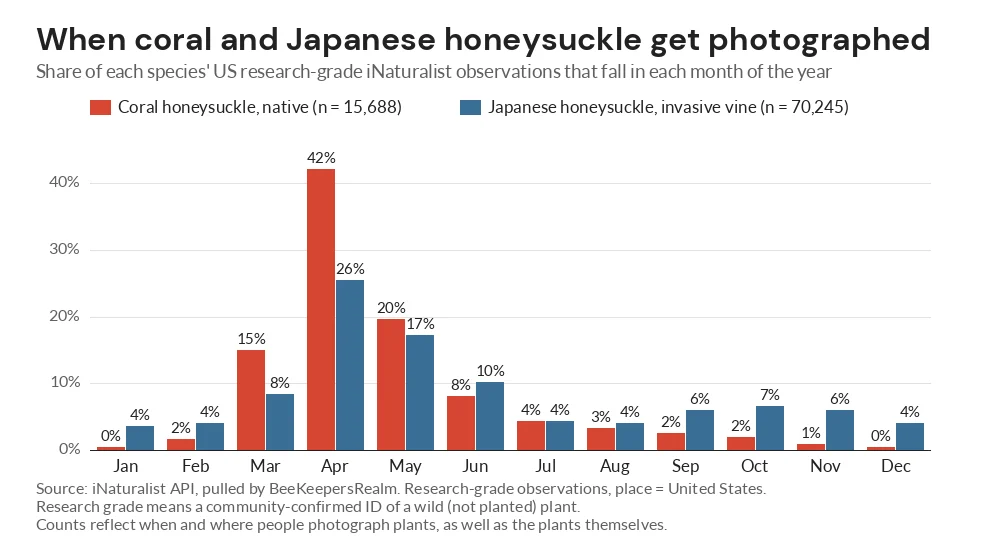
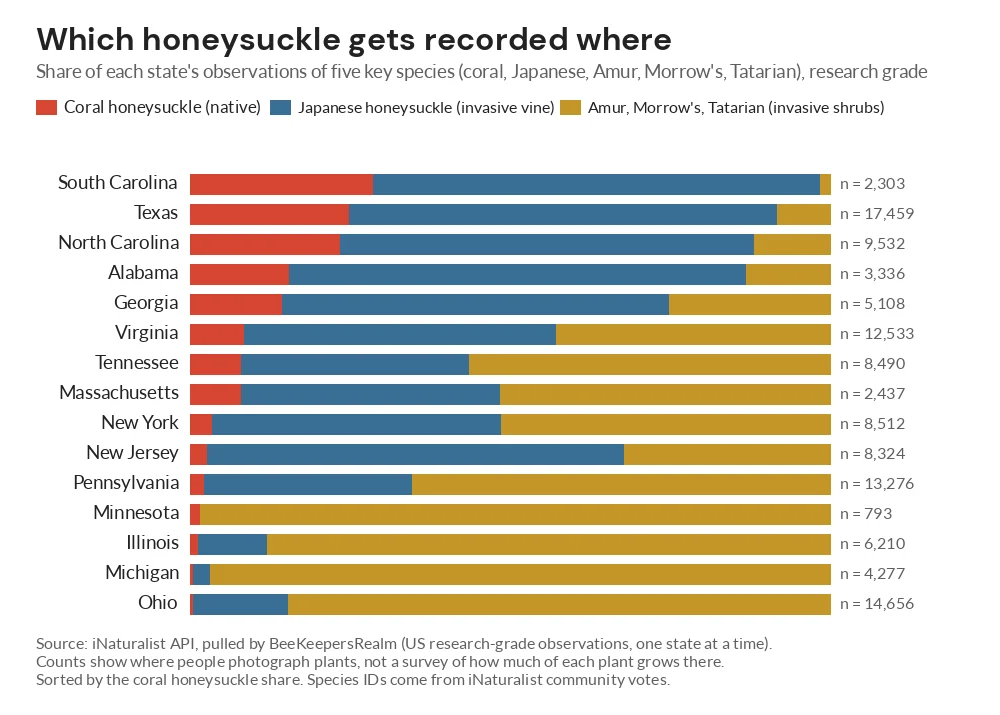
To see how often each honeysuckle is recorded, we pulled US research-grade observations from the iNaturalist API. Research grade means the community confirmed the ID, the plant was wild rather than planted, and the record has a date, a place and a photo. These counts show where and when people photograph plants, not how much of each plant grows there.
Japanese honeysuckle has 70,245 US observations and coral honeysuckle 15,688, a ratio of 4.5 to 1. The calendars differ too. 76.7% of coral honeysuckle records fall in March to May, with April alone at 42%. Japanese honeysuckle has 51.3% in those months, but 18.5% in September to November against 5.3% for coral. That fits NC State’s description of a semi-evergreen vine that flowers from late spring into fall, though the data cannot prove the reason.
By state, the mix flips. In South Carolina, Texas and North Carolina, coral honeysuckle is 29%, 25% and 23% of the observations of the five species we counted. In Ohio, Illinois and Michigan it is about 1% or less: Ohio has 12,406 observations of Amur, Morrow’s and Tatarian combined against 62 for coral. In the Midwest, an unknown honeysuckle in the woods is far more likely to be a shrub invader than the native vine.
Can You Eat Honeysuckle? Nectar, Berries and Haskap
Nectar: NC State Extension says nectar can be sucked from Japanese honeysuckle flowers without harm, and that the flowers are an ingredient in some Chinese dishes. Pick only from plants you have positively identified and that have not been sprayed.
Berries: Wikipedia notes that in most species the berries are mildly poisonous. NC State rates the Japanese honeysuckle fruit as medium poison severity, with symptoms that include vomiting and diarrhea, and adds that it is toxic only if large quantities are eaten. Tatarian honeysuckle is rated low, with diarrhea, vomiting and abdominal pain and no reported human deaths; Amur honeysuckle berries are also rated low and are said to cause severe diarrhea. NC State calls the red coral honeysuckle berries inedible. Birds eat honeysuckle berries and spread the seeds of the invasive species, per UMD Extension.
If a child swallows berries, call Poison Control at 1-800-222-1222; the service is free, confidential and expert, per poison.org. If the child collapses, has a seizure or trouble breathing, call 911. This is general information, not medical advice.
The edible exception is Lonicera caerulea, called haskap or blue honeysuckle. Utah State University Extension describes dark blue fruit that ripens in early to mid-June, usually just before strawberries, with a flavor some describe as a cross between raspberry, currant and blueberry. Plants need cross-pollination from an unrelated cultivar that blooms at the same time. Maryland Extension’s trial found four varieties produced under an ounce per plant after four seasons, so check varieties for your climate. Bumblebees work the cream-colored flowers too.
Growing Native Coral Honeysuckle
Coral honeysuckle is the version to plant. NC State Extension’s profile gives these basics:
- Light: full sun gives the best flowering, though it tolerates some shade.
- Soil: medium moisture, well-drained, neutral to acidic, and humus-rich. High-nitrogen fertilizer makes leaves at the expense of flowers.
- Support: it is a vigorous twining vine, 10 to 20 feet, that needs a trellis, arbor or fence. Left alone, it can sprawl as a groundcover.
- Pruning: NC State advises holding off until after flowering. Spring bloom is followed by berries from July to September.
- Problems: watch for aphids; powdery mildew and leaf spots may occur, particularly in hot, humid summers.
- Hardiness: it lists USDA zones 4 through 9.
- Fire: NC State rates it as highly flammable and says not to plant it in the defensible space around a home.
Buy by botanical name, Lonicera sempervirens, not by “honeysuckle” alone, since the label alone does not tell you whether the plant is native. NC State lists cultivars with different looks, including a yellow-flowered compact type and a repeat-blooming red one. Pair it with other natives from our drought-resistant flowers for bees list, which includes trumpet honeysuckle.
Removing Invasive Honeysuckle and What to Plant Instead
Extension advice is consistent: match the method to the size of the plant.
- Small plants: Penn State says shrub honeysuckles are shallow-rooted, so small plants can be pulled by hand. UMD Extension says to remove young Japanese honeysuckle vines early, before they strangle other plants.
- Larger shrubs: cutting or mowing alone fails because the plants resprout from stumps; Penn State pairs cutting with treating the cut stump.
- Cut-stump timing: Ohio State Extension and the Missouri Department of Conservation say late summer, early fall or the dormant season works well. Ohio State warns that treating during spring sap flow lessens effectiveness, and Illinois Extension says fall is best because the plant is sending energy to its roots.
- Speed matters: Penn State says water-based glyphosate must go on immediately after cutting, while oil-based triclopyr ester can go on any time after. Illinois Extension says within about 10 minutes.
Pollinator safety: University of Illinois Extension says the simplest way to protect pollinators is to avoid spraying where they gather, namely flowers, and Ohio State Extension says not to spray on windy days so that drift does not reach flowering plants nearby. Cut-stump treatment puts herbicide on a cut surface rather than on blossoms, and fall or dormant-season work avoids honeysuckle’s April and May bloom. Follow the product label and ask your state extension office about current rules.
Replace it with natives. The Missouri Department of Conservation notes that planting natives after removal may help reestablish the plant community and reduce reinvasion. For a shrub, UMD Extension suggests summersweet, spicebush, winterberry, witchhazel, mockorange and native viburnums, and native Diervilla if you want the bush honeysuckle look. For a vine, NC State’s alternatives to Japanese honeysuckle include coral honeysuckle, crossvine, Carolina jessamine, Virginia creeper and passionflower. Our guide to native bee species explains which bees use such plants, and the native plants guide linked above covers bloom times.
Frequently Asked Questions
Is honeysuckle invasive?
Some is. Japanese honeysuckle and the Amur, Morrow’s, Tatarian and Bell’s shrubs are invasive in much of the US, and several states regulate them. Coral, limber and yellow honeysuckle and Diervilla are native.
Is coral honeysuckle invasive?
No. The Invasive Plant Atlas of the United States lists Lonicera sempervirens as native to the eastern half of the country, and NC State Extension calls it native and recommends it as a pollinator plant.
Are honeysuckle berries poisonous?
Mildly, for most species. NC State rates Japanese honeysuckle berries medium and Tatarian and Amur low, and Wikipedia names blue haskap (Lonicera caerulea) as the notable edible exception. If a child eats berries, call Poison Control at 1-800-222-1222.
Can you eat honeysuckle flowers?
NC State says nectar can be sucked from Japanese honeysuckle flowers without harm. Only eat flowers you have identified and that have not been sprayed.
Does honeysuckle attract hummingbirds?
Yes, especially coral honeysuckle, whose pollinators NC State identifies as hummingbirds. Tatarian honeysuckle is also visited by ruby-throated hummingbirds.
Do bees like honeysuckle?
Bumble bees and several other bees visit it, and Penn State says honey bees are drawn to shrub honeysuckles. Long coral honeysuckle tubes are out of reach for a honey bee tongue of about 6 millimeters, so short-tongued bees may bite a hole at the base instead.
What is the difference between vine honeysuckle and bush honeysuckle?
Vines (coral, Japanese, limber, yellow) twine up supports. Bush honeysuckles are freestanding shrubs: the invasive Lonicera shrubs and the native Diervilla, which is not a Lonicera.
The Bottom Line
Plant coral honeysuckle, check the pith before you keep a shrub, and remove Japanese and bush honeysuckle on a fall schedule away from bloom.
Image credits: featured photo of a ruby-throated hummingbird at coral honeysuckle by jeffreyw, via Wikimedia Commons, CC BY 2.0, cropped. Other sources read: Wikipedia, the Flora of the Southeastern United States key, Discover Life, Minnesota DNR, Vermont Invasives, Ohio Administrative Code, Mass.gov, University of Kentucky, Ohio State, Missouri Department of Conservation, University of Illinois, Utah State and SARE.