Reviewed by Elena P. · How we review
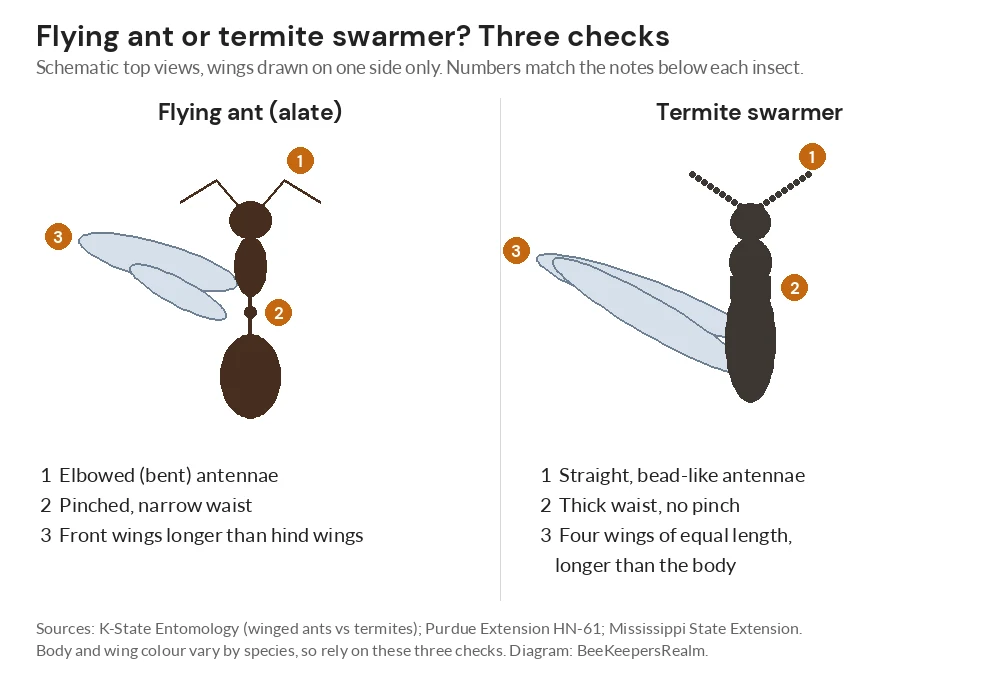
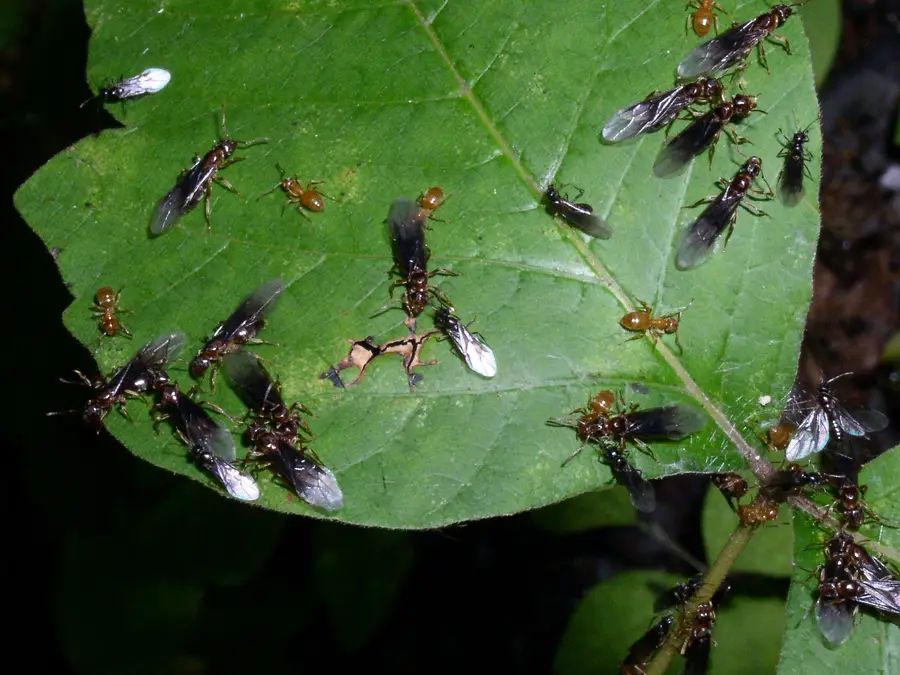
Flying ants are not a separate kind of ant. They are the winged queens and males, called alates, of ordinary ant colonies, leaving the nest on a mating flight. Worker ants never have wings. After mating the males die, and each new queen sheds her wings to start a colony. A few winged ants outdoors are harmless and gone within days. Dozens or hundreds indoors usually mean a nest inside or right beside the house. To rule out termites, check for elbowed antennae, a pinched waist and front wings longer than the hind wings.
This guide draws on university extension entomologists. It is educational information, not pest-control advice for a specific property.
Key Takeaways
- Flying ants are the reproductive caste of many ant species; Mississippi State Extension notes that ant workers never have wings.
- Colonies of one species fly together, cued by warmth, calm air and humidity, often after rain.
- Ants have elbowed antennae, a pinched waist and unequal wings. Termites have straight antennae, a thick waist and four equal wings.
- Iowa State Extension says hundreds of swarmers indoors almost certainly mean a colony in the house; fewer than 10 are likely strays.
- Vacuum swarmers indoors and find the nest. Termite swarmers indoors call for a professional.
Table of Contents
- What Are Flying Ants?
- Why Flying Ants Appear All at Once
- Flying Ants vs Termites
- Which US Ants Swarm, and When
- Do Flying Ants Bite or Sting?
- What to Do About Flying Ants
- Flying Ants, Bees and Look-Alikes
- Frequently Asked Questions
- The Bottom Line
What Are Flying Ants?
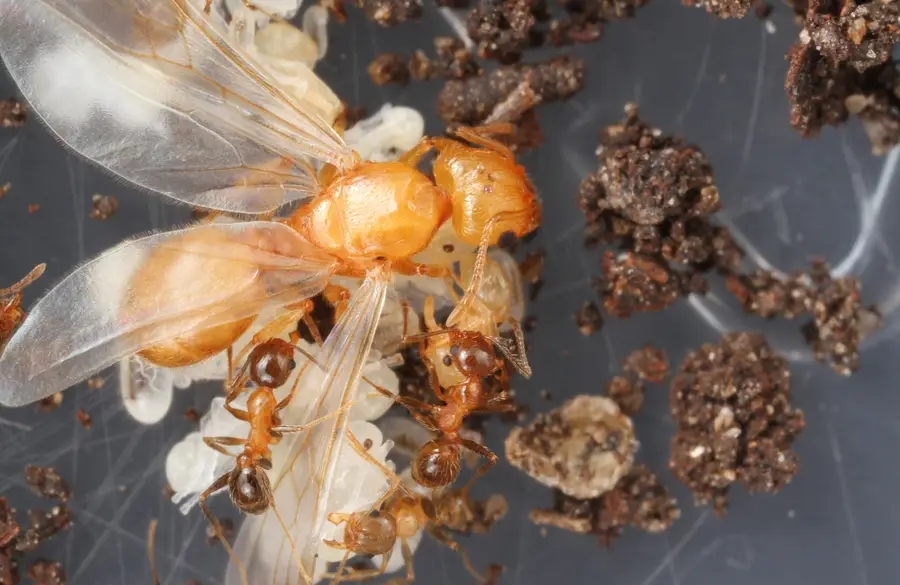
An ant colony has one or more egg-laying queens and many wingless, sterile female workers. A mature colony also raises winged males and virgin queens, which leave to mate:
“Usually, the males die after mating and the females disperse, shed their wings and attempt to start a new nest.”
Penn State says a black carpenter ant colony first makes winged ants when it is several years old. About 200 to 400 develop in summer, stay in the nest over winter and leave the next spring or early summer.
Why Flying Ants Appear All at Once
Iowa State Extension says all colonies of one species in an area release swarmers at the same time. Texas A&M’s Michael Merchant names the cues: temperature, wind speed, humidity and day length. Shared cues let males and queens from different colonies meet.
- After rain. LSU AgCenter says fire ants fly at 70 to 90°F within 24 hours after rainfall.
- Brief. Texas A&M says a swarm typically lasts one or a few days.
- Off-season indoors. Penn State links late-fall and early-spring citronella ant swarms to warm soil beside heated homes.
Ant Lab’s clip shows winged male Odontomachus and Aphaenogaster ants taking off, filmed at 1,500 and 3,200 frames per second; the flight footage starts at 1:05. This summary is from the video’s description and chapter list.
“Flying ant day” is a UK term for summer swarms of the black garden ant, Lasius niger, usually in July or August, per London’s Natural History Museum. A Royal Society of Biology citizen-science survey found no single day, but a flying ant season.
Flying Ants vs Termites
Both swarm, shed wings and land on windowsills, but only termites eat wood. Body color varies, so check shape.
| Feature | Flying ant | Termite swarmer | Source |
|---|---|---|---|
| Antennae | Elbowed (bent) | Straight, bead-like | K-State, Purdue |
| Waist | Pinched, narrow | Thick, broadly joined | K-State, Mississippi State |
| Wings | Front pair noticeably longer than hind pair | All four about equal, longer than the body | Mississippi State, K-State |
| Shed wings | Queens remove them after mating | Break off soon after, sometimes in piles | Penn State, Purdue |
| Color | Light tan to black, by species | Eastern subterranean black; Formosan tan to light brown | Mississippi State |
| When they swarm | Spring, summer or fall | Usually spring. Eastern subterranean by day, mid-February to mid-May; Formosan after sunset, late April to June (Mississippi) | Purdue, Mississippi State |
| Swarm indoors means | A nest inside, under or very close to the house | An almost sure sign of infestation | Texas A&M |
| What to do | Vacuum; identify the ant; find the nest | Save a few in rubbing alcohol; call a termite professional | K-State, Texas A&M |
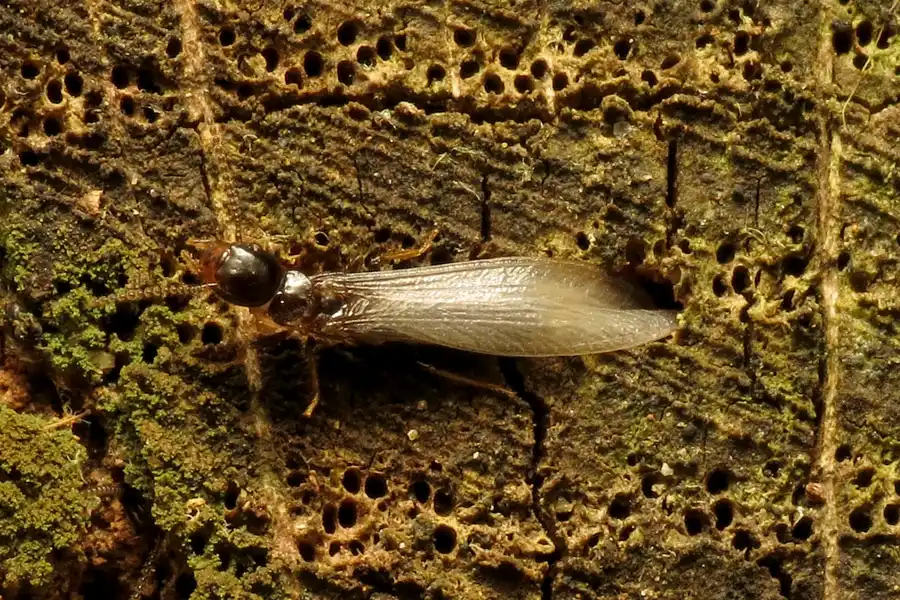
“Having termites swarm in your home is an almost sure indication of a termite infestation.”
Mississippi State Extension adds a caveat: swarmers can get in through cracks under doors and are not likely to survive indoors for long. Large numbers, or swarmers coming out of walls, ceilings or floors, are the signal to call a professional.
Which US Ants Swarm, and When
Seasons differ by species and region, so each row uses its extension source’s wording. Ants without a published extension flight season are left out.
| Ant | Typical flight season | Indoors? | Note | Source |
|---|---|---|---|---|
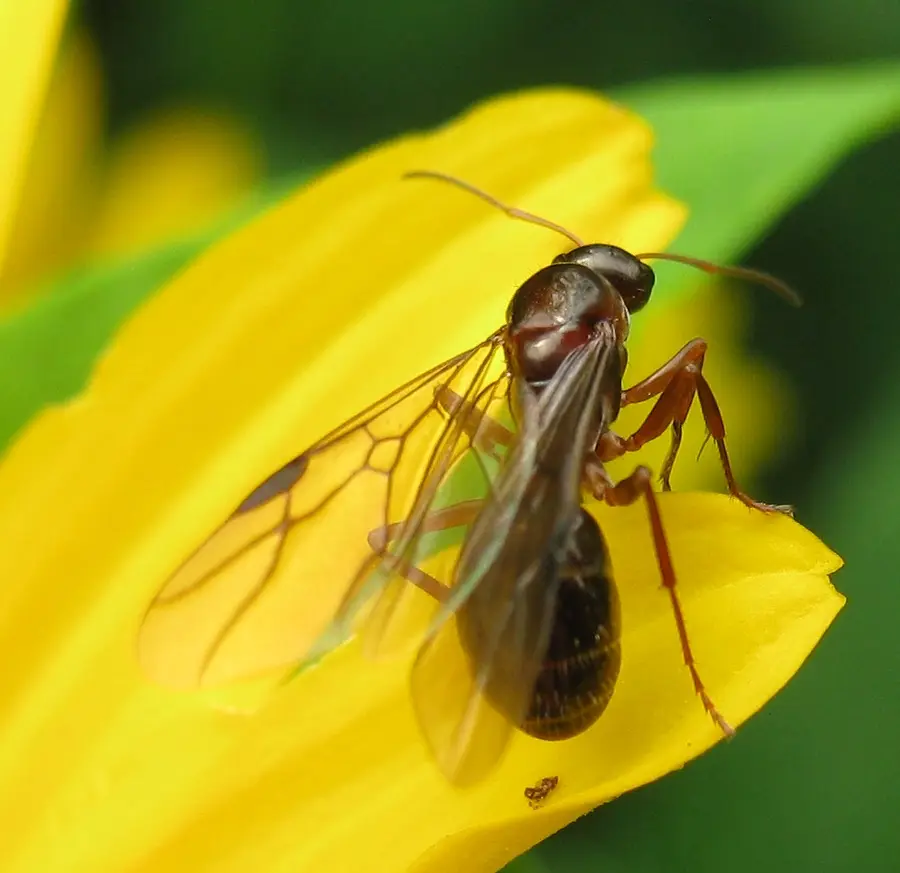
| Carpenter ant | Spring or early summer; May to July in Virginia | Many winged ants at indoor windows probably came from an indoor nest | Nests in damp, decaying wood | Penn State, Virginia Tech |
| Red imported fire ant | Spring through late fall; 6 to 8 flights between spring and fall | Indoor swarms usually come from a mound beside the foundation | Flies on warm days after rain | Alabama Extension, UF/IFAS, Texas A&M |
| Pavement ant | June in North Carolina; spring after rain in Utah | Can swarm indoors | Nests under pavement, stones and slabs | NC State, Utah State |
| Citronella (yellow) ants | Mostly mid- to late summer; in homes also late fall and early spring | Yes, through slab and door gaps | Lemon smell when crushed; will not breed indoors or damage the house | Penn State, Univ. of Minnesota |
| Acrobat ant | Usually fall | Not stated | Swarm resembles gnats | NC State |
| Field ants (Formica) | Not stated | Not often | A nuisance during swarming flights | Utah State |
Sources disagree on fire ant timing: UF/IFAS says midday on a warm, sunny day after rain, LSU AgCenter says late afternoon or early morning. In Texas, Merchant notes that carpenter ants are the earliest swarmers, emerging in winter.
Do Flying Ants Bite or Sting?
Rarely. Winged ants are mating, not defending a nest.
- Fire ants. LSU AgCenter says male alates have no stinger. Winged females can sting, but:
“it is highly unlikely the ants will bite and sting you while flying or searching for a nesting site.”
- Fire ant workers are the hazard: NC State Extension says they sting aggressively and repeatedly when a mound is disturbed.
- Acrobat ants “do not sting noticeably,” per NC State.
- Carpenter ants do not sting but can bite, as our carpenter ant guide explains.
What to Do About Flying Ants
Indoors
- Count them. Hundreds mean a colony in the walls, rotten wood or under the slab; fewer than 10 are probably strays (Iowa State).
- Vacuum them and put the bag in an outdoor trash can (K-State). Texas A&M says a vacuum, or a one-time indoor spray, is often all a swarm needs.
- Identify the species, with help from your county extension office if needed.
- Find the nest. For carpenter ants, Penn State says to check damp wood near roof leaks, leaking gutters and condensation, and fix the moisture. Fire ants swarming indoors usually point to a mound by the foundation (Texas A&M).
Ants that keep foraging indoors, rather than swarming, are a separate ant-control job built on baits and sanitation.
Termite swarmers
Texas A&M advises saving a few in rubbing alcohol, noting the date and room, and calling a termite professional.
Outdoors
Leave them. K-State says a swarm from an established colony does not mean the infestation will grow, because the winged ants leave for good. Alabama Extension adds that most new fire ant queens are killed by predators such as foraging ants, birds, spiders and lizards.
Flying Ants, Bees and Look-Alikes
Ants mate the way honey bees do: in the air, away from the nest. A virgin honey bee queen flies to an area where drones from many colonies gather, as our virgin queen mating flight timeline explains.
A flying ant swarm is not a bee swarm, which is a cluster of worker bees and their queen looking for a new home. Not every winged “ant” is an ant, either: male velvet ants are winged wasps. If unsure, use our bee vs wasp guide.
Frequently Asked Questions
Why do I suddenly have flying ants?
A nearby colony is releasing winged queens and males to mate, often on a warm, humid day after rain.
Does flying ants mean you have termites?
No. If the antennae are straight, the waist thick and the wings equal, you have termite swarmers instead.
Should you get rid of flying ants?
Outdoors, no; they disperse within days. Indoors, vacuum them and find the nest.
How do I get rid of the flying ants?
Vacuum them, identify the species and treat or remove the nest. K-State says insecticide rarely eliminates a colony unless the nest is treated.
Are flying ants dangerous?
Generally not. Male fire ants have no stinger, and winged fire ants are highly unlikely to sting, per Alabama Extension.
When do flying ants swarm?
By species: carpenter ants in spring and early summer, pavement ants around June, citronella ants mostly in mid- to late summer, acrobat ants in fall.
What is the purpose of flying ants?
Mating between colonies, after which each mated queen tries to found a new colony.
The Bottom Line
Check antennae, waist and wings first. Let outdoor swarms pass; indoors, vacuum, identify and find the nest, and call a professional for termites.
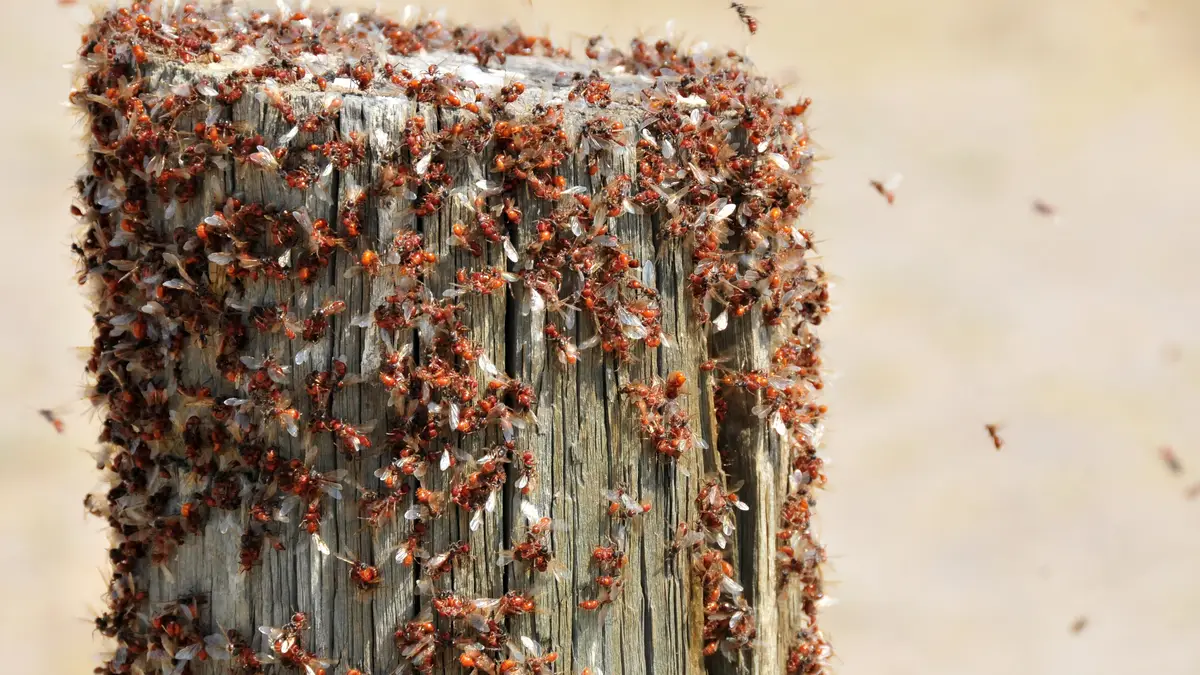
Featured photo: western harvester ants swarming on a fence post, by Tom Koerner, U.S. Fish and Wildlife Service (Wikimedia Commons), public domain, cropped.