Reviewed by Daniel M. · How we review
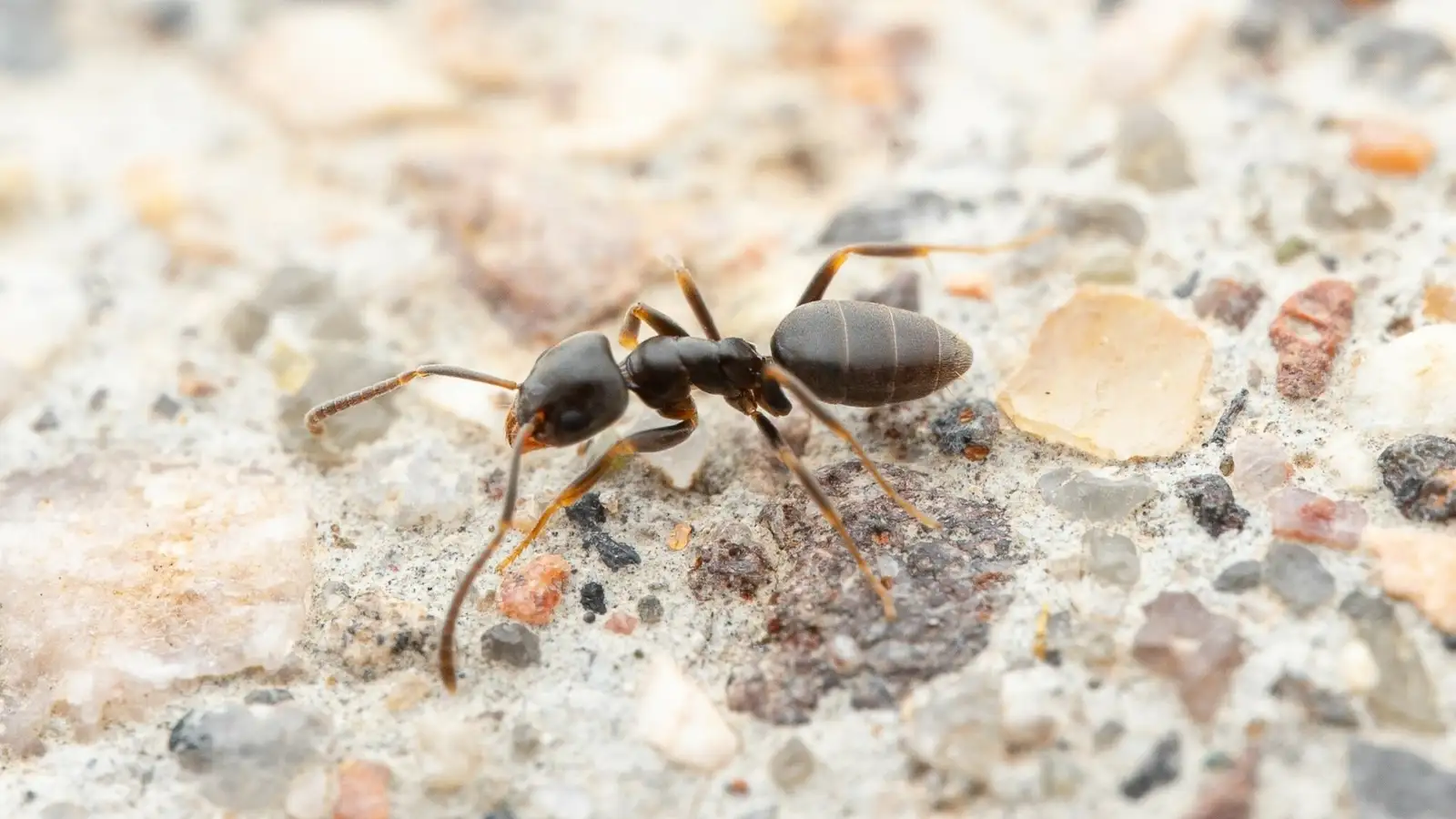
“Sugar ants” is a nickname, not a species. In the US it means the small ants that trail to sweets indoors, most often the odorous house ant (Tapinoma sessile), but also Argentine, pavement, little black, ghost and pharaoh ants. In Australia it means the banded sugar ant. They rarely bite, and the most common ones cannot sting at all. To get rid of them, remove food and water, seal entry points and use a slow-acting bait on the trail. Spraying the trail tends to scatter colonies that have many queens.
This guide draws on university extension entomologists and on our own count of iNaturalist records. It is educational information, not professional pest-control advice.
Key Takeaways
- “Sugar ant” covers several species. The odorous house ant is the usual one and smells of rotten coconut when crushed.
- Odorous house, Argentine and ghost ants cannot sting. Stings that turn into white pustules point to fire ants.
- Baits work because workers carry them home to the queens. Never spray ants feeding at a bait.
- In US iNaturalist records, odorous house ants peak in April and May, and 88.6% of Argentine ant records come from California.
- Keep sweet baits and insecticides away from flowers and beehives.
Table of Contents
- What Are Sugar Ants?
- How to Get Rid of Sugar Ants
- Which Sugar Ant Do You Have?
- Do Sugar Ants Bite or Sting?
- Why Sugar Ants Come Inside
- Home Remedies: What the Evidence Says
- Sugar Ants, Bees and Pollinators
- Frequently Asked Questions
- The Bottom Line
What Are Sugar Ants?
In the US, the name goes to whichever small ant finds the sugar bowl.
“Odorous house ants are also called sugar, stink and coconut ants.”
Which ant gets the name depends on where you live. The University of Kentucky calls the odorous house ant “the most common and difficult ant species to control in Kentucky and much of the Midwest.” UC IPM’s Pest Notes: Ants says the Argentine ant is the most common ant in and around California homes. The species matters, because they take different baits.
How to Get Rid of Sugar Ants
Extension guides agree on the order: find the entry point, remove food, seal gaps, then bait.
What the video covers: UC IPM staff explain that a bait must act slowly so workers carry it home, and results can take 7 to 10 days or more. For Argentine ants they recommend sweet liquid baits with 0.5 to 1.0% borate, placed mainly outdoors with no spraying nearby. (Summarized from the transcript.)
1. Follow the trail
Ants lay invisible odor trails between food and nest. The University of Kentucky says a trail is often distinct enough to follow back to the nest or to where ants enter from outdoors. To reveal a hidden trail, Kentucky suggests a dab of honey or jelly on an index card next to the ants.
2. Take away food and water
UC IPM advises storing sugar, syrup, honey and pet food in closed containers, rinsing soft drink cans, cleaning up grease and spills, removing garbage daily and fixing leaky faucets. Do this before you bait, because crumbs compete with the bait.
3. Seal gaps and trim plants back
Caulk foundation cracks and the openings where wires and pipes enter, which ants follow (UC IPM). Kentucky adds sealing door thresholds and windows and trimming shrubs that touch the house. UC IPM’s quick tips say to keep plants and mulch at least a foot from the foundation.
4. Use a slow-acting bait the ants will eat
A bait mixes food with a slow-acting insecticide that workers share with the queens and larvae. Penn State Extension names hydramethylnon, fipronil and boric acid as slower-acting ingredients. Keep baits away from children and pets, and match the bait to the ant:
| Ant | Bait it usually takes | Source note |
|---|---|---|
| Odorous house ant | Sweet | “Sweet baits usually work best … but not always” (Clemson) |
| Argentine ant | Sweet all year; protein mainly in spring | Low-strength liquid borate (0.5 to 1.0%) for heavy infestations (UC IPM) |
| Pharaoh ant | Protein or greasy | Non-repellent baits only (UF/IFAS) |
| Pavement ant | Sweets, proteins, grease | Readily controlled with most baits (Kentucky) |
| Ghost ant | Sweet | 1 to 5% boric acid in sugar water “seems to work well” (Texas A&M) |
Expect more ants at first: Kentucky says that crowd means they are feeding, and activity usually subsides in a few days. Penn State allows two weeks or longer.
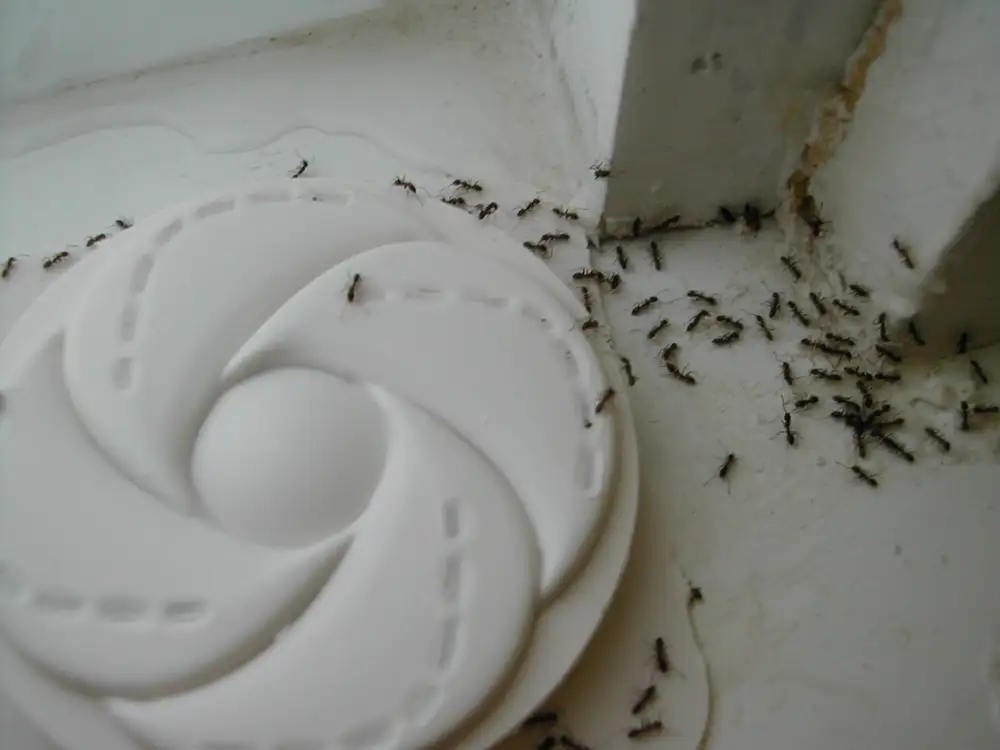
5. Don’t spray the trail
“The mistake most people make when attempting to control ants is only spraying the ones they see.”
Foragers are a small share of the colony. Several sugar ants also have many queens and split into new nests, called budding. Oregon State says odorous house ant colonies may bud when disturbed, and UF/IFAS warns that repellent products can make pharaoh ant colonies fracture and bud.
“Also, be careful not to overuse sprays as this can cause colony budding and increase the number of individual nests with their own queens.”
6. Bait outdoors, in spring
UC IPM recommends baits mainly outdoors, every 10 to 20 feet around the foundation. It says a perimeter spray kills only foragers and “won’t provide permanent control.” Baiting in late winter and early spring, as colonies start to grow, works best.
When to call a professional
Call one if ants keep coming after several weeks of baiting or you suspect pharaoh ants, which UF/IFAS calls the most difficult household ant to control. UC IPM suggests a company trained in IPM or IPM-certified.
Which Sugar Ant Do You Have?
Texas A&M says a hand lens is enough for 80% to 90% of common pest ants, though pharaoh ants may need a microscope. The last two rows are ants that are not harmless sugar ants.
| Ant | Size | Color | Key mark | Where it nests | Sting/bite? | Source |
|---|---|---|---|---|---|---|
| Odorous house ant | 1/16 to 1/8 in | Brown to black | One hidden node; rotten-coconut smell | Under rocks and boards; indoors in voids near moisture | No sting; “ineffective biters” | Penn State; Oregon State |
| Argentine ant | 1/8 in | Light to dark brown | One node; hundreds of queens | Shallow, moist soil; indoors near pipes and sinks | No sting | UC IPM; Texas A&M |
| Pavement ant | 2.5 to 4 mm | Dark brown to black | Grooved head; two nodes; two spines | Under slabs; soil piles at cracks | Small stinger | Penn State |
| Little black ant | 1/16 in | Shiny black | Two nodes; 3-segmented club | Lawns, under stones; wall voids | Tiny stinger | Texas A&M |
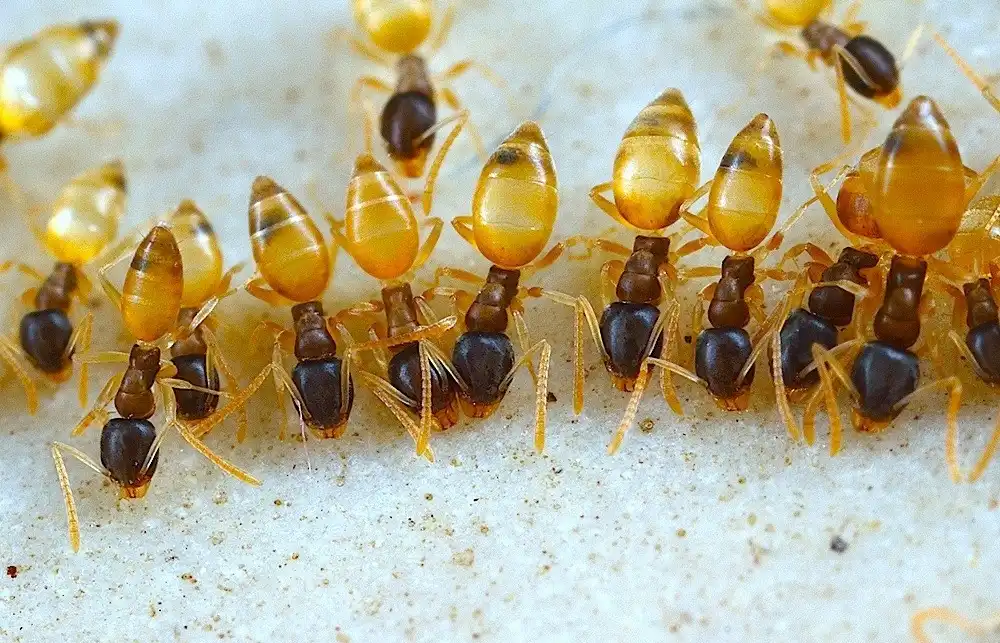
| Ghost ant | Under 1/16 in | Dark head, pale abdomen and legs | Bicolored | Warm climates; any indoor cavity | No sting | Texas A&M |
| Pharaoh ant | 1/16 in | Yellow to orange | Two nodes; 3-segmented club | Warm, humid wall and cabinet voids | Stinger rarely used | UC IPM; UF/IFAS |
| Banded sugar ant (Australia) | 5 to 15 mm | Black, orange-brown band | Large; mainly nocturnal | Urban areas, woodland, heath | No sting; painful bite | Australian Museum; Wikipedia |
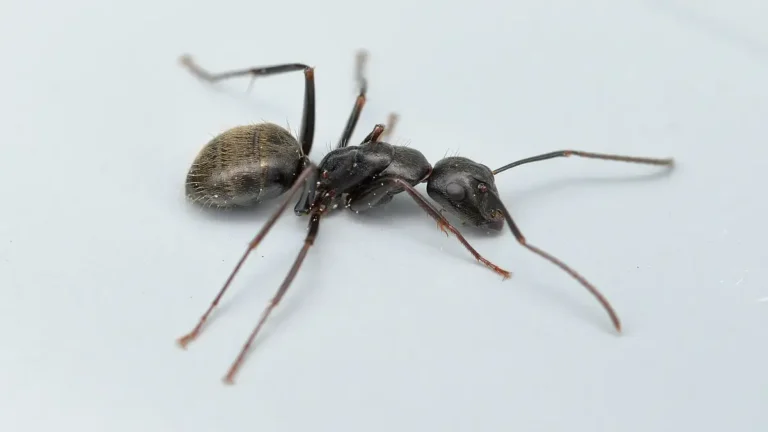
| Carpenter ants | 1/4 to 1/2 in | Black, or red and black | One node; smoothly rounded back | Damp or decayed wood | Bite, no sting | Penn State; UC IPM |
| Red imported fire ant | 1/16 to 1/5 in | Reddish, dark abdomen | Two nodes; mixed sizes | Soil mounds in lawns | Painful sting | UC IPM |
Other look-alikes: a small, shiny dark ant that stings in the Southeast may be the invasive Asian needle ant. A fuzzy red-and-black “ant” walking alone outdoors is likely a velvet ant, a wingless wasp with a strong sting. Our comparison chart of stinging insects covers the rest. Winged ants indoors, often confused with termites, are covered in our guide to flying ants.
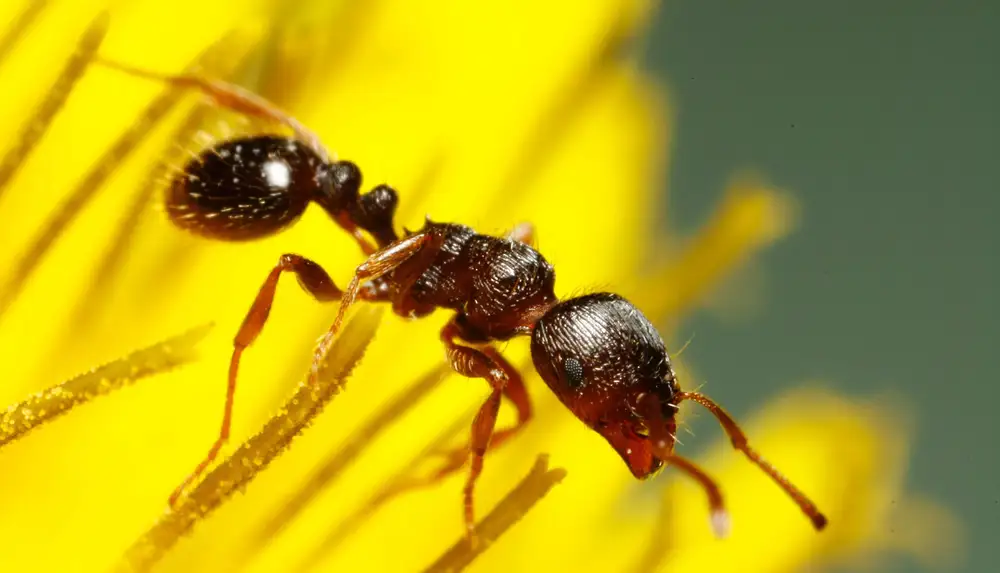
The smell test
Kentucky likens a crushed odorous house ant to rotten coconut or pine, but Oregon State cautions that several ants smell similar. Confirm with the single hidden node.
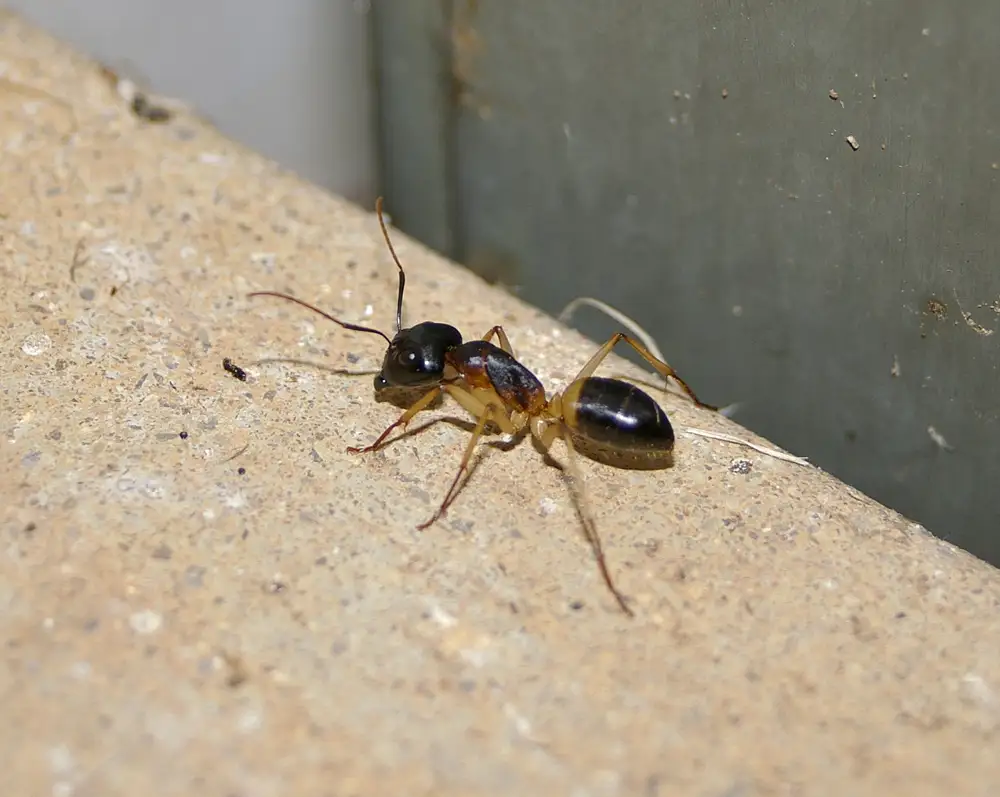
The banded sugar ant in Australia
The Australian Museum describes sugar ants as relatively large ants with an orange-brown middle and a black head and abdomen. They take any sweet food and forage under street or house lights in summer. Wikipedia adds that larger soldiers bite painfully and spray formic acid.
Do Sugar Ants Bite or Sting?
Mostly no. UC IPM notes that ants can bite with their pincerlike jaws, but most species rarely do.
- Odorous house, Argentine and ghost ants belong to a subfamily (Dolichoderinae) with no sting. Oregon State calls odorous house ants “ineffective biters.”
- Pavement, little black and pharaoh ants carry small stingers. Wikipedia calls the pavement ant’s “essentially harmless,” and UF/IFAS says the pharaoh ant rarely extends its own.
The bigger risk from pharaoh ants is contamination. UF/IFAS reports that in hospitals they can carry more than a dozen pathogens, including Salmonella, Staphylococcus and Streptococcus, and have been seen at the mouths of sleeping infants and in-use IV bottles.
If small ants sting repeatedly and each sting becomes a white pustule a day later, suspect fire ants. Get medical help for any allergic reaction.
Why Sugar Ants Come Inside
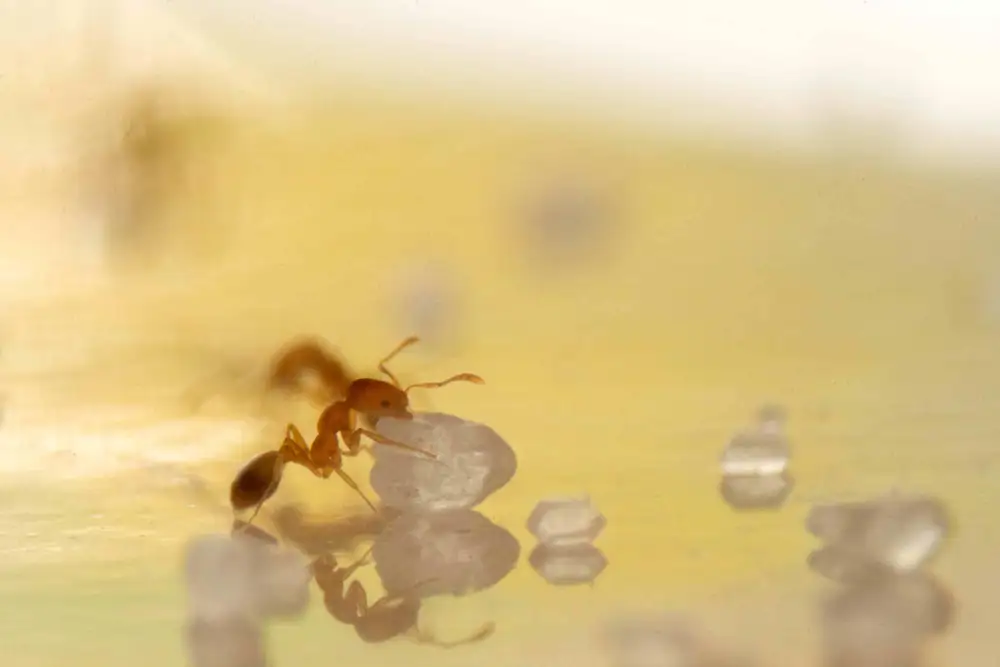
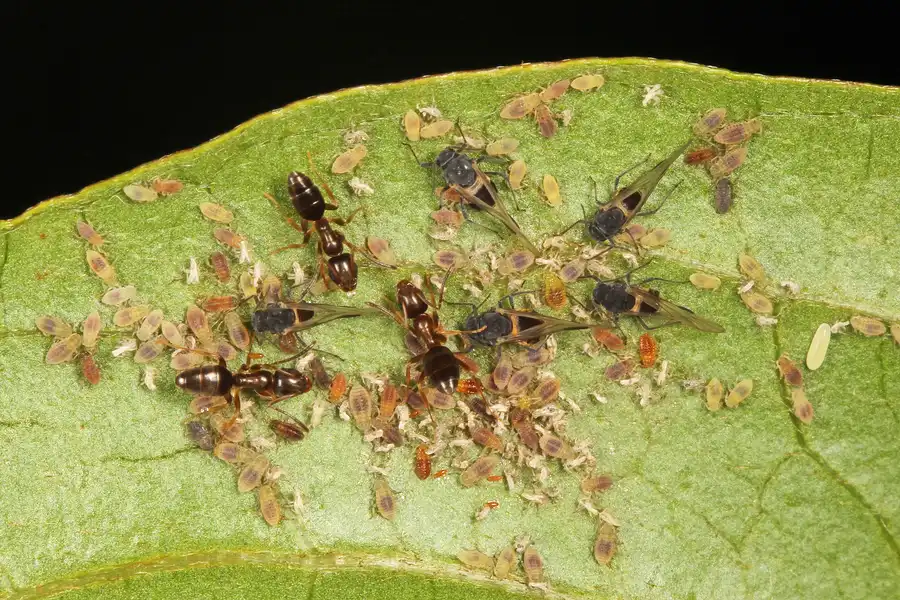
UC IPM says ants enter seeking food and water, warmth and shelter, or refuge from dry, hot weather or flooding, and may appear suddenly when outdoor food runs out or the weather changes. Oregon State notes pavement ants can be particularly troublesome after heavy rain. Outdoors, Penn State says odorous house ants feed on aphid honeydew and nectar.
When they show up: what iNaturalist records show
We pulled every US research-grade iNaturalist observation of the two most-named sugar ants on 17 November 2026 and grouped them by month.
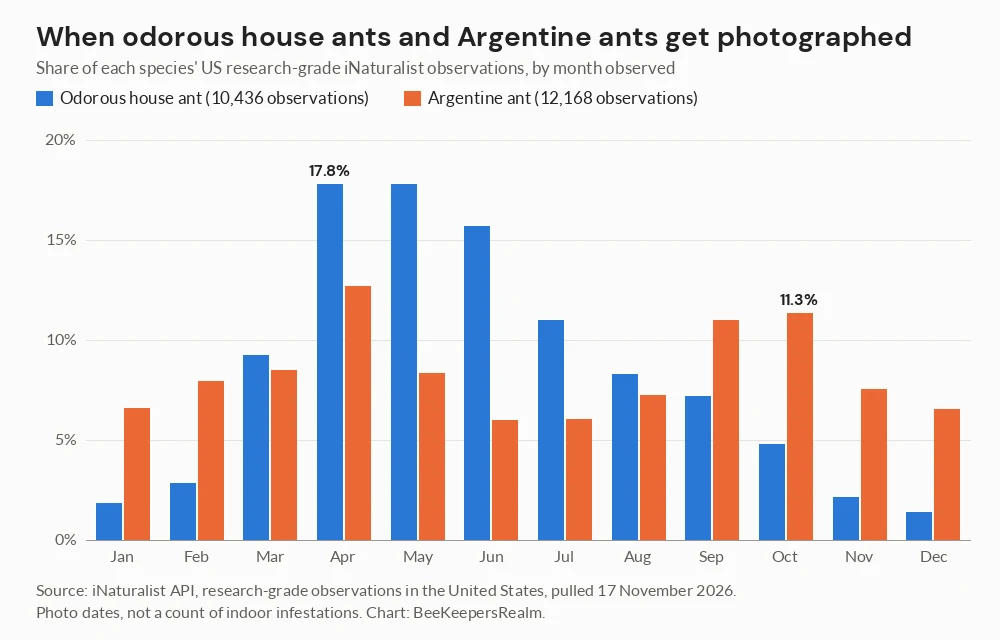
Odorous house ants (10,436 records) peak in April and May at 17.8% each, and April through June hold 51.3% of the year. Argentine ants (12,168 records) never fall below 6% a month and peak in April (12.7%) and October (11.3%).
Argentine records are 88.6% Californian and come from only 18 states. Odorous house ants appear in every state except Alaska:
| Rank | Odorous house ant | Records (share) | Argentine ant | Records (share) |
|---|---|---|---|---|
| 1 | California | 1,430 (13.7%) | California | 10,778 (88.6%) |
| 2 | New York | 1,144 (11.0%) | Texas | 341 (2.8%) |
| 3 | Virginia | 961 (9.2%) | Alabama | 252 (2.1%) |
| 4 | Pennsylvania | 737 (7.1%) | North Carolina | 157 (1.3%) |
| Source: iNaturalist API, research-grade records, pulled 17 November 2026. | ||||
These show when and where people photographed ants, not indoor invasions. Still, the spring peak fits the advice to bait early.
Home Remedies: What the Evidence Says
| Remedy | What the sources say | Verdict |
|---|---|---|
| Soapy water, vacuuming | Removes the scent trail; may match an indoor spray for removing foragers (UC IPM) | Good cleanup; misses the nest |
| White vinegar | Not mentioned in the extension sources we read | Temporary at best |
| Peppermint, clove, orange oils | “Excellent contact activity but … limited residual activity” (UC IPM) | Short-lived |
| Cinnamon, coffee grounds | Not recommended in any source we read | Unproven |
| DIY borax or boric acid bait | Weak, slow mixes reach the colony (Texas A&M, UC IPM). NPIC says infants are more sensitive to boric acid. | Can work; a labeled product has a known dose |
Sugar Ants, Bees and Pollinators
A sweet bait feeds any insect that finds it. The National Pesticide Information Center says fipronil is highly toxic to honey bees, while the EPA concluded boric acid is relatively nontoxic to bees. Use closed bait stations along the foundation, never on blooming plants or near hives. Our guide to pollinator-safe pest control products explains how to read a label for bee hazards.
Syrup feeders and stored honey draw the same ants into apiaries. See how to protect beehives from ants for stands and barriers, and how to remove ants from hives naturally for insecticide-free fixes.
Ants that tend aphids also chase off aphid predators such as ladybugs, so controlling ants helps those beetles do their job.
If the small dark creatures in the house have far more than six legs and curl up when touched, they are millipedes, not ants.
Frequently Asked Questions
Why do I suddenly have sugar ants?
A scout found food or water and laid a trail. UC IPM says ants often appear suddenly when outdoor food runs short or the weather turns hot, dry or wet.
What time of year do sugar ants come out?
Mostly spring. US iNaturalist records of odorous house ants peak in April and May. Argentine ants show a second peak in fall.
Are sugar ants harmful?
Usually not to people, though they contaminate food. Pharaoh ants are the exception in hospitals, where UF/IFAS says they can spread pathogens.
What happens if a sugar ant bites you?
Usually very little. Most sugar ants rarely bite, though Australia’s banded sugar ant can bite painfully. Stings that form pustules suggest fire ants.
Should I squish sugar ants?
Squishing a few lets you smell-test for odorous house ants, but it will not stop the colony. Leave ants feeding at a bait alone.
How do you get rid of sugar ants permanently?
Remove food and water, seal entry points and bait so workers carry poison to the queens. Then keep watching: Texas A&M notes that when Argentine ant colonies are removed from a building, new colonies quickly move in.
The Bottom Line
Identify the ant, cut off what draws it in, and let a slow bait work outdoors on the trail. If ants keep coming after a few weeks, or you suspect pharaoh ants, call a professional.
Image credits: featured photo of an odorous house ant worker by Jake N. (Wikimedia Commons, via iNaturalist), CC BY 4.0, cropped. Other photos are credited in their captions; all via Wikimedia Commons, resized or cropped. Chart by BeeKeepersRealm from iNaturalist data.