Reviewed by Michael R. · How we review
Chiggers are the six-legged larvae of tiny mites in the family Trombiculidae. They are arachnids, not insects, and only the larval stage bites. A chigger does not burrow into your skin or drink blood. It injects saliva that breaks down skin cells, then sips the liquid through a feeding tube your own skin forms. Bites itch within hours, usually cluster where clothing is tight, and fade within about two weeks. Repellent on skin, permethrin-treated clothing and a hot shower after time in tall grass prevent most bites.
This guide draws on US extension services, the CDC, MedlinePlus and peer-reviewed research, each named where we use it. We make no claim of personal field experience with chiggers. It is educational information, not medical advice; ask a doctor or pharmacist about treatment for you or a child.
Key Takeaways
- Chiggers are larval mites, related to ticks and spiders. Nymphs and adults live in soil and eat insect eggs and small arthropods, according to Ohio State University Extension.
- They do not burrow and do not suck blood. Painting a bite with nail polish does nothing useful, Iowa State University Extension says.
- Five US sources put the first itch or first signs between 3 and 24 hours after a bite. Itching is usually worst at 24 to 48 hours and can last up to two weeks.
- US chiggers are not known to spread disease to people, per UMD and Clemson Extension. A 2022 review calls their role in US disease “essentially unknown.” Scrub typhus, a chigger-borne disease, occurs mainly in Asia and the Pacific, per the CDC.
- In the yard, mowing, brush removal and more sun do more than spraying. Extension services do not generally recommend treating whole lawns, and never on plants in bloom.
Table of Contents
- What Are Chiggers?
- How a Chigger Bite Works
- Do Chiggers Burrow? Three Myths
- What Chigger Bites Look Like
- How Long Chigger Bites Itch
- Chigger Bites vs Other Bites
- Relief and When to See a Doctor
- Do Chiggers Spread Disease?
- Where and When Chiggers Live
- How to Prevent Chigger Bites
- How to Get Rid of Chiggers in the Yard
- Chigger Control and Bees
- Frequently Asked Questions
What Are Chiggers?
“Chigger” is the common name for the larval stage of trombiculid mites. Mites are arachnids, closer to ticks and spiders than to fleas or mosquitoes; our page on why a bee is an insect and a spider is not explains the difference. Beekeepers know another mite well: the varroa mite, a distant relative with a very different life.
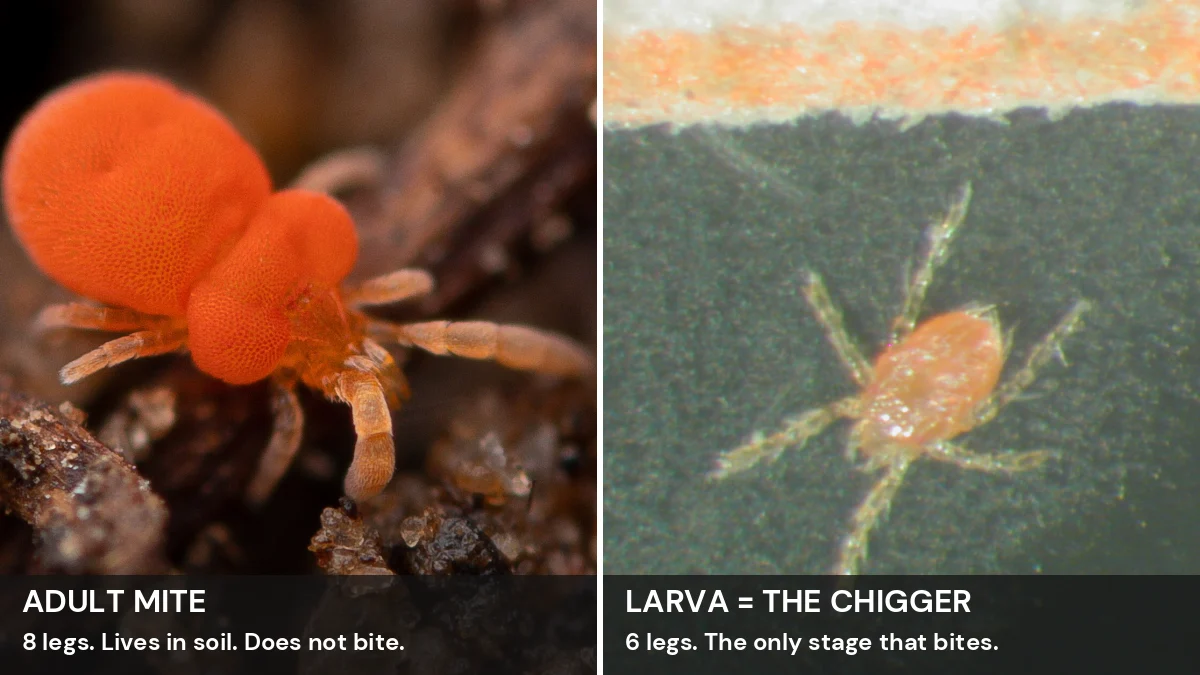
A chigger develops from egg to larva, through nymph stages, to adult. The University of Maryland Extension says only the larval stage bites humans, and Ohio State University Extension says nymphs and adults prey on insect eggs and small arthropods such as springtails. Larvae have six legs; later stages have eight.
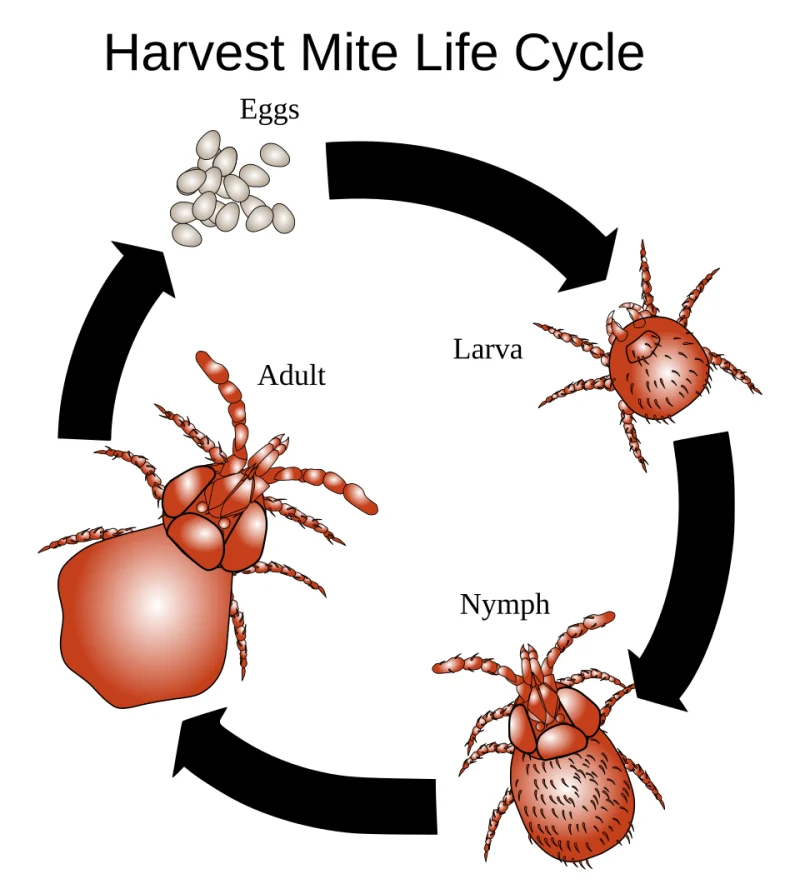
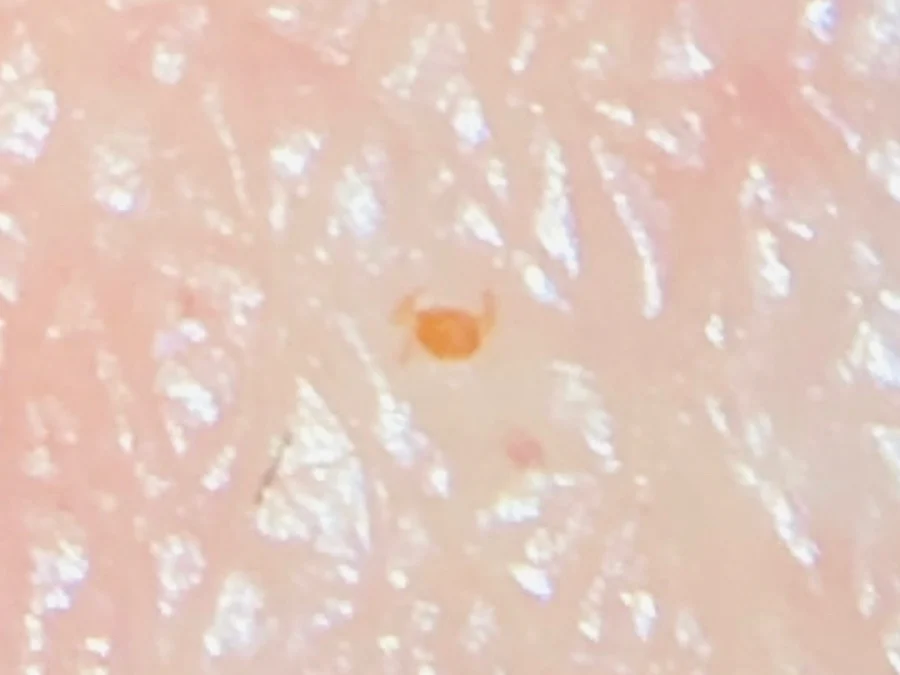
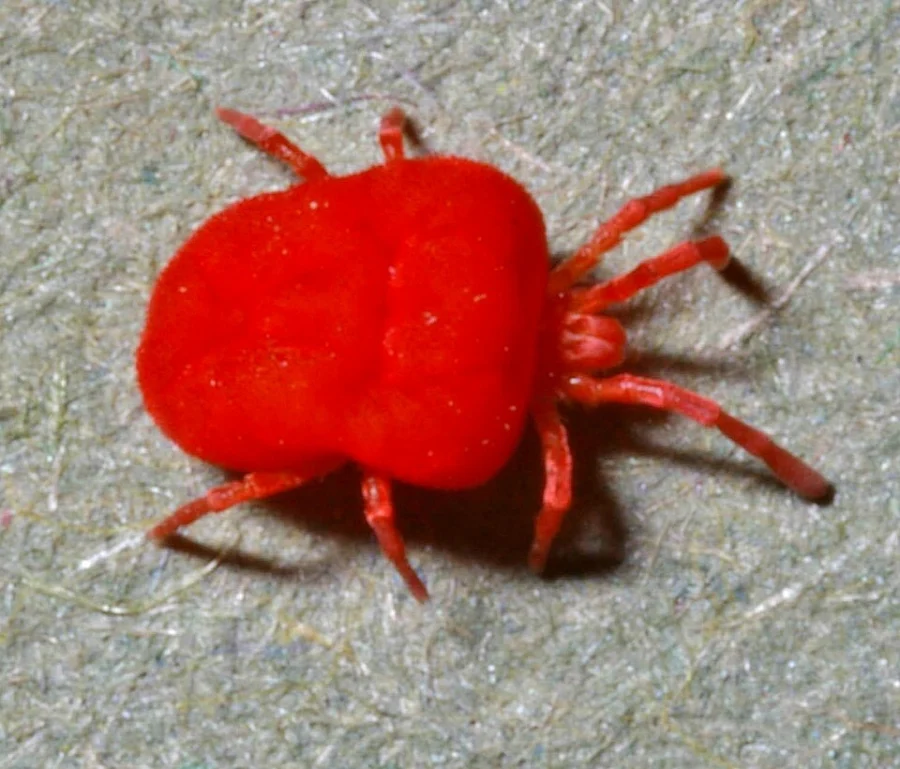
Kansas State University gives the larva’s length as about 1/128 inch (0.19 mm), orange-yellow to red. Texas A&M AgriLife describes adult Eutrombicula mites as about 1 mm long, velvety and bright red, often called “red bugs.”
A 2022 review counted 248 chigger species reported in the US, in every state except Hawaii. The most widespread, Eutrombicula alfreddugesi, was recorded in 22 states on 179 host species. Texas A&M AgriLife says it lives in grassy, weedy uplands, briar patches and woodland edges, while Eutrombicula splendens prefers swamps, bogs and rotting logs.
Chigger Look-Alikes
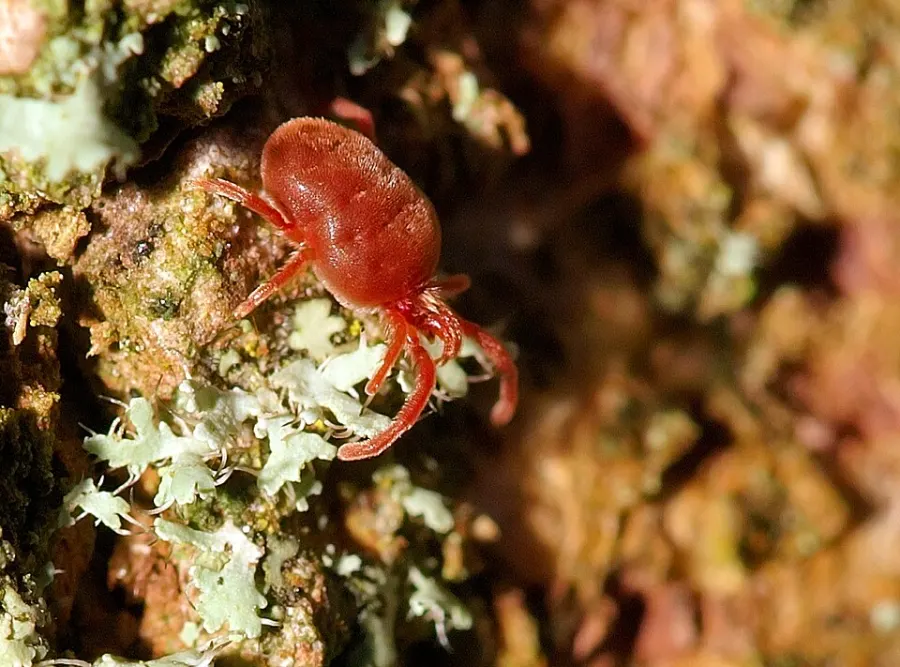
Red mites you can easily see are not the ones biting you. Ohio State lists red velvet mites, concrete mites and clover mites as often misidentified as chiggers, and says these larger red mites do not bite humans.
How a Chigger Bite Works
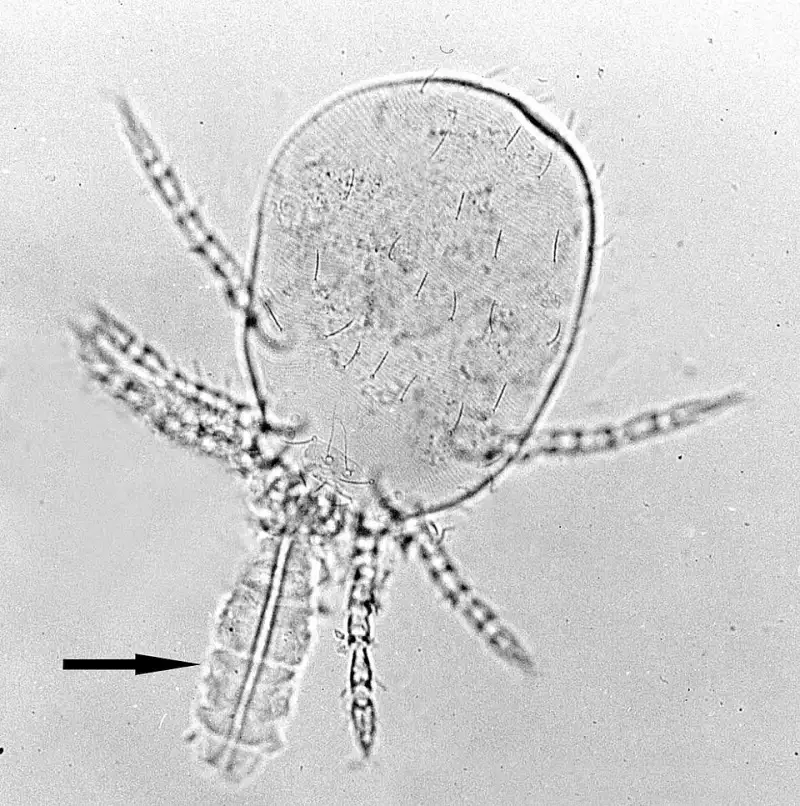
Larvae wait on grass tips and grab shoes or clothing as you pass. Texas A&M AgriLife says they typically explore a host for several hours before choosing a place to feed. Then the larva pierces the skin and injects saliva with digestive enzymes, and the tissue around the bite hardens into a tube called a stylostome. University of Missouri Extension describes what happens next:
“The chigger remains attached to the stylostome and sucks up liquefied tissue — like a person drinking through a straw.”
On their usual hosts (birds, reptiles, rodents and other small mammals, per AgriLife), chiggers feed for 2 to 4 days, according to Ohio State and Kansas State. People are poor hosts: AgriLife says chiggers often do not survive on humans more than 1 or 2 days, and UF/IFAS says they are usually dislodged or die within hours. The itch is your reaction to the saliva, so it continues after the chigger is gone.
Do Chiggers Burrow? Three Myths
Myth 1: chiggers burrow under the skin. They do not. “The mite doesn’t burrow into the skin,” the University of Kentucky’s fact sheet says, and Ohio State calls burrowing “a myth.” Texas A&M AgriLife explains the illusion: as the skin swells, it can surround the feeding chigger and make it look buried.
Myth 2: chiggers drink blood. They do not. The University of Maryland Extension says they feed on digested skin cells, not blood.
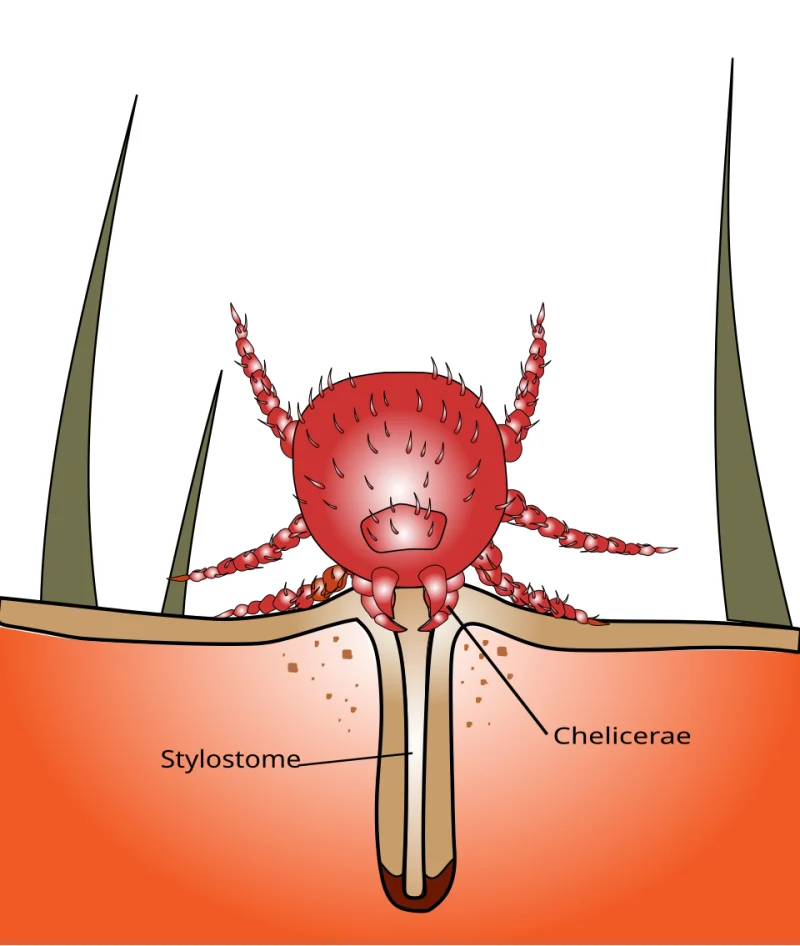
Myth 3: nail polish suffocates them. Since nothing lives under the bump, there is nothing to smother. Iowa State University Extension puts it plainly:
“The many chigger “home remedies” used by devotees have not been tested to verify effectiveness.”
Iowa State adds that sealing the skin from air is one way to stop itching, which is why nail polish seems to help. It is the seal, not a dead mite.
Video: in this University of Illinois Extension “Gardenbite,” horticulture educator Chris Enroth covers what chiggers are, the burrowing and protective-clothing myths, disease and biting habits, treating bites and prevention, including why nail polish won’t help. This summary is from the video’s official chapters and description.
What Chigger Bites Look Like
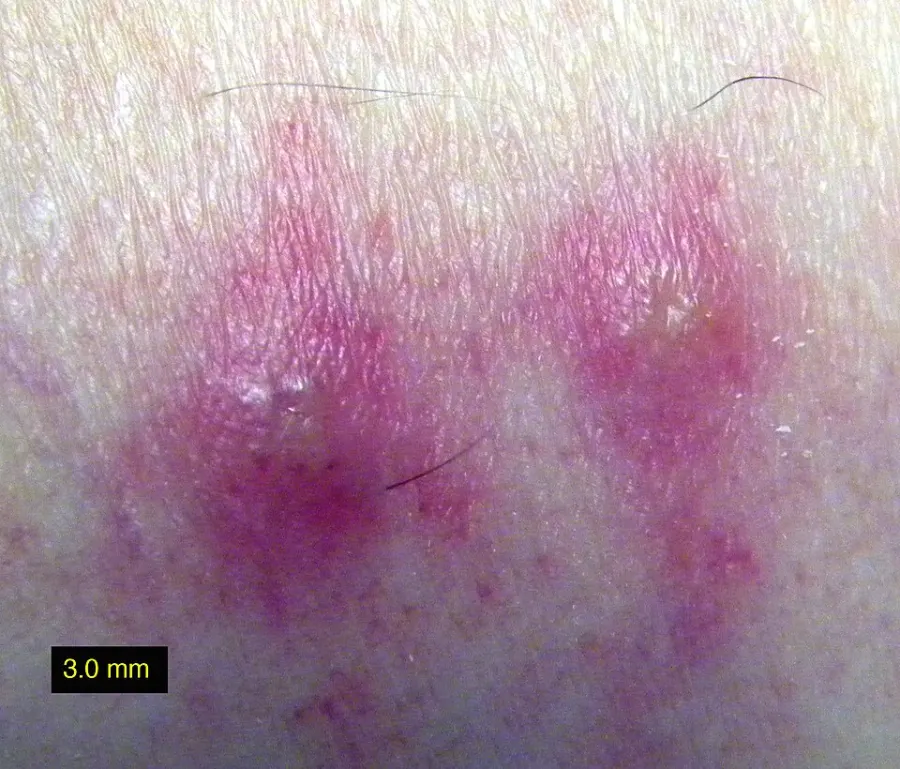
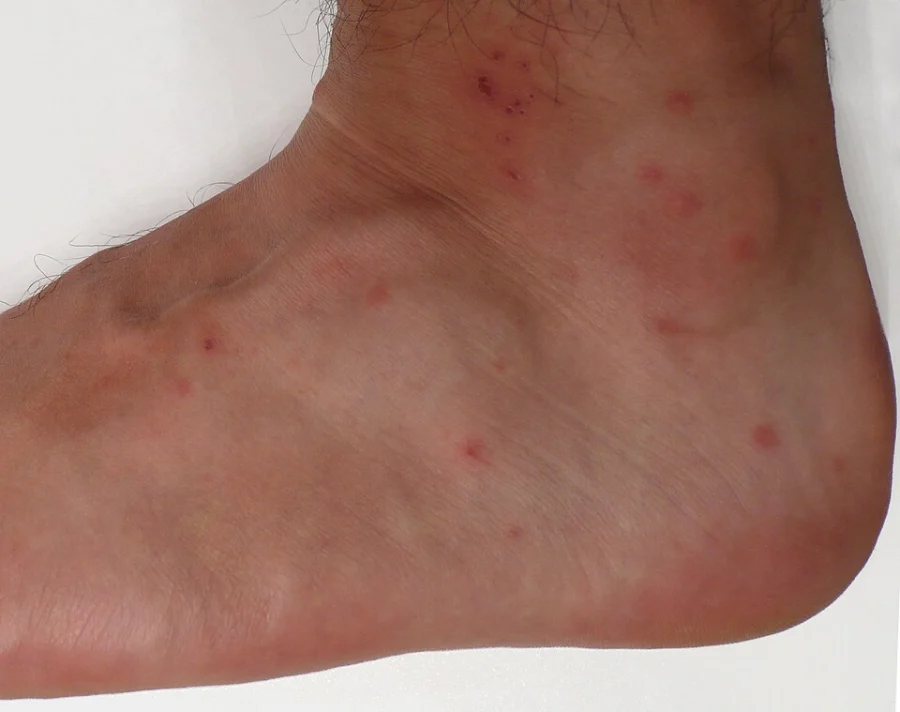
MedlinePlus, the US National Library of Medicine’s health site, lists severe itching and red, pimple-like bumps or hives as the main symptoms, and notes the bite itself is painless. The University of Kentucky says a bite can be red and slightly raised, can have a red dot in a sunken center, or can form a pustule that pops like a blister, and people react differently.
Location is the best clue. MedlinePlus says chiggers bite around the waist, the ankles and warm skin folds; the University of Kentucky adds the backs of the knees, groin, armpits and bra lines. Cleveland Clinic notes that bites often form a line along the seams of tight-fitting clothing. Wizzie Brown of Texas A&M AgriLife Extension explains why: chiggers prefer places where skin is thinnest or where clothing fits tightly.
How Long Chigger Bites Itch
Sources disagree on the exact hours, partly because some count from attachment and others from feeding. We lined up what each says. The pattern holds: the itch starts within hours, peaks over a day or two, and fades over one to two weeks.
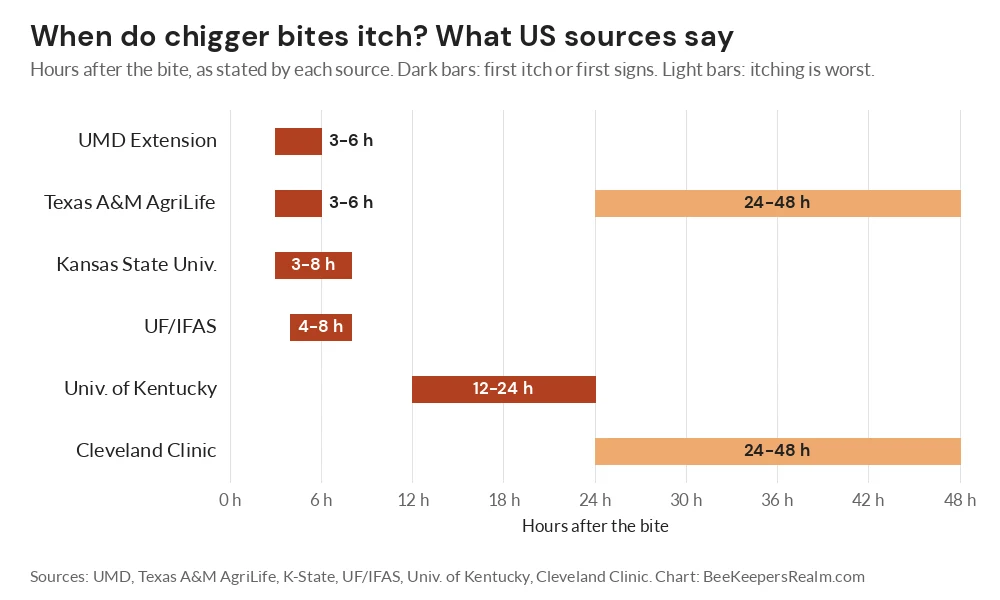
| Source | Itch starts | Itch is worst | How long it lasts | Feeding time |
|---|---|---|---|---|
| University of Maryland Extension | 3 to 6 hours after attachment | Not stated | Up to 2 weeks | Up to 3 days |
| Texas A&M AgriLife | Within 3 to 6 hours | 24 to 48 hours | A week or more | Often no more than 1 or 2 days on people |
| Kansas State University | 3 to 8 hours after feeding | Not stated | More than a week | 2 to 4 days |
| UF/IFAS (Florida) | 4 to 8 hours | Not stated | Welts may last 2 weeks | On people, usually dislodged or dead within hours |
| University of Kentucky | Effects may not appear for 12 to 24 hours | Not stated | About 10 to 14 days | 2 to 4 days |
| Cleveland Clinic | Not stated in hours | First 24 to 48 hours | Stops after about 2 weeks | Not stated |
| University of Missouri Extension | Usually within hours | Not stated | Not stated | 3 or 4 days if undisturbed |
| MedlinePlus | Several hours after attaching | Not stated | Not stated | Not stated |
Source: each organization’s chigger page or fact sheet, linked in the Sources list. “Not stated” means the source gives no figure.
Because the itch lags, UF/IFAS notes, it is not always possible to prevent welts completely; a prompt shower is your best chance.
Chigger Bites vs Other Bites
Location and timing separate chigger bites from most look-alikes. This table uses each source’s own description. Fire ants sting rather than bite; for bee and wasp stings, see our guide to treating a bee or wasp sting.
| Bite | Where on body | Pattern | When it itches | Source |
|---|---|---|---|---|
| Chigger | Ankles, waist, backs of knees, groin, armpits, warm skin folds | Clusters, or a line along the seams of tight clothing | Within hours; worst at 24 to 48 hours; fades over about 2 weeks | MedlinePlus; University of Kentucky; Cleveland Clinic |
| Mosquito | Exposed skin, such as arms and legs | A puffy, reddish bump; one or several | Bump within minutes; a hard, itchy bump a day or so later | CDC; Cleveland Clinic |
| Flea | Legs, waist, buttocks, thighs, lower abdomen | Small red bumps, often three together | Very itchy; no timing given | MedlinePlus |
| Bed bug | Any skin in contact with the bed: arms, legs, face, back | Random, a straight line or a zigzag | Marks 1 to several days later; first-time reactions can take up to 14 days | CDC; American Academy of Dermatology; Cleveland Clinic |
| Fire ant (sting) | Skin the ants reach after a mound is disturbed | A hive or lump, then a blister that looks pus-filled | Pain and itch at once; lump fades in 30 to 60 minutes; blister within 4 hours | ACAAI; MedlinePlus |
| Horse fly | Legs and body (horse flies); shoulders and head (deer flies) | A raised, red area; may bleed a little | Pain is the first sign; usually heals within days | Purdue Extension; Cleveland Clinic |
Source: CDC, MedlinePlus, American Academy of Dermatology, American College of Allergy, Asthma and Immunology (ACAAI), Purdue Extension, University of Kentucky and Cleveland Clinic pages listed under Sources.
In short: chigger bites cluster at the waistband or sock line after time in grass or brush, bed bug bites appear on skin that touched the bed, and flea bites gather on the legs. Kissing bug bites usually come at night, often on the face, neck, arms and legs. If a rash fits none of these, ask a clinician.
Relief and When to See a Doctor
Most chigger bites heal on their own. The sources agree on a few steps.
- Wash first. The University of Maryland Extension says lathering and rinsing several times in a hot shower is the best way to remove any remaining chiggers. University of Missouri Extension recommends a warm shower with a vigorous skin massage within an hour or two of exposure.
- Clean the bumps. UF/IFAS advises applying antiseptic to welts that appear.
- Calm the itch. MedlinePlus says antihistamines and corticosteroid creams or lotions may be helpful. Cleveland Clinic mentions anti-itch creams such as calamine lotion. Ask a pharmacist which product and dose suits you, especially for children.
- Don’t scratch. The University of Maryland Extension and MedlinePlus both warn that scratching can lead to a secondary skin infection.
MedlinePlus says antibiotics are not needed unless the skin becomes infected. It advises contacting a provider if the rash itches very badly, gets worse, or does not improve with treatment. Cleveland Clinic adds seeing a provider if the itch causes extreme discomfort, bites turn into open wounds, itching lasts more than two weeks, or the skin around a bite swells or leaks pus.
Some people react more strongly than others. UF/IFAS notes that some people have an allergic reaction to the fluid chiggers inject, and the University of Maryland Extension suggests asking your physician to recommend a cream or ointment.
Do Chiggers Spread Disease?
The University of Maryland Extension says chiggers are not known to transmit any infectious diseases in the United States. Clemson’s Home and Garden Information Center says the same, and Kansas State University states that US chiggers do not transmit diseases.
The research picture is less settled. A 2022 review by North Carolina State University entomologists notes that chiggers are reported to harbor microbes including Rickettsia and Borrelia, and concludes that “The role that chiggers play in disease transmission dynamics in the US is essentially unknown” (Chen, Roe and Ponnusamy, 2022).
Abroad, chiggers do spread disease. The CDC’s scrub typhus page (published May 15, 2024) says scrub typhus spreads through bites of infected chiggers, with most cases in rural Southeast Asia, Indonesia, China, Japan, the Indian subcontinent and northern Australia. If symptoms develop after time in those areas, the CDC advises seeing a healthcare provider and saying where and when you traveled.
Where and When Chiggers Live
MedlinePlus lists berry patches, tall grass and weeds, and woodland edges. University of Missouri Extension says chiggers favor damp areas with low shrubs, tall grass and weeds, and are patchy even there. The University of Maryland Extension says they are most often found in transition zones, such as where forest meets grass, swamp margins and brush thickets, and even in home lawns and golf courses.
Temperature sets the season. The University of Kentucky and Ohio State say adults overwinter in the soil and emerge to mate at about 60°F. After that, timing depends on where you live.
| Region | When chiggers are active | Generations per year | Source |
|---|---|---|---|
| Florida | Active from spring; may be active all year in South Florida | 1 to 5 | UF/IFAS |
| Texas | Late spring to fall; may stay active year-round in southern areas | Up to 4 in southern areas | Texas A&M AgriLife |
| North Carolina | Not stated | 3 (E. alfreddugesi) | 2022 review, citing Wharton and Fuller |
| Kentucky | Bites possible all growing season; peaks in spring and late summer | Multiple | University of Kentucky |
| Missouri | May until the first killing frost | 2 to 3 | University of Missouri Extension |
| Kansas | Early spring through late fall | Not stated | Kansas State University |
| Iowa | Spring to late fall; most numerous in early summer | Not stated | Iowa State University |
| Ohio | Greatest numbers June through August | 1 to 2 (E. alfreddugesi) | Ohio State University; 2022 review |
Source: each extension fact sheet listed under Sources; generation counts for North Carolina and Ohio come from the 2022 review by Chen, Roe and Ponnusamy.
The further south you are, the longer the season. For the Midwest, these sources point to spring through the first killing frost, with the most chiggers in early to mid summer. The 2022 review cites a study in which E. alfreddugesi numbers peaked in late June to early July.
How to Prevent Chigger Bites
The steps overlap with tick and mosquito protection.
- Use a skin repellent. The University of Kentucky lists DEET, picaridin, IR3535 and oil of lemon eucalyptus. The CDC advises EPA-registered repellents containing DEET or other ingredients registered for use against chiggers, and the EPA’s repellent search tool compares registered products by protection time. Follow the label.
- Treat clothing, not skin, with permethrin. The CDC says to treat clothing and gear with 0.5% permethrin or buy treated items, notes that “Permethrin kills chiggers,” and warns not to use permethrin products directly on skin.
- Close the gaps. University of Missouri Extension suggests tightly woven fabrics, pant legs tucked into boots, and buttoned cuffs and collars, and advises against shorts and sandals in chigger habitat.
- Stay off the ground. Iowa State advises against sitting or lying directly on the ground; the University of Kentucky suggests sticking to managed trails.
- Shower and wash. Kansas State University advises a hot shower as soon as possible and washing clothes in hot water.
How to Get Rid of Chiggers in the Yard
First, check whether you have them. Ohio State suggests laying a square of black paper or cardboard in the grass for 10 minutes; the yellowish-red mites show up against the black. Test several spots, since chiggers are patchy.
- Mow regularly. Texas A&M AgriLife says short grass and trimmed vegetation can raise soil temperatures and lower humidity enough to make lawns less hospitable to chiggers.
- Clear brush and let light in. The University of Kentucky says brush removal, mowing and more light reduce chigger habitat and habitat for the animals that carry them.
- Mind the hosts. AgriLife notes that wild mammals, birds and reptiles can sustain chiggers in backyards.
Insecticides are a short-term last resort. The University of Maryland Extension says pesticides for chiggers are “not recommended or effective.” Ohio State says insecticide is not generally recommended because populations can rebound, though hot-spot treatment gives short-term knockdown. University of Missouri Extension says treating the entire lawn is of little benefit, because chiggers avoid direct sunlight and normally will not infest mowed areas; if you treat, it advises one application to unkempt areas and lawn edges between late April and mid-June. Follow the label, and never apply to flowering plants in bloom.
What about diatomaceous earth? Some popular guides and search answers recommend it, but none of the 10 extension chigger pages we cite mention it, so we cannot point to evidence that it works on chiggers.
Chigger Control and Bees
Ohio State names bifenthrin and permethrin as the active ingredients in over-the-counter chigger products, and warns that broad-spectrum insecticides like these put beneficial predators and pollinators at risk. Its fact sheet gives clear rules for anyone who decides to spray:
“To reduce impacts to beneficial insects, follow the label instructions carefully, do not apply where flowers are actively blooming, and avoid spraying when pollinators are actively flying.”
Lawns with flowering clover or dandelions draw foraging bees, which is why the bloom rule matters for any lawn spray. Our guide to pollinator-safe pest control explains the label’s bee-hazard box and application timing, and our DriftWatch and BeeCheck guide shows how beekeepers can register hives so applicators know where they are.
Pollinator lawns and chigger control can coexist. If you join No Mow May or turn part of your lawn into pollinator habitat, keep mowed paths through it, wear repellent in the tall areas and shower afterward. For other garden pests, browse our garden and household insects section.
Frequently Asked Questions
How do you get rid of chiggers on you?
Take a hot shower and lather several times, which the University of Maryland Extension calls the best way to remove remaining chiggers, then wash your clothes in hot water. Chiggers are on the skin, not in it, so there is nothing to dig out.
How long do chiggers stay on you?
Not long. UF/IFAS says chiggers on people are usually dislodged or die within hours, and Texas A&M AgriLife says they often do not survive more than 1 or 2 days on a person. On animal hosts they feed for 2 to 4 days.
How do you know you got chiggers?
Look for very itchy red bumps that appear hours after time in grass, brush or woods, clustered at the sock line, waistband, groin, armpits or backs of the knees. You rarely see the chigger itself; Kansas State gives the larva’s length as about 1/128 inch.
Where are chiggers most common?
The 2022 review found chiggers reported in every US state except Hawaii, with the most species in the Southwest: California (97 species) and Texas (74) top the list. Within a yard or park they cluster in damp, overgrown spots such as woodland edges, brush, berry patches and tall grass.
What could be mistaken for chigger bites?
Cleveland Clinic compares chigger bites with bed bug, flea and mosquito bites; our comparison table shows how location and timing differ. Ohio State notes that red velvet, concrete and clover mites are often mistaken for chiggers themselves.
What is the fastest way to cure chigger bites?
None of our sources offers an instant cure; the itch usually runs its course in one to two weeks. MedlinePlus says antihistamines and corticosteroid creams or lotions may help. Ask a pharmacist about products, and see a provider if bites worsen or look infected.
How long do chigger bites last?
Most sources say one to two weeks. The University of Kentucky estimates about 10 to 14 days of symptoms, and Cleveland Clinic says the itch is worst in the first 24 to 48 hours and stops after about two weeks.
The Bottom Line
Chiggers are larval mites that bite where clothing is tight, and they never burrow or drink blood. The itch starts within hours, peaks in a day or two and fades within about two weeks. Repellent, permethrin-treated clothing and a hot shower prevent most bites. In the yard, mowing and clearing brush beat spraying, and any insecticide should stay off plants in bloom.
Sources
- University of Kentucky Entomology, Jonathan L. Larson, “Dealing with Chiggers in the Landscape” (ENTFACT-630).
- Ohio State University Extension, Ashley Kulhanek, “Chiggers” (ANR-0182, 2025).
- Texas A&M AgriLife Extension, “Chiggers“; Wizzie Brown, “Chiggers” (2022).
- University of Missouri Extension, “Chiggers” (G7398).
- University of Maryland Extension, “Chiggers” (updated April 16, 2026).
- Iowa State University Extension and Outreach, “Chiggers.”
- Clemson Cooperative Extension Home and Garden Information Center, “Chiggers.”
- UF/IFAS, Koehler, Oi and Chaskopoulou, “Chiggers” (IG085).
- Kansas State University, Raymond Cloyd, “Chiggers in Kansas” (MF2107).
- MedlinePlus, “Chiggers,” “Fleas” and “Fire ant bite.”
- CDC, “About Scrub Typhus” (May 15, 2024), “About Mosquito Bites” and “About Bed Bugs.”
- Chen K, Roe RM, Ponnusamy L, “Biology, Systematics, Microbiome, Pathogen Transmission and Control of Chiggers (Acari: Trombiculidae, Leeuwenhoekiidae) with Emphasis on the United States,” Int J Environ Res Public Health, 2022.
- American Academy of Dermatology, “Bedbugs: Signs and Symptoms.”
- American College of Allergy, Asthma and Immunology, “Insect Sting Allergies.”
- Cleveland Clinic, “Chigger Bites” and “Horsefly Bite.”
- Purdue Extension, “Horse Flies and Deer Flies” (E-246).
- US EPA, “Find the Repellent That Is Right for You.”
Image credits: Featured image combines an adult trombiculid mite photographed in Oklahoma by Thomas Shahan via Wikimedia Commons, CC BY 2.0, and a larva of the European harvest mite (Neotrombicula autumnalis) photographed in Germany by Arne100 via Wikimedia Commons, CC BY-SA 4.0, both cropped and labeled; the composite is shared under CC BY-SA 4.0. The itch-timing chart is our own. Other images are credited in their captions.