Reviewed by Michael R. · How we review
Crickets are long-antennaed, jumping insects in the order Orthoptera whose males “sing” by rubbing one wing against the other. The ones Americans meet most are field crickets and house crickets (true crickets, family Gryllidae) and the wingless, silent camel crickets of basements, which belong to a different family. Extension entomologists say crickets do not harm people, but field and house crickets can chew fabric indoors.
Key Takeaways
- True crickets have three-segmented feet, ears on their front legs and antennae at least as long as the body (NC State University). Camel crickets and mole crickets are separate families.
- Count chirps for 15 seconds and add 40 to estimate °F. That shortcut is exactly A. E. Dolbear’s 1897 formula; it works best on a steady chorus.
- In US iNaturalist records, the introduced greenhouse camel cricket (9,830) and tropical house cricket (7,026) far outnumber the European house cricket (431).
- Field crickets peak from August to October and nearly vanish by December; greenhouse camel cricket records stay high through November.
- Seal gaps, use yellow outdoor bulbs, dry damp basements and set sticky traps. UMN Extension says pesticides are generally not effective or necessary indoors.
Table of Contents
- What Makes an Insect a Cricket
- Common US Crickets and How to Identify Them
- Which Crickets Americans Actually Find: Our iNaturalist Count
- Why and How Crickets Chirp
- Cricket Chirps and Temperature: Dolbear’s Formula
- Why Crickets Come Into the House in Fall
- Do Crickets Bite or Cause Damage?
- How to Get Rid of Crickets in the House
- What Eats Crickets
- Frequently Asked Questions
What Makes an Insect a Cricket
Crickets share the order Orthoptera with grasshoppers and katydids. Like the bees and other insects on this site, they have six legs and three body parts. Britannica counts about 2,400 species, 3 to 50 mm (0.12 to 2 inches) long. NC State University gives three spot-ID features for true crickets: three-segmented feet, an eardrum on each front leg, and thread-like antennae at least as long as the body. Females carry a harmless, needle-like ovipositor (Missouri Department of Conservation, MDC).
The University of Kentucky sorts the crickets people meet into three families: Gryllidae (field, house and tree crickets), camel and cave crickets, and Gryllotalpidae (mole crickets). For relatives, see our katydid guide and grasshopper guide.
Video: KQED’s Deep Look films singing crickets up close to show that the sound comes from the wings, not the legs. Going by the episode’s official chapter list and KQED’s companion article, it then covers rivalry calls, female anatomy, courtship and the life cycle.
Common US Crickets and How to Identify Them
| Cricket | Key features | Body length | Where you find it | Chirps? | Source |
|---|---|---|---|---|---|
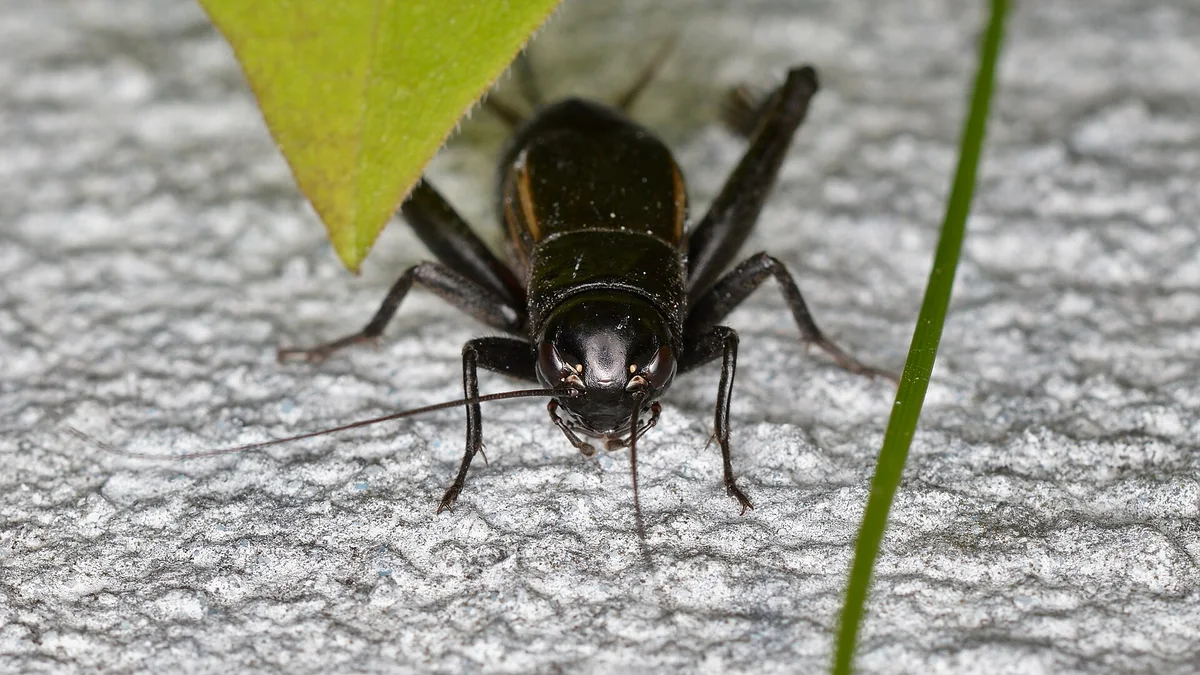
| Field crickets (Gryllus) | Shiny black or dark brown, round head, wings nearly cover the body | About 1/2 to 1 inch | Lawns, fields, foundations; drawn to light | Yes, chirps or trills | MDC, UMN Extension |
| House cricket (Acheta domesticus) | Light yellowish-brown; three dark bands across the head; wings reach past the abdomen | About 3/4 inch | Buildings, dumps; strongly drawn to light | Yes | UMN Extension, MDC |
| Tropical house cricket (Gryllodes sigillatus) | Light yellowish tan with two thick black bands; females wingless | About 1/2 to 3/4 inch (13 to 18 mm) | Introduced; spread through warm regions worldwide | Yes (males) | Wikipedia, iNaturalist |
| Camel or cave crickets (Rhaphidophoridae) | Tan to dark brown, humpbacked, wingless, very long legs and antennae | About 3/4 to 1 inch, up to 1 1/2 inches | Basements, crawl spaces, garages, caves; not drawn to light | No | MDC, UMN Extension, Univ. of Kentucky |
| Tree crickets (Oecanthus) | Pale green or white with clear wings | Slender build | Trees, shrubs and tall plants | Yes, mostly long trills | Britannica, Univ. of Kentucky |
| Mole crickets (Gryllotalpidae) | Broad, shovel-like front legs for digging | Up to 2 inches | Underground in lawns and soft soil | Varies by species | Univ. of Kentucky |
Field crickets
These are the robust black crickets most people picture, 1/2 to 3/4 inch long by UMN Extension’s measure. The fall field cricket (Gryllus pennsylvanicus) is the most recorded Gryllus species in the US. MDC notes that Gryllus species “are often best separated by singing pattern.”
House crickets and tropical house crickets
The house cricket was introduced to North America from Europe and is raised as fish bait and pet food (University of Kentucky). Look for the three dark bands across its tan head.
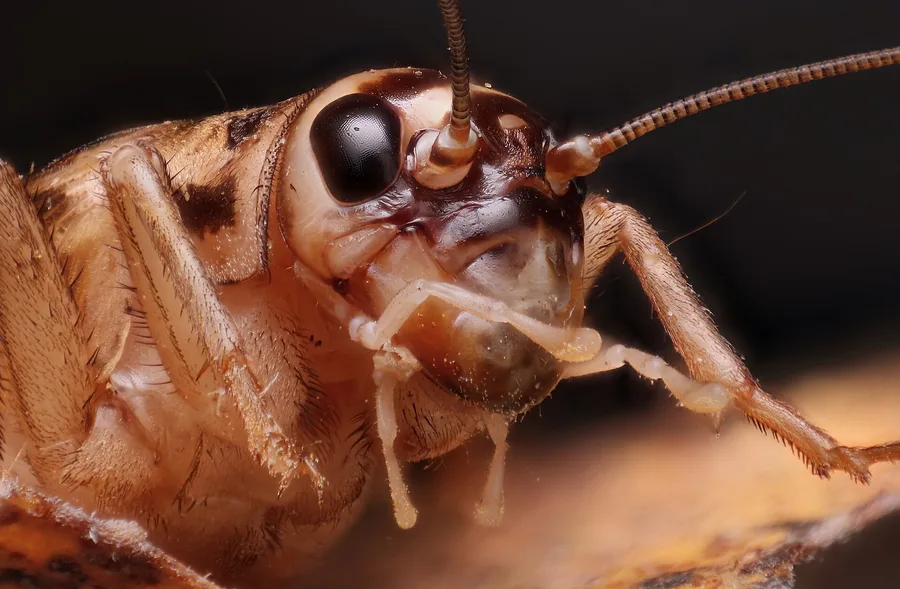
A smaller tan cricket is far more common in US records: the tropical house cricket, which iNaturalist lists as introduced. Wikipedia describes it as light yellowish tan with two thick black bands and wingless females.
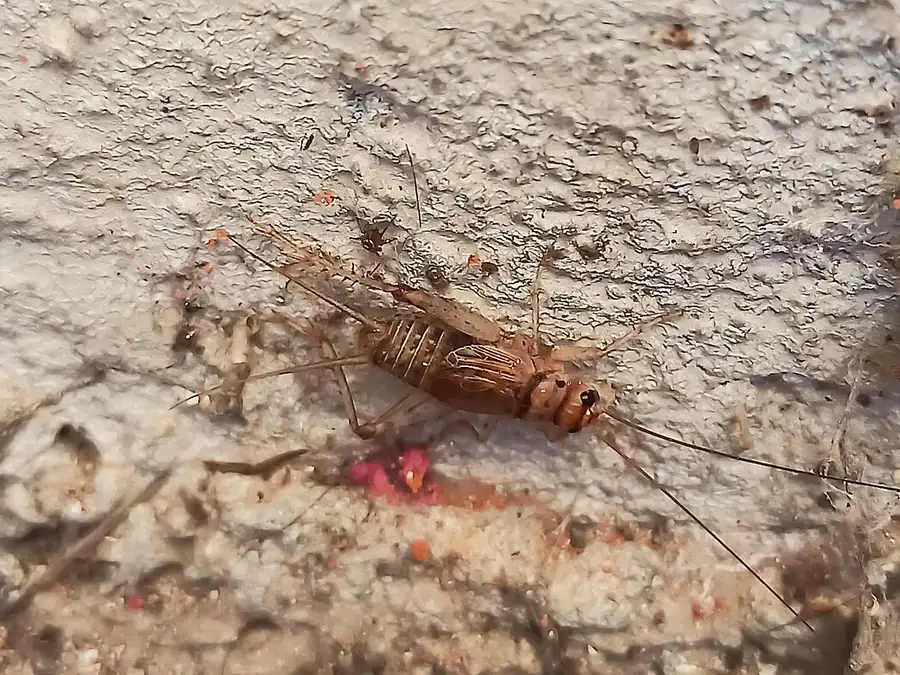
Camel crickets (spider crickets)
MDC counts about 150 camel and cave cricket species in North America and says they “are wingless and lack the ability to fly or chirp.” Long legs and antennae earn them the name “spider crickets.” Most camel crickets in eastern US homes today are an Asian species, the greenhouse camel cricket (Diestrammena asynamora, listed on iNaturalist as Tachycines asynamorus).
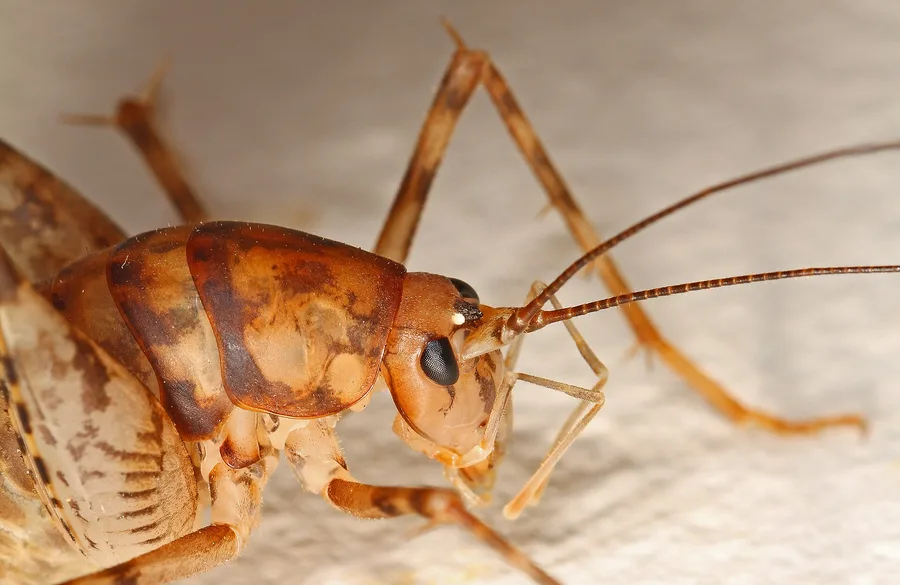
Native camel crickets, mostly Ceuthophilus, live under logs and stones, in caves and in cool, damp cellars (MDC, UMN Extension).
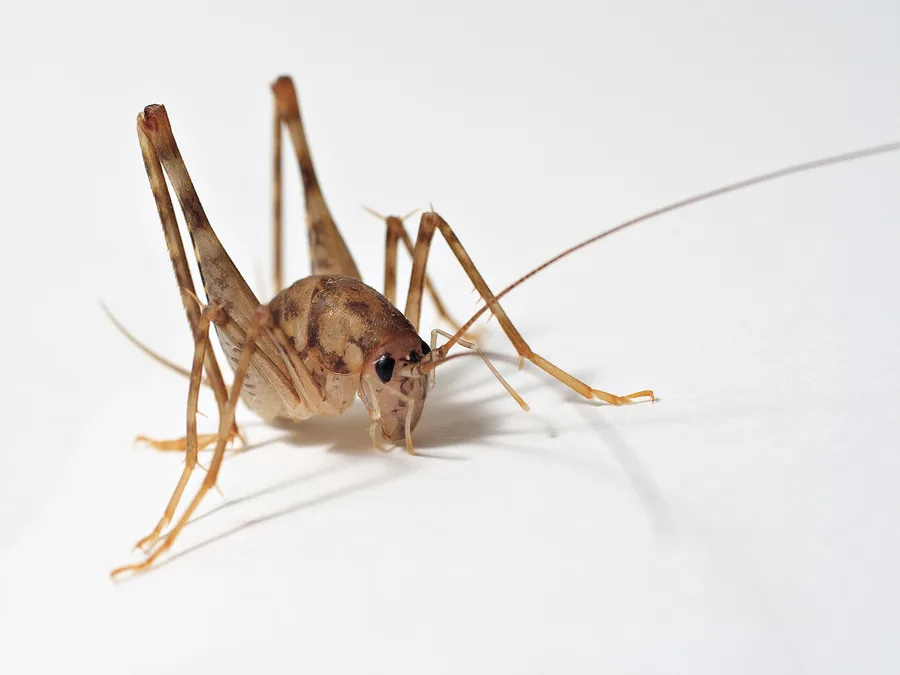
Tree crickets and mole crickets
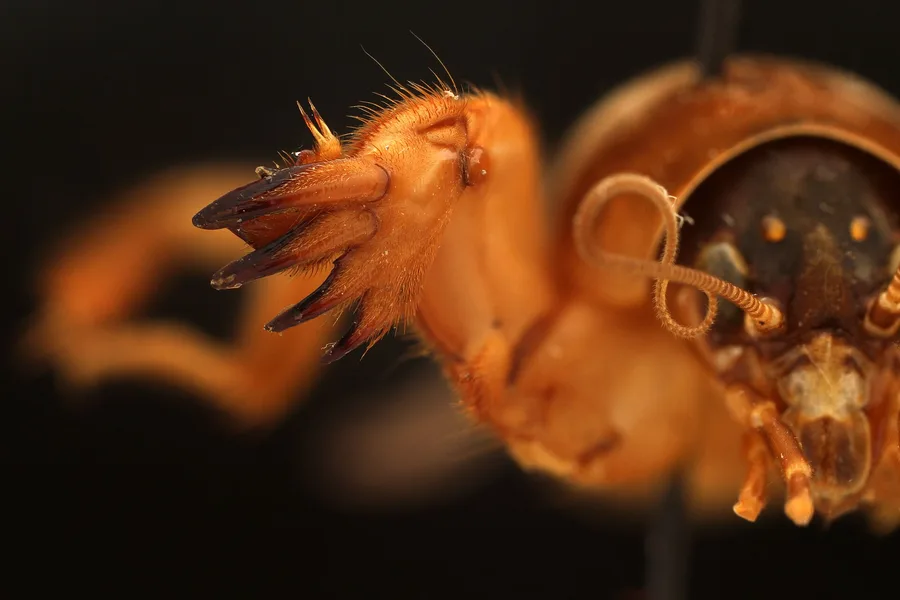
Tree crickets live on plants, not in houses. Britannica notes they eat aphids, though females injure twigs when laying eggs (see our aphids guide). Mole crickets “spend their time burrowing underground and feeding on plant roots,” says the University of Kentucky.
Which Crickets Americans Actually Find: Our iNaturalist Count
On November 22, 2026 we pulled US research-grade iNaturalist counts for the true crickets and allies (superfamily Grylloidea, 77,518 records), camel crickets (17,261) and mole crickets (4,486), and ranked the species.

- The “house cricket” usually isn’t one. Tropical house cricket records outnumber the European house cricket about 16 to 1.
- Camel crickets are mostly Asian imports. The greenhouse camel cricket makes up 57% of US research-grade camel cricket records and the Japanese camel cricket 12%. Native Ceuthophilus are hard to identify from photos, so 14,125 of their verifiable records have not reached research grade.
- The commonest crickets live outdoors. The red-headed bush cricket and two-spotted tree cricket top the list but do not come indoors.
A continent-wide citizen science survey of camel crickets in homes found the same:
“Out of all identifiable camel cricket submissions, 88% of houses submitted evidence of the Asian genus Diestrammena.”
In that study, 24.4% of households in the unbiased survey reported camel crickets, far more often east of Colorado (28%) than in western states (7%).
Why and How Crickets Chirp
Only adult males chirp (Clemson). Britannica explains that a male rubs a scraper on one forewing along a file of about 50 to 250 teeth on the other. Songs of Insects notes that most male crickets are “right-handed singers,” right forewing on top, the reverse of most katydids. Britannica lists three main songs: a calling song that draws females, a courtship song, and a fighting chirp that warns off rivals. For a singer that uses a different organ, see our cicada guide.
Cricket Chirps and Temperature: Dolbear’s Formula
Britannica notes a direct relationship between chirp rate and temperature. In 1897 the physicist A. E. Dolbear put numbers on it in a one-page note:
“The rate of chirp seems to be entirely determined by the temperature and this to such a degree that one may easily compute the temperature when the number of chirps per minute is known.”
Dolbear gave 80 chirps a minute at 60°F and 120 at 70°F, four chirps per degree, and about 40 at 50°F, below which crickets stop singing. His formula is T = 50 + (N − 40) / 4, with T in °F and N in chirps per minute; his own example, 100 chirps a minute, gives 65°F. Divide N by 4 and you get the shortcut: chirps in 15 seconds + 40 = °F.
Popular versions drift. The Old Farmer’s Almanac and Wikipedia’s cricket article say 14 seconds plus 40, and the Great Plains Nature Center says 15 seconds plus 37. Fifteen seconds plus 40 matches Dolbear’s numbers, and it is the version Britannica gives.
| Chirps in 15 seconds | Chirps per minute | Estimated temperature |
|---|---|---|
| 10 | 40 | 50°F (10°C) |
| 20 | 80 | 60°F (16°C) |
| 25 | 100 | 65°F (18°C) |
| 30 | 120 | 70°F (21°C) |
| 35 | 140 | 75°F (24°C) |
| 40 | 160 | 80°F (27°C) |
Which cricket? Dolbear never named one. He described whole fields chirping in time “as if led by the wand of a conductor” and noted that a lone cricket “chirps with no great regularity,” so count a chorus and treat a single basement cricket as a rough guide. Britannica calls the snowy tree cricket (Oecanthus fultoni) “the thermometer cricket.”
Why Crickets Come Into the House in Fall
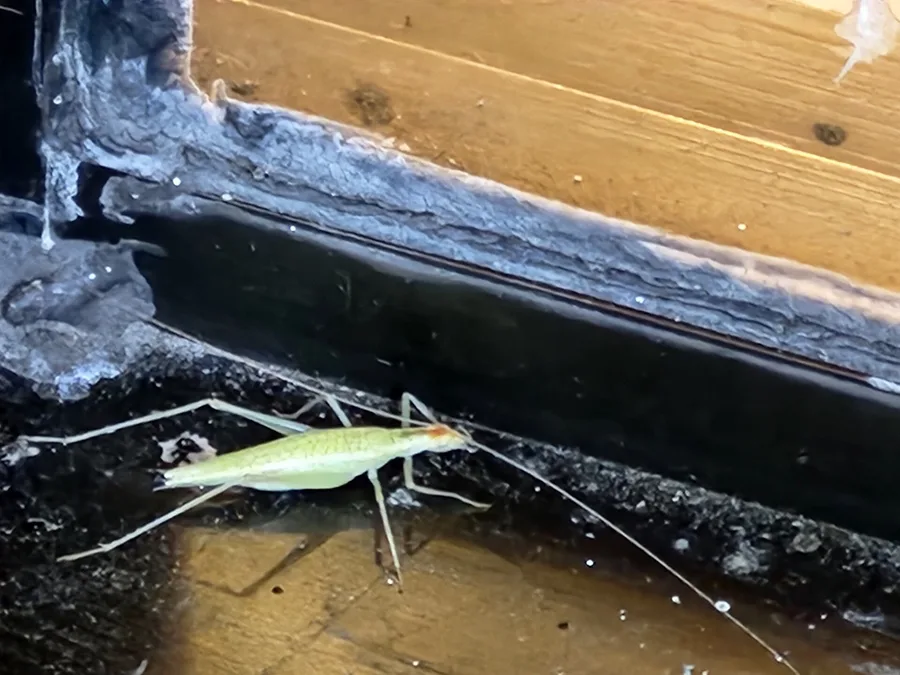
Most field and house cricket species overwinter as eggs (MDC), and the adults die with winter (Great Plains Nature Center). UMN Extension says crickets “may accidentally enter homes, especially in late summer and fall,” and Clemson’s Home & Garden Information Center adds that many are drawn to places “where the moisture level is high and stable.”
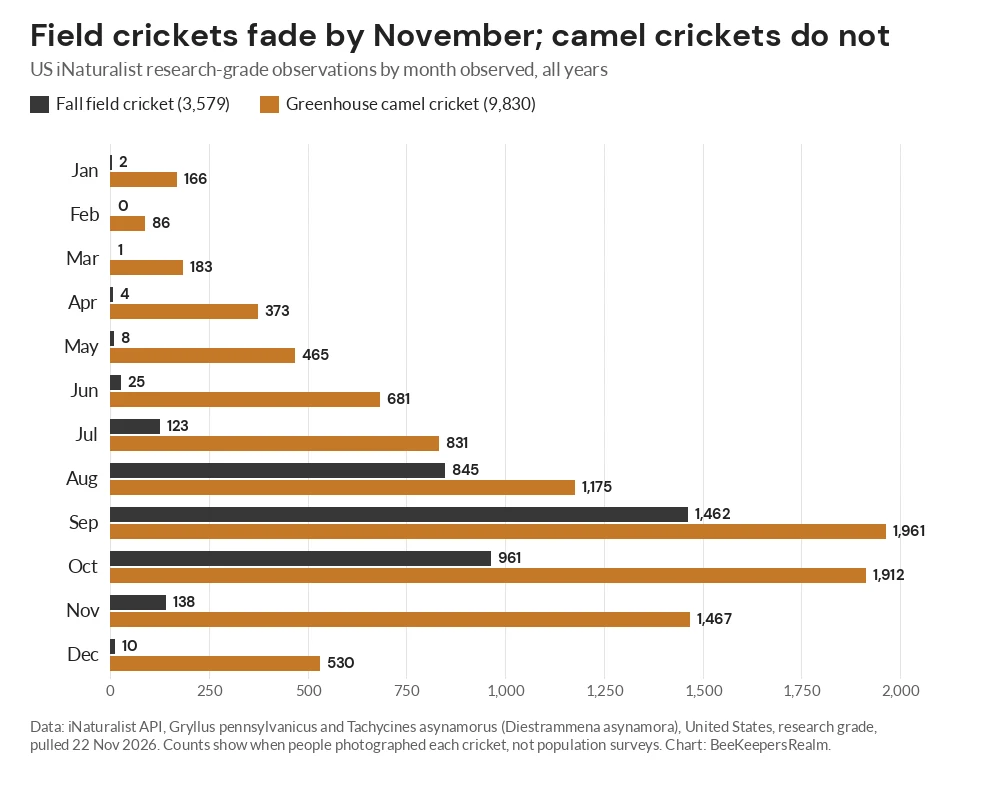
Our iNaturalist data show the split: 91% of US fall field cricket records fall in August to October, and only 148 come from November and December combined. Greenhouse camel crickets, which live in and around houses, are recorded all year, with 1,997 records in November and December alone.
- Field crickets lay eggs in soil, so they rarely build up inside (Clemson).
- House crickets “can spend their whole lives inside buildings” (Clemson), though UMN says crickets rarely reproduce indoors in Minnesota.
- Camel crickets rarely breed indoors unless it is dark and damp enough (MDC).
“If these crickets are numerous in your basement, it could mean you have a moisture problem that should be addressed.”
Crickets share that habit with silverfish and millipedes, so drying the basement helps with all three.
Do Crickets Bite or Cause Damage?
The University of Kentucky says field and house crickets “do not infest food or harm humans,” and calls camel crickets harmless. The damage is to fabric. Clemson says indoor crickets can feed on fabrics, leather and fur, especially items “soiled with food, beverages or perspiration,” and UMN warns that numerous house crickets “can cause severe damage” to silk and wool.
Outdoors, UC IPM says crickets are “rarely serious enough to require control in gardens,” though large numbers can destroy rows of seedlings; row covers stop that.
How to Get Rid of Crickets in the House
Educational information, not professional pest control advice. If you use any pesticide, follow its label, which is the law.
- Seal the way in. Caulk foundation cracks and gaps around doors, ground-level windows and vents, and repair screens (UMN, Clemson).
- Change the lights. Turn off unneeded outdoor lights or use yellow or sodium vapor bulbs, which attract fewer field and house crickets (Clemson, UMN).
- Dry the basement. A fan or dehumidifier is “especially effective for camel crickets” (UMN).
- Clear the foundation. Mow tall grass and weeds, pull heavy mulch back, and move firewood and debris away from the walls (UMN, Clemson).
- Trap and vacuum. Sticky traps along walls and entry points catch crickets, especially camel crickets. Vacuum the rest and empty the bag outside (Clemson).
- Keep sprays as a last resort. UMN says pesticides “are generally not effective or necessary indoors,” and Clemson limits indoor treatment to large infestations, in cracks and crevices only.
Mind the bees outdoors. UMN’s foundation-band products (permethrin, beta-cyfluthrin, deltamethrin) are pyrethroids, which the extension ratings in our bee-safe Japanese beetle guide list as toxic to bees. Keep any treatment off open flowers and flowering weeds.
What Eats Crickets
Spiders, centipedes, birds, reptiles, amphibians and small mammals all eat crickets (University of Kentucky). Indoors, the house centipede hunts them. Outdoors, the great golden digger wasp paralyzes crickets, katydids and grasshoppers to stock its nest, and praying mantises take them too.
Wild tarantulas hunt crickets and other insects at night; our tarantula guide covers what they eat and when they are out.
Root weevils are another summer visitor that wanders indoors but cannot breed there; our weevil guide explains what to do.
Camel crickets share damp basements with Oriental cockroaches; our cockroach guide shows how to tell the two apart.
Jerusalem crickets share the order Orthoptera with true crickets but have no wings and drum instead of chirping; see our Jerusalem cricket guide.
Frequently Asked Questions
Are crickets good or bad?
Mostly good. Outdoors they scavenge plant and animal matter and feed many animals. They become a nuisance only indoors, where they chew fabric and keep people awake.
What attracts crickets to a house?
Outdoor lights, moisture and easy entry points. Field and house crickets come to bright lights; camel crickets seek damp, dark basements. Clemson notes many wander in when fall temperatures drop.
Do crickets bite?
Not in any way that matters. The University of Kentucky says field and house crickets do not harm humans, and camel crickets look fearsome but are harmless.
Why do crickets chirp at night?
Most crickets are active at night (University of Kentucky), and the calling song lets females find a male in the dark. Britannica adds that tree- and bush-dwelling crickets usually sing at night, while house and field crickets chirp day and night.
How long do crickets live?
Britannica says nymphs molt 6 to 12 times and adults usually live 6 to 8 weeks. Most field crickets live one season and die with the cold, leaving eggs in the soil.
Why does a cricket stop chirping when you get close?
Songs of Insects notes that singing males hide under rocks, leaves and debris and go silent whenever they are disturbed.
What does “crickets” mean as slang?
Silence. MDC notes the word now describes a response so quiet you can hear crickets, such as an audience that says nothing.
The Bottom Line
A chirping cricket indoors is a nuisance, not a danger. Seal gaps, dim the lights and dry the basement before reaching for a spray, and on a warm evening count a chorus for 15 seconds and add 40.
Image credits: featured photo of a female fall field cricket by Ryan Hodnett, via Wikimedia Commons, CC BY-SA 4.0, cropped and resized. Other photos are credited in their captions. Charts: BeeKeepersRealm, from iNaturalist API data pulled November 22, 2026.