Reviewed by Thomas B. · How we review
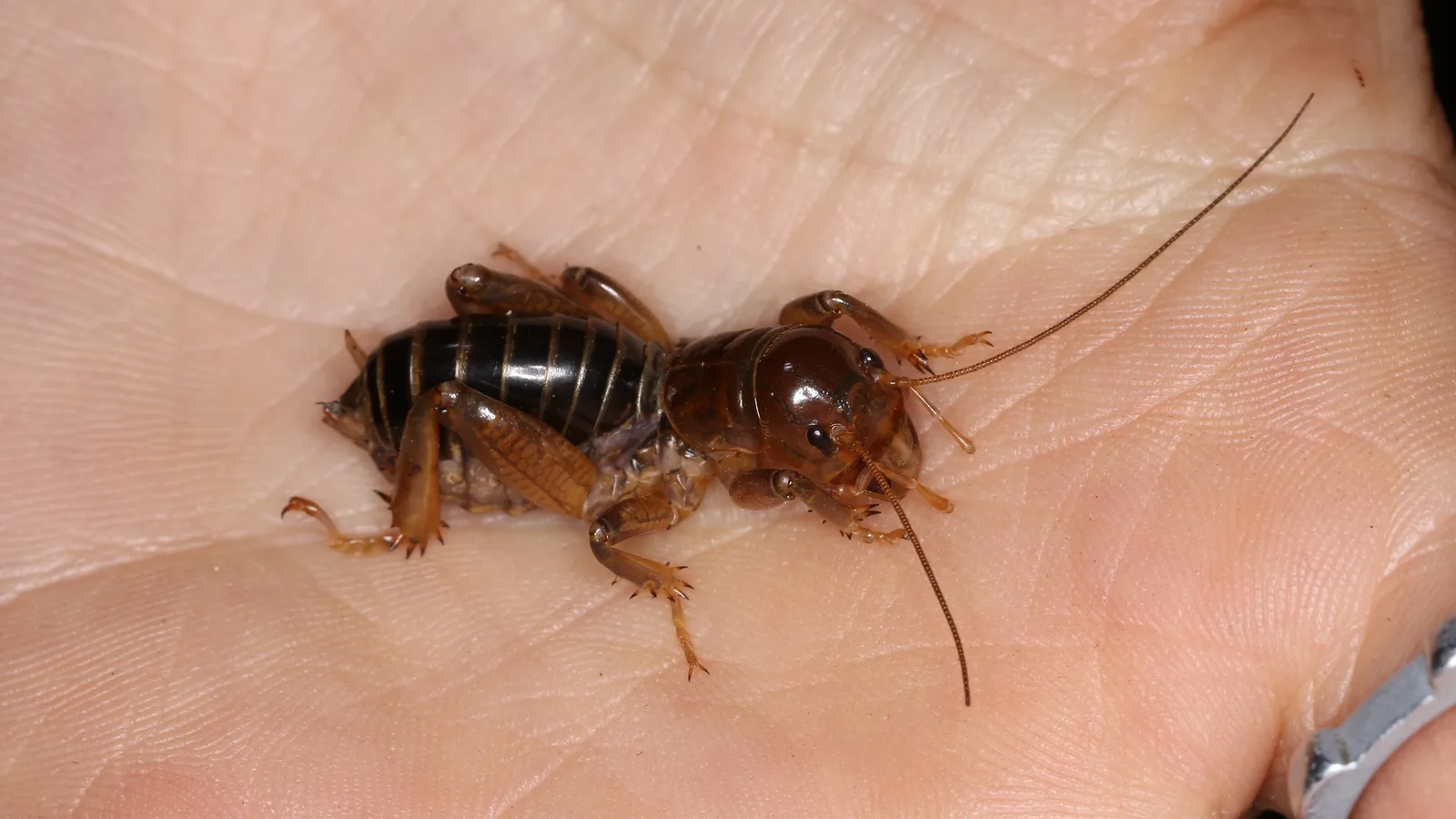
A Jerusalem cricket is a large, wingless, burrowing insect of the western United States and Mexico, also called a potato bug or niño de la tierra. It has a bald, round, humanlike head and a fat orangish abdomen ringed in black, grows to about 2 inches, and lives mostly underground, eating roots, tubers and small insects. It has no venom, but its strong jaws can give a painful bite if you grab it.
Below: identification, where and when Americans find them, garden harm, the bite, drumming and the 2026 species count, with our tally of 21,382 US iNaturalist records.
Key Takeaways
- Jerusalem crickets are not true crickets and are not from Jerusalem. They are native to the western US and Mexico (USGS).
- UC IPM calls them harmless to people and woody plants and says no control is necessary; they only occasionally damage turf, vegetables or drip tape.
- They have no venom, but a rough grab can earn a pinching bite that may draw blood.
- In our iNaturalist count, 83.6% of US records come from California, where sightings peak in October and November; Arizona’s peak in August, during the monsoon.
- A March 2026 monograph described 105 new species, and 72% of US iNaturalist photos are identified only to genus.
Table of Contents
- What a Jerusalem Cricket Is
- How to Identify a Jerusalem Cricket
- Where Jerusalem Crickets Live
- When They Turn Up: Rain, Digging and Season
- What They Eat and Whether They Harm Gardens
- Do Jerusalem Crickets Bite?
- How Jerusalem Crickets Drum to Find a Mate
- How Many Species There Are
- Why They Are Called Jerusalem Crickets and Potato Bugs
- Found One? What to Do
- Frequently Asked Questions
What a Jerusalem Cricket Is
Jerusalem crickets (family Stenopelmatidae) belong to the order Orthoptera with true crickets and grasshoppers, but they have no wings and live mostly underground. A USGS Western Ecological Research Center article describes them as native to the western United States and Mexico and often spotted in California at night.
The scientific name has changed. A 2021 revision by David Weissman, Amy Vandergast and colleagues moved all 16 described US taxa from Stenopelmatus to Ammopelmatus, leaving Stenopelmatus for species south of the border. Many pages still say Stenopelmatus fuscus; the current name is Ammopelmatus fuscus, and iNaturalist files no US record under Stenopelmatus.
Video: In this KQED Deep Look episode, a female drums her abdomen on the ground and a male answers, sensing the beat through receptors in his legs. Going by the transcript, she draws out her reply so he can find her, the narrator says people could hear her about 50 feet away, and the pair then mate.
How to Identify a Jerusalem Cricket
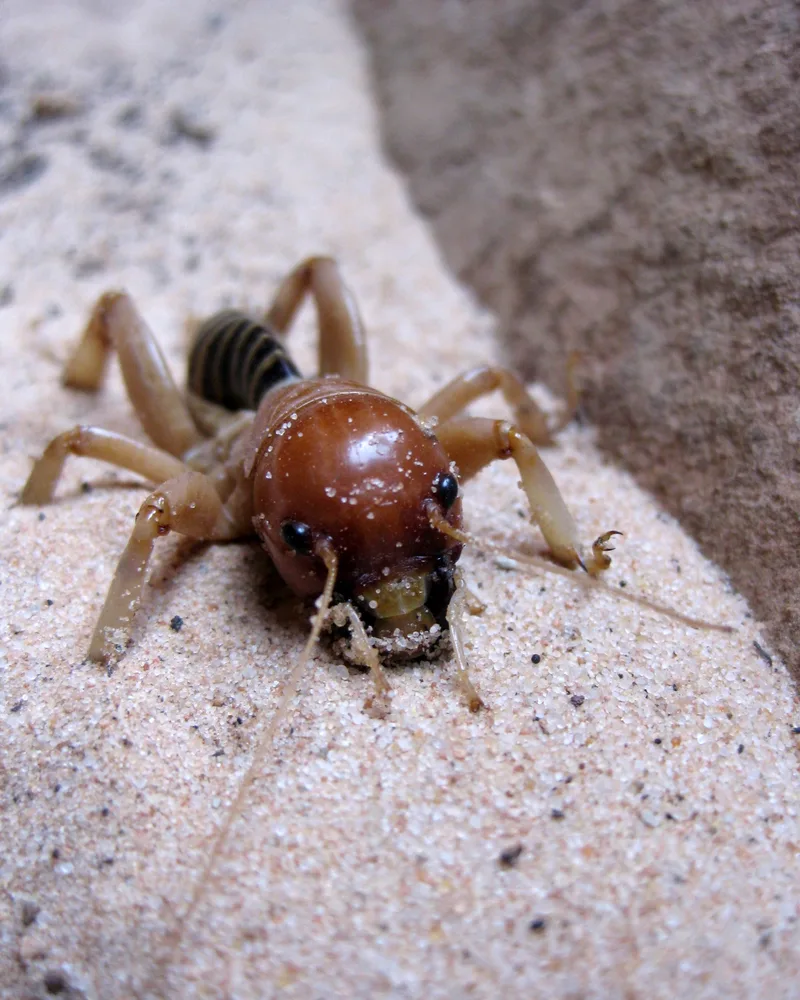
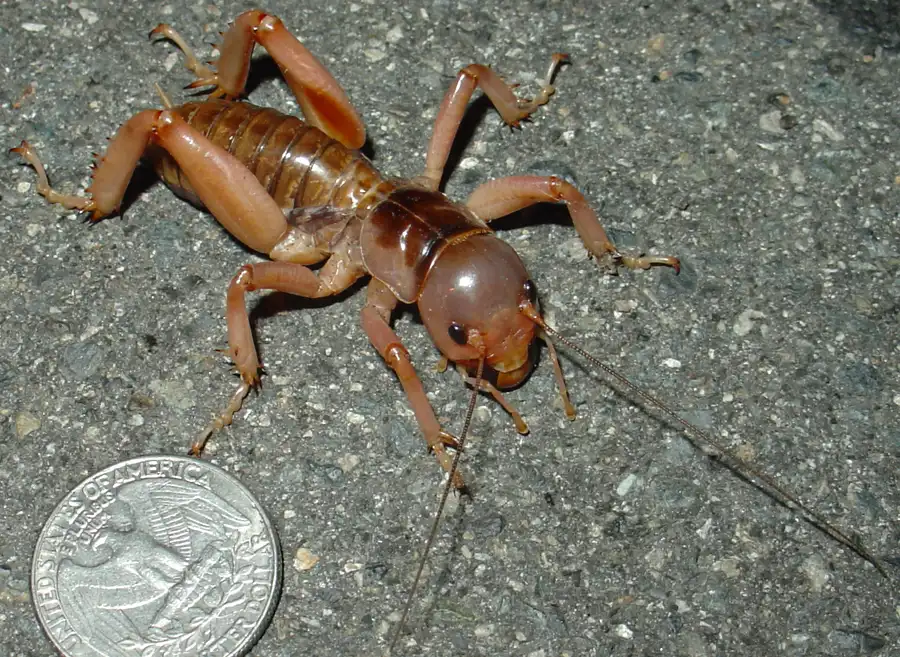
The UC IPM Jerusalem cricket page says they are easily recognized by a “bald, round, humanoid head” and a fat orangish abdomen with black rings. Look for:
- Head: large and round, with small dark eyes and long brownish antennae.
- Body: a black-banded abdomen and no wings.
- Legs: short, thick and spiny, built for digging.
- Size: up to about 2 inches (UC IPM); KQED says some exceed 3 inches and weigh more than a mouse.
- Young: nymphs look like small adults.
| Trait | What the sources say | Source |
|---|---|---|
| Activity | Underground by day, above ground mostly at night | UC IPM |
| Growth | Nymphs molt up to about 10 times | UC IPM |
| Life span | Up to about 2 years; adults live 2 to 6 months | UC IPM; Jeff Mitton, CU Boulder |
| Venom or sting | None | WebMD; UCCE Ventura County |
“Potato bug” also means the Colorado potato beetle and pill bugs and sow bugs, so check the head and legs before you trust the name.
Where Jerusalem Crickets Live
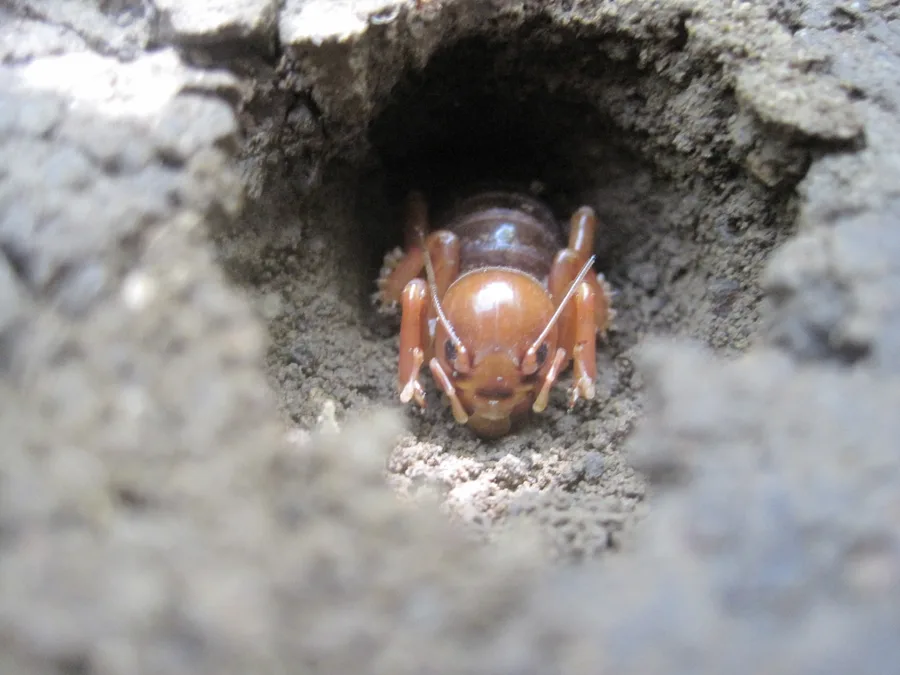
UC Cooperative Extension in Ventura County says potato bugs burrow in soil under woodpiles, boards, leaf litter, rocks and trash, and in grassy pasture. Jeff Mitton of the University of Colorado Boulder writes that they generally live in sandy soil.
To see where Americans find them, we counted all 21,382 verifiable US iNaturalist records of the family (photo, date and place; not captive), pulled from the iNaturalist API on November 22, 2026:
| State | Records | Share of US | Research grade |
|---|---|---|---|
| California | 17,884 | 83.6% | 1,974 |
| Utah | 673 | 3.1% | 32 |
| Arizona | 592 | 2.8% | 20 |
| New Mexico | 574 | 2.7% | 37 |
| Oregon | 476 | 2.2% | 78 |
| Nevada | 349 | 1.6% | 31 |
| Idaho | 276 | 1.3% | 24 |
| Washington | 189 | 0.9% | 172 |
| Nine other states* | 369 | 1.7% | 234 |
*Colorado 112, Wyoming 96, Texas 84, Montana 36, Oklahoma 24, Kansas 11, Nebraska 4, Georgia 1 and South Dakota 1; we did not check the lone records far from the West. California’s lead partly reflects how many iNaturalist users live there.
When They Turn Up: Rain, Digging and Season
UC IPM says they are most often seen when gardeners turn the soil, after heavy irrigation or rainfall, or at night and twilight in mild weather. In a vegetable bed, the same digging can also turn up the brown pupae of the tomato hornworm. Mitton adds that they forage on the surface at night “particularly after rain.” Our records follow the rains on two different calendars.
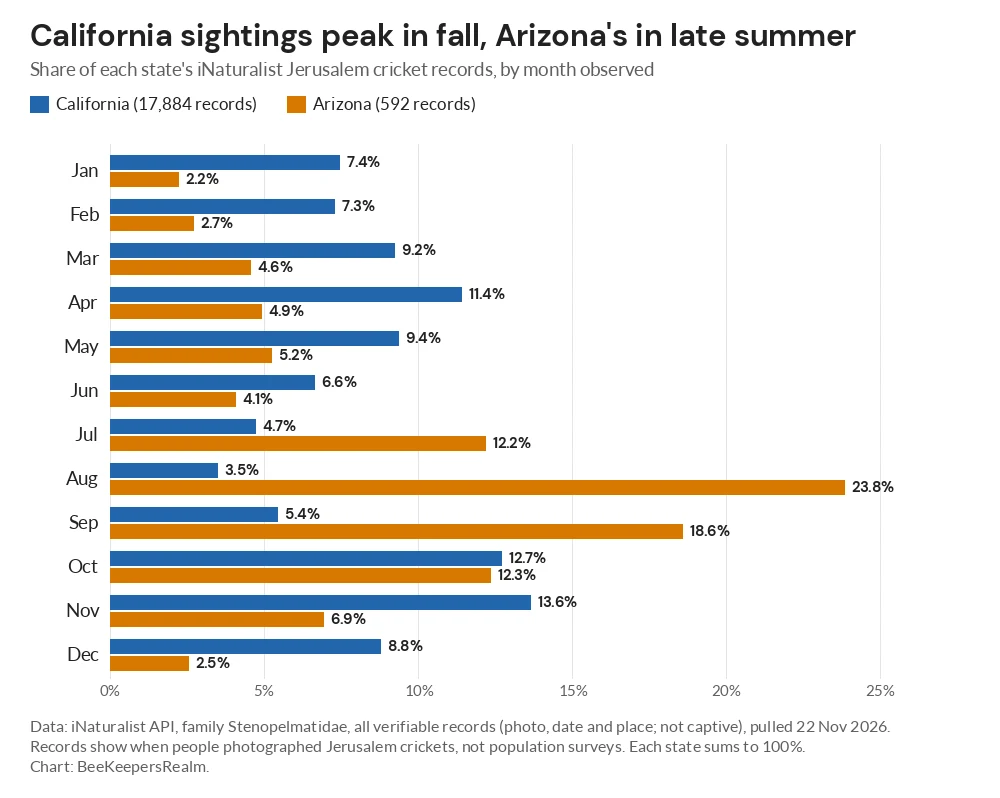
California records climb in October (12.7%) and November (13.6%), stay high through April (11.4%) and bottom out in August (3.5%); the California Office of Environmental Health Hazard Assessment dates the typical start of the rainy season to October 1. In Arizona, 54.6% of records fall in July through September, inside the monsoon season the National Weather Service in Phoenix sets at June 15 to September 30.
What They Eat and Whether They Harm Gardens
UCCE Ventura County lists fruit, vegetables, grass roots, earthworms and any small insect they can catch; Mitton adds decaying plant material.
“Jerusalem crickets are harmless to people and woody plants. Their food includes insects, nonwoody roots, and tubers. They only occasionally damage turf and vegetables.”
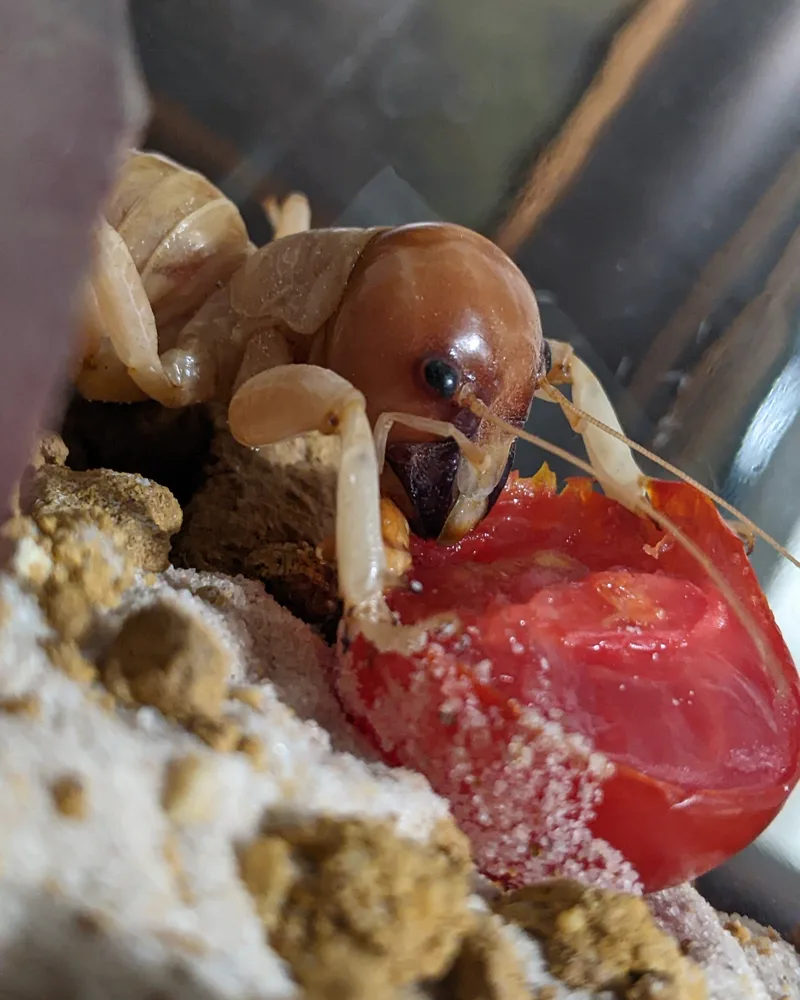
Damage does happen: UCCE Ventura County says they can damage fruit and vegetables and “can become a real problem by chewing holes in drip tape.” Still, UC IPM says they generally are not pests and may be important food for some vertebrate predators. If what you dug up is a fat, C-shaped white grub instead, see our June bug guide.
Do Jerusalem Crickets Bite?
This is educational information, not medical advice. If a bite looks infected or you are worried about a reaction, ask a doctor.
Yes, if handled. They do not sting and have no venom: WebMD’s medically reviewed guide says a bite “isn’t dangerous; it’s just painful,” and UCCE Ventura County says they will bite if handled carelessly or squeezed. Mitton warns that a roughly handled one can draw blood with a pinching bite. Disturbed, they may rise on their hind legs, jump at the intruder and make a sound like sandpaper rubbed together (UCCE Ventura County).
How Jerusalem Crickets Drum to Find a Mate
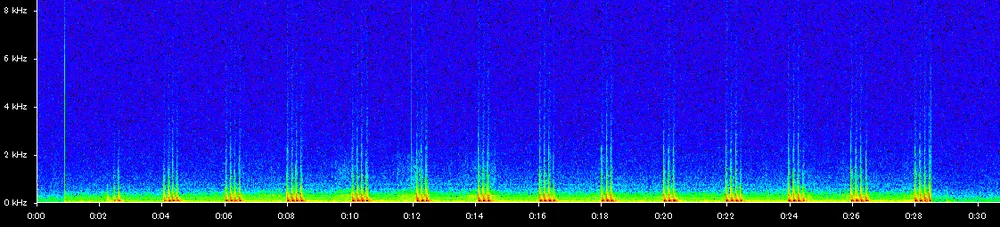
With no wings to sing with, adults strike the ground with the abdomen.
“Both males and females drum, calling and responding in a “duet” until they locate one another to mate.”
USGS says many species have their own pattern. KQED reports beats ranging from one every other second to 40 per second, and Weissman told KQED the female occasionally eats the male after mating, around 5 percent of the time.
How Many Species There Are
In 2017 Mitton wrote that 29 species were recognized. In March 2026, Weissman and five co-authors published a 775-page Zootaxa monograph, “Massive radiation in Ammopelmatus Jerusalem crickets,” describing 105 new species from the United States and Mexico and keeping 12 older names as valid. The abstract says its species groups were defined by DNA, morphology, chromosomes, ecology and calling drum pattern, most of which a photo cannot show. iNaturalist reflects that:
| How far the US record is identified | Records | Share |
|---|---|---|
| To species | 4,894 | 22.9% |
| Only to genus (Ammopelmatus) | 15,432 | 72.2% |
| Only to tribe or family | 1,056 | 4.9% |
| Research grade (community-agreed) | 2,602 | 12.2% |
The most common research-grade species are the mahogany (540), pictured (260) and southern long-spined (247) Jerusalem crickets.
Why They Are Called Jerusalem Crickets and Potato Bugs
No one knows for certain where “Jerusalem cricket” came from. One theory is a startled exclamation.
“Very few people have seen them, and they are large and brightly colored, so I think it is the startle factor.”
Mitton adds that when the name was adopted, “Jerusalem” and “cricket” were both words people blurted out when startled. Another theory, summarized on Wikipedia, links it to Franciscan priests hearing Navajo names for a “skull insect” and thinking of Calvary outside Jerusalem. “Potato bug” is clearer: UC IPM says they are occasional pests of potatoes. UC IPM also lists “niñas de la tierra” (children of the earth), and KQED’s list of nicknames includes “Old Bald-Headed Man” and “Devil’s Baby.”
Found One? What to Do
UC IPM says no control is necessary. In the garden, leave it in the soil. Indoors, slide a container over it, slip a card underneath and carry it to a shady bed outside, without bare hands. Where they are a nuisance, UCCE Ventura County suggests clearing trash, dead grass and leaf litter. Turning spring soil can also uncover ground-nesting bees or springtails, two other harmless soil dwellers.
Frequently Asked Questions
Are Jerusalem crickets dangerous?
No. They have no venom and do not sting. The only risk is a painful bite if you grab or squeeze one.
Are Jerusalem crickets good or bad for a garden?
Mostly harmless. They eat insects, roots, tubers and decaying plants, and only occasionally damage vegetables, turf or drip tape.
Does a Jerusalem cricket bite hurt?
Yes. The jaws pinch hard and can draw blood, but the bite is not venomous.
What states do Jerusalem crickets live in?
Mainly western states. California has 83.6% of US iNaturalist records, followed by Utah, Arizona, New Mexico and Oregon; 17 states have at least one record.
What does it mean if you see a Jerusalem cricket?
Usually that rain, irrigation or digging brought one to the surface.
Are Jerusalem crickets invasive?
No. They are native to the western United States and Mexico.
What should I do if I find a Jerusalem cricket in my house?
Cover it with a container, slide a card underneath and release it outside. No pesticide is needed.
The Bottom Line
A Jerusalem cricket is a native soil insect that looks alarming, bites only when grabbed and rarely harms a garden. If one surfaces after rain or digging, let it go back underground.
Image credits: Featured image: Donald Hobern, Ammopelmatus sp. at Ring Mountain, San Francisco Bay Area, via Wikimedia Commons, CC BY 2.0, cropped to 16:9 and resized. Other photos are credited in their captions, with links to each file page and licence; the mahogany Jerusalem cricket and burrow photos are shared under CC BY-SA. Chart: BeeKeepersRealm, from iNaturalist API data pulled November 22, 2026.