Reviewed by Elena P. · How we review
A weevil is a small beetle with a long snout. The ones people find in rice, pasta, cereal and whole grains are usually rice, maize or granary weevils, which hatch from eggs laid inside a single kernel, so they often arrive with the food. They do not bite, sting or make you sick if you eat one by accident. To get rid of them, throw out infested food, freeze what you want to keep at 0°F for four days, clean the shelves and store dry goods in airtight containers.
Below: how to tell pantry weevils from look-alike beetles, how they get into sealed food, a clean-out based on university extension advice, the garden weevils that wander indoors, and our count of 130,929 US iNaturalist records showing which weevils Americans find, and when.
Key Takeaways
- Pantry weevils develop inside whole kernels: the female bores a hole, lays an egg and seals it (NC State Extension). A new, unopened bag can already be infested.
- Most “flour weevils” are not weevils. Bugs in milled flour are usually red or confused flour beetles, which have no snout.
- Eating a few by accident is not a health risk, according to Texas A&M AgriLife Extension, but infested food should go in the trash.
- Freezing works only if it is cold enough. University of Kentucky figures show rice and granary weevils die in one day at 0 to 5°F, but survive 16 and 73 days at 30 to 35°F.
- In our iNaturalist count, grain weevils are just 0.1% of US true weevil records, and 37.9% of them fall from November to March, against 10.6% for weevils overall.
Table of Contents
- What a Weevil Is
- Pantry Weevils and Their Look-Alikes
- How Weevils Get Into Rice, Flour and Pasta
- Signs You Have Weevils
- Are Weevils Harmful If You Eat Them?
- How to Get Rid of Weevils in the Pantry
- How Long Freezing Takes to Kill Weevils
- Which Weevils Americans Find, and When
- Weevils in the House That Didn’t Come From the Pantry
- Garden Weevils and Bee-Safe Control
- The Boll Weevil, a Pest the US Nearly Erased
- Weevils and Honey
- Frequently Asked Questions
What a Weevil Is
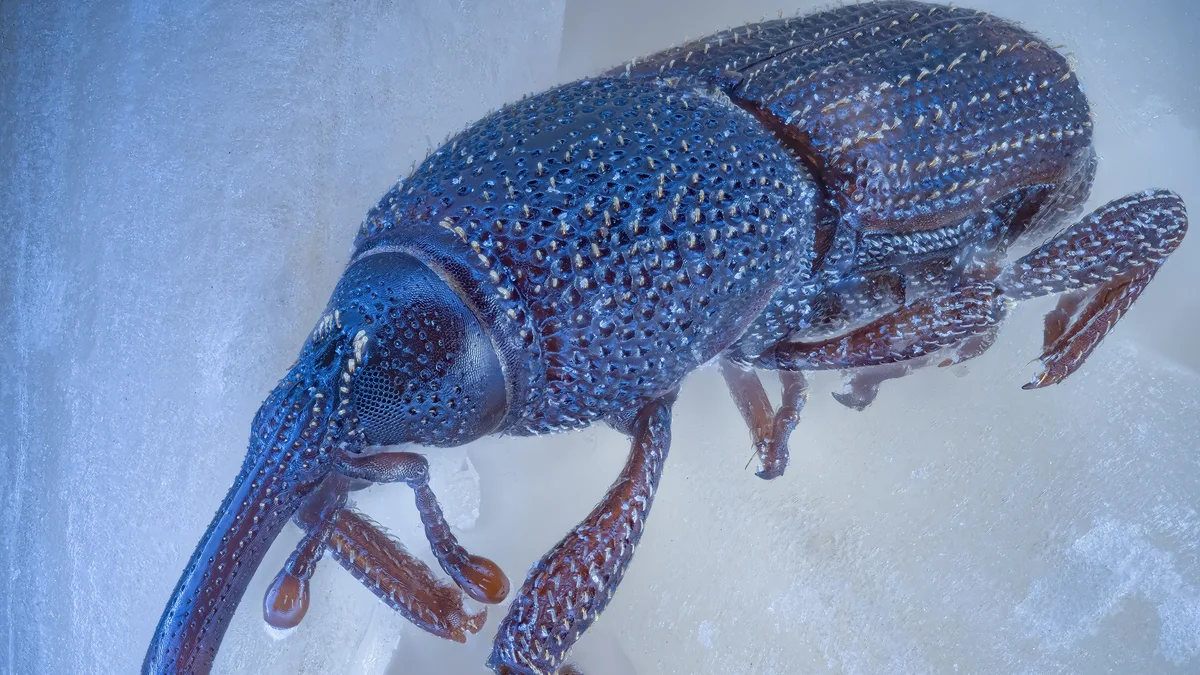
Weevils are beetles in the superfamily Curculionoidea, with about 97,000 known species, most of them in the family Curculionidae, the true weevils. UC IPM notes they are also called snout beetles because the adult’s head is drawn out into a snout, with the jaws at its tip. Females use it to chew a hole in a seed, nut, stem or kernel before laying an egg inside.
Look for elbowed antennae with a small club at the end, attached to the sides of the snout near its tip. Many weevils play dead when disturbed; the Missouri Department of Conservation describes them tucking in their legs and lying still. MDC gives a typical length of ¼ to ½ inch, and the pantry species are smaller, about 1/8 inch. The larvae are pale, legless grubs hidden inside their food, so the damage is usually noticed before the insect. Weevils chew rather than pierce, so they are insects but not true bugs; our page on why a bee is an insect but not a bug explains the difference.
Pantry Weevils and Their Look-Alikes
Three true weevils in the genus Sitophilus cause most kitchen infestations, and all need whole kernels or seeds to breed. Other pantry insects get called weevils but belong to other beetle families.
| Insect | Snout? | Size, marks and flight | Usually found in |
|---|---|---|---|
| Rice weevil (Sitophilus oryzae) | Yes | 1/16 to 1/8 inch, dull reddish brown, four pale spots on the wing covers; flies and is drawn to light | Rice, wheat, corn, beans, nuts, pasta |
| Maize weevil (S. zeamais) | Yes | Almost identical to the rice weevil | Corn and other whole grains |
| Granary (wheat) weevil (S. granarius) | Yes | 1/8 to 1/4 inch, reddish brown to black, no pale spots; cannot fly | Wheat and other grains, cooler regions |
| Bean weevil (Acanthoscelides obtectus) | No, a seed beetle | 2 to 5 mm (under 1/4 inch), light to dark brown, head bent forward | Dried beans |
| Red and confused flour beetles (Tribolium) | No, darkling beetles | About 1/7 inch, flattened, shiny reddish brown; the red flies, the confused does not | Flour, mixes, cereal, broken grain |
Sources: Utah State University, University of Maryland, NC State and UC IPM extension pages; bean weevil size from Wikipedia.

Rice, maize and granary weevils
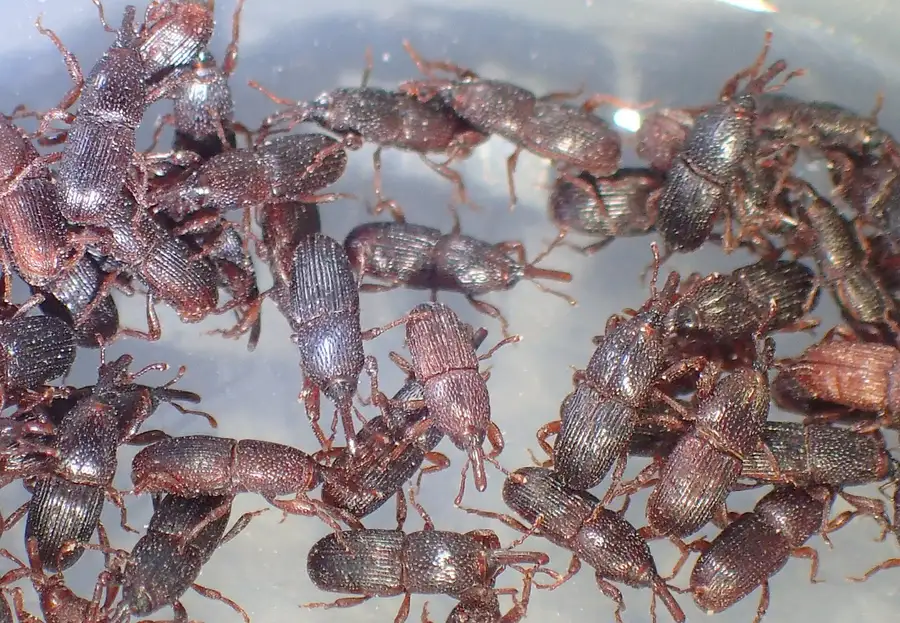
NC State Extension says some consider the rice weevil the most important stored-product pest. It has four pale marks on its back and flies; in the South, adults fly from stored grain to crops in the field. The maize weevil is now separated from it only on genetics and internal anatomy, so for a home cook they are the same pest. The spotless granary weevil cannot fly; NC State says it favors cooler climates, from North Carolina northward, and travels in infested grain.
Bean weevils are seed beetles
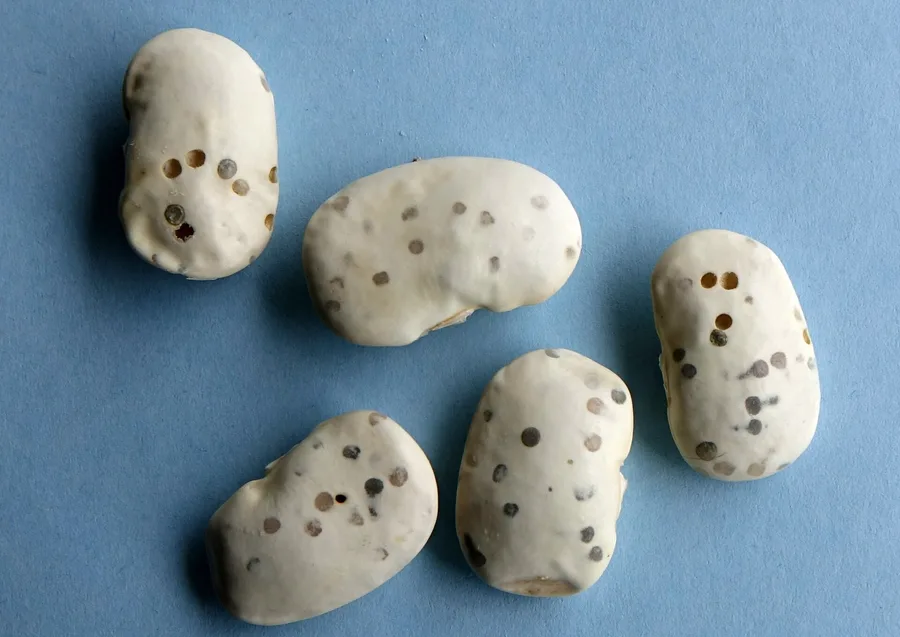
The “bean weevil,” “cowpea weevil” and “pea weevil” are seed beetles, a subfamily of the leaf beetles, with a blunt head and no snout. UC IPM groups the bean weevil with the rice and granary weevils as beetles that feed mainly on seeds or whole grains, with the same management. The sign is a dried bean with a neat round exit hole.
“Flour weevils” are usually flour beetles
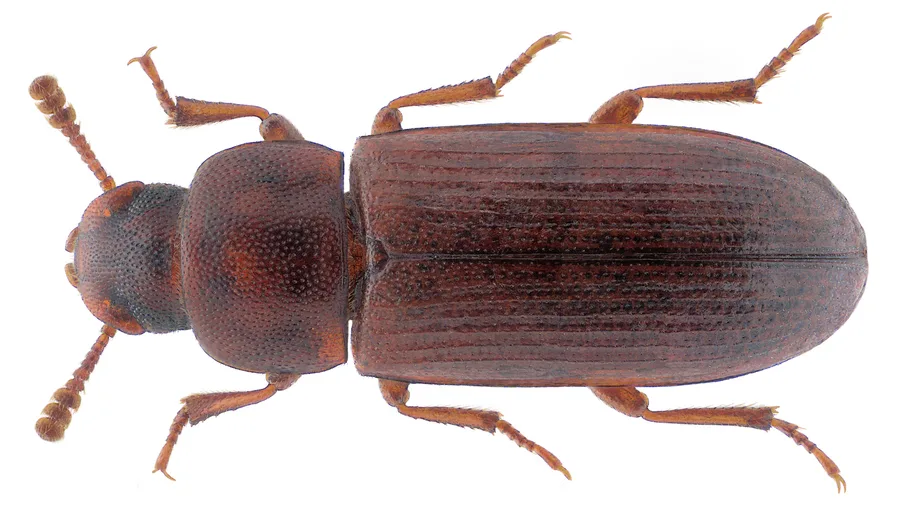
Texas A&M AgriLife entomologist Molly Keck notes that many people call any small pantry beetle a weevil, though the weevil itself feeds only on whole grains. Bugs in flour or cake mix are far more often red or confused flour beetles. UC IPM separates the two by the antenna tip: an abrupt three-segmented club on the red, a gradual four-segmented one on the confused. The clean-out below works for both.
How Weevils Get Into Rice, Flour and Pasta
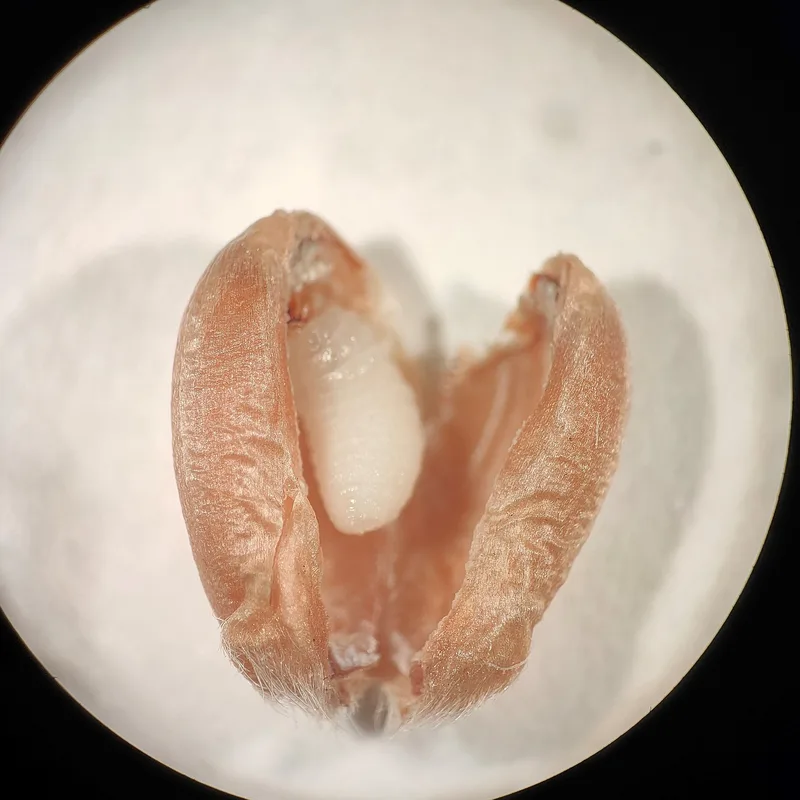
Most infestations start before the food reaches your kitchen. NC State Extension describes the female rice weevil boring into a kernel, laying an egg and sealing the hole with a jelly-like plug. The larva eats that one kernel from the inside, pupates there and chews its way out as an adult. A female granary weevil can lay more than 200 eggs, and the rice weevil’s egg-to-egg cycle can be as short as 32 days, with adults living three to six months.
Because the egg is inside the grain, a package can look perfect and still carry weevils. Keck says the most often infested items are the oldest, hardest-to-reach foods, but even new, unopened containers may be infested, and some pantry pests can get through plastic, waxed paper and even cardboard. NC State adds that rice weevils prefer temperatures above 80°F and, in the North, are confined to heated buildings, so a warm kitchen keeps them breeding all winter.
Video: In this episode of KQED’s Deep Look for PBS Digital Studios, close-up footage follows a female rice weevil carving a hole in a grain of rice and laying an egg inside, and the larva hollowing out the grain until an adult emerges about 30 days later, according to the published transcript. It closes with the same advice as the extension services: toss infested grain and keep rice airtight in a cool, dry place.
Signs You Have Weevils
- Adults in or near food: small brown snouted beetles in rice, pasta, cereal or dried beans, or on the shelf.
- Beetles at windows: rice and maize weevils fly to light, so they can turn up on a windowsill away from the pantry.
- Holed or hollow kernels: round exit holes in rice, corn, wheat berries or beans.
- Frass: the University of Maryland describes sawdust-like droppings in the package.
- Specks: Keck says an established infestation shows as small brown specks in pale foods.
Weevils leave no webbing; silk and clumped food point to pantry moths. Tiny flies over fruit or a drain are fruit flies or gnats, which need a different fix.
Are Weevils Harmful If You Eat Them?
No, not in the amounts people find by accident. Texas A&M AgriLife Extension says the insects are harmless to humans, with little to no likelihood of anyone becoming ill if one is eaten by accident. Rutgers Cooperative Extension’s food safety team agrees, and NC State notes that although their mouthparts look threatening, weevils do not bite people. They do not sting, carry disease or damage the house.
“The worst thing about them is the ‘gross factor’ of having them in your food and the fact you have to throw the infested food out and replace it, which adds to your grocery bill.”
Infested food is discarded for quality, not poison: hollowed kernels, droppings and insects that keep spreading. One exception is not a weevil: UC IPM says the shed hairs of the warehouse beetle can irritate the mouth, throat and stomach, so food infested with it should always be discarded.
This section is general educational information, not medical advice. If you have an allergy or symptoms after eating something, talk to a doctor.
How to Get Rid of Weevils in the Pantry
The University of Kentucky puts the first step plainly: the best solution is usually to examine all grain products and dispose of any infested materials. The extension steps after that are the same everywhere.
1. Check every dry food
Empty the shelf and check rice, flour, pasta, cereal, oats, cornmeal, dried beans, popcorn, nuts, birdseed and dry pet food. A spoonful on a white plate shows adults and holed kernels.
2. Throw out infested food in a sealed bag
Tie it up and take it to an outdoor bin. Texas A&M also advises also tossing unopened boxes of food containing whole grains, since weevils can live inside cardboard boxes.
3. Freeze what you want to keep
Seal suspect or uninfested dry goods in a container or freezer bag and freeze them: four or more days, says Texas A&M, or three to four days at 0°F, says Rutgers. Dead insects stay in the food, so sift or inspect it afterward.
4. Vacuum and wash the shelves
Vacuum shelves, corners and cracks with a crevice tool and empty the vacuum outside. UC IPM says soap and water are fine for flat surfaces; let shelves dry before restocking.
5. Store dry goods airtight
Use glass jars, metal tins or rigid plastic with tight-fitting lids. UC IPM says plastic bags are not adequate, and Rutgers notes insects can chew through even freezer-weight bags. Keep rarely used flours and grains in the freezer, and follow NC State Extension’s advice to use dried foods within two to four months of purchase.
6. Skip the sprays
Weevils live inside the food, so a shelf spray cannot reach them.
“Spraying pesticides on or near food may cause greater harm to you and your family than would pantry pests.”
None of the extension guides we read recommend bay leaves or cloves. If insects keep appearing, look for forgotten birdseed, pet food or old beans.
How Long Freezing Takes to Kill Weevils
The University of Kentucky’s ENTFACT-635 by Ric Bessin, adapted from Richard T. Cotton’s Pests of Stored Grain and Grain Products, lists the days needed at each temperature to kill all life stages. We pulled out the weevils, the flour beetles mistaken for them, and the pantry moth for comparison.
| Temperature (°F) | Rice weevil | Granary weevil | Red flour beetle | Confused flour beetle | Indian meal moth |
|---|---|---|---|---|---|
| 0 to 5 | 1 day | 1 day | 1 day | 1 day | 1 day |
| 5 to 10 | 1 | 3 | 1 | 1 | 3 |
| 15 to 20 | 3 | 14 | 1 | 1 | 8 |
| 20 to 25 | 6 | 33 | 5 | 5 | 28 |
| 25 to 30 | 8 | 46 | 8 | 12 | 90 |
| 30 to 35 | 16 | 73 | 17 | 17 | no figure |
Source: University of Kentucky Entomology, ENTFACT-635 (revised March 2026). The 10 to 15°F row is left out because it has no granary weevil figure.
The flightless granary weevil is by far the most cold-hardy, surviving 73 days at refrigerator-like temperatures, so the fridge is not a treatment. Once food reaches 0 to 5°F, every pest in the table dies within a day; the four-day advice gives the middle of a bag time to get fully cold.
Which Weevils Americans Find, and When
To see which weevils people in the US actually encounter, we queried the iNaturalist API on November 22, 2026 for research-grade US observations (photos whose identification the community has confirmed) of true weevils, family Curculionidae. It returned 130,929 observations of 1,089 species.
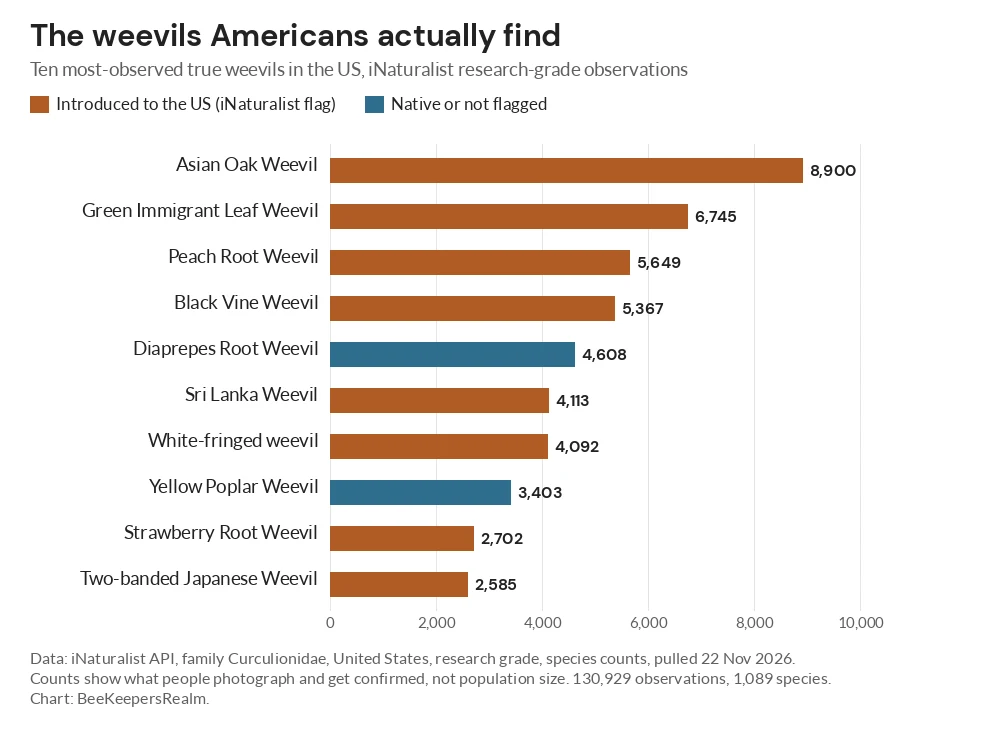
The ten most-recorded species are all garden, lawn or woodland weevils, and iNaturalist flags eight of them as introduced to the US. The Asian oak weevil leads with 8,900 records, ahead of the green immigrant leaf weevil (6,745), peach root weevil (5,649) and black vine weevil (5,367). Together the top ten make up 36.8% of all records.
Pantry weevils barely register. The grain weevil genus Sitophilus has 132 research-grade records, 0.1% of the total, including 42 rice weevils, 5 granary weevils and 5 maize weevils. Counting all 2,721 verifiable grain weevil photos, confirmed or not, they are still about 1.0% of verifiable records. Insects in a bag of rice are rarely photographed well enough to confirm, so this undercounts kitchen infestations, but a weevil on your porch is almost never a pantry pest.
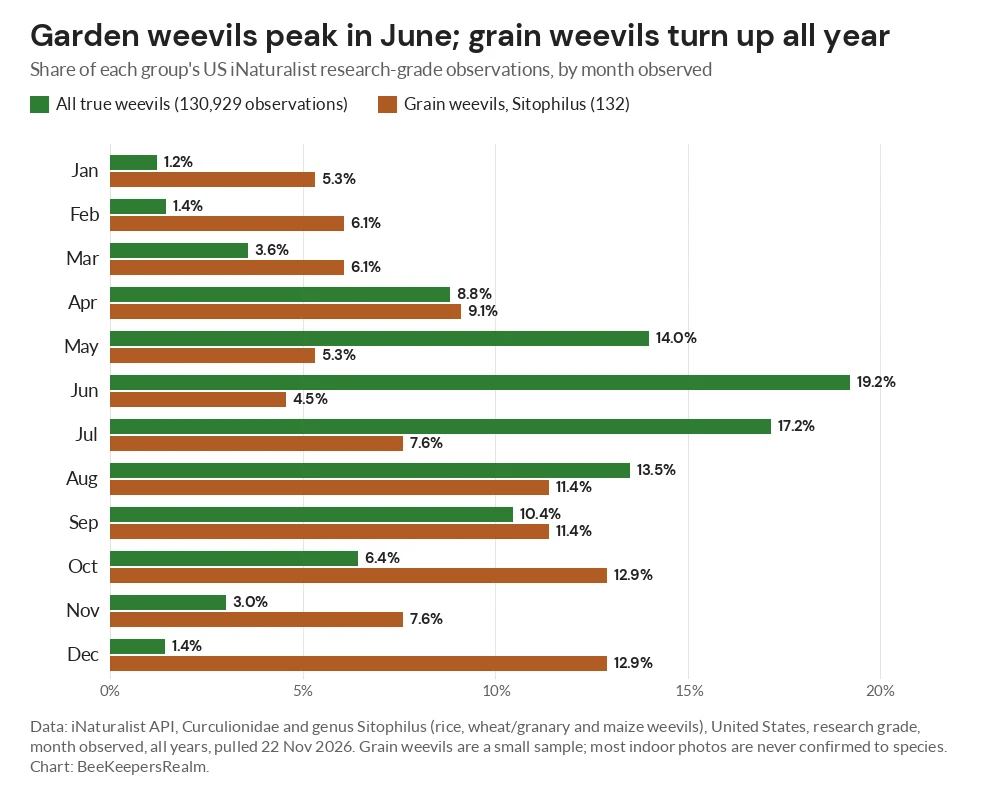
The seasons differ just as sharply. True weevils peak in June, with 19.2% of records, and May through August hold 63.8%. Grain weevils show no summer peak: October and December are their highest months, at 12.9% each, and 37.9% of their records fall from November to March, against 10.6% for weevils overall. That fits insects breeding year-round in heated kitchens, and the season when people open old flour for holiday baking.
The outdoor species line up with extension timing. Colorado State University Extension says strawberry root weevils most often invade homes in late June and July; in our count, July alone holds 42.7% of US strawberry root weevil records. Nut and acorn weevils (Curculio) have 83.3% of records from August to October. These are counts of when people photograph insects, not population surveys, and they lean toward places where iNaturalist users live.
Weevils in the House That Didn’t Come From the Pantry
A few larger dark weevils walking across the floor or up a wall in summer, with nothing in your dry goods, are almost certainly root weevils from the yard. Colorado State’s W.S. Cranshaw says strawberry root weevils move indoors mostly in hot, dry weather in late June and July, while black vine weevils and rough strawberry root weevils are more common indoors in late summer and early fall.
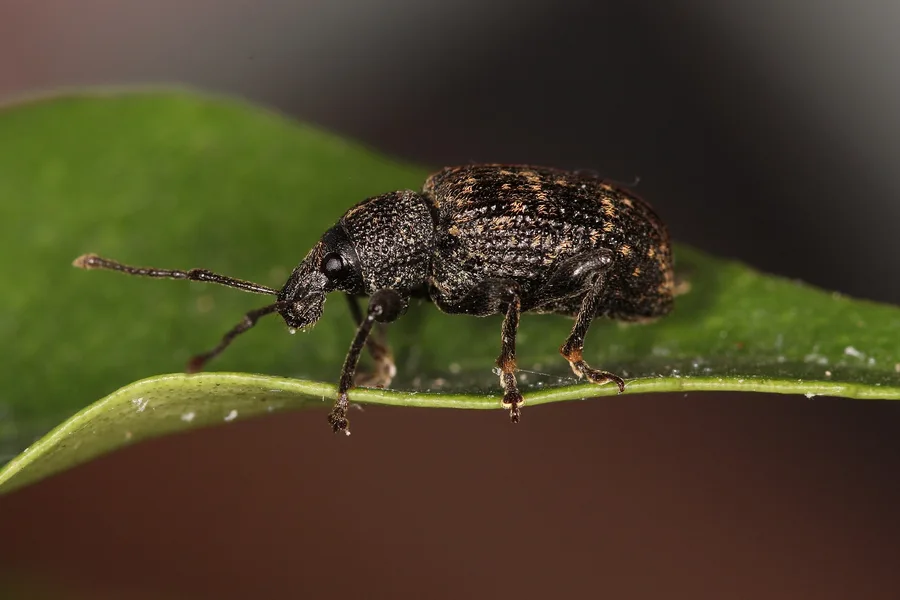
According to Colorado State, root weevils cause no injury to people or furnishings and will not reproduce indoors, and indoor insecticides have no effective use against them. Vacuum them up, seal gaps around doors, windows and the foundation, and reduce watering next to the foundation, since Colorado State says the adults seem drawn to shade and moisture. The same steps help with other summer wanderers such as sugar ants, crickets and silverfish.
Garden Weevils and Bee-Safe Control
Outdoors, UC IPM says many adult weevils hide by day, feed at night and chew irregular notches in leaf edges, while the larvae do the real harm by eating roots, so a plant wilts as if short of water. Colorado State lists euonymus, heuchera, astilbe, hosta, peony and wisteria among black vine weevil’s common hosts.
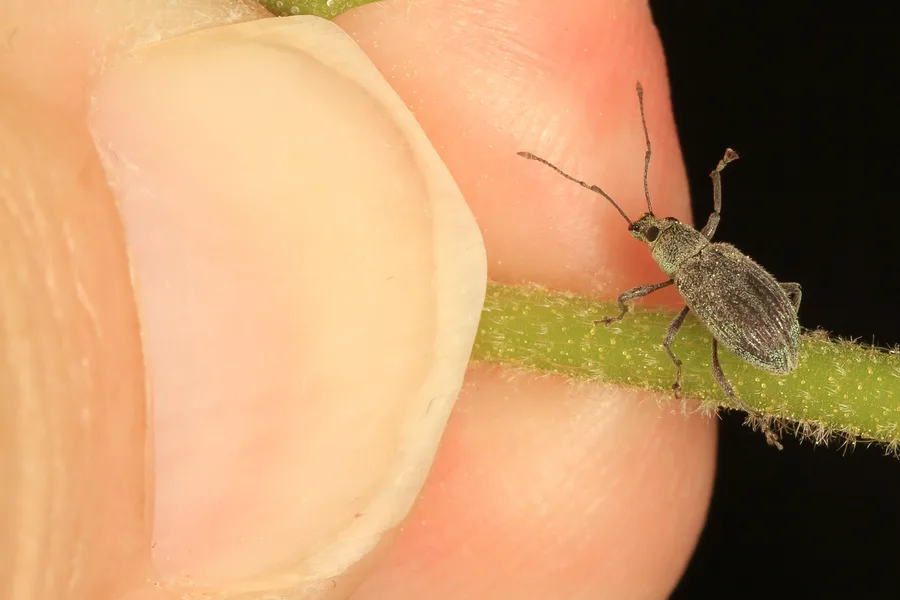
- Look at night with a flashlight, or shake branches over a white cloth, as UC IPM suggests.
- Trap them: UC IPM suggests wrapping trunks in corrugated cardboard overnight, then dropping the weevils into soapy water.
- Band the trunk: many root weevils cannot fly, so sticky material over a fabric wrap stops them climbing.
- Use beneficial nematodes for larvae: UC IPM and Colorado State recommend Heterorhabditis bacteriophora as a soil drench; Colorado State times it for warm soil after most eggs hatch, typically mid-July to mid-September.
If spraying is unavoidable, Colorado State says the spray belongs on the lower trunk and around the base, never on leaves and flowers while the plant is in bloom and attracting pollinators. Our guide to pollinator-safe pest control products covers the options.
Some weevils target one crop: MDC names the plum curculio a serious fruit pest (two-thirds of its records in our count fall April to June), and our sunflower guide covers the head-clipping weevil. Lawn grubs are usually other beetles; see our Japanese beetle and June bug guides.
The Boll Weevil, a Pest the US Nearly Erased
The best-known weevil in American history entered the US from Mexico in 1892, according to Texas A&M AgriLife. It lays eggs in cotton buds and bolls, and its 16- to 18-day development allows up to seven generations a year. The National Cotton Council estimates it cost US cotton producers more than $15 billion. In the late 1970s, USDA’s Animal and Plant Health Inspection Service launched the National Boll Weevil Eradication Program on the Virginia–North Carolina border, and it went on to clear state after state across the Cotton Belt.
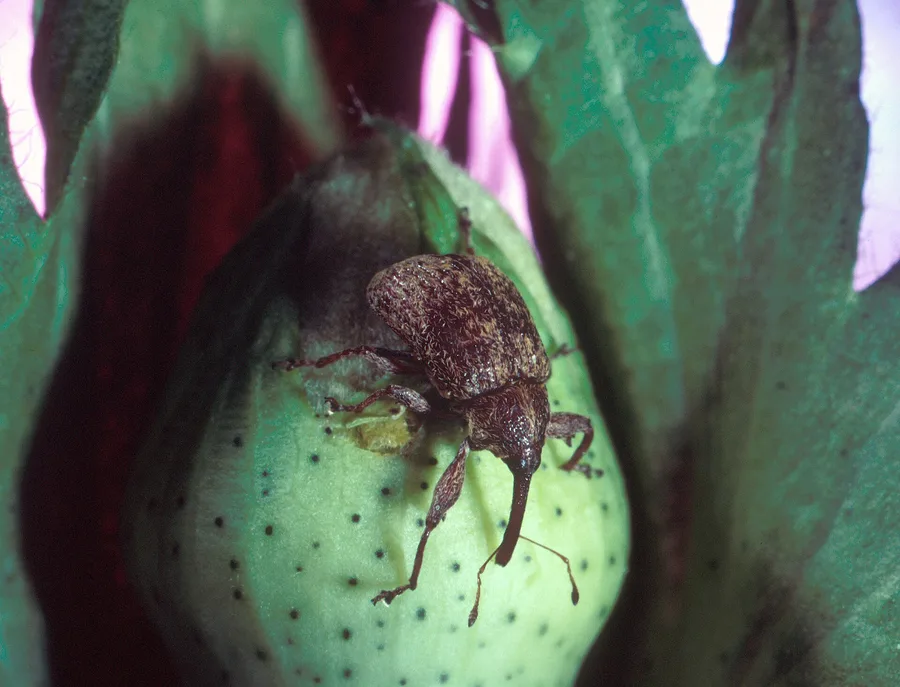
“But it is the single most successful insect elimination program in the U.S. It’s a big victory.”
In 2023, Texas A&M reported boll weevils still clinging to around 20% of the cotton acres in the Lower Rio Grande Valley. Our count shows how rare it has become: across all years, just 3 research-grade US observations of the boll weevil, against 5,367 for the black vine weevil.
Weevils and Honey
Honey is not a weevil food. The extension host lists for rice and granary weevils cover grains, seeds, beans and nuts, and Texas A&M says the weevil feeds only on whole grains. Honey’s pantry problem is moisture, covered in our honey storage guide. Beekeepers will recognize the freezer step: cold is also how many protect stored drawn comb from wax moth eggs, as our guide to storing drawn comb without a freezer explains.
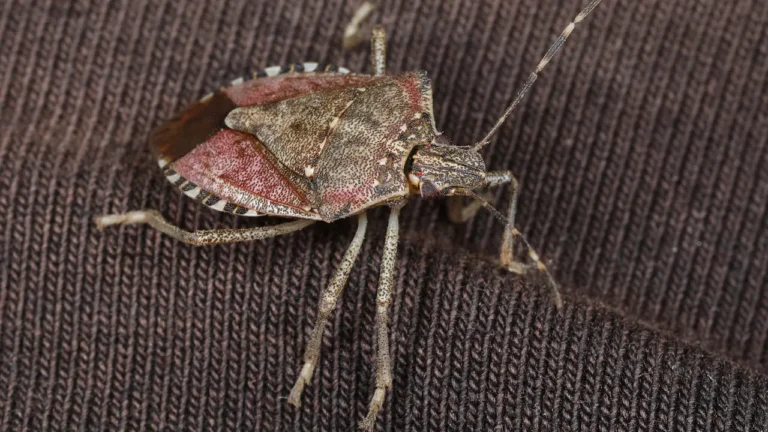
A shield-shaped insect that smells when crushed is not a weevil but a stink bug.
Sealed food containers also keep out cockroaches, as our cockroach guide explains.
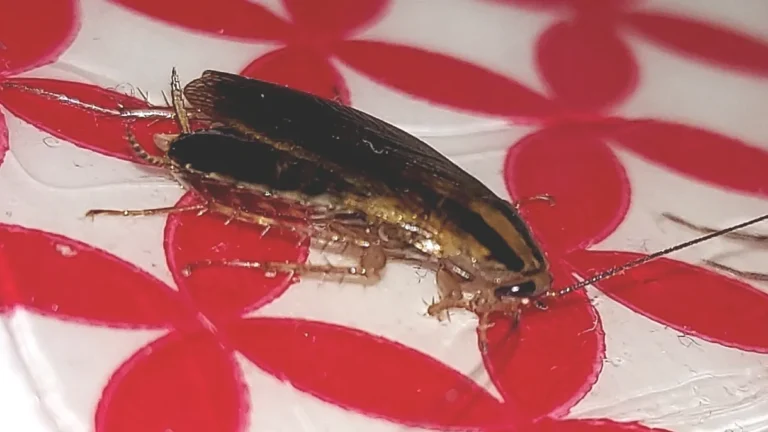
The sealed glass or plastic containers that stop weevils also deny food to German cockroaches, the most common cockroach in US homes.
Frequently Asked Questions
Are weevils harmful to humans?
No. They do not bite, sting or spread disease, and Texas A&M AgriLife Extension says there is little to no likelihood of getting sick from eating one by accident.
What causes weevils to appear?
Usually an infested product. Eggs laid inside kernels in the field, mill or store hatch in your pantry, and warm kitchens and old packages let them multiply.
What is another name for a weevil?
Snout beetle. The granary weevil is also called the wheat weevil, and “flour weevil” usually means a flour beetle, which is not a weevil.
Do weevils bite or sting?
Neither. NC State Extension notes they do not bite people, and they have no stinger.
Can you still use flour if it has weevils?
Extension services advise throwing infested food out. If you keep lightly affected flour, freeze it at 0°F for four days and sift it; discard anything with many insects, clumps or an off smell.
Should I throw away food with weevils?
Yes, in a sealed bag. Freeze nearby dry goods you want to keep, then store them airtight.
How do I store flour to prevent weevils?
Use a glass, metal or rigid plastic container with a tight lid, buy what you will use in two to four months, and freeze flours you rarely use.
How do I know if I have weevils in my flour?
Spread a spoonful on a white plate and look for small brown beetles or specks. Small flat beetles with no snout are flour beetles; the clean-out is the same.
The Bottom Line
A weevil in the rice is a storage problem, not a health emergency. Throw out what is infested, give the rest four days in a 0°F freezer, and keep grains in jars with tight lids.
Image credits: featured photo of a rice weevil by Fedaro, via Wikimedia Commons, CC BY 4.0, cropped and resized. Other photos are credited in their captions. Charts by BeeKeepersRealm from iNaturalist data.