Reviewed by Michael R. · How we review
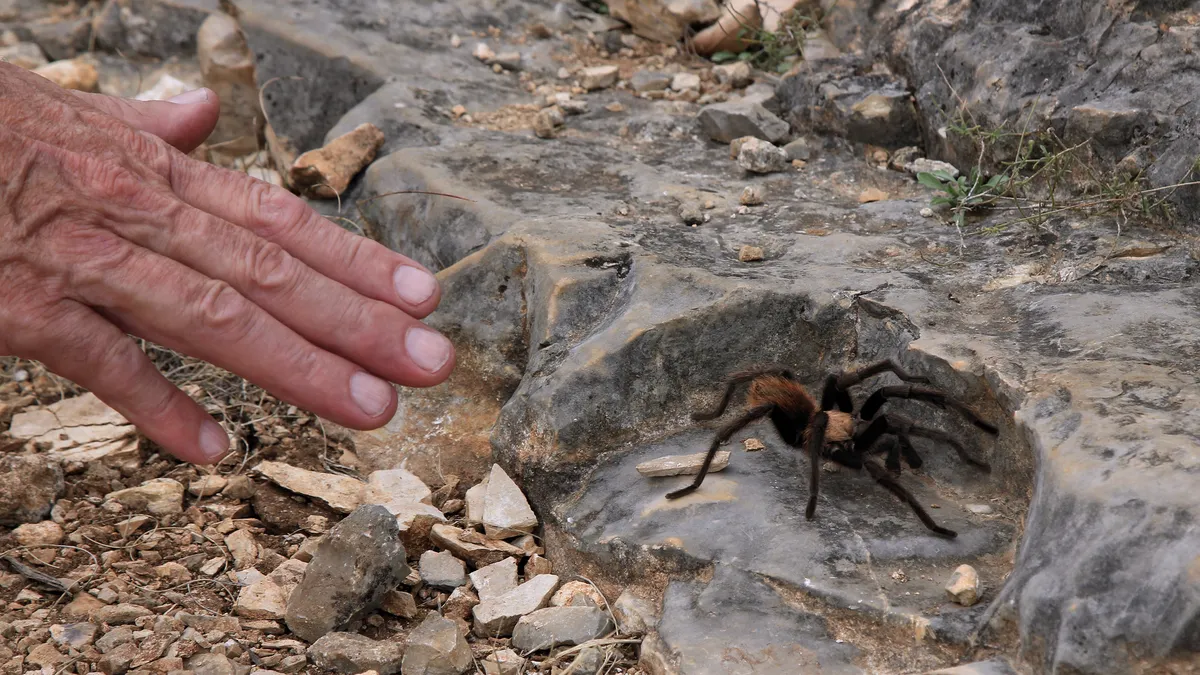
A tarantula is a large, hairy spider in the family Theraphosidae. In the United States, wild tarantulas belong to one genus, Aphonopelma, with 29 species living in the Southwest and southern Great Plains. They are shy, slow-moving and active mostly at night. Their bite feels like a bee sting and their venom is not considered dangerous to people, but the barbed hairs they flick from the abdomen can irritate skin and eyes for weeks.
Below: how to recognize a tarantula and tell a male from a female, where each US species lives, how long they live, what to do about bites and hairs, and our count of 26,969 US iNaturalist records showing when tarantulas turn up in each state. That count shows something most guides miss: the “fall tarantula season” is mainly a fall event in Colorado, Utah and California. Texas also has a big spring wave, and Arizona’s peak comes with the summer monsoon.
Key Takeaways
- The US has 29 tarantula species, all in the genus Aphonopelma, according to a 2016 revision of the genus in the journal ZooKeys. They live across the southern third of the country, west of the Mississippi River.
- In our iNaturalist count, 26,966 of 26,969 US research-grade records come from 12 states, led by Texas (7,285), California (6,556) and Arizona (6,519). Florida and 35 other states have none.
- The tarantulas people see crossing roads are almost always mature males looking for females. Records tagged as males peak in September (24.9%) and October (23.5%), but Arizona’s records peak in July and August, and Texas has a second peak in May and June.
- Females can live 25 years or more; males usually die within months of maturing, according to the National Park Service.
- MedlinePlus says US tarantula venom is not considered dangerous, though allergic reactions are possible. Remove hairs from skin with sticky tape, and see an eye doctor if hairs get into an eye.
Table of Contents
- What a Tarantula Is
- How to Identify a Tarantula
- Where Tarantulas Live in the US
- The 29 US Tarantula Species
- Tarantula Mating Season: When and Why Males Wander
- How Long Tarantulas Live
- Burrows, Eggs and Molting
- What Tarantulas Eat
- Do Tarantulas Bite? Venom, Hairs and Safety
- Tarantula Hawks and Other Predators
- Tarantulas as Pets
- Frequently Asked Questions
What a Tarantula Is
Tarantulas are spiders, so they are arachnids with eight legs and two body parts, not insects; our explainer on why bees are insects and spiders are not covers the difference. Britannica counts more than 1,000 tarantula species in some 160 genera worldwide, most of them in the tropics and subtropics.
Tarantulas are mygalomorphs. Britannica explains that their jaws move forward and down, while most other spiders, from the jumping spiders on a garden fence to house spiders, have jaws that move sideways and together. The name itself is borrowed. It first belonged to a European wolf spider, Lycosa tarantula, and comes from the town of Taranto in southern Italy (Britannica).
New World tarantulas, including every US species, carry urticating hairs on the abdomen as a defense. Britannica notes that tarantulas from Africa and Asia typically lack these hairs and instead depend more on speed, threat displays and often more potent venom.
How to Identify a Tarantula
A US tarantula is hard to mistake for anything else. Look for:
- Size: Britannica says southwestern Aphonopelma reach a body length of almost 2 inches and a leg span of almost 5 inches. The Missouri Department of Conservation (MDC) gives Texas brown tarantula females an average body length of 2 inches and males about 1.5 inches.
- Hair: a thick coat of hairs on the body and legs, usually brown, tan, blonde or black.
- Build: a stocky body and thick legs. MDC calls the Texas brown tarantula Missouri’s largest spider.
- Behavior: slow and deliberate, out mostly at dusk and at night, often on bare ground or roads rather than in a web.
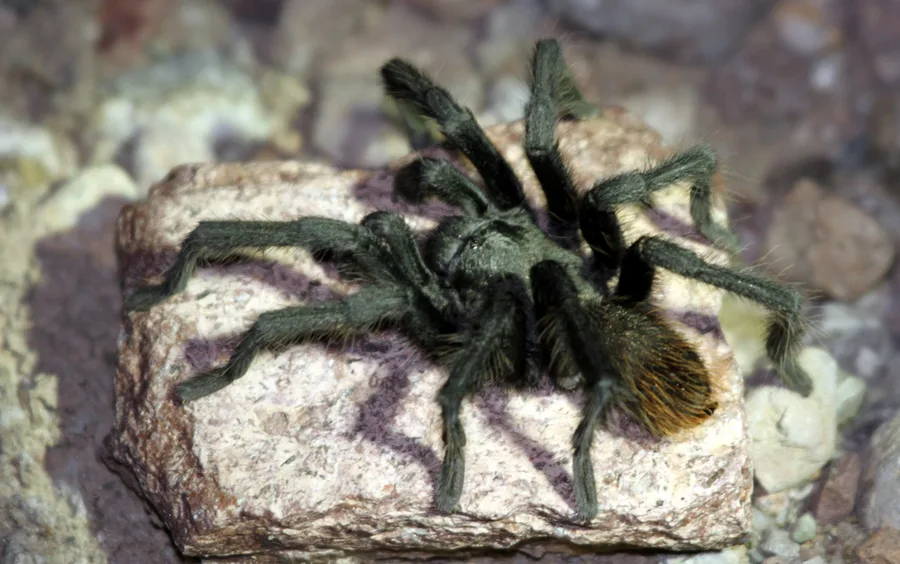
The usual look-alikes are much smaller. A wolf spider’s body is about 1/4 to 1 inch long without the legs (MDC), and it runs fast, as our wolf spider identification guide shows. Fuzzy jumping spiders are smaller still, hop rather than walk, and have two very large forward-facing eyes.
Male or female?
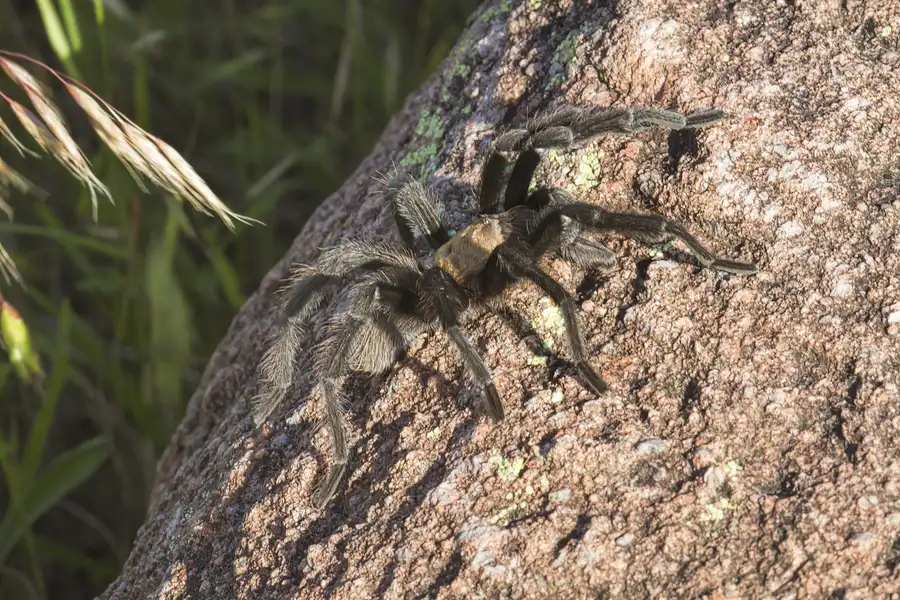
Almost every tarantula seen walking in the open is an adult male. Hamilton and colleagues write that museum specimens are usually adult males “because they are commonly collected after abandoning their burrows in search of females.” KQED’s Deep Look reports that males develop clasps called tibial hooks on their front legs when they mature, and MDC’s measurements show males are smaller-bodied than females. Females rarely leave the burrow, as UC Master Gardeners in San Luis Obispo County note.
Video: KQED’s Deep Look series follows newly mature male Texas brown tarantulas wandering the prairie south of La Junta, Colorado, in September. It shows how a male taps at a female’s burrow, locks her fangs with his tibial hooks during mating and then retreats, with comments from arachnologist Brent Hendrixson and Colorado State University entomologist Whitney Cranshaw, going by the companion article KQED published with the video.
Where Tarantulas Live in the US
The 2016 revision of US tarantulas by Chris Hamilton, Brent Hendrixson and Jason Bond says the genus is distributed across the southern third of the United States, from west of the Mississippi River to California. To see where people actually find them, we counted every research-grade US observation of Aphonopelma on iNaturalist, state by state (“research grade” means at least two people agreed on the identification).
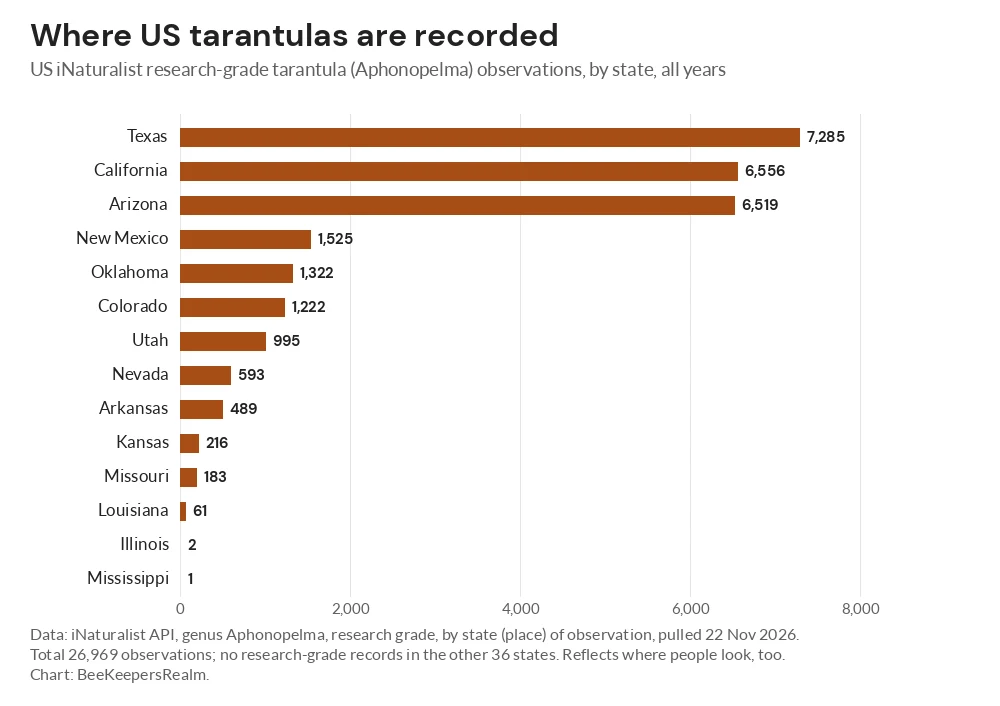
Of the 26,969 records, 26,966 come from 12 states: Texas, California, Arizona, New Mexico, Oklahoma, Colorado, Utah, Nevada, Arkansas, Kansas, Missouri and Louisiana. The other three are two records in Illinois and one in Mississippi, probably escaped pets or mislabeled locations. No other state has a single research-grade record, which is worth knowing because some online “tarantulas by state” lists include Florida. Records also reflect where iNaturalist users live, which partly explains why California ranks so high.
The edges of the range are sharp. MDC says the Texas brown tarantula is apparently the only tarantula native to Missouri, occurs mainly in the south and center of the state, and that “the Missouri River apparently acts as a barrier” to its spread north. Texas A&M AgriLife Extension counts 15 tarantula species in Texas.
The 29 US Tarantula Species
“Based on our analyses, we now recognize only 29 distinct species in the United States.”
The study evaluated all 55 species names then in use for the US, treated 33 of them as synonyms and described 14 new species, among them Aphonopelma johnnycashi, named for Johnny Cash because it lives near Folsom Prison and mature males are generally black. The authors separated species with DNA, anatomy and geography, and many look alike in photos, so treat the names below as a guide to what lives where, not a field test. The table pairs each common species’ range and breeding season from the 2016 revision with the month our iNaturalist count of records tagged “male” peaks.
| Species | US range (Hamilton et al. 2016) | Males wander (Hamilton et al. 2016) | Peak month, male records (iNaturalist) | US records |
|---|---|---|---|---|
| Texas brown (A. hentzi) | Most widespread US species: parts of MO, AR, LA, KS, OK, TX, CO, NM and AZ | April to August and September to October, depending on locality | September (second peak June) | 9,304 |
| Desert blonde (A. chalcodes) | Southern two-thirds of Arizona, barely into southwestern New Mexico | Generally July to September, during the monsoon | July | 4,985 |
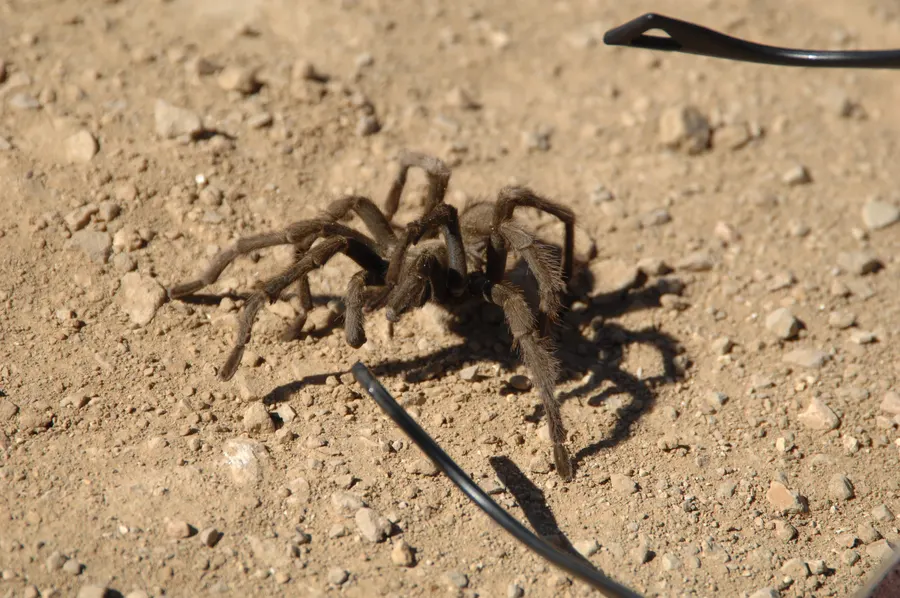
| Desert tarantula (A. iodius) | California’s Bay Area and Coast Ranges to the Mojave; Great Basin of Nevada, Utah and northwestern Arizona | Generally August to November | October | 4,675 |
| Texas tan (A. anax) | South Texas | April to July; males seen on roads after heavy rain | May | 1,425 |
| Steindachner’s ebony (A. steindachneri) | Southern California Coast Ranges to the southern Sierra Nevada | July to August | August | 1,412 |
| California ebony (A. eutylenum) | Southern California coast and Peninsular Ranges, west of the Mojave | Generally September to November | September | 1,372 |
| Grand Canyon black (A. marxi) | High elevations of northern AZ, northwestern NM, southwestern CO, southeastern UT | Generally September to November | October | 1,024 |
| Johnny Cash tarantula (A. johnnycashi) | Western foothills of the Sierra Nevada, California | Generally September to November | October | 502 |
Records are US research-grade iNaturalist observations identified to species. Common names are iNaturalist’s. Several mountain species in southeastern Arizona, such as A. chiricahua, breed in late autumn and early winter instead (Hamilton et al. 2016).
Tarantula Mating Season: When and Why Males Wander
A male tarantula spends years in a burrow. The National Park Service says males mature at 8 to 10 years old and then leave to search for a female, a trip that ends their lives. Texas A&M AgriLife Extension entomologist Wizzie Brown says the movement is “not a true migratory event”; it is males searching for mates. Our count shows how strongly the season belongs to males.
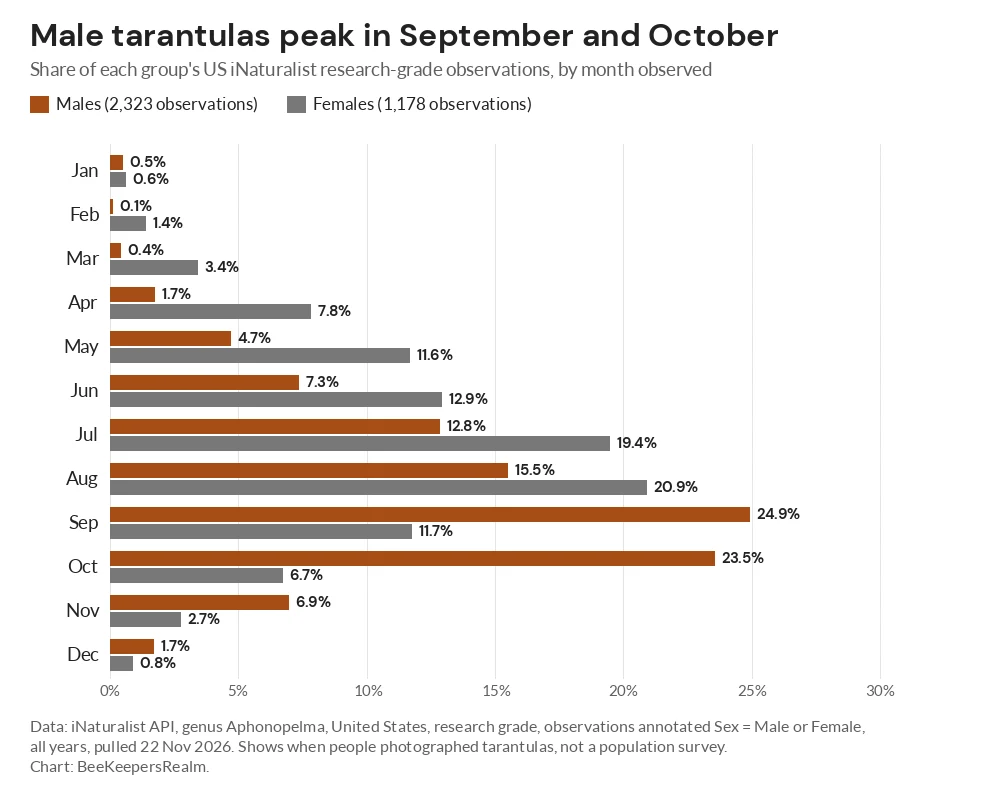
Of the 2,323 US records tagged as males, 48.4% fall in September and October. Females, with 1,178 tagged records, peak in August (20.9%) and July (19.4%), a month or two before the males. Across all 26,969 records, September (5,420) and October (4,735) are also the busiest months.
The national total hides big regional differences. When we split the records by state, three patterns appeared:
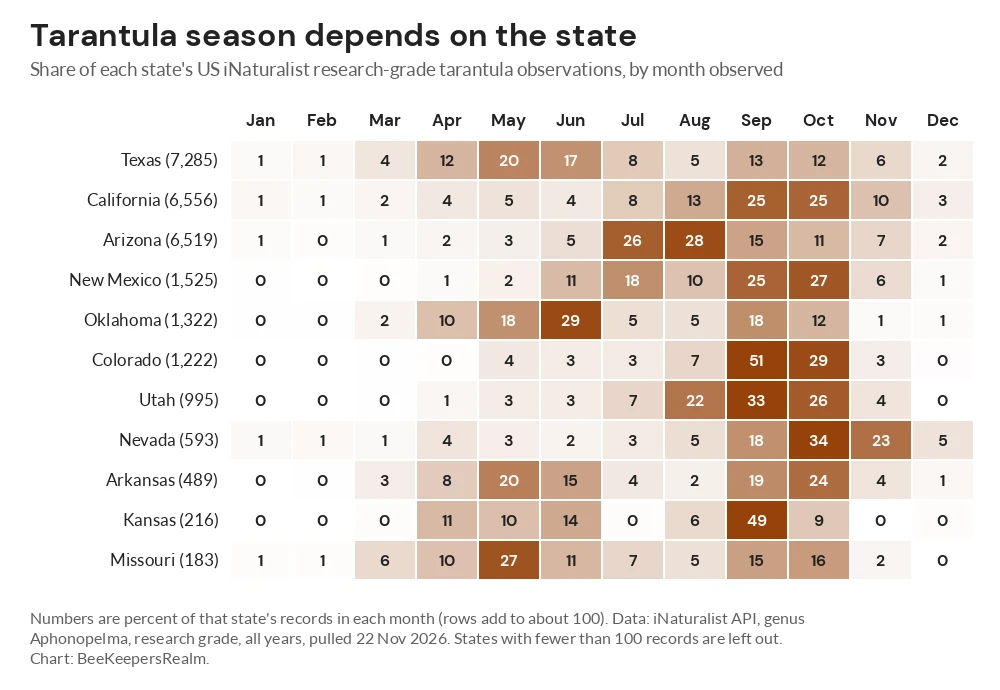
- Fall states: in Colorado, 50.7% of records fall in September alone, matching the September spectacle south of La Junta. Utah, California, Nevada, New Mexico and Kansas also peak in September or October.
- Monsoon state: in Arizona, 54.0% of records fall in July and August, when the desert blonde breeds during the summer rains.
- Two-season states: Texas peaks in May (19.5%) and June (17.4%) and again in September and October; Oklahoma and Arkansas show the same two humps. That fits the Texas brown tarantula’s spring/summer and fall breeding periods and the spring-breeding Texas tan.
These numbers show when people photograph tarantulas, not population surveys, and about a quarter of all records (7,114) come from 2025 and 2026. But they line up with the breeding seasons in the 2016 revision, species by species.
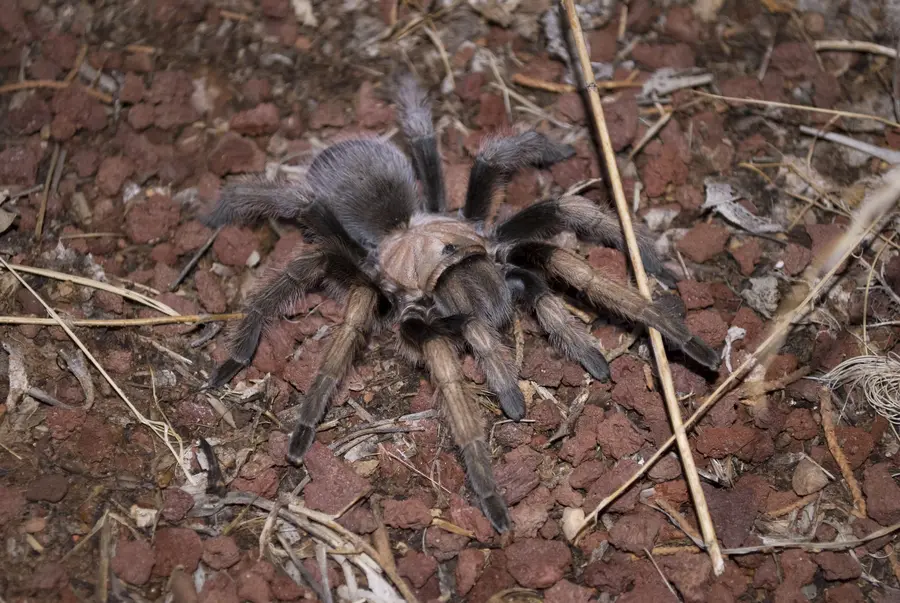
Most wandering males never find a female, Hendrixson told KQED, and those that do must escape after mating. The NPS says that even if a male escapes being eaten by the female, he will still die within a few months.
“They literally wear themselves to pieces by the end of the breeding season.”
How Long Tarantulas Live
MDC notes that most Missouri spiders live for only a single season, while tarantulas can live for years. A spring or summer worker honey bee lives about 2 to 6 weeks, as our guide to honeybee lifespan explains; a female tarantula can live for decades. Sources give different figures, so the table lists each one with its source.
| Source | Females | Males |
|---|---|---|
| National Park Service (Joshua Tree) | Often produce eggs for 25 years or more | Mature at 8 to 10 years; die within a few months |
| Missouri Dept. of Conservation (Texas brown) | More than 30 years | 7 or more years, though in the wild perhaps little more than a year |
| Texas A&M AgriLife Extension | Up to 25 years in captivity | About 2 to 3 years in the wild, or 5 to 10 in captivity, once mature |
| UC Master Gardeners, San Luis Obispo County | Many 13 to 15 years | Not much more than a few months once wandering |
The pattern is consistent even where the numbers are not: females live for decades, while males die soon after their first and only breeding season.
Burrows, Eggs and Molting
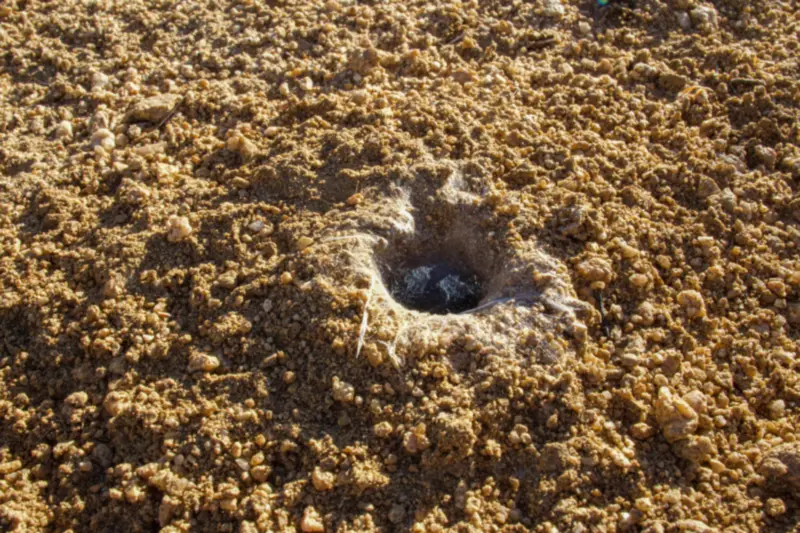
US tarantulas live in burrows. Hamilton and colleagues describe them as typically circular and generally covered by a thin veil of silk, and note that Texas brown tarantulas also use scrapes under rocks or wood. The NPS notes that females dig in dry, sandy soil and line the burrow with silk, and that only one spider lives in each.
MDC says females attach their egg cases to silk inside the burrow and guard them until they hatch, and the young often stay with the mother for about a week before dispersing. National Geographic says females guard the egg sac for six to nine weeks.
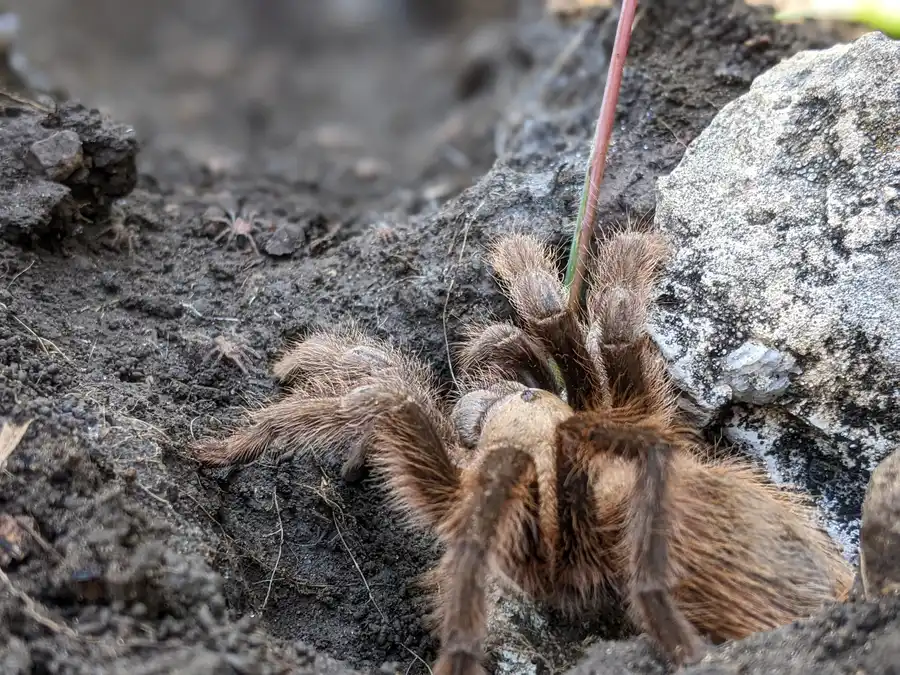
To grow, tarantulas molt. National Geographic explains that during a molt they shed the whole external skeleton, replace internal structures such as the stomach lining, and can even regrow lost legs.
What Tarantulas Eat
Tarantulas do not catch prey in webs. MDC says they walk on the ground and grab insects they encounter, hunting at night for prey such as crickets. National Geographic adds that they may lay a silk trip line to sense prey near the burrow, sometimes take frogs, toads and mice, and may not need to eat for a month after a large meal.
Do Tarantulas Bite? Venom, Hairs and Safety
This section is educational information, not medical advice. For a bite, an exposure or an allergic reaction, call your doctor, Poison Help at 1-800-222-1222, or 911 in an emergency.
US tarantulas can bite, but rarely do. The NPS calls the tarantula “a timid creature” that will not bite people unless seriously provoked.
“Tarantulas are venomous, but the effects of the venom of tarantulas indigenous to North America are typically mild in humans and only cause pain at the bite site.”
The bite
MedlinePlus, from the National Library of Medicine, says the venom of US tarantulas is not considered dangerous but may cause allergic reactions, and a bite may hurt like a bee sting, with warmth and redness. MDC also compares the bite to a bee sting; if you know a bee sting, our guide to bee sting vs wasp sting describes that pain. Poison Control advises washing the bite with soap and water, using cool compresses for pain and checking that your tetanus shot is up to date. Breathing trouble, swelling of the lips or throat or collapse after a bite are signs of an allergic reaction and need emergency care (MedlinePlus).
The hairs
When threatened, a US tarantula can brush barbed hairs off its abdomen with its hind legs; the 2016 revision lists “type I urticating setae only” for the genus. MedlinePlus says the barbs can pierce human skin and cause swollen, itchy bumps, and the itching may last for weeks. Pull them out with sticky tape (MedlinePlus, Poison Control). Hairs in the eye are more serious: Poison Control says they can cause pain, redness, light sensitivity and corneal damage, and that “evaluation by an eye doctor is a must.”
If you find one
Leave it alone. Wizzie Brown recommends “just admiring them and leaving them be”; for one indoors, she suggests covering it with a glass and sliding paper underneath to move it outside. Poison Control advises keeping children and pets away from tarantulas. Our guide to first aid for dogs and cats covers sting care for pets; for a pet bitten or sprayed with hairs, call your veterinarian.
Tarantula Hawks and Other Predators
KQED reports that wandering males are worn down by cold, exposure and predators. National Geographic says tarantulas have few natural enemies, with the parasitic Pepsis wasps, or tarantula hawks, a formidable exception. The NPS describes how a single tarantula hawk can sting and paralyze a tarantula, drag it back to a prepared burrow and lay eggs on its abdomen, and the wasp larvae then eat the spider alive. Our guide to the tarantula hawk wasp and its sting covers the wasp itself, which ranks near the top of the Schmidt sting pain index.
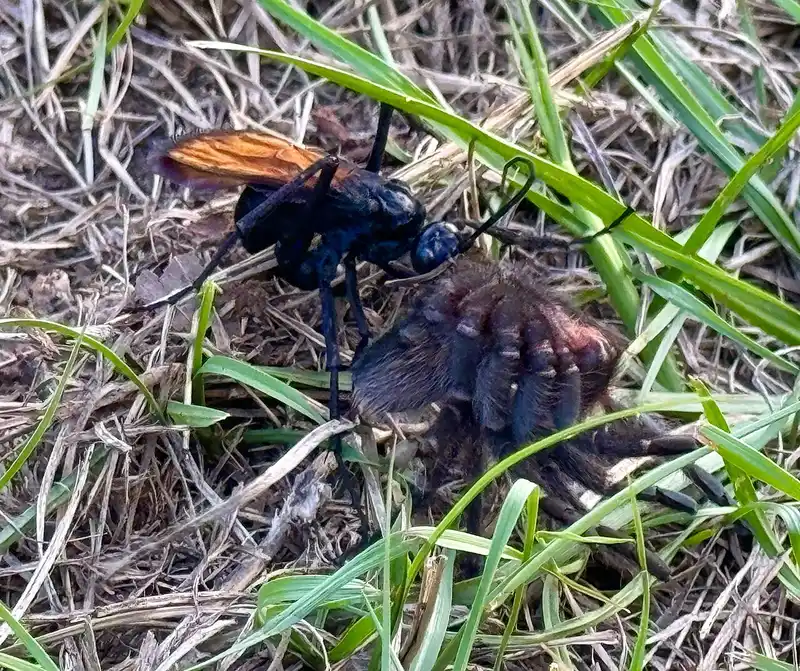
Adult tarantula hawks feed on flower nectar, including milkweed, so in the Southwest they work the same summer blooms as bees. They belong to the spider wasp family, one of the groups in our guide to types of wasps in the US.
Tarantulas as Pets
Many people keep tarantulas. Britannica lists docile pet species such as the Chilean rose, Honduran curly hair and Mexican red-kneed tarantulas, all from Latin America rather than the US. Native species are collected too: Hamilton and colleagues note that the Rio Grande gold tarantula is highly sought after by collectors for the pet trade, though they found no evidence that collecting has reduced its numbers. Rules vary by state; in Missouri, for example, it is illegal to collect tarantulas from public land without a permit (MDC). Poison Control recommends gloves and eye protection when handling a tarantula, to avoid contact with its hairs.
Male tarantulas are not the only spiders that wander to find mates; male hobo spiders turn up in western homes from August to October.
Another large western ground dweller that alarms people is the Jerusalem cricket, which has no venom but can bite if grabbed.
Frequently Asked Questions
Are tarantulas harmful to humans?
Not seriously, for US species. A bite is painful, like a bee sting, and MedlinePlus says death from a tarantula bite in a healthy person is rare. The barbed hairs cause itchy rashes and can injure an eye.
Do any US states have tarantulas?
Yes. In our iNaturalist count, wild tarantulas are recorded in 12 states: Texas, California, Arizona, New Mexico, Oklahoma, Colorado, Utah, Nevada, Arkansas, Kansas, Missouri and Louisiana.
What tarantulas live in the US?
Twenty-nine species, all in the genus Aphonopelma (Hamilton et al. 2016). The most often recorded are the Texas brown, desert blonde and desert tarantula.
Are there venomous tarantulas in the US?
All tarantulas have venom, but Poison Control says North American species typically cause only mild effects in people, mainly pain at the bite site. Allergic reactions are possible.
Is a tarantula aggressive?
No. The NPS calls it timid, and MDC says tarantulas are quick to evade people. Britannica notes that a threatened tarantula may rear up and show its fangs, and US species can also flick hairs. Bites usually follow rough handling.
Do tarantulas migrate?
No. The mass movements in late summer and fall, or spring in Texas, are mature males searching for females. Females stay in their burrows.
How long do tarantulas live?
Females 25 years or more; males usually die within months of maturing, at about 8 to 10 years old (NPS).
Are tarantulas good pets?
For some people. They need little space and are quiet, but they should not be handled often, their hairs irritate skin and eyes, and collecting wild ones is restricted in some places, such as on public land in Missouri. Check local rules first.
The Bottom Line
A tarantula on the road is almost always a male on his final search for a mate, and he poses little risk if left alone. Let him pass, keep pets and fingers away, and if hairs or a bite do cause a reaction, follow the first-aid steps above. For more of the creatures that turn up in yards and homes, see our garden and household insects guides.
Image credits: Featured image: Texas brown tarantula in Lost Maples State Natural Area, Texas, by Larry D. Moore, Wikimedia Commons, CC BY 4.0, resized. Desert blonde tarantula: Greg Schechter, CC BY 2.0. Carrizo Plain tarantula: Sarah Swenty, USFWS, public domain. Wichita Mountains tarantula: Larry Smith, CC BY 2.0. Zion male tarantula: NPS / Christopher Gezon, public domain. Burrow: NPS / Robert Zuniga, public domain. Female with spiderlings: Beckyhansis, CC BY-SA 4.0. Tarantula hawk: Llaffineur, CC BY-SA 4.0. All photos via Wikimedia Commons, resized; links to each file page and licence are in the captions. Charts: BeeKeepersRealm, from iNaturalist API data pulled November 22, 2026.