Reviewed by Michael R. · How we review
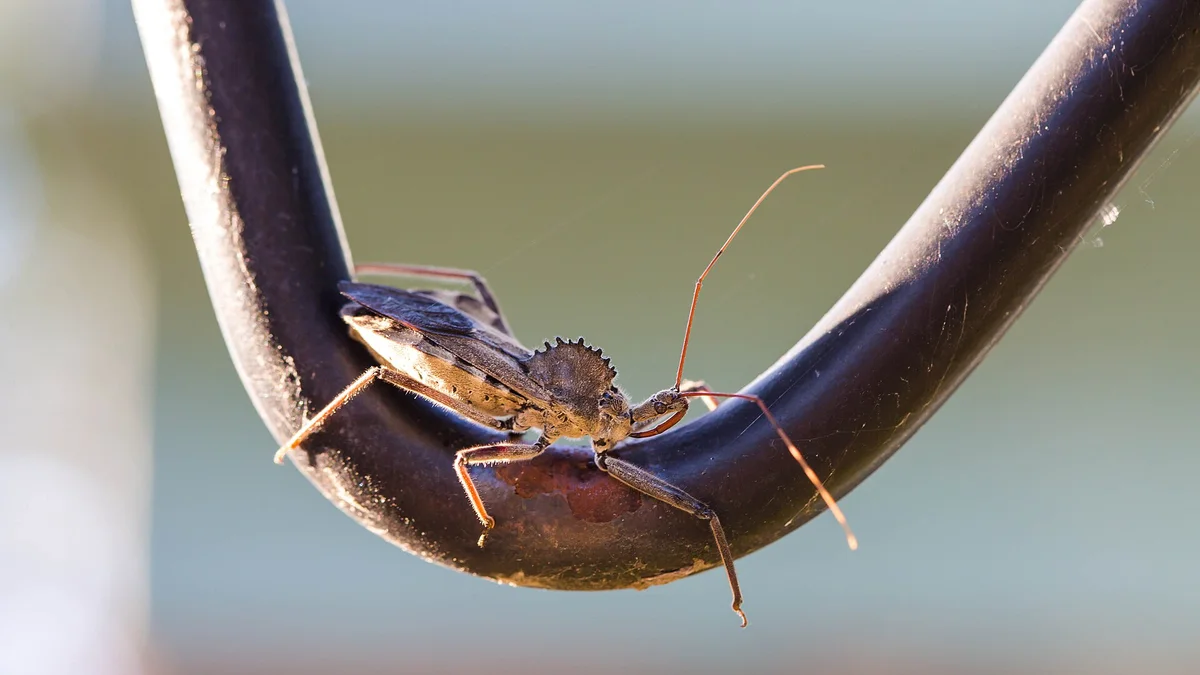
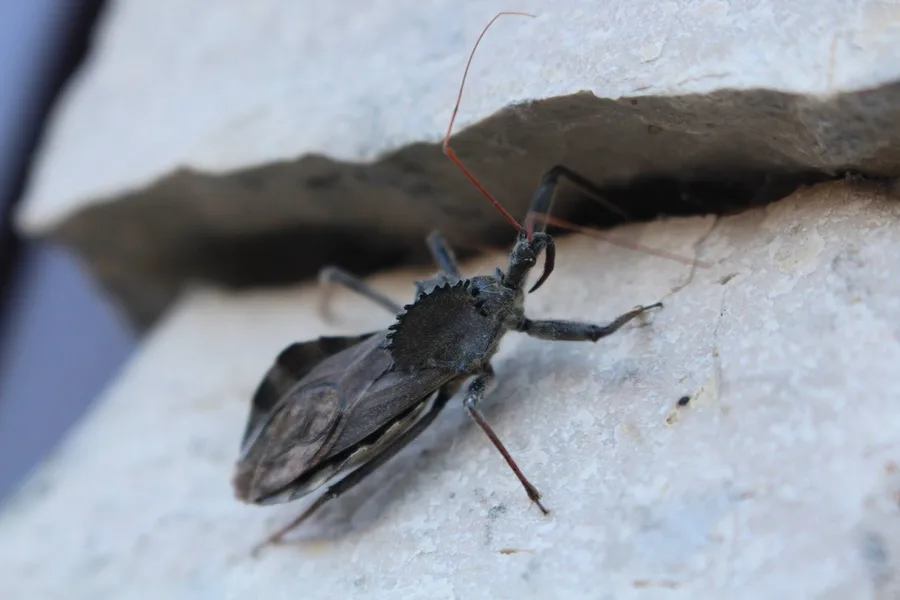
The wheel bug (Arilus cristatus) is a large gray or brown assassin bug, 1 to 1 1/2 inches long, with a toothed, cogwheel-shaped crest on its back. It is the only insect in the United States with that crest. Wheel bugs hunt caterpillars, beetles, stink bugs and other insects, so extension entomologists count them as beneficial, but the bite is very painful. Leave them alone, and never pick one up bare-handed. Below, our own count of 64,168 US iNaturalist records shows when nymphs and adults appear and what wheel bugs are photographed eating, bees included.
Key Takeaways
- Look for the cog-like “wheel” on the thorax: Illinois Extension says no other U.S. insect has one. Adults are 1 to 1 1/2 inches long and gray to grayish-brown; nymphs are red and black, with no wheel.
- In our count of US research-grade iNaturalist records, nymph sightings peak in June and adult sightings in October. Egg masses sit on twigs through the winter.
- Wheel bugs eat caterpillars, beetles, sawfly larvae, aphids and stink bugs. They take some bees too: 26 of the 109 prey records we counted were bees, against 35 beetles.
- The bite is defensive, but Illinois Extension describes it as being as bad as or worse than a wasp or hornet sting, with numbness for days.
- Wheel bugs do not feed on human blood and are not kissing bugs (Virginia Tech). Move one with gloves or a stick.
Table of Contents
- What a Wheel Bug Is
- How to Identify an Adult Wheel Bug
- Wheel Bug Nymphs and Egg Masses
- When Wheel Bugs Show Up: Nymphs vs Adults by Month
- Where Wheel Bugs Live in the US
- What Wheel Bugs Eat
- Do Wheel Bugs Eat Bees?
- The Wheel Bug Bite
- Wheel Bug vs Kissing Bug and Other Look-Alikes
- Is a Wheel Bug Good for Your Garden?
- Frequently Asked Questions
What a Wheel Bug Is
The wheel bug is a true bug (order Hemiptera) in the assassin bug family, Reduviidae, and the Missouri Department of Conservation calls it North America’s largest assassin bug. Smaller relatives include the flower-dwelling ambush bugs and other assassin bugs that wait for pollinators on blossoms.
A wheel bug grabs prey with its front legs, stabs it with a stiff beak, and injects saliva that paralyzes the insect and starts digesting it, then sucks out the liquefied insides (Illinois Extension). It never feeds on plants, which is why Virginia Cooperative Extension says it is not a plant pest.
How to Identify an Adult Wheel Bug
The crest settles it. Illinois Extension describes a prominent, cog-like toothed wheel on the thorax with 8 to 12 teeth, and says no other insect in the U.S. has such a structure. Other features, from Virginia Cooperative Extension’s wheel bug fact sheet and the University of Kentucky:
- Size: 1 to 1 1/2 inches long.
- Color: gray to grayish-brown, sometimes nearly black, with reddish-brown antennae, beak and lower legs.
- Head: narrow, with a curved beak that folds under the body.
- Abdomen: broad and flat, with alternating dark and light bands along the flared edge.
- Scent glands: disturbed adults can push out a bright orange scent gland from the rear (Kentucky).
- Flight: adults fly “noisily and clumsily,” in Missouri’s words.
Wheel Bug Nymphs and Egg Masses
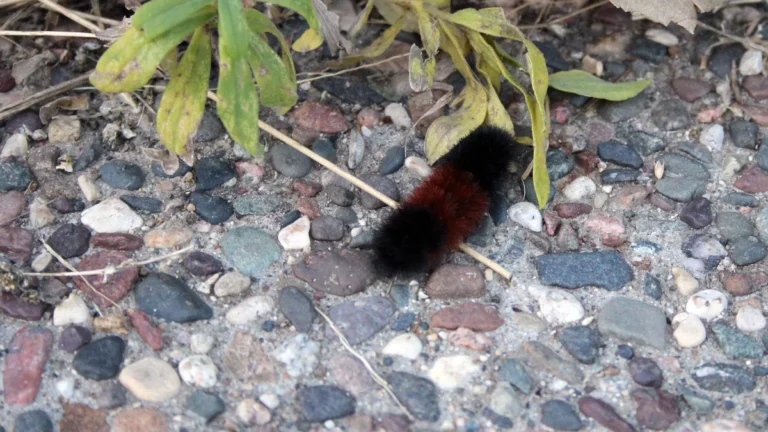
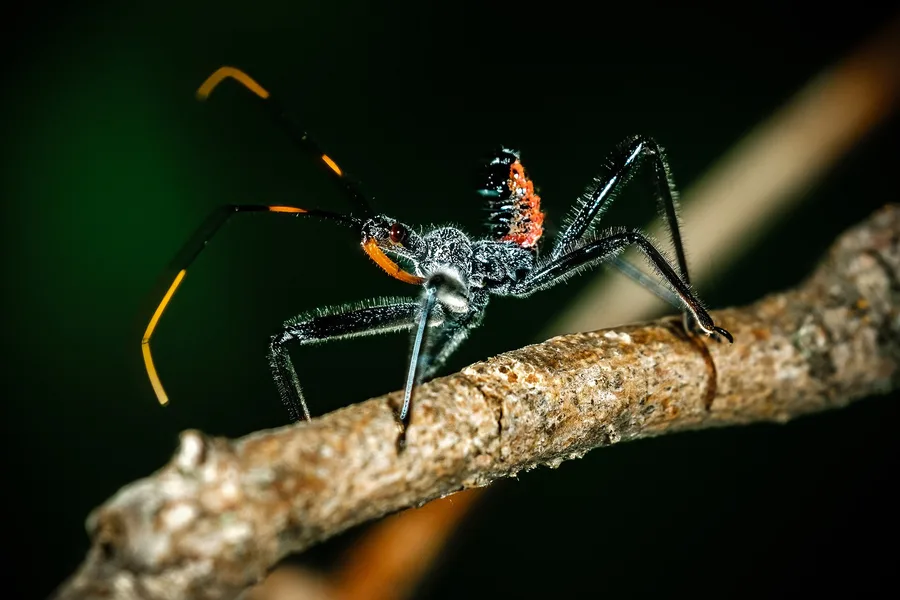
Young wheel bugs look so different from adults that many people do not connect them. Illinois Extension says nymphs are red and black when they hatch, and later stages turn black and gray. Virginia Tech describes newly emerged nymphs as bright orange, with a reddish-orange abdomen that curves upward until the nymph matures, and Ohio State says nymphs are commonly mistaken for spiders. Nymphs never have the wheel; it appears only at the final molt. Kentucky counts five nymphal stages.
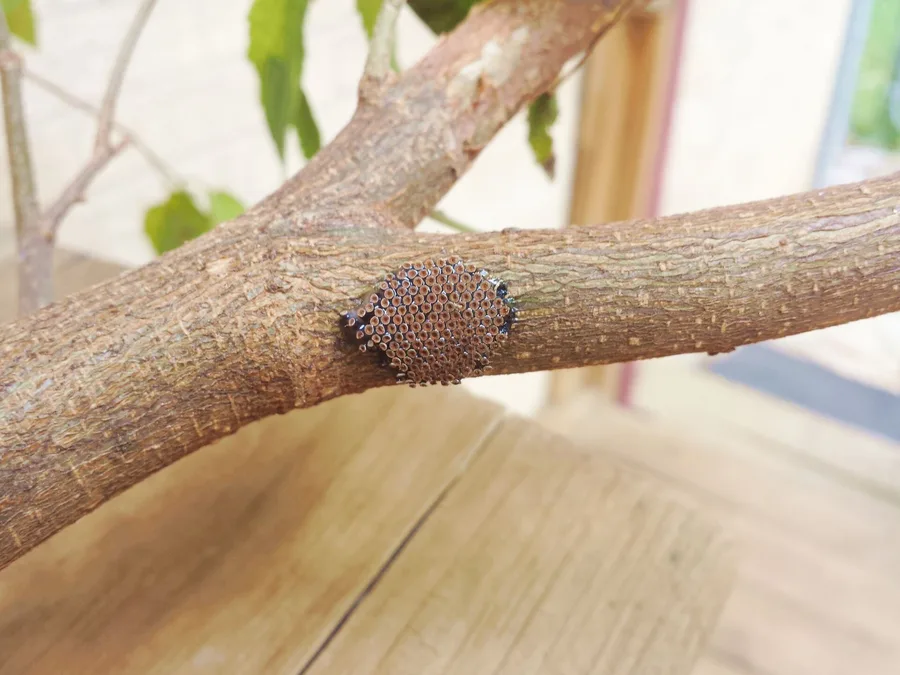
Females lay eggs in fall on the twigs and branches of trees and shrubs, and the eggs stay there all winter. Virginia Tech describes barrel-shaped eggs cemented together in masses of 10 to 40, in a pattern somewhat like honeycomb, that hatch in May and June. If you find a mass, leave it where it is: it is next year’s crop of caterpillar hunters.
When Wheel Bugs Show Up: Nymphs vs Adults by Month
People tend to notice the big adults in late summer and fall and overlook the small nymphs. To put numbers on that, we pulled every research-grade US observation of Arilus cristatus from the iNaturalist API on November 22, 2026 (“research grade” means at least two people agreed on the identification): 64,168 records, of which 22,484 were tagged as nymphs, 35,064 as adults and 1,275 as eggs.
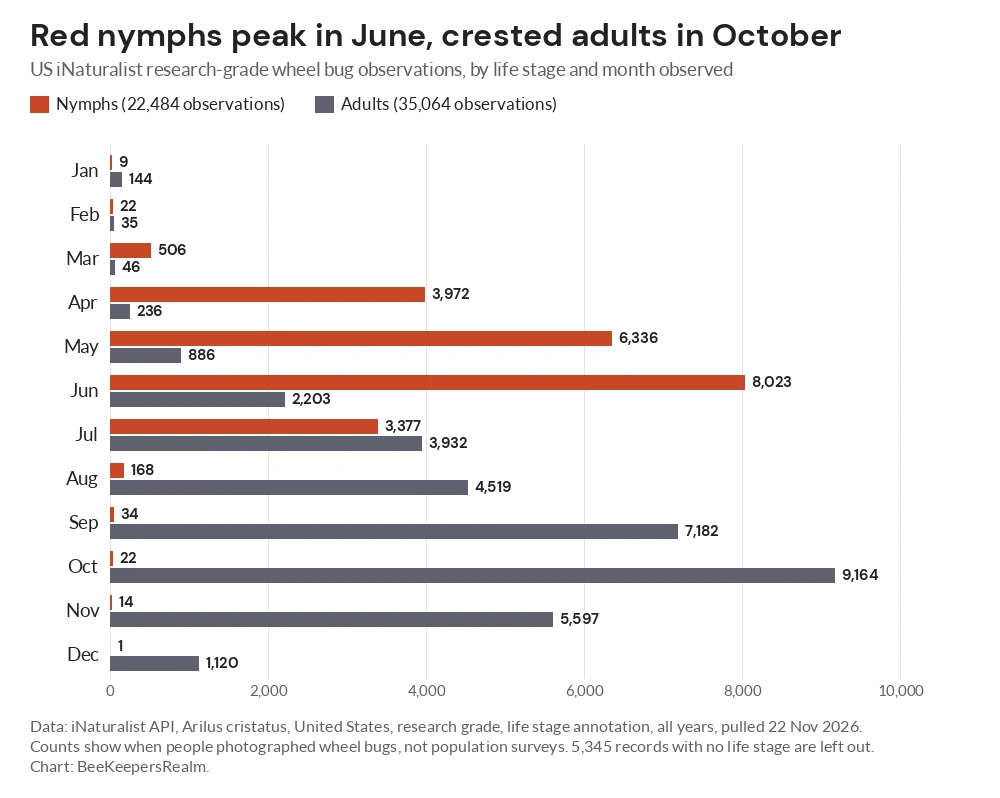
The two life stages barely overlap. April through July hold 96.5% of nymph records, with June the peak at 8,023. July is the first month with more adults than nymphs, and adult records then climb to a peak in October (9,164, or 26.1%); September through November hold 62.6%. Egg records cluster in the cold months, with 75.1% between October and April, when the masses sit on bare twigs. These counts show when people photographed wheel bugs, not how many there are, but they fit Virginia Tech’s account of eggs hatching in May and June.
Where Wheel Bugs Live in the US
Penn State Extension says wheel bugs are native to eastern North America, and the Carnegie Museum of Natural History puts their range across the southern half of the United States, north to the upper Midwest and southern New England. Our iNaturalist count shows the same pattern: Texas alone accounts for 20.5% of US research-grade records, and the ten states below hold 72.3% of them.
| State | Research-grade records | Share of US records |
|---|---|---|
| Texas | 13,170 | 20.5% |
| Virginia | 5,799 | 9.0% |
| North Carolina | 5,006 | 7.8% |
| Florida | 4,498 | 7.0% |
| Maryland | 3,844 | 6.0% |
| Pennsylvania | 3,361 | 5.2% |
| Oklahoma | 2,954 | 4.6% |
| Missouri | 2,654 | 4.1% |
| Ohio | 2,607 | 4.1% |
| Illinois | 2,476 | 3.9% |
iNaturalist API, Arilus cristatus, research grade, all years, pulled November 22, 2026. Records also reflect where iNaturalist users live.
Twenty-eight states have at least 100 records. At the edges the numbers fall away: Michigan has 54, California 2, and eight states, including Minnesota, Oregon and Alaska, none.
What Wheel Bugs Eat
Wheel bugs are generalists. Illinois Extension lists caterpillars, beetles, sawfly larvae, aphids and stink bugs, and says wheel bugs are one of the few insects that feed on the invasive brown marmorated stink bug. Ohio State calls caterpillars and sawfly larvae their favored food, the Missouri Department of Conservation names Japanese beetles among the pests they take, and Penn State says they eat any insect they can overpower.
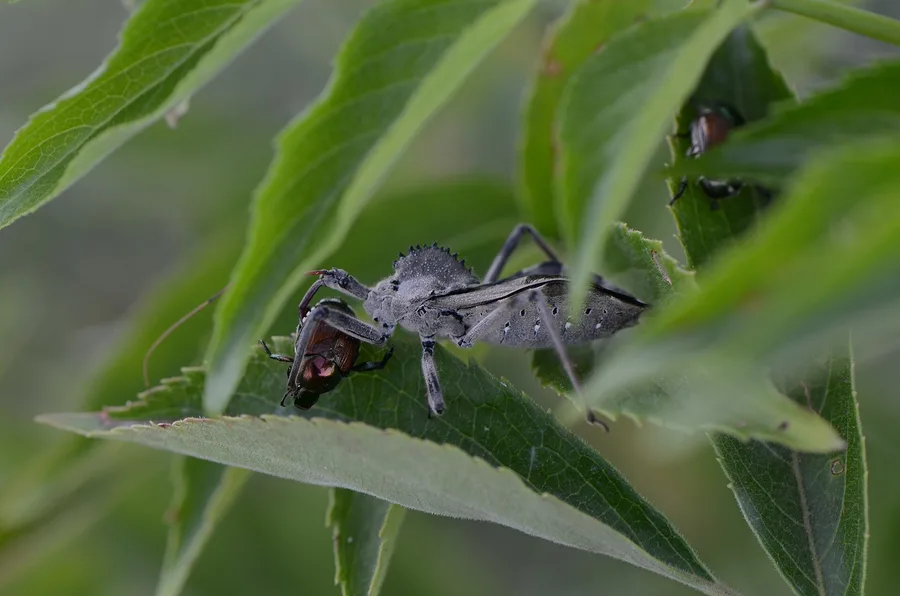
Those lists say what wheel bugs can eat, not how often. Some iNaturalist observers record the prey, so we counted 109 prey records on 108 research-grade US wheel bug observations and sorted them into groups.
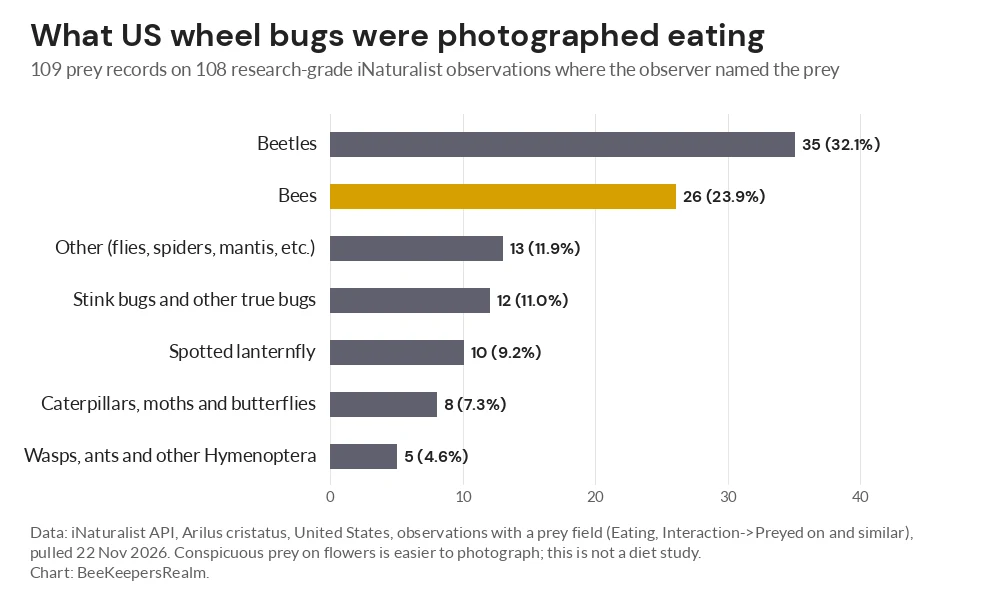
Beetles lead with 35 records (32.1%), including five Japanese beetles and seven lady beetles, and bees come second with 26 (23.9%). Then come stink bugs and other true bugs (12), the invasive spotted lanternfly (10), caterpillars, moths and butterflies (8), and wasps and ants (5). The other 13 were flies, spiders, a praying mantis and other prey. Two cautions: these observations are only 0.17% of US wheel bug records, and a bug eating a bumble bee on a flower is easier to spot and photograph than one eating a caterpillar under a leaf. This is what people noticed, not a diet study.
Do Wheel Bugs Eat Bees?
Yes, sometimes. Illinois Extension says that because wheel bugs are generalist predators, they may also eat beneficial insects such as honey bees and wasps. Our 26 bee records break down into 5 honey bees, 7 bumble bees, 1 sweat bee and 13 bees identified only as “bees” or to the family Apidae. Missouri says they prowl around flowers and gardens, which puts foraging bees within reach.
“However, the benefit of their feeding on pest insects far outweighs the occasional beneficial insect that may be eaten.”
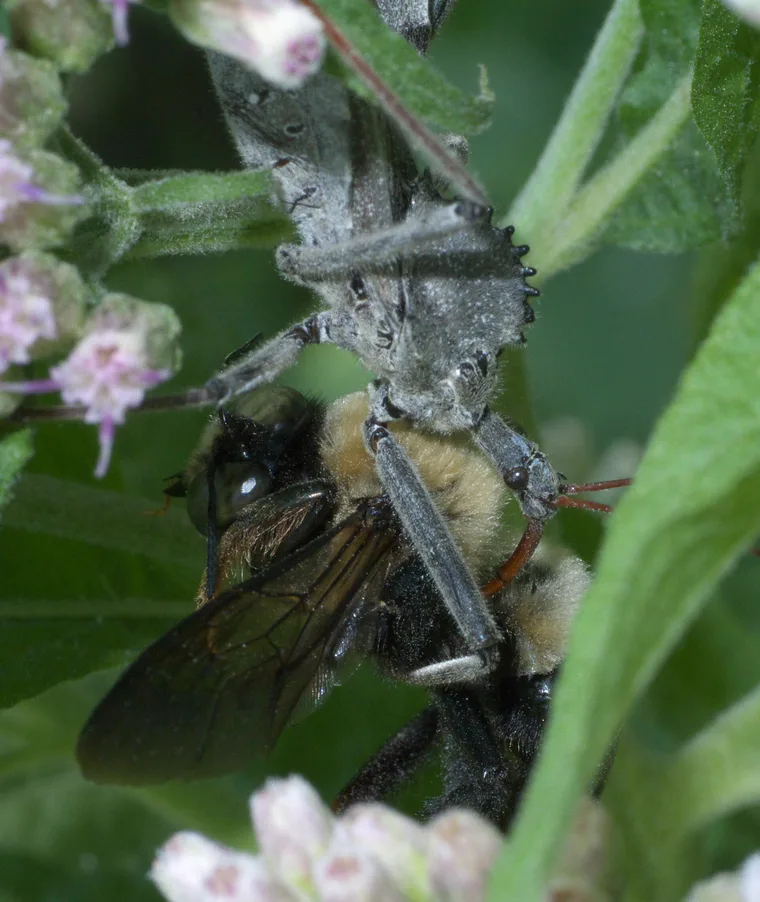
For beekeepers, scale matters: a wheel bug catches one insect at a time, and none of the extension sources we reviewed calls it a pest of honey bee hives. Spraying one on a flower your bees work would hit the bees too, so save pollinator-safe pest control for real pests. Our guide to carpenter bees covers the large native bee in the photo above.
The Wheel Bug Bite
This is educational information, not medical advice. If a bite worries you, especially if you notice any sign of an allergic reaction, contact a doctor; Poison Control (1-800-222-1222) also answers questions about bites and stings.
Wheel bugs do not hunt people. Illinois Extension says they are not aggressive but will defend themselves if handled, and Missouri says crushing or slapping at them generally causes them to bite. Nymphs can bite too: the University of Florida says both nymphs and adults should be avoided or handled with caution, and that the bite usually is more severe than a bee sting.
- Pain: as bad as or worse than a wasp or hornet sting, lasting several minutes at first (Illinois Extension). Ohio State says equal to or more powerful than a hornet sting, a step up from the bee and wasp stings most gardeners know.
- Afterward: numbness for several days, and a wound that may take a few weeks to heal (Illinois Extension).
- Tissue damage: Penn State says the bite can result in local tissue death.
“Their bite is extremely painful and can result in local tissue death, so wheel bugs should not be handled without gloves or using a stick or other implement.”
Bob Androw of the Carnegie Museum of Natural History picked one up by the wheel under gas station lights. The bite felt at first like a tiny electrical shock; within a minute, a burning sensation spread along his thumb.
“The pain reached a crescendo in about 5 minutes and stayed at that level for several hours.”
He adds that the bite could be worse for people who are sensitive or allergic to it. What a bite does not do is spread disease: Virginia Tech says wheel bugs do not feed on mammalian blood.
Wheel Bug vs Kissing Bug and Other Look-Alikes
The most worrying mix-up is with the kissing bug, a blood-feeding assassin bug that can carry the parasite behind Chagas disease. Ohio State says no kissing bug has a wheel-like structure on its back, and that wheel bugs do not have red spots on the upper edge of the abdomen. Penn State describes the eastern conenose kissing bug’s abdomen as checkered red and brown along that edge.
| Insect | Size | What to look for | Bites people? | Source |
|---|---|---|---|---|
| Wheel bug, adult | Up to 1 1/2 in | Gray to dark brown; toothed “wheel” crest in the middle of the back; no red spots on the abdomen edge | Only in defense; extremely painful | Penn State, Ohio State |
| Wheel bug, nymph | Smaller | Red-orange abdomen held curved upward; black legs; no crest; often mistaken for a spider | Can bite; handle with caution | Virginia Tech, Missouri, Ohio State, Univ. of Florida |
| Eastern conenose kissing bug (Triatoma sanguisuga) | About 0.6 to 0.8 in | Dark abdomen underneath, checkered red and brown along the top edge; no crest | Feeds on blood; can carry the Chagas parasite | Penn State, Ohio State |
| Black corsair and masked hunter | About 0.6 to 0.8 in | Adults mostly all black; often found indoors hunting other insects | Painful bite if handled | Penn State |
Quick check: a cogwheel crest means wheel bug. A smaller dark bug with red-and-black checkered edges and no crest needs a closer look.
Wheel bugs also get confused with stink bugs, because both are true bugs that smell when bothered. A stink bug’s body is a broad shield with no crest, and wheel bugs eat stink bugs.
Is a Wheel Bug Good for Your Garden?
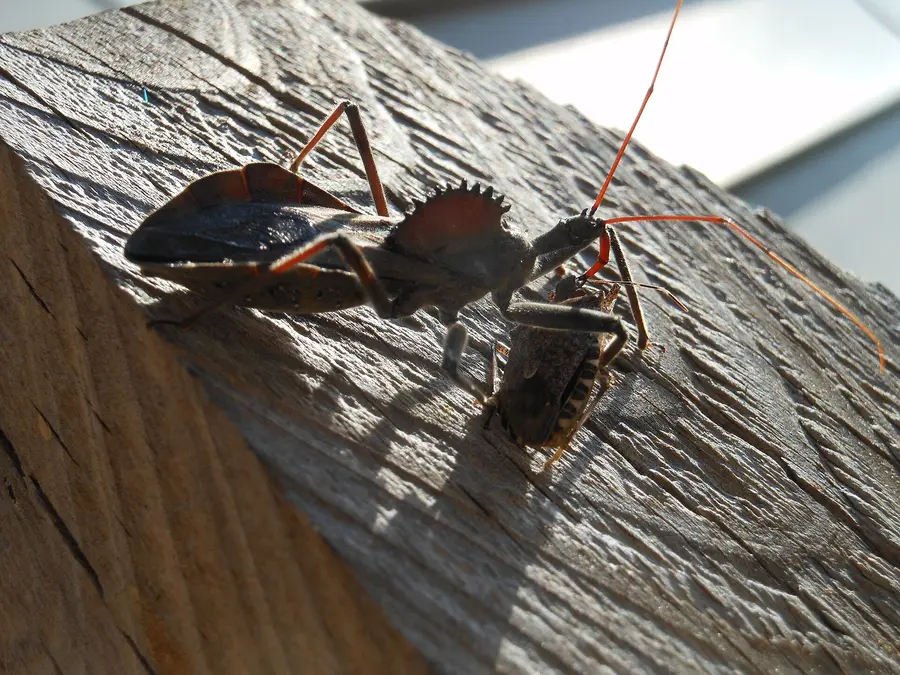
Yes. Virginia Tech calls wheel bugs beneficial insects that should be considered valuable allies, and advises leaving them alone whenever possible; because they do not feed on plants, there is no need to spray them. Missouri and Penn State also call them beneficial. When one turns up where people are:
- On you: Missouri says wheel bugs that land on people can be brushed off easily. Do not slap or crush one.
- On a screen, porch or deck: Virginia Tech says homeowners often find the slow-moving adults here. Move one to a shrub with a stick or gloves (Penn State).
- Near doors or where children play: Virginia Tech says a fly swatter can be used.
For more of the predators and plant feeders that share a yard with them, see our garden and household insects guides.
Frequently Asked Questions
What happens if a wheel bug bites you?
Expect sharp pain for several minutes, as bad as or worse than a wasp or hornet sting by Illinois Extension’s account, then numbness that can last several days and a wound that may take a few weeks to heal. It does not transmit disease.
What states have wheel bugs?
Mainly the eastern and southern US, north to the upper Midwest and southern New England. Texas, Virginia, North Carolina, Florida and Maryland lead in iNaturalist records.
How rare is a wheel bug?
Not rare. The Missouri Department of Conservation lists it as common, and iNaturalist holds 64,168 research-grade US records.
Is a wheel bug the same as a stink bug?
No. Both are true bugs that release an odor when disturbed, but the wheel bug is an assassin bug that hunts other insects, stink bugs among them.
Should I get rid of wheel bugs?
No. Extension services call them beneficial predators of garden pests. Move one with a stick or gloved hand if it is near a door or where children play.
Can a wheel bug fly?
Yes. Adults fly noisily and clumsily, according to the Missouri Department of Conservation. Nymphs cannot fly.
Are wheel bugs poisonous?
They are venomous rather than poisonous: they inject saliva that paralyzes and digests their prey, and the same bite is very painful to people.
What do baby wheel bugs look like?
Nymphs are small, long-legged and red or orange with black, often with the abdomen curled upward, and have no wheel.
What kills wheel bugs?
Cold weather: Virginia Tech says the adults die with cold weather, and only the eggs survive the winter. Birds and other vertebrates eat them too, the Missouri Department of Conservation notes.
The Bottom Line
A wheel bug in the garden is a sign of a working food web, not a problem. Learn the crest, the red nymphs and the egg masses, admire them from a distance, and move one with a stick or gloves if it ends up where people are.
Image credits: featured photo of a wheel bug by Melissa McMasters, via Wikimedia Commons, CC BY 2.0, cropped to 16:9 and resized. Other photos are credited in their captions. Charts by BeeKeepersRealm from iNaturalist data.