Reviewed by Michael R. · How we review
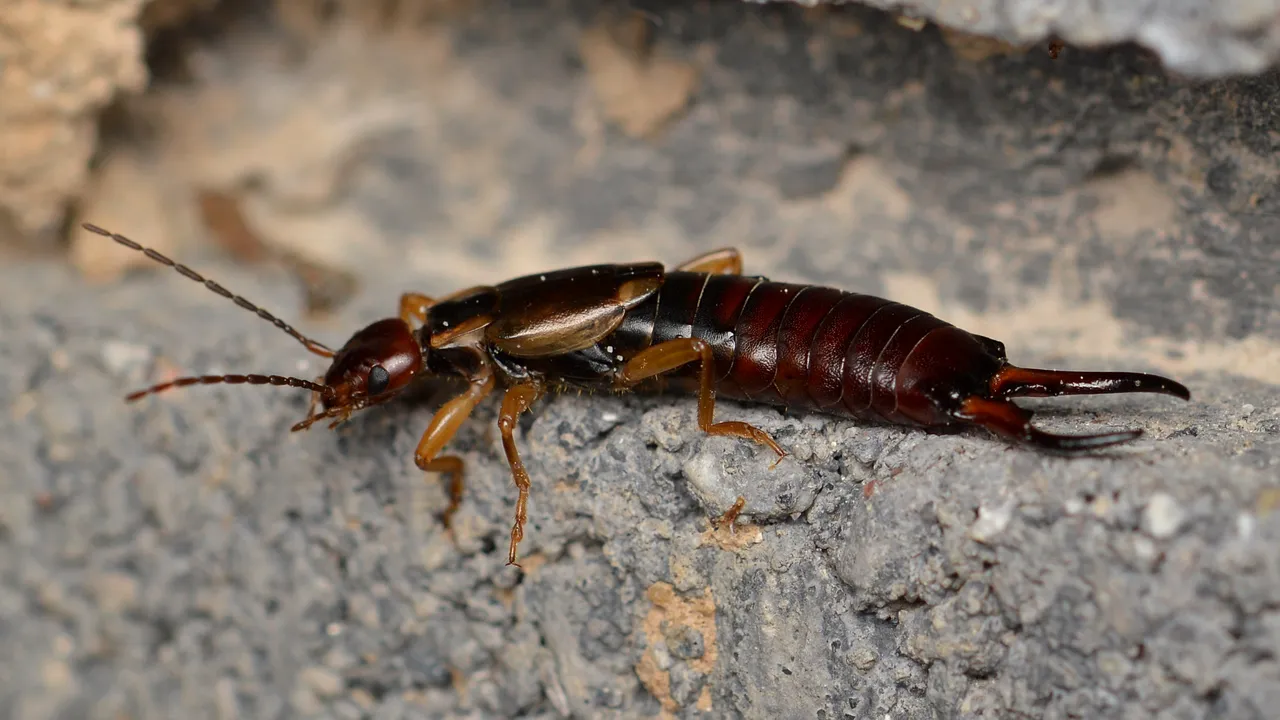
An earwig is a small, flat, reddish-brown insect in the order Dermaptera with a pair of pincers (cerci) at the tip of its abdomen. Most American earwigs are introduced European earwigs that hide in damp places by day and feed at night. They are not venomous, spread no disease and do not seek out ears; at most they pinch when handled. They eat aphids as well as seedlings and soft fruit, and traps plus fewer damp hiding places control them best.
Every fact below is credited to a university, extension program, agency or peer-reviewed paper; the observation counts are our own pull of iNaturalist records. We claim no first-hand experience trapping earwigs.
Key Takeaways
- Male European earwigs have strongly curved pincers; females have smaller, straighter ones (Virginia Tech; UC IPM).
- An earwig can pinch if trapped in clothing or sat on, but no venom is transferred and the pinch rarely breaks the skin (UC IPM; NPMA).
- They do not hunt for ears. A 2021 case report documented one in a man’s ear canal; his eardrum was undamaged.
- The “European earwig” is really a group of look-alike species: in 18,738 US iNaturalist records, the West Coast has the western earwig and the East the European earwig proper.
- Earwigs do not become established indoors (Ohio State). Fix moisture and vacuum the ones that get in.
- Rolled newspaper, cardboard and oil-filled cans are the recommended traps; UC IPM says insecticides should rarely be needed.
Table of Contents
- What Is an Earwig?
- Male vs Female Earwig Pincers
- Do Earwigs Pinch, Bite or Go in Your Ears?
- How to Get Rid of Earwigs in the Garden
- Earwigs in the House: Why They Come In and What to Do
- Where and When Earwigs Are Seen in the US
- Earwig Species in the US
- Earwig Life Cycle and Maternal Care
- What Earwigs Eat and How to Spot Their Damage
- Earwigs, Beehives and Bee Nests
- Earwig Myths vs Facts
- Frequently Asked Questions
- Sources
What Is an Earwig?
Earwigs make up the insect order Dermaptera, about 2,000 species worldwide (Wikipedia). Penn State Extension counts 22 in the United States, only four or five of which commonly invade homes; Clemson’s Home & Garden Information Center counts 28.
The one almost everyone means is the European earwig, Forficula auricularia, accidentally introduced from Europe in the early 1900s (UC Statewide IPM Program). The Connecticut Agricultural Experiment Station (CAES) dates the first US report to Rhode Island in 1901.
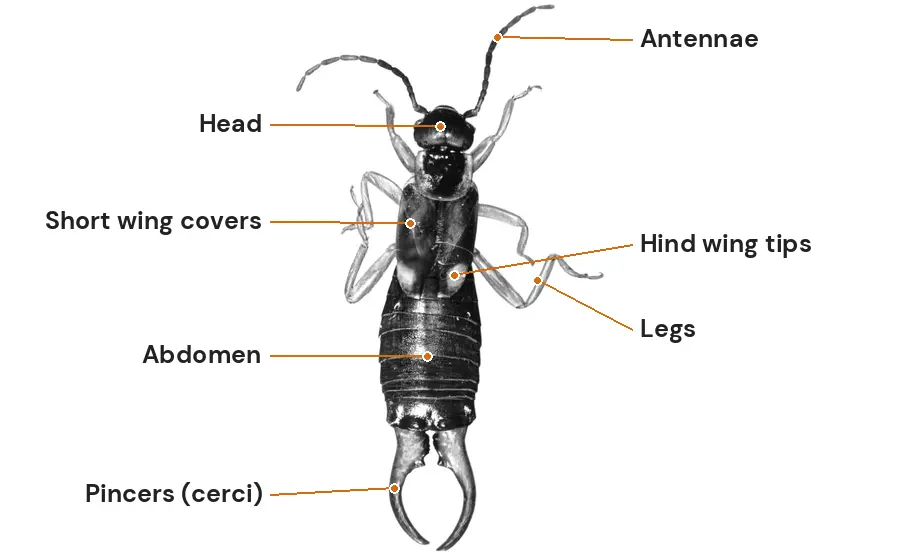
Adults are about 5/8 to 3/4 inch long, reddish brown, with a reddish head and yellow-brown legs (UC IPM; Penn State). Most have wings folded under short wing covers but seldom fly (UC IPM); Ohio State says the hind wings fold origami-style with up to 20 folds. Nymphs look like smaller adults.
Earwigs are nocturnal and need moisture. By day they hide under boards, stones, mulch and bark, inside flowers and in damaged fruit. When threatened they can release a foul-smelling, yellowish-brown liquid (Wisconsin Horticulture).
Male vs Female Earwig Pincers
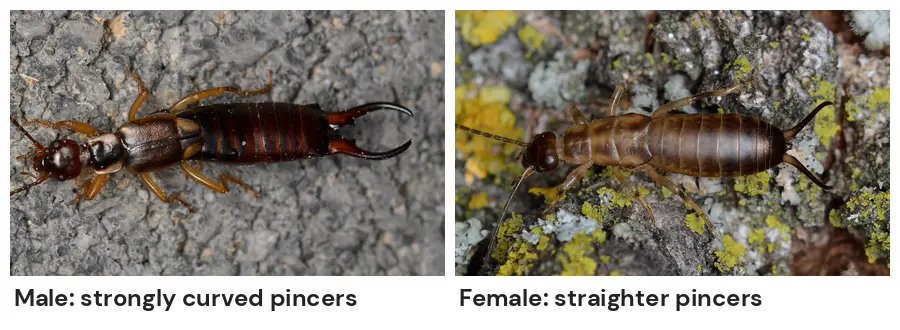
The pincers are modified cerci (tail appendages). UC IPM says they are used for defense and are somewhat curved in the male but straighter in the female; Penn State adds that they also help catch prey.
| Feature | Male | Female | Source |
|---|---|---|---|
| Pincer shape | Strongly curved | Smaller, straighter, less curved | Virginia Tech; UC IPM; Colorado State |
| Pincer size | About 3/16 in on some males, 3/8 in on others | Smaller than the male’s | Penn State; Virginia Tech |
| Main uses | Defense, courtship, fighting rival males | Defense, courtship | Virginia Tech; UNH Extension; Colorado State |
| Nymphs | Look like adult females but smaller and lighter in color | UNH Extension | |
Do Earwigs Pinch, Bite or Go in Your Ears?
They can pinch, but only in self-defense. When threatened, an earwig bares its pincers in a defensive posture (SARE), often with the abdomen curled up as in the photo below. UC IPM’s Pest Notes put it this way:
“Contrary to popular myth and despite their ferocious appearance, earwigs generally don’t attack humans, although they are capable of biting if trapped in clothing or sat upon.”
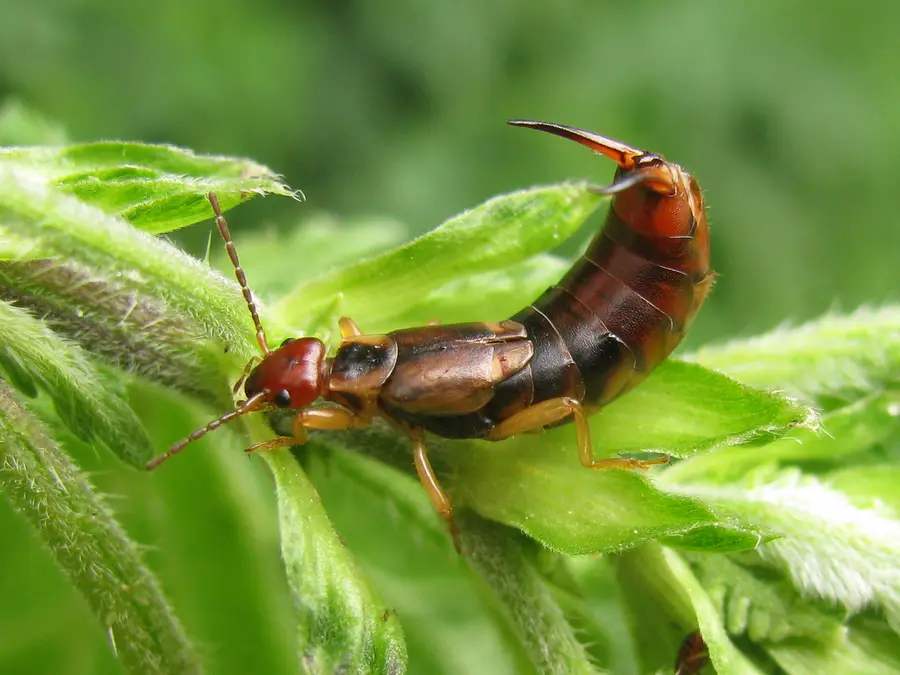
Colorado State calls it a mildly painful bite. The National Pest Management Association (NPMA) says no venom is transferred, the pinch rarely breaks the skin and earwigs do not spread disease. Shake out gloves left outdoors, and pick up indoor earwigs with a tissue, as CAES suggests.
The name comes from an old superstition. Penn State says earwigs do not crawl into the human ear, and Wisconsin Horticulture calls the idea that they bore into the brain a myth. Like any small insect, one can end up in an ear by accident: in a 2021 case report in Cureus, doctors removed an earwig from the ear canal of a 24-year-old man who woke with ear pain and ringing; his eardrum was normal.
How to Get Rid of Earwigs in the Garden
Video: in this 2.5-minute UC IPM video, the narrator says baits and sprays are often not very effective against earwigs, then shows traps of rolled newspaper, corrugated cardboard, bamboo tubes and hose set near plants just before dark and emptied into soapy water each morning, plus oil-filled cans sunk to soil level. This summary is from the video’s captions.
First decide whether you need to. UC IPM says earwigs matter if you grow vegetables, herbaceous flowers, sweet corn or soft fruits such as strawberries, and not if your yard is mainly lawn, trees and woody shrubs. Where they are a problem: trap them, remove hiding places and reduce moisture.
Set traps every night
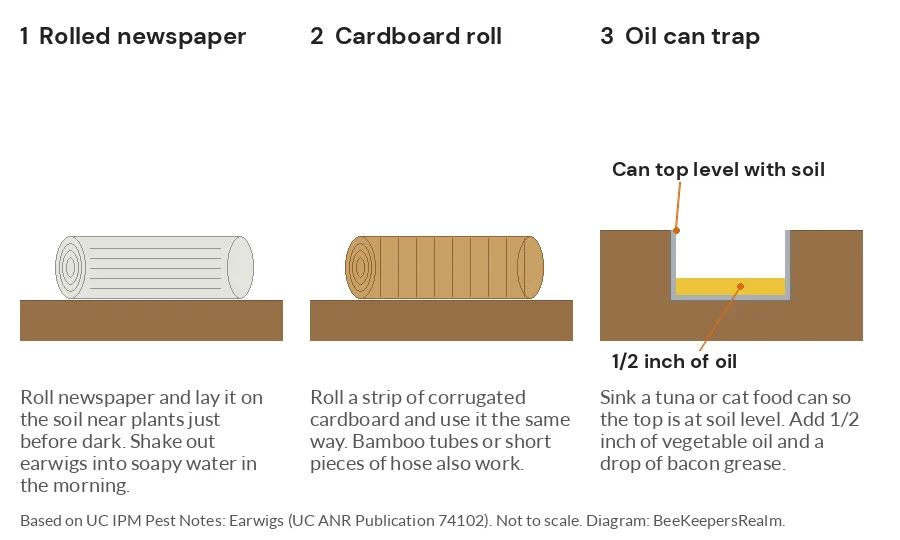
- Rolled shelters: rolled newspaper, corrugated cardboard, bamboo tubes or short pieces of hose, laid on the soil near plants just before dark. Shake the earwigs into soapy water in the morning (UC IPM). Colorado State says a little food bait inside helps; wheat bran and wheat germ worked in its trials.
- Oil traps: a tuna or cat food can with 1/2 inch of vegetable oil and a drop of bacon grease, or fish oil, sunk with the rim at soil level (UC IPM).
- Board traps: two boards with matching grooves, laid together where earwigs are active (CAES; Penn State).
Repeat daily; UC IPM says daily trapping will reduce earwig populations to tolerable levels.
Take away hiding places and moisture
UC IPM recommends clearing ivy, dense ground cover, weeds, boards and debris near vegetable and flower beds, and warns that mulches often harbor earwigs. Use drip irrigation where possible, prune fruit-tree suckers and pick soft fruit as soon as it ripens; a sticky band around the trunk keeps earwigs out of stone fruit trees. Toads, birds, chickens and ducks eat earwigs.
Baits and sprays
UC IPM says baits often are not very effective where other food is available and insecticides should rarely be needed. If you use any product, follow the label, keep it off plants in bloom and, as UC IPM advises to protect bees, apply it at night. Our guide to pollinator-safe pest control explains how to read labels with bees in mind.
Earwigs in the House: Why They Come In and What to Do
Earwigs wander inside when it is too dry, too hot or too cold outdoors (UC IPM); Ohio State points to heat and drought, and Colorado State says problems there run from mid-July to mid-September. Penn State adds that they ride in on cut flowers and luggage. Indoors they hide under rugs and near sinks, showers and basements (Colorado State; CAES).
They do not settle in. Ohio State says earwigs do not become established indoors, and UC IPM says they eventually die inside for lack of food and are not a health hazard.
- Remove them. Sweep or vacuum them up and dispose of the vacuum bag so they cannot crawl back out (UC IPM; Ohio State).
- Dry damp rooms. Ohio State suggests a dehumidifier in a damp basement.
- Seal gaps around doors, windows and vents with caulk (Colorado State).
- Clear the foundation. Pull bark mulch, leaves, ivy and wood piles away from the walls, clean gutters, fix downspouts and grade soil so water drains away (UC IPM).
- Switch outdoor bulbs to yellow or sodium vapor, which attract fewer earwigs (UC IPM).
UC IPM and Wisconsin Horticulture both say indoor insecticides are not recommended. Sealing gaps also helps against other fall invaders such as the brown marmorated stink bug and the boxelder bug, and drying damp spots helps with other moisture lovers such as the millipede. Ants trailing to food are a different problem, covered in our guide to sugar ants.
Where and When Earwigs Are Seen in the US
We pulled every US research-grade iNaturalist observation of the European earwig group on 17 November 2026: 18,738 records. iNaturalist is one of the citizen science programs that track insects; the counts are photos that volunteers confirmed, not population estimates.
Our first query, for Forficula auricularia alone, returned zero records from Washington, Oregon and California, which made no sense for an insect common across the West. The reason is taxonomy: a 2020 DNA study by González-Miguéns and colleagues found that F. auricularia is a complex of at least four look-alike species (Guillet, Josselin and Vancassel had found two sibling species in eastern North America in 2000), and iNaturalist now files western records under the western earwig, Forficula dentata. Extension fact sheets still use one name, and the advice here applies to all of them.
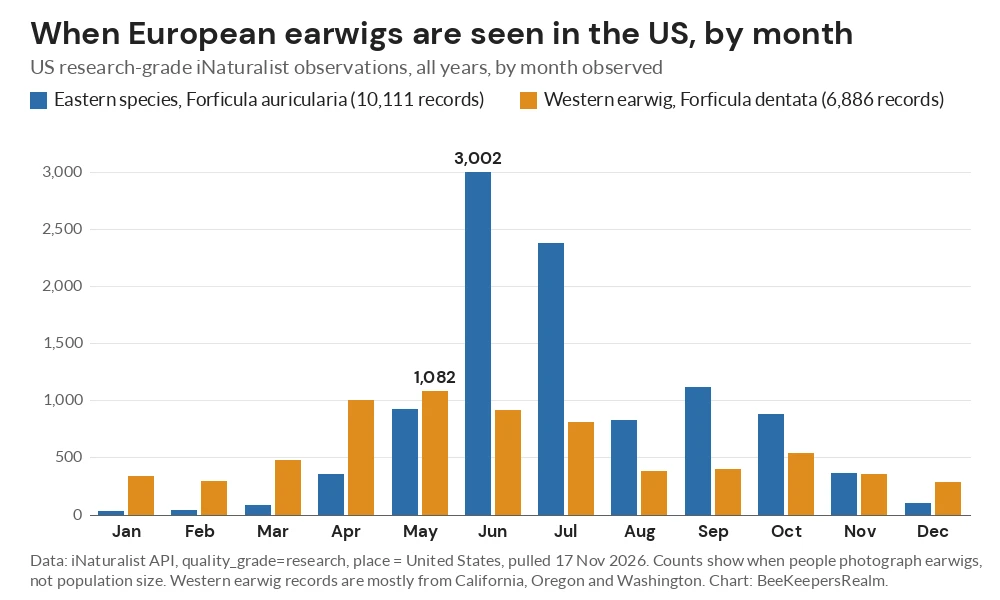
- The eastern species (10,111 records) peaks in June, with 29.7% of its records; December to February hold 1.7%.
- The western earwig (6,886 records) peaks in April and May, with 13.4% of records in December to February.
- California holds 68% of all December-to-February records, and its count falls from 922 in April to 120 in August, which fits UC IPM’s note that earwigs may be inactive in summer in hot parts of the state and active all year in mild ones.
- Of 461 records tagged as nymphs, 80% are from April to June, when the young leave the nest.
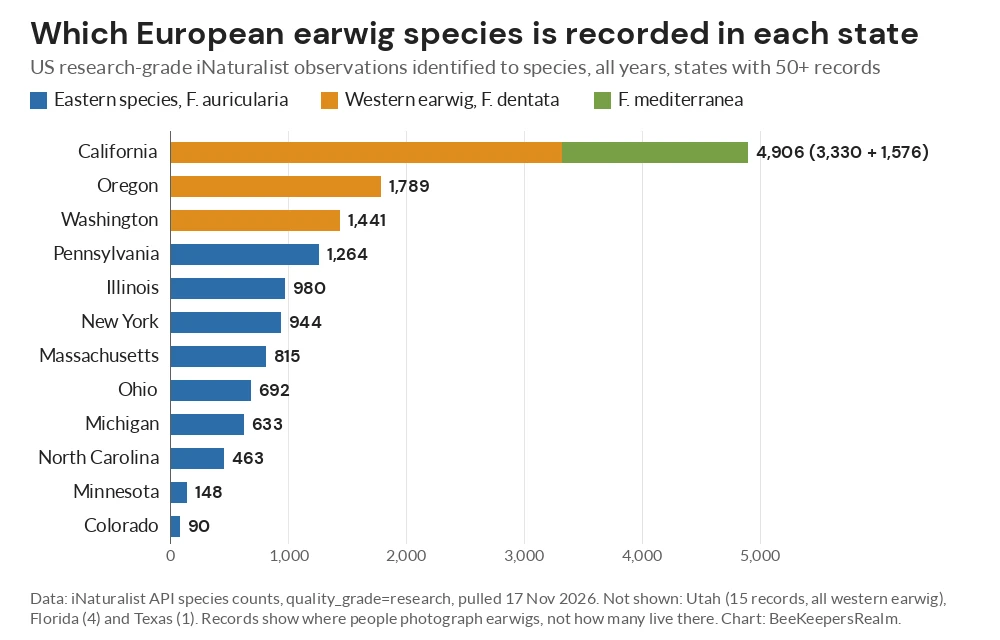
Every species-level record in Washington, Oregon and Utah is the western earwig; California has it plus 1,576 records of a third species, Forficula mediterranea; Colorado, the Midwest, the Northeast and North Carolina have only the eastern species. Records rose from 863 in 2022 to 5,990 so far in 2026, which reflects more iNaturalist users and re-identification after the split, not more earwigs.
Earwig Species in the US
iNaturalist has research-grade US records for 31 earwig species. These are the ones homeowners meet most:
| Earwig | US records | Where and what to know | Source |
|---|---|---|---|
| European earwig (Forficula auricularia, strict sense) | 10,111 | East, Midwest, Colorado. The classic garden and household earwig. | iNaturalist; Penn State; UC IPM |
| Western earwig (Forficula dentata) | 6,886 | Washington, Oregon, California, Utah. Same habits and control. | iNaturalist; González-Miguéns et al. 2020 |
| Ring-legged earwig (Euborellia annulipes) | 2,900 | Wingless, with dark-ringed legs. Ohio, southern Colorado, the South; can infest stored grain products. | Ohio State; Colorado State; Clemson |
| Striped or shore earwig (Labidura riparia) | 2,855 | Southern California and the South. Drawn to lights and smelly when crushed, but eats pests and does not damage plants. | UC IPM; Clemson |
| Forficula mediterranea | 1,576 | California; another member of the European earwig group. | iNaturalist |
Earwig Life Cycle and Maternal Care
Earwigs go from egg to nymph to adult with no pupal stage. European earwigs pair up in late summer and fall and dig a soil chamber for the winter (Penn State; CAES). In late winter the female lays her eggs and drives the male out; Penn State says the first batch holds 30 to 55 eggs.
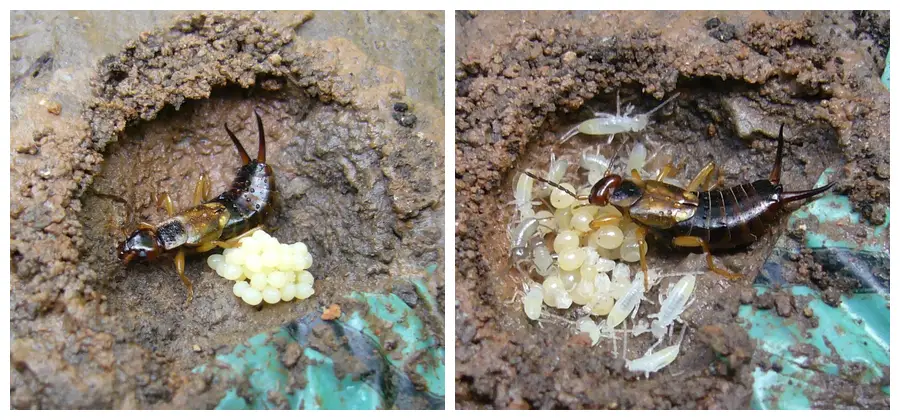
CAES says the female grooms and turns the eggs much like a hen, guards and feeds the young, and may not feed for as long as seven months. Early-spring eggs take about 70 days to hatch and later ones about 20 (Penn State). First-stage nymphs stay in the nest; second-stage nymphs forage at night and return by day; older nymphs live on their own (UC IPM).
There is one generation a year, but some females produce a second brood (CAES; Penn State), and both are adults by August and September. Wikipedia’s Forficula auricularia article, citing published research, says cold-climate populations mostly lay one clutch a year (F. auricularia) and warmer-climate ones two (F. dentata).
What Earwigs Eat and How to Spot Their Damage
Earwigs are omnivores. UC IPM calls the European earwig a voracious feeder on aphids and insect eggs that can exert significant biological control under some circumstances, and Colorado State says insects, including aphids, are its main food. Penn State adds lichens, pollen and pantry foods such as flour and bread.
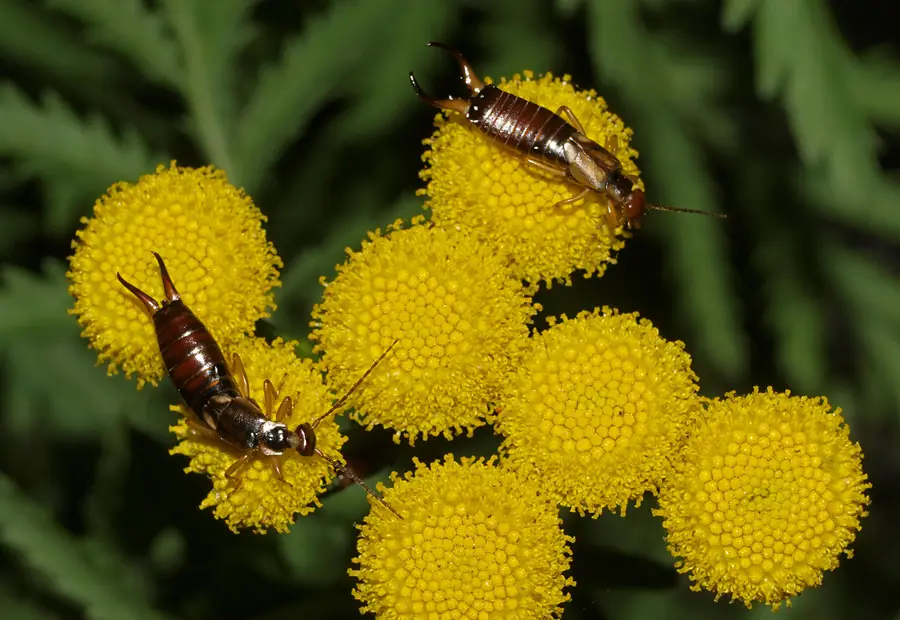
They also chew plants. UC IPM lists seedlings; soft fruit such as apricots, strawberries, raspberries and blackberries; corn silks, which prevents pollination and causes poor kernel development; and flowers including zinnias, marigolds and dahlias. Wisconsin adds hostas, lettuce, roses and seedling beans. Like the Japanese beetle, they chew flowers, but earwigs feed at night.
They also hide in holes that snails or caterpillars made, so they get blamed for damage they did not cause (UC IPM; Colorado State). This checklist draws on UC IPM and Wisconsin Horticulture:
| Sign | Earwigs | Slugs and snails | Caterpillars |
|---|---|---|---|
| Leaf holes | Many small, irregular holes; ragged edges | Similar ragged holes | Holes or chewed edges |
| Telltale trace | Small black droppings; no slime | Shiny slime trails | Webbing, frass (droppings) or pupae |
| Soft fruit | Shallow gouges or deep holes | Holes with slime nearby | Not described |
| Best check | Go out at night with a flashlight and see who is feeding (UC IPM) | ||
Earwigs, Beehives and Bee Nests
Beekeepers often find earwigs when they lift the lid. South Carolina master beekeeper Charlotte Anderson of Carolina Honey Bees writes that they are most common between the inner and outer cover or on the bottom board and in general pose no threat to honey bees or equipment. CAES notes one real cost: “They also have been observed raiding honey from honey bee hives.” Our guide to bee pests and predators covers the hive invaders that do serious harm.
Solitary bees are more exposed. SARE’s handbook Managing Alternative Pollinators says:
“Earwigs are a common nuisance associated with solitary bee nests in the eastern US.”
The same page says they eat pollen provisions, leaf nest material and sometimes bee eggs, and usually get in by climbing the shelter legs or plants touching the shelter. Coat the legs with grease or a sticky insect barrier. If you keep a mason bee house, add that step.
Earwig Myths vs Facts
| Claim | What the evidence says | Source |
|---|---|---|
| Earwigs crawl into ears and lay eggs in your brain | Myth. They do not seek out ears or reach the brain; one can wander into an ear by accident. | Penn State; Wisconsin Horticulture; Cureus 2021 |
| Earwigs are venomous | False. No venom is transferred by the pinch. | NPMA |
| Earwig bites are dangerous | No. A mild pinch that rarely breaks the skin and spreads no disease. | UC IPM; Colorado State; NPMA |
| All earwigs are pests | No. They eat aphids, mites and insect eggs; damage matters mainly on seedlings, soft fruit, corn and some flowers. | UC IPM; Colorado State |
| Earwigs infest houses | No. They wander in from outside and do not become established indoors. | Ohio State; UC IPM |
| Earwigs cannot fly | Most can but seldom do; the ring-legged earwig is wingless. | UC IPM; Ohio State |
The praying mantis has a similar reputation: it may nip a finger but is harmless to people.
Frequently Asked Questions
Are earwigs harmful to people?
No. They can give a mild pinch if handled or sat on, but they carry no venom, rarely break the skin and do not spread disease (NPMA; Colorado State).
Is it bad if I have earwigs in my house?
It usually means moisture or shelter near the foundation. Earwigs do not become established indoors and die inside for lack of food, so fix damp spots and gaps rather than spraying (Ohio State; UC IPM).
Why shouldn’t I kill earwigs?
Removing the ones indoors is fine. Outdoors they eat aphids and insect eggs, and UC IPM says they do not need managing in many yards, such as those with mainly lawn, trees and woody shrubs.
What kills earwigs immediately?
Soapy water, which is how UC IPM says to empty traps each morning. Vacuuming removes indoor earwigs just as fast.
What happens if an earwig gets in your ear?
It can cause pain and ringing until a doctor removes it, as in the 2021 Cureus case, where the eardrum was unharmed. It will not burrow into the brain.
The Bottom Line
An earwig is a harmless, moisture-loving night feeder that can be a garden helper or a pest. Trap it, dry out its hiding places and keep sprays off flowers bees visit. For other insects that wander into homes and gardens, browse our garden and household insects guides.
Image credits: Featured photo: male European earwig in Guelph, Ontario, Ryan Hodnett, CC BY-SA 4.0, via Wikimedia Commons (cropped). Charts use US research-grade iNaturalist observations pulled 17 November 2026. Other credits are in the captions.
Sources: UC Statewide IPM Program, Pest Notes: Earwigs; Penn State Extension, European Earwigs; Colorado State University Extension; Ohio State University Extension, Earwigs (HYG-2068); Wisconsin Horticulture; Clemson HGIC; UNH Extension; Connecticut Agricultural Experiment Station; Virginia Tech ENTO-194NP; National Pest Management Association; SARE; Jeong, Shin and Kim 2021, Cureus; González-Miguéns et al. 2020; Guillet, Josselin and Vancassel 2000; iNaturalist.