Reviewed by Michael R. · How we review
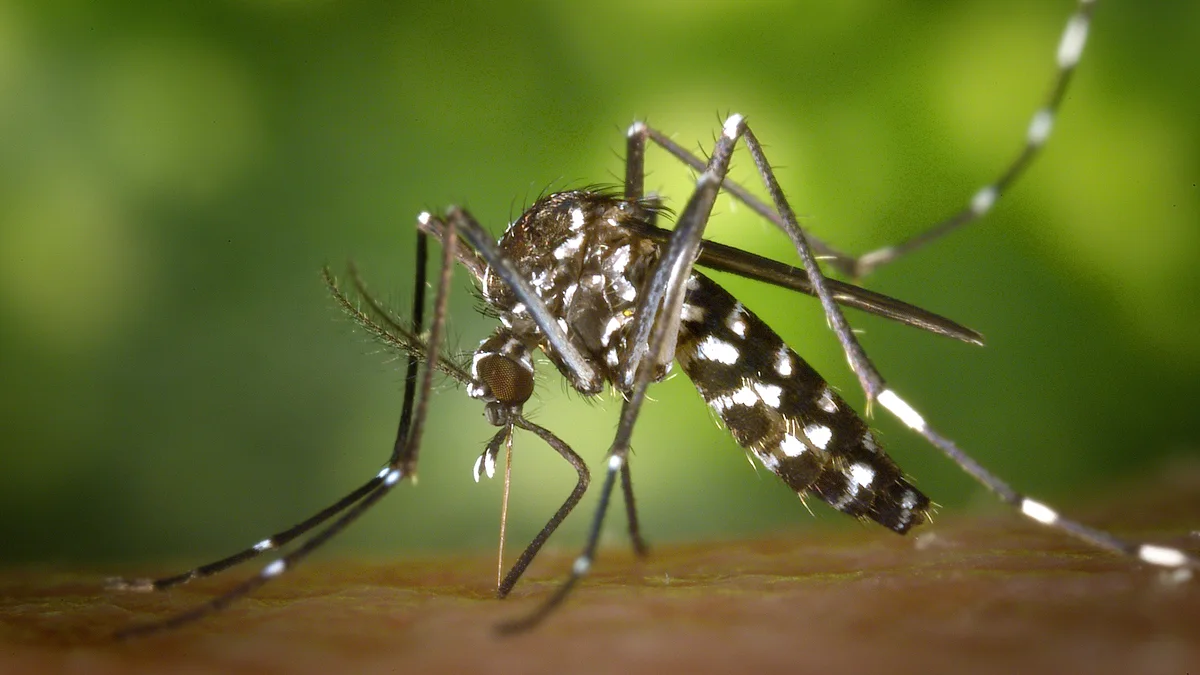
A mosquito is a small flying insect in the family Culicidae whose females bite to get the blood they need to make eggs. Males cannot pierce skin and live on flower nectar and fruit juices. The CDC counts more than 3,700 kinds worldwide and more than 200 in the continental United States and its territories, but only about 12 of the US kinds spread germs that make people sick; most are nuisance biters.
Below: the main US kinds, the life cycle, bites, diseases, pollination, and bee-safe control, including what EPA-registered spray labels say about honey bees and what beekeepers can do before a spray night. Our own count of 34,649 US iNaturalist records shows when and which mosquitoes Americans find.
Educational information, not medical advice. Health facts here come from the CDC’s mosquito pages and pesticide facts from EPA pages and product labels; ask a doctor about symptoms and follow the label on any product you use.
Key Takeaways
- Only female mosquitoes bite. Both sexes feed on nectar and plant juices, and adults live about 2 to 4 weeks (CDC).
- Aedes and Culex mosquitoes go from egg to adult in 7 to 10 days (CDC), so emptying and scrubbing water-holding containers once a week breaks the cycle.
- West Nile virus is the leading mosquito-borne disease in the contiguous US, with about 2,000 diagnosed cases a year (CDC).
- Bti mosquito dunks have minimal toxicity to honey bees (EPA); adult-mosquito sprays are labeled “highly toxic to bees” exposed directly.
- Bee risk from spraying comes down to timing: labels steer sprays to dusk, night and early morning, and EPA residue tests at mosquito rates fell below the 25% bee-kill level within 3 hours.
- Register your apiary with the state or DriftWatch so you get spray notices.
Table of Contents
- What a Mosquito Is: Males, Females and Body Parts
- Common US Mosquitoes: Aedes, Culex, Anopheles and Others
- Mosquito Life Cycle, From Egg to Adult
- When Mosquitoes Are Active
- Mosquito Bites and Why Some People Get Bitten More
- Diseases Mosquitoes Spread in the US
- Do Mosquitoes Pollinate Flowers?
- Bee-Safe Mosquito Control Around the Home
- Mosquito Spraying and Honey Bees: What the Labels Say
- How Beekeepers Can Protect Hives From Mosquito Spraying
- Frequently Asked Questions
What a Mosquito Is: Males, Females and Body Parts
Mosquitoes are insects with two wings, six legs and a needle-like mouthpart called the proboscis. The CDC describes the antennae as long, feather-like organs that detect carbon dioxide from a person’s breath and the movement of air, while the palps between them sense odor.
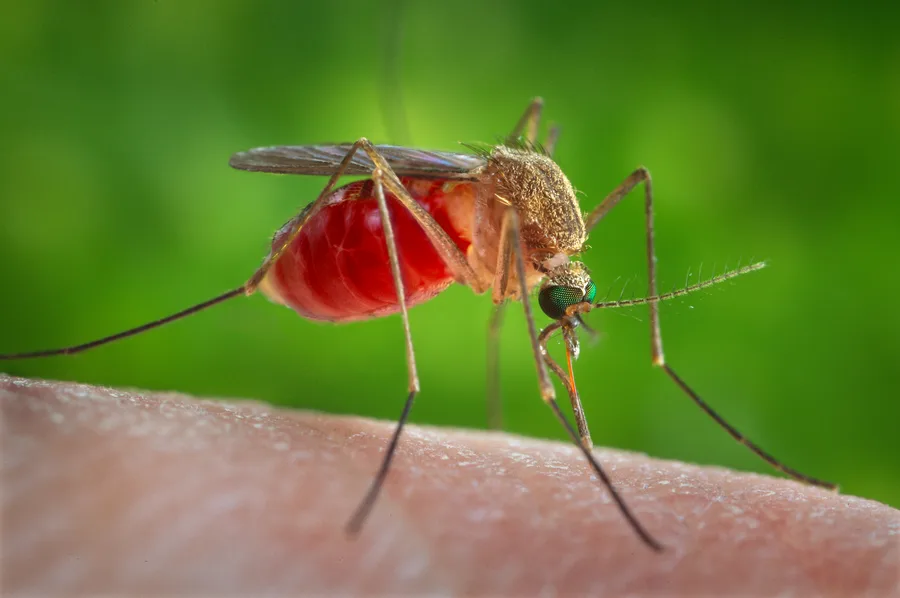
The biggest difference is between the sexes. Both males and females use the proboscis to feed on flower nectar and fruit juices. Only the female uses it to pierce skin, because most female mosquitoes cannot produce eggs without a blood meal. The male’s proboscis is not strong enough to pierce skin, and males never feed on blood.
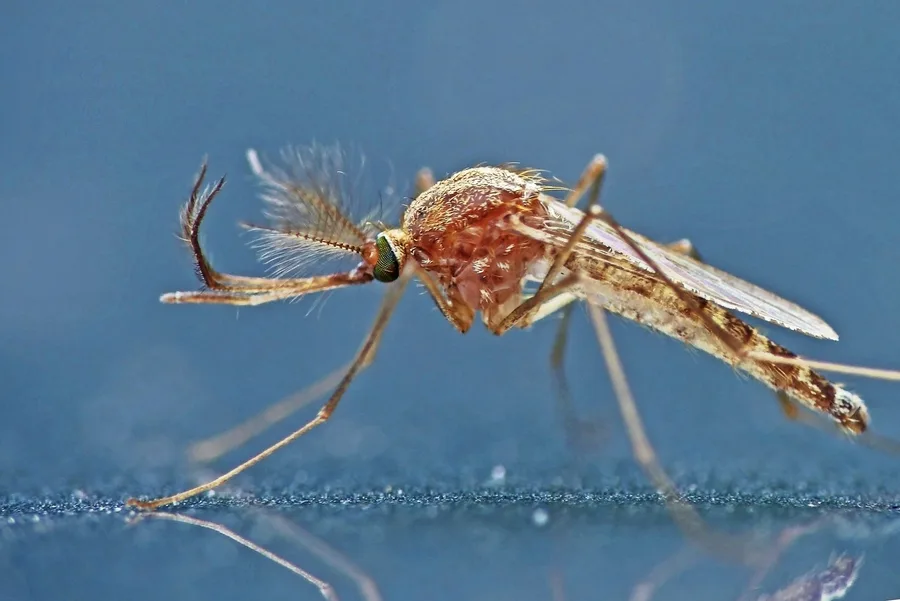
According to the CDC, adult mosquitoes live about 2 to 4 weeks depending on the species, humidity and temperature, and females often outlive males. In our iNaturalist count, 3,394 US records were tagged female and 1,084 male, likely because people photograph the mosquito that lands on them to bite.
Common US Mosquitoes: Aedes, Culex, Anopheles and Others
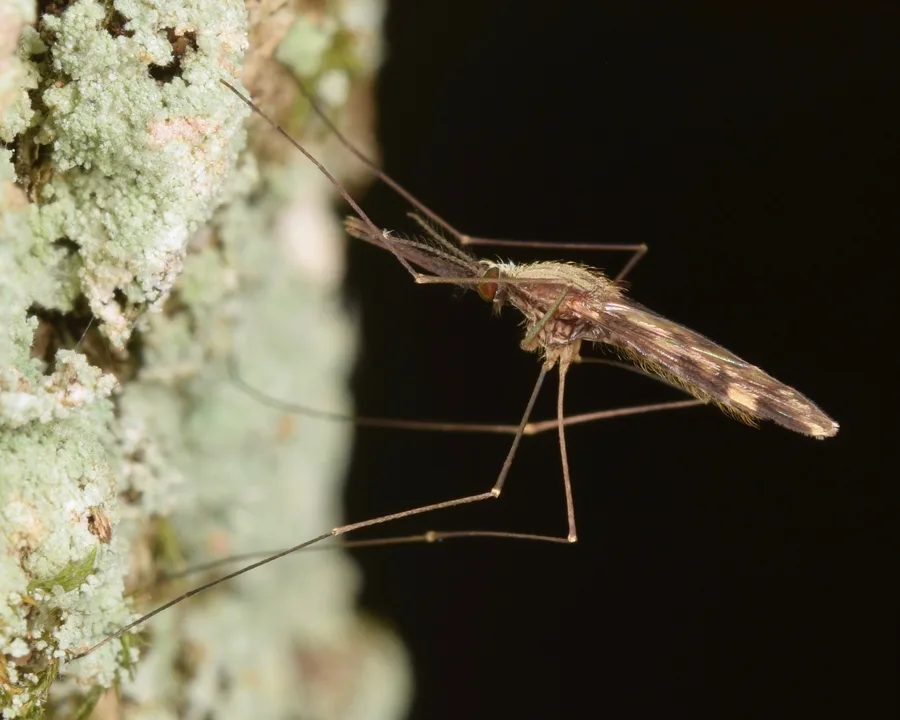
The CDC names three groups as the most common US mosquitoes that can spread germs: Aedes (above all Ae. aegypti), Culex (Cx. pipiens, Cx. tarsalis and Cx. quinquefasciatus) and Anopheles (An. freeborni and An. quadrimaculatus). Most other US mosquitoes are nuisance species that bite but do not spread disease, and they often surge after heavy rain, hurricanes or floods.
| Genus | US examples | What to know | US iNaturalist records |
|---|---|---|---|
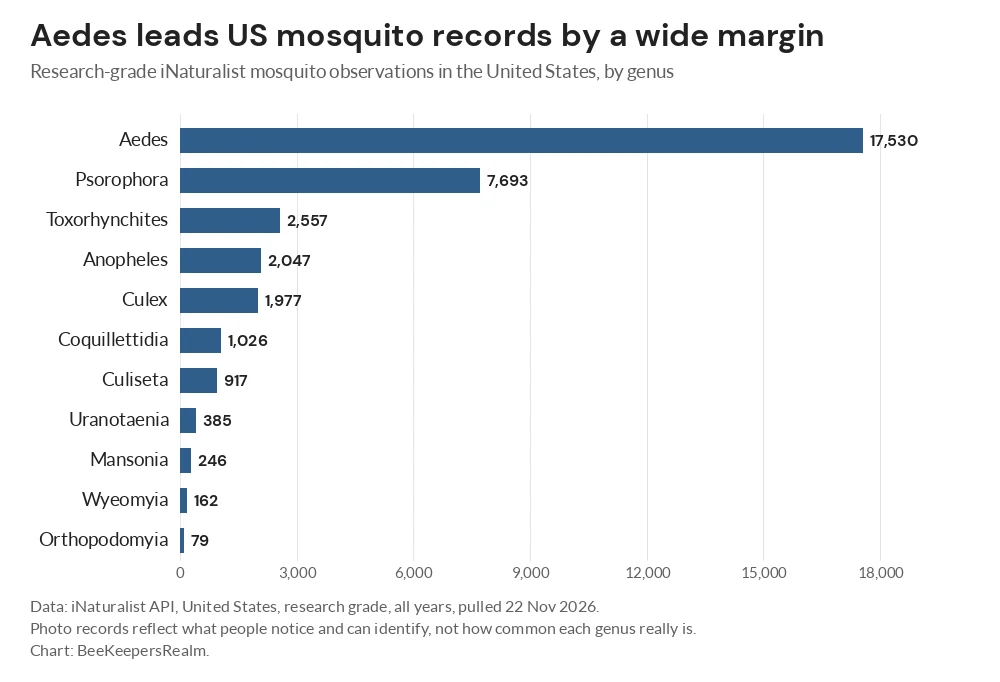
| Aedes | Asian tiger mosquito (Ae. albopictus), yellow fever mosquito (Ae. aegypti), inland floodwater mosquito (Ae. vexans) | Ae. aegypti and Ae. albopictus lay eggs on container walls and fly only a few blocks in their lifetime. Ae. aegypti lives indoors and out and prefers to bite people; Ae. albopictus lives outdoors (CDC). | 17,530 (50.6%) |
| Psorophora | Gallinipper (P. ciliata), white-footed woods mosquito (P. ferox), dark ricefield mosquito (P. columbiae) | Not on the CDC’s list of germ-spreading US mosquitoes; the second most photographed genus. | 7,693 (22.2%) |
| Toxorhynchites | Elephant mosquito (T. rutilus) | Not on the CDC list; the most common mosquito in research-grade US flower-visit records. | 2,557 (7.4%) |
| Anopheles | An. quadrimaculatus, An. freeborni, woodland malaria mosquito (An. punctipennis) | Can spread malaria; the CDC says most of the continental US has Anopheles mosquitoes. | 2,047 (5.9%) |
| Culex | Southern house mosquito (Cx. quinquefasciatus), Cx. pipiens, Cx. tarsalis | Lays floating egg rafts; most active dusk to dawn; can fly up to 2 miles; some prefer to bite birds. Spreads West Nile, St. Louis encephalitis and eastern equine encephalitis viruses (CDC). | 1,977 (5.7%) |
iNaturalist counts are research-grade US observations pulled from the iNaturalist API on November 22, 2026, out of 34,649 for the whole family. They measure what people photograph and can identify, not how common each mosquito really is: small, night-active Culex are easy to miss, while a big, striped gallinipper gets noticed.
At species level the Asian tiger mosquito leads with 7,525 records, followed by the gallinipper (3,825), the elephant mosquito (2,527), the inland floodwater mosquito (2,035) and the yellow fever mosquito (1,965). Mosquitoes from 125 species have research-grade US records.
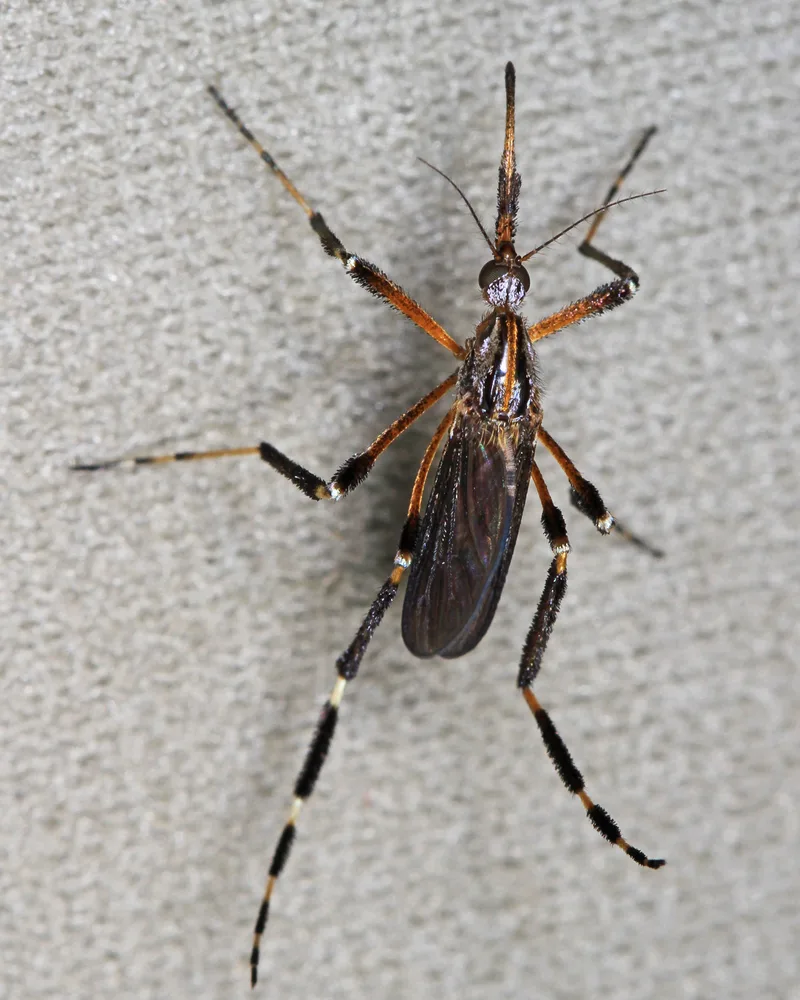
Mosquito Life Cycle, From Egg to Adult
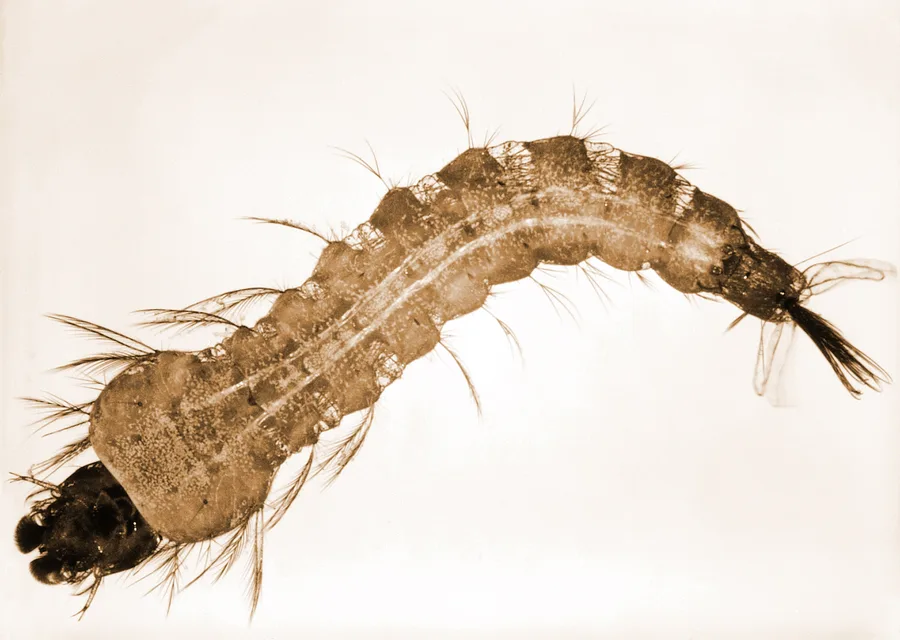
Every mosquito goes through four stages: egg, larva, pupa and adult. The first three need water. The CDC puts the egg-to-adult time for Aedes and Culex at 7 to 10 days, and the EPA says the whole cycle typically takes about two weeks but can range from 4 days to a month depending on conditions.
| Stage | Where it lives | How long it lasts |
|---|---|---|
| Egg | Aedes: stuck to the inner walls of containers just above the waterline. Culex: floating rafts of 100 to 300 eggs on standing water. | Aedes eggs hatch when rain or a sprinkler covers them and can survive drying out for up to 8 months, even through a southern winter (CDC). |
| Larva (“wiggler”) | In water; feeds and molts several times; most species surface to breathe. | As little as 5 to 6 days in warm water with plenty of food, but usually longer (UGA Extension). |
| Pupa (“tumbler”) | In water, resting just below the surface; does not feed. | Often 2 to 3 days (UGA Extension); two days to a week (EPA). |
| Adult | Flies away from the water once its body hardens. | About 2 to 4 weeks; females often longer (CDC). |
Two details matter for control. Aedes eggs sit above the waterline and survive drying, which is why the CDC says to scrub containers, not just empty them. And because pupae do not feed, the CDC notes that oils and films that suffocate them at the surface are the only effective way to kill that stage.
What the video covers: This short HHMI BioInteractive film follows Aedes aegypti through its chapters on the egg stage, the larva stage, the pupa stage and emergence, and adult behavior and transmission. HHMI’s description notes that larvae and pupae can only develop in water, and that a virus such as dengue multiplies in the mosquito’s midgut before reaching the salivary glands and passing to the next person bitten. This summary is from the video’s description and official chapter list.
When Mosquitoes Are Active
US mosquito season tracks warmth. In our iNaturalist count, 63.4% of all research-grade US mosquito records were made from June through September, with July (5,664), August (5,653) and September (5,617) almost tied. December through February together hold only 4.4%.
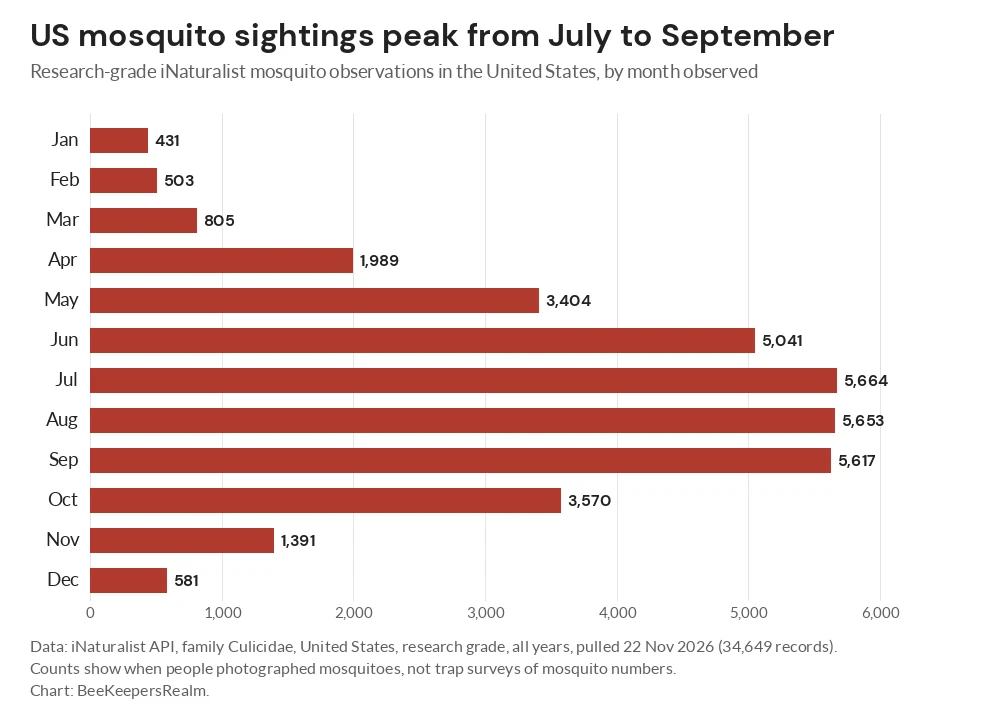
That curve lines up with disease risk. The CDC says people catch West Nile virus during mosquito season, typically June through October, and diagnoses peak in late August to early September. Time of day depends on the mosquito: Culex are most active from dusk to dawn, while mosquitoes as a group bite both day and night (CDC).
Mosquito Bites and Why Some People Get Bitten More
When a female bites, she pierces the skin with her proboscis and injects saliva while she feeds. The itchy bump is your body’s reaction to that saliva. The CDC lists the usual signs as a puffy, reddish bump a few minutes after the bite, then a hard, itchy, reddish-brown bump a day or so later; some people get small blisters or dark, bruise-like spots instead.
Stronger reactions, with a large area of swelling and redness, low-grade fever, hives or swollen lymph nodes, are more likely in children, in adults bitten by a species they have not met before, and in people with immune system disorders. Scratching can infect a bite; the CDC says to see a healthcare provider if a bite turns red and warm, a red streak spreads from it, or symptoms get worse.
Why mosquitoes prefer some people
Mosquitoes find people by carbon dioxide, which their antennae detect, and by skin odor. A 2022 study in Cell by De Obaldia and colleagues in Leslie Vosshall’s lab tested human skin odor and found people who were consistently “mosquito magnets” and others who were not, with the differences stable over several years. The highly attractive people produced significantly more carboxylic acids in their skin emanations.
For other biting flies, see our horse fly and deer fly guide; for itchy bumps around the waist and ankles after a walk in tall grass, compare chigger bites.
Diseases Mosquitoes Spread in the US
A mosquito picks up a germ by biting an infected person or animal. The germ then has to multiply and move to the salivary glands, which the CDC says takes 2 to 3 weeks, before the mosquito can pass it on.
- West Nile virus is the leading cause of mosquito-borne disease in the contiguous US. The CDC says about 2,000 people are diagnosed each year, an undercount because most infected people have no symptoms; more than 1,300 a year develop severe illness affecting the central nervous system, and more than 130 die. Mosquitoes catch it from infected birds, and there is no licensed vaccine or treatment.
- Other US viruses on the CDC list include Cache Valley, eastern equine encephalitis, Jamestown Canyon, La Crosse encephalitis and St. Louis encephalitis.
- Dengue, chikungunya and Zika outbreaks have occurred in Florida, Hawaii, Texas, Puerto Rico, the US Virgin Islands and American Samoa.
- Malaria was common in the US into the 20th century. Today more than 2,000 cases are reported a year, mostly in returning travelers, and US mosquitoes have caused more than 150 locally acquired cases over the past 50 years.
- Pets and livestock: the EPA notes that mosquitoes also transmit dog heartworm, and that dogs and horses are susceptible to eastern equine encephalitis and West Nile virus.
Mosquitoes are not the only biting insects that carry disease in the US; our kissing bug guide covers Chagas risk.
Do Mosquitoes Pollinate Flowers?
Some do, but the evidence is narrow. Because both sexes drink nectar, mosquitoes visit flowers, and a 2020 study in PNAS by Lahondère, Riffell and colleagues showed that Aedes mosquitoes, including Ae. aegypti, are effective pollinators of the orchid Platanthera obtusata, drawn by its nonanal-rich scent. We found no source showing that mosquitoes matter as pollinators of any US crop.
Our iNaturalist count gives a sense of what people actually see. Only 407 of 97,061 verifiable US mosquito observations (0.4%) carry the “Visited flower of” field. Among the 222 research-grade ones, 117 (52.7%) are elephant mosquitoes, followed by Aedes (73) and Psorophora (26). Goldenrods (Solidago) were the flower in 102 of the 407 records, a quarter of the total, and where the sex was tagged, males outnumbered females 48 to 21.
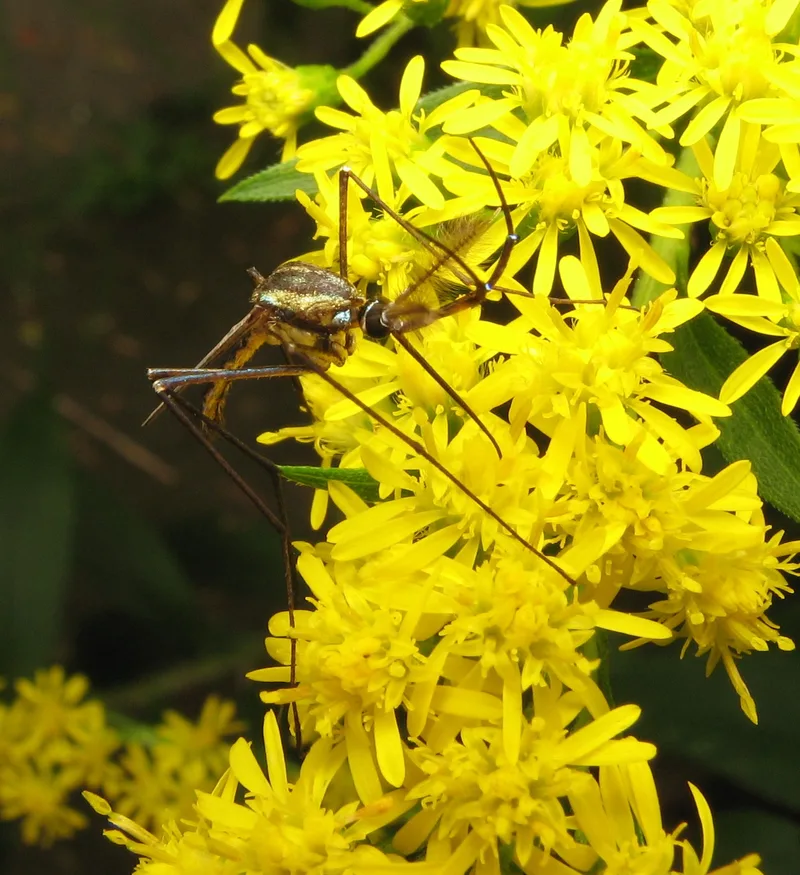
So mosquitoes share some flowers with bees, such as goldenrod, but they are a footnote among pollinators. Dragonflies eat adult mosquitoes, yet our dragonfly guide explains why they will not clear a yard of them.
Bee-Safe Mosquito Control Around the Home
The most effective yard control uses no spray at all. Mosquitoes need only a small amount of standing water, and the CDC’s core advice is to empty and scrub, turn over, cover or throw out anything that holds water once a week: tires, buckets, planters, toys, pools, birdbaths, flowerpot saucers and trash containers.
- Cover rain barrels and other water storage tightly, or use wire mesh with holes smaller than an adult mosquito (CDC).
- Fill tree holes, fix septic cracks and screen open vent or plumbing pipes (CDC).
- Use window and door screens and air conditioning to keep mosquitoes outdoors (CDC).
- For a pond you cannot empty, the EPA suggests fish that eat larvae or a fountain or aerator to keep the water moving.
Mosquito dunks (Bti) and other larvicides
For water that cannot be dumped, covered or removed and will not be used for drinking, the CDC recommends a larvicide. The bacterial larvicide Bti (Bacillus thuringiensis subspecies israelensis) has been used for more than 30 years and is toxic to mosquito, black fly and fungus gnat larvae; the EPA says studies indicate it has minimal toxicity to honey bees and has found no documented resistance. The Mosquito Dunks label (EPA Reg. No. 6218-87) lists birdbaths, rain barrels, plant and fish water gardens and ponds among its uses and says each dunk releases Bti for 30 days under typical conditions, at one dunk per 100 square feet of water surface. Bti does not kill biting adults, and the related bacterium Lysinibacillus sphaericus does not work on Ae. aegypti (CDC). For fungus gnats in houseplant soil, see our gnats guide.
If you keep a water source for bees, the same rules apply: a stone-filled saucer stays useful to bees and useless to mosquitoes if you dump, refill and scrub it on schedule, as our bee waterer plans show. Bees need that water, as explained in why bees need a reliable water source.
Yard sprays and repellents
Backyard “barrier” sprays put adult-mosquito products right where bees forage. The CDC’s adulticide guidance tells homeowners not to apply adult-mosquito products to plants in bloom or to plants that bees, butterflies and other pollinators visit, and to spray where mosquitoes rest: under decks, eaves and patio furniture and in dense, shady brush. UGA Extension notes that barrier sprays usually go on in daylight and suggests planting the flowers bees like best toward the center of a property, away from a neighbor’s spray. Our pollinator-safe pest control guide explains how to read the bee-hazard box on a label.
On your skin, the CDC recommends EPA-registered repellents with DEET, picaridin, IR3535, oil of lemon eucalyptus (OLE), para-menthane-diol (PMD) or 2-undecanone, and says not to use OLE or PMD on children under 3. Permethrin belongs on clothing and gear, never directly on skin.
Mosquito Spraying and Honey Bees: What the Labels Say
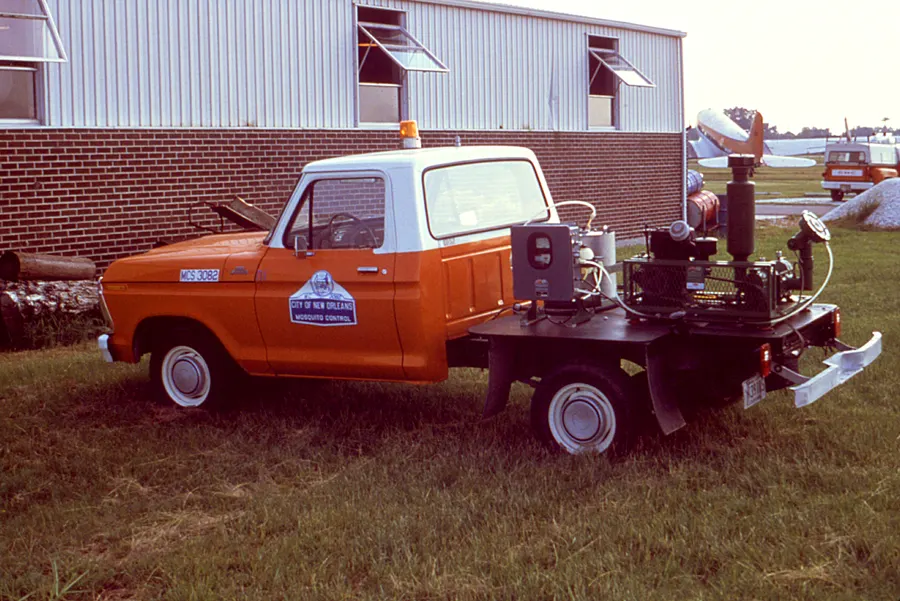
Public mosquito programs use two kinds of products. Larvicides kill mosquitoes in the water; adulticides kill flying adults and are usually sprayed as an ultra-low-volume (ULV) mist from trucks, planes or helicopters. The EPA says ULV sprays typically use less than 3 ounces of active ingredient per acre. The CDC lists organophosphates (malathion and naled), plant-derived pyrethrins and synthetic pyrethroids (permethrin, sumithrin and deltamethrin) as the main adulticides, and the EPA calls permethrin the most widely used mosquito adulticide in the US.
| Product type | Example (EPA Reg. No.) | Rate or use | What the label or EPA says about bees |
|---|---|---|---|
| Bti larvicide | Mosquito Dunks (6218-87) | 1 dunk per 100 sq ft of water, about 30 days | EPA: minimal toxicity to honey bees; its toxins affect only mosquito, black fly and fungus gnat larvae. |
| Other larvicides | L. sphaericus, methoprene, pyriproxyfen, oils and films | Applied to water by programs and homeowners (CDC) | The CDC and EPA pages we used give no honey bee statement for these. |
| Naled (organophosphate) | Dibrom Concentrate (5481-480) | Aerial ULV, 0.05 to 0.1 lb active ingredient per acre | “Highly toxic to bees exposed to direct treatment on blooming crops or weeds”; recommends no application more than 2 hours after sunrise or 2 hours before sunset. |
| Malathion (organophosphate) | Fyfanon ULV Mosquito (279-3539) | No more than 0.23 lb per acre a day by air, 0.06 lb by ground | Highly toxic to bees; “do not apply this product more than two hours after sunrise or more than two hours before sunset.” |
| Sumithrin (pyrethroid) | Anvil 10+10 ULV (8329-62) | No more than 0.0036 lb sumithrin per acre per application | Highly toxic to bees; no drift onto blooming crops or weeds while bees are visiting, with a public-health exception. |
| Etofenprox | Zenivex E20 (2724-791) | ULV | Highly toxic to bees; time sprays for “the maximum possible interval between treatment and the next period of bee activity.” |
| Permethrin and other pyrethroids | Various | ULV, usually with the synergist piperonyl butoxide | EPA: “pyrethroids are toxic to fish and to bees,” and labels carry pollinator language. |
The Anvil and Fyfanon labels carry an exception: the no-drift rule for blooming plants does not apply when a public health or vector control agency has documented disease-causing agents in mosquitoes or mosquito-borne disease in animals or people, or during an approved natural disaster recovery effort. In a declared health threat, timing and notice are what protect bees.
Why spraying happens at dusk and at night
Most mosquitoes are active at twilight or at night, so ULV sprays are typically made between dusk and dawn, after most bees are home (UGA Extension). The EPA makes the same point for naled:
“Spraying naled can kill bees that are outside of their hives at the time of spraying. However, spraying typically occurs between dusk and dawn (when mosquitoes are most active), which is when bees are usually inside their hives.”
Dose and residue matter too. The mist is fine (UGA puts ULV droplets at 10 to 50 micrometers), naled goes out at only 1 to 2 tablespoons per acre (EPA), and UGA says bees are about 100 times less susceptible to a properly calibrated mosquito spray than mosquitoes are. The EPA’s residual toxicity (RT25) table shows how long foliage residues stay toxic enough to kill 25% of honey bees. In alfalfa tests at mosquito-control rates (etofenprox and resmethrin at 0.007 lb of active ingredient per acre, a d-phenothrin product at 0.0036 lb), residues just 3 hours old already killed fewer than 25% of test bees. A malathion test at 1.22 lb per acre, more than five times the Fyfanon mosquito label’s 0.23 lb daily maximum, stayed toxic for 154 hours. Vermont’s agriculture agency says the material it uses for aerial sprays, at 0.008 lb per acre, becomes “bee safe” in less than three hours.
What field studies found
- Truck ULV, suburban hives: Pokhrel and colleagues (PLOS ONE, 2018) compared sentinel hives in sprayed and unsprayed suburban areas after resmethrin, prallethrin-sumithrin and deltamethrin applications and found no significant differences in bee mortality, colony health or detoxification enzymes over seven weeks.
- Caged bees near a truck sprayer: Rinkevich and colleagues (Bulletin of Entomological Research, 2017) titled their results “limited impacts” on honey bee mortality from truck-based ULV adulticides.
- Aerial naled, Utah: a two-year study in Salt Lake City by Crowder and colleagues (Science of the Total Environment, 2025) found no statistically significant differences between exposed and unexposed colonies; Nosema infection, high temperatures and the time of season were bigger factors in bee deaths.
The failures happen when timing or communication breaks down. In 2016, after four travel-related Zika cases were reported, Dorchester County, South Carolina, sprayed naled from the air over about 15 square miles on a Sunday morning. Smithsonian magazine, summarizing reporting by the New York Times and The Post and Courier, reported that the spraying wiped out about 2.3 million bees in 46 hives at one bee farm; the county had called registered beekeepers but overlooked her. For hives rented out for crop pollination, see our guide to pesticide clauses in pollination agreements.
How Beekeepers Can Protect Hives From Mosquito Spraying
NC State Extension’s David Tarpy sums up the problem bluntly:
“Usually what is good at killing a mosquito is also good at killing honey bees.”
- Register your apiary. In North Carolina, the state agriculture department emails beekeepers registered on DriftWatch in a planned aerial treatment zone; Tarpy notes that if you have not registered, they have no way to contact you. Vermont notifies apiaries registered with its agriculture agency within 48 hours before an aerial treatment. Our guides to DriftWatch and BeeCheck and to state apiary registration explain both systems.
- Call your county mosquito program. Ask what product it uses, when and how it sprays, and whether it keeps a beekeeper notification list. Our Florida beekeeping laws page describes one county program that does.
- Site hives away from spray routes. UGA Extension says placing hives 300 feet or more from likely truck routes significantly cuts exposure to ground spraying; fences, hedges or shrubs on two sides help, three sides is better, and entrances should face away from the road. See our beehive placement guide.
- Cover or confine on spray night. Vermont advises draping a loose, wet cloth over the whole hive at dusk and removing it promptly the next morning; UGA lists moist burlap, sheets or hive nets. NC State calls covering a last resort and warns never to fully seal a hive, which can overheat or suffocate the bees.
- Move hives if it is practical. NC State describes screening entrances at night when foragers are home, strapping the boxes together and moving the colonies outside the spray zone until spraying ends.
- Give clean food and water. The EPA says supplying sugar syrup, protein and clean drinking water during an application further reduces exposure.
- Check afterward and report. A handful of dead bees is normal, but NC State says several inches of dead bees on the bottom board usually points to an acute pesticide exposure. Report suspected kills to your state apiary program, as Vermont asks its beekeepers to do.
Remember that bees can forage up to 5 miles from the hive (UGA), so a neighbor’s yard spray can matter as much as the county truck.
Moth flies, often called drain flies, breed in the slime film inside household drains rather than in open water; see our drain flies guide.
Crane flies look like giant mosquitoes but cannot bite; our crane fly guide shows how to tell the two apart.
The same EPA-registered repellents also protect against ticks, and our guide to ticks covers tick checks and safe removal.
The same repellents also protect against the lone star tick, the main US tick linked to alpha-gal syndrome.
Itchy bumps that appear in a line overnight may be bed bug bites rather than mosquito bites; our bed bug bites guide shows how to tell them apart.
Lovebugs do not eat mosquitoes, and the story that the University of Florida bred them for that is a myth, as our lovebugs guide explains.
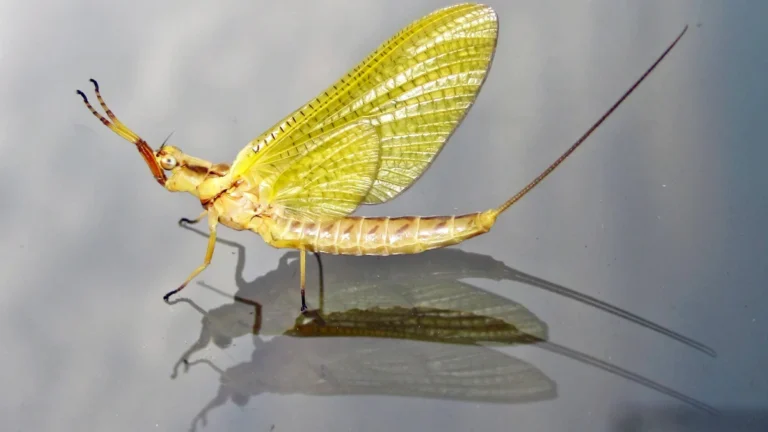
Unlike mosquitoes, adult mayflies have no working mouthparts and cannot bite; our mayfly guide explains the summer swarms near lakes and rivers.
Frequently Asked Questions
Does spraying for mosquitoes kill bees?
It can, if bees are flying when the spray drifts over them; the adulticide labels we checked all say “highly toxic to bees exposed to direct treatment.” Properly timed dusk-to-dawn sprays caused no measurable colony harm in published truck and aerial field studies.
What is the number one predator of mosquitoes?
None of our sources names a single top predator. The EPA says fish and dragonfly nymphs help keep permanent ponds, lakes and streams relatively free of mosquito larvae, which is why it suggests larva-eating fish for ornamental ponds. Adult dragonflies eat mosquitoes but do not control them in a yard.
What smells do mosquitoes hate?
The CDC says it does not know how well non-registered natural repellents work. Two plant-derived ingredients, oil of lemon eucalyptus and 2-undecanone, are on its list of EPA-registered repellents that are proven effective when used as directed. Our marigold guide looks at one popular repellent-plant claim.
How do you tell if it’s a mosquito bite?
It usually starts as a puffy, reddish bump within minutes and turns into a hard, itchy, reddish-brown bump a day or so later (CDC).
What is the best thing to do for a mosquito bite?
The CDC says to wash the bite with soap and water, apply an ice pack for 10 minutes, and use a paste of 1 tablespoon of baking soda and a little water for 10 minutes or an over-the-counter anti-itch or antihistamine cream. Do not scratch.
Can having a lot of mosquito bites make you sick?
Bites alone can cause strong reactions such as fever, hives or swollen lymph nodes, especially in children, and scratched bites can become infected. An infected mosquito can also pass on a germ such as West Nile virus. See a healthcare provider if symptoms worsen (CDC).
How long do mosquitoes live?
Adults live about 2 to 4 weeks depending on species, humidity and temperature, and females often live longer than males (CDC). Some Aedes eggs can wait up to 8 months for water.
Are mosquito dunks safe for bees?
Yes, according to the EPA: Bti, the active ingredient, has minimal toxicity to honey bees, and its toxins affect only the larvae of mosquitoes, black flies and fungus gnats. Use them only in water nobody drinks (CDC), and follow the label.
The Bottom Line
Dump and scrub standing water weekly, use Bti where water has to stay, and keep yard sprays off anything in bloom. If you keep bees, register your apiary and talk to your county program before mosquito season, because the beekeepers who get the phone call are the ones who can cover their hives in time. More creature guides are in our garden and household insects section.
Image credits: Featured image: Asian tiger mosquito (Aedes albopictus) by James Gathany, CDC Public Health Image Library #2165, via Wikimedia Commons, public domain, cropped and resized. Other photos are credited in their captions. Charts by BeeKeepersRealm from iNaturalist data.