Reviewed by Elena P. · How we review
Drain flies, also called moth flies or sewer flies, are tiny, fuzzy, moth-like flies whose larvae live in the slimy film that lines sink, shower and floor drains. They do not bite or sting. To get rid of them, find the drain they breed in, scrub the film out of it, and keep that drain clean for about three weeks. Boiling water, bleach and insecticides poured down the drain do not remove the film.
Below: identification, a tape test that finds the source, popular home remedies checked against university extension advice, and our count of 16,594 US iNaturalist records.
Key Takeaways
- Drain flies breed in the gelatinous film inside drains, traps and overflows. Killing the adults alone does not work (Arkansas Extension).
- Of 16,594 research-grade US iNaturalist records of moth flies, 94.7% are one species, the bathroom moth fly (Clogmia albipunctata), and 52.3% were logged from July to October.
- Find the source first: tape over each drain overnight, or an oiled cup for 24 hours (UC IPM).
- Scrub the film with a stiff brush, clean the trap, use an enzyme or bio-based product, and repeat for at least three weeks.
- Extension services disagree about boiling water, and PVC is rated to 140°F. All agree that no insecticide is registered for use in drains.
Table of Contents
- What Drain Flies Are
- How to Identify Drain Flies and Larvae
- Drain Flies vs Fruit Flies and Gnats
- Life Cycle: Why They Keep Coming Back
- When Drain Flies Show Up
- Find the Breeding Drain First
- How to Get Rid of Drain Flies
- Home Remedies Checked
- Hidden Breeding Sites
- When to Call a Plumber
- Are Drain Flies Harmful?
- Drain Flies, Gardens and Bees
- Frequently Asked Questions
What Drain Flies Are
Drain flies are true flies in the family Psychodidae, the moth flies. Arkansas Extension also lists sewer flies, filter flies and bathroom flies as common names. Its blood-feeding sand flies are a separate subfamily, not the flies in your bathroom (Wikipedia).
In the US, one species dominates. Of 16,594 research-grade US records of the family on iNaturalist (identifications confirmed by at least two people), 15,719 (94.7%) are the bathroom moth fly. The next two, Lepiseodina conspicua (300) and the trickling filter fly, Psychoda alternata (187), are far behind.
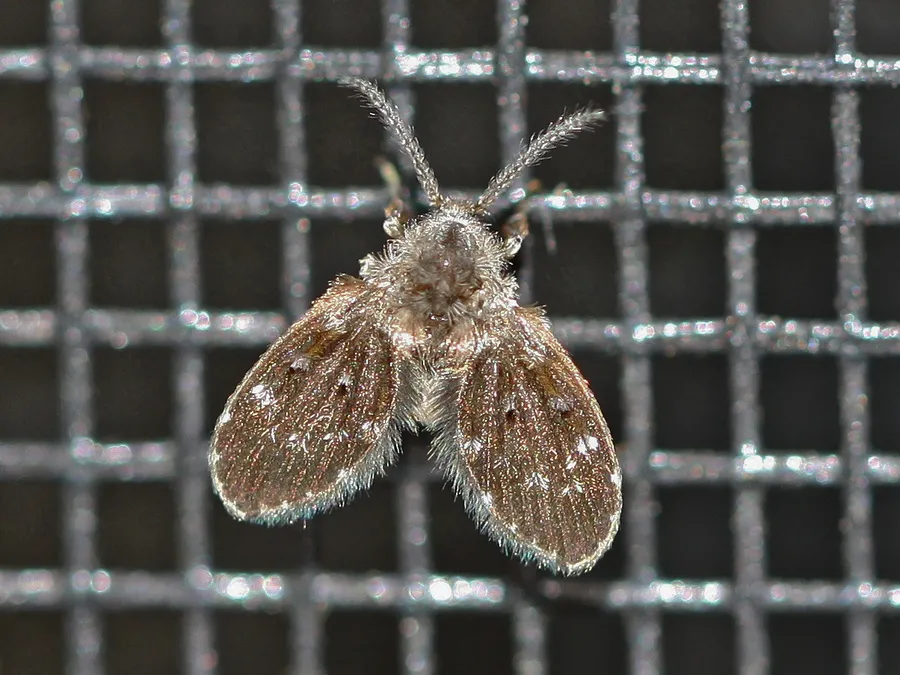
How to Identify Drain Flies and Larvae
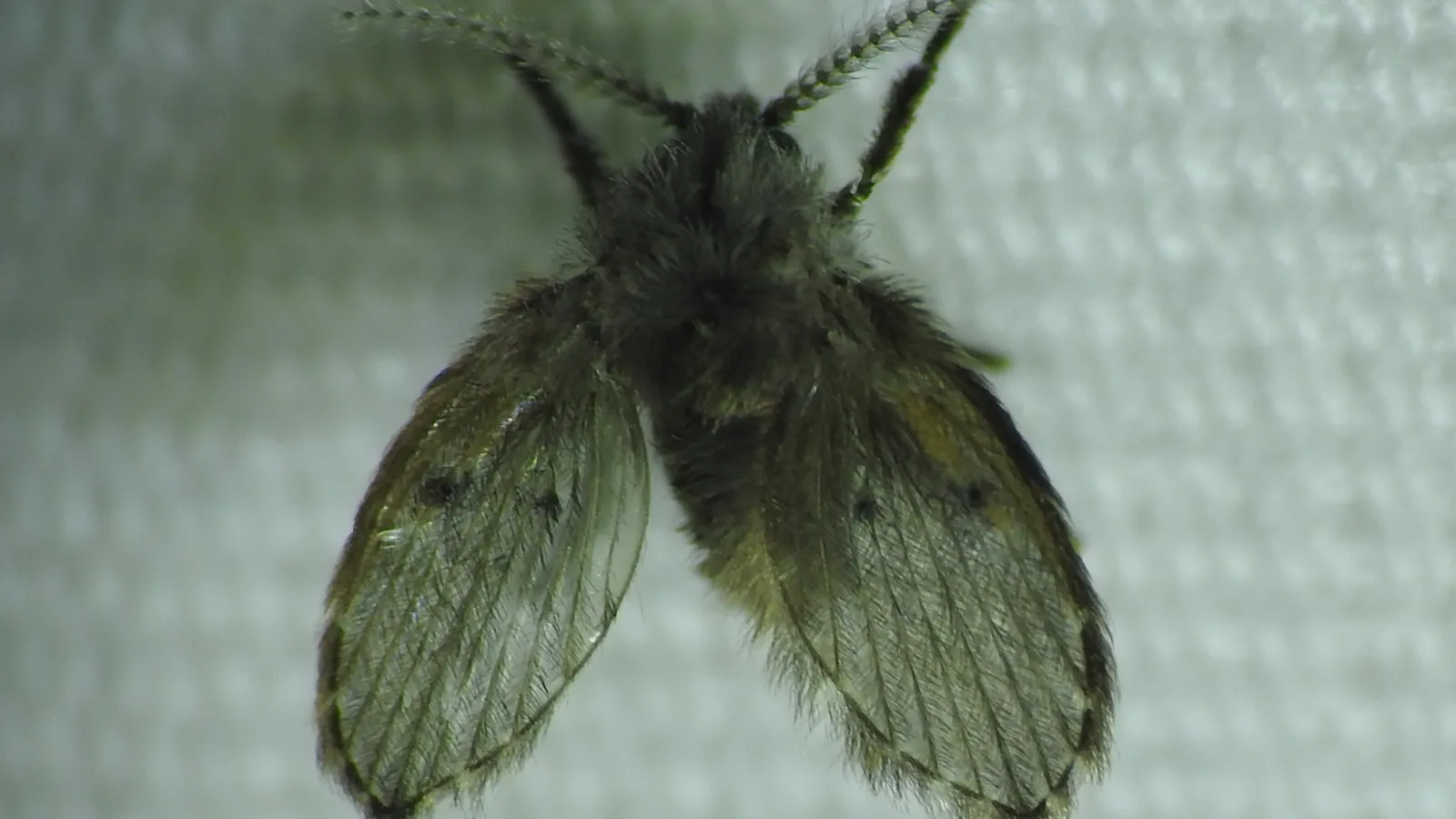
- Size: 1/16 to 1/4 inch (Clemson); most are 2 to 3 mm (Virginia Tech).
- Fuzz: body and wings “densely covered with hairs” (Ohio State).
- Wings: held roof-like at rest, with parallel veins, a pattern UC IPM calls unique to the family.
- Flight: weak, jerky hops of a few feet. They rest on walls near drains and hover over sinks in the evening.
Kentucky’s quick test: the wings are covered with scales, so a swatted drain fly turns to fine dust.
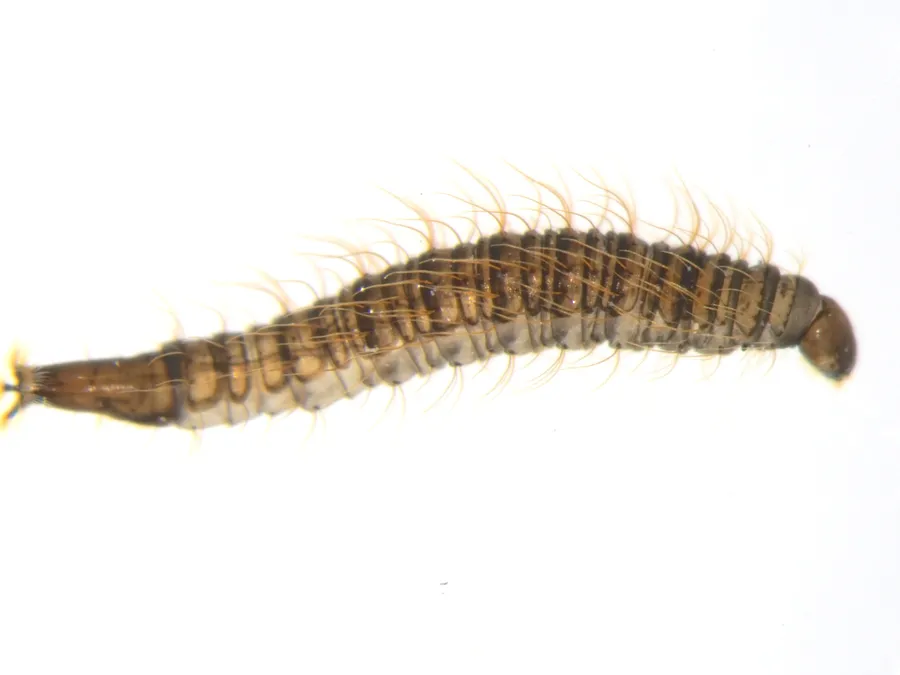
The larvae are legless, gray and worm-like, about 3/8 inch long with darker ends (Ohio State), with a breathing siphon at one end (UC IPM). To find them, lift the drain plate and scrape the pipe wall with a dull knife (UC IPM), using a flashlight for deeper slime (Alabama Extension).
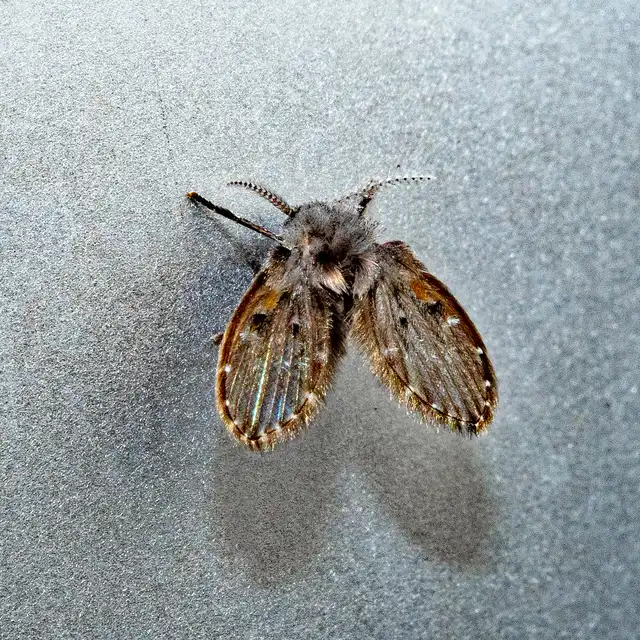
In this four-minute KQED Deep Look episode, filmed with the bathroom moth fly, the narration explains that drain flies come in from outside, for example through a crack in an old pipe, and that their larvae feed on a biofilm that bacteria and fungi build from hair, saliva and food. It ends by noting that drain cleaner helps but “won’t keep them away forever.”
Drain Flies vs Fruit Flies and Gnats
Four small flies share kitchens and bathrooms, and each needs a different fix:
| Fly | Looks | Habits | Breeds in | Source |
|---|---|---|---|---|
| Drain (moth) fly | Fuzzy, moth-like | Short hops; rests on walls | Slime film in drains | Ohio State, UC IPM |
| Fruit fly | About 1/8 inch, stout | Drawn to fermenting fruit | Ripe fruit, spills | Texas A&M |
| Fungus gnat | Slender, mosquito-like | Stays near houseplants | Moist potting soil | Kentucky, Texas A&M |
| Phorid fly | About 1/8 inch, humpbacked | Runs before flying | Garbage, drains, sewer leaks | Kentucky, Texas A&M |
Some fungus gnats also feed on drain films (Texas A&M), so a tape test is the surest check. Our guide to gnats in the house covers fungus gnats and phorid flies.
Life Cycle: Why They Keep Coming Back
Eggs, larvae and pupae all develop in the drain film. Extension sheets give different numbers:
| Source | Egg to adult | Adult life | Eggs |
|---|---|---|---|
| Ohio State (ENT-41) | 1 to 3 weeks (larvae 9 to 15 days) | About 2 weeks | Masses of 10 to 200 |
| UC IPM (Pest Notes 74167) | 8 to 24 days | Not stated | Hatch in about 48 hours |
| University of Arkansas | About 23 days (larvae 18, pupae 5) | About 12 days | Not stated |
| Kentucky (ENTFACT-615, 657) | 10 to 15 days at 70°F | 3 to 4 days | Clusters of 10 to 100 |
| Alabama (ANR-3235) | 8 to 24 days | Not stated | 30 to 100 per female |
The real disagreement is adult life: 3 to 4 days in Kentucky’s newer small-flies sheet versus about two weeks from Ohio State. Either way, a new generation can appear within one to four weeks, and Kentucky says development “can continue through the year indoors.”
Flushing does not drown the larvae: they trap air bubbles and can stay submerged for a day or more (Kentucky, Virginia Tech).
When Drain Flies Show Up
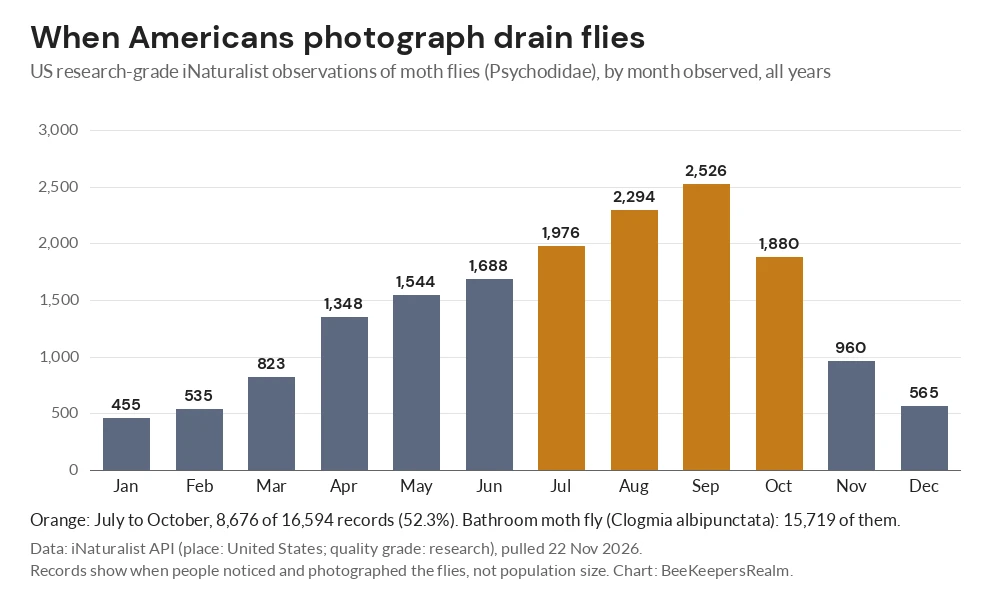
By month observed, the 16,594 records climb from 455 in January to 2,526 in September; July through October holds 8,676 (52.3%), and December to February only 1,555 (9.4%). The bathroom moth fly peaks in September too, with 2,474. This shows when people notice and photograph drain flies, not population size.
Find the Breeding Drain First
A bathroom can have four or five candidate drains. Test them all before you clean:
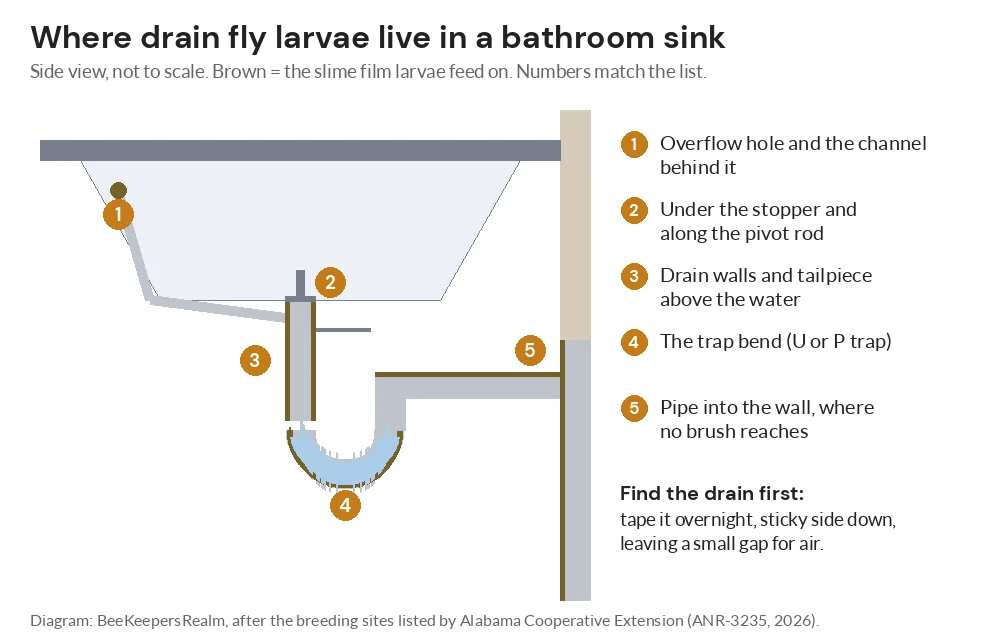
- Tape test. Place clear tape over the drain, sticky side down, “leaving a small section exposed for airflow” (Alabama Extension). Flies stuck to it the next morning mark a breeding drain.
- Cup test. Coat a cup or jar inside with Vaseline or vegetable oil, invert it over the drain and leave it 24 hours (UC IPM).
- Every opening. Check tubs, showers, floor drains and overflows too; flies can emerge from more than one (Arkansas Extension).
How to Get Rid of Drain Flies
As UC IPM puts it, “The key to managing moth flies is the elimination of breeding sites.” That means removing the film.
1. Scrub the film
Remove the stopper and cover, then scrub the opening, stopper, pivot rod and overflow with a stiff brush, which Virginia Tech calls the most effective cleaning method. Ohio State suggests a long-handled brush or brush-tipped snake for the pipe.
2. Clean the trap
Remove the J-trap under the sink, clear out the debris and run water to confirm it flows (UC IPM).
3. Rinse and treat
Texas A&M rinses with hot to boiling water after scrubbing, or uses “an antibacterial drain product designed to biodegrade organic films,” which “usually require repeat applications over several weeks.” Ohio State recommends enzyme-action cleaners. On a septic system, check that the product is compatible.
4. Keep going for three weeks
Arkansas Extension says control “requires thorough cleaning and maintenance for at least 3 weeks or longer to break the life cycle.” Repeat the tape test weekly.
5. Then remove the adults
Once the source is gone, swat or vacuum them (Alabama). Fly sprays only knock down adults; Ohio State warns, “These products will not kill the larvae and new flies will soon appear.”
Home Remedies Checked
Popular guides repeat the same remedies. Here is what extension services say about each:
| Remedy | Popular advice | Extension sources | Verdict |
|---|---|---|---|
| Boiling water | Twice a day for a week (This Old House) | Ohio State, Texas A&M: a rinse after scrubbing. Kentucky, Virginia Tech: short-term only. UC IPM: a “common misconception.” Alabama: ineffective, may damage pipe. | A rinse, not the fix |
| Boiling water in PVC | wikiHow: PVC can be damaged | Westlake Pipe: PVC’s maximum operating temperature is 140°F; water boils at 212°F at sea level. | Use hot tap water |
| Bleach | Often suggested | Ohio State: larvae are “surprisingly resistant.” Texas A&M: “largely ineffective.” Never mix with ammonia (Alabama). | Does not work |
| Baking soda, salt, vinegar | Half a cup each of soda and salt, a cup of vinegar, overnight (wikiHow) | Kentucky ENTFACT-657 lists baking soda or vinegar plus hot water; Alabama calls them ineffective. | Sources split; brush instead |
| Enzyme or bio gel | Widely recommended | Ohio State recommends; Texas A&M expects weeks of repeat use. | Works slowly, after scrubbing |
| Lye drain cleaner | Drano (This Old House) | Ohio State: “not as effective as other means”; never follow with bleach. | Clears clogs, not film |
| Insecticide in drain | Rarely suggested | Ohio State, Arkansas: none is registered for drains. | Never |
| Vinegar or sticky traps | Vinegar and dish soap (This Old House) | Texas A&M: help pinpoint the source; Ohio State: will not end an infestation. | Monitoring only |
“A common misconception is that pouring boiling water and/or bleach down a drain will control these flies.”
“The use of bleach does not seem to rid pipes of the scum, and the drain fly larvae are surprisingly resistant to bleach.”
Hidden Breeding Sites
If the drains test clean but flies keep coming, look further:
- Rarely used drains, such as a guest shower (Arkansas). Run water in them weekly (Alabama).
- Toilet tank base and overflow pipes (Alabama).
- Drip pans of refrigerators, dishwashers, air conditioners and dehumidifiers (Virginia Tech).
- Cracked tile, sliding-door tracks and wet floor cracks (Texas A&M).
- Floor drains, sump pumps and elevator pits (UC IPM).
- Leaking pipes in crawlspaces, wall voids and under slabs (UC IPM).
- Outdoors: wet ground where air conditioners drain and clogged gutters (Kentucky), bird baths and pot saucers (Ohio State). Flies from sewage plants can drift up to a mile, and some pass through window screening (Ohio State).
Emptying standing water outdoors also cuts down on mosquitoes. Indoors, the film is the target:
“Scrubbing the biofilm is the best way to get rid of it.”
When to Call a Plumber
Arkansas Extension says an infestation that continues “despite careful sanitation of all drains, can indicate a broken pipe or leak under a slab or in a crawlspace beneath the home.” A plumber can find the leak and run high-pressure drain cleaning, which Arkansas says clears the whole length of the drain. Clemson suggests getting quotes from two or three firms.
Are Drain Flies Harmful?
Mostly they are a nuisance. They “do not bite or sting humans or other animals” (Arkansas). UC IPM notes they can carry microbes into health care and food preparation areas, and that dead flies in high numbers may form allergens; Ohio State links inhaled fly fragments to bronchial asthma. For homes, Deep Look’s narration is reassuring: they “don’t really spread it to humans.” This is general information, not medical advice. A small fly that bites is not a drain fly; see our guide to horse flies and deer flies.
If you are finding bites rather than flies, see our bed bug guide for the signs that confirm an infestation.
Drain Flies, Gardens and Bees
Drain flies have no real connection to bees. Adults live on water or flower nectar but do not harm plants (Arkansas), and nothing here calls for spraying a yard. For yard pests, see our guide to pollinator-safe pest control. Silverfish are another bathroom pest that signals too much moisture; more are in our garden and household insects guides.
If you also find small tan roaches with two dark stripes behind the head around the sink, see our German cockroach guide.
Frequently Asked Questions
How do I get rid of drain flies fast?
Tape-test the drains, scrub out the film, clean the trap and use an enzyme product, for at least three weeks (Arkansas Extension).
Why do I suddenly have drain flies?
Virginia Tech says their appearance “usually indicates a slow or clogged drain that needs to be cleaned.” Rarely used drains and outdoor sources are other causes.
Do drain flies go away on their own?
Not while the film is there. New adults keep emerging, and indoors they breed year-round.
How long do drain flies live?
Adults live about 12 days (Arkansas) to two weeks (Ohio State); one Kentucky sheet says 3 to 4 days.
What smells do drain flies hate?
None of the extension sheets we read names a repellent scent. Only removing the film works.
Will Drano kill drain flies?
It clears clogs, but Ohio State says lye-based cleaners “are not as effective as other means.” Never follow one with bleach.
Do drain flies bite?
No. They do not bite or sting people or pets.
The Bottom Line
Drain flies are a plumbing problem. Find the drain with tape, scrub out the film, and keep that drain clean for three weeks.
Image credits: Featured image: Sam Kieschnick, Wikimedia Commons (via iNaturalist), CC BY 4.0, cropped and resized. Clogmia moth fly: Judy Gallagher, CC BY 2.0. Larva: carnifex (iNaturalist), CC BY 4.0. Trickling filter fly: Géry Parent, CC BY-SA 4.0. Links to each file page and licence are in the captions. Chart and diagram: BeeKeepersRealm, from iNaturalist API data pulled November 2026 and Alabama Cooperative Extension’s breeding-site list.