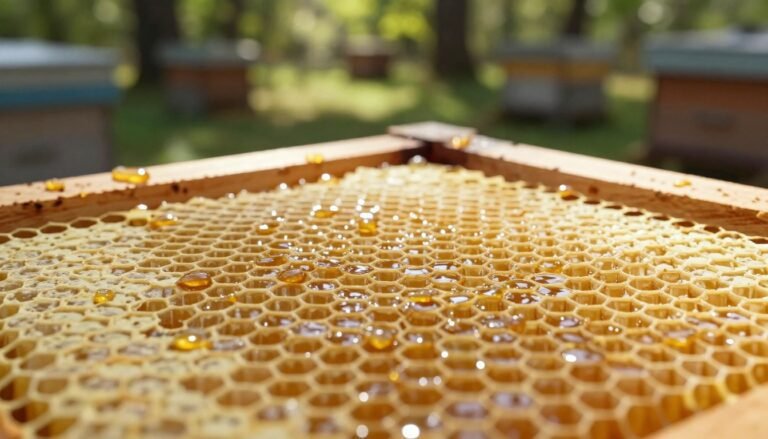
Managing excess comb is a core skill for every apiarist. This guide, titled burr comb vs brace comb explained, breaks down how these structures form and how they affect hive health.
Honey bees are natural builders. They often fill gaps and anchor frames, which can disturb the designed bee space and make frame removal harder.
Understanding why bees build extra material helps you choose the right approach to maintenance. Good spacing and consistent inspections cut down on problem areas and keep honey stores and brood safe.
For practical tips on preventing cross-comb and choosing suitable equipment, see resources like diagnostic guidance for hive structures and a beginner’s guide to selecting boxes at how to choose a beehive for.
Key Takeaways
- Know the signs: Learn to identify the types of extra material bees build.
- Protect bee space: Correct spacing reduces unwanted construction.
- Regular inspections prevent heavy buildup and frame damage.
- Careful removal preserves honey and minimizes colony stress.
- Choose hive equipment that matches your management goals.
Understanding the Basics of Bee Space
Proper spacing inside a hive guides bees to build where you expect them to. Reverend Lorenzo Langstroth set the standard design that made modern beekeeping manageable. His work shows why a 3/8 inch bee space is essential between sheets of comb.
The Role of Proper Spacing
Frames must sit evenly inside each box so bees use the supplied foundation and bars. Any gap larger than the ideal space encourages bees to fill the void with extra wax and cells.
Fill boxes with the correct number of frames and keep the top and place clear. Regular checks reduce surprise buildups and preserve easy inspections.
Impact of Non-Standard Equipment
Mixing parts from different manufacturers or using non-standard hives changes internal dimensions. These differences often prompt bees to build irregular combs to restore their preferred environment.
| Issue | Cause | Action |
|---|---|---|
| Excess wax between frames | Gap > 3/8 inch | Adjust frame spacing; replace warped bars |
| Irregular comb on top bars | Non-standard box dimensions | Use matched boxes or reframe to standard size |
| Difficulty removing frames | Bees built cells in voids | Inspect often; follow removal guide: removing excess wax |
Burr Comb vs Brace Comb Explained
Extra wax structures often form where a hive’s wooden parts meet, creating bridges that bind frames together.
What they are: One type appears in gaps between frames and boxes and acts like a ladder for the colony. The other anchors comb to top bars or side walls, securing cells and brood to the wood.
Why it matters: Both forms of extra wax reduce the designed bee space. That makes frame removal hard and raises the risk of damaging honey stores or brood during inspections.
- They form where space is irregular or boxes are mismatched.
- Workers build cells to bridge gaps or anchor comb to wood.
- Experienced beekeepers remove these growths carefully to avoid colony stress.
| Feature | Typical Location | Impact on Management |
|---|---|---|
| Extra web-like wax | Between frames and boxes | Frames stick; harder inspections |
| Anchoring wax | Top bars and side walls | Comb fixed to wood; risk to brood |
| Signs | Stiff frame removal, wax bridges | Trim or scrape; restore proper spacing |
For hands-on guidance on dealing with cross-connections in top-bar hives, see this practical guide on handling cross-comb in top-bar hives.
Why Bees Construct Excess Comb
When flowers flood the landscape, colonies shift into build mode and rapidly expand storage and brood space. A strong nectar flow gives worker bees the energy and material to produce wax and draw new comb within days.
Seasonal Factors and Nectar Flow
Spring is the peak for comb construction. Workers focus on honey and brood cells, so any available space—between frames, boxes, or under the inner cover—gets filled fast.
If inspectors leave frames loose after checks, bees will bridge the gap to restore their preferred bee space. That bridge often anchors comb to top bars or to the box above, which makes later inspections harder.
- Provide foundation or guide strips to steer building into frames; see how bees draw comb.
- Monitor colonies in heavy flows to prevent bridges between frames and boxes.
- Keep gaps under 3/8 inch to reduce anchoring and excess construction; read common causes at reasons bees won’t draw comb.
Identifying Potential Risks to the Queen and Colony
Hidden pockets of wax and cells can create serious hazards for the queen and the whole colony. When workers add extra comb in odd gaps, the queen may lay eggs there.
If you remove that material during an inspection, you might accidentally injure or kill her. Move slowly and check for the queen before cutting or scraping.
Drone brood often sits on the outer edges of the brood nest. That makes those cells a common target for Varroa mites, which prefer drone larva.
- Look inside removed comb for reddish spots on larvae—this can signal mite activity.
- Perform a mite test immediately if you spot suspicious marks.
- Remember that brood in excess wax is common and hard to remove without care.
| Risk | Where to check | Action |
|---|---|---|
| Queen present in stray comb | Any new wax patch | Pause removal; relocate frame; inspect gently |
| Drone brood with mites | Outer brood edges and stray cells | Examine larvae; run a mite test |
| Hidden brood | Undersides of top bars or gaps | Inspect after easing frames; avoid sudden cuts |
For handling fragile frames and best post-inspection checks, review guidance from extension resources: hive inspection safety.
Best Practices for Removing Unwanted Wax
A quick, careful removal of excess material prevents long-term headaches in the hive. Work calmly, use steady motions, and check each frame before cutting. That protects brood and keeps inspections short.
Tools for Efficient Scraping
Start with a standard hive tool. A flat edge lifts sticky wax from top bars and interior walls. Use a small knife or a curved scraper for delicate spots near the queen or brood.
Tip: Warm tools cut wax cleaner. Heat gently over a flame or hot water and wipe before use.
Proper Disposal of Wax Scraps
Do not dump scraps on the ground near your hives. The scent draws pests and can disturb the colony. Instead, collect pieces in a sealed container.
Saved wax makes soap, candles, or lip balm. Recycling scraps adds value and keeps pests away.
- Remove excess promptly to preserve bee space and ease future inspections.
- Scrape frames and box walls regularly to prevent new growth between bars and frames.
- Always scan for the queen and avoid cutting brood; handle any found brood gently.
For more on dealing with bridge-style growth between frames and boxes, see this practical guide on bridge comb.
Managing Hive Pests and Comb Contamination
A single neglected patch of extra wax may invite pests that ruin drawn frames and stored honey.
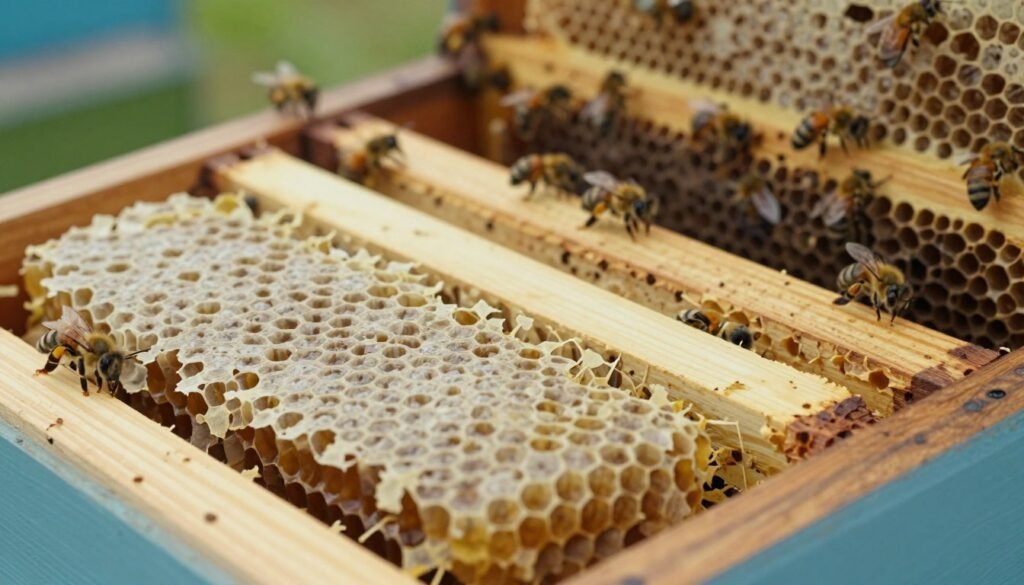
Watch for signs: Wax moths and small hive beetles favor stray material and damaged frames. They chew through cells and spoil honey fast.
If you find entombed pollen or sunken cells, the bees may be sealing off contaminated stores to protect the colony. Treat those spots as suspect.
When removing material that contains drone brood, inspect larvae for mites or reddish spots on larvae or pupae. If infestation is heavy, cull affected frames to stop spread.
Keep boxes clean and rotate old wax. Good hive hygiene and the practice to store frames to prevent pests reduce pressure on your bees and improve honey yields.
| Threat | Where found | Immediate action |
|---|---|---|
| Wax moth | Old drawn comb, debris | Remove and freeze or burn; replace frame |
| Small hive beetle | Under frames, in cracks | Clean hive floor; trap adults; cull damaged comb |
| Varroa mites | Drone brood, larvae | Inspect larvae; treat colony if detected |
When to Cull Frames and Replace Old Comb
Older frames often hide problems that only show up when you lift them for inspection.
Darkened brood comb is a common sign that a frame has held many generations. The cells collect silk cocoons and debris, which darken cell walls and change the feel of the wax.
Signs to watch
Replace frames every 3 to 5 years to limit contaminants and keep cell size consistent for new brood.
If a frame is mostly drone cells or appears black, cull it. Honey stored in older combs may darken, which matters if you sell or display your harvest.
- Dark, brittle comb that flakes: replace.
- Heavy drone cell coverage: swap for fresh foundation.
- Sticky, contaminated wax: remove and dispose safely.
| Issue | Indicator | Action |
|---|---|---|
| Dark brood comb | Blackened cells | Cull every 3–5 years |
| Excess drone cells | Large cell pattern | Replace frame with foundation |
| Contaminated wax | Odor or pests | Remove and sanitize boxes |
Regular inspection protects the queen and supports a healthy colony. For guidance after disease concerns, consult this note on when to discard comb after disease.
Conclusion
Good hive work focuses on small, regular steps that prevent big problems later. Keep frame placement true to the 3/8 inch bee space and inspect often to limit excess comb that binds frames and boxes.
When you find stray wax, act calmly: scan for the queen and brood before you cut. Use proper tools and a steady hand to remove burr and bridge growth while protecting honey and larvae.
Consistent hygiene, timely culls of dark frames, and the right gear shorten time at the hive and reduce stress on your colony. For gentle inspection tools and brush alternatives, see this best bee brush alternative.