Reviewed by Elena P. · How we review
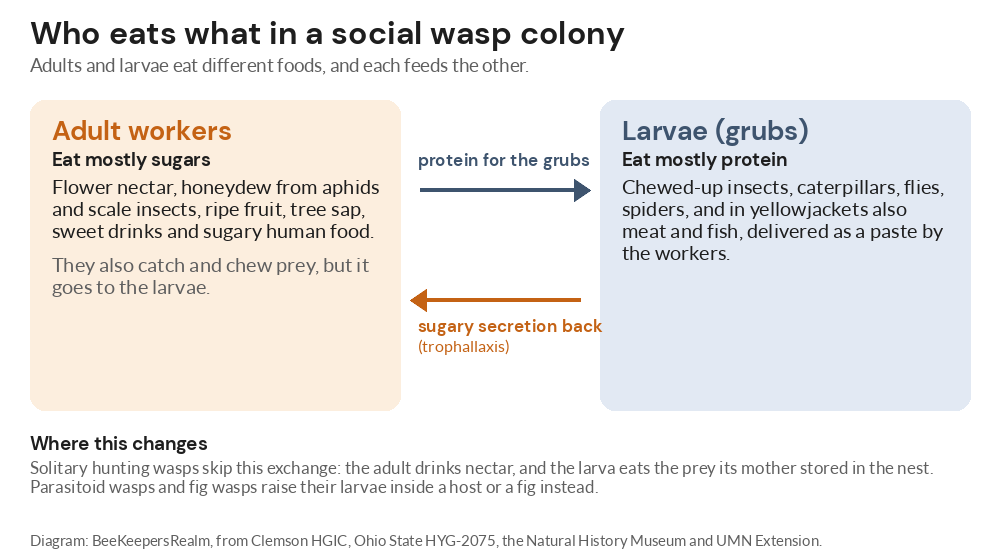
Adult wasps mostly eat sugars, such as flower nectar, honeydew and ripe fruit, while wasp larvae eat protein, usually chewed-up insects, caterpillars or spiders that the adults hunt for them. Yellowjackets add meat and human food to the list, and in late summer, when their colonies slow or stop growing, they go after sweets. Almost no wasps make honey; the best-known U.S. exception is a small Texas species.
Educational information based on university extension and museum sources, not pest-control or medical advice. If you are unsure which wasp you have, our guide to the types of wasps will help you identify it.
Key Takeaways
- Adults and larvae eat different foods: sugars for adults, protein for larvae. Each feeds the other in a food swap called trophallaxis.
- Social wasps hunt caterpillars, flies and spiders, so they work as natural pest control for most of the year.
- Late summer is the exception. Yellowjacket colonies slow or stop growing and workers turn to sweet drinks, fruit and garbage.
- Solitary hunting wasps are specialists, such as mud daubers on spiders, cicada killers on cicadas and tarantula hawks on tarantulas.
- Almost no wasps make honey. The Mexican honey wasp of South Texas is the U.S. exception. Yellowjackets mainly scavenge dead bees and sometimes rob weak hives.
Table of Contents
- What Adult Wasps Eat
- What Wasp Larvae Eat
- What Different Wasps Eat: A Species Table
- Why Wasps Swarm Picnics in Late Summer
- Do Wasps Make Honey?
- Do Wasps Eat Bees?
- Are Wasps Pollinators?
- How Long Do Wasps Live?
- What Wasps Do in Winter
- What Attracts Wasps
- Frequently Asked Questions
What Adult Wasps Eat
Adults live on sugar. The Natural History Museum in London says adult wasps feed only on sugars, taken in the wild from flower nectar and from honeydew, the sweet liquid aphids excrete. Ohio State says adult yellowjackets feed on fruits, flower nectar and tree sap, and Penn State adds honeydew from scale insects and spotted lanternflies. Missouri’s field guide says adult paper wasps drink nectar and fruit juice.
“Adult wasps don’t live very long, so they don’t really need protein. They’ve just got to load up on carbs.”
Adults still hunt, but the catch is not for them. Ohio State says yellowjacket mouthparts are built for chewing insects and for sucking nectar and fruit juice, and that adult workers chew and condition captured insects or meat to feed to the larvae.
What Wasp Larvae Eat
Larvae are grubs in the nest cells and need protein to grow. Missouri’s field guide says paper wasps specialize in feeding caterpillars to their young. NC State Extension describes a worker killing a caterpillar, chewing it up and rolling it into a ball to carry home. Washington State University lists caterpillars, beetle larvae and other prey that are chewed and fed to the larvae in the nest.
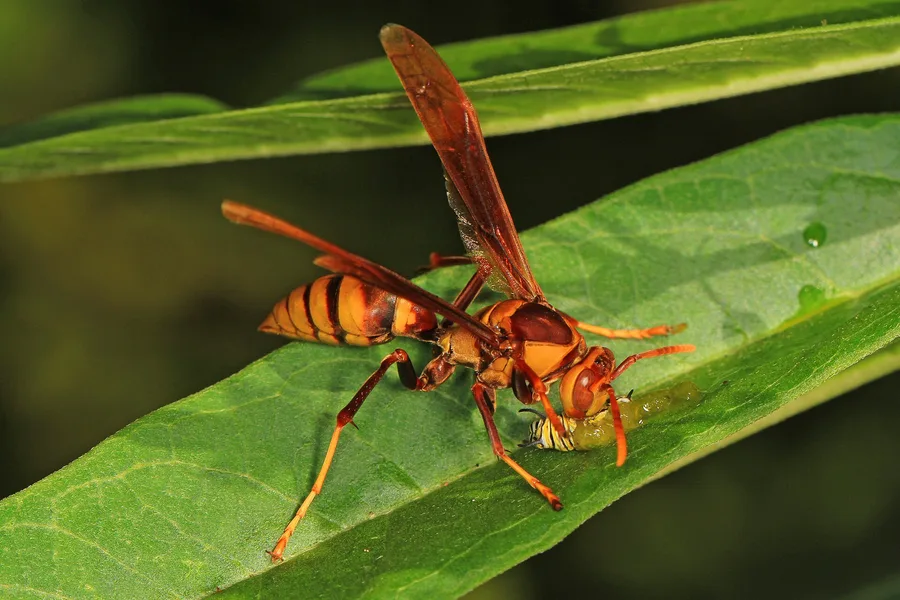
The larvae pay the workers back. Ohio State and Clemson both say they secrete a sugary substance that the adults eat, a swap called trophallaxis. The Natural History Museum notes that this sweet liquid is one more sugar source for adults.
This is why social wasps are so useful. UC IPM says some social wasps are predators for most or all of the year and kill large numbers of plant-feeding insects and nuisance flies. For more on the group, see our guide to paper wasps.
What Different Wasps Eat: A Species Table
Minnesota Extension counts about 103,000 wasp species worldwide, of which only about 1,000 are social. Most of the rest are solitary hunters or parasitoids, so the adult-sugar, larva-protein pattern holds but the larva’s menu varies widely.
| Wasp | What adults eat | What larvae eat | Source |
|---|---|---|---|
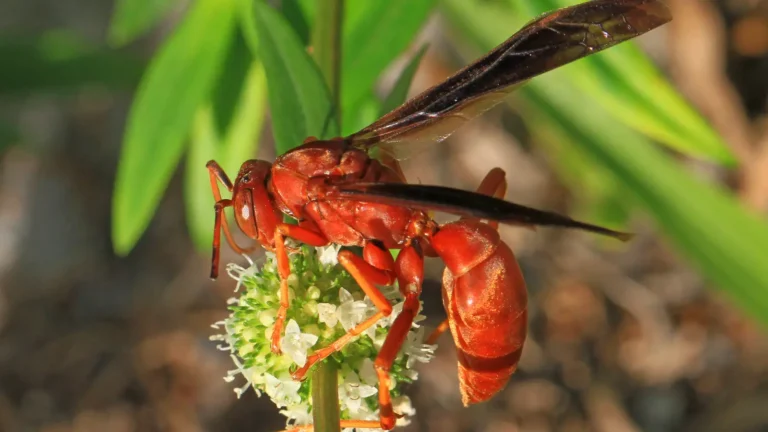
| Paper wasps (Polistes) | Flower nectar and fruit juice | Caterpillars, chewed into a ball | Missouri Dept. of Conservation; NC State |
| Yellowjackets | Nectar, fruit, tree sap, honeydew, and in late summer sweet drinks | Chewed insects, fish and meat | Ohio State (HYG-2075); Clemson; Penn State |
| Mud daubers | Flower nectar | Paralyzed spiders packed in mud cells; blue mud daubers use many black widows | Missouri Dept. of Conservation |
| Cicada killers | Nectar and other plant exudates | One or two paralyzed cicadas per cell | Ohio State (ENT-63) |
| Tarantula hawks | Nectar of milkweed, mesquite and soapberry | One paralyzed tarantula, eaten slowly while it stays alive | Colorado State; National Park Service |
| Fig wasps | — | Tissue of the fig’s flowers, inside the fruit | University of Maryland Extension |
| Parasitoid wasps | — | The living tissue of a host insect, from the inside | Minnesota Extension |
| Mexican honey wasp | Nectar and aphid honeydew; stored honey in the off-season | Appear to be fed honey and pollen | Texas Entomology (Hogue 1993; Sugden and McAllen 1994) |
A dash means the cited source does not say. Sources: Missouri Department of Conservation field guide; NC State Extension; Clemson HGIC; Ohio State fact sheets HYG-2075 and ENT-63; Colorado State Extension; University of Maryland Extension; Minnesota Extension; Texas Entomology.
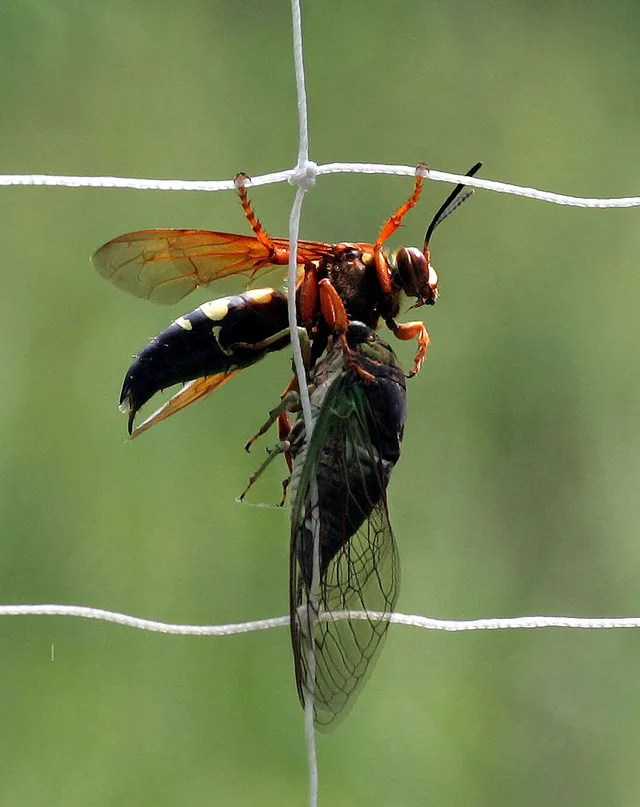
More on the specialists: mud daubers, cicada killers, the tarantula hawk and yellow jackets.
Why Wasps Swarm Picnics in Late Summer
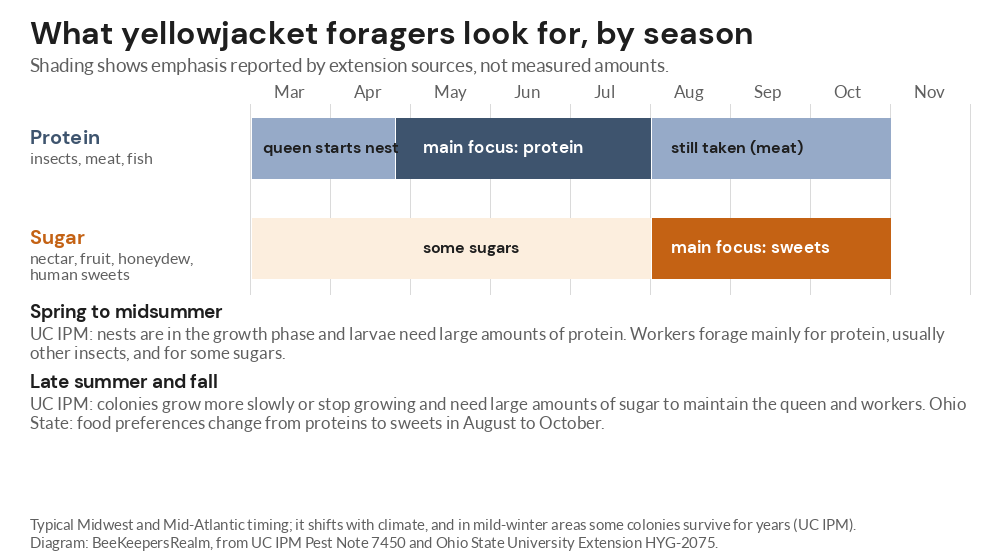
The change is in the colony, not in the wasps’ taste. UC IPM says larvae need large amounts of protein from spring to midsummer, so workers forage mainly for insects and for some sugars. Ohio State says yellowjacket food preferences change from proteins to sweets in August to October.
“By late summer, however, the colonies grow more slowly or cease growth and require large amounts of sugar to maintain the queen and workers; foraging wasps are particularly interested in sweet things at this time.”
One common explanation is that, as insect prey becomes scarce, the larvae make less sugary secretion for the workers to eat. Wikipedia summarizes it that way and it fits Clemson’s account of the exchange, though we found no extension source that measures it. Either way, workers then scavenge sweet drinks, ripe fruit and garbage.
Do Wasps Make Honey?
Almost none do. Yellowjacket and paper wasp combs are brood cells, and UC IPM describes the grub-like larvae sitting in them. The exception is the Mexican honey wasp (Brachygastra mellifica). Texas Entomology says it stores honey made from flower nectar, that it is the only one of the 12 Brachygastra species to reach the United States, and that it is common in South Texas. Texas A&M AgriLife Extension notes that its nest is paper, not wax comb, and that the wasp is docile. Our guide to which wasps make honey covers the other honey-storing species, including a Texas paper wasp that stores honey for winter.
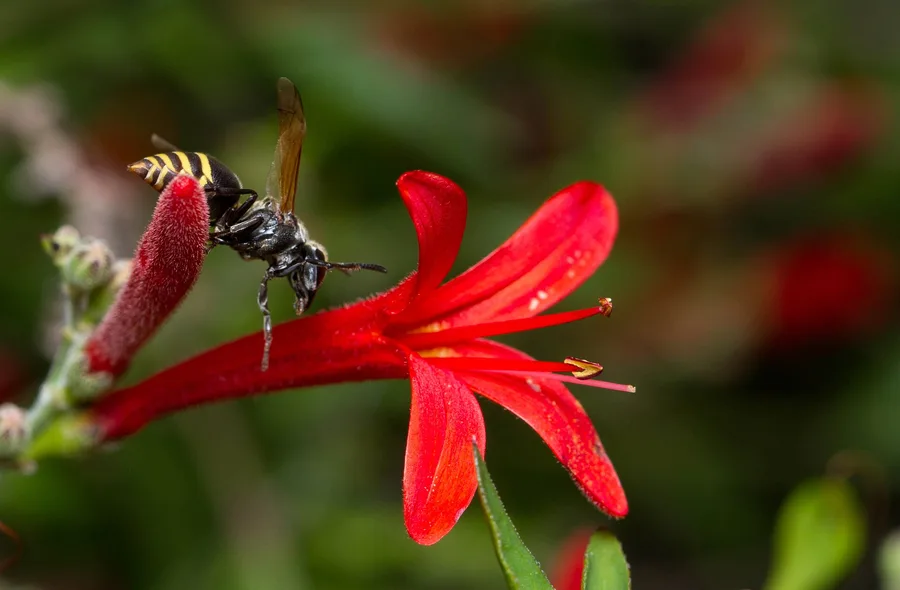
Honey from related wasps in Mexico and Brazil is harvested by people, but Texas Entomology quotes a warning that it can be poisonous when the nectar comes from toxic flowers. Wasps will eat honey when they find it, though, and the Sardinian study below lists it in the German yellowjacket’s diet.
Do Wasps Eat Bees?
Some do, and yellowjackets are the main trouble for beekeepers. Clemson says yellowjackets are a problem around beehives in fall and will enter and rob honey if given the chance. Penn State says German yellowjackets sometimes attack honey bees, but usually target individual bees, and honey bees often repel them.
“Our results confirm the major role of the German yellowjacket as a scavenger, because its diet is based mostly on bee carrions.”
That study watched one Sardinian apiary in fall 2017, so treat it as a single data point. Narrow entrances and strong colonies are the defense; see how to protect beehives from yellow jackets. One hunter of live bees is the European beewolf.
Are Wasps Pollinators?
Yes, in a smaller way than bees. Oregon State Extension says adults visit flowers constantly for nectar and carry pollen between plants by accident, a less efficient pollination that is still impactful. A 2024 study in Ecological Entomology (Borchardt et al.) found that the paper wasp Polistes fuscatus deposited a similar number of pollen grains in a single visit as the bumble bee Bombus impatiens. Fig wasps are the extreme case: Maryland Extension says each fig species is pollinated by one or a few tiny wasps, which lay eggs in exchange.
How Long Do Wasps Live?
A few weeks to a year, depending on the caste. A 2021 Scientific Reports paper says social wasp workers usually live a few weeks and queens as long as a year. Solitary adults are short-lived too: Ohio State gives cicada killer adults about 60 to 75 days. Social colonies last one season in most places, though UC IPM says some yellowjacket colonies in mild-winter areas of California survive for years.
What Wasps Do in Winter
Most social wasps do not eat in winter because they are dead. Minnesota Extension says workers die in freezing temperatures and only mated queens survive, sheltering in protected spots. Missouri says a warm spell can wake a paper wasp queen, which is why one sometimes flies in February. UC IPM says queens emerge in late winter or early spring to feed and start a nest, and Ohio State says they feed on nectar and insects first. The honey wasp is the exception: its colonies survive the off-season on stored honey, per Texas Entomology.
What Attracts Wasps
Ohio State says yellowjackets are drawn to garbage cans, sweet drinks, fruit, flowery clothing and perfume. Keep food and drinks covered, close trash lids, and check an open can before sipping, since a wasp may be inside. UC IPM warns that once wasps find food they keep hunting around that spot long after the source is gone. If a nest is the problem, see wasp nest removal, and for stings, our first aid guide.
That late-season hunger ends with the colony itself; see when wasps die off for the autumn timeline.
Frequently Asked Questions
What do wasps eat the most?
Adults eat mostly sugars, such as nectar, honeydew and fruit. The protein they collect goes to the larvae.
What do baby wasps eat?
Larvae eat protein delivered by the workers: chewed caterpillars, flies and other insects, and for yellowjackets also fish and meat. Solitary species leave each larva a stored prey animal, such as a spider or a cicada.
Do wasps eat meat?
Yellowjackets do. Penn State calls German yellowjackets omnivores that scavenge carcasses, and UC IPM says homemade traps use meat bait.
Do wasps eat wood?
No. Paper wasps scrape wood fibers and mix them with saliva to build paper nests, according to the Missouri Department of Conservation.
Do wasps eat honey bees?
Yellowjackets scavenge dead bees and sometimes rob honey, and a few hunters such as the beewolf take live bees. Honey bees often repel yellowjacket attacks, according to Penn State.
Do wasps serve any good purpose?
Yes. Minnesota Extension says wasps pollinate flowers, control pests and help decompose carcasses.
Why are wasps so aggressive in late summer?
UC IPM says defensive behavior increases as colonies grow larger while food becomes scarcer, and that wasps are most interested in sweets then.
Next Steps
A wasp hunting caterpillars is helping your garden, while a yellowjacket at a picnic is after sugar. Our hornet vs wasp guide helps with the naming.
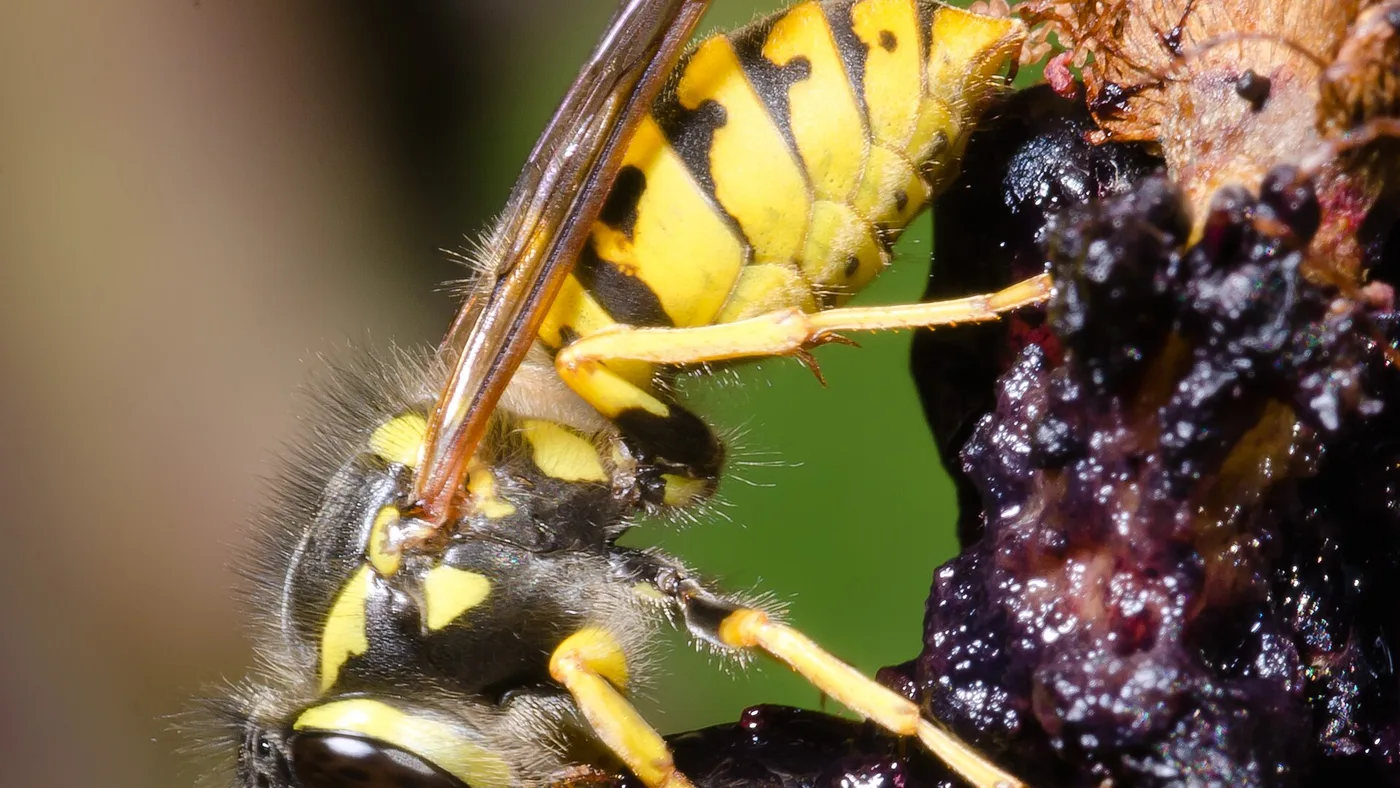
Featured image: a common wasp (Vespula vulgaris) feeding on blackberries in a garden in Stuttgart, Germany. Photo: pjt56, via Wikimedia Commons, CC BY-SA 3.0, cropped.