Reviewed by Thomas B. · How we review
A hornet is a kind of wasp. Every hornet is a wasp, but only wasps in the genus Vespa are true hornets, and the only one established in the United States is the European hornet. The “bald-faced hornet” is really a yellowjacket. Hornets run larger than yellowjackets and paper wasps, but their stings are not reliably worse.
Educational information, not medical or pest-control advice. After a sting, call 911 for trouble breathing or a swelling face, tongue or throat; for ordinary stings, see our sting first aid guide.
Key Takeaways
- Hornets are wasps. Yellowjackets and paper wasps are other wasps, not hornets.
- The European hornet is the only true hornet established in the U.S.; the bald-faced hornet is a yellowjacket.
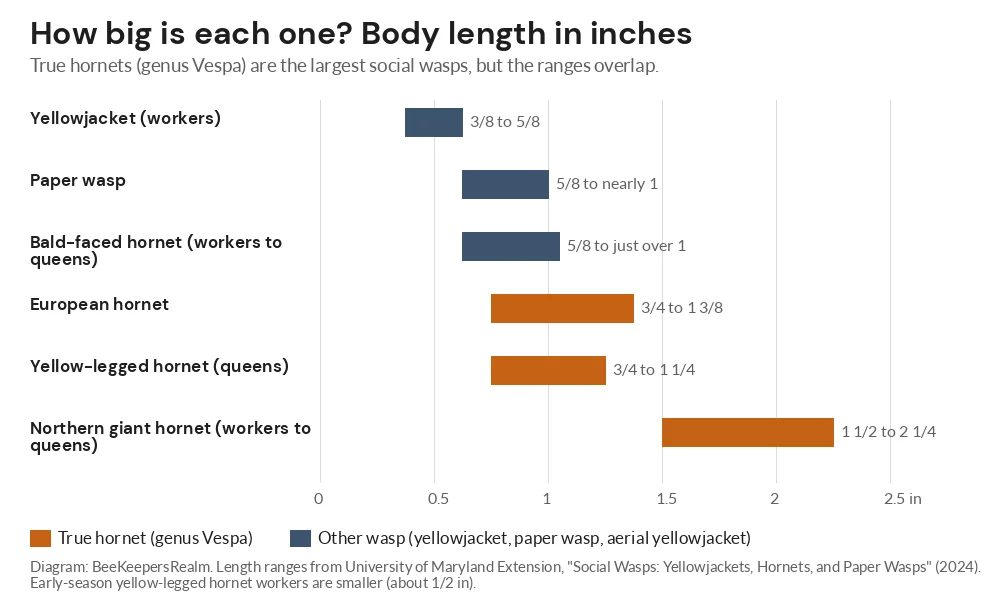
- Check the nest first, then size and face color. A European hornet is 3/4 to 1 3/8 inches long; a yellowjacket worker, 3/8 to 5/8.
- Extension sources rate these stings about alike. Colony size, nest location and allergy decide the danger.
- Yellow-legged hornets were detected in Georgia, South Carolina and North Carolina. Report a sighting to your state agriculture department.
Table of Contents
- Hornets Are Wasps: What the Names Mean
- Hornet vs Wasp Side by Side
- Hornets Found in the United States
- How to Tell Them Apart in the Field
- Which Is More Dangerous?
- If You Find a Nest
- Frequently Asked Questions
Hornets Are Wasps: What the Names Mean
“Wasp” is the broad word. Hornets are wasps of the genus Vespa, while yellowjackets (Vespula and Dolichovespula) and paper wasps (Polistes) are other genera of the same family. University of Maryland Extension calls the European hornet the only true hornet established in the U.S. and says the bald-faced hornet is an aerial yellowjacket.
Size misleads too: the tarantula hawk is a giant but solitary wasp, not a hornet. To compare all three with bees, see bees vs wasps vs hornets.
Hornet vs Wasp Side by Side
Hornets are usually bigger, but the size ranges overlap.
| Feature | European hornet (true hornet) | Bald-faced hornet (yellowjacket) | Yellowjacket | Paper wasp |
|---|---|---|---|---|
| Length | 3/4 to 1 3/8 in | 5/8 to just over 1 in | 3/8 to 5/8 in | 5/8 to nearly 1 in |
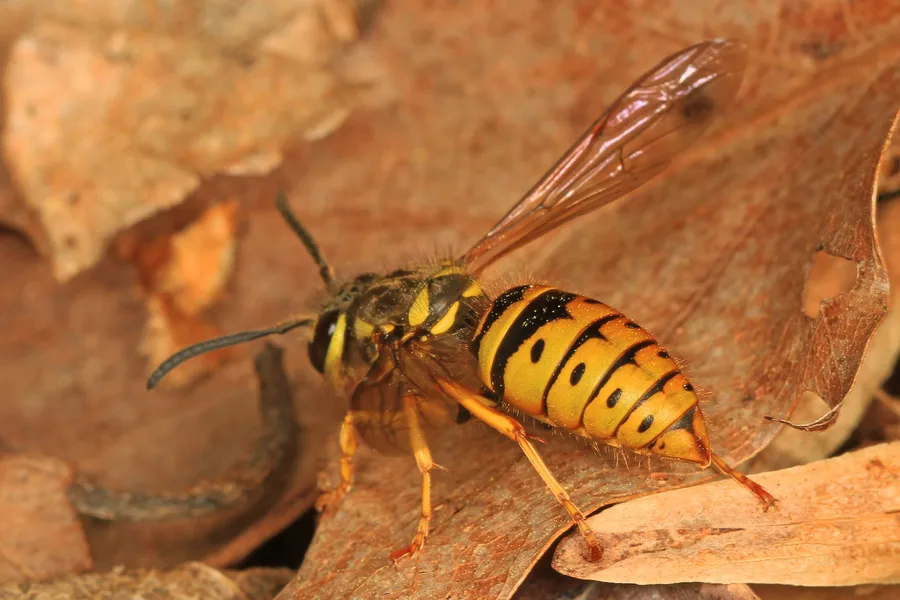
| Color | Reddish-brown, golden-yellow abdomen with teardrop marks | Black and white, white face | Black and yellow | Yellow, brick-red or near-black; long dangling legs |
| Nest | Fragile paper hidden in hollow trees, barns, wall voids, attics | Gray paper ball in the open, 3 to 60+ ft up | Hidden: burrows, wall voids, sheds | One open umbrella comb under eaves |
| Peak colony | 200 to 400 workers | 100 to 400 workers | Thousands in large nests | 20 to 75 |
| Behavior | Flies day and night; comes to lights | Defends its nest; eats flies and other yellowjackets | Easily agitated; may seem to sting unprovoked | Less defensive than hornets and yellowjackets |
| Sting pain* | About a honey bee’s | 2 | 2 | 1 to 2.5, by species |
| Season and role | All four build annual nests that peak in late summer or early autumn and die at the first hard frost. All prey on insect pests. | |||
Sources: University of Maryland Extension; Penn State Extension fact sheets on the European hornet and baldfaced hornet. *Schmidt sting pain index, where a honey bee scores 2.
Hornets Found in the United States
- European hornet (V. crabro): Penn State Extension says it was first detected in the 1840s and is now widespread in the eastern U.S. It nests in hollow trees and hunts insects, including bees and other wasps.
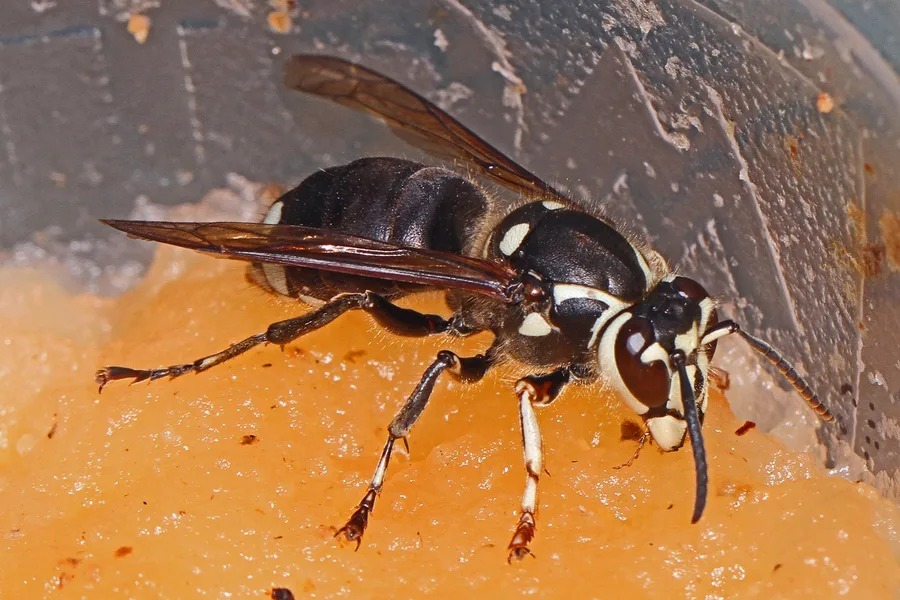
- Bald-faced hornet: a native yellowjacket, not a true hornet.
- Yellow-legged hornet (V. velutina): first found at Savannah, Georgia, in August 2023. USDA APHIS lists detections in Georgia, South Carolina and North Carolina and aims to prevent it establishing; Washington’s agriculture department reports one photographed live at a port there in April 2026. Report sightings to your state agriculture department.
- Northern giant hornet (V. mandarinia, once called the Asian giant hornet): the Washington State Department of Agriculture declared it eradicated at the end of 2024.
How to Tell Them Apart in the Field
Four checks, in order:
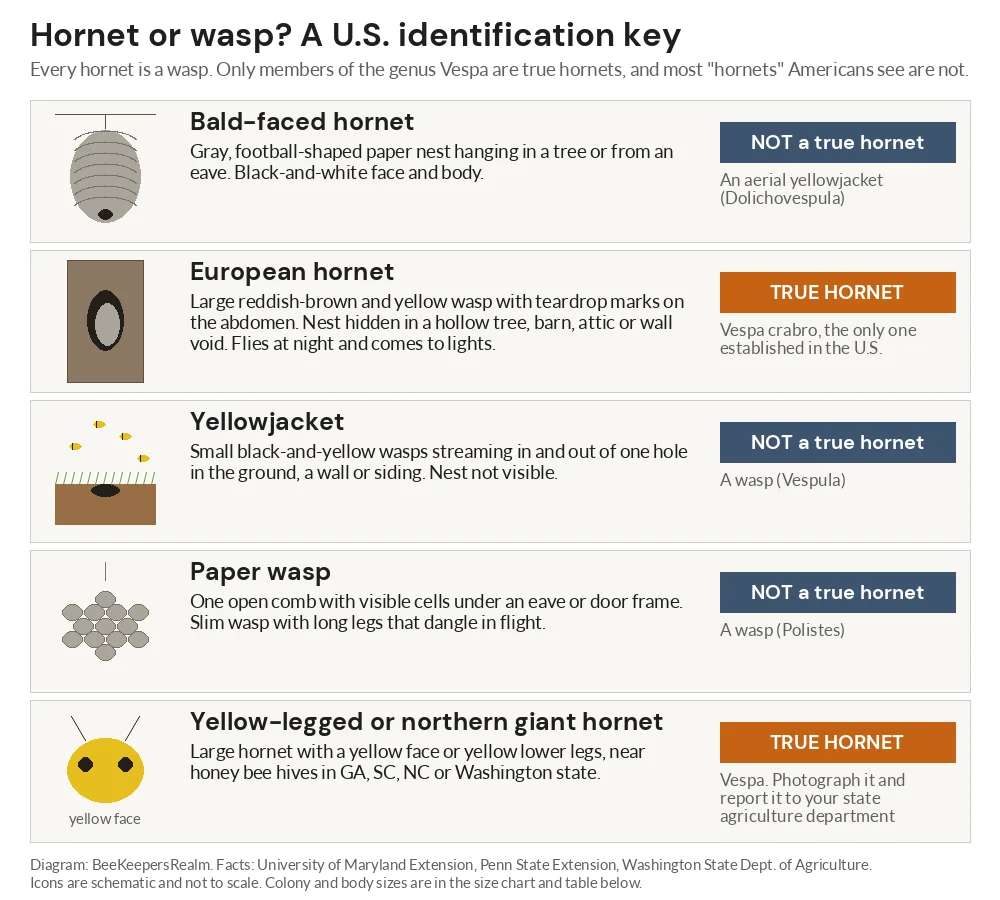
- The nest. A gray paper ball in the open is a bald-faced hornet; a hole in the ground with wasps streaming out means yellowjackets; an open umbrella comb is a paper wasp; a nest hidden in a hollow tree, barn or wall void may be a European hornet.
- Size and face. A black-and-white face means a bald-faced hornet. A big reddish-brown wasp with a yellow abdomen is a European hornet.
- Legs in flight. Maryland Extension says paper wasps can look larger in flight because their long legs dangle.
- Time of day. In the East, a big wasp at the porch light after dark is probably a European hornet; Maryland Extension notes it is drawn to lights.
Which Is More Dangerous?
On pain, neither group wins. Penn State Extension says:
“Despite their large size, the sting from a European hornet is only about as painful as a honey bee sting.”
The Schmidt index also scores the bald-faced hornet and a western yellowjacket at 2. Exposure differs. Yellowjacket colonies run to thousands of wasps and often sit underground, where a mower can set them off. University of Kentucky entomologist Michael Potter says:
“Yellowjackets are arguably the most dangerous stinging insects in the United States.”
Foraging wasps seldom attack, Potter adds, but a threatened nest can launch a coordinated assault, with alarm pheromones calling more defenders. He puts allergic reactions to wasp and hornet stings at about 225,000 emergency room visits and as many as 100 deaths a year in the U.S. All of these insects can sting repeatedly. See bee sting vs wasp sting for how the stings compare.
If You Find a Nest
Keep your distance. Maryland Extension says not to mow under a nest, strike its tree or wall, or shine a light at it, and that a nest is not reused after the colony dies at the first hard frost. For treatment choices, see wasp nest removal. If you think you see a yellow-legged or giant hornet, safely photograph it and report it to your state agriculture department.
Frequently Asked Questions
Is a hornet a wasp?
Yes. Hornets are wasps of the genus Vespa.
What is the difference between a wasp and a hornet?
True hornets are generally larger, and the European hornet nests out of sight in hollow trees or wall voids. The wasps people meet most, yellowjackets and paper wasps, are smaller.
Is a bald-faced hornet a hornet?
No. It is an aerial yellowjacket, native to the U.S.
Hornet vs yellowjacket: which is more dangerous?
Stings hurt about the same. Yellowjackets cause more trouble because colonies are larger and often hidden underground.
Do hornets sting more than once?
Yes. Penn State Extension says European hornets have smooth stingers, unlike honey bees.
Are hornets more aggressive than wasps?
Pest sites disagree. Maryland Extension says social wasps are not aggressive unless a nest is disturbed or they feel threatened.
How is a hornet different from a bee?
Bees are fuzzy and eat pollen and nectar; hornets are smooth and hunt insects.
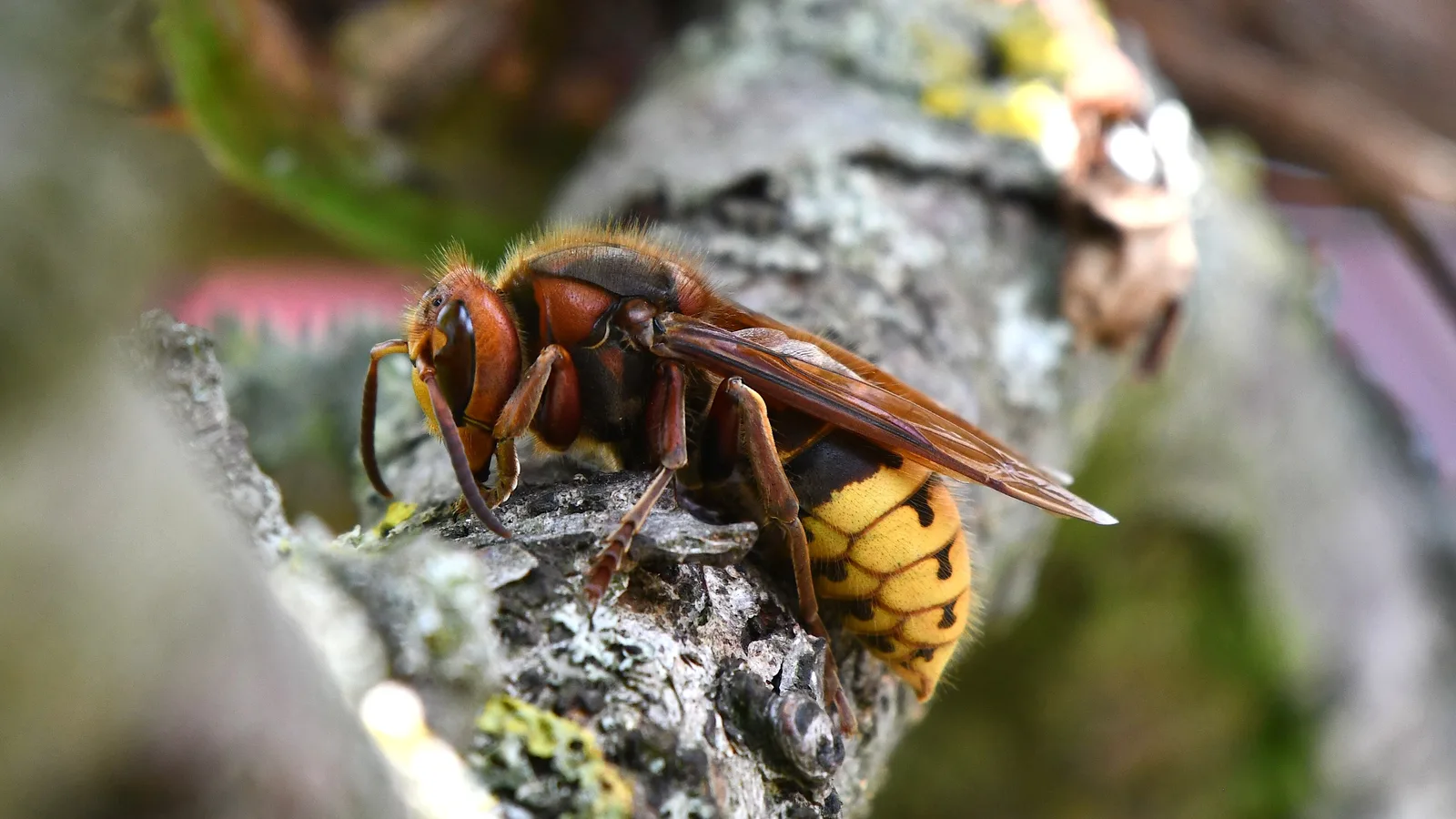
Featured image: a European hornet (Vespa crabro) on a fruit tree in Germany. Photo: Romzig, via Wikimedia Commons, CC0, cropped.