Reviewed by Michael R. · How we review
Stingless bees are a tribe of about 605 species of social, honey-making bees, the Meliponini, that live in the tropics and subtropics of the Americas, Africa, Asia and Australia. Their sting is too reduced to work, so they defend their nests by biting, smearing sticky resin and guarding narrow entrances. None is native to the United States. The only stingless bees living wild in the country are a small population of a Brazilian species, Plebeia emerina, in Palo Alto, California, traced to a USDA import experiment that began in 1948.
This guide draws on the 2023 ZooKeys species checklist, the federal bee import rules in 7 CFR Part 322, published honey analyses and our own count of every U.S. stingless bee record on iNaturalist. For one regional tradition in depth, see our page on sugarbag, Australia’s native stingless bee honey.
Key Takeaways
- Stingless bees (tribe Meliponini) number 605 described living species in 45 genera, according to a 2023 review in ZooKeys. Most of them, 474, live in the Americas.
- They do have a sting, but it is vestigial. Instead they bite, tangle in hair, plaster intruders with resin and, in the “fire bees” of the genus Oxytrigona, squirt caustic mandibular secretions.
- The northernmost native population in the Americas is at about 27°N in Sonora, Mexico, roughly 300 miles south of the Arizona border.
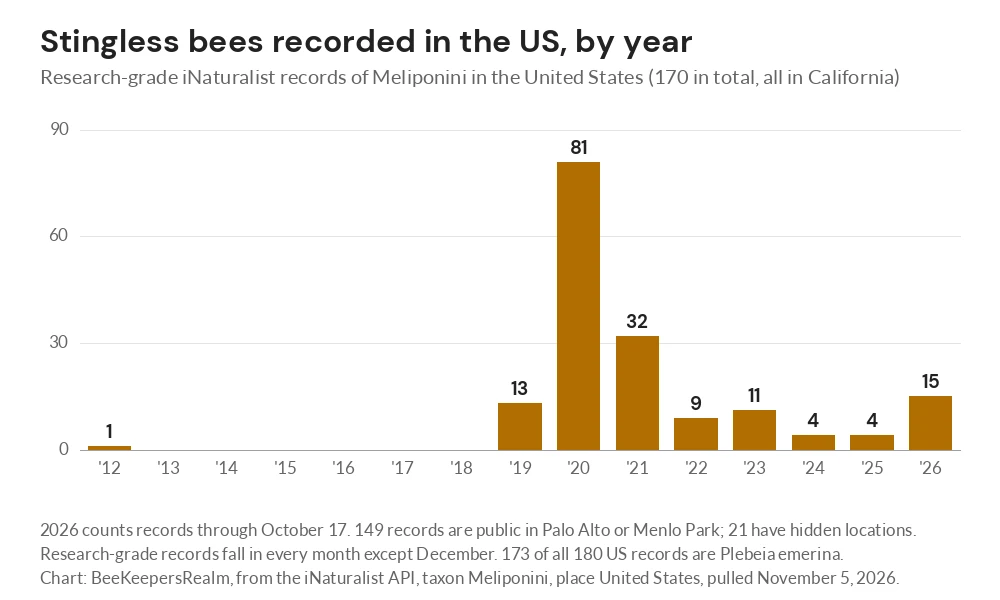
- All 170 research-grade U.S. records on iNaturalist come from California, nearly all from Palo Alto, where a colony from the 1948 to 1950 USDA shipments apparently survived.
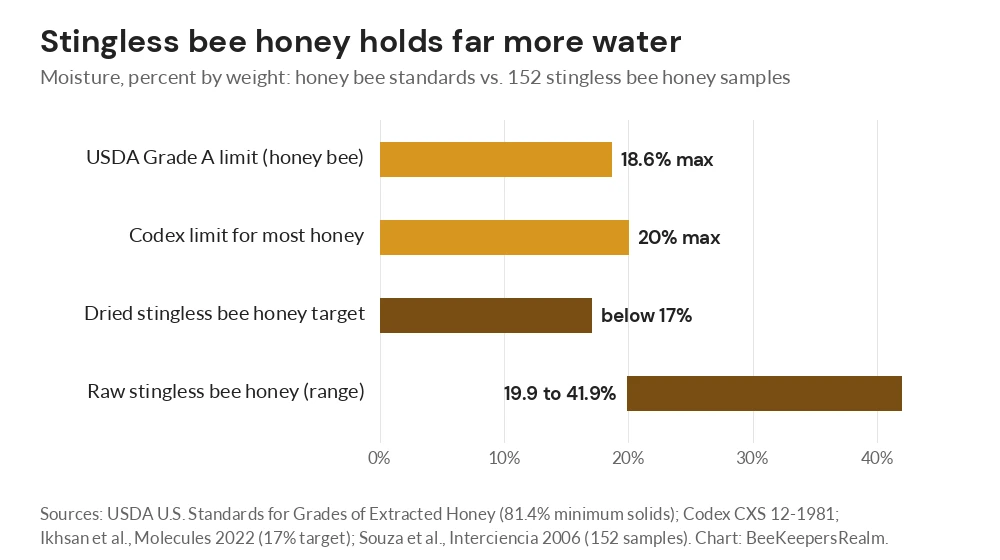
- Their honey is stored in wax-and-resin pots and is much wetter than honey bee honey: 19.9% to 41.9% water in 152 samples, against an 18.6% limit for USDA Grade A honey.
- Federal rules allow only five non-honey bee species, all from Canada, to be imported without a research permit. Stingless bees are not among them.
Table of Contents
- What Stingless Bees Are
- Where Stingless Bees Live
- How They Defend a Nest Without a Sting
- Are There Stingless Bees in the United States?
- Inside a Stingless Bee Nest
- Stingless Bee Honey: Wetter, Sourer and Scarcer
- Meliponiculture: Keeping Stingless Bees
- Can You Keep Stingless Bees in the US?
- Stingless Bees as Pollinators
- Frequently Asked Questions
- The Bottom Line
What Stingless Bees Are
Stingless bees are true bees in the family Apidae, the same family as honey bees and bumble bees. Biologists group them with honey bees (Apini), bumble bees (Bombini) and orchid bees (Euglossini) as the corbiculate bees, the lineages whose workers carry pollen in a basket on each hind leg. Within that group, the 2023 review by Michael S. Engel, Claus Rasmussen, Ricardo Ayala and Favízia F. de Oliveira calls the stingless bees “the most diverse lineage.” If you are unsure where bees sit among insects at all, our explainer on whether bees are insects walks through the classification.
Like honey bees, they are highly social. A colony has a queen, female workers and males, lives for years in the same nest and stores honey and pollen for lean times. Unlike honey bees, they feed each larva by mass provisioning: workers fill a brood cell with food, the queen lays an egg on it and the cell is sealed until the adult chews its way out. Brood cells are used once and then torn down.
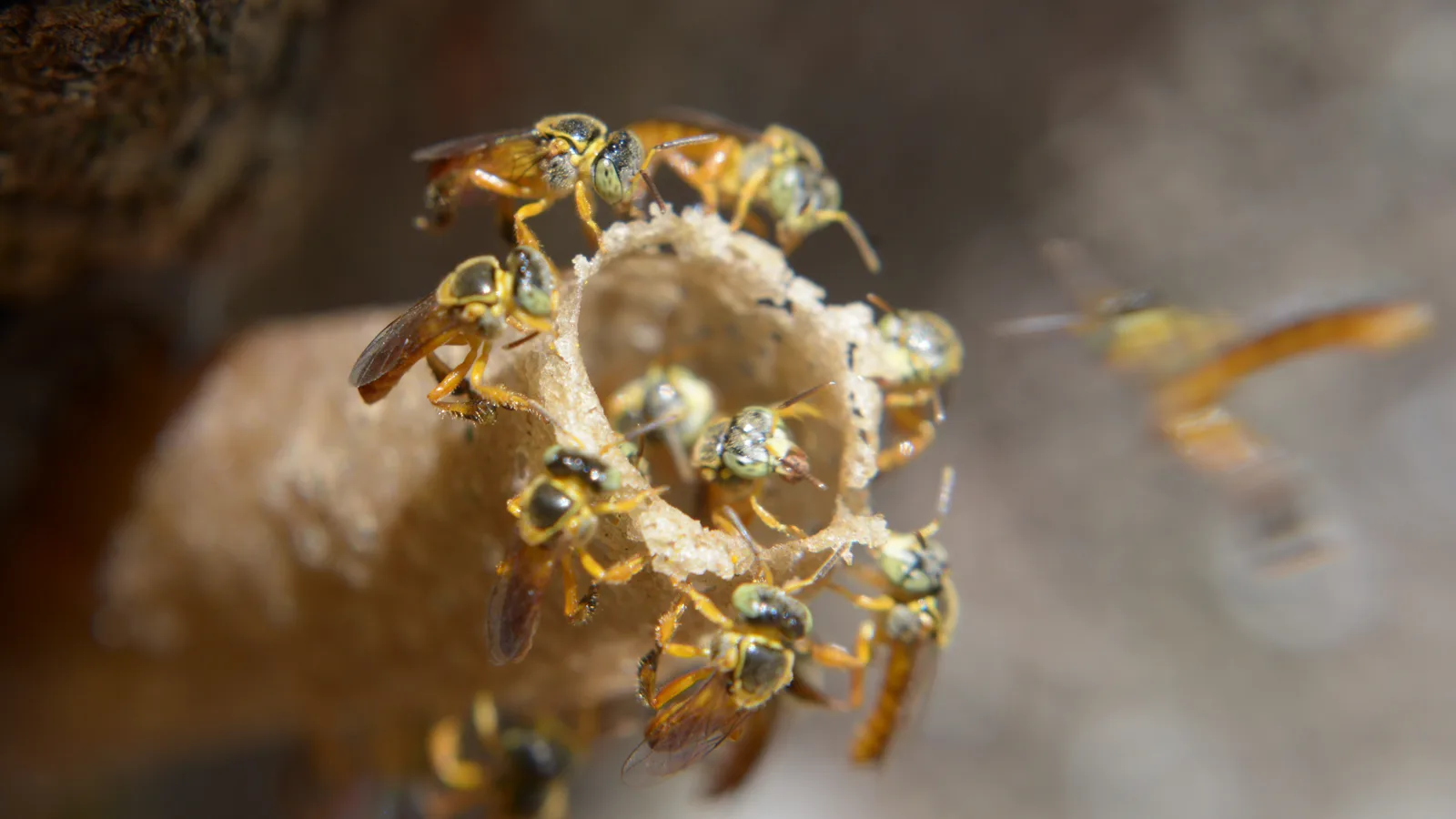
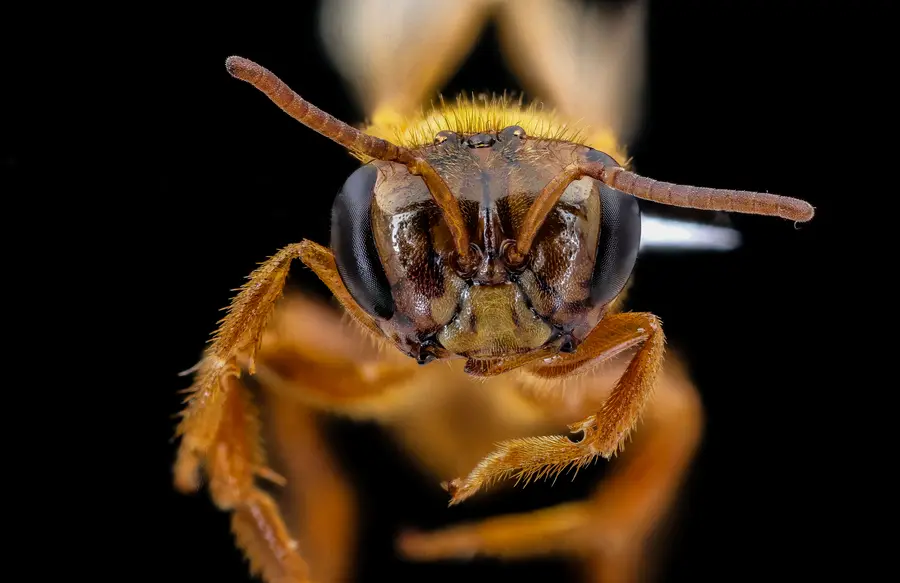
Britannica gives body lengths of 2 to 15 millimeters, about 0.08 to 0.6 inch. Many are smaller and darker than a honey bee, often with yellow or reddish markings, so people mistake them for gnats or small wasps. To compare them with the bees you are likely to meet in North America, see our guide to the types of bees in the US.
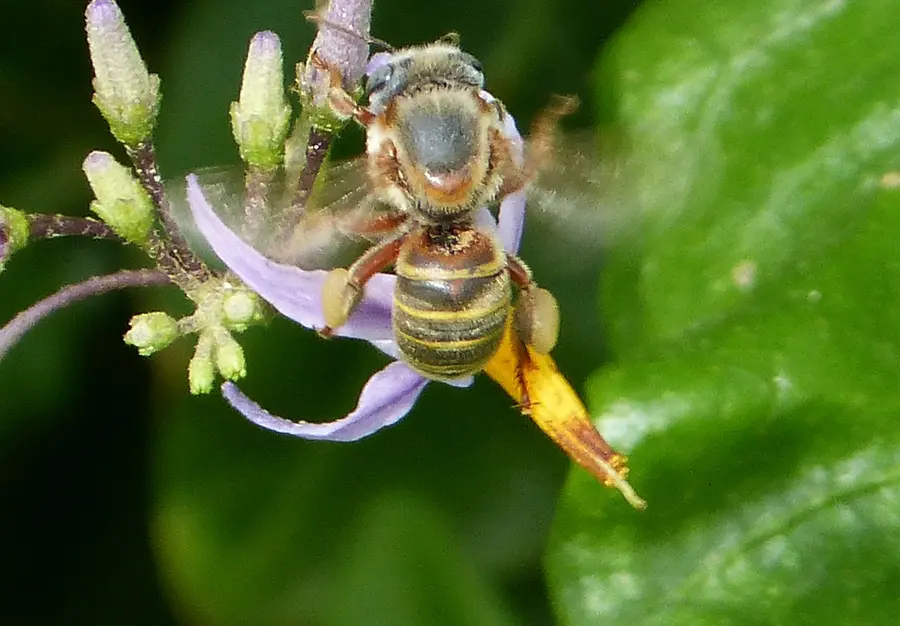
Counting the species
The most complete current count is the checklist in Engel and colleagues’ 2023 review, “Stingless bee classification and biology,” published in ZooKeys: 605 described living species in 45 genera, plus 18 extinct species known from fossils. Other sources say more than 600 (Britannica), about 500 (iNaturalist) or 512 (a California state entomologist in 2021); counts shift as taxonomists describe, merge and split species.
Where Stingless Bees Live
Stingless bees are pantropical: they live in tropical and subtropical climates and nowhere with a hard winter. The ZooKeys review splits the 605 species into three regional faunas.
| Region | Living species | Genera | Range limits given in the review |
|---|---|---|---|
| The Americas | 474 | 26 | From 34.89°S in Uruguay and Argentina to 27.03°N at Álamos, Sonora, Mexico; up to 4,000 m in Peru and Bolivia |
| Asia, New Guinea and Australia | 98 | 11 | Indomalayan, Papuasian and Australian regions |
| Africa and Madagascar | 33 | 8 | A belt from Senegal to Eritrea south to KwaZulu-Natal, South Africa, plus Madagascar |
| World | 605 | 45 | Plus 18 extinct species |
Source: Engel, Rasmussen, Ayala and de Oliveira, ZooKeys 1172: 239–312 (2023). Species lists current as of June 29, 2023.
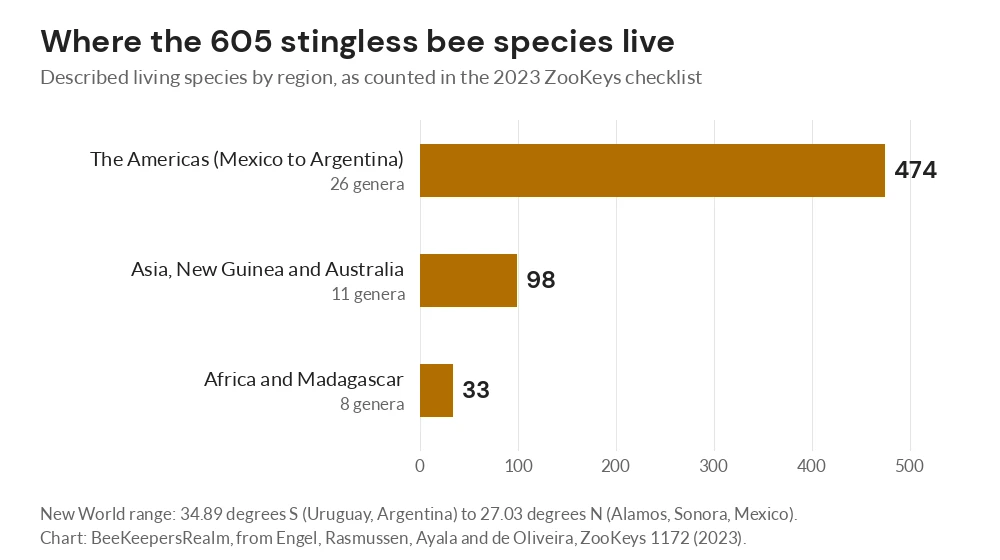
For American readers the useful number is the northern limit. Álamos, Sonora, sits at about 27°N. The Arizona border at Nogales is near 31.3°N, so the closest native stingless bees live roughly 4.3 degrees of latitude, or about 300 miles, south of the United States. Peru alone has at least 175 species, according to Smithsonian magazine.
How They Defend a Nest Without a Sting
Stingless bees are not truly stingless. The sting apparatus is still there, but it is reduced and generally nonfunctional; the review notes that only the African genus Meliponula keeps a comparatively well-developed sting and venom gland. One explanation it cites is a “miniaturization bottleneck”: as the lineage shrank, a tiny sting stopped deterring vertebrate predators, so nest defense moved elsewhere.
“Although stingless bees have an atrophied (vestigial) sting and lack an ability to sting it does not make them defenseless.”
Their toolkit instead:
- Biting and tangling. Workers crawl into hair and fur, pinch skin with their jaws, and get into noses and ears. Usually this is a nuisance, though the review notes bites can cause some injuries.
- Resin. Bees daub sticky plant resin on intruders such as ants, and build resin into the nest walls.
- Caustic secretions. Oxytrigona, the “fire bees,” release caustic secretions from their mandibular glands, which the review notes can even cause injuries.
- Bluffing. Many species, if grabbed, curl the abdomen toward the attacker as if to sting.
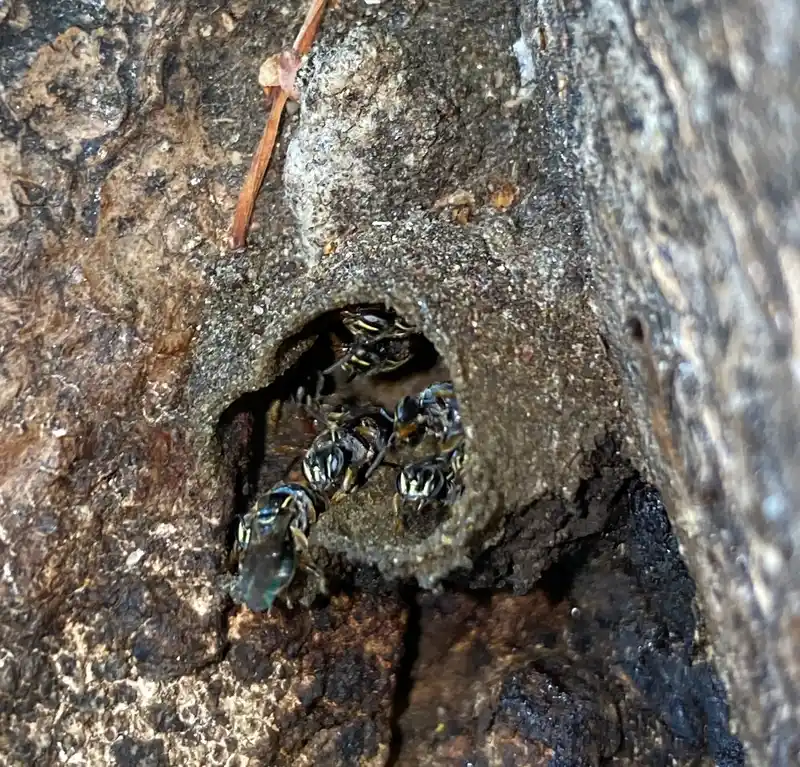
- Architecture and guards. Hidden or hard-to-reach nests, narrow entrance tubes, guard bees, and in some species an entrance sealed every night.
In this six-minute episode of KQED’s Deep Look, filmed with stingless beekeeper Emilio Pérez in the highlands of Oaxaca, Mexico, bees tear down the wax-and-resin lattice they built over their nest entrance overnight to keep out ants, then rebuild it at dusk. The narration explains that Melipona beecheii posts a single guard on a flower-shaped ledge while other species use as many as 15, and that a defending worker’s bite “only feels like a pinprick.”
So can stingless bees hurt you? A bite from most species is minor, though a crowd of them in your hair is unpleasant, and fire bee secretions can injure skin. For how real stings compare, see our page on which bees die after stinging.
Are There Stingless Bees in the United States?
Not native ones. No stingless bee is native to the U.S. today, though the group has a deep American past: Cretotrigona prisca, described in 1988 in the Proceedings of the National Academy of Sciences as Trigona prisca, the oldest fossil bee then known, is a stingless bee worker preserved in Cretaceous amber from New Jersey. Its describers, Charles Michener and David Grimaldi, noted that it closely resembles living tropical American species.
The living exception is in Palo Alto, California. In 1948 the Brazilian bee scientist Paulo Nogueira-Neto shipped stingless bee colonies to the U.S. Department of Agriculture, which was looking for useful pollinators. He later described what happened, in a 2002 paper quoted by Bay Nature:
“They were forwarded to Baton Rouge (Louisiana), Tucson (Arizona), Davis and Palo Alto (California), Logan (Utah) and Beltsville (Maryland). A [colony of] Plebeia sp. lived eight years in Palo Alto with Prof. G. Schafer. The other colonies died in less than one year.”
He had sent 10 colonies in 1948 and 20 more in 1950. Stanford professor George Schafer’s backyard colony vanished after eight years and was presumed dead. Then, per Bay Nature:
- September 6, 2013: a homeowner near Schafer’s old house reported strange “wasps” in a backyard tree. Martin Hauser of the California Department of Food and Agriculture identified them as Plebeia, and Gabriel Melo in Brazil later identified the species as Plebeia emerina.
- 2018: a second colony turned up at Elizabeth Gamble Garden in the same neighborhood.
- Spring 2021: a four-year-old found the third and fourth known colonies, in two trees about a mile from the garden.
The species is native to southern Brazil; Palo Alto Online reports it comes from Rio Grande do Sul, Brazil’s southernmost state, which may explain why it copes with a Bay Area winter. Hauser told Bay Nature the bees are 5 to 7 millimeters long, black with yellow trim, and visit a wide range of garden flowers. A 2022 scientific note in Apidologie by Charles Fernando dos Santos and colleagues framed the case as “a stingless bee species attempting to invade a foreign region.”
“Their slow spread is really interesting: they are hanging on for 70 winters and fire seasons, droughts etc, but not spreading significantly.”
What the U.S. records show
To see whether stingless bees have turned up anywhere else, we pulled every iNaturalist observation of the tribe Meliponini in the United States on November 5, 2026. There were 180, of which 170 were research grade, meaning the community agreed on the identification. All 170 research-grade records are from California: 149 have public locations in Palo Alto or neighboring Menlo Park, and the other 21 have hidden locations listed only as California. 173 of the 180 records are Plebeia emerina. The other seven are unconfirmed or casual records, including single ones from Florida, New Jersey and Pennsylvania.
Three details stand out. The earliest research-grade record is dated May 13, 2012, more than a year before the 2013 backyard report. Records peak in 2020, during the crowdsourced “Bay Area Plebeia Watch” search on iNaturalist that Bay Nature described in 2021, but they continue every year since, including 15 so far in 2026. And research-grade records fall in every month except December, which fits Bay Nature’s observation that the colony forages nearly year-round. To add your own, see our guide to pollinator citizen science.
Inside a Stingless Bee Nest
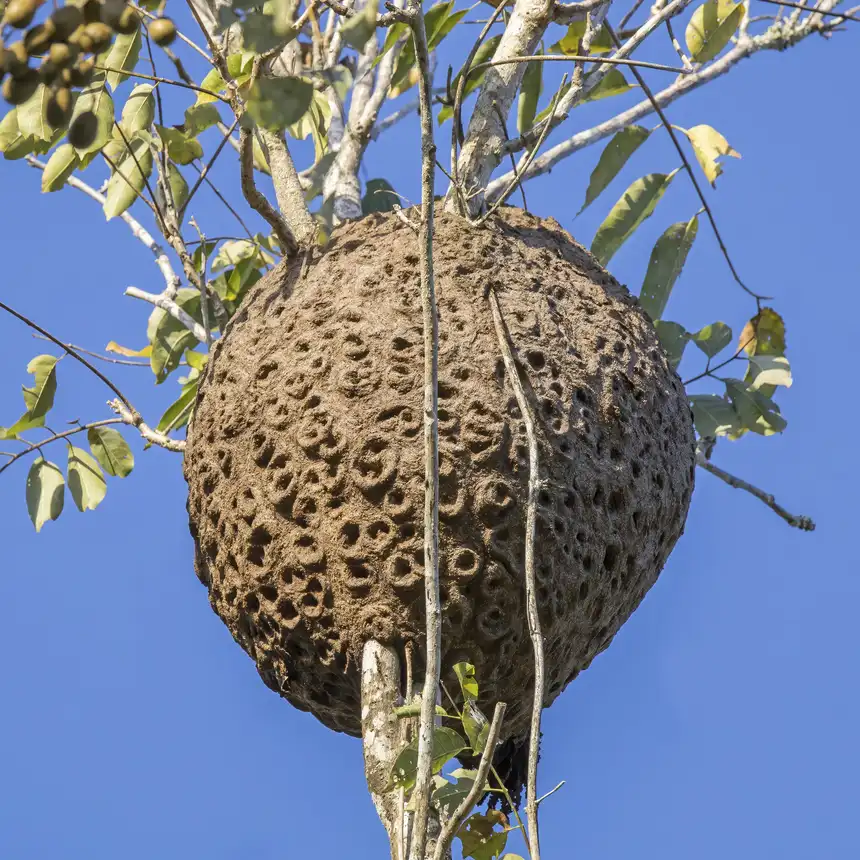
Most stingless bees nest in tree hollows, wall cavities or the ground; some, like many Trigona, build exposed nests on branches. Their building material is cerumen, a blend of beeswax and plant resin, where a honey bee uses pure wax. The ZooKeys review describes the typical layout from the inside out:
- Brood chamber. Single-use brood cells, usually in horizontal combs stacked like a tiered cake, though some species build clusters.
- Involucrum. Thin, layered cerumen sheets around the brood that help hold its temperature steady.
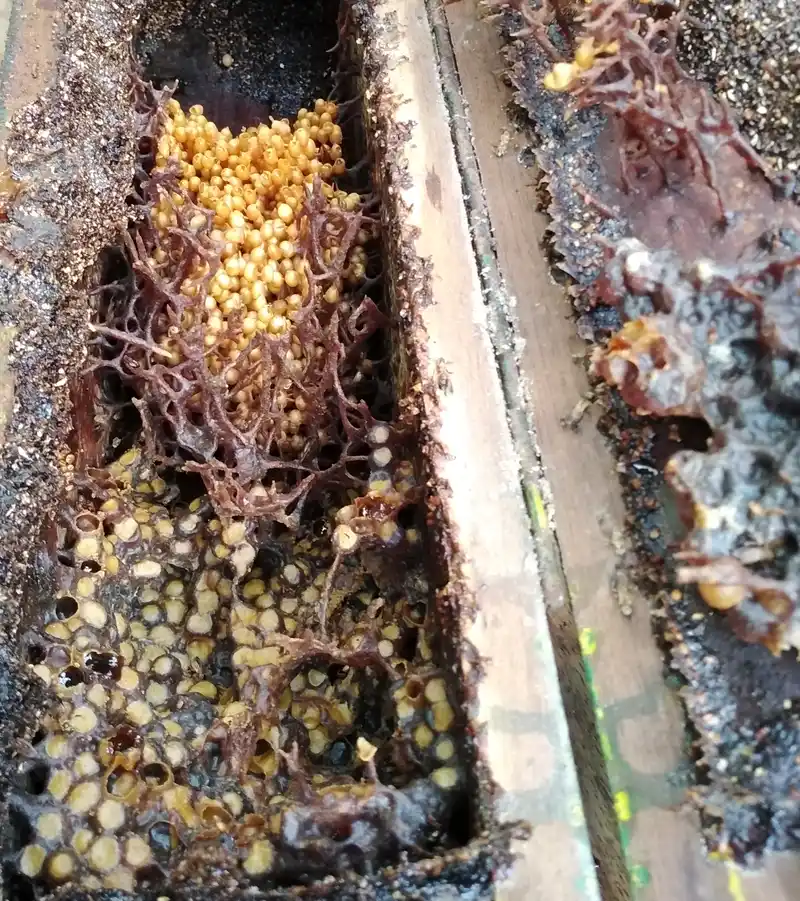
- Storage pots. Rounded pots, in clusters or layers rather than combs, filled with honey or pollen.
- Batumen. Thick layers of cured resin that seal the whole cavity.
The entrance is often a tube or ledge of resin and wax whose shape helps identify the species. Charles Darwin used Melipona cells, more regular than a bumble bee’s but less so than a honey bee’s, in his argument about how comb-building evolved; see Darwin’s bees. According to Hauser, new colonies form when a young queen leaves with a large share of the workers for a new nest, and he suspects these swarms do not fly far, one reason the Palo Alto bees have spread so slowly.
A few stingless bees break the pollen-and-nectar rule. Robber bees of the genus Lestrimelitta live by stealing food from other colonies, and three tropical American Trigona species feed on dead animals instead of pollen; our page on vulture bees covers them.
Stingless Bee Honey: Wetter, Sourer and Scarcer
Stingless bees make true honey from nectar but keep it in cerumen pots, so it is often called pot honey. Its chemistry differs noticeably from the honey bee honey in U.S. stores.
| Measure | Honey bee honey | Stingless bee honey |
|---|---|---|
| Where it is stored | Hexagonal beeswax comb | Rounded wax-and-resin pots |
| Moisture | USDA Grade A needs at least 81.4% solids (about 18.6% water or less); Codex limit 20% for most honeys | 19.9% to 41.9% across 152 samples |
| Free acidity | Codex guideline: not more than 50 meq/kg | 5.9 to 109.0 meq/kg; pH 3.15 to 4.66 |
| Notable sugar | Mostly fructose and glucose | Trehalulose, 13 to 44 g per 100 g in five species tested |
| Shelf stability | Stable when ripe | Prone to fermentation; drying below 17% moisture prevents it |
| Yield per colony | 48.0 lb, U.S. average in 2025 | About 9 lb a year for Melipona beecheii in Oaxaca |
Sources: USDA AMS, U.S. Standards for Grades of Extracted Honey, Tables III to V; Codex Alimentarius CXS 12-1981; Souza et al., Interciencia 31 (2006), 152 samples compiled from studies since 1964, mostly Melipona; Fletcher et al., Scientific Reports (2020); Ikhsan et al., Molecules (2022); USDA NASS Honey, March 13, 2026; KQED Deep Look (2024).
Why the water content matters
More water makes the honey thinner and lets yeasts grow. A 2022 review in Molecules by Ikhsan, Chin and Ahmad puts it plainly: stingless bee honey “has a high moisture content, making it more prone to fermentation and leading to honey spoilage.” The review compares drying methods and cites moisture below 17% as the level that prevents fermentation, which vacuum drying and freeze-drying reached in the studies it summarized. For the honey bee side of the same problem, see ripe honey moisture content.
The trehalulose finding
In 2020 a University of Queensland team led by Mary Fletcher tested honey from five stingless bee species in Australia, Malaysia and Brazil and found that its main disaccharide was trehalulose, at 13 to 44 grams per 100 grams. The paper in Scientific Reports describes trehalulose as a sucrose isomer with known low glycemic index and non-tooth-decaying properties and calls this the first time it has been found as a major component of any food. That is a finding about a sugar, not proof the honey treats any illness. Like other honeys, it should not be given to infants under one year old.
Why it costs more
Mostly volume. The beekeeper in the Deep Look episode gets about 9 pounds a year from each Melipona beecheii colony; USDA’s National Agricultural Statistics Service puts the average U.S. honey bee colony at 48.0 pounds in 2025. Harvesting means draining many small pots, and the wet honey needs drying before it keeps. A high price also invites dilution; the 2020 trehalulose paper proposes the sugar as a marker for authenticating the honey.
Meliponiculture: Keeping Stingless Bees
Keeping stingless bees is called meliponiculture, from Meliponini, as apiculture comes from Apis. It is older in the Americas than honey bee keeping: the ZooKeys review calls Melipona species “the first ‘semi-domesticated’ bees,” managed by the pre-Hispanic Maya. Honey bees reached North America only in the 1600s; see how honeybees came to America. For Maya log hives and smoke-free harvests in context, see our page on ancient beekeeping practices.
Today keepers use hollow logs, clay pots and small wooden boxes like the ones pictured on this page. Because the bees cannot sting, a colony can be opened without the suit and veil a honey bee hive calls for, though defensive species still bite.
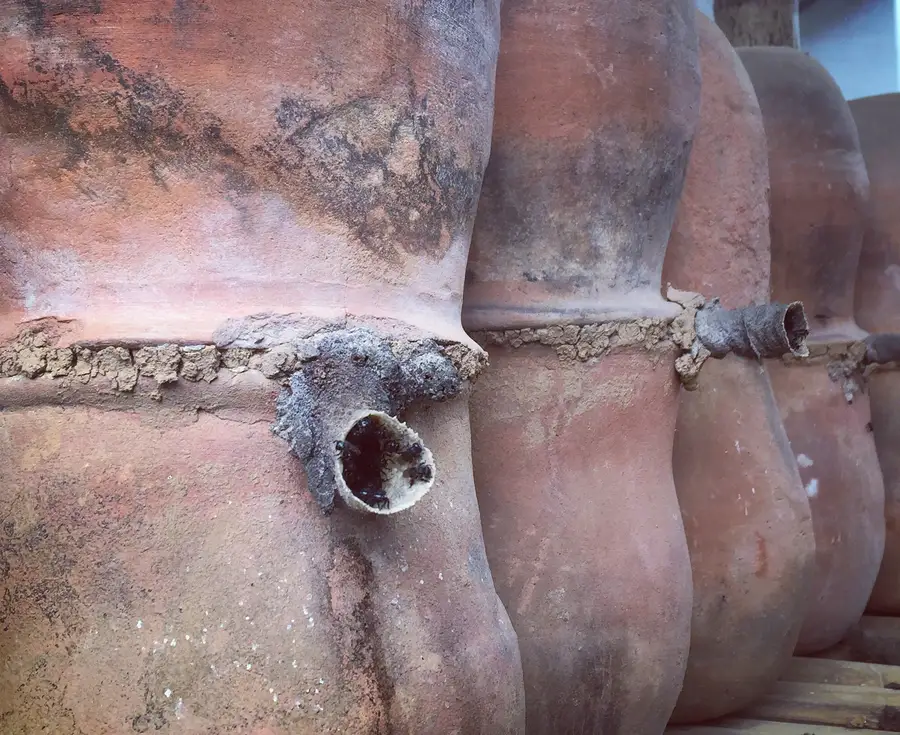
Rules vary widely. Brazil treats native stingless bees as protected wildlife rather than livestock; see our summary of Brazil’s beekeeping laws, and for Mexico, Mexico’s beekeeping regulations. In Peru, the province of Satipo passed an ordinance in October 2025 recognizing legal rights for native stingless bees, and the town of Nauta followed in December, which Smithsonian magazine called the first legal rights granted to insects. Mongabay reports that a national law, No. 32235, had already recognized them as a species of national interest. Australian keepers are covered on our sugarbag bees page.
Can You Keep Stingless Bees in the US?
Educational information, not legal advice. Confirm current rules with USDA APHIS and your state apiarist before moving any bees.
For a hobbyist, effectively no. Federal rules on imported bees are in 7 CFR Part 322, administered by USDA’s Animal and Plant Health Inspection Service:
- § 322.4(c) approves only one region for importing bees other than honey bees into the continental U.S.: Canada. Hawaii is excluded.
- § 322.5(d)(2) limits those imports to five species: the bumble bees Bombus impatiens and Bombus occidentalis, the alfalfa leafcutter bee, the blue orchard bee and the horn-faced bee.
- § 322.13 makes every other bee a restricted organism. Importers must be “Federal, State, or university researchers,” and imports must be for research or experimental purposes.
So a stingless bee colony offered online from abroad cannot legally be shipped to a private buyer. These rules descend from the honey bee import ban covered in our history of the Honeybee Act of 1922. States add their own requirements; see our guides to California beekeeping laws and beekeeping in Hawaii and tropical U.S. climates.
Climate is the second barrier. Native stingless bees stop well short of the border, and the 1948 to 1950 colonies died within a year everywhere but Palo Alto. The only U.S. effort to manage them that we found reported involves the Palo Alto Plebeia: in 2024 Palo Alto Online described a Davis beekeeper in the California Master Beekeeper Program building bee houses in two public gardens, hoping to capture a colony and split it. If you want gentle, mostly non-stinging bees in a U.S. yard, the realistic choice is to support native bee species such as mason and leafcutter bees.
Stingless Bees as Pollinators
Stingless bees are generalists that visit many plants, which makes them important to tropical forests and farms. In a widely cited review of their crop role, published in the Annual Review of Entomology in 1999, Tim Heard found records of them visiting the flowers of about 90 crops. They were confirmed as effective and important pollinators of 9, might contribute to about 60 more, and probably matter little for another 20 that are pollinated by other means.
Frequently Asked Questions
Can stingless bees sting you?
No. Their sting is vestigial and does not work as a weapon. Only the African genus Meliponula keeps a comparatively developed sting, and even that is not an effective weapon.
Do stingless bees bite?
Yes. Defending workers bite and tangle in hair. Most bites feel like a pinprick; fire bees (Oxytrigona) add caustic secretions that can injure skin.
Are stingless bees dangerous?
Not for most people. Because they cannot sting, the sting-allergy risk of honey bees and wasps does not apply. Fire bees are the main exception to their gentle reputation.
Can stingless bees live in the US?
Only one wild population is known: Plebeia emerina in Palo Alto, California, apparently from 1948 to 1950 USDA shipments. Federal rules bar private imports.
How many species of stingless bees are there?
605 described living species in 45 genera, according to the 2023 ZooKeys checklist, 474 of them in the Americas.
Where do stingless bees live?
In the tropics and subtropics: from northern Mexico to Argentina and Uruguay, across Africa south of the Sahara and Madagascar, and from India through Southeast Asia to New Guinea and Australia.
Do stingless bees make good honey?
They make real honey, thinner and often more acidic than honey bee honey, with 19.9% to 41.9% water in one 152-sample review. It ferments unless dried to below about 17% moisture.
Why is stingless bee honey so expensive?
Low yields: about 9 pounds a year per Melipona beecheii colony in one Mexican apiary, against a U.S. honey bee average of 48 pounds.
The Bottom Line
Stingless bees are a large tropical branch of the honey-making bees, and in the United States they live in only one place. If you live near Palo Alto, look for tiny black-and-yellow bees at a resin tube in a tree trunk and log what you find on iNaturalist.
Image credits: Photo: Sintropepe, Tetragonisca angustula nest entrance in Brasília, Brazil, via Wikimedia Commons, CC BY-SA 4.0, cropped and resized.