Last Updated September 16, 2026
Hawaii has the toughest bee-smuggling penalty in the country — illegally importing honey bees, queen bees, or used beekeeping equipment is a class C felony carrying fines of up to $200,000. That’s not a typo or a bureaucratic maximum nobody enforces: it reflects a genuinely different reality for Hawaii’s beekeepers, who operate on an isolated island chain where Varroa destructor mites are still contained to just two of the six main islands, and where the state’s entire regulatory framework is built around keeping it that way.
This guide covers Hawaii’s strict import and inter-island movement restrictions under HRS Chapter 150A, the state’s voluntary (not mandatory) beekeeper registry under HRS §142-100, the quarterly inspection and shipping-certification requirements for queen breeders, the very different beekeeping zoning rules across Hawaii’s four counties — including a major 2024 reform on Hawaii Island — and how Hawaii’s home-based producer law treats selling honey.
Disclaimer: This guide is for educational purposes only and is not legal advice. Beekeeping regulations change over time — always confirm current requirements directly with your local or national agricultural authority before acting.
Key Takeaways
- Illegally importing or moving live or dead bees, queens, or used beekeeping equipment into or within Hawaii is a class C felony under HRS §150A-6, punishable by fines up to $200,000 (§150A-14(c)).
- Unlike most states, Hawaii’s beekeeper registry (HRS §142-100) is voluntary, not mandatory — though the Department of Agriculture and Biosecurity (DAB) strongly encourages registration for disease-alert and statistical purposes.
- Varroa mites are still confined to O’ahu and Hawai’i Island (the Big Island); Maui, Kaua’i, Moloka’i, and Lāna’i remain mite-free, which is why inter-island bee shipments require prior inspection and certification.
- Beekeeping zoning rules vary dramatically by county: Honolulu allows up to 8 hives per residential lot statewide, while Hawai’i County only opened all zoning districts (including residential) to beekeeping in September 2024, reversing a longstanding residential ban.
- Hawaii’s home-based producer law lets small-scale beekeepers sell up to 500 gallons of honey per year directly to consumers without a commercial food-processing permit, provided they complete a food-safety course and follow specific labeling rules.
Table of Contents
- Import and Inter-Island Movement Restrictions
- The Voluntary Hawaii Beekeeper Registry
- Queen Breeder Inspections and Shipping Certificates
- County Zoning Rules: Honolulu, Hawai’i, Kaua’i, and Maui
- Selling Honey Under Hawaii’s Home-Based Producer Law
- Penalties for Non-Compliance
- Frequently Asked Questions
Import and Inter-Island Movement Restrictions
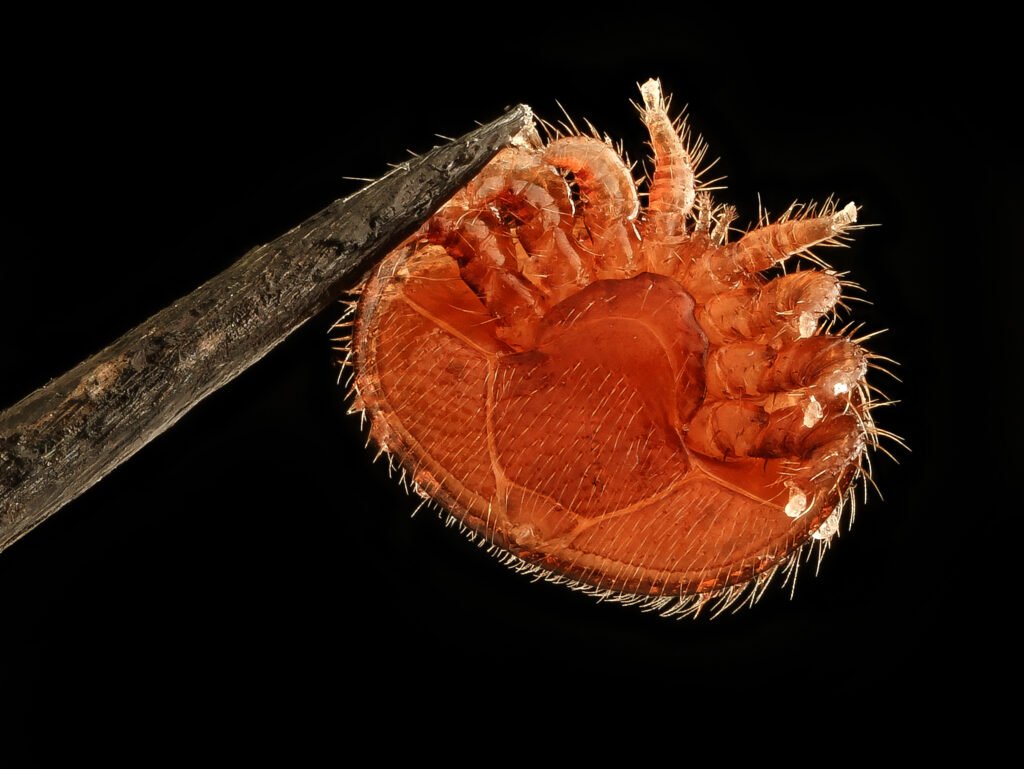
Hawaii has restricted the importation of bees since 1908, and today HRS §150A-6 makes it illegal to import or move live or dead bees, queens, or used beekeeping equipment into the state, or between islands, unless the shipment has been certified pest-free by the Hawai’i Department of Agriculture and Biosecurity (DAB). This isn’t a minor regulatory formality: violators face class C felony charges and fines of up to $200,000 under §150A-14(c), a penalty level no other state on this site applies to a beekeeping-equipment violation. The reason is concrete rather than symbolic. Varroa destructor mites — the single most damaging honey bee parasite worldwide — were accidentally introduced to O’ahu in 2007 and reached Hawai’i Island (the Big Island) in 2008, but have never been detected on Maui, Kaua’i, Moloka’i, or Lāna’i. Every import and inter-island shipping rule in the chapter exists to keep those four islands mite-free, which is a genuinely rare and valuable status most mainland beekeeping regions lost decades ago. Honey bee semen, notably, can still be imported from the mainland for queen breeding and genetic-diversity purposes, since semen doesn’t carry the same pest risk as live bees or used equipment. Hawaii’s approach is a stricter regional variant of a pattern that goes back to the Honeybee Act of 1922, the first U.S. federal law restricting bee imports; for how other countries handle the same risk, see this site’s comparison of bee import laws by country.
The Voluntary Hawaii Beekeeper Registry
Under HRS §142-100, Hawaii maintains a beekeeper registry, but — unlike the mandatory annual registration required in most states covered on this site — registering is voluntary. The DAB’s Apiary Program, established in 2011, encourages every beekeeper to register anyway, because the registry is the primary channel the state uses to compile accurate industry statistics and to reach beekeepers directly during an emerging disease outbreak or pest detection. Registration information submitted under §142-100 is kept confidential (subject to Hawaii’s public-records law, chapter 92F), though the department may publish a registrant’s name and business address and may release compiled statistics. In practical terms, a Hawaii beekeeper who skips registration isn’t breaking the law, but they are opting out of the fastest way DAB has to warn them if, for example, Varroa is detected for the first time on their island. This voluntary model is the exception rather than the rule; most state apiary registration programs make registration mandatory.
Queen Breeder Inspections and Shipping Certificates
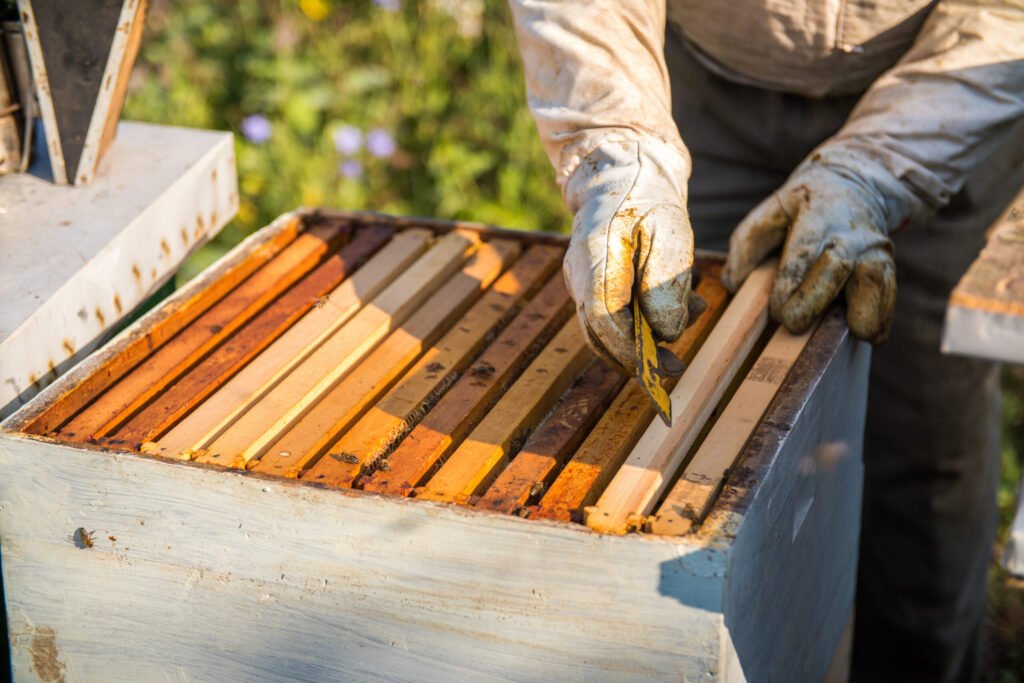
Hawaii’s queen-breeding industry — centered on the Big Island’s Kona district — exports queens both domestically and internationally, and that trade is exactly where the state’s biosecurity rules get the most specific. A queen breeder shipping to a destination that requires a certificate must be inspected and certified by the DAB Apiary Program, which conducts quarterly inspections of all registered queen breeders statewide. To even schedule a queen inspection, an operation needs a minimum of 40 colonies, and each individual bee yard included in the inspection must have at least 20 colonies. Inspectors check specifically for American foulbrood (AFB), which would block shipment entirely if found, European foulbrood (EFB), and Varroa mite levels — and the acceptable mite threshold isn’t uniform, since different export destinations set their own limits (California requires levels under 3%, for instance, while Canada requires under 1%). Shipping certificates are only valid for 90 days, so an active queen-export operation is effectively subject to continuous re-inspection rather than a one-time approval. Beekeepers interested in the breeding side of this trade can see this site’s guide to starting a queen breeding program.
County Zoning Rules: Honolulu, Hawai’i, Kaua’i, and Maui
Hawaii has no single statewide zoning rule for where hives can be placed — that authority sits with each of the state’s four counties, and the four counties currently take meaningfully different approaches. In the City and County of Honolulu (O’ahu), noncommercial beekeeping is allowed in every zoning district: the Revised Ordinances of Honolulu cap residential lots at 8 hives, require movable-frame hives, and set a 25-foot setback from property lines, public streets, sidewalks, and alleys — though that setback can be waived if the hives sit behind a 6-foot solid fence extending 15 feet past the hives in both directions, or if the hives are elevated at least 8 feet above ground level, such as on a rooftop.
Hawai’i County (the Big Island) tells a genuinely different story, and a recent one. For years, beekeeping was barred entirely in the county’s residential zones, permitted only in Agricultural, Intensive Agricultural, and Residential-Agricultural districts, and subject to an unusually large 1,000-foot setback from any major public street. That changed in September 2024, when the County Council passed Bill 144 and Mayor Mitch Roth signed it into law, making apiaries a permitted use in all zoning districts on the island — residential, resort, commercial, and industrial included — while replacing the 1,000-foot roadway setback with a much more workable 25-foot property-line setback (or 15 feet behind a flyover barrier). The new ordinance also caps lots smaller than 20,000 square feet at 15 standard hives, with an exemption process for existing beekeepers who already exceed that count. The reform brought years of already-existing residential and school apiaries into legal compliance rather than creating new activity from scratch.
For a general primer on navigating local hive-placement rules, see this site’s urban beekeeping guide. Kaua’i County doesn’t define beekeeping explicitly in its zoning code, but treats it as falling under the code’s broad “agriculture” definition; beekeeping is allowed outright in agricultural districts, while a Use Permit is generally needed in residential or resort zones, and a reasonable-interpretation standard suggests apiaries should sit at least 500 feet from residential districts absent a permit. As of 2026, a Kaua’i County Council bill to more explicitly expand and clarify legal zones for apiaries has passed its first reading, signaling the county is moving in the same permissive direction Hawai’i County already has, though it wasn’t yet enacted law at the time of writing. Maui County remains the most restrictive of the four: beekeeping is treated as agricultural livestock production, allowed as of right only in Rural and Agricultural districts, generally barred in residential zones (with a narrow exception for the Maui Research & Technology Park District), and otherwise possible only through a discretionary Special or Conditional Use Permit that isn’t guaranteed to be granted.
Selling Honey Under Hawaii’s Home-Based Producer Law
Hawaii updated its honey-sales statute in 2013 specifically at beekeepers’ request, adding an inspection exemption for home-based producers under HRS §328-79. A beekeeper selling honey this way doesn’t need to process it in a certified honey house or licensed food-processing establishment, provided they sell less than 500 gallons of honey per year, sell only directly to consumers or to retailers who sell directly to consumers, complete a Department of Health-approved food-safety workshop and pass its certification exam, keep production and distribution records for at least two years, and label every container with the producer’s name and address, the net weight and volume, the production date, and two specific mandatory warning statements: that honey shouldn’t be given to infants under one year old, and that the product is home-produced and hasn’t been inspected by the Department of Health. Beekeepers weighing whether the exemption fits their business can compare it against this site’s general guide to selling honey legally. A beekeeper who exceeds the 500-gallon threshold, or who wants to sell through channels the exemption doesn’t cover, needs a full commercial permit from the Department of Health instead. If the department receives a consumer complaint about a home-based producer, the producer becomes subject to food sampling and a premises inspection under §328-80 to check for misbranding or adulteration.
| County | Zoning Districts Allowed | Hive Cap | Setback |
|---|---|---|---|
| Honolulu (O’ahu) | Every zoning district | 8 per residential lot | 25 ft (waivable with fence or elevation) |
| Hawai’i County (Big Island) | All districts since Sept. 2024 (Bill 144) | 15 on lots under 20,000 sq ft | 25 ft, or 15 ft behind a flyover barrier |
| Kaua’i County | Agricultural outright; Use Permit elsewhere | Not fixed | ~500 ft from residential districts (informal standard) |
| Maui County | Rural and Agricultural as of right | Not fixed | Discretionary Special/Conditional Use Permit required elsewhere |
For more on the 2024 Big Island reform, see Hawai’i Public Radio’s coverage of Bill 144’s passage.
Penalties for Non-Compliance
Penalties in Hawaii scale with the type of violation rather than following one flat schedule. The most severe consequences attach to the import and movement restrictions in Chapter 150A: illegally bringing bees, queens, or used equipment into the state, or shipping them between islands without certification, is a class C felony carrying fines of up to $200,000 under §150A-14(c) — a criminal-level penalty, not a civil fine. County zoning violations carry their own separate, generally civil or misdemeanor-level consequences: Honolulu treats noncompliant hive placement as subject to penalties and criminal action under ROH 7-2.10, while Kaua’i County charges zoning violations as a misdemeanor with fines of up to $2,000. Because Hawaii’s beekeeper registry itself is voluntary, failing to register carries no penalty at all — the legal exposure in Hawaii comes almost entirely from the biosecurity and zoning rules, not from registration status.
Frequently Asked Questions
Is beekeeper registration mandatory in Hawaii?
No. Hawaii’s registry under HRS §142-100 is voluntary, unlike the mandatory annual registration most states require, though the state strongly encourages it for disease-alert purposes.
Why are Hawaii’s bee-import penalties so much higher than other states?
Because Varroa mites are still confined to O’ahu and Hawai’i Island; Maui, Kaua’i, Moloka’i, and Lāna’i remain mite-free, and the felony-level penalties (up to $200,000) exist specifically to protect that status.
Can I keep bees in a residential neighborhood on the Big Island?
Yes, as of September 2024’s Bill 144, which made apiaries a permitted use in every zoning district on Hawai’i Island, reversing the prior residential ban.
How many hives can I keep on a residential lot in Honolulu?
Up to 8 hives per lot, set back at least 25 feet from property lines unless shielded by a qualifying fence or elevated at least 8 feet.
How much honey can I sell in Hawaii without a commercial food permit?
Up to 500 gallons per year directly to consumers, provided you complete a food-safety course and follow the required labeling rules under HRS §328-79.
Related Reading
For more on this topic, see the official Hawaii state government apiary program page.
Image credits: Photo: Ivan Radic, CC BY 2.0, via Wikimedia Commons; Photo: Gilles San Martin, licensed under CC BY-SA 2.0, via Wikimedia Commons.