
Last Updated September 16, 2026
Montana is one of the very few states where selling home-produced honey requires no license, no permit, and no inspection at all — a direct result of the state’s 2021 Local Food Choice Act, one of the most permissive “food freedom” laws in the country. That same hands-off philosophy doesn’t extend to hive placement, though: Montana’s apiary registration system sorts beekeepers into four distinct categories, and commercial operations face a real, geography-based rule most states don’t bother with — a mandatory 3-mile buffer between commercial apiary sites.
This guide covers Montana’s four apiary registration classifications under Title 80, Chapter 6 of the Montana Code Annotated, the 3-mile buffer-zone rule for commercial yards, the state apiary program’s inspection authority, and how the Montana Local Food Choice Act treats selling honey directly to consumers.
Disclaimer: This guide is for educational purposes only and is not legal advice. Beekeeping regulations change over time — always confirm current requirements directly with your local or national agricultural authority before acting.
Key Takeaways
- Montana sorts apiary registrations into four types: Commercial (General), Pollination, Landowner, and Hobbyist, each with different rules.
- Commercial apiary sites must be at least 3 miles from another beekeeper’s commercial site and must run at least 10 hives from April 15 through October 15.
- Hobbyist apiaries are capped at 5 hives per individual or 10 per household, with no minimum distance requirement between them.
- Landowner apiaries have no buffer-zone requirement and no cap on hive count, as long as the landowner personally manages the bees.
- Under the 2021 Montana Local Food Choice Act, home producers can sell honey directly to an informed Montana consumer with no license, permit, or inspection required, as long as the sale happens in person within the state.
Table of Contents
- Montana’s Four Apiary Registration Types
- The 3-Mile Commercial Buffer Zone
- State Apiary Program Inspections
- Selling Honey Under the Local Food Choice Act
- Alfalfa Leafcutting Bees: Montana’s Other Managed Pollinator
- Penalties and Enforcement
- Frequently Asked Questions
Montana’s Four Apiary Registration Types
Under Montana Code Annotated Title 80, Chapter 6 (Apiculture), the Montana Department of Agriculture registers every apiary site in the state — currently around 650 registered beekeepers across roughly 2,700 registered sites. Rather than a single one-size-fits-all registration, Montana sorts every apiary into one of four categories, each carrying different rules:
Commercial (General): An apiary placed by permission on someone else’s property. Commercial sites must be at least 3 miles from the next commercial site operated by a different registered beekeeper, and must have at least 10 hives present continuously from April 15 through October 15.
Pollination: A provisional apiary registered specifically to pollinate a commercial seed, fruit, or other crop. Pollination sites are exempt from the 3-mile buffer rule, but bees can’t be placed until the crop is actually blooming and must be removed once bloom ends — this is a seasonal, crop-tied registration, not a permanent site.
Landowner: An apiary registered to whoever owns the land it sits on. There’s no buffer-zone requirement and no cap on the number of hives, provided the landowner personally manages the bees rather than leasing the arrangement out.
Hobbyist: An apiary placed by permission on someone’s property, capped at no more than 5 hives per individual or 10 per household. Unlike the commercial category, there’s no minimum distance required between hobbyist apiaries.
The 3-Mile Commercial Buffer Zone
The 3-mile separation requirement between commercial apiary sites is a genuinely distinctive feature of Montana’s law — most states covered on this site leave hive spacing entirely to local zoning or don’t regulate it at all, while Montana builds a mile-scale buffer directly into state apiculture law. The Department of Agriculture states the purpose plainly: the buffer exists to prevent the spread of diseases and pests between neighboring commercial operations, and to limit over-exploitation of the pollen and nectar resources that foraging honey bees in a given area depend on. In a state with as much open rangeland as Montana, that second concern is a real, practical one — enough commercial colonies packed too closely together can genuinely deplete a shared forage radius during peak nectar flow. Because Pollination and Landowner registrations aren’t subject to this same 3-mile rule, a commercial beekeeper who wants a large operation on a single property they lease or manage in that landowner capacity may have more flexibility than the buffer rule alone would suggest.
State Apiary Program Inspections
Montana’s apiary program is fee-for-service, funded primarily through registration fees rather than general tax revenue. State apiary inspectors are authorized to enter any registered apiary and examine hives for disease and pest signs; inspections may be routine or specifically triggered by a suspected disease outbreak, and registered beekeepers are expected to cooperate during normal business hours. Montana consistently ranks among the top five honey-producing states in the country, a scale of industry that gives the inspection program’s disease-control mission real economic stakes beyond individual hobbyist hives.
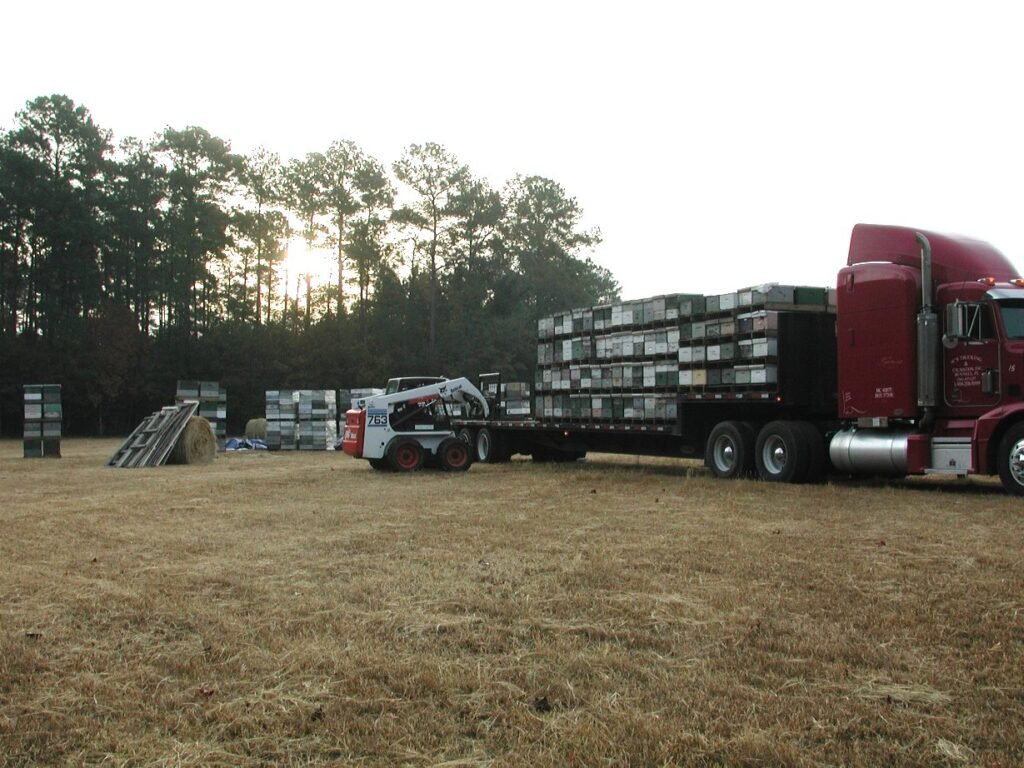
Montana’s honey industry relies heavily on migratory beekeeping operations moving colonies in for the summer nectar flow. Beekeepers moving bees into Montana or across state lines should also expect health-certificate requirements tied to registration, since interstate movement is one of the more common ways pests and diseases spread between apiaries. The apiary program’s contact structure reflects its relatively small, specialized staffing: a state entomologist based in Helena oversees the program alongside a natural resource section supervisor, and beekeepers with questions about registration, inspections, or health certificates are directed to a dedicated apiary program email address rather than a general agency line — a practical sign of how directly accessible the program aims to be for a beekeeping community of a few hundred registered operators statewide. For how this compares to other states’ programs, see this site’s overview of state bee inspector and apiary registration programs.
Selling Honey Under the Local Food Choice Act
Montana passed Senate Bill 199, the Montana Local Food Choice Act (MLFCA), in 2021, and it fundamentally changed how home-based honey producers can sell in the state. Under the MLFCA, a producer selling homemade food — honey included — directly to an “informed end consumer” is exempt from state and local licensing, permitting, certification, packaging, labeling, and inspection requirements, provided the transaction happens within Montana and the buyer is told the product is unlicensed and uninspected. There’s no gross-sales cap and no income limit under this framework, which is a genuinely rare degree of deregulation compared to the cottage food laws most other states use, many of which impose annual sales caps, mandatory food-safety training, or registration fees. The trade-off is that MLFCA sales must be direct and in-person: a beekeeper can take an order and payment online, but the actual honey has to be handed to the buyer face-to-face inside Montana — mailing it, using a common carrier, or routing it through a third-party delivery service isn’t covered by the exemption. Montana also maintains an older, separate Cottage Food Operation registration path (a one-time $40 fee through the county sanitarian) that covers a narrower list of shelf-stable foods with somewhat wider market access, but most home honey producers find the newer MLFCA path both simpler and less restrictive. Producers are still encouraged to add a voluntary label statement noting that honey shouldn’t be given to infants under 12 months old, even though the MLFCA itself doesn’t mandate specific labeling. For how this compares nationally, see this site’s guides to cottage food laws and selling honey legally and starting a honey business in the United States.

Alfalfa Leafcutting Bees: Montana’s Other Managed Pollinator
Honey bees aren’t the only managed pollinator Montana regulates. The state also registers alfalfa leafcutting bees (Megachile rotundata), a solitary species used almost exclusively by alfalfa seed producers to boost seed yields, commonly by two to three times over unassisted pollination. Unlike honey bees, each female leafcutting bee builds and provisions her own individual nest rather than living in a colony, but the species is gregarious enough that thousands of nests are kept clustered together in large shelter structures set out in alfalfa fields — a very different regulatory and biological picture from the four honey-bee apiary categories above. Montana currently has around 35 registered leafcutting-bee keepers, all alfalfa seed producers, and the state’s leafcutting-bee program has grown into a regional resource, providing analytical services to producers as far away as Nevada, Oregon, Washington, and the Dakotas. A Montana beekeeper diversifying into leafcutting bees for seed-crop pollination work needs a separate registration from their honey-bee apiary registration, since the two programs are administered under distinct rules.
| Type | Buffer Rule | Hive Requirement |
|---|---|---|
| Commercial (General) | 3 miles from another commercial site | At least 10 hives, April 15–October 15 |
| Pollination | Exempt from 3-mile rule | Seasonal; removed once crop bloom ends |
| Landowner | None | No cap, if landowner personally manages bees |
| Hobbyist | None | Capped at 5 per individual / 10 per household |
For the bill’s full legislative history, see the Montana Free Press Capitol Tracker entry on SB 199.
Penalties and Enforcement
Because Montana’s apiary law is built around a registration and inspection framework rather than a criminal statute, enforcement centers on registration compliance and cooperation with inspections rather than large fixed fines. An unregistered commercial, landowner, or hobbyist apiary is out of compliance with Title 80, Chapter 6, and the Department of Agriculture can require registration and inspection access as a condition of keeping bees in the state. Because the buffer-zone and hive-count rules differ by registration type, a beekeeper who registers under the wrong category — for instance, running a de facto commercial operation registered as a hobbyist to avoid the 3-mile rule — risks a compliance dispute if inspected. Selling honey outside the Local Food Choice Act’s direct, in-person, within-Montana conditions (shipping it out of state without a commercial permit, for example) removes the exemption’s protection and exposes the seller to standard food-licensing enforcement instead.
Frequently Asked Questions
How many hives can I keep as a hobbyist beekeeper in Montana?
Up to 5 hives per individual or 10 per household, with no minimum distance required from other hobbyist apiaries.
Why does Montana require a 3-mile buffer between commercial apiaries?
To limit the spread of disease and pests between operations and to prevent over-exploitation of shared pollen and nectar resources in a given area.
Do I need a license to sell honey in Montana?
No, under the 2021 Local Food Choice Act you can sell directly to an informed Montana consumer in person with no license, permit, or inspection required.
Can I ship honey I sell under Montana’s Local Food Choice Act?
No, MLFCA sales must be delivered in person within Montana; shipping or third-party delivery isn’t covered by the exemption.
What’s the difference between a landowner and hobbyist apiary registration in Montana?
Landowner apiaries have no hive-count cap and no buffer-zone requirement as long as the landowner personally manages the bees; hobbyist apiaries are capped at 5-10 hives but face no minimum-distance rule.
Related Reading
For more on this topic, see the official Montana state government apiary program page.