Last Updated September 16, 2026
Nebraska’s Apiary Act defines beekeeping itself as “an agricultural pursuit” — a specific legal classification that matters well beyond semantics, since it shapes how beekeeping interacts with the state’s broader agricultural exemptions and protections. That classification doesn’t override local zoning, though, which is exactly why understanding both the state framework and your specific municipality’s rules matters in Nebraska.
This guide covers Nebraska’s annual apiary registration requirement, the Apiary Act’s agricultural classification of beekeeping, the certification process for moving or selling an apiary, the apiary posting requirement, and how local ordinances interact with the state’s agricultural framework. Nebraska’s agricultural economy depends heavily on pollination-dependent crops, and the state’s Apiary Act reflects a regulatory philosophy built specifically around protecting that pollination capacity — disease control and hive-movement certification exist to keep Nebraska’s managed bee population healthy enough to keep pollinating the crops the state’s broader agricultural sector actually depends on, not simply as a beekeeper-focused compliance exercise.
Disclaimer: This guide is for educational purposes only and is not legal advice. Beekeeping regulations change over time — always confirm current requirements directly with your local or national agricultural authority before acting.
Key Takeaways
- Nebraska beekeepers must register their apiaries annually, free of charge, reporting current colony counts and apiary locations.
- The Nebraska Apiary Act defines beekeeping as “an agricultural pursuit,” a classification with real practical implications for how beekeeping is treated relative to other agricultural activities in the state.
- Moving or selling an apiary in Nebraska requires certification from the Department of Agriculture confirming it’s apparently free of infectious or contagious bee diseases, parasites, or pests.
- Every apiary not located at the owner’s or operator’s place of residence must have the owner’s name and address posted in a conspicuous place.
- Nebraska’s agricultural classification of beekeeping doesn’t override local zoning — cities and counties retain their own authority over beekeeping ordinances, particularly in urban and suburban areas.
Table of Contents
- Annual Apiary Registration
- The Apiary Act’s Agricultural Classification
- Certification to Move or Sell an Apiary
- Selling Honey in Nebraska
- Apiary Posting Requirement
- Local Ordinances Still Apply
- Frequently Asked Questions
Annual Apiary Registration
Nebraska requires beekeepers to register their apiaries annually with the Department of Agriculture (NDA), with registration due by January 1 each year. Registration is free and requires reporting the beekeeper’s current colony count along with the exact location of each apiary, including sufficiently detailed directions or coordinates for the department to locate it if needed. Any change in apiary location or a significant change in colony count during the year should be reported as part of keeping the registration current, since the entire point of the registry is to give NDA an accurate, up-to-date picture of where Nebraska’s managed honey bee colonies actually are. This location data serves a practical purpose beyond simple record-keeping: it lets the department respond quickly if a disease outbreak or pesticide-exposure incident is reported nearby, and it gives Nebraska’s Entomology and Apiary program the information it needs to plan inspection priorities across a state with a genuinely wide range of beekeeping density, from concentrated apiaries near the state’s major pollination-dependent crop regions to scattered rural hobbyist operations.

The Apiary Act’s Agricultural Classification
The Nebraska Apiary Act specifically defines beekeeping as “the moving, raising, and producing of bees, beeswax, and honey which is an agricultural pursuit.” This isn’t just a descriptive flourish — classifying beekeeping as agriculture ties it into the broader legal and regulatory treatment Nebraska extends to agricultural activities generally, which can matter for things like agricultural land-use protections in rural areas. Honey bees pollinate crops genuinely central to Nebraska’s agricultural economy, including alfalfa, vetch, sweet clover, sunflower, and other seed crops, along with fruit and vegetable crops like watermelons, cucumbers, cantaloupe, pumpkins, apples, cherries, and pears — the Apiary Act’s framing reflects that beekeeping isn’t treated as a hobby activity tolerated by agricultural law, but as a recognized agricultural pursuit in its own right, on the same conceptual footing as raising crops or livestock. This matters practically for beekeepers on rural land considering how their apiary fits into a broader farm operation, since an activity explicitly recognized as agricultural in state law is generally on firmer footing when questions arise about compatibility with other agricultural land uses than an activity with no such explicit statutory recognition would be.
“[Beekeeping is] the moving, raising, and producing of bees, beeswax, and honey which is an agricultural pursuit.”
Nebraska Apiary Act, via the Nebraska Department of Agriculture
Certification to Move or Sell an Apiary
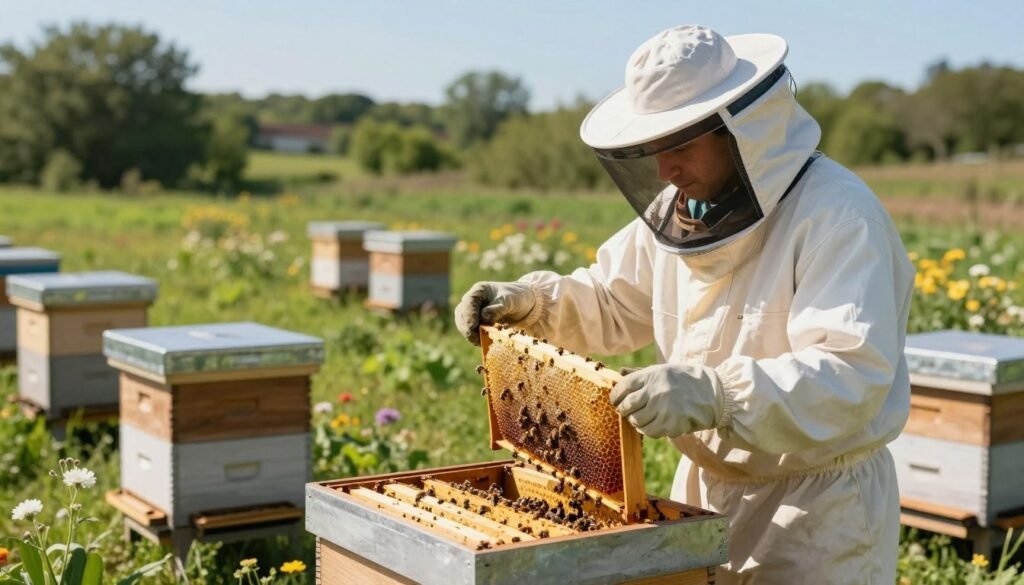
Under the Nebraska Apiary Act Regulations, moving or selling an apiary requires certification from NDA confirming the apiary is apparently free of infectious or contagious bee diseases, parasites, or pests, along with payment of a certification fee — a requirement specifically designed to prevent disease and pest spread through apiary sales and relocations. Separately, NDA’s Entomology and Apiary program conducts inspections when a Nebraska beekeeper requests a Bee Health Certificate for shipping hives across state lines; these requests go directly to the NDA State Entomologist. (See our guide to how state apiary inspectors are trained and hired if that career path interests you.) Both mechanisms serve the same underlying goal — keeping Nebraska’s honey bee population, and by extension the crops it pollinates, protected from disease introduced through uninspected movement — but they’re triggered by different specific activities: one by a change of ownership or location within the certification framework, the other by interstate shipment requiring health certification. A beekeeper planning to sell an established apiary to a new owner, move a significant number of colonies to a new site, or ship bees to another state should build the relevant certification or health-certificate request into their planning timeline well in advance, rather than assuming the process can be completed the same week as the actual transaction or shipment.
Selling Honey in Nebraska
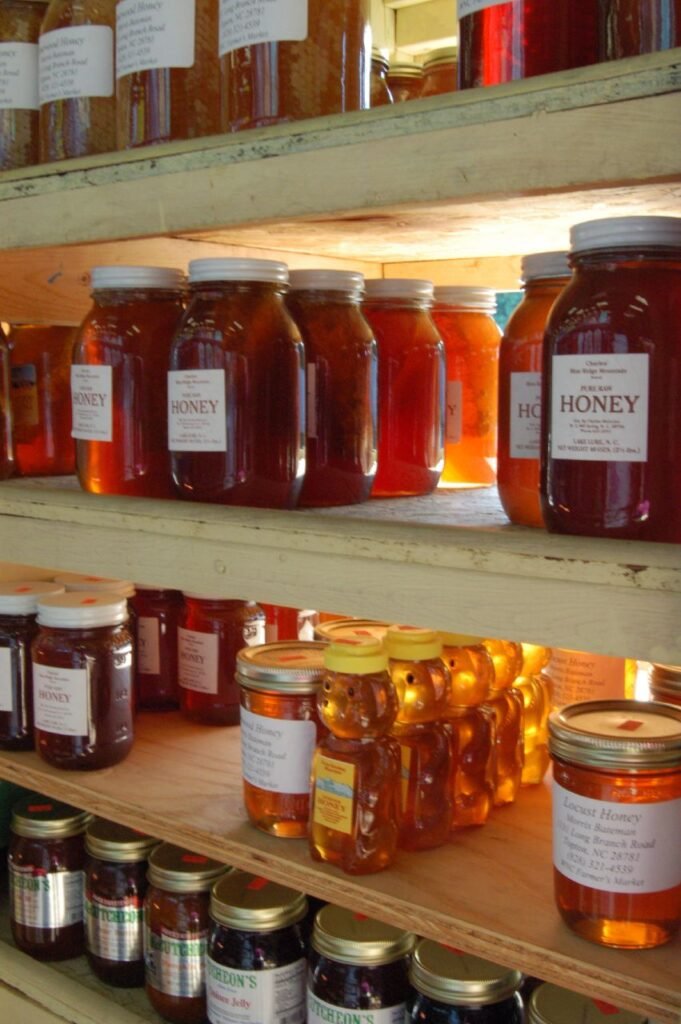
Nebraska operates a Cottage Food Program through NDA that allows home producers to sell certain foods directly to consumers without the full commercial food-licensing process, generally with no revenue cap for producers who qualify. Exactly how honey specifically fits within this framework has some genuine nuance — some guidance treats plain honey sold directly at a farmers market as a non-time/temperature-control-for-safety food that may not need the same registration process required for other cottage foods, while other sources describe more specific category restrictions. Given this ambiguity, a Nebraska beekeeper planning to sell honey commercially should confirm directly with NDA’s Food Safety and Consumer Protection division exactly which pathway applies to their specific sales method — farmers market, online, or retail — rather than assuming the general cottage food rules automatically cover honey the same way they cover baked goods or jams.
Nebraska Beekeeping Law At a Glance
| Requirement | Detail |
|---|---|
| Apiary registration | Free, annual, due January 1, with NDA |
| Legal classification | Beekeeping is statutorily “an agricultural pursuit” |
| Sale/move certification | NDA certification of disease-free status + fee required |
| Interstate shipment | Bee Health Certificate via the NDA State Entomologist |
| Apiary posting | Name/address required at any site away from the beekeeper’s residence |
| Local zoning | Not preempted — city/county ordinances still apply |
Apiary Posting Requirement
Any apiary not located at the beekeeper’s own place of residence must have the owner’s or operator’s name and address posted in a conspicuous place at the apiary site. This requirement exists for the same practical reason similar posting rules exist in other states: it lets a neighbor, a landowner, or an NDA inspector quickly identify who’s responsible for a given set of hives without needing to track down ownership information through a separate records request. This is particularly relevant for beekeepers who lease land for an apiary separate from their own residence, or who maintain multiple apiary sites across different properties — each site away from the beekeeper’s home needs its own posted identification, not just the primary registered address on file with NDA.
Local Ordinances Still Apply
Nebraska’s agricultural classification of beekeeping doesn’t automatically override local zoning and municipal ordinances, particularly in urban and suburban areas where cities have adopted their own specific beekeeping codes. A beekeeper who is fully registered with NDA and compliant with the Apiary Act can still be out of step with a stricter city ordinance covering hive placement, setback distances, or colony limits — the state’s agricultural framing addresses the disease-control and agricultural-policy side of beekeeping, not the land-use side, which remains a local government decision. Cities like Omaha and Lincoln maintain their own specific municipal codes addressing residential beekeeping, and smaller Nebraska municipalities vary widely in whether they’ve adopted any beekeeping-specific ordinance at all. Always check your specific city or county code in addition to state registration, especially if you keep bees within an incorporated municipality rather than on rural agricultural land, since the agricultural pursuit classification carries real weight for state-level treatment but was never intended to preempt a city’s own zoning authority.
Frequently Asked Questions
Do I need to register my beehives in Nebraska?
Yes, annual registration with NDA is required, free of charge, due by January 1 each year.
Does Nebraska law really call beekeeping “an agricultural pursuit”?
Yes, the Nebraska Apiary Act specifically defines beekeeping using that exact language.
Do I need certification to sell my hives in Nebraska?
Yes, moving or selling an apiary requires NDA certification confirming it’s free of infectious diseases, parasites, or pests, plus a fee.
Do I need to post my contact information at my Nebraska apiary?
Yes, if the apiary isn’t at your own residence, your name and address must be posted conspicuously.
Does Nebraska’s agricultural classification override my city’s beekeeping ordinance?
No, local zoning and municipal beekeeping codes still apply regardless of the state’s agricultural classification.
Do I need a special license to sell honey in Nebraska?
It depends on your sales method; confirm directly with NDA’s Food Safety and Consumer Protection division whether your specific sales channel requires cottage food registration.
Related Reading
For more on this topic, see the official Nebraska state government apiary program page.