Last Updated September 14, 2026
Maryland requires every beekeeper to register — and gives you just 30 days to do it after acquiring your first colony. Under COMAR 15.07.01, there’s no exemption for hobbyists with a single hive: the moment you take possession of bees, the clock starts. Registration itself is free, but skipping it is a misdemeanor, and the state’s rules go well beyond registration into hive design, honey house sanitation, and even how bees can legally be transported through the state on a highway.
This guide covers Maryland’s statewide registration requirement under COMAR 15.07.01, the statewide moveable-frame hive mandate, honey house sanitation standards, disease and abandoned-apiary rules, the state’s unusually specific bee-transportation regulation, and how to sell honey legally under Maryland’s cottage food exemption. Maryland’s apiary program is administered directly by the state Department of Agriculture rather than delegated to counties, which means the same rules apply whether you’re keeping bees in rural Western Maryland or a rowhouse backyard in Baltimore.
Disclaimer: This guide is for educational purposes only and is not legal advice. Beekeeping regulations change over time — always confirm current requirements directly with your local or national agricultural authority before acting.
Key Takeaways
- Maryland requires every beekeeper to register each colony with the Maryland Department of Agriculture (MDA) within 30 days of acquiring it — registration is free but mandatory, with no hobbyist exemption.
- Registration must be renewed annually (valid January 1 through December 31) and requires you to provide MDA inspectors access to your colonies.
- Maryland bans fixed-comb hives statewide: every hive must use moveable frames so any frame can be removed without damaging the rest of the comb.
- Maryland has one of the most specific bee-transportation laws in the country — vehicles carrying bees through the state generally can’t travel more than 1 mile from an interstate highway, and any bee release must be reported to both MDA and the Maryland State Police.
- Pure, unflavored honey qualifies as a cottage food exempt from a food facility license up to $50,000 in annual gross sales; flavored honey needs a separate processing license.
Table of Contents
- Does Maryland Require Beekeepers to Register?
- How Maryland Apiary Registration Works
- The Statewide Moveable-Frame Requirement
- Honey House Sanitation Standards
- Disease Inspection, Quarantine, and Destruction
- Abandoned Apiaries and Dead Colonies
- Transporting Bees Through Maryland
- Selling Honey Legally in Maryland
- Penalties for Non-Compliance
- Frequently Asked Questions
Does Maryland Require Beekeepers to Register?
Yes, without exception. Under COMAR 15.07.01.02, anyone keeping a bee colony must hold a valid registration certificate, and anyone who isn’t already registered and acquires a colony must register it with the Maryland Department of Agriculture within 30 days of acquisition. There’s no colony-count threshold or hobbyist carve-out — a single backyard hive triggers the same requirement as a commercial operation with dozens. This puts Maryland closer to Florida’s mandatory-registration model than to a state like Missouri, which has no statewide hive registry, and it’s worth knowing this before you bring your first colony home rather than discovering the 30-day window after it’s already passed.
How Maryland Apiary Registration Works
To register, you apply to MDA on the department’s own forms and agree to provide access for inspection of each colony in each apiary. Once registered, you’re assigned a permanent identification number, and your certificate is valid for one year, running from January 1 (or your date of issuance) through December 31, after which it must be renewed. The certificate itself isn’t transferable — if you sell your apiary or hand it off to someone else, they need their own registration rather than inheriting yours. There’s no fee attached to registration itself, which makes Maryland’s program notably more accessible than fee-based systems in some other states, even though the compliance obligation is stricter. Because the certificate isn’t transferable, anyone buying an existing apiary or taking over a relative’s hives needs to treat that as acquiring a brand-new colony for registration purposes, triggering their own fresh 30-day window rather than assuming the previous owner’s registration carries over.
“Apiary registrations are critical to planning, so please get your registration forms in ASAP!”
Registration also plugs you into Maryland’s wider beekeeping community. The Maryland State Beekeepers Association and its county-level chapters run mentorship programs, swarm-call lists, and educational meetings, and many local chapters layer their own rules on top of the state’s — Frederick County, for instance, amended its zoning ordinance in 2012 to explicitly allow beekeeping on every property in the county, with its own compiled set of local requirements on top of COMAR 15.07.01. Always check your specific county or municipal code in addition to the statewide rules covered here, since a state registration doesn’t exempt you from local zoning.
The Statewide Moveable-Frame Requirement
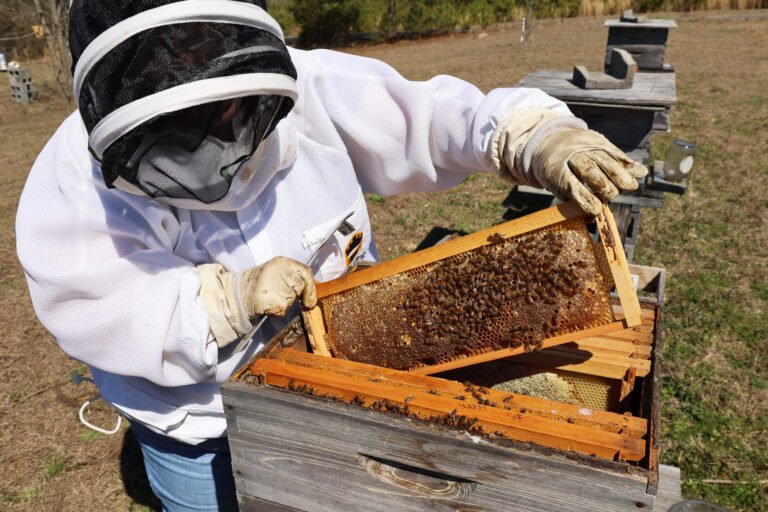
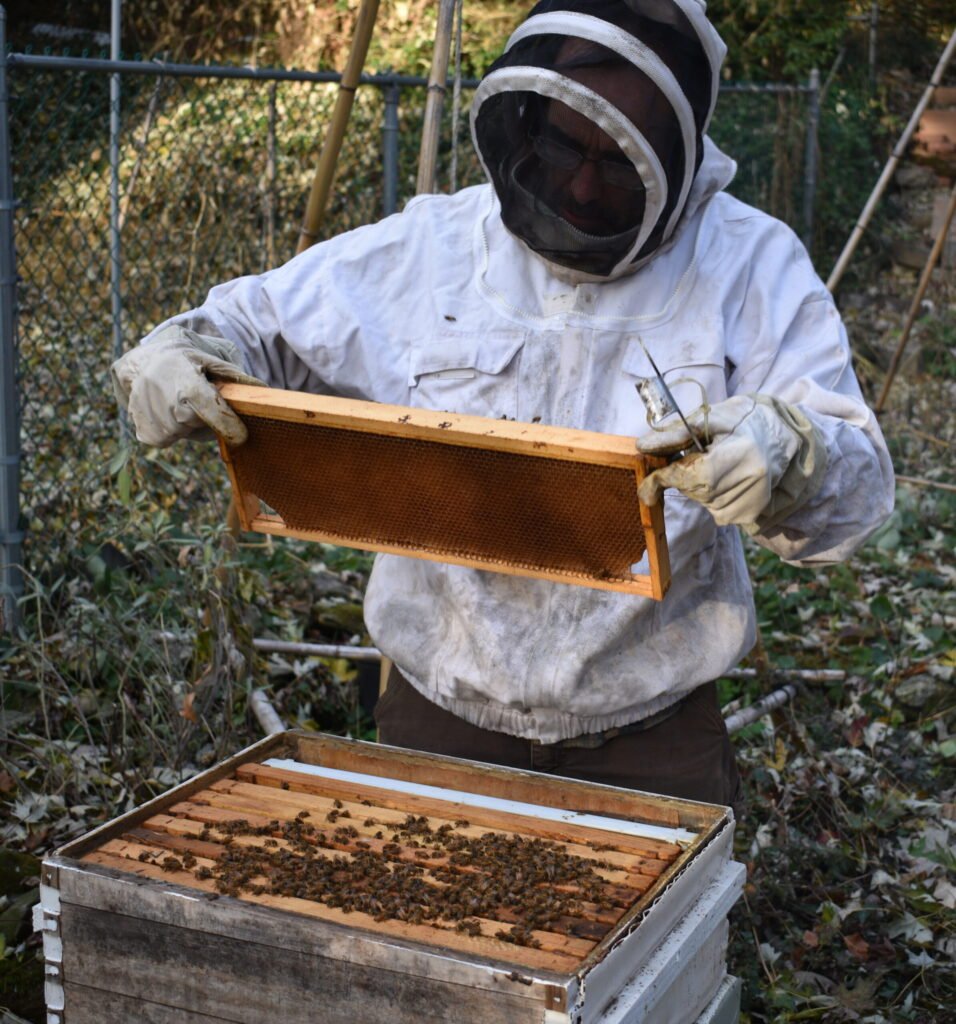
Maryland regulation COMAR 15.07.01.06 requires every beekeeper to provide moveable frames in all hives and to manage colonies so that bees construct brood comb within those frames, allowing any single frame to be removed without damaging the rest of the hive. In practice, this rules out permanent skeps, box hives, and other fixed-comb designs as long-term equipment, for the same underlying reason many other states impose a similar rule: a hive that can’t be opened frame by frame can’t be properly inspected for disease, which undermines the entire inspection system the rest of the regulation depends on. Anyone drawn to a historical or decorative hive style for aesthetic reasons should plan to use it only as a secondary feature rather than as the actual housing for a registered colony, since MDA inspectors need to be able to pull individual frames during a routine or disease-response inspection.
Honey House Sanitation Standards
Maryland’s regulations go further than most states in specifying exactly what a honey house — the structure where honey is extracted and processed for sale — must look like. Under COMAR 15.07.01.03, the honey house must be constructed so it can be kept clean, used exclusively for honey handling and related equipment storage during extraction, have smooth washable walls and ceilings, screened and self-closing doors, adequate ventilation and lighting, and an accessible supply of clean hot water for cleaning equipment. Workers must wear clean, washable outer clothing while extracting or packing honey, and a wash basin with hot running water and sanitary towels must be available. Honey may only be extracted from comb that’s properly capped and free of brood or wax-moth and small-hive-beetle larvae, and previously used containers can only be reused if they were only ever used for human food and are properly cleaned first.
Disease Inspection, Quarantine, and Destruction
When an MDA inspector finds a colony infected with American or European foulbrood, the hive is physically marked with the disease name and inspection date, and that marking can’t be removed until the department authorizes it in writing. A quarantine notice can follow, naming the specific disease or diseases identified, the number of colonies affected, and the treatment or disposition instructions the beekeeper must follow — and while a quarantine is active, bees, colonies, and any equipment that’s been near them can’t be moved off the property without written permission, a restriction that applies regardless of how urgently a beekeeper might otherwise want to relocate a struggling colony. If a diseased colony isn’t treated as instructed, or fails to respond to treatment, the Secretary of Agriculture can order the colony and any contaminated equipment destroyed, typically by burning on-site.
Abandoned Apiaries and Dead Colonies
An apiary is considered “abandoned” under Maryland regulation if the owner stops performing the customary seasonal management a healthy apiary requires — spring and fall disease inspections, providing adequate super room during honey flow, and generally preventing conditions like robbing that could spread disease to neighboring colonies. If an apiary is deemed abandoned, MDA sends written notice by certified mail; after 30 days without correction, the state can remove or destroy the apiary to protect neighboring hives. Separately, Maryland requires that when a colony dies, the beekeeper must seal the hive entrance so other bees can’t rob out any remaining honey — a small but specific requirement most other states don’t spell out explicitly, aimed at preventing disease spread through robbing behavior.
Transporting Bees Through Maryland
Maryland’s rules on transporting bees through the state are unusually specific compared to most states’ apiary regulations. Under COMAR 15.07.01.08, every bee colony being transported must be screened or covered at all times to prevent escape, and the vehicle’s engine generally must keep running to avoid agitating the bees, except while refueling or unless the bees are in a refrigerated compartment held at 45°F. A vehicle carrying bees generally can’t be operated more than one mile from an interstate highway. If bees are ever released from a vehicle for any reason, the operator must immediately report the release to both the Maryland Department of Agriculture and the Maryland State Police — a dual-notification requirement that reflects how seriously the state treats an accidental release as a public-safety event, not just an agricultural one. For beekeepers relocating hives within Maryland or passing through on the way to or from a pollination contract elsewhere on the East Coast, this rule is easy to overlook precisely because it targets transportation rather than the apiary itself — worth building into your route planning if you regularly move colonies any real distance by vehicle.
Selling Honey Legally in Maryland
Pure, unflavored honey (including creamed honey) is treated as a raw agricultural product and qualifies under Maryland’s cottage food exemption, letting you produce and sell it from a residential kitchen without a food service facility license, permit, or routine kitchen inspection — as long as annual gross sales stay under $50,000. Flavored honey is treated differently: because it involves adding another ingredient rather than selling honey in its raw state, it generally requires a separate on-farm or home-processing license rather than qualifying under the same cottage food exemption. Cottage food sales in Maryland must stay within the state and can be made directly from home, at farmers markets, by personal delivery, or by in-state mail; selling to retail stores requires additional steps, including label review by the Maryland Department of Health and food safety training. Keeping the raw-honey and flavored-honey distinction straight matters in practice: a beekeeper who starts out selling plain jarred honey under the simple cottage food exemption and later wants to add a cinnamon or lavender-infused line needs to budget for that additional licensing step rather than assuming the original exemption automatically covers the new product.

For the full mechanics of Maryland’s cottage food exemption and how it compares with other states’ thresholds, see our complete guide to cottage food laws for selling honey. If you plan to sell beyond Maryland or want your labeling to hold up to fraud-prevention scrutiny as your operation grows, it’s also worth understanding what the True Source Certified label actually verifies before you print jar labels.
Penalties for Non-Compliance
Violating any provision of Maryland’s apiary inspection chapter is a misdemeanor under Agriculture Article §12-103 of the Annotated Code of Maryland. Beyond the criminal penalty, practical consequences include quarantine restrictions that prevent moving bees or equipment, destruction of diseased colonies that don’t respond to treatment, and removal or destruction of apiaries that are declared abandoned and left uncorrected for more than 30 days after notice. In practice, most Maryland beekeepers never encounter these penalty provisions directly, since they’re triggered by genuine non-compliance or neglect rather than routine registration and inspection — but they exist precisely to give MDA real enforcement teeth in the small number of cases where a beekeeper ignores the process entirely.
Maryland Apiary Regulation Quick Reference
| Requirement | COMAR Citation | Key Detail |
|---|---|---|
| Registration | 15.07.01.02 | Within 30 days of acquiring a colony; free; renew annually by Jan. 1 |
| Moveable frames | 15.07.01.06 | Required in every hive; fixed-comb/skep hives not permitted |
| Honey house sanitation | 15.07.01.03 | Dedicated space, washable surfaces, hot water, clean clothing |
| Transporting bees | 15.07.01.08 | Screened/covered, engine running, generally within 1 mile of an interstate |
| Violation penalty | Agriculture Article §12-103 | Misdemeanor |
Frequently Asked Questions
Do I need to register my beehives in Maryland?
Yes. Every beekeeper must register each colony with the Maryland Department of Agriculture within 30 days of acquiring it, with no exemption for hobbyists.
How much does Maryland apiary registration cost?
Nothing — registration is free, though it must be renewed annually and you must allow MDA to inspect your colonies.
Can I keep bees in a skep or other fixed-comb hive in Maryland?
No. Maryland requires moveable frames in every hive so any frame can be removed without damaging the rest of the comb.
What happens if I’m transporting bees through Maryland?
Bees must be screened or covered, the vehicle generally can’t travel more than 1 mile from an interstate highway, and any accidental release must be reported immediately to both MDA and the Maryland State Police.
Can I sell honey from my home in Maryland without a commercial kitchen?
Yes, for pure unflavored honey, under the cottage food exemption, provided annual gross sales stay under $50,000. Flavored honey needs a separate processing license.
What happens to my registration if I sell my apiary or move to a new address?
Maryland’s registration certificate is non-transferable and tied to the beekeeper, not the hives. If you sell an apiary, the buyer must register it as a new acquisition within 30 days; if you move within Maryland, you need to update your registration with MDA.
Are Maryland’s beekeeping rules the same in Baltimore, Montgomery County, and every other county?
The COMAR 15.07.01 requirements covered in this guide apply statewide with no local exemption. However, individual counties and cities can add their own zoning rules on top — setbacks, hive-count limits, or registration with a local association — so always check your specific county or municipal code as well.
Related Reading
Image credits: Photo: Ivan Radic, CC BY 2.0, via Wikimedia Commons; Photo: Celinebj, CC BY-SA 4.0, via Wikimedia Commons; Photo: Ich, CC BY-SA 4.0, via Wikimedia Commons.