Last Updated September 16, 2026
Georgia is one of the few states where hobbyist beekeepers aren’t actually required to register with the state. Unlike California, Florida, New York, or Ohio, Georgia’s bee law focuses its registration and inspection requirements primarily on commercial operations — anyone selling bees, queens, or nucleus colonies — rather than mandating it for every backyard beekeeper. That doesn’t mean Georgia beekeeping is unregulated, though: local ordinances in cities like Atlanta and Savannah fill in real rules of their own, and some counties have gone as far as banning residential beehives outright. Understanding which layer of rules actually applies to your specific address, rather than assuming state law is the whole picture, is the single most important thing to get right before setting up a Georgia apiary.
This guide covers exactly who Georgia’s state law does and doesn’t require to register, what commercial licensing actually involves, and how Atlanta, Savannah, and other Georgia jurisdictions handle backyard beekeeping differently. Understanding this two-track system — a light-touch state framework paired with a genuinely varied patchwork of local rules — is essential before you decide where in Georgia to set up your first hives.
Disclaimer: This guide is for educational purposes only and is not legal advice. Beekeeping regulations change over time — always confirm current requirements directly with your local or national agricultural authority before acting.

Key Takeaways
- Georgia does not require hobbyist beekeepers to register with the state — registration and inspection are enforced primarily on commercial sellers of bees, queens, and nuclei.
- Anyone selling bees, queens, or nucleus colonies commercially in Georgia must obtain a license from the Department of Agriculture for a $25 fee.
- Hobbyists can request a free courtesy inspection from the state Apiary Program even without a registration requirement.
- State law prohibits local governments from banning beekeeping outright, but zoning boards can still impose lot-size or distance restrictions — and some counties, like Henry County, have effectively restricted residential beehives anyway.
- Atlanta permits up to 4 hives per residential property with a 15-foot setback; Savannah requires its own mandatory local apiary registration on top of anything at the state level.
Table of Contents
- Do Hobbyist Beekeepers Need to Register in Georgia?
- Commercial Beekeeping Licensing Requirements
- Courtesy Inspections for Hobbyists
- Why Local Governments Can’t Ban Beekeeping Outright
- Atlanta Beekeeping Rules
- Savannah and Chatham County Beekeeping Rules
- Henry County: When a County Restricts Beekeeping Anyway
- Selling Honey Legally in Georgia
- What Happens If You Ignore Local Rules
- Frequently Asked Questions
Do Hobbyist Beekeepers Need to Register in Georgia?
No — and this is where Georgia genuinely differs from most states. Under Georgia’s bee law (O.C.G.A. § 2-14-40), the Commissioner of Agriculture may require registration and inspection of honeybee colonies as needed, but in practice, the state’s limited number of apiary inspectors means registration and inspection requirements are enforced primarily on commercial beekeepers rather than hobbyists. If you’re keeping a couple of hives in your backyard purely for personal honey production, Georgia doesn’t put you through the same mandatory annual registration process that states like California or Florida do. This lighter regulatory touch is one of the reasons Georgia has a genuinely active hobbyist beekeeping community, since the barrier to legally getting started at the state level is close to nonexistent for most backyard keepers.
Commercial Beekeeping Licensing Requirements
The exemption for hobbyists doesn’t extend to anyone selling bees commercially. Any person, firm, or corporation that wants to carry on the business of selling bees, queens, or nucleus colonies in Georgia must apply to the Commissioner of Agriculture — acting as ex officio state entomologist — for a license, accompanied by a $25 application fee. The Department’s implementing rules for licensing queen and package bee producers are set out in Georgia Compiled Rules and Regulations 40-4-1. This licensing requirement exists specifically to keep disease and pest tracking tight around the point in the supply chain where colonies actually change hands between beekeepers, which is a meaningfully higher-risk activity than simply keeping a stationary hobbyist hive. A commercial license also typically comes with periodic inspection expectations that a purely hobbyist operation in Georgia simply doesn’t face, reflecting the higher disease-spread risk that comes with regularly shipping or transporting live colonies to new owners across county and sometimes state lines.
Courtesy Inspections for Hobbyists
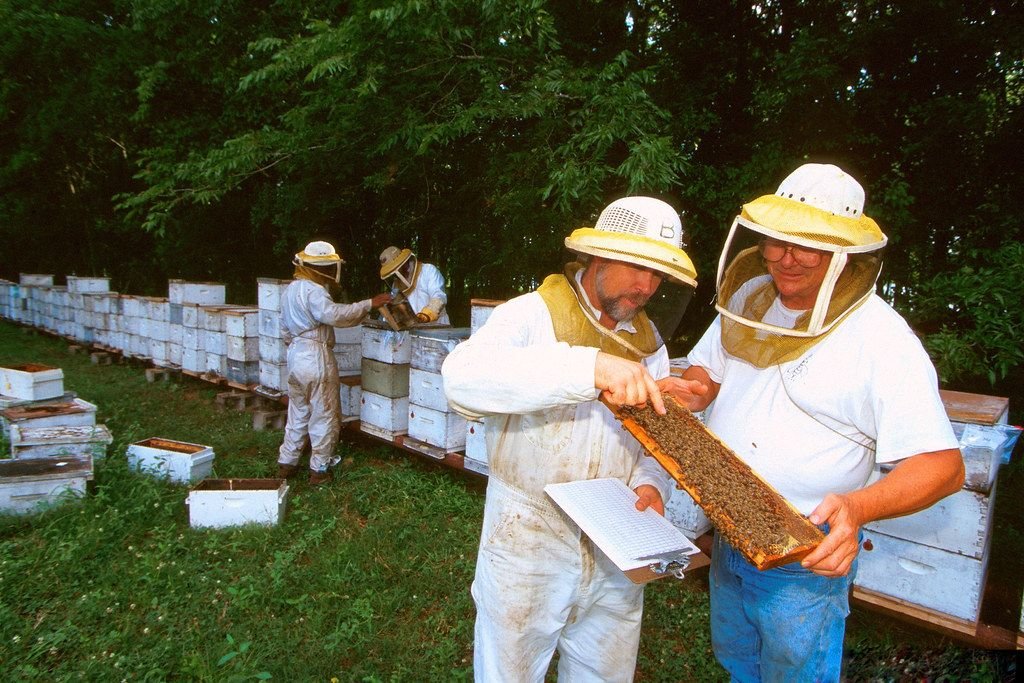
Even though hobbyists aren’t required to register, Georgia’s Apiary Program will perform a courtesy inspection for hobbyist beekeepers upon request. This is worth taking advantage of, especially for a first-year beekeeper: a state inspector can reliably catch early signs of American foulbrood or other reportable diseases well before a hobbyist beekeeper without any formal training would ever recognize the symptoms on their own, and there’s no registration commitment required to ask for one. Many new Georgia beekeepers request a courtesy inspection during their first season specifically to get a second, more experienced set of eyes on their colony before problems have a chance to compound into something harder to treat.
Why Local Governments Can’t Ban Beekeeping Outright
Georgia state law does not allow local governments to ban beekeeping entirely — a meaningful protection that not every state provides explicitly. What local zoning boards can do instead is adopt ordinances that require minimum lot square footage, set minimum distances from schools or other high-traffic areas, or otherwise regulate how and where beekeeping happens within their jurisdiction. In practice, that gives Georgia cities and counties wide latitude to make backyard beekeeping practically difficult even without technically banning it outright. This is a genuinely important nuance worth remembering for anyone actively comparing Georgia against states that use a firmer, more uniform statewide siting standard: the state-level protection against an outright ban is real, but it doesn’t guarantee anything close to a consistent experience from one Georgia county to the next.
Atlanta Beekeeping Rules
Atlanta permits up to 4 hives per residential property, with a 15-foot setback required from property lines and a 6-foot flyway barrier where that setback can’t be maintained. No separate city permit is required to keep bees in Atlanta, which makes it one of the more straightforward major Georgia cities to get started in — though state-level registration is still recommended for hobbyists even where it isn’t strictly mandatory, simply because it puts you on the Apiary Program’s radar if a regional disease issue comes up. Atlanta’s relatively permissive approach, paired with its sizable urban tree canopy and community garden network, has made it one of the more welcoming major Southern cities for backyard beekeeping.
Savannah and Chatham County Beekeeping Rules
Savannah takes a notably different approach than the “hobbyists aren’t required to register” state-level default. Since a 2015 ordinance, all beekeepers in Savannah must register each apiary annually with the Chatham County Department of Building Safety — a mandatory local requirement that exists independent of anything at the state level. The ordinance also restricts colony count based on lot size, requires a reliable water source for the bees so they are less likely to bother a neighbor’s pool or pet bowl instead, and mandates a flyway barrier at least 6 feet high wherever a colony sits within 25 feet of a property line. Beekeeping in Savannah must also not constitute a public or private nuisance, giving code enforcement a broader tool for addressing complaints beyond the specific numeric requirements. Beekeepers moving to Savannah from elsewhere in Georgia are frequently surprised to learn that the state’s generally hands-off approach to hobbyist registration doesn’t apply once they cross into Chatham County, since the local ordinance effectively replaces the state default with its own mandatory system.
Henry County: When a County Restricts Beekeeping Anyway
Henry County, located southeast of Atlanta, is a genuinely useful real-world example of how far local restriction can go even under a state law that technically prohibits outright bans. Henry County has effectively said no to backyard beehives in residential communities through its own zoning approach — a solid reminder that “beekeeping is legal in Georgia” at the state level doesn’t automatically guarantee it’s practically legal on your own specific residential lot. Checking your specific county or city’s current zoning stance before investing in equipment is a genuinely necessary step in Georgia in a way it isn’t in states with more uniform statewide rules. A quick call to your county planning or zoning office before ordering a nuc can save considerable frustration compared to discovering a restriction only after hives are already installed and a neighbor has already filed a complaint.
| Jurisdiction | Hive Count Limit | Setback | Local Registration Required? |
|---|---|---|---|
| Atlanta | 4 hives per residential property | 15 ft from property line (6 ft flyway barrier if not met) | No separate city permit |
| Savannah / Chatham County | Tied to lot size | 6 ft flyway barrier within 25 ft of property line | Yes, mandatory annual registration since 2015 |
| Henry County | Effectively restricted in residential zones | N/A | Check current zoning before installing hives |
Sources: City of Atlanta zoning code; City of Savannah/Chatham County beekeeping ordinance (2015); Henry County zoning office.
Selling Honey Legally in Georgia
Selling honey in Georgia is governed separately from beekeeping registration or licensing. Georgia’s cottage food rules allow home producers to sell honey directly to consumers under specific labeling requirements, generally without a full commercial food facility license, though exceeding certain sales thresholds can change that. If you’re planning to sell honey at scale, our guide to starting a honey business in the United States covers labeling and permitting basics that apply on top of Georgia’s specific cottage food framework. Keep in mind that selling honey and selling bees are governed by entirely different parts of Georgia’s bee law – a honey producer with no interest in ever selling a queen or a nuc never needs to touch the commercial beekeeping license described above.
What Happens If You Ignore Local Rules
Because Georgia doesn’t mandate hobbyist state registration, the practical compliance risk for most backyard beekeepers in Georgia comes almost entirely from local ordinance violations rather than a state registration lapse. In cities and counties with specific requirements — Savannah’s mandatory apiary registration, Atlanta’s setback and hive-count rules, or a county-level zoning restriction like Henry County’s — violations are typically complaint-driven, and repeated or unresolved issues can lead to code enforcement fines or an order to remove hives. Commercial sellers who skip the state licensing requirement face a more direct compliance risk, since that license is tied to the legal ability to sell bees, queens, or nuclei at all. Selling without that license isn’t simply a matter of an unpaid fee — it puts the underlying sale itself outside the bounds of what Georgia law permits, which is a materially different situation than a hobbyist who never registered a purely personal hive.
Frequently Asked Questions
Do I need to register my bees with the state if I’m just a hobbyist in Georgia?
No. Georgia’s registration and inspection requirements are enforced primarily on commercial beekeepers; hobbyists are not required to register with the state, though a free courtesy inspection is available on request.
Do I need a license to sell honey in Georgia?
Selling raw honey generally falls under Georgia’s cottage food rules rather than requiring the same license as selling bees or queens. Selling bees, queens, or nucleus colonies commercially does require a $25 state license.
Can a Georgia city or county ban beekeeping entirely?
No, state law prohibits local governments from banning beekeeping outright, though zoning boards can impose lot-size, distance, and other restrictions that make beekeeping practically difficult in some areas.
How many hives can I keep in Atlanta?
Atlanta permits up to 4 hives per residential property, with a 15-foot setback from property lines and a 6-foot flyway barrier required where that setback isn’t met.
Does Savannah require its own separate beekeeping registration?
Yes. Savannah requires all beekeepers to register each apiary annually with the Chatham County Department of Building Safety, independent of any state-level requirement.
Related Reading
Image credits: Photo: Zsike, CC BY-SA 3.0, via Wikimedia Commons; Photo: emmajanehw, CC BY 2.0 (Flickr); Photo: Scott Bauer, USDA-ARS, CC BY 2.0; Photo: Ich, Wikimedia Commons, CC BY-SA 4.0; Photo: John Pons, CC BY-SA 4.0, via Wikimedia Commons; Photo: Dirk Pons, Wikimedia Commons. Licensed CC BY-SA 3.0.