Reviewed by Thomas B. · Last Updated October 24, 2026 · How we review
North Carolina does not require hobby beekeepers to register or license their hives. State law bars counties from banning five or fewer hives, and any city beekeeping ordinance must allow up to five hives per parcel. NCDA&CS apiary inspectors check colonies on request. Selling bees takes a $25 state permit unless you sell fewer than 10 hives a year, and an HOA can still say no.
Educational information, not legal advice. Check the official North Carolina Bee and Honey Act (G.S. Chapter 106, Article 55) and your city or county code before you act. Sources were read on October 23, 2026.
Key Takeaways
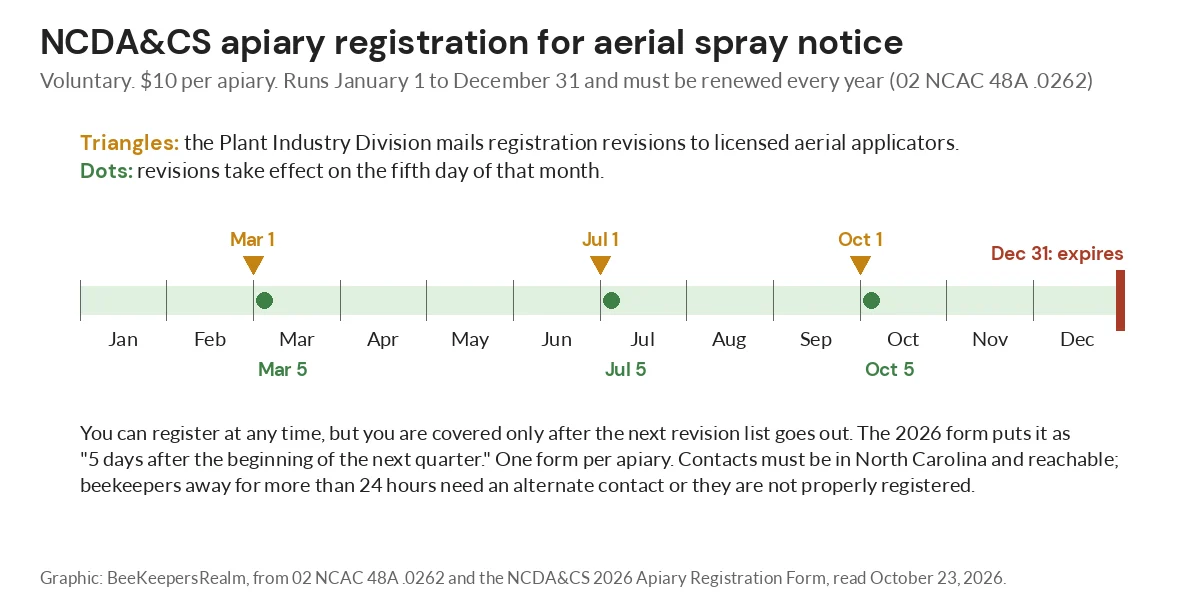
- No state registration is needed to keep bees. The only apiary registration in the rules is an optional $10-per-apiary sign-up for aerial-spray warnings (02 NCAC 48A .0262).
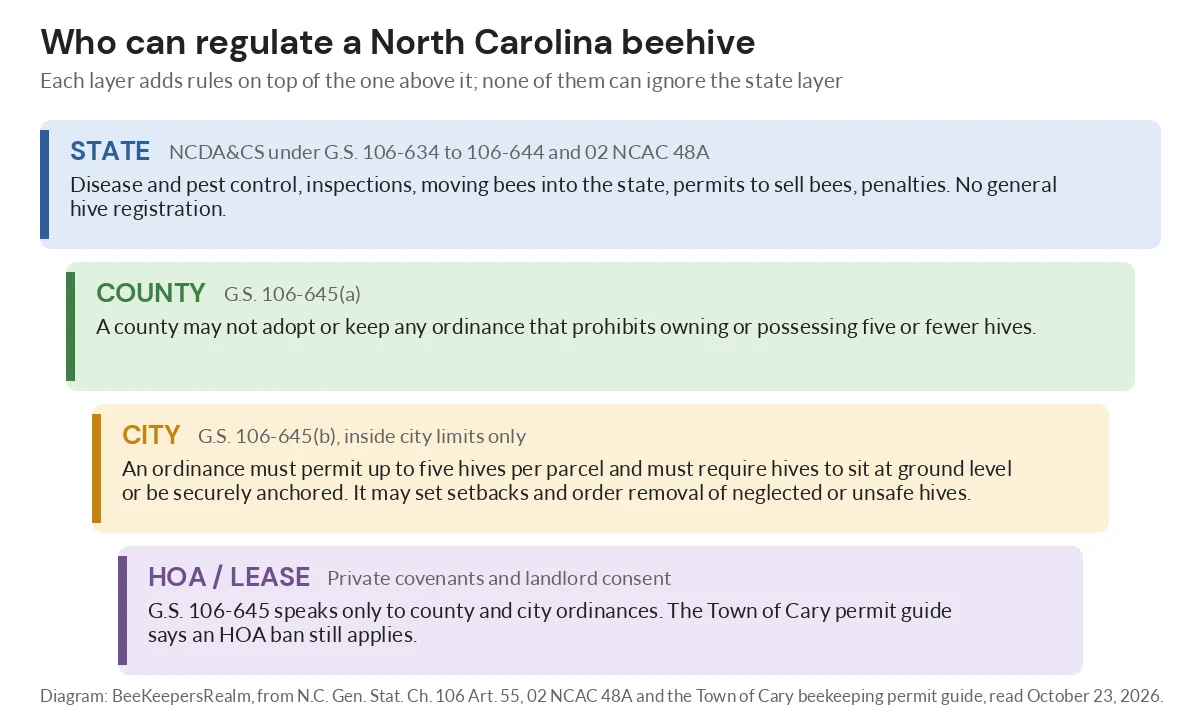
- G.S. 106-645 treats counties and cities differently: counties may not prohibit five or fewer hives; cities may regulate hives but must permit up to five per parcel.
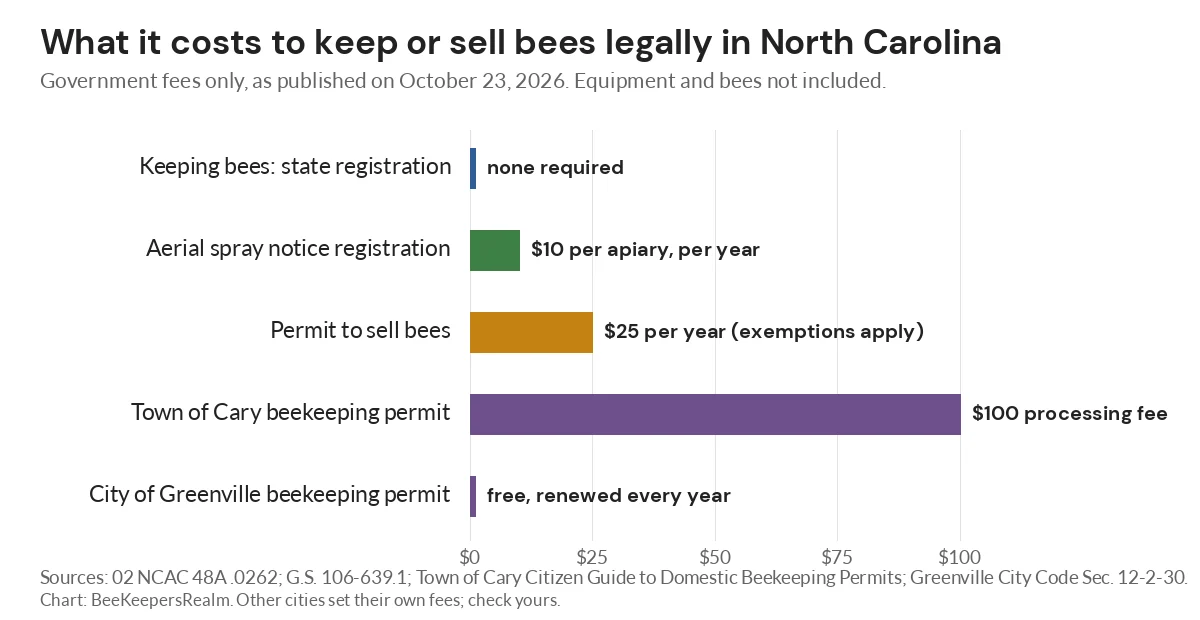
- Local rules vary widely. Cary charges a $100 permit fee and requires a 10-foot setback; Greenville issues a free permit each year after inspecting the hives.
- Two port areas, around Morehead City and Wilmington, are declared bee-free zones where no bees may be kept without the State Apiarist’s permission.
- Bees brought into North Carolina under an entry permit stay at their first location for a one-year post-entry quarantine.
Table of Contents
- North Carolina Beekeeping Rules at a Glance
- Do You Have to Register Bees in North Carolina?
- The Five-Hive Rule in G.S. 106-645
- City, County and HOA Rules: Two Real Examples
- Apiary Inspections, Diseases and Penalties
- The Bee-Free Port Zones at Morehead City and Wilmington
- Bringing Bees or Used Equipment Into North Carolina
- Selling Bees, Queens and Nucs
- Selling Honey: Home Kitchens, Labels and Sourwood
- Frequently Asked Questions
- The Bottom Line
North Carolina Beekeeping Rules at a Glance
| Question | Short answer | Where it comes from |
|---|---|---|
| Must I register my hives? | No. Optional aerial-spray notice registration costs $10 per apiary per year. | 02 NCAC 48A .0262 |
| Can my county ban beekeeping? | Not for five or fewer hives. | G.S. 106-645(a) |
| Can my city limit hives? | Yes, but it must permit up to five per parcel inside city limits. | G.S. 106-645(b) |
| Can my HOA ban hives? | Yes. Private covenants are a separate question from city and county ordinances. | Town of Cary permit guide |
| Who inspects hives? | NCDA&CS apiary inspectors, on request and in random surveys. | 02 NCAC 48A .0243 |
| Do I need a permit to sell bees? | Yes, $25 a year, unless an exemption applies (for example, fewer than 10 hives a year). | G.S. 106-639.1 |
| Can I sell honey from home? | Home bottlers use the NCDA&CS home processor program, which inspects the kitchen first. | NCDA&CS Food and Drug Protection Division |
Do You Have to Register Bees in North Carolina?
No. North Carolina has no general beekeeper registration or license. The Bee and Honey Act lets the Board of Agriculture adopt rules for “the registration of honeybees” (G.S. 106-641), but the rule it adopted, 02 NCAC 48A .0262, covers only beekeepers who want advance notice before a pesticide is applied from the air.
That sign-up is voluntary and works like this:
- Cost: $10 for each registration, and the 2026 NCDA&CS form asks for a separate form for each apiary or bee yard.
- Term: January 1 to December 31. It expires every December 31 and must be renewed.
- Timing: the Plant Industry Division mails revisions to licensed aerial applicators on March 1, July 1 and October 1, effective on the fifth of the month. Registering in November does not cover you until March.
- Contacts: the people to notify must be in North Carolina. If you are away for more than 24 hours without an alternate, the rule says you are not properly registered.
NCDA&CS also supports BeeCheck, part of the free, voluntary DriftWatch map; see DriftWatch and BeeCheck pesticide registries.
The Five-Hive Rule in G.S. 106-645
Many summaries, including the NCSBA laws page (which says it was accurate as of September 2018), still say the statute stops “cities and counties” from banning five or fewer hives. The current text, last amended by Session Law 2024-32, sets two different rules.
Counties
“[N]o county shall adopt or continue in effect any ordinance or resolution that prohibits any person or entity from owning or possessing five or fewer hives.”
Cities
A city “may adopt an ordinance to regulate hives within its incorporated limits,” but that ordinance must do two things: permit up to five hives on a single parcel, and require each hive to sit at ground level or be securely attached to an anchor or stand. It may allow anchored roof hives, set setbacks, and order removal of neglected or unsafe hives.
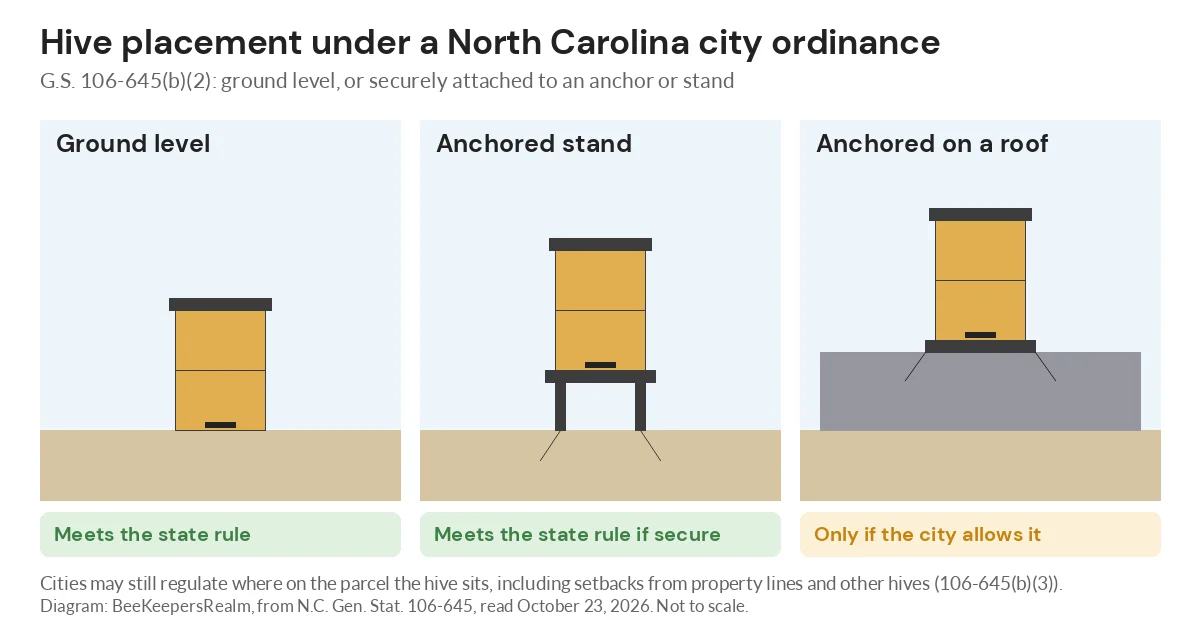
“Hive” carries the Act’s definition in G.S. 106-635(15): “any receptacle or container, or part of receptacle or container,” made for or inhabited by bees, so ask your city how it counts hives. Five is a floor, not a cap. For setbacks, see how close beehives can be to neighbors.
City, County and HOA Rules: Two Real Examples
Because 106-645 sets a floor rather than a template, towns handle the same backyard hive very differently, as these two published codes show:
| Town of Cary | City of Greenville | |
|---|---|---|
| Rule | Land Development Ordinance Sec. 5.3.4(O) | City Code Sec. 12-2-30 |
| Permit | Accessory use permit, $100 processing fee | Required, free, renewed every year (expires December 31) |
| Hive limit | Five per parcel, on any lot regardless of zoning | No more than five per parcel |
| Placement | At least 10 feet from every property line | Not in a front yard |
| Other conditions | Constant on-site fresh water, closer to the hive than any water on adjacent properties; plot plan with the application | City inspects equipment and hives every year before issuing the permit |
| Enforcement | Complaint-based inspections | Civil penalties of $100, $250, then $500 within 365 days |
Many towns have no beekeeping section, so general zoning and nuisance rules apply. Ask your planning department whether the parcel is inside city limits, since 106-645(b) covers a city’s “incorporated limits.” Our beekeeping zoning laws guide lists the questions to ask.
An HOA is a separate question:
“Whether or not Cary permits beekeeping in your zoning district, if your HOA prohibits beekeeping, you are not allowed to have beekeeping on your property.”
Read your covenants before you buy equipment, and see how to get HOA approval for beehives if the documents are silent or vague.
Apiary Inspections, Diseases and Penalties
Inspections are run by the NCDA&CS Apiary Program, part of the Plant Industry Division’s Plant Protection Section. Under 02 NCAC 48A .0243, inspectors check bees at a beekeeper’s request “on a first-come, first-serve basis,” run random disease surveys, and diagnose by sampling.
The state is split into six inspection areas, each with its own inspector:
| Area | Inspector | Includes (examples) |
|---|---|---|
| 1 | Lewis Cauble | Buncombe (Asheville), Henderson, Watauga |
| 2 | Anton Joubert | Mecklenburg (Charlotte), Cabarrus, Iredell |
| 3 | Don Hopkins | Wake (Raleigh), Durham, Guilford, Forsyth |
| 4 | Shirley Harris | Cumberland (Fayetteville), Moore, Union |
| 5 | John Harris | New Hanover (Wilmington), Brunswick, Onslow |
| 6 | Adolphus Leonard | Pitt (Greenville), Johnston, Dare |
Contacts and full county lists are on the NCDA&CS Apiary Field Services page. Rule .0259 lists the “diseases and disorders of special concern,” including American foulbrood, chalkbrood, tracheal mites, Varroa mites, small hive beetles, Africanized bees and any Apis species other than Apis mellifera. For suspected foulbrood, the rope test for American foulbrood is a sensible first check before you call an apiary inspector.
The Commissioner may require moveable-frame hives kept in inspectable condition (G.S. 106-641), and inspectors may enter with the owner’s permission or a warrant (106-643). Under 106-644, blocking an inspection or breaking the Act is a Class 3 misdemeanor, each day a separate offense, and the Commissioner may add a civil penalty of up to $10,000 after the chance for a hearing.
The Bee-Free Port Zones at Morehead City and Wilmington
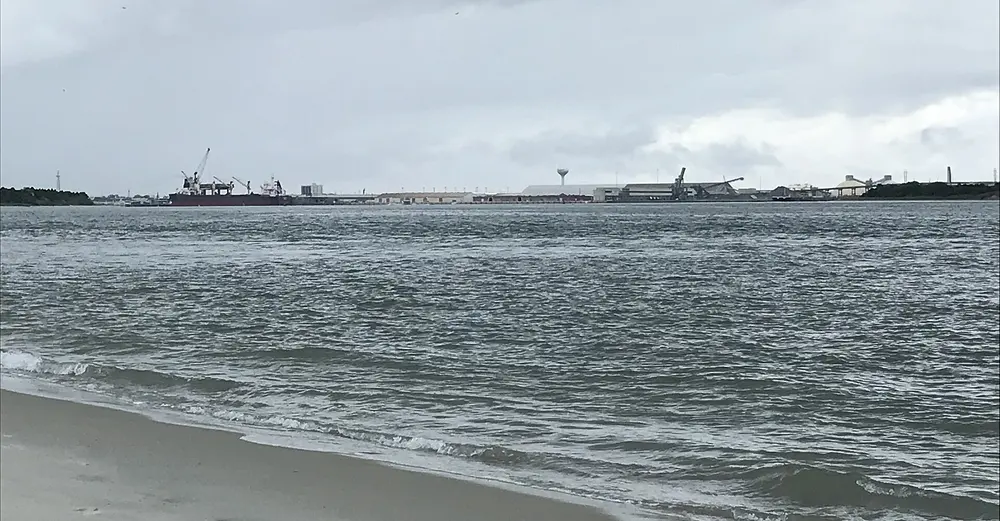
Most guides miss this rule. To keep Africanized bees and Varroa mites from arriving by ship, 02 NCAC 48A .0265 creates two clean-up areas: a two-mile radius around the western end of the Morehead City-Beaufort Bridge on U.S. 70 in Morehead City, and a two-mile radius around the western end of Shipyard Boulevard in Wilmington.
“These areas are hereby declared bee-free areas. No bees shall be kept or husbanded in these areas without permission of the State Apiarist.”
Inspectors may destroy bees found there, and no one may take a swarm out. Near either port, measure your distance from those points before setting up a hive or swarm trap. Background: how to identify Africanized bees.
Bringing Bees or Used Equipment Into North Carolina
When bees or used equipment need a state entry permit, 02 NCAC 48A .0247 requires an origin-state inspection certificate dated within 60 days of entry, a statement of how many colonies are coming and where, and permission for North Carolina inspectors to check them. Used equipment also needs proof of freedom from American foulbrood plus fumigation or sterilization.
The State Apiarist approves the destination in advance, weighing bee density, forage and effects on cities “or any local bee ordinance.” Rule .0248 then places the bees “under post entry quarantine for a period of one year after entry,” during which they may not be moved to another North Carolina location.
Most hobbyists buy from the NCDA&CS list of permitted bee dealers; the July 16, 2026 list has more than 170 in-state entries and about 20 out-of-state suppliers. Choosing between packages and nucs? See package bees vs nucs for beginners.
Selling Bees, Queens and Nucs
G.S. 106-639.1 requires a permit from the Commissioner before you sell bees in North Carolina. The fee is $25, nonrefundable, and the permit expires every December 31. No permit is needed for:
- selling fewer than 10 bee hives in a calendar year;
- a one-time going-out-of-business sale of fewer than 50 hives;
- renting bees for pollination, or moving bees to gather honey.
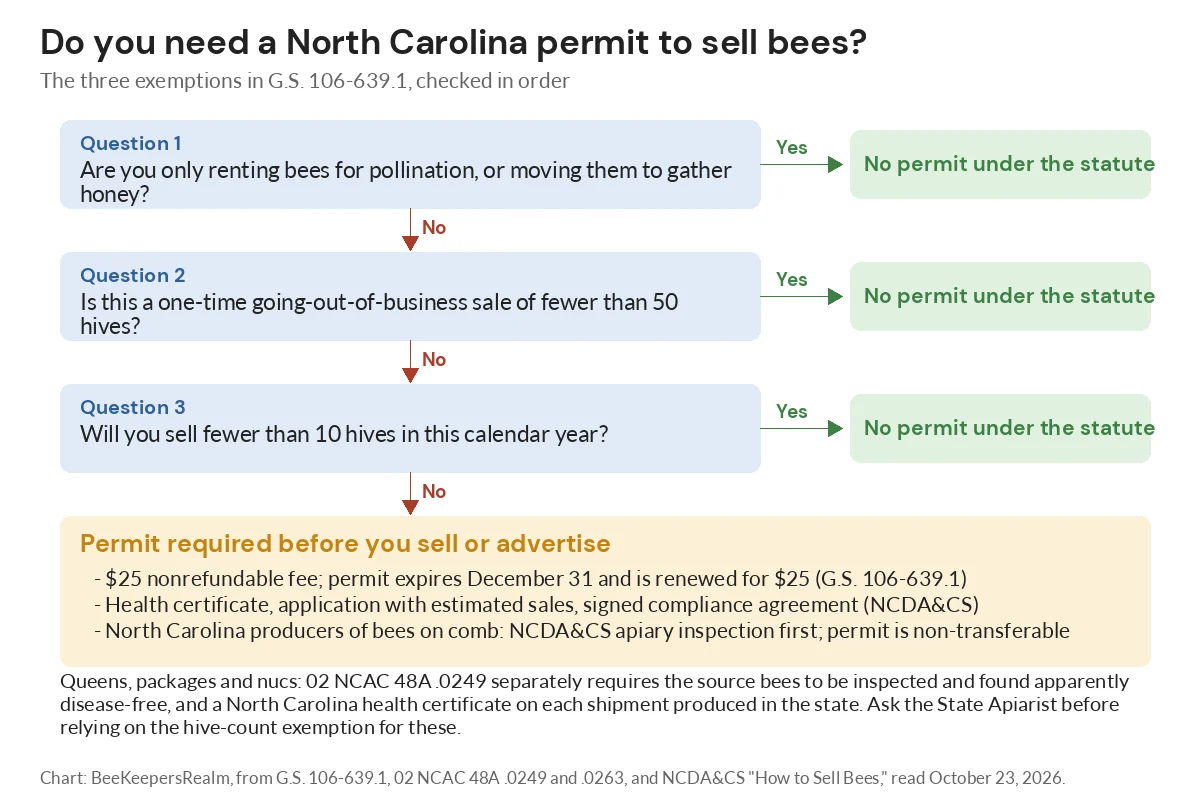
NCDA&CS asks for a health certificate from the state of origin, an application estimating sales, a signed compliance agreement and the fee. First-time applicants schedule an inspection, and in-state sellers of bees on comb must be inspected before distribution. Under rule .0263 the permit is non-transferable, and a permit holder may not sell bees owned by another person.
Rule .0249 adds rules for queens, packages and nucs: source bees inspected and found apparently disease-free, a North Carolina health certificate with each in-state shipment, and sales records kept three years. It also sets a two-mile protective quarantine around compliant queen, package and nuc producers: nobody may move bees into that circle without a health certificate based on an inspection within the previous 30 days. Since the exemption counts hives, ask the State Apiarist before selling queens or nucs without a permit.
Selling Honey: Home Kitchens, Labels and Sourwood
The bee statute does not license honey sales; food rules come from the NCDA&CS Food and Drug Protection Division, and the North Carolina State Beekeepers Association (NCSBA) tells beekeepers bottling honey from their own bees to follow the division’s home processor guidelines.
The NCDA&CS home processor program requires your home kitchen to be inspected before you sell to anyone, including directly to consumers. Three of its conditions catch beekeepers out: no pet may come into the home at any time, a kitchen in a garage, basement or separate building counts as a commercial business, and you must check with your local planning department and HOA that a home food business is allowed.
For labels, NCSBA summarizes a 1984 agreement between the two NCDA&CS divisions: the name “honey,” the name, address and ZIP code of the manufacturer, packer or distributor, and net contents in both pounds or ounces and grams, shown in the lower 30% of the label. A floral source such as sourwood may be named if the honey has significant pollen from it. Our honey labeling rules cover the federal side.
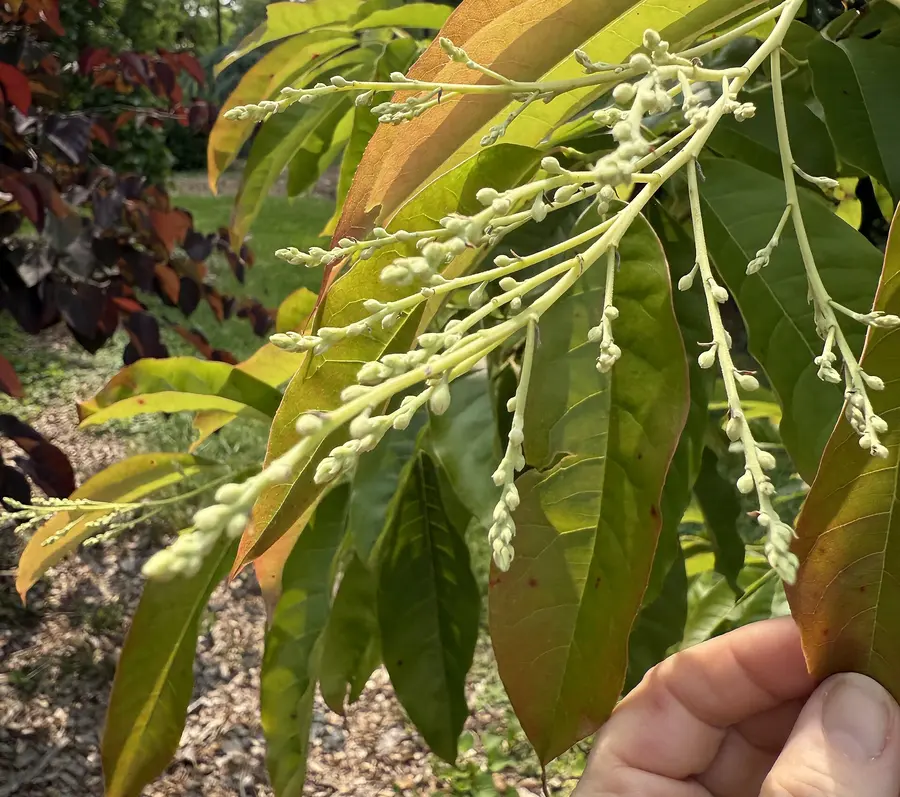
One more North Carolina detail: since June 1, 2012, selling honey labeled “Sourwood” or “North Carolina Honey” at farmers markets operated by NCDA&CS has required a permit, according to NCSBA’s labeling guide. Mountain beekeepers selling sourwood honey at those markets should get it before market day. For the business side, see how to start selling honey legally.
Frequently Asked Questions
What are the beekeeping laws in North Carolina?
The North Carolina Bee and Honey Act of 1977 (G.S. 106-634 to 106-645) and its rules in 02 NCAC 48A cover disease control, inspections, moving and selling bees, and limits on local bans. Cities, counties and HOAs add their own rules.
Do I need a license to keep bees in North Carolina?
No state license or registration is required. Some cities, such as Greenville and Cary, require a local permit.
How many beehives are allowed on a small city lot in NC?
A city ordinance must permit up to five hives on a single parcel, though setbacks still decide where they can sit.
Can my HOA ban beehives in North Carolina?
Yes. G.S. 106-645 limits county and city ordinances, not private covenants. The Town of Cary’s permit guide states that an HOA ban applies even where the town allows bees.
Can I sell bees without a permit in North Carolina?
Yes, if you sell fewer than 10 hives in a calendar year, hold a one-time going-out-of-business sale of fewer than 50 hives, or only rent bees for pollination. Queens, packages and nucs have separate inspection rules, so check with the State Apiarist first.
Do I need a permit to sell honey in North Carolina?
No bee-specific permit, but NCSBA points home bottlers to the NCDA&CS home processor program, which inspects your kitchen before you sell. A separate permit applies to honey labeled “Sourwood” or “North Carolina Honey” at state-run farmers markets.
The Bottom Line
Keeping a few hives in North Carolina is easy at the state level; the work is checking your city code, your HOA, and, near the Morehead City or Wilmington ports, your address. For neighboring states, compare our South Carolina and Tennessee guides, or the U.S. beekeeping regulations by state overview.