Last Updated September 16, 2026
Delaware’s honey bee industry is small but genuinely valuable — roughly 7,200 colonies, worth about $350 each, contribute to nearly $30 million in fruit and vegetable production every year. Protecting that pollination value is exactly why Delaware requires every single beekeeper, whether they keep one hive or a hundred, to register annually, and why the state actively surveys its ports for Africanized bees rather than waiting for a problem to be reported.
This guide covers Delaware’s mandatory annual beekeeper registration under Title 3, Chapter 75, the state’s distinctive Africanized bee surveillance program at its ports, the State Apiarist’s inspection and quarantine authority, the swarm removal and pollination services roster available to registered beekeepers, and how Delaware’s cottage food law treats selling honey. As the second-smallest state by land area, Delaware manages a genuinely compact beekeeping sector with resources concentrated efficiently — a small State Apiarist office can realistically maintain a complete, accurate registry and conduct meaningful port-focused surveillance in a way that would be considerably harder to replicate at scale in a much larger state.
Disclaimer: This guide is for educational purposes only and is not legal advice. Beekeeping regulations change over time — always confirm current requirements directly with your local or national agricultural authority before acting.
Key Takeaways
- Every person keeping bees in Delaware, regardless of colony count, must register annually with the State Apiarist by January 30, and notify the state within 10 days of acquiring new bees.
- Delaware’s roughly 7,200 honey bee colonies, valued at about $350 each, represent a $2.5 million industry supporting nearly $30 million in annual fruit and vegetable production.
- Delaware actively surveys for Africanized bees along its coastal anchorages and at the Ports of Wilmington and Delaware City, rather than relying solely on beekeeper reporting.
- Violating Delaware’s beekeeping law carries a civil penalty of $100 to $1,000 per count.
- Delaware’s cottage food law allows home-based honey sales but requires registration, training, and inspection, and doesn’t permit online sales or shipping.
Table of Contents
- Annual Registration Requirement
- Africanized Bee Surveillance at Delaware’s Ports
- Inspector Authority and Quarantine Power
- Swarm Removal, Pollination Services, and BeeCheck
- Local Ordinances
- Selling Honey Under Delaware’s Cottage Food Law
- Penalties for Non-Compliance
- Frequently Asked Questions
Annual Registration Requirement
Under Delaware’s Beekeeping Law, Title 3, Chapter 75, all persons keeping bees in Delaware must register annually with the State Apiarist on or before January 30 each year — whether they keep one hive or one hundred. Section 7504 of the law is specific about the acquisition timeline: “All persons keeping bees in this State shall notify the State Apiarist within 10 days of the time the bees are acquired, of the number and location of colonies they own, or rent, or which they keep for anyone else, whether the bees are located on their own or someone else’s property.” This means a Delaware beekeeper acquiring bees mid-year doesn’t wait until the following January to register — the 10-day notification requirement applies immediately, regardless of where the annual registration cycle currently stands. Since December 2022, registration can be completed online via a mobile-friendly form, replacing what had previously required paper submission. Delaware’s approach is broadly consistent with the state bee inspector and apiary registration programs most states run.
Africanized Bee Surveillance at Delaware’s Ports
Delaware doesn’t wait for Africanized honey bees to be reported before acting — the state actively conducts surveys specifically along its coastal anchorages and at the Ports of Wilmington and Delaware City. This proactive, geography-specific surveillance reflects a genuine risk factor unique to Delaware’s position: as a coastal state with active commercial ports, Delaware faces a real pathway for Africanized bees or other invasive pests to arrive via shipping traffic that a landlocked state simply doesn’t have to the same degree, making port-focused monitoring a rational, targeted use of the State Apiarist’s limited inspection resources rather than a generic statewide sweep.

Inspector Authority and Quarantine Power
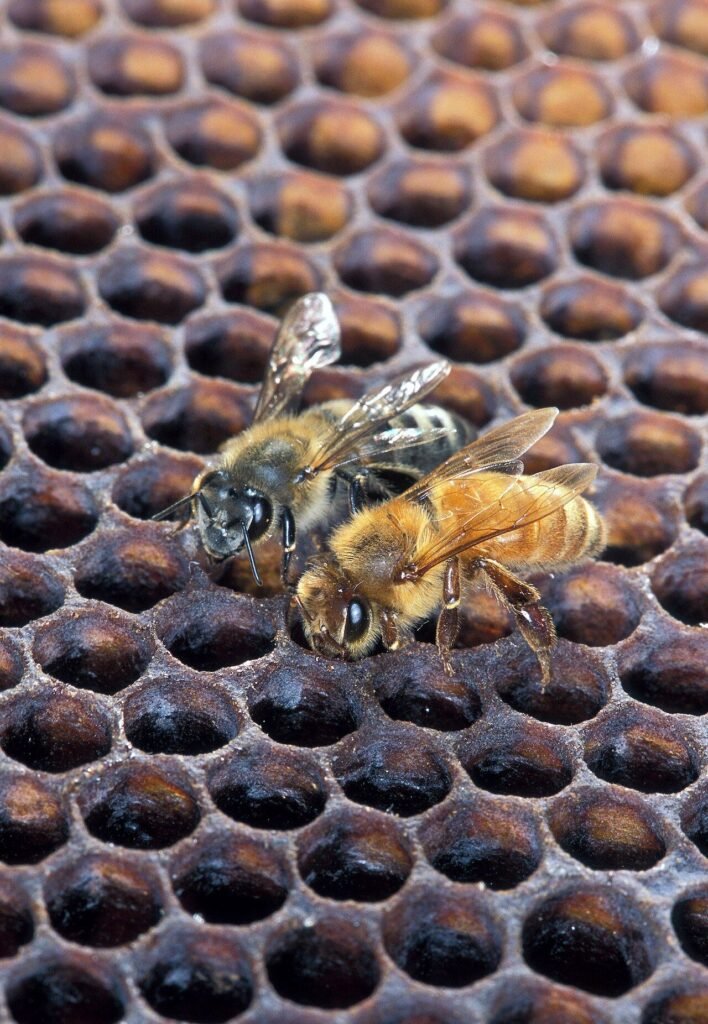
By law, the State Apiarist and Delaware’s bee inspectors may enter any public or private premises and access any apiary or place where bees and beekeeping equipment are kept, specifically to inspect for pests and diseases. All honeybee colonies in Delaware must be registered and are subject to inspection for diseases, mites, and Africanized bees. If a serious pest or disease situation is found, the State Apiarist has the authority to declare a quarantine and order the destruction or treatment of affected hives. Delaware’s Department of Agriculture also issues periodic bee health advisories directly to registered beekeepers — a May 2024 advisory, for example, specifically warned that Delaware bee colonies were showing varying levels of resistance to amitraz-based miticides like Apivar and Amiflex, recommending beekeepers conduct alcohol-wash mite counts before and after treatment to confirm the product is still working. This kind of targeted, product-specific advisory reflects a genuine advantage of Delaware’s compact registration system: because the State Apiarist maintains a complete, current list of registered beekeepers, health advisories about a specific emerging problem like miticide resistance can reach essentially the entire beekeeping community directly, rather than relying on beekeepers to happen to see the notice through a beekeeping association newsletter or social media.
Swarm Removal, Pollination Services, and BeeCheck
For registered beekeepers specifically, Delaware maintains a public roster connecting the public to swarm removal and pollination services — a real, practical benefit tied directly to being registered, not just a compliance obligation. The state also hosts a BeeCheck pesticide-application notification system at no cost to the beekeeper, letting registered apiary locations be flagged so pesticide applicators can plan around them. Together, these programs mean Delaware’s registration requirement functions as more than record-keeping: it’s the entry point to services that materially help a beekeeper’s business and protect their colonies from nearby pesticide applications. An unregistered Delaware beekeeper isn’t just out of compliance with the law — they’re also invisible to both of these practical protections, missing out on pesticide-drift alerts near their own apiary and losing the referral visibility the swarm-removal and pollination-services roster provides to registered beekeepers looking for that kind of work.
Local Ordinances
Delaware’s state registration law establishes disease control, inspection authority, and the annual registration requirement, but it doesn’t set a statewide property-line setback or hive-density limit for where a beekeeper can actually place hives. As in most states covered on this site, that side of beekeeping regulation is left to individual cities, towns, and counties, so a fully state-registered Delaware beekeeper can still need a separate local permit or face a stricter local ordinance depending on where in the state they keep bees. Given Delaware’s small size, a beekeeper relatively close to a jurisdictional boundary should specifically check whether they fall under a New Castle, Kent, or Sussex County ordinance versus an incorporated municipality’s own code, since the compact geography means these boundaries can be closer together than in a larger state.
Selling Honey Under Delaware’s Cottage Food Law
Delaware’s cottage food law, in place since 2016, allows home producers to sell certain non-perishable foods, honey included, but with more procedural steps than some neighboring states require: Delaware requires registration, training, and inspection before a producer can begin selling under the cottage food framework. In December 2023, the state improved this framework by removing what had been one of the lowest annual sales caps in the country (previously tied at $25,000) and eliminating the requirement to print a home address directly on product labels. For a broader look at cottage food rules nationally, see this site’s guide to cottage food laws and selling honey legally. One restriction that didn’t change: Delaware still doesn’t allow online sales or shipping of cottage food products — sales must happen directly from home, at farmers markets, or at in-person events, meaning a Delaware beekeeper can’t simply set up an online honey shop under the cottage food exemption alone. Delaware honey sellers should also confirm they meet the federal honey labeling requirements that apply regardless of the sales channel.

Penalties for Non-Compliance
Delaware’s beekeeping law specifies real financial consequences for violations: anyone who violates the Beekeeping Law is subject to a civil penalty of no less than $100 and no more than $1,000 per count. This per-count structure means multiple violations — for example, failing to register multiple separate apiary locations — can compound into a considerably larger total penalty than a single flat fine would.
| Requirement | Deadline / Threshold | Consequence if Missed |
|---|---|---|
| Annual apiary registration | On or before January 30 each year | Civil penalty of $100–$1,000 per count |
| Notify State Apiarist of new bees | Within 10 days of acquisition | Civil penalty of $100–$1,000 per count |
| Cottage food sales cap | No annual cap since December 2023 | N/A (cap removed) |
| Cottage food sales channel | Direct/in-person only | Online sales and shipping not covered by exemption |
For the underlying regulatory text, see the Delaware Register of Regulations’ October 2023 cottage food rule change.
Frequently Asked Questions
Do I need to register my beehives in Delaware even if I only have one hive?
Yes, every beekeeper must register annually regardless of colony count, by January 30 each year.
How quickly must I report newly acquired bees in Delaware?
Within 10 days of acquiring them, per Section 7504 of the Beekeeping Law.
Why does Delaware survey its ports for Africanized bees?
As a coastal state with active commercial ports, Delaware faces a real risk of invasive bee introduction via shipping traffic, making targeted port surveillance a practical precaution.
Can I sell honey online in Delaware under the cottage food law?
No, Delaware’s cottage food law doesn’t permit online sales or shipping; sales must be direct, in person.
What happens if I don’t register my bees in Delaware?
You’re subject to a civil penalty of $100 to $1,000 per count.
Related Reading
For more on this topic, see the official Delaware state government apiary program page.