Last Updated September 16, 2026
Kentucky does not require beekeepers to register their hives. That surprises a lot of new beekeepers, since state law under KRS Chapter 252 gives the Commissioner of Agriculture the authority to establish a registration fee schedule — but according to the Kentucky State Beekeepers Association, that authority simply hasn’t been turned into an actual mandatory requirement. What Kentucky does regulate closely is bee disease control, with real destruction authority, and cross-state-line movement, which works differently depending on whether you’re bringing bees in or taking them out.
This guide covers Kentucky’s actual registration policy (and the gap between statutory authority and what’s actually enforced) under KRS Chapter 252, how moving hives across the Kentucky state line and across county lines works differently, the Commissioner’s disease-control and destruction authority, the voluntary pesticide-notification registry, what Kentucky law says about keeping bees on residential property, and how honey processing and sales are handled through general food-safety channels rather than a dedicated beekeeping-specific exemption.
Disclaimer: This guide is for educational purposes only and is not legal advice. Beekeeping regulations change over time — always confirm current requirements directly with your local or national agricultural authority before acting.
Key Takeaways
- Kentucky has no mandatory hive registration requirement, despite KRS 252.190 giving the Commissioner of Agriculture authority to establish a registration fee schedule.
- Moving bees into Kentucky requires emailing a health certificate to the State Apiarist; moving bees out of Kentucky requires emailing to arrange an inspection date first.
- Moving bees across county lines within Kentucky requires no inspection at all.
- The Commissioner has broad authority to destroy diseased bees, hives, honey, or equipment without compensating the owner — infected material is legally treated as a public nuisance.
- KRS 252 doesn’t classify honey bees as livestock, so whether you can keep a hive on residential property generally comes down to local nuisance ordinances rather than state agricultural law.
Table of Contents
- Does Kentucky Require Beekeepers to Register?
- Moving Hives Across State and County Lines
- Disease Control and Destruction Authority
- The Voluntary Pesticide-Notification Registry
- Keeping Bees on Residential Property
- Pools, Swarms, and Being a Good Neighbor
- Selling Honey Legally in Kentucky
- Frequently Asked Questions
Does Kentucky Require Beekeepers to Register?

No. Under KRS 252.190, the Commissioner of Agriculture “may establish a schedule of registration fees to be used for carrying out the provisions of KRS 252.180 to 252.240” — but according to the Kentucky State Beekeepers Association’s own regulations FAQ, that authority has not been exercised as an actual requirement: “No. There is no beehive registration required in Kentucky.” This is a genuinely useful distinction to understand — the legal framework for a registration system exists in statute, but Kentucky beekeepers currently aren’t required to use it, unlike neighboring states that have activated similar authority into a mandatory annual process. It’s worth keeping in mind that this could change without much warning, since the statutory authority to require registration and charge a fee is already sitting on the books — a future administration could implement it without needing new legislation, so it’s reasonable for Kentucky beekeepers to periodically check whether that status has changed rather than assuming it never will. The current text is published on the Kentucky legislature’s own statute page.
| Situation | Inspection/certificate required? |
|---|---|
| Moving bees into Kentucky | Yes — email health certificate to State Apiarist |
| Moving bees out of Kentucky | Yes — email to arrange inspection first |
| Moving bees across Kentucky county lines | No |
| Statewide hive registration | No (authority exists but unused) |
| Pesticide-spray notification | Voluntary opt-in registry only |
Moving Hives Across State and County Lines
Kentucky treats hive movement differently depending on direction and distance. Beekeepers bringing hives into Kentucky from another state should email a health certificate to the Kentucky State Apiarist. Beekeepers taking hives out of Kentucky need to email the State Apiarist to arrange an inspection date before the move. Moving bees across county lines entirely within Kentucky’s own borders, by contrast, requires no inspection at all — a meaningful practical difference for beekeepers relocating hives seasonally or moving to a new property within the state, who can skip a step that out-of-state movement specifically requires. In practice, this means a Kentucky beekeeper who buys a nuc from a breeder two counties over can simply pick it up and go, while someone buying the same nuc from just across the border in Tennessee or Ohio needs to plan around the health-certificate requirement first — a distinction that has nothing to do with distance and everything to do with which side of the state line the bees started on.
Disease Control and Destruction Authority
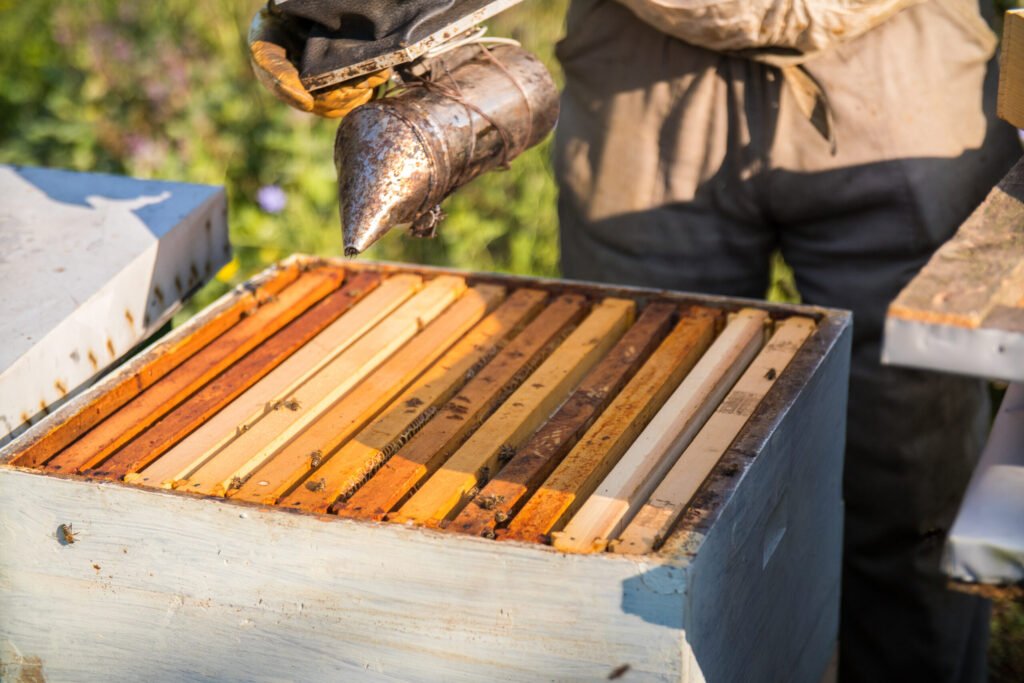
The Commissioner of Agriculture has broad authority under KRS 252.190 to make and enforce rules necessary to control, eradicate, or prevent the spread of bee diseases, including the power to destroy infected bees, hives, honey, or equipment by burning or other means, without compensating the owner, when deemed necessary for disease control. Infected bees, hives, honey, and equipment are legally classified as a public nuisance under this statute. The Commissioner can also require beekeepers to report information necessary for carrying out the chapter’s provisions, and can publish inspection or disease-related information as needed. Failing to comply with the Commissioner’s rules and orders under KRS 252.180 to 252.240 is itself a statutory violation. This authority is broad by design — disease control in beekeeping depends on being able to act quickly once American foulbrood or another serious pathogen is confirmed, since delay generally means more colonies exposed, and a statute that required lengthy compensation proceedings before destruction could authorize would undermine the entire point of having a rapid-response disease program in the first place. This mirrors the history of American foulbrood laws and apiary inspection that shaped similar authority nationwide.

The Voluntary Pesticide-Notification Registry
Although Kentucky doesn’t require hive registration, beekeepers can voluntarily register to be notified when agricultural pesticide or mosquito-control spraying is scheduled in their area, through the Kentucky Department of Agriculture’s Pollinator Protection Stakeholder Plan registry. This free program exists specifically to give beekeepers advance warning so they can take protective steps before a nearby spraying event, and beekeepers concerned specifically about mosquito-control spraying can separately request placement on a no-spray list. Registering costs nothing and, unlike hive registration, is something Kentucky beekeepers can actually opt into today. Given that Kentucky doesn’t track hive locations through any mandatory system, this voluntary registry is genuinely the only practical mechanism connecting individual beekeepers to nearby pesticide activity — skipping it means relying entirely on informal, word-of-mouth awareness of spraying schedules in your area, which is a meaningfully weaker safeguard than an actual notification system. For how similar systems work in other states, see our guide to DriftWatch and BeeCheck.
Keeping Bees on Residential Property
KRS 252 doesn’t define honey bees as livestock, which shifts the practical question of whether you can keep a hive on residential property away from state agricultural law and toward local rules instead. The Kentucky State Beekeepers Association recommends checking with your local county clerk for any nuisance ordinances that specifically restrict beehive placement; if no such ordinance exists, homeowners generally have the right to maintain a beehive on their own property. This makes Kentucky’s approach meaningfully more decentralized than states with explicit statewide siting rules — the real answer for most Kentucky beekeepers depends on county-level ordinances rather than anything in Chapter 252 itself. This is a genuinely different regulatory philosophy from states that set explicit statewide rules on lot size, hive count, or setback distances — Kentucky essentially defers that entire question to local government, which means the honest answer to “can I keep bees here” varies more county to county in Kentucky than it does in states with a uniform statewide siting standard. Our guide to safe distances between beehives and neighbors covers the practical siting considerations most county ordinances end up addressing.
Pools, Swarms, and Being a Good Neighbor
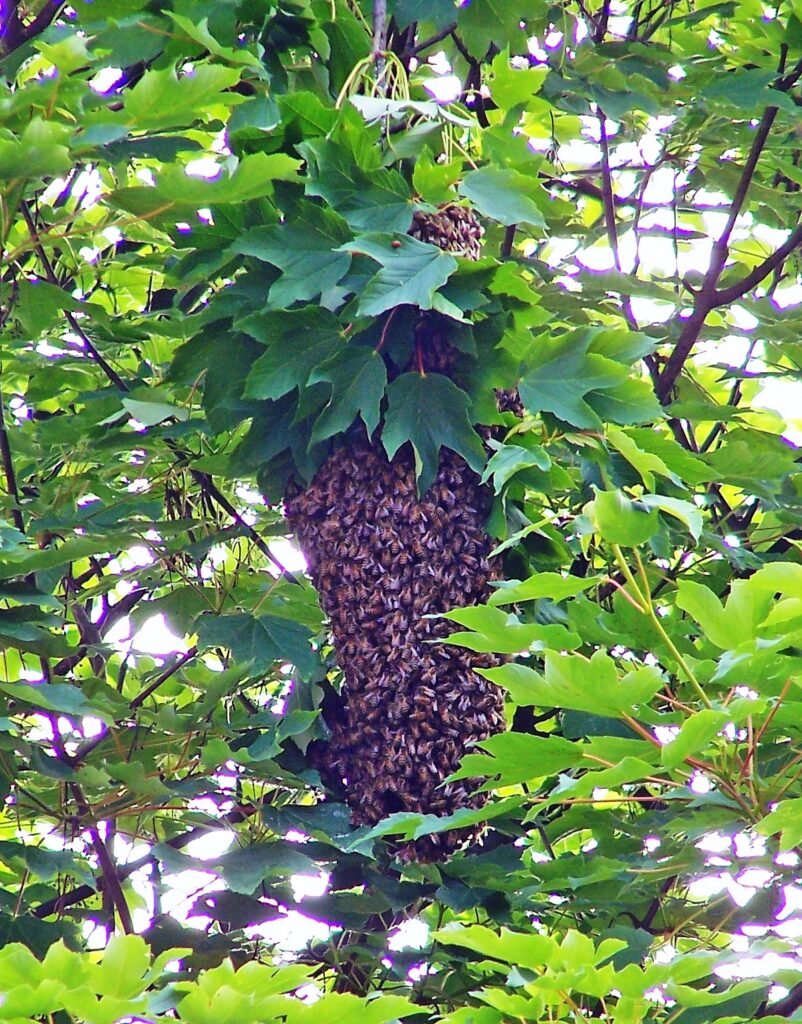
Even without a nuisance ordinance on the books, the Kentucky State Beekeepers Association specifically recommends beekeepers proactively anticipate and avoid common neighbor conflicts — honey bees collecting water and salt from swimming pools is a frequently cited source of complaints, along with swarms that can understandably alarm neighbors unfamiliar with bee behavior, since a resting swarm cluster looks far more threatening to someone who doesn’t keep bees than it actually is. Precautions are also worth extra consideration around elderly neighbors, tethered animals, or small children who might be near hives. None of this is strictly mandated by state law, but it’s the kind of practical, good-neighbor guidance that helps keep a Kentucky apiary running without local friction, particularly in a state where the absence of formal siting rules puts more weight on informal community relationships. A beekeeper who introduces themselves to close neighbors before setting up hives, explains basic bee behavior, and offers a contact number for concerns tends to prevent far more friction than one who waits for a complaint to surface first — a small investment of time that pays off disproportionately in a regulatory environment this decentralized.
Selling Honey Legally in Kentucky
Honey processing and labeling in Kentucky falls under both federal FDA rules and state oversight through the Kentucky Cabinet for Health and Family Services’ Food Safety Branch Food Manufacturing Program. The Kentucky State Beekeepers Association directs sellers to FDA guidance on proper honey labeling and honey source declaration requirements as the primary compliance references, alongside the state’s own commercial food manufacturing guidance for anyone processing honey at meaningful scale. Beekeepers considering selling at farmers markets should also review the Kentucky Farmers’ Market Manual & Resource Guide, published by the Kentucky Department of Agriculture’s Office of Agricultural Marketing, which addresses questions like product liability insurance that go beyond pure food-safety compliance. Because Kentucky routes honey compliance through general food-safety and labeling rules rather than a dedicated small-producer honey exemption like some other states maintain, it’s worth confirming current thresholds and requirements directly with the Food Safety Branch before assuming a specific dollar or volume cutoff applies — the guidance is explicitly structured as a set of external references to check rather than a single self-contained exemption written into beekeeping law itself. See our guide to cottage food laws and selling honey legally for how dedicated exemptions work in states that have one.

Frequently Asked Questions
Do I need to register my beehives in Kentucky?
No, Kentucky has no mandatory hive registration requirement, even though state law gives the Commissioner of Agriculture authority to create one.
Do I need an inspection to move bees within Kentucky?
Only if you’re crossing the state line. Moving bees across county lines within Kentucky requires no inspection.
What happens if my bees are found diseased in Kentucky?
The Commissioner of Agriculture can order destruction of infected bees, hives, honey, or equipment without compensation; infected material is legally treated as a public nuisance.
Can I keep bees in a residential neighborhood in Kentucky?
Generally yes, unless your county has a specific nuisance ordinance restricting it — check with your local county clerk, since KRS 252 doesn’t classify bees as livestock or set statewide siting rules.
Is there a way to get notified before pesticide spraying near my hives in Kentucky?
Yes, through the Kentucky Department of Agriculture’s free, voluntary Pollinator Protection Stakeholder Plan registry.