Last Updated October 2, 2026
Michigan is one of the small number of states with no mandatory hive registration at all. There’s no state-level requirement to register your bees with the Michigan Department of Agriculture and Rural Development (MDARD), no annual fee, and no mandatory inspection. Meanwhile, individual cities fill the gap with their own rules, and they vary dramatically: Grand Rapids requires hives to sit 150 feet from neighboring buildings, while Ann Arbor simply caps every apiary in the city at two hives regardless of lot size, and Detroit takes yet a third approach by folding beekeeping into a combined ordinance alongside backyard poultry.
This guide covers Michigan’s voluntary registration and BeeCheck programs, why keeping your own records still matters, and how Grand Rapids, Ann Arbor, and Detroit each handle backyard beekeeping very differently from one another. Because so much of the real regulatory weight in Michigan sits at the city level rather than the state level, understanding your specific municipality’s ordinance matters more here than it does in states with a stronger unifying statewide framework.
Disclaimer: This guide is for educational purposes only and is not legal advice. Beekeeping regulations change over time — always confirm current requirements directly with your local or national agricultural authority before acting.

Key Takeaways
- Michigan has no mandatory hive registration — MDARD offers registration on a voluntary basis, with real benefits like disease and pesticide-application notifications.
- We found no general record-keeping mandate for hobbyists in Michigan’s Apiary Law (Act 412 of 1976), but inspection, treatment and harvest records are still worth keeping.
- The voluntary BeeCheck program lets beekeepers map their hive locations so pesticide applicators know where to avoid spraying.
- Local ordinances vary enormously: Grand Rapids requires a 150-foot setback from residences and other buildings, Ann Arbor caps apiaries at 2 hives citywide, and Detroit allows 2 hives under its broader animal-husbandry ordinance.
- Honey sales in Michigan fall under apiary law rather than the state’s cottage food law, which is a distinction most beekeepers new to the state don’t expect.
Table of Contents
- Is Beekeeping Registration Mandatory in Michigan?
- The BeeCheck Program
- Keeping Your Own Hive Records
- GAAMPs: Michigan’s Right-to-Farm Framework
- Grand Rapids Beekeeping Rules
- Ann Arbor Beekeeping Rules
- Detroit Beekeeping Rules
- Selling Honey Legally in Michigan
- What Happens If You Violate Local Rules
- Frequently Asked Questions
Is Beekeeping Registration Mandatory in Michigan?
No. Unlike most of the states covered in this series, Michigan does not require beekeepers to register their hives with the state at all. Registration through MDARD is entirely voluntary, and there are no mandatory state inspections tied to it. That said, Michigan State University Extension’s guide to keeping bees in Michigan makes a strong case for registering anyway: registered beekeepers receive notifications about nearby disease outbreaks, pesticide applications in their area, and any changes to state regulations that might affect them, none of which an unregistered beekeeper has direct access to. Given that registration costs nothing and takes only a few minutes, most Michigan beekeeping clubs actively encourage new members to sign up anyway, treating it less as a legal formality and more as a genuinely useful early-warning system for anything that might threaten a colony.
The BeeCheck Program
Beyond basic registration, Michigan beekeepers can also opt into BeeCheck, a mapping tool that lets you pin the exact location of your hives so pesticide applicators can see them before spraying nearby fields or rights-of-way. Beekeepers who sign up can also receive email notifications when pesticides are being applied in response to a public health emergency, such as mosquito-control spraying during an Eastern Equine Encephalitis or West Nile Virus outbreak — a real, practical benefit for anyone whose hives sit near land that gets treated on short notice. BeeCheck works both ways: applicators can see registered hive locations before they spray, and beekeepers who sign up get a heads-up before treatment happens nearby, giving them a window to shelter or relocate a hive temporarily if the situation calls for it.
Keeping Your Own Hive Records
An earlier version of this guide said Michigan law requires every beekeeper to keep hive records. We could not confirm that: Michigan’s Apiary Law (Act 412 of 1976) had its inspection and registration sections repealed in 1993, and we found no general record-keeping mandate for hobbyists. Records are still worth keeping, since a beekeeper without them has little to fall back on if a dispute over honey sales, disease history, or colony health ever comes up. Basic records — inspection dates, treatments applied, harvest amounts, and any observed signs of disease or pest pressure — are generally enough to satisfy the requirement for most hobbyist beekeepers, and keeping them also happens to make you a noticeably better beekeeper over time, since patterns become obvious in writing that are easy to miss from memory alone.
GAAMPs: Michigan’s Right-to-Farm Framework
Michigan’s Generally Accepted Agricultural and Management Practices (GAAMPs) are a right-to-farm framework that protects agricultural operations, including beekeeping in many contexts, from being treated as a nuisance simply for operating according to accepted industry practices. GAAMPs matter most for beekeepers operating in areas zoned specifically for agriculture or at a genuinely larger commercial scale; a backyard hobbyist in a typical residential neighborhood is more directly governed day-to-day by local city ordinance than by GAAMPs, but understanding that this state-level protective framework exists is useful context for how Michigan balances beekeeping against other land uses. GAAMPs are reviewed and updated periodically by a state commission, and the specific version covering site selection and management practices for agricultural operations is the one most directly relevant to beekeepers operating at any meaningful commercial scale.
Grand Rapids Beekeeping Rules
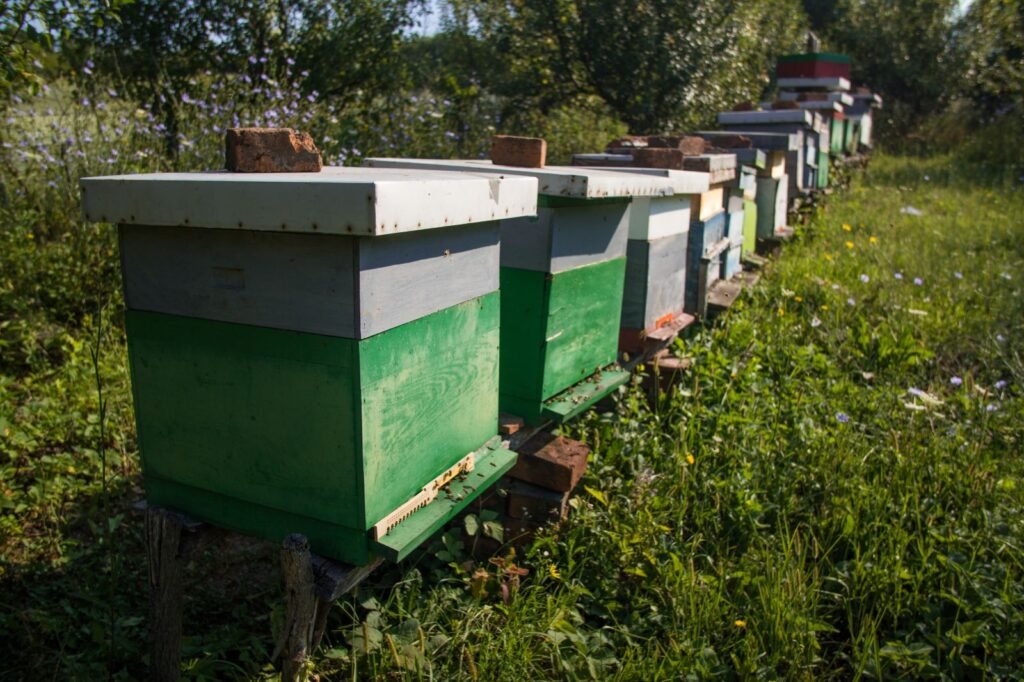
Grand Rapids has one of the stricter municipal beekeeping ordinances of any city covered in this series. Hives must sit more than 150 feet from any residence, hospital, medical facility, school, church, office building, store, hotel, apartment house, rooming house, or other place of habitation — and at least 150 feet from the beekeeper’s own property line as well. A permit is required, and any hive must be screened by a hedge, shrubbery, or solid fence at least 6 feet tall. In practice, this 150-foot standard makes backyard beekeeping on a typical residential lot in Grand Rapids genuinely difficult, and it’s one of the reasons the city’s own urban agriculture guidance is worth reading closely before assuming a small yard will qualify. Beekeepers who can’t meet the 150-foot standard on their own property sometimes look at community garden plots or larger shared urban-agriculture sites within the city instead, since those locations are more likely to have the space the ordinance actually requires.
Ann Arbor Beekeeping Rules
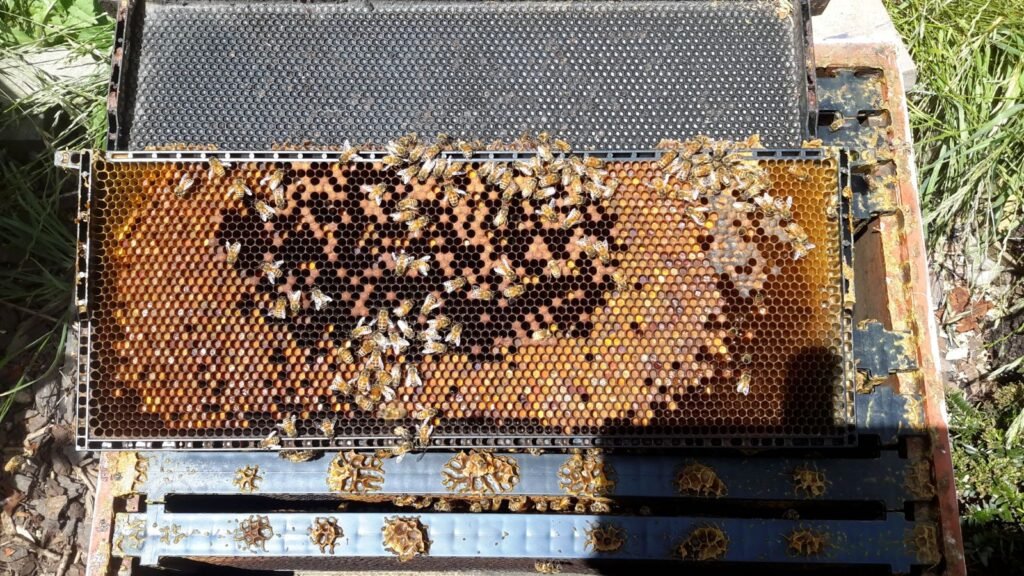
Ann Arbor takes a different approach: rather than a large setback distance, the city simply caps every apiary within city limits at 2 hives or stands, regardless of lot size. There’s no numeric setback published alongside that cap, which makes Ann Arbor comparatively easier to work within for a small backyard operation, provided you’re genuinely content staying at or under two hives, which is enough for most hobbyists focused on personal honey production but a real constraint for anyone hoping to eventually split colonies or scale up within city limits.
Detroit Beekeeping Rules
Detroit regulates beekeeping through a broader animal husbandry ordinance that also covers backyard chickens and ducks. Residents can keep up to two beehives, with hives required to sit at least 25 feet from neighboring homes and any enclosure at least 5 feet from the property line, located in the home’s backyard rather than a front or side yard. Detroit’s ordinance reflects a broader, ongoing urban-agriculture push across the city, and pairing beekeeping rules with backyard poultry rules in a single ordinance is a deliberate structural choice that makes Detroit’s code worth reading in full rather than searching for a beekeeping-only section. Residents interested in both chickens and bees will find the two sets of rules share a similar underlying logic around setbacks and enclosure requirements, which makes the combined ordinance easier to work with once you understand the pattern.
| City | Hive Limit | Setback | Permit Required? |
|---|---|---|---|
| Grand Rapids | No fixed numeric cap, but the setback below effectively limits most lots | 150 ft from residences/other buildings and from the property line | Yes |
| Ann Arbor | 2 hives citywide | No published numeric setback | No |
| Detroit | 2 hives | 25 ft from neighboring homes; enclosure 5 ft from property line | Under combined animal-husbandry ordinance |
Selling Honey Legally in Michigan
Here’s a genuine surprise for beekeepers moving to Michigan from a cottage-food-friendly state: honey sales in Michigan are regulated under the state’s apiary law rather than its cottage food law. That means the usual cottage food thresholds and exemptions that apply to jams, baked goods, and other home-processed foods in Michigan don’t automatically extend to honey the same way. Checking MDARD’s specific apiary program requirements before your first sale is the right move rather than assuming Michigan’s general cottage food rules apply to honey the same way. Honey and maple syrup producers are instead governed by their own, considerably lower threshold: Michigan Food Law section 289.4105 exempts honey and maple syrup sales from a food-license requirement only while gross annual sales of that product stay at $15,000 or less — a meaningfully different number from the $50,000 cap that applies to general cottage food products like jams and baked goods. This distinction trips up beekeepers who’ve read general cottage-food guidance online without realizing Michigan carved honey out into its own regulatory track years ago. Our guide to starting a honey business in the United States covers general labeling and permitting concepts that are still useful background even though Michigan’s specific legal pathway differs from most other states.
What Happens If You Violate Local Rules
Because Michigan doesn’t mandate state registration, virtually all of the practical compliance risk for a Michigan beekeeper comes from local ordinance violations rather than anything at the state level. In cities with detailed rules — Grand Rapids’s 150-foot setback, Ann Arbor’s 2-hive cap, Detroit’s 25-foot/5-foot placement rules — violations tend to be complaint-driven, and repeated or unresolved issues can lead to code enforcement fines or an order to remove or relocate hives. Because the state itself imposes no registration penalty, a Michigan beekeeper’s real legal exposure is almost entirely a function of which specific city or township they live in, making local research more important in Michigan than in states with a stronger unifying state framework. A beekeeper who moves from Ann Arbor to Grand Rapids, for instance, could go from a simple 2-hive cap to a 150-foot setback requirement overnight, despite staying within the same state and the same general region.
Frequently Asked Questions
Do I have to register my bees with the state in Michigan?
No. Michigan does not require mandatory hive registration; MDARD offers voluntary registration with benefits like disease and pesticide-application notifications.
Do I have to keep hive records in Michigan?
We found no general record-keeping mandate for hobbyists in Michigan’s Apiary Law (Act 412 of 1976). Keeping inspection, treatment and harvest records is still strongly recommended.
How many hives can I keep in Ann Arbor?
Ann Arbor caps every apiary within city limits at 2 hives or stands, regardless of lot size.
Why is Grand Rapids’ beekeeping ordinance so much stricter than other Michigan cities?
Grand Rapids requires a 150-foot setback from residences and other buildings, plus a permit and a 6-foot screening fence or hedge, making it considerably more restrictive than nearby Ann Arbor or Detroit.
Does Michigan’s cottage food law cover honey sales?
No. Honey sales in Michigan are regulated under the state’s apiary law rather than its cottage food law, so beekeepers need to check MDARD’s specific apiary program requirements before selling.
Related Reading
Image credits: Photo: Warren LeMay, CC BY-SA 2.0, via Wikimedia Commons; Photo: Ivan Radic, CC BY 2.0, via Wikimedia Commons; Photo: John Pons, CC BY-SA 4.0, via Wikimedia Commons; Photo: Ich, Wikimedia Commons, CC BY-SA 4.0.