Reviewed by Sofia T. · How we review
A dandelion is common dandelion (Taraxacum officinale), a perennial in the aster family that was introduced from Europe and now grows in all 50 states. You can tell it apart by its rosette of jagged, hairless “lion’s tooth” leaves, one yellow flower head on each hollow, leafless stalk, milky sap, and a round white seed head. Dandelions bloom mainly in April and May. Bees visit them heavily for nectar and pollen, but the pollen is low in several amino acids bees need, so dandelions work best as one early food among many, not as a complete diet.
The bloom and bee figures below include our own counts of US iNaturalist observations, pulled in November 2026.
Key Takeaways
- Common dandelion is a non-native perennial with a taproot. The USDA Forest Service lists it as invasive.
- Cat’s ear (false dandelion), hawkweeds and chicory look similar. Check the stalk: a dandelion’s is hollow, unbranched and carries one flower head.
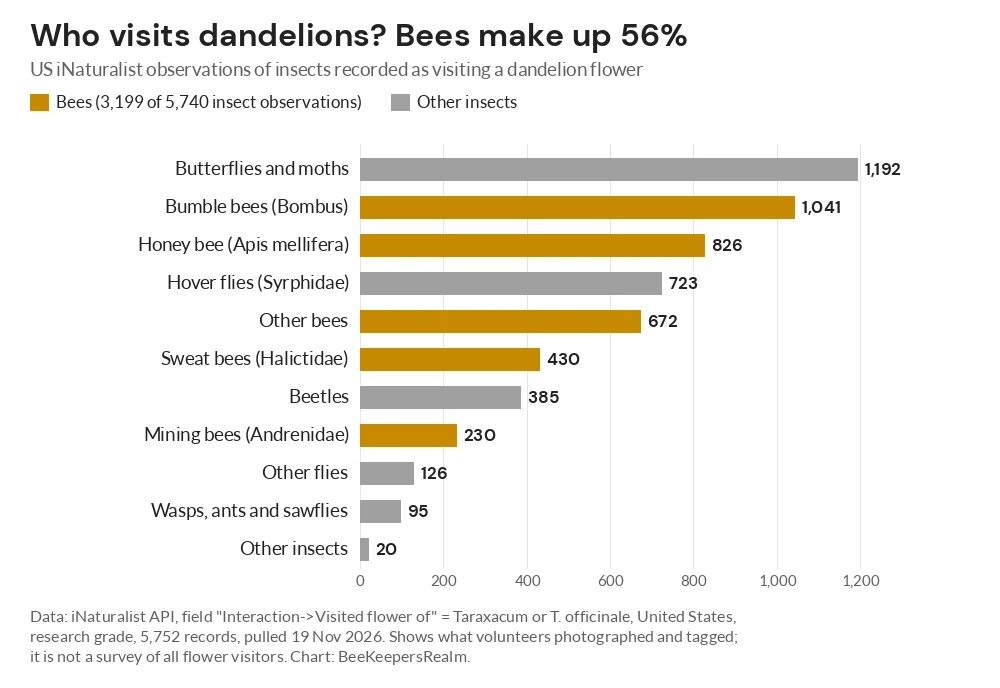
- Of 3,199 research-grade US iNaturalist records of bees on dandelions, 91% were made in April or May.
- Dandelion pollen is low in valine, isoleucine, leucine and arginine. Bees do poorly on it alone, but in a mixed diet it still adds protein.
- Dandelions set seed without pollination, so they do not need bees, even though bees use them.
- The headline No Mow May study was retracted in 2022. Mowing less often and a little higher has better support, and flowers should be mowed off before any insecticide goes on a lawn.
Table of Contents
- What Is a Dandelion?
- How to Identify a Dandelion
- Dandelion vs Cat’s Ear, Hawkweed and Chicory
- When Do Dandelions Bloom?
- Are Dandelions Good for Bees?
- Dandelion Honey
- Should You Pull, Mow or Leave Dandelions?
- Are Dandelions Edible?
- Frequently Asked Questions
- The Bottom Line
What Is a Dandelion?
In US yards, “dandelion” almost always means common dandelion, Taraxacum officinale. The USDA Forest Service Fire Effects Information System describes it as an introduced, cool-season perennial forb found in all 50 states, almost all Canadian provinces and Mexico, and rates it nonnative and invasive. UC IPM notes it was brought from Europe, where it has long been used as an herb.
- Other names: lion’s tooth, puffball and blowball. Minnesota Wildflowers notes that “dandelion” comes from the French dent de lion, tooth of lion, after the sharp leaf lobes.
- Family: Asteraceae, the aster or daisy family. Each “flower” is really a head of 100 to 300 small flowers.
- Life span: perennial, regrowing each year from a thick taproot.
How to Identify a Dandelion
Leaves and root
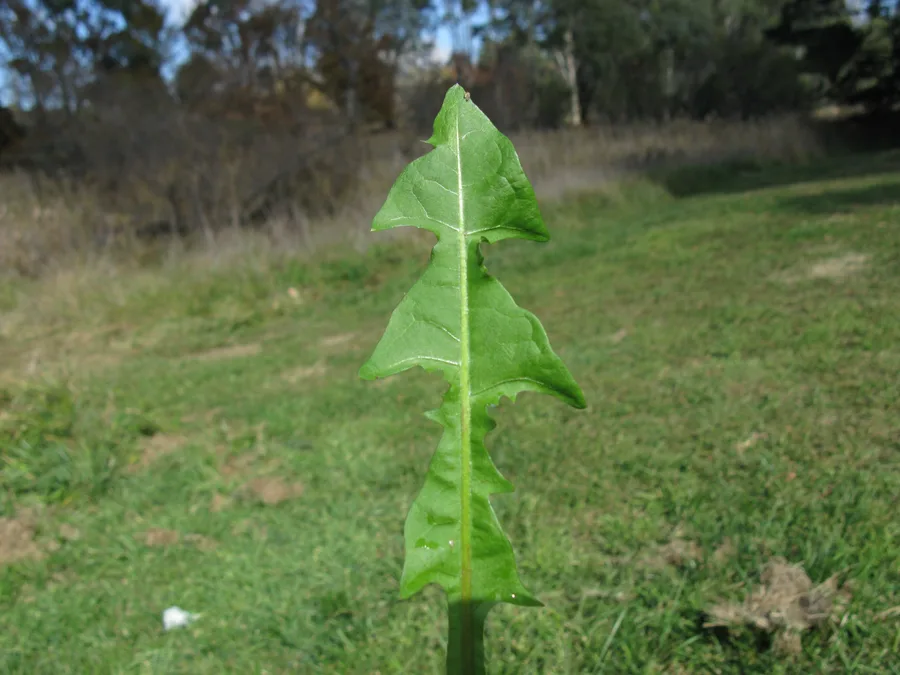
All the leaves grow from a flat rosette at ground level. The UC IPM dandelion Pest Note gives leaf length as 2 to 14 inches and describes the deeply serrated, “lion’s tooth” outline. Leaves are mostly hairless, although Minnesota Wildflowers notes they can be hairy underneath along the midrib. UC IPM says the fleshy taproot lies mostly in the top 6 to 18 inches of soil and that root pieces as short as an inch can grow back.
Flower stalk and milky sap
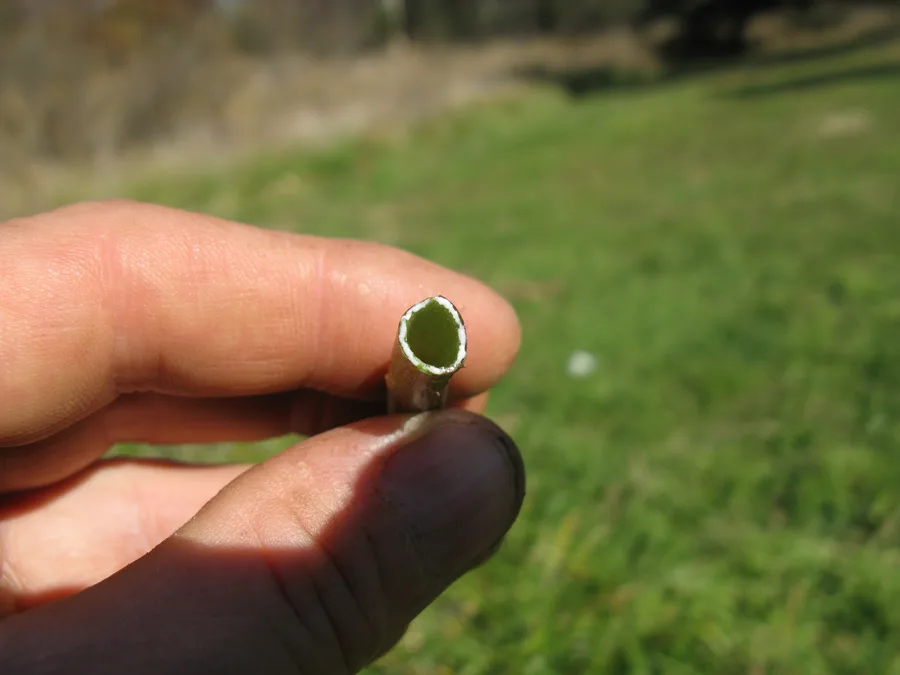
Each flower head sits alone on a smooth, leafless stalk that is hollow inside. UC IPM gives stalk height as 6 to 24 inches, but in a mowed lawn the plant flowers almost at ground level. Minnesota Wildflowers puts the typical head at about an inch across and notes that the leaves, roots and flowering stems all release a milky sap when broken.
Seed head (puffball)
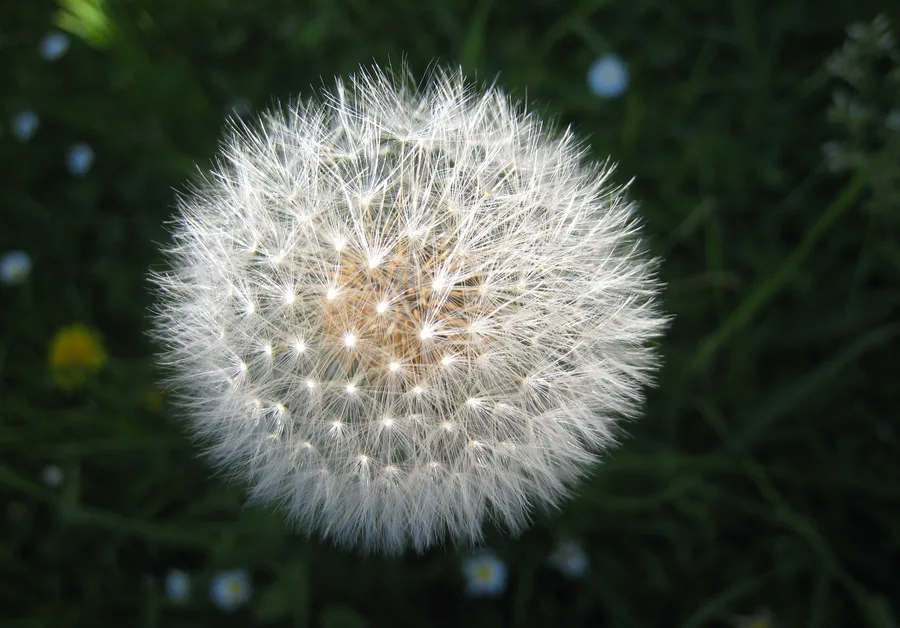
Each flower head ripens into a white globe of seeds, each hanging under a tiny parachute of bristles. The Forest Service reports seeds blown several hundred meters in an Iowa prairie and notes that dandelion builds a long-lived seed bank. UC IPM says seeds germinate when moist soil reaches at least 50°F.
Dandelion vs Cat’s Ear, Hawkweed and Chicory
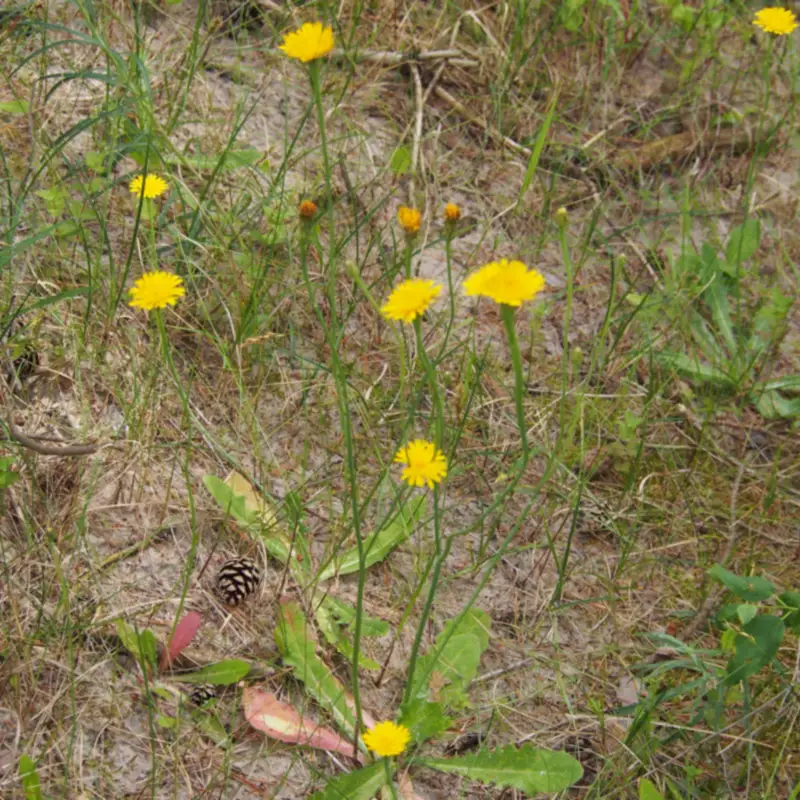
Several relatives with milky sap, most of them yellow-flowered, get called dandelions. For the commonest one, Penn State Extension gives the key test: “Catsear flowering stems are forked and solid with multiple flowers per plant, whereas dandelions possess unforked stems that are hollow with a single flower”.
| Plant | Leaves | Flower stem | Flowers per stem | Sap | Bloom time | Notes | Source |
|---|---|---|---|---|---|---|---|
| Common dandelion (Taraxacum officinale) | Basal rosette, deeply toothed, mostly hairless | Hollow, unbranched, leafless | 1 | Milky | Mainly spring; March to late fall in most states | Round white puffball seed head | UC IPM; Minnesota Wildflowers; USDA FEIS |
| Cat’s ear, false dandelion (Hypochaeris radicata) | Basal rosette, lobed, covered in coarse, rough hairs | Solid, forked | Several | Milky | May to November | Class B noxious weed in Washington | Penn State Extension; UC IPM; WSU |
| Meadow hawkweed (Hieracium caespitosum) | Mostly basal, hairy on both sides, untoothed | Hairy, unbranched below the flower cluster | 5 to 30 in a cluster at the top | Milky | June to August | Heads about ½ to ¾ inch; spreads by runners | Minnesota Wildflowers; Montana State Extension |
| Chicory (Cichorium intybus) | Rosette leaves dandelion-like; stem leaves small, clasping | Tough, branched, up to about 4 feet | 1 to 4 per cluster along the branches | Milky | June to October | Flowers blue, open in the morning and close later in the day | Minnesota Wildflowers; UW-Madison Extension |
All four have milky sap, so a broken stem does not settle the question. Check the stem first, then the leaf hairs, then the calendar. A “dandelion” on a branched stem in midsummer is most likely cat’s ear.
When Do Dandelions Bloom?
The Forest Service says common dandelion flowers from March to late fall in most states and year-round in warmer areas. Its state records show the start moving later with latitude: February to June in Kentucky, Tennessee, Georgia and Virginia; April to June in Iowa and North Dakota; April to September in Montana; and May to August in Wyoming.
Our iNaturalist count shows the same spring peak. Of 7,734 research-grade US dandelion observations tagged as flowering, 38% were made in April and 21% in May, with a small second rise from September to November. Cat’s ear records (1,418) peak later, in June, and stay high through September.
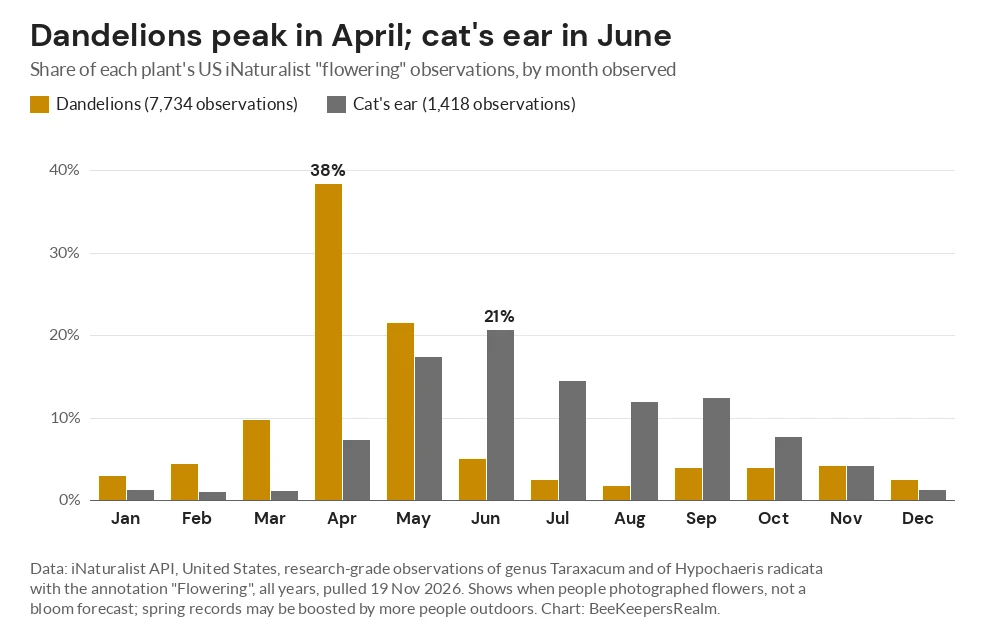
That early timing is why dandelions matter to bees, alongside other spring forage such as crocus and other early bloomers.
Are Dandelions Good for Bees?
Yes, as a source of nectar and early pollen. No, as a bee’s only food.
Which bees visit dandelions
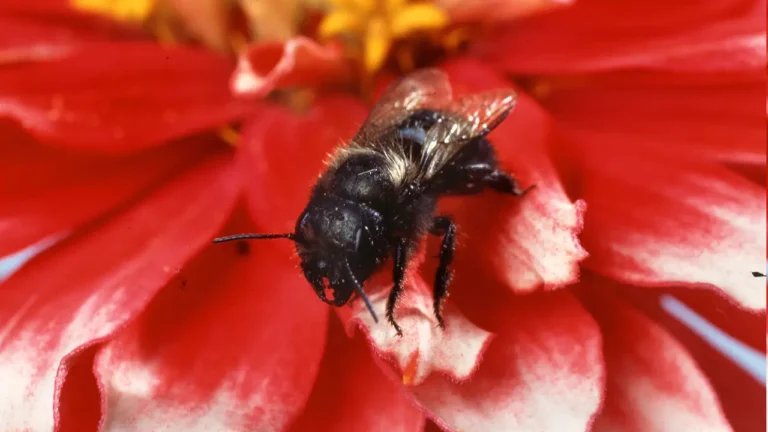
In central Kentucky lawns in 2011 and 2012, entomologists Jonathan Larson, Adam Kesheimer and Daniel Potter collected more than 2,100 pollinators from 50 species, including 37 bee species. A University of Kentucky news release reports that hover flies, honey bees and wild native bees were the most common visitors to dandelions.
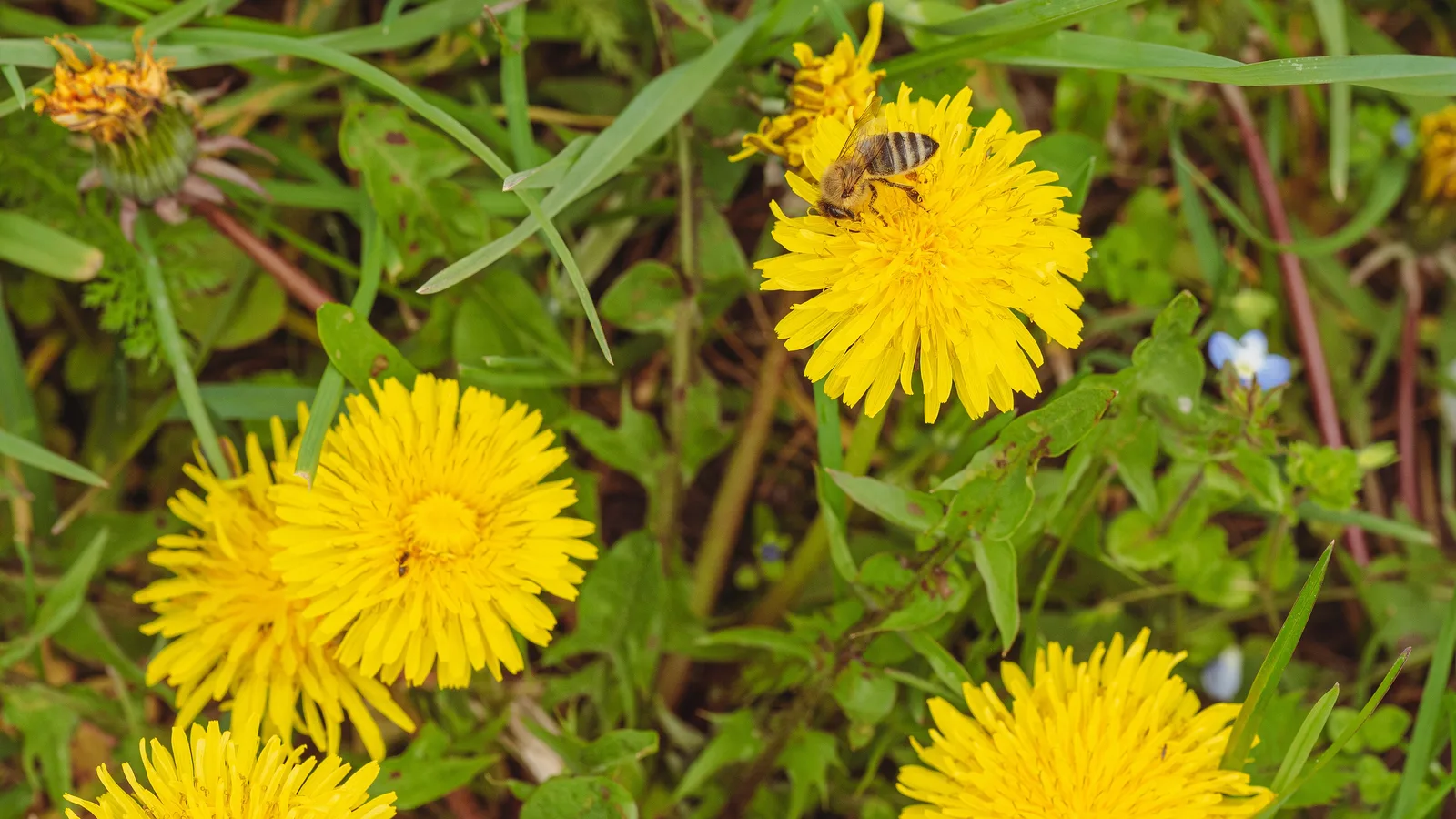
US iNaturalist records show a similar mix. Of 5,740 research-grade records of insects on dandelion flowers, 3,199 were bees (56%). The bees recorded most often were the western honey bee (826 records), common eastern bumble bee (333), tricolored bumble bee (286) and eastern carpenter bee (254). Across all quality grades there are 10,087 records. These counts reflect what volunteers chose to photograph, so large, easy-to-name bees are over-represented. Read them as a list of visitors, not as visit rates.
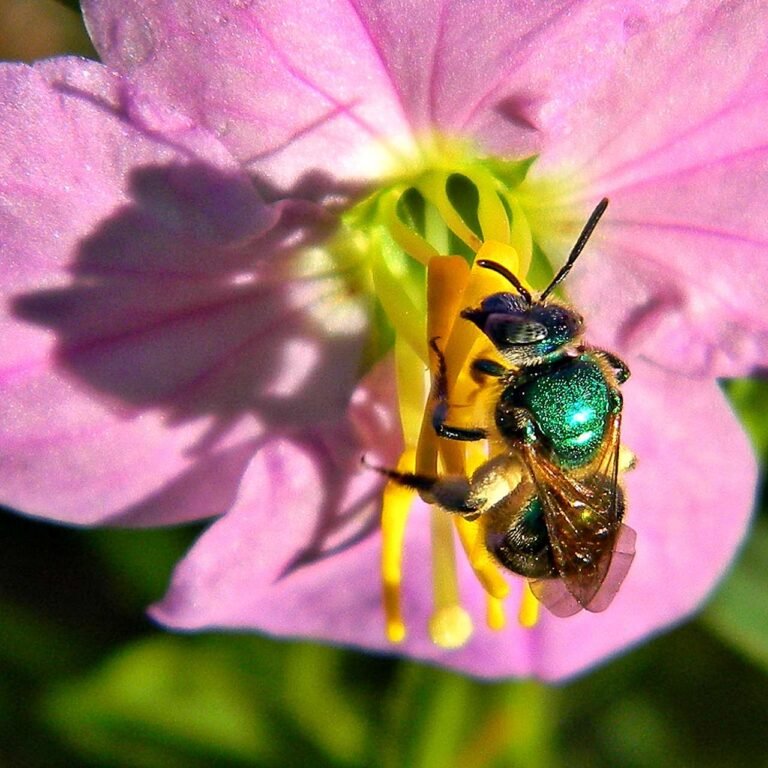
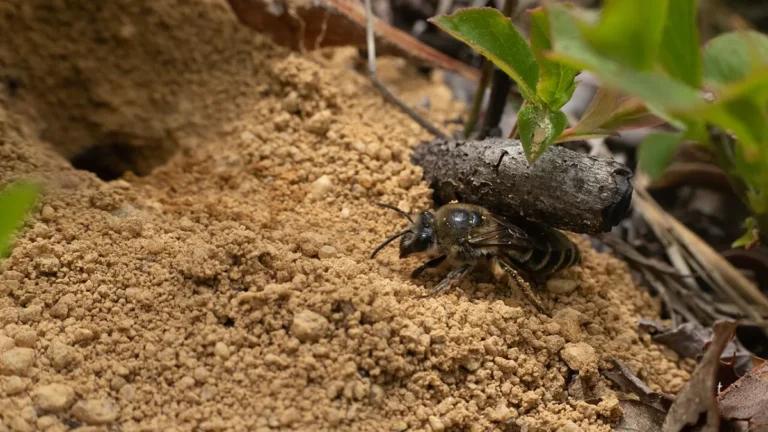
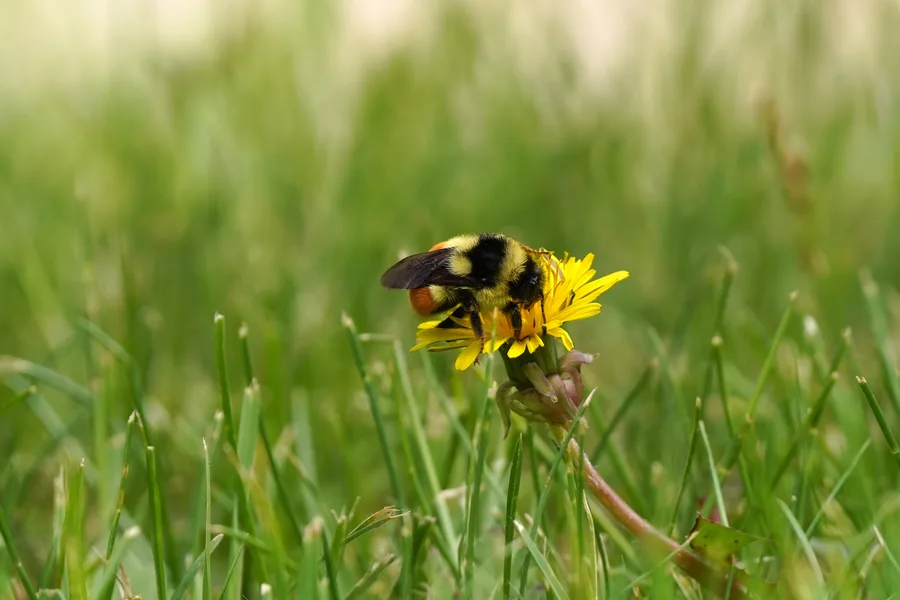
Early in the season, the bumble bees on dandelions are queens starting colonies alone, as our bumble bee identification and life cycle guide explains. Ground-nesting mining bees that emerge in early spring use them too. Potter explained the stakes:
“In the spring, a lot of native bees that are foraging on these weeds are queens and are very vulnerable, as their colonies are not yet established,”
Nectar and pollen: how nutritious is it?
The case against relying on dandelions is about pollen protein. In 1987, USDA-ARS researchers Loper and Cohen found that dandelion pollen, whether collected by bees or by hand, was low in valine, isoleucine, leucine and arginine relative to honey bee needs (Journal of Economic Entomology 80:14-17). They linked the poor brood rearing seen on dandelion-only diets to that shortfall. In American Bee Journal (2018), Rusty Burlew summarized feeding studies in which pure dandelion pollen held back mason bee larvae, stopped honey bee brood production and led bumble bees to reject all their larvae.
The key word is pure. Philip Donkersley and colleagues (Oecologia, 2017) analyzed stored pollen (bee bread) from 26 honey bee hives in northwest England. Bee bread with more dandelion pollen had more protein, and the same was true of willow pollen. If spring pollen is scarce where you keep bees, see our guide on when to feed pollen patties in spring. Larson, a co-author of the Kentucky lawn study, made a related point to Snopes:
“Dandelions may help earlier in the year but species that emerge after dandelion bloom peak need food too.”
Larson also called dandelion bloom “very transient” compared with white clover, which flowers for longer; see our guide to clover for bees. Plants such as creeping phlox in spring and black-eyed Susan in summer help fill the months after the dandelion flush.
Do bees pollinate dandelions?
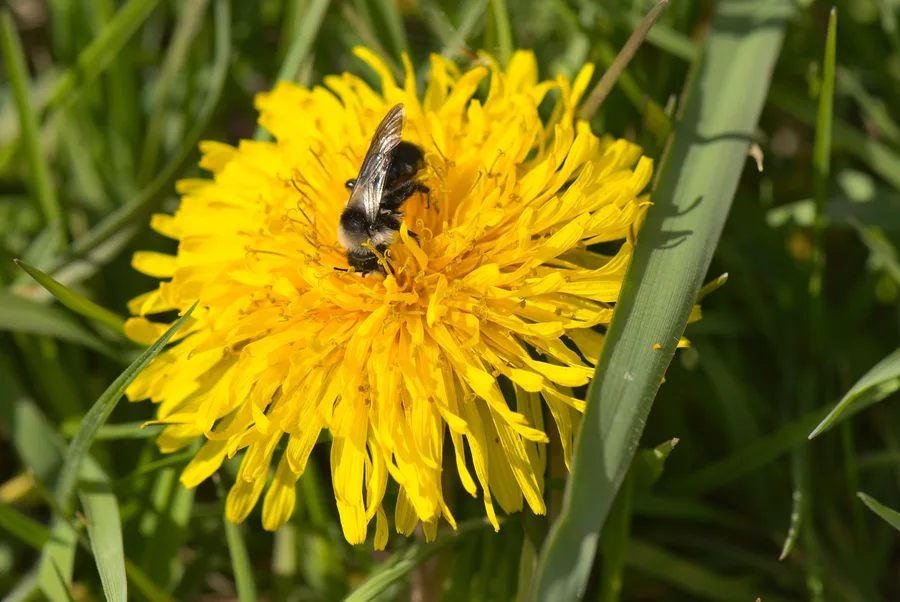
Bees carry dandelion pollen, but the plant does not depend on it. UC IPM states: “Dandelion flowers are not normally pollinated, but develop asexually.” The Forest Service explains that common dandelion reproduces apomictically, forming seeds from unfertilized cells, so each seed is a genetic copy of its parent.
Dandelion Honey
Pure dandelion honey is a specialty. In their reference survey of European single-flower honeys, Livia Persano Oddo and Roberto Piro call dandelion “one of the earlier nectar sources” and note that colonies are often not yet strong enough to gather a crop from it. They describe the honey this way:
“Dandelion unifloral honey has a typical yellow colour, quite a strong flavour and crystallises rapidly, due to the high glucose content.”
Their sensory panel found a bright yellow honey with a strong odor and long aftertaste that sets with very small crystals into a fondant-like texture. Here are their mean values, with black locust (sold as acacia honey) for contrast.
| Measure (mean) | Dandelion honey | Black locust honey |
|---|---|---|
| Samples in database | 114 | 715 |
| Color (mm Pfund) | 56.6, yellow hue | 12.9 |
| Fructose (g/100 g) | 37.4 | 42.7 |
| Glucose (g/100 g) | 38.0 | 26.5 |
| Fructose/glucose ratio | 0.99 | 1.61 |
| Glucose/water ratio | 2.33 | 1.57 |
Dandelion honey has about as much glucose as fructose, while black locust has far less glucose. Our explainer on why some honeys crystallize faster than others covers the chemistry. For a dependable honey crop, see our list of the best plants for honey production in the USA.
Should You Pull, Mow or Leave Dandelions?
Mow less often and a little higher
In 16 western Massachusetts yards, Susannah Lerman and colleagues (Biological Conservation, 2018) found that lawns mowed every three weeks had as much as 2.5 times more lawn flowers than lawns mowed every one or two weeks. Two-week lawns had the most bees but the fewest bee species. The authors called this a “lazy lawnmower” approach. University of Wisconsin-Madison Extension adds that lawns mowed higher (above 3 inches) and less often have more flowers, and that you should not cut off more than a third of the grass height at once.
No Mow May: what the evidence says
The widely shared claim that unmowed Appleton, Wisconsin lawns had five times more bees came from a study retracted on November 18, 2022. As North Dakota State University Extension horticulturist Esther McGinnis reports, the retraction cited “several potential inconsistencies in data handling and reporting.” She adds that grass can grow 12 inches or more in May, so cutting it to 3 inches on June 1 breaks the one-third rule just before summer heat. Our article does No Mow May really help bees covers the full story.
Herbicides, insecticides and bees
UC IPM notes that mowing alone does not control dandelions and lists spot treatments with translocated herbicides such as 2,4-D, dicamba and triclopyr; always follow the label. For bees, insecticides are the bigger lawn risk. A Kentucky study found that mowing flowering weeds before or soon after a grub treatment greatly reduced bees’ exposure, and Purdue University researchers also advise mowing off weed flowers before spraying. If grubs are the reason you are treating, our guide to June bug grubs in lawns covers when treatment is warranted.
Removing dandelions by hand
- Dig out the whole plant, taproot and all, with a dandelion knife or similar weeder. Root pieces left behind can regrow.
- UC IPM advises digging out new plants before they produce seed.
- Keep the turf dense. UC IPM notes that dense turf shades the soil and reduces new seedlings.
- To swap some dandelions for longer-blooming flowers, see how to turn a lawn into pollinator habitat, or plant some of the best US native plants for pollinators.
UC IPM also notes that dandelion flowers attract bees, which can be a problem where children or people with bee allergies play.
Are Dandelions Edible?
Yes. UC IPM notes that the leaves and flowers are used in salads, beer and wine, that mature leaves can be dried for a mild tea, and that the roots make a stronger tea. This is general background, not health advice. Only pick from ground that has not been treated with lawn chemicals, avoid roadsides, and be sure of your identification. If you have a medical condition or take medication, ask a doctor or pharmacist first.
After dandelions fade, summer bloomers such as yarrow keep feeding small native bees.
Frequently Asked Questions
Are dandelions good for bees?
Yes, as an early source of nectar and pollen for bumble bee queens, mining bees and honey bees in April and May. The pollen is low in several essential amino acids, so bees need other flowers too.
Do bees pollinate dandelions?
Bees pick up dandelion pollen, but common dandelion sets seed without fertilization (apomixis), so it does not need pollinators.
Are dandelions weeds?
In lawns, yes. Extension services treat common dandelion as a lawn weed, and the USDA Forest Service lists it as nonnative and invasive. It is also a food plant and spring forage, so whether it is a weed depends on where it grows.
When do dandelions bloom?
Mostly in April and May, with flowers from March to late fall in most states and year-round in mild climates. Our iNaturalist count puts 60% of flowering records in April and May.
What is a false dandelion?
Usually cat’s ear (Hypochaeris radicata). Its leaves are covered in rough hairs and its stems are solid and forked, with several heads. A true dandelion has a hollow, unforked stalk with one head.
Can I eat dandelions from my yard?
The leaves, flowers and roots are edible, but only harvest from a yard that has not been treated with herbicides, insecticides or weed-and-feed products. If you take medication, check with a pharmacist first.
Are dandelions safe for dogs?
The ASPCA’s dog plant list has no entry for dandelion as either toxic or non-toxic (checked November 2026). The ASPCA notes that eating any plant material can cause vomiting and stomach upset in pets. If your dog seems unwell, call your vet or the ASPCA Animal Poison Control Center at (888) 426-4435.
Are all dandelions the same?
No. Common dandelion fills most US lawns, but Minnesota Wildflowers notes that red-seeded dandelion (T. erythrospermum) is very hard to tell apart from it. Cat’s ear, hawkweeds and chicory also get called dandelions.
The Bottom Line
A dandelion is easy to confirm: one yellow head on a hollow, leafless stalk above a rosette of jagged, hairless leaves. For bees it is a real but partial meal, valuable in April and May and weak as a sole pollen source. Mow a little higher and less often in spring, never spray insecticide on a lawn in flower, and plant flowers that bloom after the dandelions finish. Find more ideas in our pollinator gardening and native bees section.
Image credits: featured photo of a western honey bee on dandelion in the Freisinger Moos protected landscape, Bavaria, Germany, by Flocci Nivis, via Wikimedia Commons, CC BY 4.0, cropped. Other photos are credited in their captions. Charts by BeeKeepersRealm from iNaturalist data.