Reviewed by Daniel M. · How we review
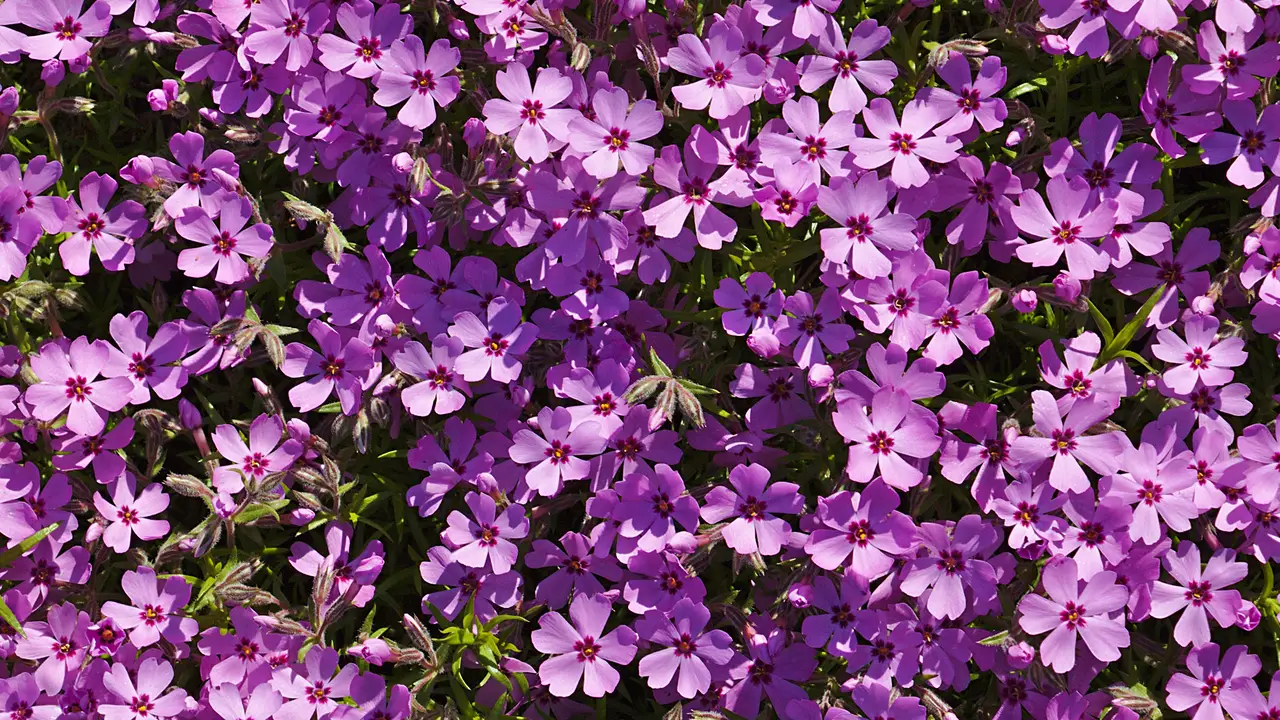
Creeping phlox (Phlox subulata), also called moss phlox, is a low evergreen ground cover native to the eastern United States. It grows about 4 to 6 inches tall, spreads 2 to 3 feet, and covers itself in pink, purple, lavender or white flowers for three to five weeks in spring. Give it full sun and fast-draining soil, cut it back by half after bloom, and it will feed butterflies, sphinx moths, bee flies and long-tongued bees.
One naming catch: some nurseries also call Phlox stolonifera “creeping phlox”, and iNaturalist uses “creeping phlox” for P. stolonifera and “moss phlox” for P. subulata. This guide covers P. subulata, the sun-loving mat of rock walls and slopes, with a short section on the other phloxes. Our bloom chart and visitor counts come from iNaturalist records we pulled on November 18, 2026.
Key Takeaways
- Creeping phlox is native from about Long Island to Kentucky and south in the mountains to North Carolina and Arkansas (Lady Bird Johnson Wildflower Center). NC State Extension lists it for USDA zones 3 to 9.
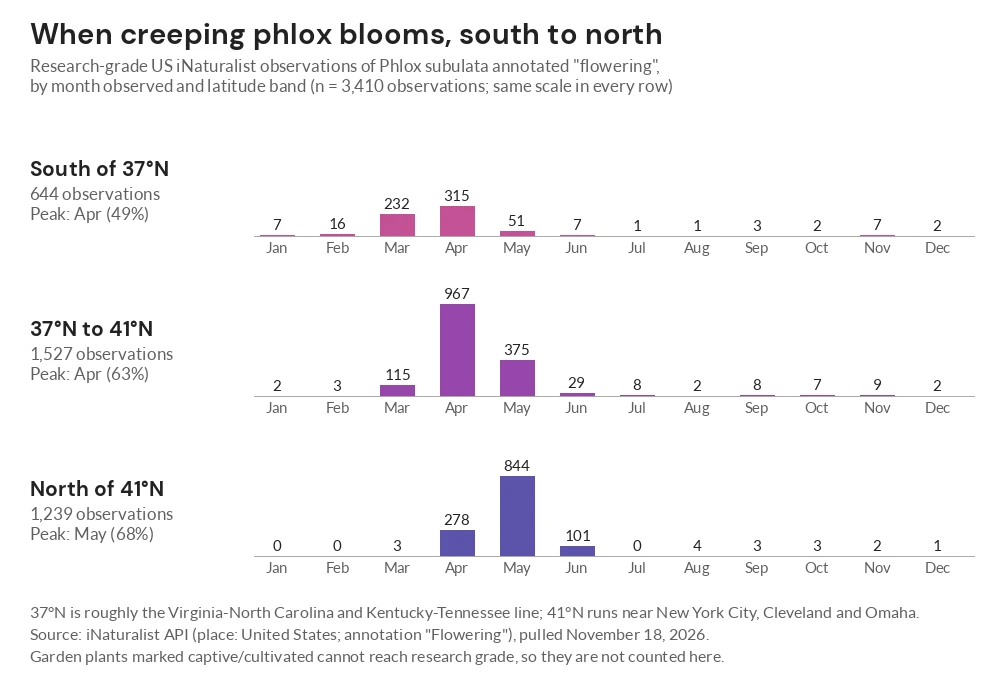
- Bloom moves north with spring. In 3,410 research-grade iNaturalist records of flowering plants, April was the peak month south of 37°N (49%) and between 37°N and 41°N (63%); May was the peak north of 41°N (68%).
- It needs sun and sharp drainage, and a trim by half after flowering. Unlike most phloxes it resists powdery mildew.
- Of 68 US iNaturalist records of insects visiting it, 36 were butterflies or moths, 17 were bees (only 1 a honey bee) and 11 were flies. None was a hummingbird.
- For shade, grow woodland phlox or P. stolonifera. For summer butterflies, the best-performing phlox in Mt. Cuba Center’s trial was garden phlox ‘Jeana’.
Table of Contents
- What Creeping Phlox Is and Where It Grows Wild
- When Creeping Phlox Blooms: Our Latitude Data
- Creeping Phlox Types and Other Native Phloxes
- How to Grow Creeping Phlox
- Problems: Mites, Rot, Deer and Rabbits
- Do Bees Like Creeping Phlox?
- Creeping Phlox vs Creeping Thyme
- Garden Phlox and Woodland Phlox for Pollinators
- Frequently Asked Questions
- The Bottom Line
What Creeping Phlox Is and Where It Grows Wild
Creeping phlox is a mat-forming perennial in the phlox family, Polemoniaceae. Its stems root where they touch the soil, building a dense carpet of stiff, needle-like leaves that stays green or mostly green through winter. NC State Extension describes the leaves as 1/4 to 3/4 inch long and the fragrant flowers as up to 3/4 inch wide, in clusters of 2 to 8, each with five notched petal lobes around a slender tube.
In the wild it grows on thin, dry, rocky ground. The NC State Extension Plant Toolbox lists dry, rocky or sandy areas, ledges, slopes, clearings and open woodlands, and Illinois Wildflowers adds shale and limestone glades and serpentine barrens. That habitat explains its care needs: sun, drainage and no standing water.
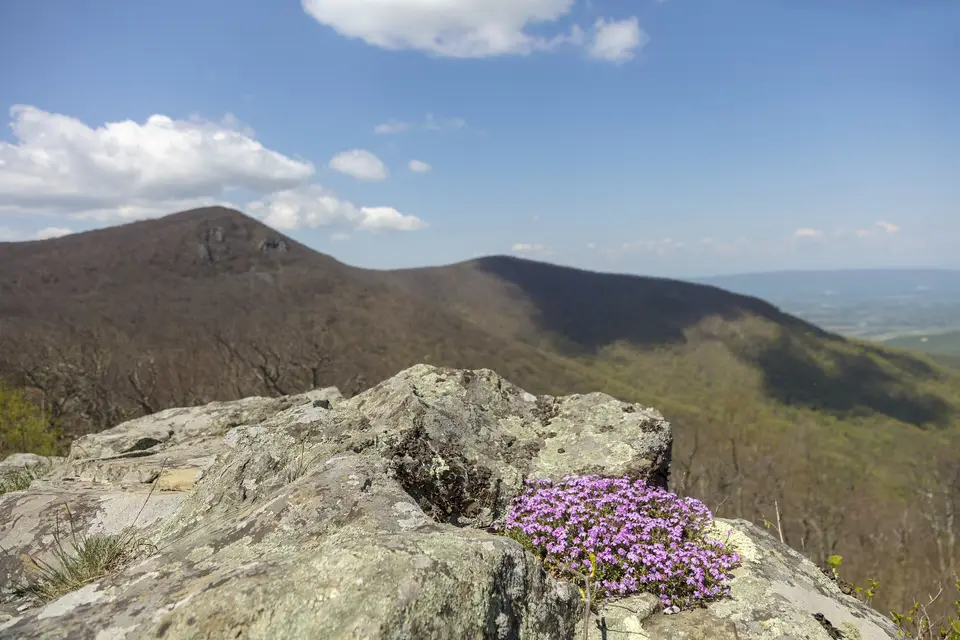
The Lady Bird Johnson Wildflower Center gives its native range as Long Island to Kentucky, south in the mountains to North Carolina and Arkansas, and says wild plants in New England escaped from gardens. If you garden in that range, it is one of the earliest-blooming native plants for pollinators.
Moss phlox, creeping phlox or mountain pink?
NC State lists eight common names for P. subulata, including creeping phlox, moss phlox, moss pink and mountain pink. Penn State Extension notes that P. stolonifera is also called creeping phlox and advises checking the Latin name. P. subulata has needle-like leaves and wants full sun; P. stolonifera has oval leaves, spreads by runners and grows in shade as well as sun.
When Creeping Phlox Blooms: Our Latitude Data
Extension sources give a short spring window: April to May (University of Maryland Extension), late April to early May (NC State), or mid- to late spring for 3 to 5 weeks (Illinois Wildflowers). To see how that window moves across the country, we pulled every research-grade US iNaturalist observation of P. subulata annotated as flowering and split it into three latitude bands.
| Latitude band | Flowering observations | March | April | May | June | Peak month |
|---|---|---|---|---|---|---|
| South of 37°N | 644 | 232 | 315 | 51 | 7 | April (49%) |
| 37°N to 41°N | 1,527 | 115 | 967 | 375 | 29 | April (63%) |
| North of 41°N | 1,239 | 3 | 278 | 844 | 101 | May (68%) |
Research-grade US iNaturalist observations of Phlox subulata with the “Flowering” annotation, pulled November 18, 2026 (3,410 total; the other eight months add 39, 41 and 13). 37°N is roughly the Virginia-North Carolina line; 41°N runs near New York City and Cleveland.
Research grade means the community agreed on the species and the plant was wild. Garden plants are marked cultivated and cannot reach research grade, so these records come from wild and naturalized plants. iNaturalist also holds 7,779 US observations of cultivated creeping phlox (all grades), and 3,875 of them were made in April.
In practice: south of the Virginia-North Carolina line, expect flowers from March into April. Through the Mid-Atlantic and lower Midwest, April is the main month. In New England, the Great Lakes and the upper Midwest, most bloom comes in May.
Creeping Phlox Types and Other Native Phloxes
Garden centers sell dozens of P. subulata cultivars alongside three other native phloxes. This table keeps to what the sources say; where a source gives no figure, we say so.
| Phlox | Species / cultivar | Height | Bloom time | Light | Native range | Pollinator notes | Source |
|---|---|---|---|---|---|---|---|
| Creeping (moss) phlox | P. subulata, wild type | 4-6 in | Late April to early May; March to June across its range | Full sun; some dappled shade in hot, humid summers | Long Island to KY, south in mountains to NC and AR | Butterflies, skippers and long-tongued bees | NC State; Lady Bird Johnson Wildflower Center; Illinois Wildflowers |
| Moss phlox cultivars | ‘Emerald Blue’; ‘Fort Hill’ (good phytophthora resistance); ‘White Delight’ (good southern blight resistance) | No cultivar figure given | Spring | Full sun | Garden selections | No cultivar-level pollinator data found | Penn State Extension; NC State |
| Creeping phlox (stoloniferous) | P. stolonifera; ‘Fran’s Purple’ (Mt. Cuba rating 4.2 of 5) and ‘Sherwood Purple’ (4.0) | Flower stems 6-12 in | April to May | Part shade; morning sun | Mostly mountains and Piedmont, PA and southern OH to GA and TN | NC State lists hummingbirds and butterflies | Penn State; Lady Bird Johnson Wildflower Center; Mt. Cuba Center; NC State |
| Woodland phlox | P. divaricata; ‘Blue Moon’ (Garden Club of America 2022 Plant of the Year; 3.5 at Mt. Cuba) | 12-15 in | April to June | Part sun to dappled shade | Southwest Quebec to MI, south to NC and AL | NC State lists hummingbirds, butterflies and bees | Penn State; Lady Bird Johnson Wildflower Center; NC State; Mt. Cuba Center |
| Garden phlox | P. paniculata ‘Jeana’ (Mt. Cuba rating 4.8; excellent powdery mildew resistance) | About 5 ft (‘Jeana’); species 2-4 ft | Mid-July to early September | Full sun to part shade | Central NY to MO and KS, south to NC, TN and LA | Drew more butterflies than any other garden phlox in Mt. Cuba’s trial | Mt. Cuba Center; NC State; Penn State; Lady Bird Johnson Wildflower Center |
Mt. Cuba Center ratings are from its 2015-2017 sun and shade phlox trials, on a 1-5 scale (5 = excellent).
How to Grow Creeping Phlox
Sun and soil
Plant it in full sun. NC State says it flowers best there but appreciates some dappled shade where summers are hot and humid. Drainage is the soil rule the sources stress: University of Maryland Extension says it needs well-drained soil, NC State notes that it likes sandy and gravelly ground, and Illinois Wildflowers says it adapts to ordinary loam if drainage is good. University of Maryland Extension gives a soil pH of 5.7 to 7.5, and Penn State says it tolerates poor soil and drought once established.
Slopes, walls and edges
Extension sources suggest rock gardens, sunny slopes, the edges of walkways and driveways, and the top of a low retaining wall, where it can drape over the stone. NC State lists it as erosion-tolerant, which makes it useful on a bank that is hard to mow. Each plant spreads 2 to 3 feet, slowly according to Penn State. None of the extension pages we checked gives a plant-to-plant spacing, so set plants closer if you want gaps to close sooner.
It also works in a plan for turning a lawn into pollinator habitat, on a sunny strip with little foot traffic: none of our sources rates P. subulata for walking on.
Shearing and dividing
NC State advises cutting the stems back by one-half when flowering is finished to keep the mat dense. University of Maryland Extension adds that shearing can sometimes bring a second flush of flowers, and Penn State says a mower set high works on large plantings. Older patches thin out in the middle, so renew them by division or stem cuttings: lift a rooted piece from the edge of the mat, since the stems root at their nodes.
Problems: Mites, Rot, Deer and Rabbits
- Spider mites: a problem in hot, dry conditions, according to NC State.
- Nematodes and rot: nematodes can damage the leaves in wet, humid conditions. NC State notes that ‘Fort Hill’ shows good resistance to phytophthora and ‘White Delight’ to southern blight.
- Plant bugs: Illinois Wildflowers lists four plant bugs (Miridae) that feed on the foliage, flowers or seed capsules.
- Rabbits and deer: NC State says rabbits may eat the foliage but deer find it less palatable. Rutgers Cooperative Extension rates phlox as a genus “Occasionally Severely Damaged,” a class it says should be planted with protection such as fencing or repellents.
Powdery mildew, the classic phlox problem, rarely troubles this species.
“It is resistant to powdery mildew, unlike most other species of phlox.”
Is creeping phlox invasive?
None of the sources we checked calls it invasive, and Illinois Wildflowers says plainly that it is not invasive in Illinois. It does escape gardens: Minnesota Wildflowers calls it adventive in New England and from Michigan westward. In a garden it spreads slowly and is easy to pull back.
Do Bees Like Creeping Phlox?
Some bees do, but creeping phlox is built mainly for visitors with long mouthparts. The nectar sits at the bottom of a narrow tube.
“The salverform shape serves insect pollinators who have a long proboscis, such as many members of Lepidoptera, butterflies, and moths, or hummingbirds with their lengthy tongues, critters who can reach deep down into the tube.”
For creeping phlox in particular, Illinois Wildflowers names the visitors and the reward:
“The flowers attract butterflies, skippers, and long-tongued bees. Nectar is the floral reward for these insects, although some of the bees also collect pollen.”
The same page cites a 2009 study by Steury and colleagues that recorded the mason bee Osmia taurus at moss phlox in Virginia. Flora of Pennsylvania goes further and calls bees the main pollinators, with butterflies and hummingbirds as frequent visitors, so the sources disagree on which group matters most. To check, we counted the US iNaturalist records where observers tagged an insect as having “visited flower of” Phlox subulata.
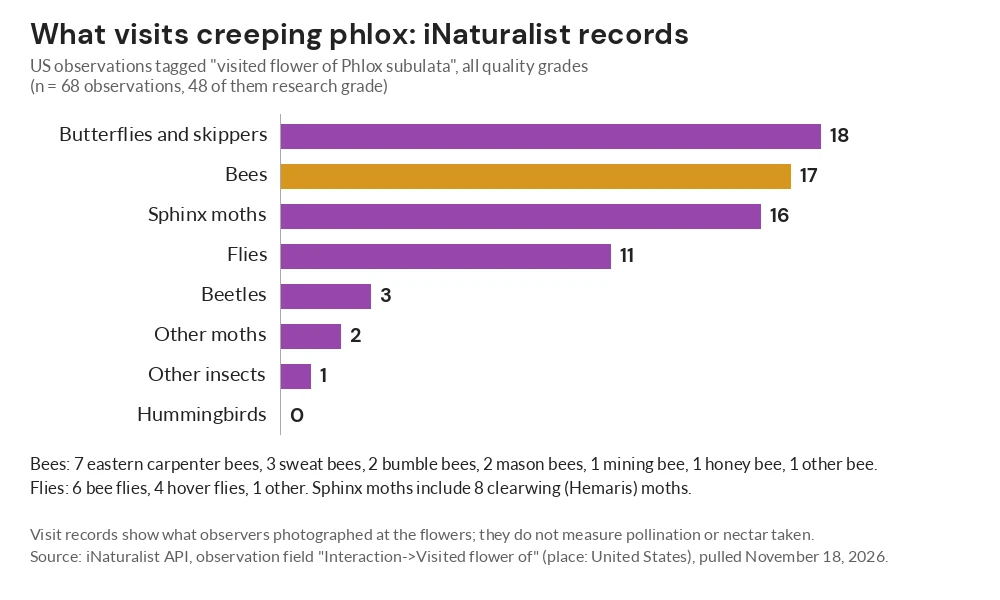
Of the 68 records (all quality grades; 48 research grade), 36 were butterflies or moths, 17 were bees and 11 were flies. The most-recorded species were the eastern carpenter bee (7 records), the greater bee fly (6) and the snowberry clearwing (6), a day-flying sphinx moth. All have long mouthparts: eastern carpenter bees, bee flies and hummingbird moths can all reach deep nectar. Only 1 record was a honey bee, and none was a hummingbird, even though NC State and Flora of Pennsylvania list hummingbirds as visitors.
Treat these numbers as a sample, not a census. They show what people chose to photograph, and small dark bees are easier to miss than a swallowtail. They also cannot show whether a visitor pollinated the flower.
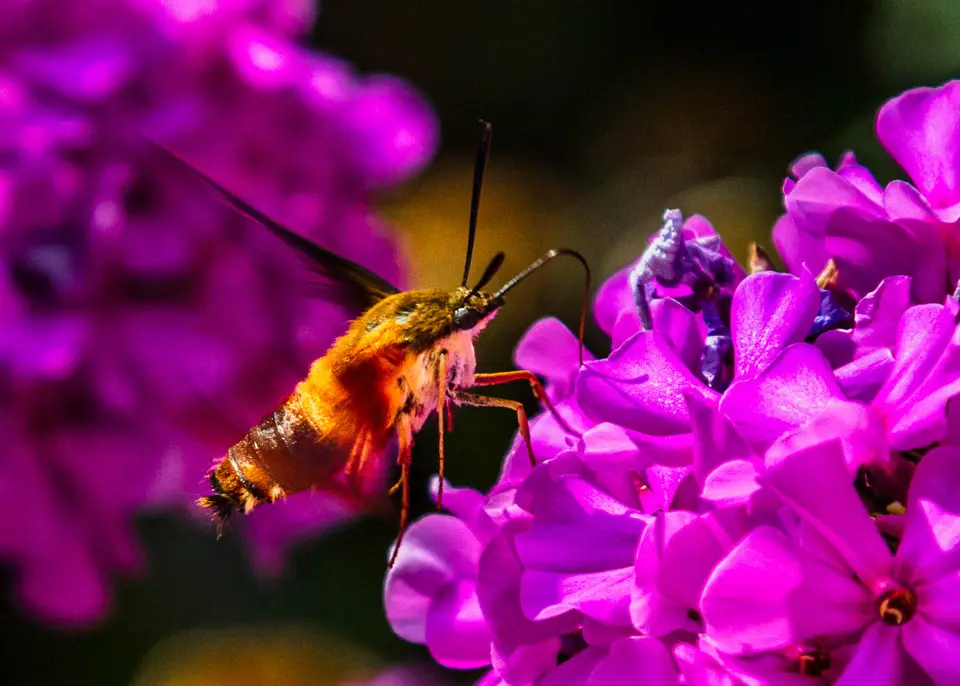
For bees, then, creeping phlox is early nectar for long-tongued species such as carpenter bees, bumble bees and mason bees; none of our sources lists it as a honey plant. Short-tongued bees need open, shallow flowers nearby; our guide to pollination syndromes explains how flower shape sorts visitors.
Creeping Phlox vs Creeping Thyme
Both are low, sun-loving and drought-tolerant, but they differ in origin, season and toughness underfoot.
| Feature | Creeping phlox (P. subulata) | Creeping phlox (P. stolonifera) | Creeping thyme (Thymus serpyllum) | Creeping thyme (T. praecox) |
|---|---|---|---|---|
| Native to the US | Yes, eastern US | Yes, Appalachians | No: northern Europe, western Asia, northern Africa | No: Greenland and Europe to Turkey |
| Height | 4-6 in | 6-12 in | 2-3 in | 3-6 in |
| Bloom | Spring (April-May) | Spring (April-May) | June to September | June to September |
| Light | Full sun | Full sun to deep shade; best with morning sun | Full sun | Full sun |
| Foot traffic | Not rated by our sources | Light | Fills gaps between stepping stones | Moderate |
| Deer (Rutgers) | Phlox: Occasionally Severely Damaged | Phlox: Occasionally Severely Damaged | Thyme: Rarely Damaged | Thyme: Rarely Damaged |
| USDA zones | 3-9 | 4-8 | 4-9 | 5-8 |
| Flower visitors listed | Hummingbirds, butterflies, skippers, bees | Hummingbirds, butterflies | Bees and butterflies | Bees and butterflies |
Sources: NC State Extension Plant Toolbox pages for each species, Lady Bird Johnson Wildflower Center, Penn State (morning sun) and the Rutgers deer-resistance list, which rates phlox and thyme only at genus level.
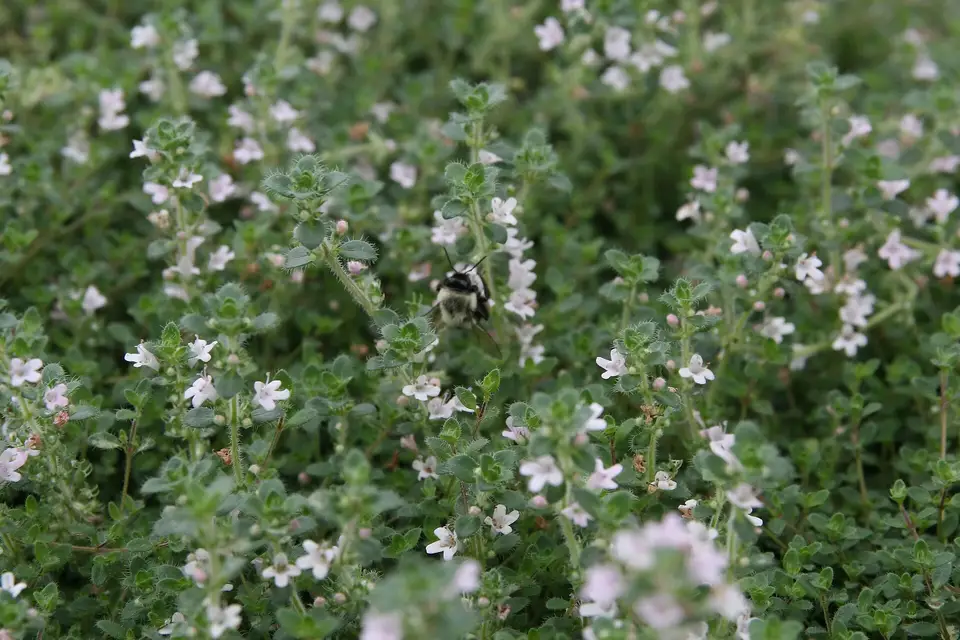
Pick creeping phlox for a native spring show on a slope or wall, and creeping thyme for summer flowers between pavers. Because they bloom in different months, planting both feeds pollinators in spring and summer. Both suit dry, sunny ground, like many drought-resistant flowers for bees.
Garden Phlox and Woodland Phlox for Pollinators
Woodland phlox (P. divaricata) is the shade option. Penn State gives a bloom from April to June and a fragrance often described as clove and vanilla, and warns that rabbits love it. NC State says powdery mildew can be serious. In iNaturalist, 28 of its 39 US flower-visit records (all grades) were butterflies or moths.
Garden phlox (P. paniculata) is the summer option and the stronger butterfly plant. In 1,091 US iNaturalist visit records (all grades; 1,016 research grade) it drew 860 butterflies and moths (79%), 129 bees (114 of them eastern carpenter bees) and 26 hummingbirds. The most-recorded species were the spicebush swallowtail (122) and the hummingbird clearwing (121), and 51 records were monarch butterflies. The catch is disease: NC State says phlox bugs, powdery mildew and root rot can be serious problems.
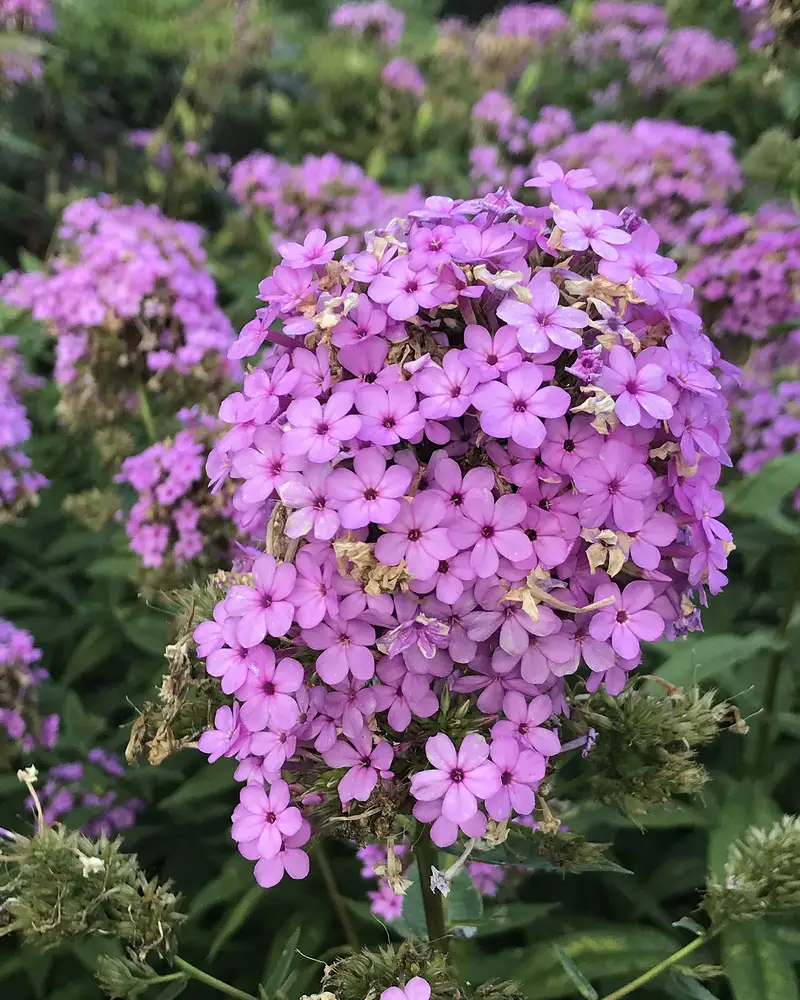
That is why ‘Jeana’ stands out. Mt. Cuba Center calls it the best-performing phlox from its trial, rates its mildew resistance excellent, and found it attracted more butterflies than any other garden phlox in the trial. Like bee balm, garden phlox still needs space for air to move. For more pairings, browse our pollinator gardening guides.
If a spot is too dry even for creeping phlox, a creeping sedum is another low ground cover to consider.
Frequently Asked Questions
What is the problem with creeping phlox?
Most problems come from the site: rot and nematodes in wet soil, spider mites in hot, dry weather. Old mats also thin in the center, and the main bloom lasts only three to five weeks.
Does creeping phlox prefer sun or shade?
Sun. NC State says it flowers best in full sun and accepts some dappled shade in hot, humid summers. In real shade, grow P. stolonifera or woodland phlox instead.
What does creeping phlox look like in winter?
A low green or partly green mat of needle-like leaves. NC State calls it semi-evergreen; the Lady Bird Johnson Wildflower Center calls its mats evergreen. Older stems turn tan and woody.
How quickly will creeping phlox spread?
NC State rates its growth rate as medium, and Penn State says it slowly spreads to about 2 or 3 feet. The mat widens from the edges as stems root.
How many years does creeping phlox last?
It is a perennial, and none of our sources gives a fixed lifespan. Older plantings thin out in the middle, so divide the mat and replant the young edges to renew it.
Is creeping phlox deer resistant?
Partly. NC State says deer find it less palatable and University of Maryland Extension says it tolerates occasional browsing, but Rutgers rates phlox “Occasionally Severely Damaged.” Rabbits may eat it too.
What are the pros and cons of growing creeping phlox?
Pros: native, nearly evergreen, drought-tolerant once established, mildew-resistant, and early nectar for butterflies, moths and long-tongued bees. Cons: a short bloom, a need for full sun and drainage, no rating for foot traffic, and mats that thin with age.
The Bottom Line
Plant creeping phlox where it would grow wild, on a sunny, sharply drained slope, wall or edge, and shear it by half when the flowers fade. Pair it with summer bloomers such as creeping thyme or garden phlox so the insects it feeds in spring have food later in the year.
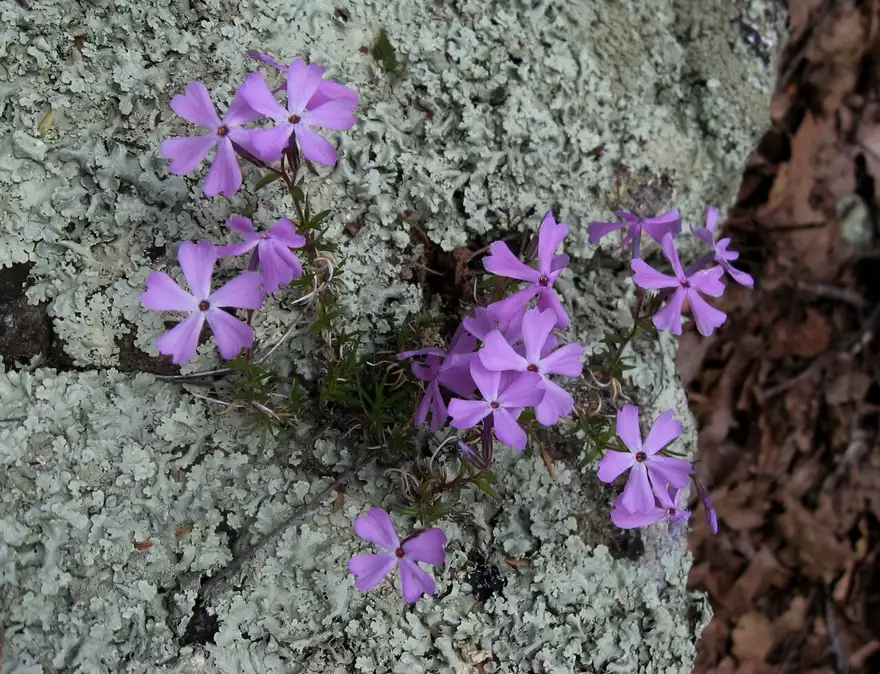
Image credits: featured photo of a creeping phlox mat in central Massachusetts by Mcvoorhis, via Wikimedia Commons, CC BY-SA 3.0, cropped and resized. Charts by BeeKeepersRealm from iNaturalist data.