Reviewed by Thomas B. · How we review
Butterfly bush (Buddleja davidii) is a fast-growing shrub from China whose fragrant flower spikes bloom from midsummer into fall and feed butterflies, bees and hummingbirds. It is also a listed noxious weed in Oregon and Washington, where sales are limited to low-seed cultivars and certain hybrids, because its wind-blown seed escapes into riverbanks and roadsides. Native caterpillars can barely use its leaves. If you grow one, choose a cultivar on Oregon’s sterile list, cut off spent flowers, prune in spring and plant native host plants nearby.
Key Takeaways
- Oregon and Washington list Buddleja davidii as a Class B noxious weed and restrict its sale. Oregon allows only cultivars on its approved list that set 2% or less viable seed, plus four listed hybrids.
- Virginia and Pennsylvania list it as invasive with no sales ban. Maryland will assess it in 2026 and 2027.
- In 5,840 US iNaturalist research-grade records of animals visiting its flowers, 75.3% are butterflies and skippers and 9.8% are bees, led by eastern carpenter bees.
- Washington has the most research-grade iNaturalist records of butterfly bush outside gardens: 1,856 of 9,194 US records, or 20.2%.
- ‘Miss Molly’ and the other “Miss” butterfly bushes are not on Oregon’s sterile list. Oregon treats them as hybrids whose fertility has not been assessed.
Table of Contents
- What Is Butterfly Bush?
- Is Butterfly Bush Invasive? Status by State
- Butterflies, Bees and Moths on Butterfly Bush
- Why It Is Not a Caterpillar Host Plant
- Butterfly Bush Types and Seedless Cultivars
- Native Alternatives to Butterfly Bush
- How to Grow and Prune Butterfly Bush
- Frequently Asked Questions
- The Bottom Line
What Is Butterfly Bush?
Butterfly bush is Buddleja davidii, a shrub in the figwort family (Scrophulariaceae). The genus is also spelled Buddleia, and other common names include summer lilac and orange eye. It is native to China.
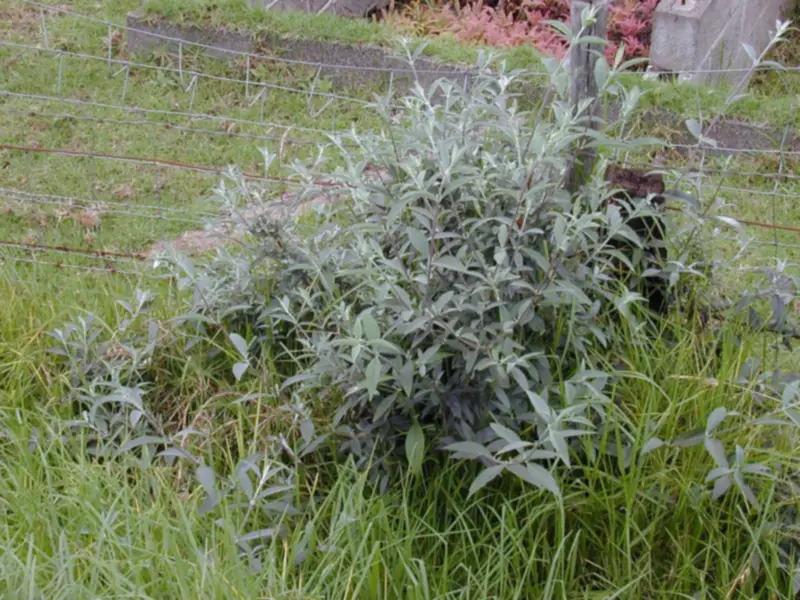
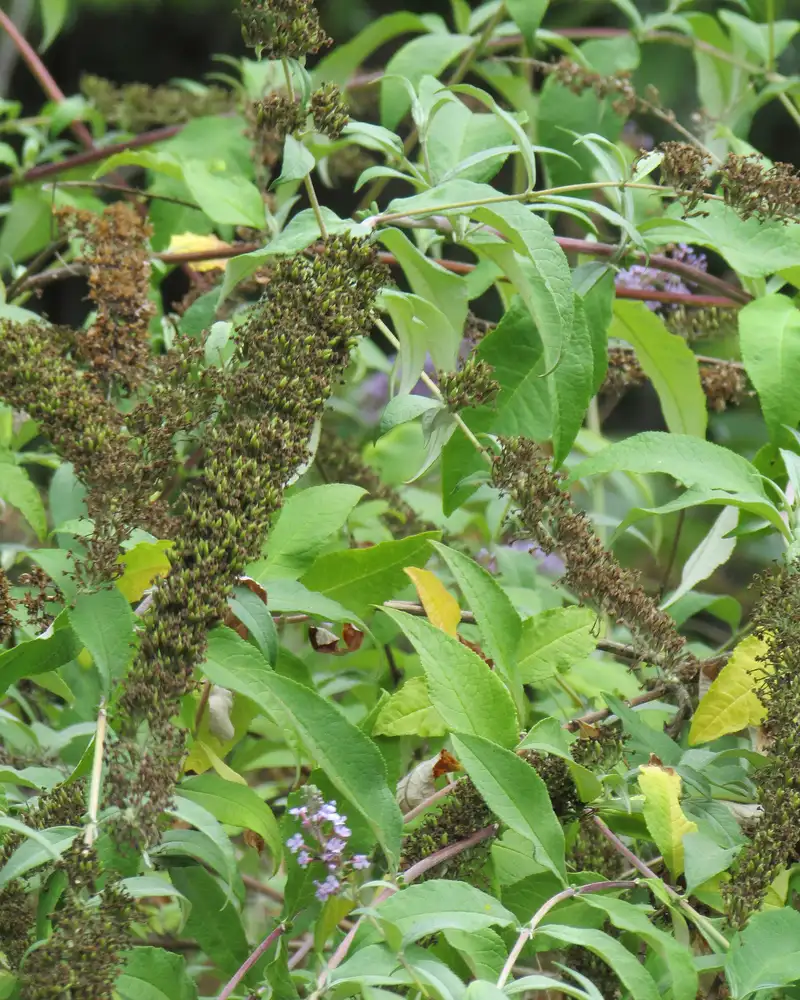
Full-size plants reach 6 to 12 feet, while dwarf cultivars stay at 4 to 5 feet or less, according to University of Maryland Extension. The Washington weed board describes opposite, lance- or egg-shaped leaves that are green to blue-gray above and whitish below. Small fragrant flowers form spikes 4 to 10 inches long, commonly purple with an orange center.
Maryland Extension puts bloom at midsummer to mid-autumn. In 1,034 US research-grade iNaturalist records of flowering plants not marked as cultivated, 30.6% fall in August and 78.2% between July and September.
What the video covers: In this 7-minute talk from August 2023, the Master Gardeners of Northern Virginia explain the problems with invasive butterfly bush. Its official chapters then cover three native alternatives: buttonbush, butterfly weed and sweet pepperbush.
Is Butterfly Bush Invasive? Status by State
Yes, in parts of the US. The Washington weed board estimates one cultivar produces about 40,000 seeds per flower head, and seeds stay viable for 3 to 5 years. Wind and water carry them to riverbanks, roadsides, rail lines and logged forest.
“It forms dense thickets, especially along river banks and gravel bars, which crowd out native plants and may alter soil nutrient concentrations.”
Here is what each state agency says, checked on its own page on November 19, 2026. We list only states with an official state source we could read. Nonprofit councils in other states also rank the shrub, so check your state before planting.
| State | Official status | What it means for buyers | Official source |
|---|---|---|---|
| Oregon | “B”-listed noxious weed; state quarantine OAR 603-052-1200, amended in 2009 | Only cultivars on the approved sterile list (2% or less viable seed) and four listed hybrids may be propagated, transported or sold. No new approval requests are being accepted. | Oregon Department of Agriculture |
| Washington | Class B noxious weed since 2005; on the prohibited plant quarantine list (WAC 16-752-610) | Sale banned “except accepted sterile cultivars” (under 2% viable seed). Crosses with other Buddleja species are not regulated. Plants labeled only “butterfly bush” are assumed to be B. davidii. | Washington State Noxious Weed Control Board |
| Virginia | On the Invasive Plant Species List (September 2024), ranked “Low” and marked for early detection | The list has no regulatory authority, so no sales ban. | Virginia DCR |
| Pennsylvania | Has a state invasive plant fact sheet | Not on the Department of Agriculture’s noxious weed lists, so no sales ban. | Pennsylvania DCNR |
| Maryland | Not prohibited; named among species to be assessed in 2026 and 2027 | No current ban. If listed, all cultivars would be covered unless later exempted, per University of Maryland Extension. | Maryland Department of Agriculture (archived July 16, 2026; the live page blocked our check) |
This table is educational information, not legal advice. State lists change, so confirm current rules with your state department of agriculture before you buy or sell plants.
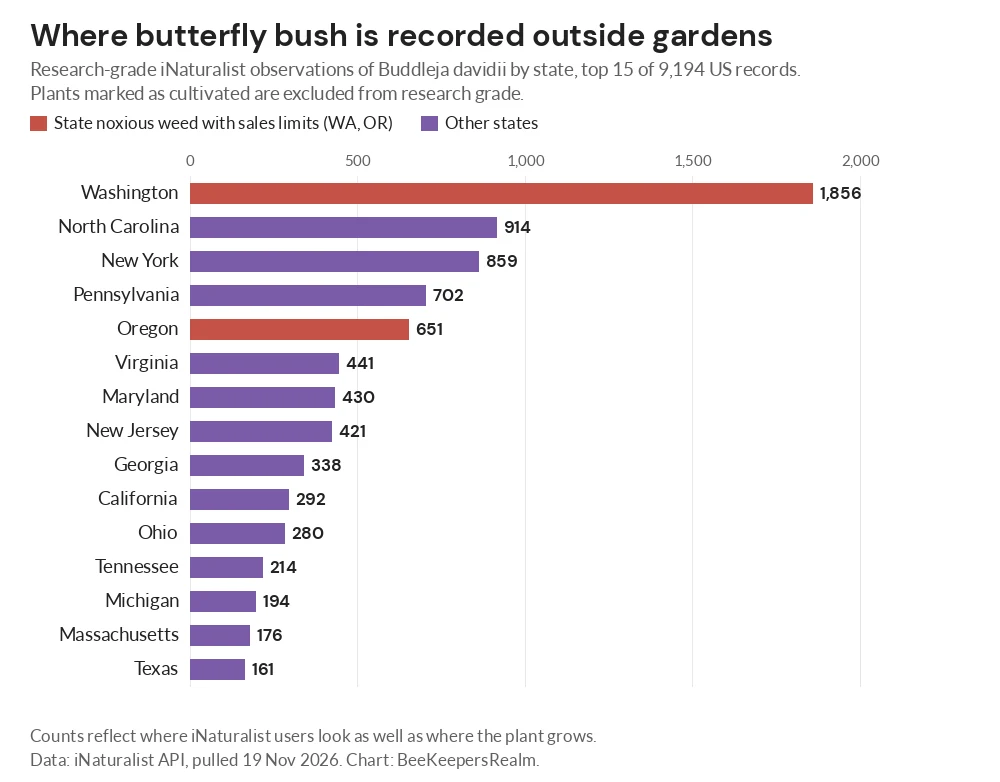
Our pull of iNaturalist data shows where the shrub turns up outside gardens, since plants marked as cultivated cannot reach research grade. There are 9,194 research-grade US records from 47 states and DC. Washington leads with 1,856, followed by North Carolina (914), New York (859), Pennsylvania (702) and Oregon (651). Washington and Oregon together hold 27.3%. Counts also track where iNaturalist users are active, so read them as a map of sightings, not a census.
Butterflies, Bees and Moths on Butterfly Bush
As a nectar plant, butterfly bush earns its name.
“The flowers are a nearly irresistible nectar source for butterflies, bees, lady beetles, and other pollinating insects as well as the occasional hummingbird.”
To see who shows up, we pulled every US iNaturalist observation tagged “Visited flower of: Buddleja davidii“: 6,287 of all grades and 5,840 research-grade. The numbers below are research grade.
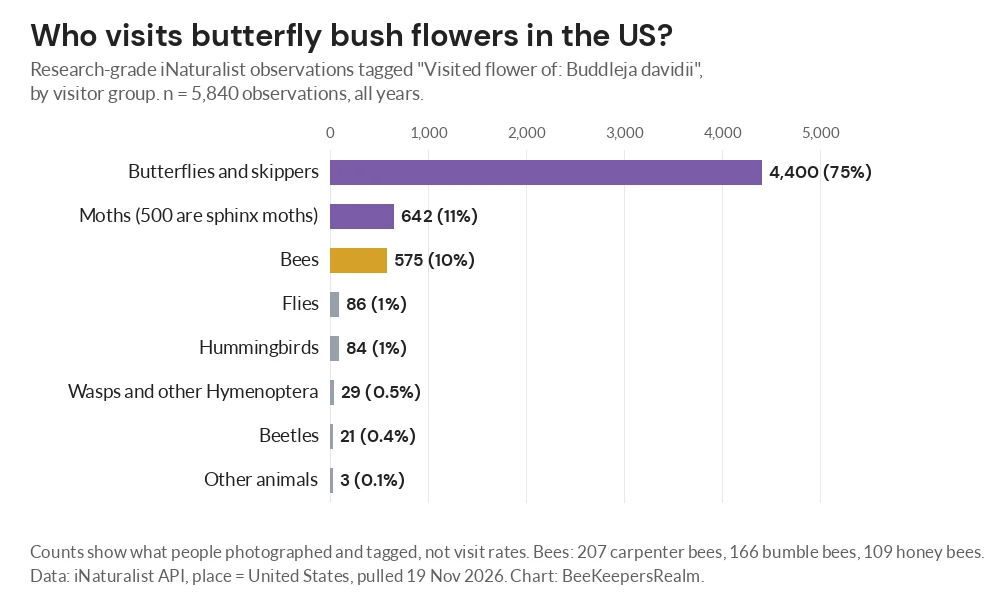
- Butterflies and skippers: 4,400 records (75.3%) from 71 species, led by the monarch (845), eastern tiger swallowtail (694), silver-spotted skipper (334), Huron skipper (298) and American lady (217).
- Moths: 642 records (11.0%). Sphinx moths make up 500, mostly snowberry clearwings (229) and hummingbird clearwings (225), the day-flying hummingbird moths.
- Bees: 575 records (9.8%) from 20 species. Eastern carpenter bees lead with 206, then honey bees (109), sculptured resin bees (84), common eastern bumble bees (59) and brown-belted bumble bees (57).
- Others: flies 86, hummingbirds 84, wasps and other Hymenoptera 29, beetles 21.
So butterfly bush does attract bees, but mostly big ones. Carpenter bees and bumble bees make up 373 of the 575 bee records, while small sweat bees appear only 5 times. These counts reflect what people photograph and tag, not visit rates, and large insects are easier to photograph.
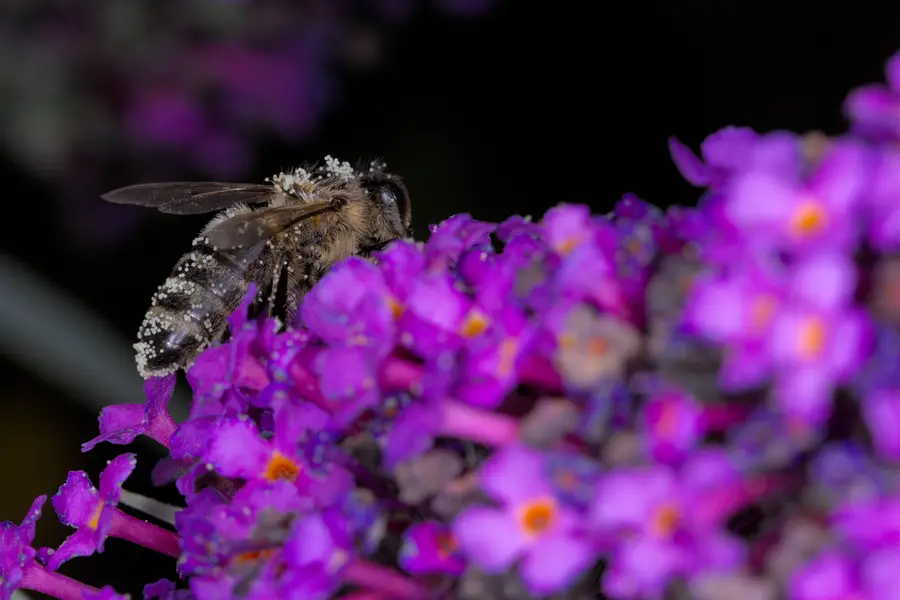
Is the nectar “junk food”? Anahí Espíndola, an entomologist at the University of Maryland, wrote in 2020 that this claim is likely inaccurate, because studies put its nectar concentration in the usual range for butterfly flowers. Its pollen is not equal to that of native plants, she added, but it contains the essential elements the tested pollinators need.
Why It Is Not a Caterpillar Host Plant
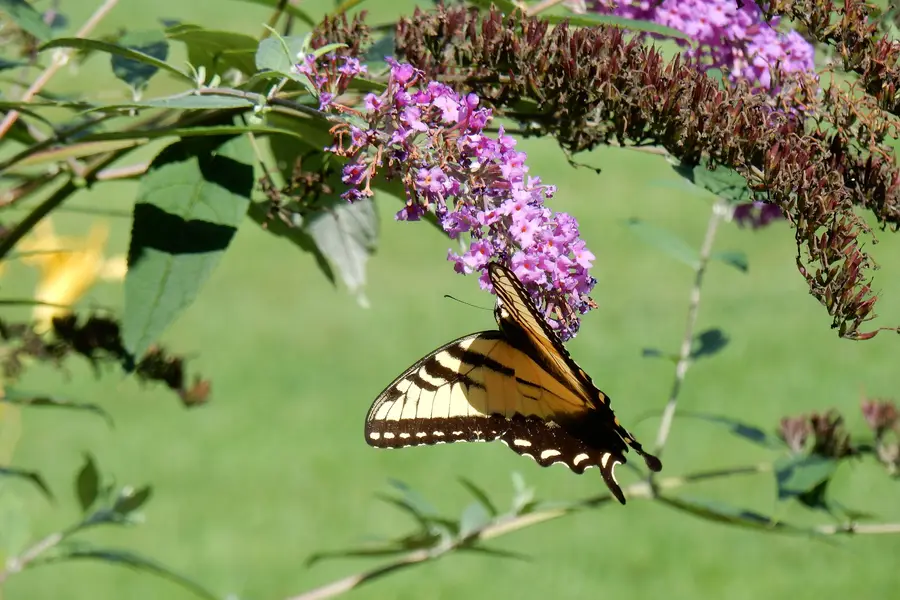
A butterfly garden needs nectar for adults and leaves for caterpillars. Butterfly bush supplies only the first.
“Not one native caterpillar is able to feed on it, so it can easily out-compete native asters and milkweeds that our local butterfly larvae depend on.”
NC State Extension agrees that the caterpillars of native butterflies cannot feed on its leaves. Espíndola is slightly more cautious, writing that few caterpillar species can feed and develop on it. Either way, the shrub feeds the adults you see and almost none of the next generation.
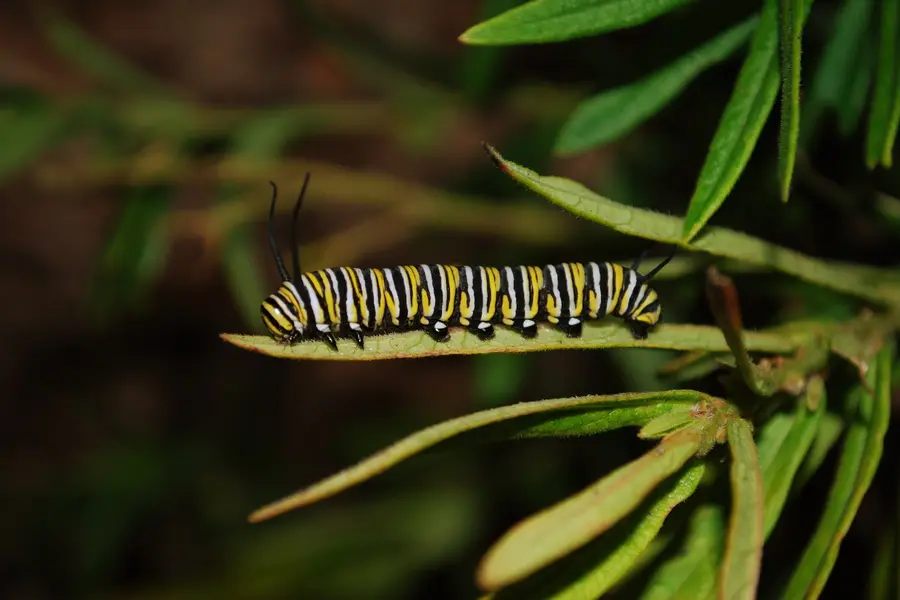
The monarch butterfly shows the gap best. It was the most frequent visitor in our data, yet its caterpillars eat only milkweeds. A yard with butterfly bush and no milkweed feeds passing monarchs but raises none.
Butterfly Bush Types and Seedless Cultivars
Breeders have released low-seed cultivars, including the Lo & Behold series developed at NC State University. Oregon publishes its approved and exempt cultivars by name, so the seed-set column uses Oregon’s wording. A “seedless” marketing claim is not the same as a place on that list.
| Butterfly bush | Cultivar / series | Height | Flower color | Seed set / sterility (as sourced) | Notes | Source |
|---|---|---|---|---|---|---|
| Standard B. davidii | ‘Royal Red’, ‘White Profusion’ | 6 to 12 ft | Reddish purple; white | Fertile; several cultivars germinate above 80%, one at 92% viable seed | Regulated in OR and WA | UMD; Clemson; WA weed board |
| Dwarf B. davidii | ‘Ellen’s Blue’, ‘Nanho Blue’, ‘White Ball’ | About 4 ft; ‘White Ball’ about 3 ft | Blue-violet; mauve to indigo blue; white | No sterility data found; not on Oregon’s lists | Compact size is not a low-seed claim | Clemson; Oregon |
| Lo & Behold series | ‘Blue Chip’, ‘Blue Chip Jr.’, ‘Ice Chip’, ‘Pink Micro Chip’, ‘Purple Haze’ | Small and mounded | Varies | Oregon sterile list: 2% or less viable seed | Developed at NC State | Oregon; NC State; Proven Winners |
| Oregon non-regulated hybrids | ‘Lilac Chip’, ‘Miss Molly’, ‘Miss Ruby’, ‘Miss Violet’ | 4 to 5 ft (“Miss” series) | ‘Miss Molly’ near red | Fertility not assessed by Oregon; Proven Winners calls “Miss” varieties seedless | Legal in Oregon as tested interspecific hybrids | Oregon; Proven Winners |
| Flutterby series and ‘Asian Moon’ | Five Flutterby Grandé cultivars, Flutterby Petite Snow White, Flutterby Pink, ‘Asian Moon’ | Not stated in our sources | Not stated (names only) | Oregon sterile list | Flutterby plants are listed as “Nectar Bush” | Oregon |
| Pugster series | Pugster Blue and others | Short and stocky | Pugster Blue is “true-blue” | Not on either Oregon list as of November 19, 2026 | Thick stems suit areas with winter dieback | Proven Winners; Oregon |
For a dwarf butterfly bush, Lo & Behold is the only group in our sources with both a stated compact size and a place on Oregon’s sterile list. Oregon is not accepting new approval requests while it reviews the process, so a newer release may be missing for that reason alone.
Native Alternatives to Butterfly Bush
The best replacements feed adults and caterpillars. Ranges, bloom months and host notes below come from the Lady Bird Johnson Wildflower Center (LBJWC), which draws on Xerces Society and Butterflies and Moths of North America (BAMONA) data. Bloom months are range-wide, so your local window is shorter.
| Native shrub / perennial | Region | Bloom | Butterflies it hosts | Source |
|---|---|---|---|---|
| Butterfly milkweed (Asclepias tuberosa) | New England to Florida, west to Texas and Colorado | May to Sep | Monarch, queen, gray hairstreak | LBJWC |
| Swamp milkweed (Asclepias incarnata) | Manitoba to Nova Scotia, south to Georgia and Texas | Jun to Oct | Monarch, queen | LBJWC |
| Common milkweed (Asclepias syriaca) | Saskatchewan to New Brunswick, south to Georgia and Kansas | Jun to Aug | Monarch | LBJWC |
| New Jersey tea (Ceanothus americanus) | Quebec to Florida, west to Minnesota and Texas | Mar to Aug | Spring azure, summer azure, mottled duskywing | LBJWC |
| Spicebush (Lindera benzoin) | Maine and Michigan south to Florida and Texas | Mar to May | Spicebush swallowtail, eastern tiger swallowtail | LBJWC |
| Smooth blue aster (Symphyotrichum laeve) | Most of North America except Florida, California and the far north | Aug to Oct | Pearl crescent (listed as Aster laevis) | LBJWC; BAMONA |
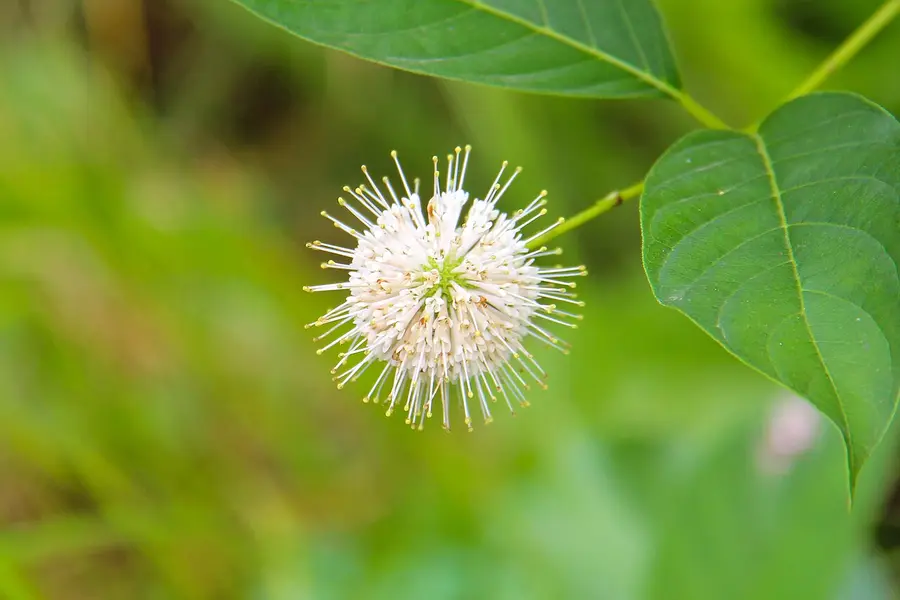
| Buttonbush (Cephalanthus occidentalis) | New Brunswick to the upper Mississippi Valley, south to Florida and Texas | Jun to Sep | None listed; nectar for sphinx moths and bees | LBJWC |
| Sweet pepperbush (Clethra alnifolia) | Eastern coastal states, Maine to Florida and Mississippi | Jul to Aug | None listed; a nectar shrub | LBJWC; UMD |
Maryland Extension’s alternatives list adds New York ironweed, New England aster, Joe-Pye weed, blazing star and mountain-mint. Purple coneflowers and black-eyed Susans fill the same sunny spots, and goldenrod carries nectar into fall, as our guide to fall-blooming flowers for bees shows. Our list of the best US native plants for pollinators has more choices by region.
How to Grow and Prune Butterfly Bush
Sun, soil and hardiness
Plant in full sun and well-drained soil. Clemson Extension says roots “will quickly rot when waterlogged” and suggests a soil pH of 6.0 to 7.0. The shrub is hardy in USDA zones 5 to 9. Very low temperatures can kill it to the ground, but it re-sprouts vigorously from the crown. Once established it is fairly drought tolerant, though our list of drought-resistant flowers for bees has native options for dry beds.
When and how to prune
Butterfly bush flowers on new growth. Clemson recommends cutting it to within a foot of the ground each spring before new growth begins, and warns that fall or winter pruning raises the risk of cold damage. Proven Winners gives a later cue: wait until green buds show, then cut just above healthy buds. It adds that new growth can take several weeks to appear, and that dwarf cultivars still need lighter pruning.
Deadhead to stop seed
Cut off flower spikes as they fade, before seed forms. The Washington weed board warns that cut branches can sprout roots, so dispose of them carefully. Clemson adds that deadheading lengthens the bloom period.
Problems and pollinator-safe fixes
- Spider mites: a problem on drought-stressed plants, per Clemson and NC State, so water during dry spells.
- Root rot: avoid wet sites, and Proven Winners advises against overwatering, especially in clay.
- Nematodes: a problem in sandy coastal plain soils, per Clemson.
- Downy mildew: can hit B. × weyeriana cultivars in cool weather when leaves stay wet.
- Sprays: Clemson discourages pesticide use on butterfly bush, especially in bloom.
Removing a butterfly bush
Maryland Extension advises digging out plants and disposing of them, or at least cutting off flowers before seed ripens. Pull seedlings by hand. The Washington weed board notes that digging can promote new seedlings, so check the spot the next season. For herbicides, it refers readers to the PNW Weed Management Handbook or a county noxious weed coordinator.
Frequently Asked Questions
In what states is butterfly bush illegal?
Oregon and Washington restrict its sale to approved low-seed cultivars and certain hybrids. Virginia and Pennsylvania list it as invasive without a ban, and Maryland plans to assess it in 2026 and 2027.
What are the disadvantages of a butterfly bush?
It self-seeds into natural areas, native caterpillars can barely use its leaves, and it needs yearly pruning and deadheading. Spider mites and root rot follow drought or poor drainage.
Do butterfly bushes come back every year?
Yes. It is a woody shrub, hardy in zones 5 to 9. In very cold winters it may die to the ground, but it re-sprouts from the crown.
Do butterfly bushes need to be cut back?
Yes. Cut it to about a foot tall in spring. Clemson says to do it before new growth begins; Proven Winners says to wait for green buds. It flowers on new growth, so yearly pruning keeps it compact.
Does butterfly bush attract bees?
Yes. Bees make up 575 of 5,840 US research-grade iNaturalist visitor records (9.8%), led by eastern carpenter bees, honey bees and bumble bees.
Is butterfly bush deer resistant?
Generally, yes. University of Maryland Extension says deer generally do not browse it, and NC State lists deer among the challenges it resists.
Is butterfly bush the same as butterfly weed?
No. Butterfly weed (Asclepias tuberosa) is a native milkweed and monarch host plant. Butterfly bush is a non-native shrub that supplies nectar only.
Can you grow butterfly bush in a pot?
Yes. Proven Winners says it thrives in containers. Use a weatherproof pot with several large drainage holes and a fast-draining, lightweight potting mix.
The Bottom Line
Butterfly bush is a strong nectar source, but it is regulated in Oregon and Washington and gives native caterpillars almost nothing. If you want one, buy a cultivar on Oregon’s sterile list, deadhead it and plant milkweed, New Jersey tea or asters nearby. More plant profiles are in our pollinator gardening and native bees section.
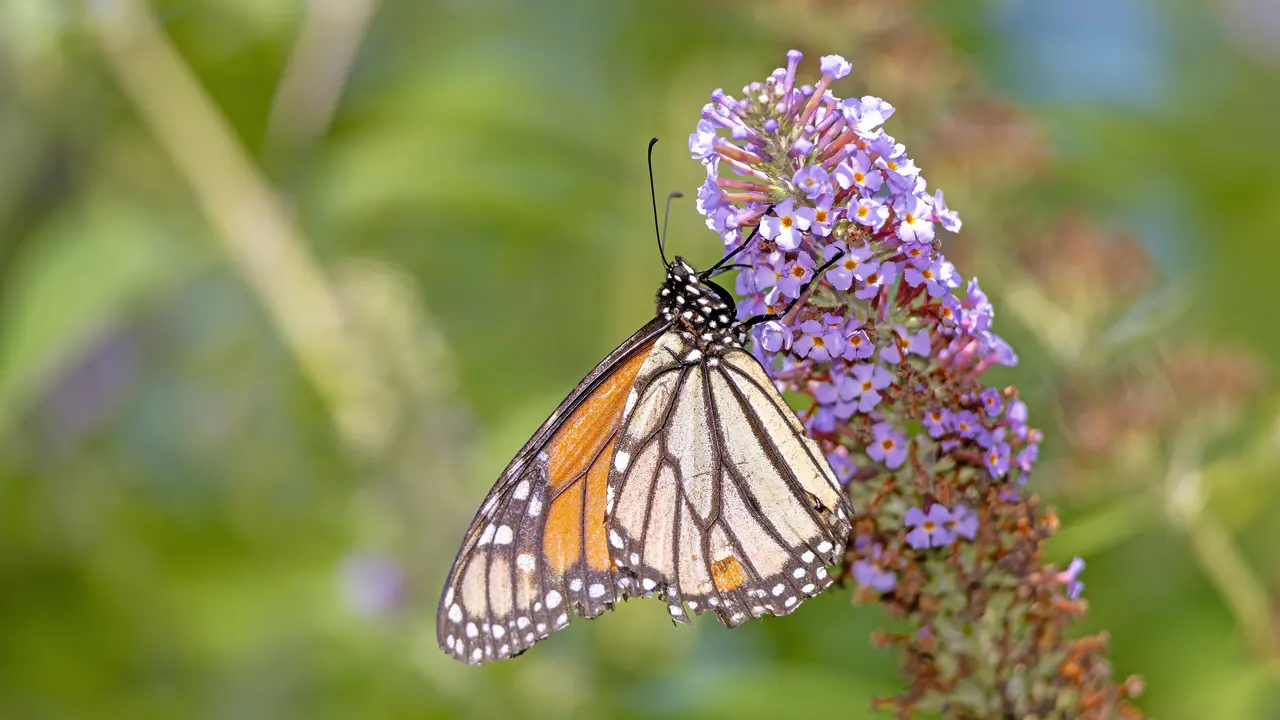
Image credits: featured photo of a monarch on butterfly bush by Patrick J. Lynch, via Wikimedia Commons, CC BY 4.0, cropped and resized. Other photos are credited in their captions. Charts by BeeKeepersRealm.