Reviewed by Elena P. · How we review
Salvia is the largest genus in the mint family (Lamiaceae), with roughly 1,000 species of annuals, perennials and shrubs, a group that now includes culinary sage, rosemary and Russian sage. In US gardens the hardiest choices are woodland sage (Salvia nemorosa) and hybrids such as ‘May Night’, perennial in zones 4 to 8. Natives such as blue sage, lyreleaf sage and tropical sage suit the East and South. Give salvia full sun and fast-draining soil, because soggy soil is the biggest threat. Bumble bees are the most recorded visitors, and blue and red tubular salvias feed hummingbirds.
Key Takeaways
- Pick salvia by winter: woodland sage, ‘May Night’ and culinary sage are perennial in USDA zones 4 to 8; autumn sage in 6 to 9; anise-scented sage in 7b to 10; mealycup and tropical sage in 8 to 10; bedding scarlet sage only in 10 to 11 (NC State Extension).
- Drainage decides survival. In the Chicago Botanic Garden’s 2014 to 2023 trial of 49 hardy salvias, nine cultivars were lost to a flood and about 17% of plants died over winter.
- Of the 40 hardy cultivars rated, seven earned “excellent”: ‘Blue By You’, ‘Indiglo Girl’, ‘Perfect Profusion’, ‘Rose Marvel’, ‘Tidal Pool’, ‘Violet Profusion’ and ‘Little Night’.
- In our pull of 1,251 research-grade US iNaturalist records of animals visiting salvia flowers identified to genus, bees made up 64% and bumble bees alone 44%. On anise-scented sage, 71% of 301 records were hummingbirds.
- Skip nectarless bedding types if you plant for pollinators: NC State notes that many scarlet sage (S. splendens) cultivars bred for bedding have no nectar.
- Cut hardy salvias back to the basal leaves after the first flush, but expect only modest rebloom. Prune tender and woody salvias only once new growth starts in spring.
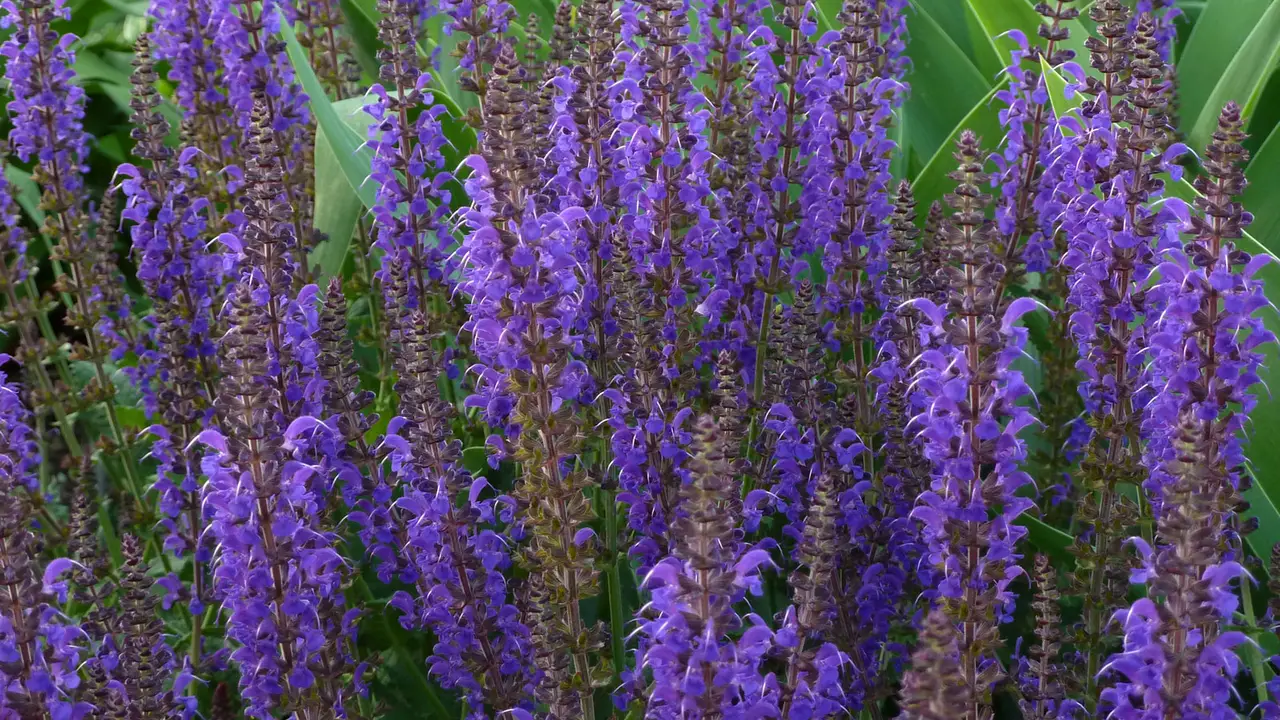
Table of Contents
- What Salvia Is (and How It Relates to Sage)
- Types of Salvia Compared
- Is Salvia a Perennial? It Depends on Your Zone
- What the Chicago Botanic Garden Trials Found
- Do Bees Like Salvia? What the Records Show
- Salvias for Hummingbirds
- Native US Salvias Worth Planting
- How to Grow and Propagate Salvia
- When and How to Cut Back Salvia
- Common Problems and Pollinator-Safe Fixes
- Salvia vs Lavender, Catmint and Russian Sage
- Frequently Asked Questions
- The Bottom Line
What Salvia Is (and How It Relates to Sage)
Salvia is a genus in the mint family. Like mint and catmint, salvias have square stems, aromatic leaves and two-lipped flowers, usually set in tiers up a spike.
The genus recently got bigger. The Chicago Botanic Garden’s 2025 hardy salvia report explains that a 2017 study by Drew and colleagues folded five small genera into Salvia, including Perovskia and Rosmarinus, taking it past 1,000 species. Rosemary is now Salvia rosmarinus, and Russian sage has been renamed Salvia yangii.
“Sage” and “salvia” name the same genus. Gardeners say “salvia” for the ornamental kinds and “sage” for the kitchen herb, common sage (Salvia officinalis). NC State Extension notes that the genus is especially diverse in Turkey and the Mediterranean and in Mexico and adjacent regions, a split that matters for pollinators. In the garden, salvias fall into three groups:
- Hardy perennials, mostly Old World species such as woodland sage, meadow sage (S. pratensis) and their hybrids.
- Tender perennials, mostly from the Americas, perennial only in mild-winter zones: autumn sage, anise-scented sage, Mexican bush sage.
- Annual or bedding salvias. The University of Minnesota Extension names four main ornamental annual species: S. coccinea, S. farinacea, S. splendens and S. patens.
Types of Salvia Compared
This table compares the salvias US gardeners are most likely to find, using published extension and botanical-garden figures.
| Salvia | Botanical name | USDA zones | Height | Bloom | Native to | Main visitors |
|---|---|---|---|---|---|---|
| Woodland sage | S. nemorosa (‘Caradonna’, ‘East Friesland’) | 4 to 8 | 1.5 to 3 ft | Summer to fall | Europe, west-central Asia | Bees, chiefly bumble bees |
| ‘May Night’ hybrid sage | S. × sylvestris ‘Mainacht’ | 4 to 8 | 1.5 to 2 ft | Late spring, rebloom in summer if moist | Europe | Bees, butterflies |
| Autumn sage | S. greggii | 6 to 9 | 2 to 3 ft | Spring to fall | Texas, adjacent Mexico | Hummingbirds, butterflies |
| Anise-scented sage | S. guaranitica (‘Black and Blue’) | 7b to 10b (Clemson: 8 to 10) | 2 to 5 ft | Summer | Brazil, Paraguay, Uruguay, Argentina | Hummingbirds |
| Mealycup sage | S. farinacea (‘Victoria’) | 8 to 10 | 1.5 to 3 ft | Spring to fall | Oklahoma, Texas, NE Mexico | Bees, butterflies |
| Scarlet sage (bedding) | S. splendens | 10 to 11 | 1 to 3 ft | Spring to fall | Brazil | Hummingbirds; many cultivars lack nectar |
| Tropical sage | S. coccinea | 8 to 10 | 1 to 3 ft | Summer; year-round in frost-free Florida | Southeastern US, Mexico | Hummingbirds, butterflies |
| Blue sage | S. azurea | 5 to 9 | 3 to 5 ft | Late summer to fall | NC to FL, west to TX, north to NE and MN | Native bees, bumble bees |
| Lyreleaf sage | S. lyrata | 5 to 8 | 1 to 2 ft | Spring | Eastern and central US | Early bees, butterflies |
| Mexican bush sage | S. leucantha | 7b to 10b | 2 to 3 ft | Fall | Mexico, Central America | Hummingbirds, butterflies |
| Common sage | S. officinalis | 4 to 8 | 1 to 2 ft | Summer | Northern Mediterranean | Bees, butterflies |
Sources: NC State Extension Gardener Plant Toolbox species pages; Florida bloom from UF/IFAS; alternative zone from Clemson HGIC. “Main visitors” combines NC State wildlife notes with our iNaturalist pull below.
Is Salvia a Perennial? It Depends on Your Zone
- Zones 4 to 5: woodland sage, ‘May Night’ and other S. × sylvestris hybrids, culinary sage, and natives such as blue sage and lyreleaf sage (zone 5 and up). The University of Minnesota Extension grows ornamental annual salvias as summer annuals.
- Zones 6 to 7: add autumn sage. Anise-scented and Mexican bush sage start at 7b.
- Zones 8 to 10: nearly everything in the table can be perennial. The LSU AgCenter notes that anise-scented sage, although tropical, usually overwinters in Louisiana thanks to roots with nodules that resemble tiny potatoes. UF/IFAS says tropical sage can be planted anywhere in Florida, and perennial salvias bloom year-round there if frost does not kill them back.
In the Chicago Botanic Garden’s 2016 to 2018 trial of 109 tender salvias, hardiness ranged across zones 6b to 10, and only the West Texas form of Salvia reptans was truly cold-hardy in Chicago.
What the Chicago Botanic Garden Trials Found
The Chicago Botanic Garden in Glencoe, Illinois, has run three multi-year salvia trials, the best US evidence on which named cultivars perform. None of the top search results for “salvia” cites them.
| Trial | Plants | Top performers | Key finding |
|---|---|---|---|
| Hardy sages, 1993 to 1998 | 15 taxa | ‘Mainacht’ (‘May Night’), ‘Wesuwe’, S. verticillata ‘Purple Rain’ (top rating) | Cutting back after flowering did not increase rebloom in most cases. ‘Purple Rain’ rebloomed best, 60% coverage in September and October. |
| Tender salvias, 2016 to 2018 | 109 taxa | 13 five-star plants, including ‘Amistad’, S. coccinea ‘Brenthurst’ and S. greggii ‘Viva’ | 49 more earned four stars. |
| Hardy salvias, 2014 to 2023 | 49 S. nemorosa and related cultivars | Seven rated excellent, including ‘Blue By You’ and ‘Indiglo Girl’ | 19 rated good. Rebloom stayed under 10% coverage except ‘Fortunate Night’ (20%). |
Sources: Chicago Botanic Garden Plant Evaluation Notes no. 14 (2000), no. 44 (2019) and no. 52 (2025). In the 2014 to 2023 trial, overall ratings were based on health, habit and floral production, with an emphasis on flowers, and plants were not deadheaded, fertilized or treated for pests. Neither ‘Caradonna’ nor ‘May Night’ was in that trial.
The 2025 report found no recurring disease or pest problems apart from a 2021 thrips outbreak, and notes that deer and rabbit pressure is generally not reported. Its summary names the main risk:
“The primary concern for most gardeners will be ensuring proper drainage to support longer-term survivability.”
Do Bees Like Salvia? What the Records Show
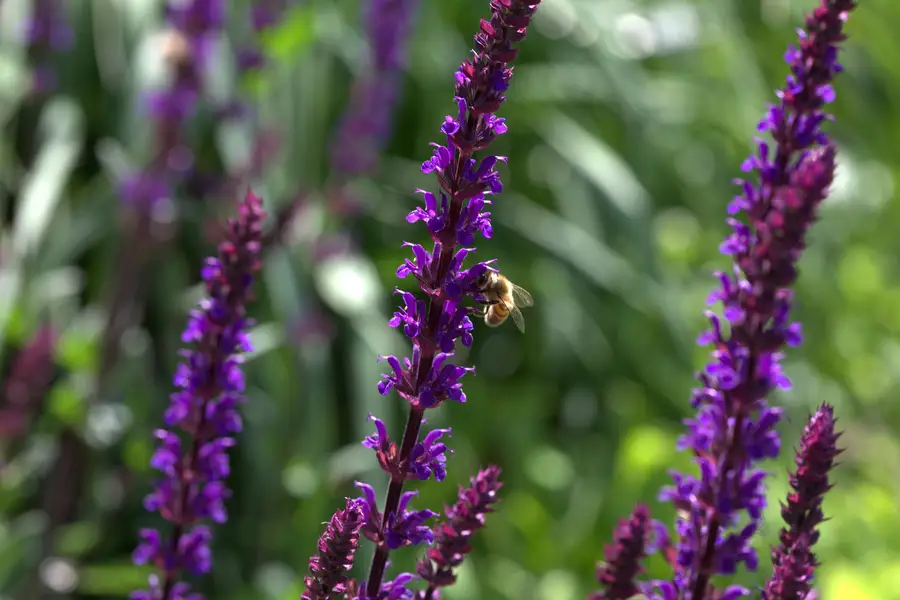
Yes. Bees visit most garden salvias, and the flower shows why. But different salvias feed different animals.
How the salvia flower loads pollen onto a bee
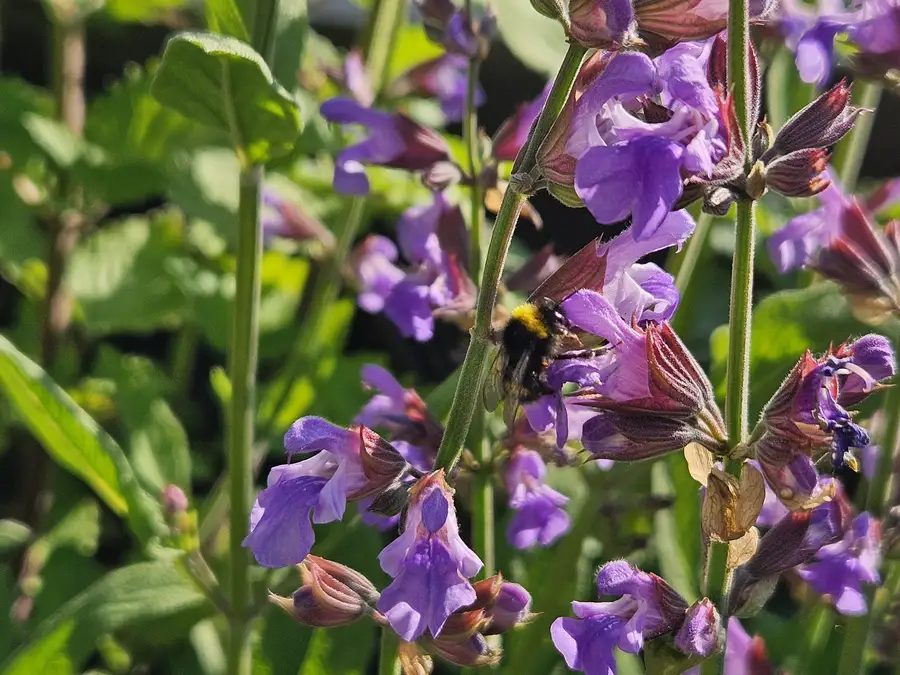
Most bee-pollinated salvias have a hinged stamen that works like a see-saw, the staminal lever. A bee pushing in for nectar presses the lower arm, and the upper arm swings down to dab pollen on its back. A 2007 study of meadow sage in the Annals of Botany found that the spoon-shaped lower lever has a small hole through which the bee inserts its proboscis, and concluded that the lever is a pollen-dispensing device. Researchers regard the lever as a key innovation behind the genus’s huge number of species. Bird-pollinated salvias often lose it, though: a review in the same journal reported that 63 of 186 bird-pollinated species transfer pollen without a functional lever, placing pollen far from the nectar so it lands on the bird’s head.
Which bees visit salvia: our iNaturalist pull
We pulled every US iNaturalist observation whose “Visited flower of” field names a salvia (18 November 2026), querying each salvia separately. Figures are research grade, meaning the community confirmed the visitor’s identity.
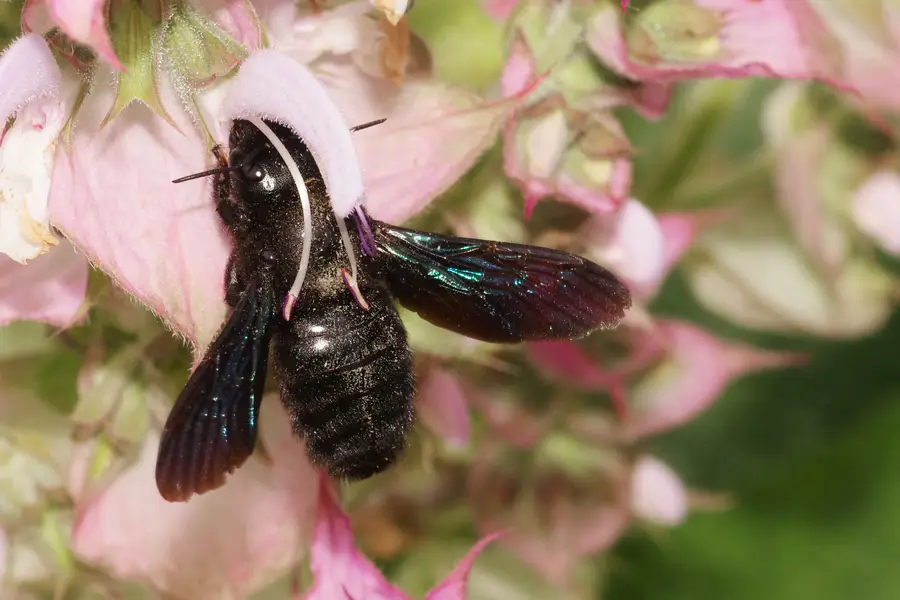
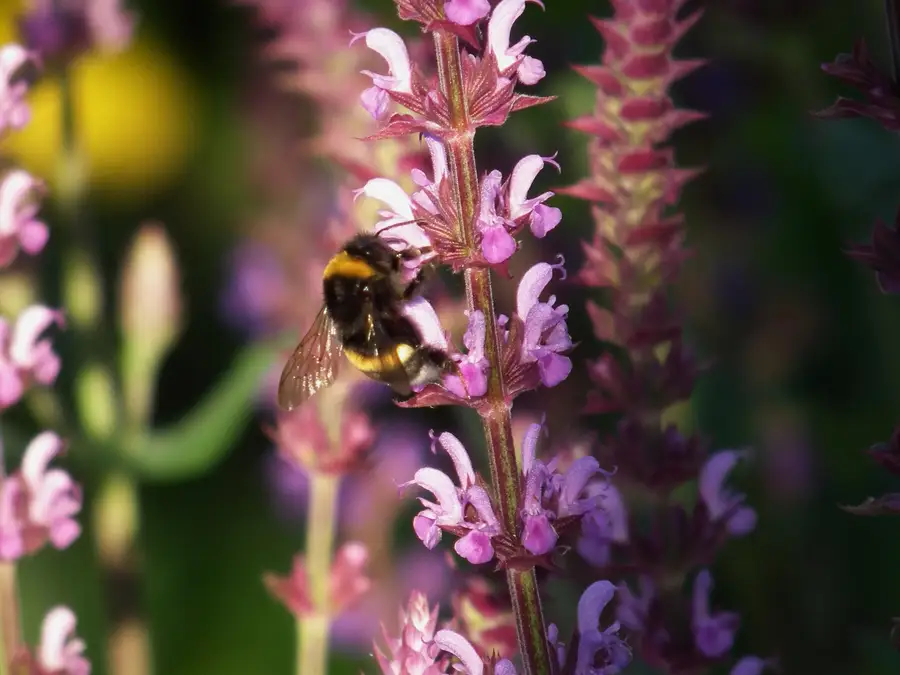
Most records name the flower only to genus. Of those 1,251 records (1,423 at all grades), bees made up 796 (63.6%) and bumble bees alone 547 (43.7%). Butterflies and moths followed with 338 (27.0%), then carpenter bees 80 (6.4%), honey bees 71 (5.7%) and hummingbirds 70 (5.6%). The bees named most often, at all grades, were the common eastern bumble bee (Bombus impatiens, 140) and the American bumble bee (B. pensylvanicus, 89); see our North American bumble bee guide.
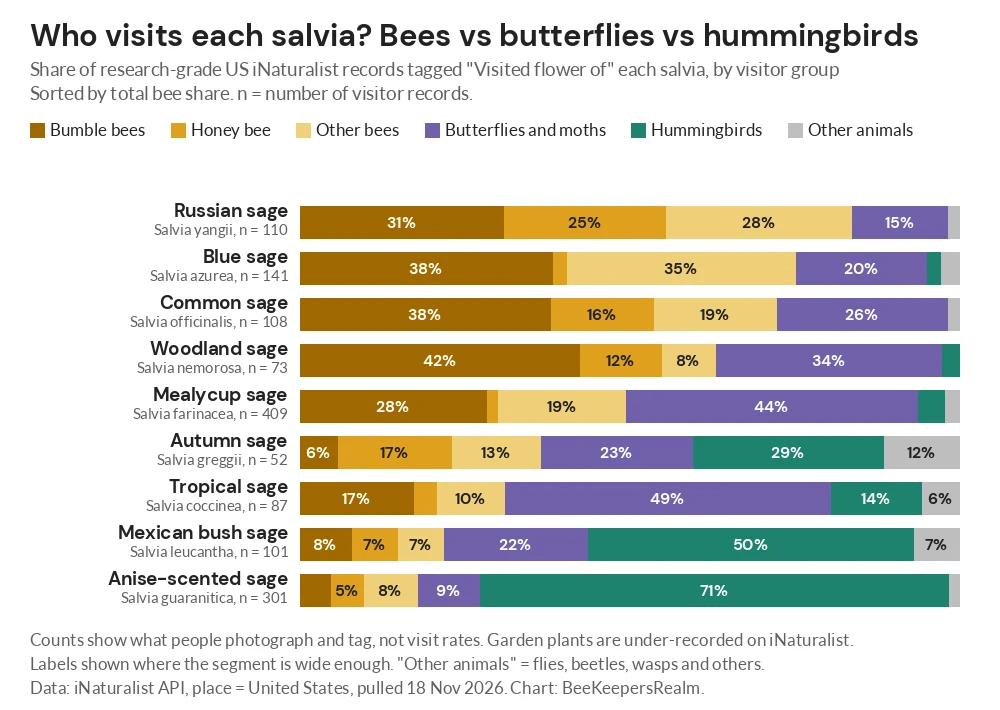
By species, Russian sage (83.6% bees, n = 110), blue sage (75.2%, n = 141), common sage (72.2%, n = 108) and woodland sage (63.0%, n = 73) were bee plants, with bumble bees the largest group on each. Mealycup sage split between bees (49.4%) and butterflies and moths (44.3%, n = 409). Hummingbirds made up 71.1% of 301 records on anise-scented sage and 49.5% of 101 on Mexican bush sage. These are photos people chose to tag, not visit rates, so read them as a ranking.
What a Georgia field study found
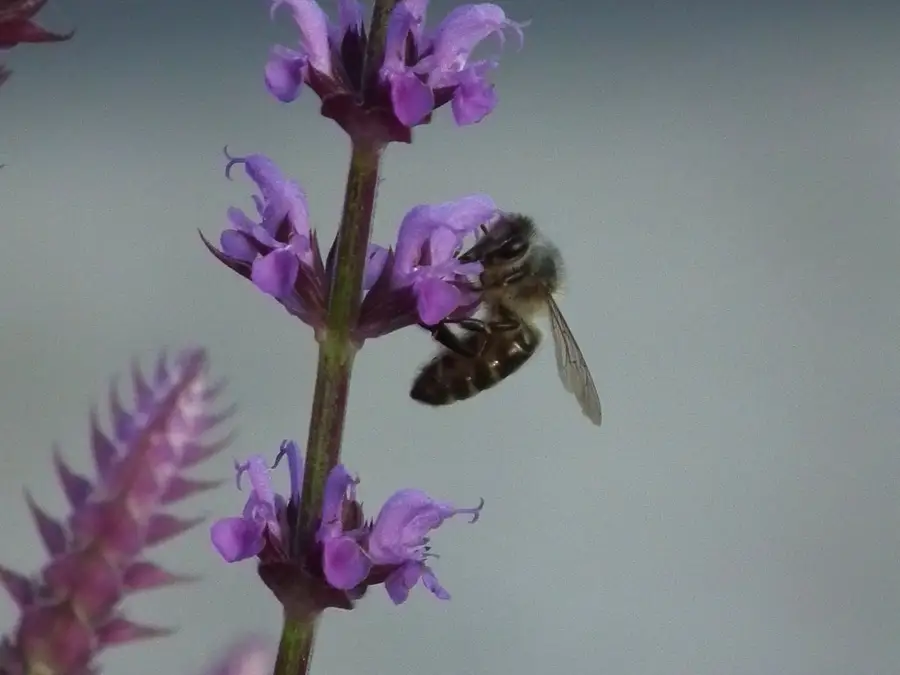
The most detailed US field counts come from the University of Georgia, where researchers recorded pollinators on salvia cultivars on 40 dates from April to October over two seasons, including ‘Radio Red’, ‘Black and Blue’, ‘Steel Blue’ and four Heat Wave hybrids.
“Salvia was most frequently visited by honey bees (36.4%) and carpenter bees (24%), although all the groups were represented.”
Heat Wave ‘Blaze’ drew the most bees and visitors, and ‘Steel Blue’ was busiest early in the season, matching its bloom. ‘Blaze’ won its visitors without sweeter nectar: sugar content (22.9 to 30.4 degrees Brix across the six cultivars) did not differ statistically. The team collected 20 bee species from the salvias. Honey bees led there and bumble bees led in our pull, because timed counts in one garden measure something different from photos taken nationwide. If you keep hives, salvias add some honey bee forage alongside the bigger sources in our honey production plant guide.
Nectar robbers and nectarless bedding plants
NC State notes that carpenter bees rob anise-scented sage by biting a hole in the floral tube, skipping the pollen. Our carpenter bee guide covers these bees. NC State also warns that many bedding scarlet sage cultivars have no nectar and are not a useful resource for pollinators. Our pull fits: scarlet sage had only 22 visitor records, 15 of them hummingbirds and 3 bees.
Salvias for Hummingbirds
NC State sums up the split in one sentence:
“Many of the Mexican species are attractive to hummingbirds, whereas the Old World species are attractive to bees.”
Clemson Extension adds that the hummingbird’s long beak and tongue easily reach the nectar at the back of a salvia flower, and that for many salvias the hummingbird is an important pollinator. Red tropical, autumn and scarlet sage are classic choices, but blue works too: in our pull, anise-scented sage had 214 research-grade hummingbird records, far more than any other salvia, and 209 of its 215 at all grades were ruby-throated hummingbirds. The Chicago Botanic Garden likewise reports that hummingbirds appeared to slightly prefer blue and purple flowers in its tender salvia trial. Daytime moths visit too; our hummingbird moth guide tells them apart.
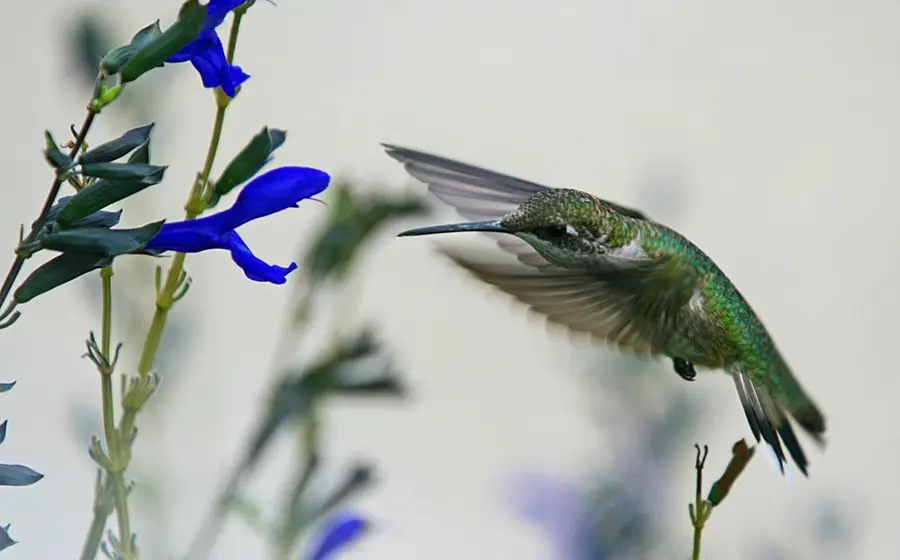
For a long hummingbird season in the South, start with lyreleaf sage in spring, add tropical and autumn sage for summer, then anise-scented and Mexican bush sage for fall. In the North, where tender salvias are annuals, set out ‘Black and Blue’ or tropical sage after the last frost so they are in full flower by late summer.
Native US Salvias Worth Planting
These natives suit local seasons and pollinators, which is why our list of the best US native plants for pollinators favors them.
- Blue sage (S. azurea). A tall prairie species that the Lady Bird Johnson Wildflower Center, citing the Xerces Society, rates of special value to native bees and bumble bees. The Center lists bloom from September to November, a strong pick among fall-blooming flowers for bees, but NC State says it is surprisingly scarce in the trade.
- Lyreleaf sage (S. lyrata). A low spring bloomer native from Florida to east Texas and north to New York, Ohio, Missouri and Kansas (Wildflower Center). It breaks the drainage rule: NC State lists wet soil and foot traffic among the challenges it tolerates, and it takes mowing. Later flowers never open but self-pollinate, and it reseeds easily in loose, sandy soil.
- Tropical sage (S. coccinea). Native to the coastal Southeast and Mexico. Clemson says it blooms all summer, especially if you deadhead often.
- Mealycup sage (S. farinacea). Native to central and west Texas and New Mexico; the Wildflower Center rates it highly deer resistant and of special value to native bees.
- Autumn sage (S. greggii). Native to rocky slopes in Texas and adjacent Mexico; drought tolerant and a hummingbird plant.
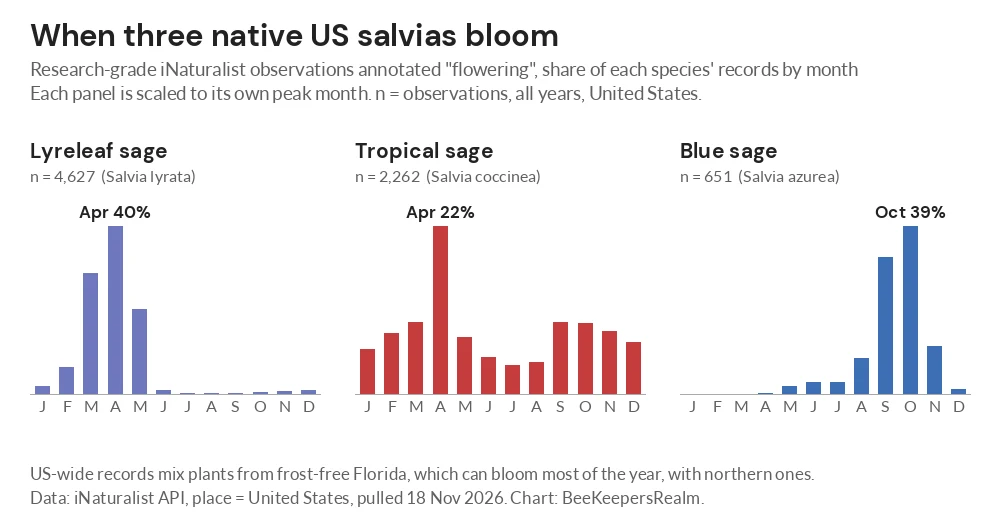
Our pull shows how they stagger bloom. Of research-grade US observations annotated as flowering, 88.3% of lyreleaf sage records fall in March to May (peak April, 39.7% of 4,627), while blue sage peaks in September and October (71.3% of 651). Tropical sage flowers in every month, with an April peak of only 22.1% of 2,262, which fits UF/IFAS’s note on year-round bloom in Florida.
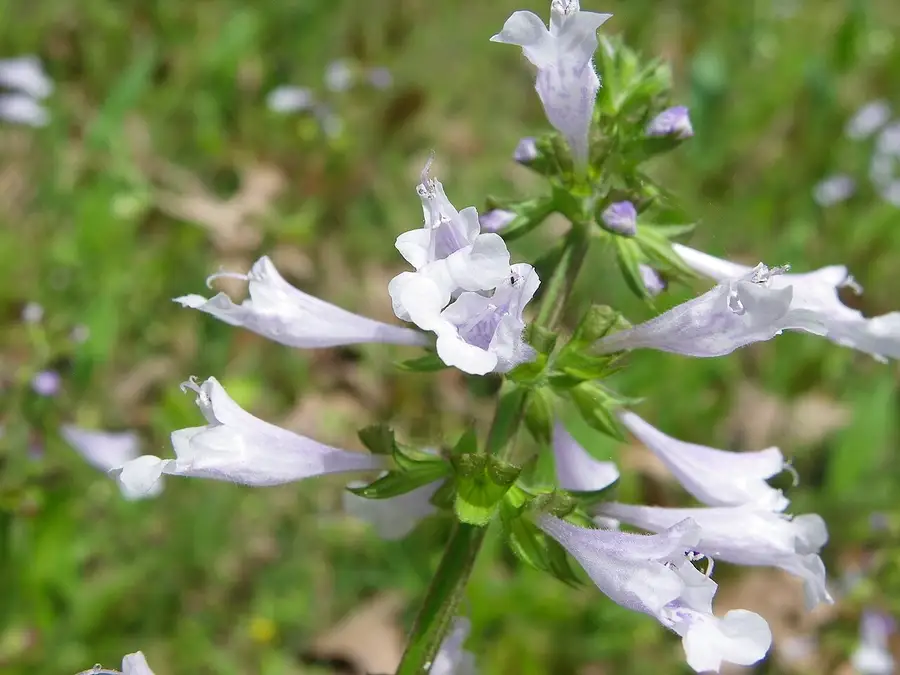
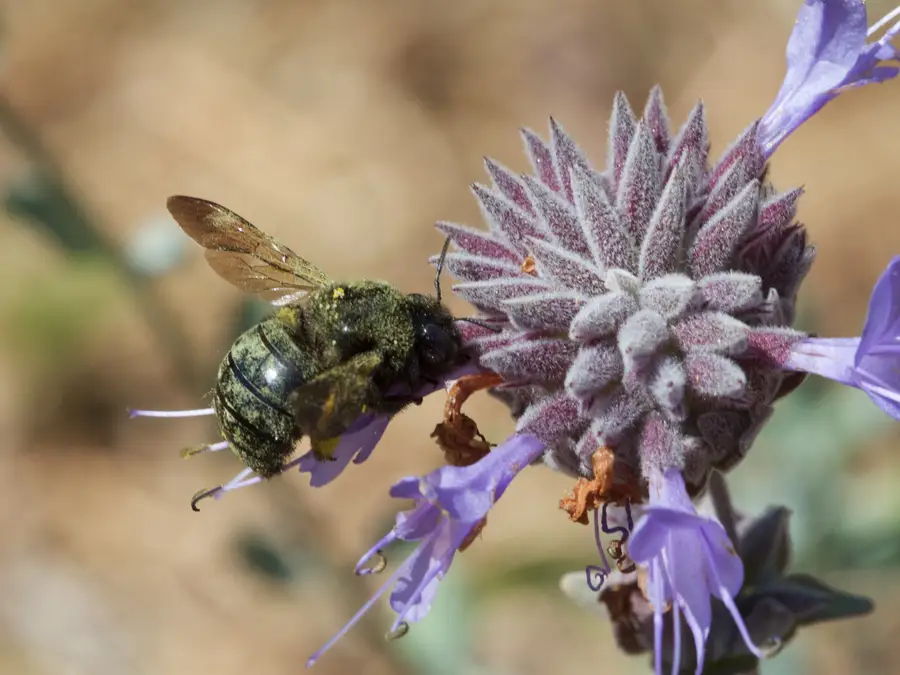
California has its own shrubby native sages, such as black sage (S. mellifera), white sage (S. apiana) and Cleveland sage (S. clevelandii), for dry West Coast gardens.
How to Grow and Propagate Salvia
Sun, soil and water
Plant in full sun, which NC State’s species pages define as six or more hours of direct sun a day. NC State rates the genus for full sun to partial shade, but UF/IFAS notes that flowering is reduced in part shade, and that in Florida, light-flowered annual salvias can be burned by the high midday sun.
Drainage matters more than fertility. The University of Minnesota Extension suggests working compost or sand into heavy soil and watering lightly only when the top 2 inches are dry. In clay, plant on a slight mound or raised bed. Clemson recommends planting in spring after frost danger has passed. Once established, every salvia in our table except bedding scarlet sage is listed by NC State as drought resistant, which is why salvias appear among our drought-resistant flowers for bees.
For containers, sources differ: the University of Minnesota Extension says its annual salvias are too large for pots, while Clemson lists containers among salvia’s uses. Choose compact types and a large, free-draining pot.
Propagation
NC State calls sages some of the easiest plants to propagate by stem cuttings; autumn sage roots easily from semi-ripe cuttings, and ‘May Night’ types grow from softwood cuttings or division. Clemson advises dividing perennial salvias in early spring when new growth begins. Seed is less predictable for named cultivars: in the 1990s Chicago trial, half the ‘Rose Queen’ plot became inferior self-sown seedlings, while ‘Mainacht’ and ‘Wesuwe’ produced none.
When and How to Cut Back Salvia
- Hardy woodland sage and ‘May Night’ types: NC State says to cut each stem to the basal leaves once it has bloomed and turned brown, and that this can bring several more flushes. The Chicago trials were more cautious: cutting back did not increase rebloom in most cases in the 1990s, and rebloom stayed under 10% for nearly every cultivar in 2014 to 2023. Cut back for tidiness and a modest second show.
- Tender and woody salvias such as autumn and anise-scented sage: Clemson advises waiting for new growth in early spring before pruning, to avoid freeze damage. UF/IFAS suggests light pruning during the flowering season to keep plants neat.
- Annual salvias: the University of Minnesota Extension says tired plants can be cut back in midsummer and will regrow with fresh flowers.
Don’t cut everything to the ground in fall. NC State notes that native bees nest in the dead, hollow stems of blue sage and lyreleaf sage, and encourages cutting dead stems to 12 to 24 inches and leaving them standing until they break down. Our guide to native bee species explains who uses them.
Common Problems and Pollinator-Safe Fixes
Clemson Extension lists damping-off, stem and root rots, powdery mildew, Botrytis blight, aphids, spider mites and whiteflies, and notes that diseases are most common in greenhouses or cool, wet weather.
- Root rot: fix the site, not the plant. Improve drainage, water less, and replant on a mound. The Chicago trial lost nine cultivars after one year when an extreme flood left the bed waterlogged.
- Powdery mildew: space plants for air flow and water at the base; Clemson has a separate factsheet (HGIC 2049).
- Aphids, whiteflies and spider mites: Clemson points to insecticidal soap (HGIC 2771), which works on contact and leaves no lasting residue, a gentler choice on a bee plant. See our guide to getting rid of aphids.
Deer and rabbits: NC State lists deer resistance for every salvia in our table except bedding scarlet sage, and rabbit resistance for woodland, culinary, Mexican bush and Russian sage. The Chicago Botanic Garden credits the aromatic leaves. Clemson warns that hungry deer may still eat salvia.
Salvia vs Lavender, Catmint and Russian Sage
All four are blue-purple, sun-loving members of the mint family, and Russian sage is now a true salvia.
| Plant | Botanical name | Habit | Zones | Height | How to tell it apart |
|---|---|---|---|---|---|
| Woodland sage | Salvia nemorosa | Clumping, upright perennial | 4 to 8 | 1.5 to 3 ft | Green to gray-green, wrinkled, toothed leaves |
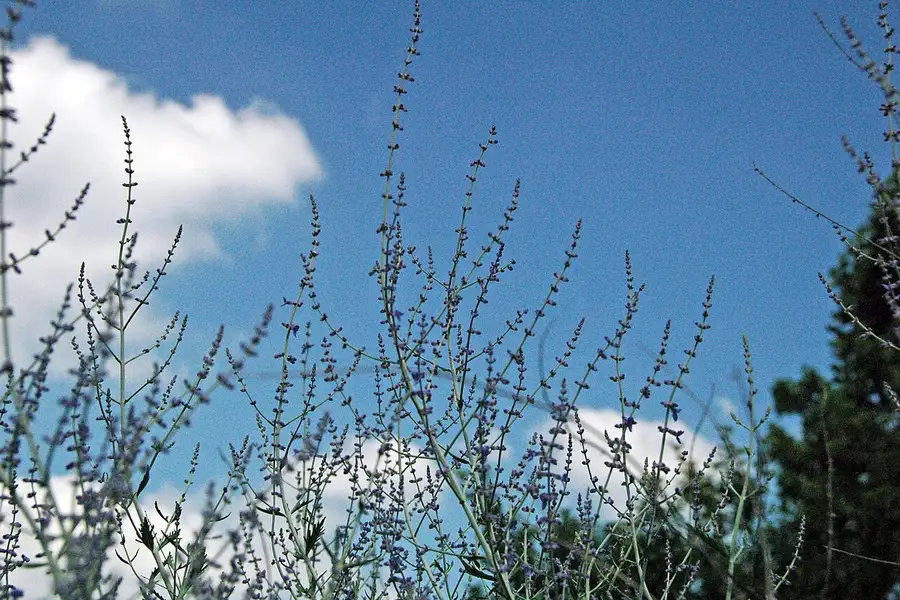
| Russian sage | Salvia yangii (formerly Perovskia) | Woody-based perennial | 5 to 9 | 2 to 4 ft | Silvery, deeply cut leaves on stiff stems; sprawls late in the season |
| English lavender | Lavandula angustifolia | Rounded evergreen shrub | 5 to 9 | 1 to 2 ft | Narrow, woolly gray-green leaves under an inch long |
| Catmint | Nepeta × faassenii | Spreading perennial | 5 to 9 | 1.5 to 2 ft | Small oblong gray-green leaves with rounded teeth |
Source: NC State Extension Gardener Plant Toolbox.
NC State says English lavender requires perfectly drained soil and will die out in heavy clay; our lavender plant guide compares it for bees.
The Chicago Botanic Garden suggests pairing hybrid sages with yarrows, daisies, coneflowers, daylilies and grasses. Our guides to echinacea, black-eyed Susan and bee balm cover good partners, and our pollinator gardening section has more.
Frequently Asked Questions
Will salvia come back every year?
Hardy types will: woodland sage, ‘May Night’ and culinary sage in zones 4 to 8, and blue and lyreleaf sage in their native ranges. Anise-scented, mealycup and bedding scarlet sage return only in mild-winter zones (NC State).
Which salvia is a perennial in cold climates?
Salvia nemorosa and S. × sylvestris hybrids such as ‘May Night’, hardy to zone 4. ‘May Night’ was a top performer in the Chicago Botanic Garden’s 1990s trial.
Do salvias like full sun or shade?
Full sun, six or more hours a day (NC State). Most grow in part shade but flower less (UF/IFAS).
Does perennial salvia spread?
Not much. Hardy salvias are clump-forming, and the Chicago Botanic Garden saw only occasional seedlings, though a few established and smothered original plants. Lyreleaf sage reseeds easily in loose soil.
What month do you prune salvias?
Cut hardy woodland sage back in summer once the first flush fades and stems brown (NC State). Prune tender and woody salvias in early spring as new growth starts (Clemson).
Should I cut salvia back to the ground in winter?
Not tender or woody types. For hardy and native salvias, leaving dead stems 12 to 24 inches tall over winter gives native bees nest sites (NC State).
What are the disadvantages of salvia?
Tender types die in cold winters, most rot in wet soil, some reseed, rebloom is modest (Chicago Botanic Garden), and many bedding scarlet sages have no nectar (NC State).
How many years do salvias last?
None of the sources we checked gives a set lifespan. In the Chicago Botanic Garden trial, every cultivar with surviving plants was kept for at least four years, and about 17% of all plants died over winter.
What not to plant near salvia?
None of the extension sources we checked names bad neighbors. Keep salvias out of heavily watered beds and away from taller plants that shade them, since wet soil causes rot and shade reduces flowering.
What is the plant salvia used for?
Mostly as an ornamental and pollinator plant. NC State notes that culinary sage, rosemary and pineapple sage are herbs, clary sage is used in perfume, and chia “seeds” are nutlets of Salvia hispanica.
The Bottom Line
Choose salvia by winter and soil: woodland sage or ‘May Night’ in the North, natives and tender salvias in the South, sharp drainage everywhere. For bees, skip nectarless bedding scarlet sage; for hummingbirds, add a blue or red tubular salvia that blooms into fall.
Image credits: Katja Schulz (CC BY 2.0); Averater (CC BY-SA 3.0); Termauri (CC BY 4.0); 4028mdk09 (CC BY-SA 3.0, two photos); Heather Moreton (CC BY 2.0); National Park Service (public domain); JKehoe_Photos (CC BY 2.0); Inhemska trädgården (CC BY-SA 4.0); James St. John (CC BY 2.0). All via Wikimedia Commons, cropped or resized. Charts by BeeKeepersRealm from iNaturalist data.