Last Updated September 16, 2026
Indiana offers a legal protection no other state covered in this series has matched: a law that bars not just cities and towns from banning beekeeping, but homeowners associations too. Public Law 193, passed in 2019, prohibited Indiana municipalities from outlawing honeybee hives. Public Law 159, passed in March 2024, extended that same protection to HOA-managed neighborhoods, giving Indiana beekeepers a statewide shield that beekeepers in states like Tennessee and Colorado simply don’t have. Registration itself is more nuanced than a flat yes-or-no: commercial beekeepers must register annually with the state, while hobbyist beekeepers can register voluntarily, and importing bees or equipment from out of state requires its own permit and inspection certificate. Taken together, Indiana’s framework rewards a beekeeper who reads the fine print, since the actual compliance burden depends heavily on whether they’re running a business, keeping a few backyard hives, or bringing bees in from somewhere else entirely.
This guide covers Indiana’s commercial-vs-hobbyist registration split, the two public laws that protect beekeepers from both municipal and HOA bans, the state’s import permit requirements, and how Fort Wayne restructured its own hive limits around lot size.
Disclaimer: This guide is for educational purposes only and is not legal advice. Beekeeping regulations change over time — always confirm current requirements directly with your local or national agricultural authority before acting.
Key Takeaways
- Commercial beekeepers must register annually with Indiana’s Division of Entomology and Plant Pathology under Indiana Code 15-16-5; hobbyist beekeepers are not required to register.
- Public Law 193 (2019) bars Indiana cities, towns, and townships from banning beekeeping outright.
- Public Law 159 (2024) extends that same protection to HOA-managed neighborhoods — a rare protection most other states don’t offer.
- Bringing bees or used equipment into Indiana from another state requires a permit and a recent inspection certificate from the origin apiary.
- Fort Wayne replaced its flat 2-hive-per-property limit with a tiered system that scales up to 8 hives on larger lots.
Table of Contents
- Indiana’s Commercial vs. Hobbyist Registration Split
- Public Law 193: No Municipal Bans
- Public Law 159: No HOA Bans Either
- Bringing Bees Into Indiana
- Fort Wayne’s Tiered Hive Limits
- Indianapolis Beekeeping Rules
- Selling Honey Legally in Indiana
- What Happens If You Skip Registration or a Permit
- Frequently Asked Questions
Indiana’s Commercial vs. Hobbyist Registration Split
| Jurisdiction | Registration | Hive Limit | Anti-Ban Protection |
|---|---|---|---|
| State of Indiana | Mandatory for commercial; voluntary for hobbyist | N/A | PL 193 (no municipal bans); PL 159 (no HOA bans) |
| Fort Wayne | Follows state | 2 hives ≤6,000 sq ft; 4 hives 6,000-16,000 sq ft; 6 hives 16,000-25,000 sq ft; 8 hives >25,000 sq ft | Covered by PL 193/159 |
| Indianapolis | Follows state | Governed by general agricultural-use zoning; check district | Covered by PL 193/159 |
This distinction matters from the very first decision a new Indiana beekeeper makes, since it shapes whether registration is a legal obligation or simply a recommended courtesy toward the wider beekeeping community.
Indiana takes a two-tier approach to apiary registration that’s genuinely different from the all-or-nothing systems seen in most states covered in this series. Commercial beekeepers must register their apiaries annually with the state’s Division of Entomology and Plant Pathology under Indiana Code 15-16-5, giving officials the information they need to track hive locations, monitor disease, and coordinate inspections. Non-commercial, hobbyist beekeepers face no legal registration requirement at all, though they can voluntarily register through BeeCheck.org to connect with other beekeepers and receive local bee health updates. This split means a backyard hobbyist and a commercial pollination operator in Indiana are, on paper, operating under two entirely different compliance obligations. A hobbyist who later scales up into selling nucs or offering pollination services should treat that transition as the point at which mandatory registration kicks in, rather than assuming their previous voluntary status carries over automatically.
Our guide to state bee inspector programs and apiary registration covers how this two-tier approach compares to other states.
Public Law 193: No Municipal Bans

Before this law passed, an Indiana beekeeper had no statewide guarantee at all against a city deciding, at any point, to prohibit beekeeping within its limits entirely.
Passed on May 2, 2019, Public Law 193 prohibits Indiana municipalities, towns, and townships from outlawing honeybee hives within their limits. This was a direct response to a patchwork of local ordinances that varied widely across the state, and it means a city can regulate how beekeeping happens — through zoning, setbacks, or hive limits — but cannot simply forbid it altogether. The Beekeepers of Indiana association worked directly with state legislators to draft this legislation, giving it a genuinely grassroots origin rather than a top-down regulatory push. That same organization has continued tracking municipal ordinances across the state since the law passed, maintaining a running list of city and town codes that comply with the framework Public Law 193 established.
Public Law 159: No HOA Bans Either
Passed less than five years after the municipal protection, this second law reflects a deliberate, continued legislative effort rather than a one-time fix, and it’s a pattern worth watching for any beekeeper wondering whether Indiana’s legal protections might extend even further in the future.
Indiana went a step further than almost every other state covered in this series when it passed Public Law 159 on March 13, 2024, extending the same anti-ban protection to HOA-managed neighborhoods. In states like Tennessee, a similar anti-ban statute binds only counties, cities and other local governments and says nothing about homeowners associations, so it does not reach HOA covenants, and in states like Colorado, an HOA covenant can override city-level permission entirely. Indiana’s law closes that gap directly, and even includes guidance that can be used to draft new municipal ordinances or amend HOA restrictive covenants to align with the law. For a beekeeper who has read about HOA restrictions overriding beekeeping permission in other states, Indiana’s approach is a genuine outlier worth understanding before assuming the same risk applies here. It also means an Indiana beekeeper facing HOA pushback has real statutory language to point to, rather than having to negotiate purely on goodwill the way a beekeeper in a state without this protection would.
Bringing Bees Into Indiana
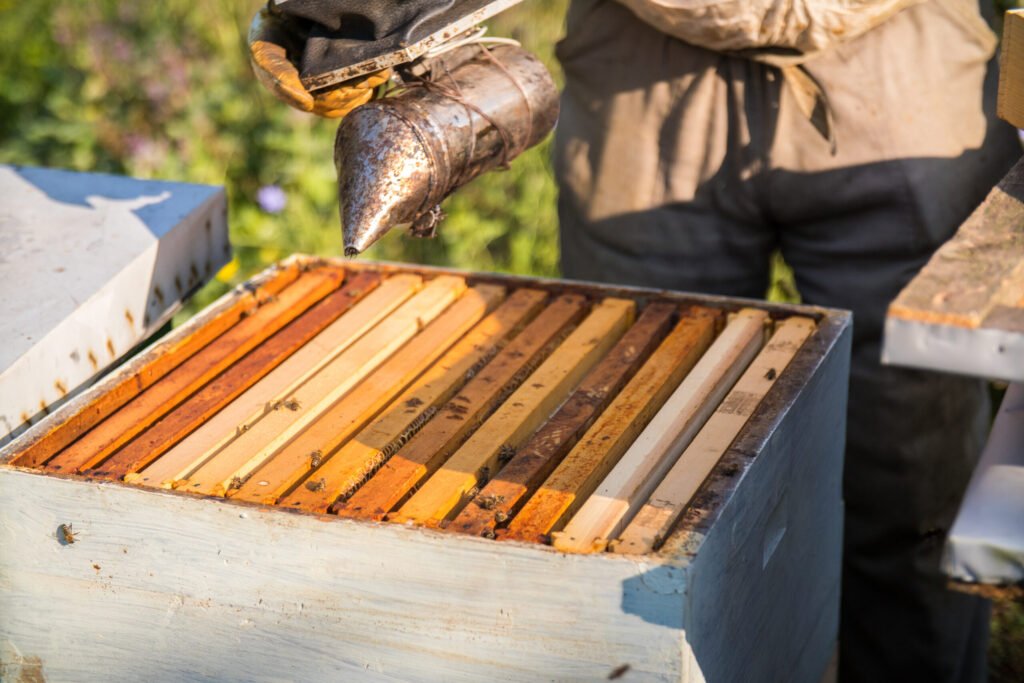
This requirement applies regardless of how the anti-ban protections above might otherwise make Indiana feel like an unusually beekeeper-friendly state, since disease and pest prevention operates under an entirely separate legal framework from zoning or HOA protections.
Moving bees or used beekeeping equipment into Indiana from another state or country requires a permit issued by the Division of Entomology and Plant Pathology before the shipment happens, not after. The application must include a certificate showing the origin apiary was inspected within 30 days of shipping — or within 60 days for queens and combless bees — during active brood rearing, with the apiary confirmed free of pests and pathogens at that inspection. This is a notably more detailed standard than the general “health certificate” language used in several other states, and it means a beekeeper relocating to Indiana needs to plan their origin-state inspection timing carefully rather than assuming any recent paperwork will satisfy the requirement. Scheduling that origin-apiary inspection early, rather than after a move is already planned, is the more reliable way to avoid a shipment being held up over an expired or missing certificate.
Fort Wayne’s Tiered Hive Limits

Fort Wayne’s approach is a useful reference point for any Indiana city still operating under an older flat hive-count ordinance, since it shows what a lot-size-scaled alternative actually looks like once adopted.
Fort Wayne restructured its hive limits in 2023, moving away from a flat cap that applied regardless of property size. Under the ordinance passed unanimously by City Council, the previous flat limit of 2 hives per property was replaced with a tiered system: 2 hives on properties up to 6,000 square feet, 4 hives on properties between 6,000 and 16,000 square feet, 6 hives on properties between 16,000 and 25,000 square feet, and 8 hives on properties larger than 25,000 square feet. City Council specifically noted there was no historical or scientific basis for the old flat 2-hive limit, and that Fort Wayne had not historically had problems tied to bees, beehives, or beekeepers. The ordinance passed unanimously, 9 to 0, with council members specifically calling out the lack of any real complaint history as a reason the old limit no longer made sense once beekeepers raised the issue.
Indianapolis Beekeeping Rules
This approach isn’t unique to Indianapolis among cities covered in this series, but it’s worth flagging explicitly since it changes how a resident should go about researching their own compliance status.
Indianapolis regulates beekeeping through its consolidated zoning code, addressing it under the agricultural, animal-related, and food-production use provisions that also cover gardens and other accessory agricultural activity. Because Indianapolis’s zoning code treats beekeeping as one piece of a broader agricultural-use framework rather than singling it out with its own dedicated hive-count ordinance the way Fort Wayne does, an Indianapolis beekeeper should check the current zoning code directly for their specific property’s district rather than assuming a single citywide number applies everywhere. This is a meaningfully different research process than checking a single dedicated beekeeping ordinance the way a Fort Wayne resident can, since the relevant rules are folded into the same zoning provisions that govern gardens and other accessory agricultural uses.
Selling Honey Legally in Indiana

Apiary registration status, whichever tier a beekeeper falls into, has no bearing on whether they’ve satisfied the separate honey-sale permitting requirements below.
Selling honey commercially in Indiana runs on a separate track from apiary registration and involves the Indiana State Department of Health for labeling and, depending on scale, registration as a food manufacturer, processor, or wholesale distributor. Our guide to starting a honey business in the United States covers the general labeling and permitting basics that apply on top of Indiana’s specific state health department requirements, and is worth reading before assuming apiary registration alone clears the way to start selling honey commercially.
Our broader guide to cottage food laws and selling honey legally covers the general framework these state rules build on.
What Happens If You Skip Registration or a Permit
Because Indiana’s compliance requirements split by beekeeper type and by activity, it’s worth being precise about which specific step actually carries a consequence rather than assuming every part of the framework is equally enforced.
Because hobbyist registration is voluntary in Indiana, there’s no direct penalty for a backyard beekeeper who never registers with the state. Commercial beekeepers are a different matter: skipping mandatory annual registration puts an operation out of compliance with Indiana Code 15-16-5 and can complicate disease-outbreak coordination and interstate certification down the line. Skipping the import permit and inspection certificate requirement when bringing bees into Indiana is a more direct compliance issue, since the shipment itself is not legally authorized without it. Local ordinance violations, like exceeding Fort Wayne’s tiered hive limits, are handled separately through municipal code enforcement.
Frequently Asked Questions
The following questions address the points that come up most often once an Indiana beekeeper understands the interaction between registration status, the two anti-ban public laws, and local zoning.
Do hobbyist beekeepers have to register in Indiana?
No. Only commercial beekeepers are legally required to register annually; hobbyists can register voluntarily through BeeCheck.org.
Can my city ban beekeeping in Indiana?
No. Public Law 193 (2019) prohibits Indiana municipalities from banning beekeeping outright, though they can still regulate it through zoning.
Can my HOA ban beekeeping in Indiana?
No, as of March 2024. Public Law 159 extended the same anti-ban protection that covers municipalities to HOA-managed neighborhoods.
What do I need to bring bees into Indiana from another state?
A permit from the Division of Entomology and Plant Pathology, along with a certificate showing the origin apiary was inspected within 30 days (60 for queens and combless bees) and found free of pests.
How many hives can I keep in Fort Wayne?
Fort Wayne’s tiered system allows 2 hives on lots up to 6,000 square feet, scaling up to 8 hives on lots larger than 25,000 square feet.