What Makes Honey Production Truly Organic
What actually makes honey "organic" is the certified, chemical-free foraging environment and beekeeping practices behind it, not the honey itself.

Getting the honey crop off the hive: reading a nectar flow, knowing when honey is ripe enough to take, choosing a harvesting method, and extracting without overheating or damaging it. The section also covers what drives yield up or down, how much to leave for the bees, keeping extractors clean, comb honey systems such as cut comb, Ross Rounds and Hogg cassettes, and real production data.
Moisture testing, processing standards and honey quality have their own section, Honey Quality Control & Testing. Honey varieties and buying advice are in Consumer Honey Guides.
Start here:
What actually makes honey "organic" is the certified, chemical-free foraging environment and beekeeping practices behind it, not the honey itself.

Honey bees play a genuinely crucial, dual role in the wider ecosystem, valued not just for their honey production but equally for their far-reaching pollination services across countless plant species.…

A hive can fill multiple supers during a strong spring nectar flow and then produce almost nothing for weeks during a summer dearth – the same colony, the same beekeeper,…

A radial extractor pulls honey from frames using centrifugal force without needing to flip them partway through, unlike a tangential extractor. That small mechanical difference ends up mattering a lot…
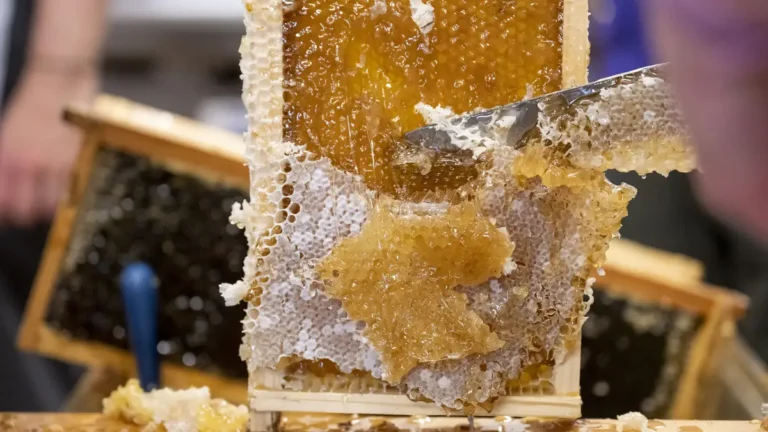
Compare the four honey harvesting methods (extractor, crush and strain, cut comb and Flow frames) by cost, comb loss and hive count, and see how to clear bees off the supers first.