Published March 31, 2026 · Last Updated August 26, 2026
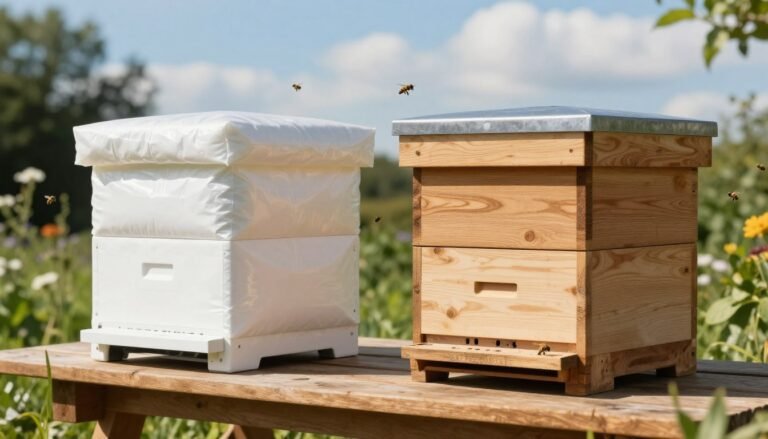
Choosing the right roof affects colony health, honey production, and weather resistance. This introduction compares two common lids used in modern beekeeping and explains how design changes influence ventilation, condensation, and transportability.
Telescoping covers are heavy-duty lids that overhang the sides of the box to block wind and rain. Migratory covers, by contrast, are flat and sit flush for easier movement when hives are stacked on pallets during commercial transport.
Small upgrades — like adding foam or extending side depth — can reduce moisture on the inner surface and help avoid water dripping onto frames and bees in winter. HONESTBEE and similar suppliers focus on durable equipment for large apiaries, while backyard beekeepers can craft a temporary lid from a 3/4″ plywood sheet in minutes.
In short: match your cover choice to local weather, whether you use feeders or standard frames, and how often you move your colonies. For more detail on insulation methods and condensation control, see this practical guide from a field-tested source and a roundup of winter wraps for cold climates.
practical insulated top guide and best hive wrap options
Key Takeaways
- Covers influence ventilation: correct interaction between outer and inner pieces matters for colony health.
- Weather protection: overhanging lids block wind and rain; flat migratory lids aid transport.
- Adding foam or side extensions can reduce condensation under the lid.
- Commercial beekeepers often choose durable, stackable migratory covers for long hauls.
- Simple temporary lids can be made quickly from plywood for emergency needs.
Understanding the Basics of Hive Covers
A proper outer lid keeps wind and rain out while helping you control internal ventilation and condensation.
Function matters: some covers sit flush to shrink the transport footprint, while others extend down the box edge to act as a drip rim. These design choices influence how air moves, how moisture builds, and how easy it is to open the hive with a hive tool.
Every beekeeping operation must pick the correct lid to protect the colony and permit fast access during inspections. Inner covers work with the outer part to manage temperature and humidity inside the hive and to give bees a stable environment.
- Protection: extended rims shed rain; flush sides simplify stacking for transport.
- Access: choose lids that let you reach frames and feeders without damage.
- Material: durable plastic or wood keeps equipment sound when not moving hives frequently.
| Feature | Flush-style lids | Overhanging rims |
|---|---|---|
| Transport footprint | Compact for pallets | Larger due to overhang |
| Weather protection | Moderate, depends on sealing | Strong drip and wind shield |
| Best use | Commercial, migratory covers | Hobbyists, stationary apiaries |
| Material options | Plastic or metal sheeting | Wood with metal cap or plastic |
For guidance on managing inner covers and airflow, see this short primer on inner cover basics.
Insulated Hive Top vs Plain Telescoping Cover: A Comparative Overview
Choosing the right outer lid changes how a box handles wind, rain, and winter moisture.
Defining the rim-style design
The rim that drops over the box edge is the defining element. It acts like eaves on a house and sheds driving rain away from frames.
- The rim fits over an inner cover to form a weather-tight seal that keeps snow and water out.
- A metal cap on the rim gives a waterproof barrier that stops wood from warping in cold months.
- Viewed from above, the overhang creates a clear edge and extra protection at the entrance and corners.
- Migratory covers are simpler and stackable, but they lack the downward skirt that helps in harsh weather.
The role of the inner cover
The inner cover creates a layer of dead air space. That space improves insulation and helps control ventilation.
Inner cover placement also limits direct bee access to the outer lid and makes inspections neater with a hive tool.
The Design Architecture of Telescoping Covers
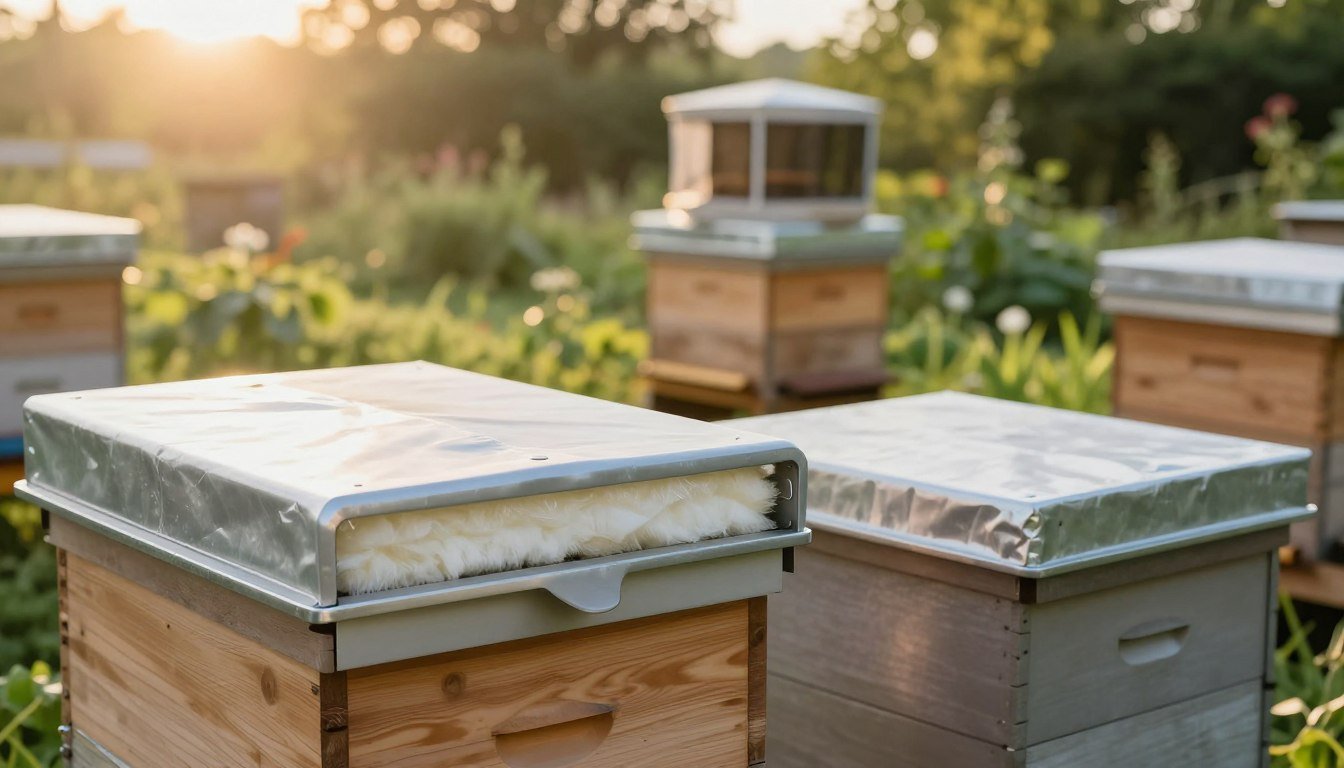
Design matters. A good lid pairs a durable metal skin with an overhanging skirt to protect wood and seams from weather, wind, and sun. This design extends service life and reduces maintenance for stationary apiaries.
The Importance of Metal Sheeting
Metal sheeting is not decorative — it is functional. Heavy-duty aluminum resists UV and moisture, forming a tough barrier over the wooden box. That metal layer slows rot and shields the joints where water usually finds a way in.
Key design benefits:
- The metal sheeting prevents wood from rotting when exposed to rain and snow.
- An overhanging skirt channels water clear of the top seams and frames.
- An inner cover beneath this lid helps stabilize temperature and humidity for bees in winter.
- The architecture favors longevity, making the investment worthwhile for stationary operations.
- There is enough clearance to use a feeder while keeping the colony protected from wind and elements.
A metal-clad lid with a dropped side reliably reduces moisture at the seam and eases inspections with a hive tool.
| Feature | Design Effect | Practical Benefit |
|---|---|---|
| Aluminum sheeting | UV and moisture barrier | Reduces wood rot; extends service life |
| Overhanging skirt | Directs water away from seams | Protects frames and entrance from leaks |
| Inner cover use | Creates dead air space | Improves temperature stability in winter |
For further reading on specific design choices and handling, see the design differences and applications guide.
Efficiency Benefits of Migratory Lids
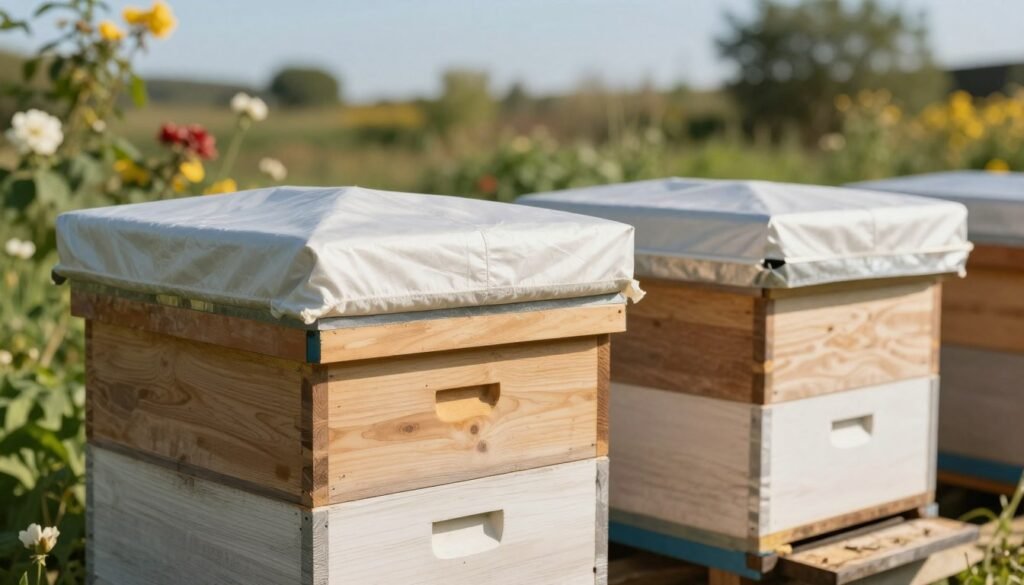
Migratory lids are engineered to sit flush with the box, which lets operators pack units tightly for transport. This flush profile removes wasted space and makes it easy to stack hives side-by-side on pallets or a semi-truck.
Why commercial teams choose them:
- They maximize the number of units per trailer for pollination runs and seasonal moves.
- The lack of overhanging sides reduces damage during loading and unloading.
- Lightweight construction speeds setup for temporary apiaries and splits in the field.
- Even with a feeder in place, the flat design keeps the box compact for transport.
“A flush migratory lid saves space and protects equipment during long hauls.”
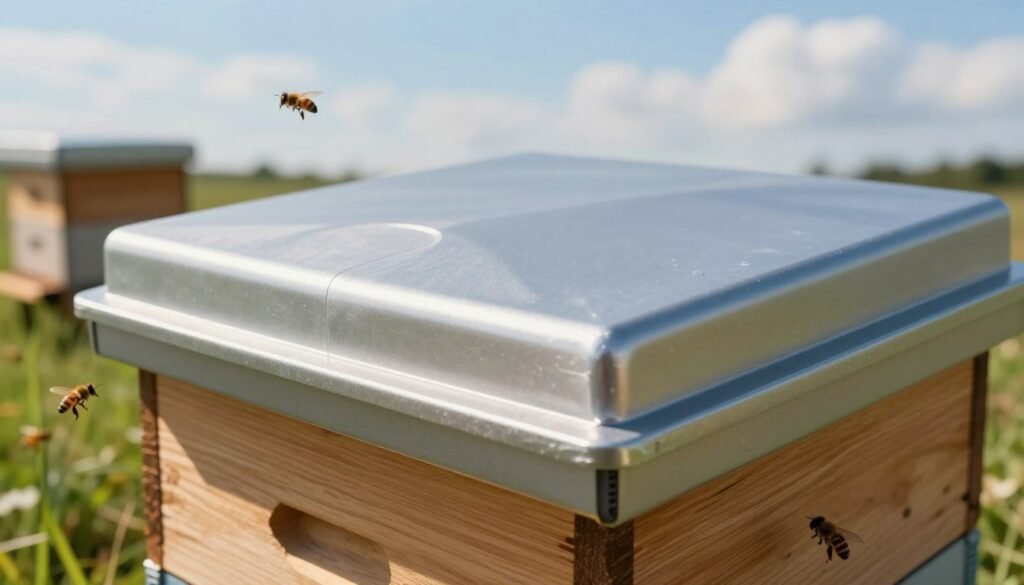
For a short primer on the practical advantages and proper use of a migratory lid and its advantages, consult the linked resource.
Managing Moisture and Winter Conditions
Cold nights and warm hive air create moisture that can drip onto frames if you do not manage ventilation carefully.
Condensation Management
The inner cover often has a notch that serves as an upper entrance. This small opening gives trapped humid air a way out without opening the box wide.
Use that notch to balance airflow. Warm air will rise and escape through the upper entrance while bees keep core areas warm. This reduces dripping on comb and lowers disease risk.
Protecting Against Harsh Weather
A metal-topped telescoping lid keeps the exterior warmer and slows heat loss. That warmer surface makes condensation less likely during freeze–thaw cycles.
Practical steps:
- Pair an inner cover notch with a snug outer cover to create a dead-air pocket that limits cold spots.
- Keep an upper entrance clear to improve ventilation without exposing bees to wind.
- When using a feeder, confirm airflow around the feeder area to avoid mold and damp honey.
A small, deliberate airflow path protects comb and helps colonies stay dry through winter.
| Issue | Simple fix | Benefit |
|---|---|---|
| Condensation on frames | Use inner cover notch + outer metal lid | Less dripping; healthier brood nest |
| Driving rain or wind | Choose a metal-topped overhang that shields seams | Reduced water ingress; drier interior |
| Mold near feeders | Ensure ventilation and clear feeder ports | Lower spoilage; cleaner honey stores |
For hands-on tips on moisture control in wet climates, see this guide on managing hives in wet climates.
Logistical Considerations for Commercial Beekeeping
Long-distance pollination schedules force commercial operators to choose equipment that speeds loading and reduces trailer space.
Migratory covers are the industry standard for operations that move hundreds of boxes each season. They sit flush, let crews pack hives tightly, and cut handling time during pickups and deliveries.
When time matters, a flat lid saves minutes per unit. That adds up quickly across hundreds of hives and can reduce labor costs on every pollination run.
Choose gear that balances durability with transport needs. Durable lids extend service life, but lightweight migratory lids improve efficiency. Use a standard hive tool to remove a migratory cover and check frames or refill a feeder without delaying a load.
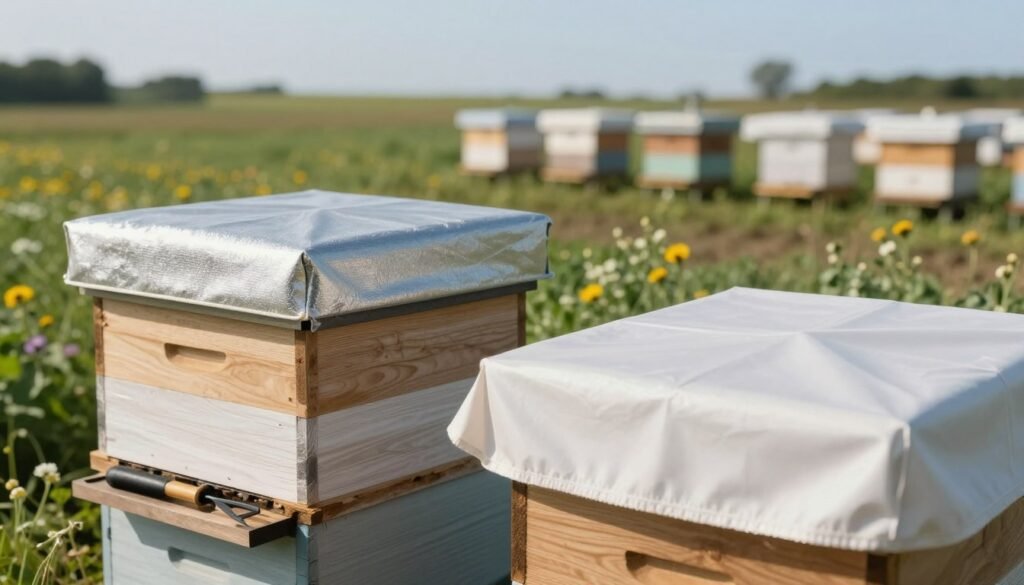
- Dense packing maximizes trailer capacity.
- Fast inspections keep transit on schedule.
- Equipment choice should match the scale of your operation.
“The efficiency of your operation depends on choosing covers that align with your logistical needs.”
| Logistic Need | Recommended Option | Practical Benefit |
|---|---|---|
| Frequent long hauls | Migratory lids | Higher density; faster loading |
| Stationary yards | Overhang-style covers | Better weather protection; longer life |
| Mid-season checks | Standard hive tool + migratory covers | Quick frame access; fast feeder refills |
Factors Influencing Your Equipment Selection
A smart selection balances upfront price with decades of reduced maintenance and loss.
Budget and long-term investment should guide whether you choose heavier, metal-faced lids or lighter, flush designs for frequent moves.
Telescoping covers cost more because of the metal cap and deeper skirt. That extra expense often pays off for stationary yards through fewer repairs and better protection of frames and comb.
For operations that move hives regularly, migratory covers lower the per-unit price and speed handling during pollination runs. Still, make sure any lid you buy works smoothly with your inner cover and feeder to protect the bee colony and stored honey.
- Durability advantage: metal-topped units resist weather and reduce wood rot over time.
- Logistics advantage: flat lids save space and labor when loading many boxes.
- Compatibility: match the outer lid to the inner cover, feeder, and routine ventilation strategy.
Invest in quality lids as a foundational step; the right choice supports colony health and production.
| Need | Recommended Option | Why it helps |
|---|---|---|
| Stationary production | Metal-topped overhang | Longer life; fewer repairs; better winter protection |
| Frequent moves | Migratory cover | Lower cost; faster loading; lighter for crews |
| Balanced budget | Quality mid-range lids | Good protection while limiting initial outlay |
For a practical buying checklist and regional sourcing, review a detailed guide on choosing beekeeping equipment.
Conclusion
The right roof choice can cut moisture problems and help bees conserve energy through winter.
Selecting the proper option is essential for the long-term health of your bees and success in beekeeping. Telescoping covers deliver strong protection for stationary hives, while migratory covers suit commercial moves and tight packing.
Consider local climate and winter risks when you pair outer cover with inner covers and a reliable feeder. Quality equipment and the right lids help keep brood dry, boost honey stores, and reduce losses.
For a deeper look at cluster insulation and moisture dynamics, see this short guide on winter cluster insulation. HONESTBEE and similar suppliers offer durable options and feeders to fit your box and operation.
FAQ
What is the main difference between an insulated hive top and a plain telescoping cover?
The primary difference lies in thermal performance and materials. The insulated option uses foam or other insulating layers beneath metal or plastic sheeting to reduce heat loss and limit cold drafts. A plain telescoping lid relies on its overhanging rim and metal skin to protect against rain and wind but offers less thermal buffering. Beekeepers choose based on climate, winter management, and whether they need space for feeders or an upper entrance.
How does a telescoping style lid interact with inner covers and frames?
Telescoping lids sit over the topmost box and overlap the sides to seal the edges. They work with inner covers that provide a secondary barrier and a controlled space for ventilation or feeding. The inner cover also creates an air gap between the comb and the outer skin, helping regulate moisture and allowing for the placement of frames and escape routes without removing the outer metal or plastic roof.
Why is metal sheeting important on migratory lids and outer roofs?
Metal sheeting protects against precipitation, UV, and wind, and it withstands the wear of migratory movement. It creates a durable weatherproof skin that resists hail and heavy rain, and it helps shed snow. For commercial operations that move hives, metal-capped lids reduce repair time and limit the need for frequent replacement compared with untreated wooden roofs.
Do migratory lids improve hive efficiency during transport?
Yes. Migratory lids are built to stay secure during transit, reducing the chance of separation between stacked boxes. Their robust construction and snug fit minimize vibration, keep bees contained, and protect comb integrity and honey production. They also allow for stacking multiple hives and using upper entrances or ventilation setups suited to long moves.
How do these covers affect condensation and moisture management in winter?
Proper ventilation and the use of inner covers help control condensation. An insulated option can reduce the temperature differential that causes moisture to condense on the inner surface, while a well-fitted telescoping lid with a breathable inner cover helps moisture escape through designed upper entrances or small vents. Managing hive humidity preserves comb health and reduces the risk of mold and chilled brood.
What steps protect hives against harsh weather with different lids?
Ensure lids sit flush and edges are caulked or taped where needed to block drafts. Use metal or plastic sheeting to shed water and snow. For winter, add windbreaks or secure straps to prevent uplift. Consider placing absorption material or a quilt box under the outer roof if moisture pooling is an issue. Regular inspections before winter detect gaps, loose screws, or detached sheeting so you can reinforce seals.
What logistical factors matter for commercial beekeeping when choosing covers?
Durability, weight, stackability, and ease of handling are key. Covers that resist denting and corroding save labor and replacement costs. Lightweight metal or plastic options lower transport fuel use and strain during repetitive handling. Compatibility with migratory frames, feeders, and upper entrances streamlines operations and reduces downtime during moves.
How should budget and long-term investment influence equipment selection?
Balance initial cost against lifespan and maintenance needs. Cheaper, untreated wooden lids may need replacement sooner and incur more repair costs. Higher-quality metal-capped or foam-lined lids cost more upfront but reduce long-term expenses and protect honey stores better. Calculate total cost of ownership including fuel, labor, and potential losses in production when choosing covers.
Can covers accommodate feeders or upper entrances without removing the outer roof?
Yes. Many inner covers offer ports or notches for entrance reducers, patties, or top feeders. Telescoping lids with removable metal sections or designated openings allow feeding and ventilation while keeping the outer skin in place. Choosing designs with integrated access points saves time and reduces disturbance to the brood and foragers.
How do different covers affect colony health and honey production?
Stable internal temperatures and controlled humidity support brood rearing and reduce stress. Covers that minimize drafts and moisture loss help bees maintain brood more efficiently, which can boost spring buildup and honey flow. Conversely, poorly sealed or thin lids can lead to chilled brood, higher feed consumption, or comb damage, impacting productivity.