Kenya has tried three separate times since 2021 to pass a national law requiring beekeepers to register their apiaries — and as of 2026, none of those attempts has actually become law. The 2021 version was withdrawn after beekeeper backlash, a 2024 version was pulled just weeks after introduction amid public uproar, and a third version, the Livestock Bill 2026, is currently before Parliament. In the meantime, roughly 80% of Kenya’s honey still comes from traditional log hives rather than the modern movable-frame equipment most beekeeping law elsewhere assumes as standard.
This guide covers why Kenya currently has no enacted national beekeeping registration requirement, the repeated legislative attempts to create one and where the current Livestock Bill 2026 stands, the country’s traditional log-hive beekeeping tradition and how it compares economically to modern hives, and the Kenya Bureau of Standards specifications that govern honey quality once it reaches the market. Beekeeping in Kenya carries real economic weight beyond honey itself, supporting rural incomes and youth employment programs in regions like Baringo County, which is part of why proposed registration and licensing requirements have generated such sustained public pushback each time they’ve been introduced — a licensing regime that feels workable for large commercial operations can land very differently on smallholder and subsistence beekeepers who make up a large share of the country’s actual beekeeping population.
Key Takeaways
- Kenya currently has no enacted national law requiring beekeepers to register their apiaries — beekeeping remains largely unregulated at the licensing level.
- Three attempts to introduce mandatory apiary registration — in 2021, 2024, and 2026 — have each faced significant public and beekeeper opposition; the 2021 and 2024 versions were withdrawn before passage.
- The current Livestock Bill 2026, introduced to the National Assembly on April 5, 2026, would require beekeeping registration under regulations the Cabinet Secretary sets in consultation with the Council of Governors, with proposed penalties up to Sh500,000 or 12 months imprisonment for non-compliance.
- Roughly 80% of Kenya’s honey production still comes from traditional log hives, particularly the Tugen log hives used in Baringo County, rather than modern Langstroth or Kenya Top Bar hives.
- Honey sold commercially in Kenya must meet Kenya Bureau of Standards specifications, including KS EAS 36:2020 for honey quality and separate standards covering honey processing units and plant layout.
Table of Contents
- Currently No National Beekeeping Registration Law
- Three Attempts to Regulate: The Livestock Bill’s Long History
- Traditional Log Hives: 80% of Kenya’s Honey Production
- Indigenous Forest Beekeeping Communities
- KEBS Honey Quality Standards
- Frequently Asked Questions
Currently No National Beekeeping Registration Law
Unlike every other country covered in this international series, Kenya currently has no enacted national law requiring beekeepers to register their apiaries or obtain a license to keep bees commercially. Beekeeping in Kenya today operates largely as an informal, unlicensed activity at the national regulatory level, governed more by county-level agricultural extension support and market-access standards than by a binding registration requirement. This isn’t for lack of legislative effort — Kenya’s Parliament has repeatedly tried to change this, and repeatedly backed away after public pushback, which is itself a genuinely distinctive and ongoing regulatory story worth understanding before assuming Kenya’s framework resembles its neighbors’ or any Western country’s approach.
Three Attempts to Regulate: The Livestock Bill’s Long History
The push to formally regulate Kenyan beekeeping has played out across three separate legislative attempts. The Livestock Bill, 2021 proposed that no person could keep bees for commercial purposes except in a registered apiary, with beekeepers required to apply to the county executive committee member responsible for livestock and renew their registration annually — but the bill was withdrawn after beekeepers and members of the public raised significant concerns, with the Speaker of the National Assembly halting it at the request of the Majority Leader. A revised Livestock Bill, 2024 was introduced to the National Assembly on June 27, 2024, again including beekeeping registration requirements alongside broader livestock-sector regulation, but it too was withdrawn — this time within about six weeks, on August 8, 2024, after renewed public uproar, with the National Assembly instead recommending comprehensive public participation before any further attempt. That further attempt has now arrived: the Livestock Bill, 2026 was introduced to the National Assembly on April 5, 2026, and remains before Parliament as of this writing. Under the current draft, beekeeping registration would be governed by regulations the Cabinet Secretary sets in consultation with the Council of Governors, a provision that has itself drawn criticism for potentially sidestepping the direct public participation and stakeholder engagement requirements many observers expected. Proposed penalties for non-compliance under this framework reach up to Sh500,000 or twelve months’ imprisonment, or both — substantial enough that Kenyan beekeepers have continued urging fellow apiarists to engage directly in public participation before the bill returns to Parliament for debate and a possible vote. Government officials have pushed back against the framing that the Bill threatens the beekeeping sector itself — Ministry officials have publicly stated the legislation is not intended to kill beekeeping but rather to formalize and support it, a claim that has done little to fully calm beekeeper concerns given the pattern of two prior withdrawals following exactly this kind of reassurance.
Traditional Log Hives: 80% of Kenya’s Honey Production
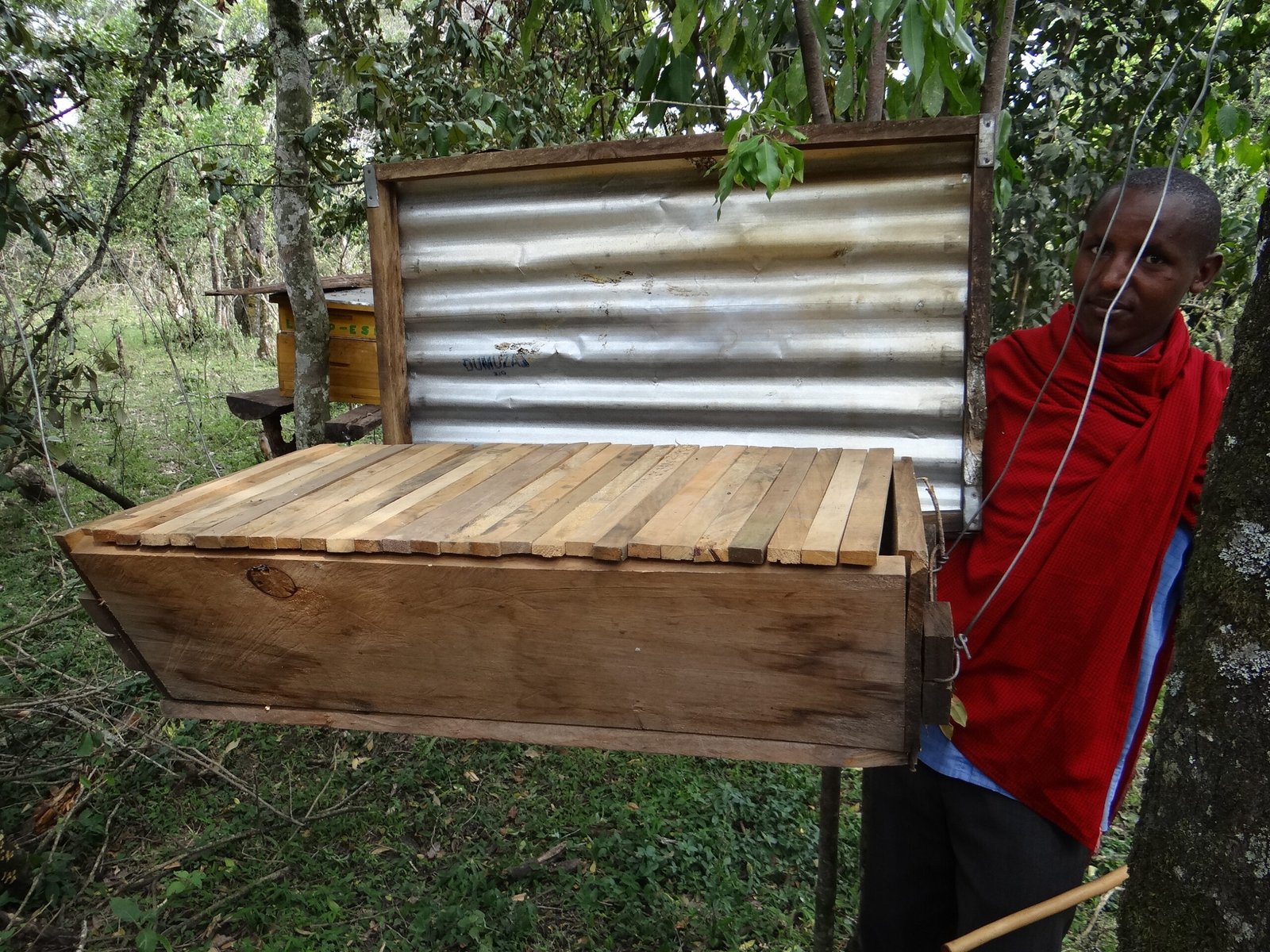
A genuinely distinctive feature of Kenyan beekeeping, and part of why registration-focused legislation has proven so contentious, is how much of the country’s honey still comes from traditional methods rather than the modern movable-frame equipment most beekeeping regulation elsewhere assumes as the baseline. Roughly 80% of Kenya’s honey production comes from traditional log hives, with modern hives like the Kenya Top Bar and Langstroth accounting for the remainder. Baringo County, in Kenya’s Rift Valley, is one of the country’s key honey-producing areas, with most local production coming from traditional Tugen log hives suited to the region’s grassland, acacia, and wild vegetation. The economic gap between the two approaches is real but not overwhelming: research in Baringo County found beekeepers using modern hives achieved gross margins of about KSh 7,917 per hive annually, compared to roughly KSh 5,590 per hive for those using traditional log hives — a meaningful difference, but not one large enough on its own to have driven most smallholder beekeepers toward modern equipment, especially given the added upfront cost movable-frame hives require. Government and NGO-backed programs have specifically targeted this gap, offering farmer capacity-building and equipment support aimed at helping smallholders transition toward modern hive technology where it makes economic sense, framing beekeeping modernization as a genuine opportunity for rural youth employment and food security rather than purely a productivity upgrade.
Indigenous Forest Beekeeping Communities
Beyond Baringo’s Tugen log-hive tradition, Kenya is also home to indigenous forest-dwelling communities like the Ogiek of the Mau Forest, whose beekeeping practices are deeply embedded in generations of ethnobotanical knowledge about forest plants, bee behavior, and seasonal honey flows. These communities’ beekeeping traditions predate any of the country’s modern legislative efforts by generations, and any future national registration framework will need to grapple with how a licensing system designed with commercial apiaries in mind applies to beekeeping practiced as an integral part of a forest-based indigenous livelihood rather than a discrete agricultural business.
KEBS Honey Quality Standards
Regardless of how a hive is built, honey sold commercially in Kenya must meet Kenya Bureau of Standards (KEBS) specifications. The core standard, Honey – Specification (KS EAS 36:2020), sets the quality parameters honey itself must meet, while separate standards — Honey Processing Unit (KS ARS 1418:2018) and Layout for Honey Processing Plant (KS ARS 1408:2018) — govern the hygienic requirements for facilities that harvest and process honey for market. These KEBS standards apply independently of the ongoing debate over apiary registration, meaning a Kenyan beekeeper selling honey commercially already has a real compliance framework to meet on the product-quality side, even in the continued absence of a national apiary-licensing law. In practice, this means product-quality compliance and apiary-licensing compliance are on genuinely separate tracks in Kenya right now: a beekeeper can be fully KEBS-compliant on the honey they sell while operating an apiary that has never been formally registered with any government body, since no such registration currently exists to comply with. Any Kenyan beekeeper planning to sell honey commercially should treat KEBS compliance as the genuinely binding requirement to focus on today, while keeping an eye on the Livestock Bill 2026’s progress through Parliament for whether and when an apiary-registration obligation might eventually join it.
Frequently Asked Questions
Do I need to register my beehives with the Kenyan government?
No, Kenya currently has no enacted national law requiring beekeeper registration, though a bill proposing this has been introduced multiple times.
What happened to Kenya’s proposed beekeeping registration laws?
The 2021 and 2024 Livestock Bills were both withdrawn after public and beekeeper opposition; a third version, the Livestock Bill 2026, is currently before Parliament.
What penalties does the current Livestock Bill 2026 propose for unregistered beekeeping?
Up to Sh500,000 in fines, twelve months’ imprisonment, or both, though this remains proposed rather than enacted law.
Do most Kenyan beekeepers use modern hives?
No, roughly 80% of Kenya’s honey still comes from traditional log hives rather than modern Langstroth or Kenya Top Bar hives.
What standard governs honey quality in Kenya?
KS EAS 36:2020, the Kenya Bureau of Standards specification for honey, alongside separate standards for processing facilities.
FAQ
Do I need to register my beehives with the Kenyan government?
No, there’s currently no enacted national registration law.
What happened to Kenya’s proposed beekeeping registration laws?
2021 and 2024 versions withdrawn; a 2026 version is pending.
What penalties does the current Livestock Bill 2026 propose for unregistered beekeeping?
Up to Sh500,000 or 12 months imprisonment, if enacted.
Do most Kenyan beekeepers use modern hives?
No, about 80% of honey comes from traditional log hives.
What standard governs honey quality in Kenya?
KEBS’s KS EAS 36:2020 honey specification.