Last Updated September 15, 2026
A genuinely good beekeeping book can do what a lecture about pollinators never will — turn a child’s fear of stinging insects into fascination. Whether you’re a beekeeping family looking for a book that helps a preschooler understand what’s happening at the hive, or a parent whose child has developed a sudden obsession with bees after a single sting, the right book at the right age makes a real difference. This guide walks through genuinely verified, real, currently-available books about bees and beekeeping, organized by age, from board-book-style lift-flap picture books through young adult fiction.
This guide covers a curated, age-by-age selection of real books about bees and beekeeping, from toddler-friendly interactive picture books through elementary nonfiction, a middle-grade novel built specifically around beekeeping, and a young adult title with a genuine beekeeping-adjacent premise. Every title below is a real, currently or recently in-print book with a verifiable publisher and publication history — this isn’t a generic list of vague suggestions, but specific titles worth actually tracking down at a library or bookstore, organized so a parent or educator can move a child from one tier to the next as their reading level and interest genuinely grow.
Key Takeaways
- For toddlers and preschoolers (roughly ages 3-7), interactive lift-flap picture books like “Bee: A Peek-Through Picture Book” introduce basic hive concepts through hands-on page interaction rather than dense text.
- For early elementary readers (ages 4-8), Gail Gibbons’s “The Honey Makers” remains a classroom-tested, diagram-rich nonfiction standard for explaining how bees actually make honey.
- For slightly older elementary readers (ages 6-9), “Bees: A Honeyed History” combines real scientific and cultural history of beekeeping with striking illustrated detail across 80 pages.
- For middle-grade readers (ages 9-13), Pablo Cartaya’s “The Last Beekeeper” builds an entire adventure story around protecting the last known beehive, and was a Jane Addams Award finalist.
- For teens, Meg Kassel’s “Keeper of the Bees” offers a supernatural young-adult fantasy built around a genuinely bee-themed premise, though it’s fantasy rather than realistic beekeeping fiction.
Table of Contents
- Toddler and Preschool: Interactive Picture Books
- Early Elementary: Classic Nonfiction
- Elementary: Illustrated History and Science
- Middle Grade: A Full Beekeeping Adventure
- Teen: Beekeeping-Themed Fantasy
- Tips for Reading Bee Books With a Real Beekeeping Family
- Frequently Asked Questions
Toddler and Preschool: Interactive Picture Books
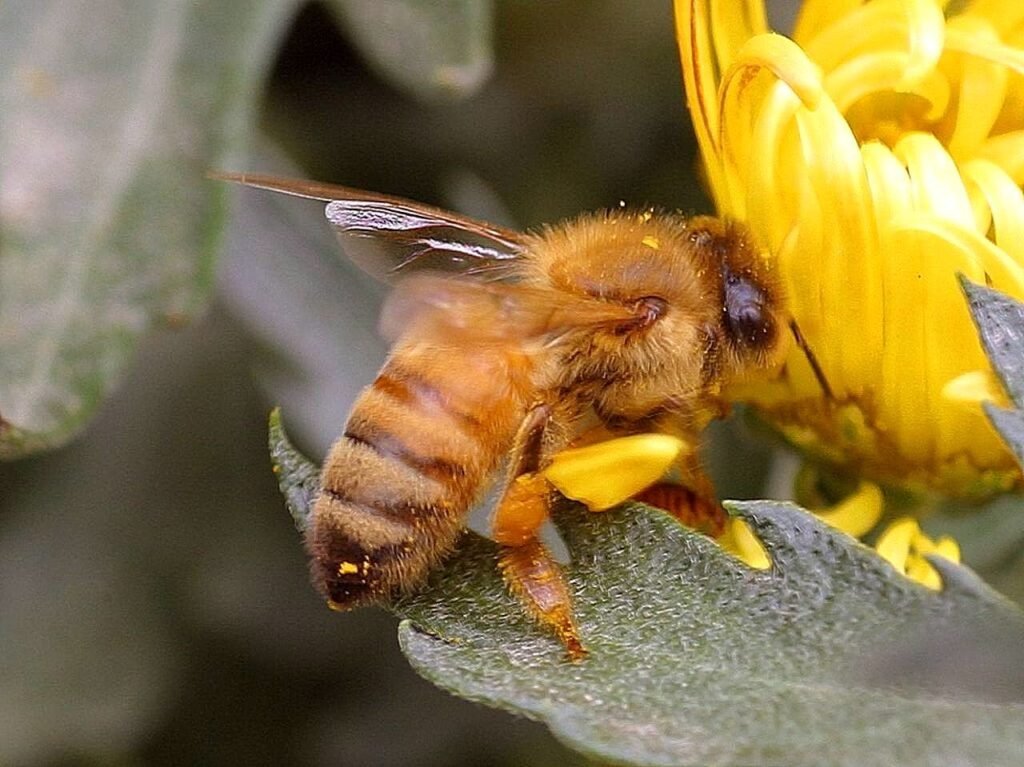
For the youngest readers, roughly ages 3 to 7, interactive format matters as much as content. “Bee: A Peek-Through Picture Book” by Britta Teckentrup (Doubleday Books for Young Readers) uses cleverly placed peekaboo holes on each page — lift or peer through them to reveal flowers, plants, and a look inside a beehive as bees work to help plants grow. This hands-on format keeps very young children engaged with the physical book itself, using the interactive element to introduce the basic idea of pollination and hive life well before a child is ready for extended text or detailed diagrams.
Early Elementary: Classic Nonfiction
For children roughly ages 4 to 8, Gail Gibbons’s “The Honey Makers” (HarperCollins) has remained a genuinely classroom-tested standard since its original publication, and it’s easy to see why: Gibbons pairs clear, age-appropriate text with detailed diagrams and illustrations that make hive structure, the roles bees play, and the actual mechanics of honey production understandable without oversimplifying past the point of accuracy. It’s frequently used in elementary science units specifically because it holds up to a teacher’s or parent’s scrutiny on factual accuracy while still reading as an engaging picture book rather than a dry reference text.
Elementary: Illustrated History and Science
For readers roughly ages 6 to 9 ready for a longer, more detailed book, “Bees: A Honeyed History” — written by Wojciech Grajkowski and illustrated by Piotr Socha (Abrams Books for Young Readers) — is an oversized, 80-page nonfiction title that goes well beyond a single-hive explanation. It traces bees and beekeeping through both scientific and cultural history, covering how different civilizations have kept and related to bees across time, all through richly detailed illustrated spreads. This is a genuinely good next step for a child who’s already read a book like “The Honey Makers” and wants more depth, more history, and more to look at on each page. The book’s large trim size and dense illustrated spreads also make it a genuinely good choice for a family read-aloud session or a classroom read-along, since the visual detail rewards slow, page-by-page exploration rather than a single quick read-through.
Middle Grade: A Full Beekeeping Adventure
For readers roughly ages 9 to 13 ready for a full-length novel, “The Last Beekeeper” by Pablo Cartaya follows twelve-year-old Yolanda Cicerón in a climate-changed future where she fights to save the last known beehive in the world from extinction, uncovering dangerous secrets along the way. Unlike many books that use bees as a minor plot device, beekeeping and the honeybee’s survival sit at the actual center of this story’s stakes, making it a genuinely on-topic pick rather than a book that happens to mention bees in passing — and it was recognized as a Jane Addams Award finalist, a peace- and social-justice-themed children’s literature honor, reflecting real critical regard beyond just its bee-related premise. Cartaya, an award-winning author known for centering Latinx characters and communities in his middle-grade work, sets the story in a mostly Latinx community, giving the book cultural specificity alongside its environmental stakes rather than treating the setting as incidental.
Teen: Beekeeping-Themed Fantasy
For teen readers looking for something with a beekeeping connection but a different tone entirely, Meg Kassel’s “Keeper of the Bees” (Entangled Teen), the second book in her Black Birds of the Gallows series, centers on a character named Dresden — cursed long ago by a queen who merged his body with a hive of honeybees — and a teen girl, Essie, dealing with her own family curse. This is genuinely a supernatural young-adult fantasy rather than a realistic story about beekeeping practice, so it’s worth setting that expectation clearly: a teen looking for insight into actual beekeeping won’t find it here, but one drawn to the honeybee as a striking, symbolically rich element within a darker fantasy story will find a genuinely well-regarded example of exactly that — reviewers have specifically praised the book’s atmospheric, melancholic tone and its unusual, memorable central metaphor. Since it’s the second book in a series, readers may want to start with the first title, “Black Bird of the Gallows,” for full context.
Tips for Reading Bee Books With a Real Beekeeping Family
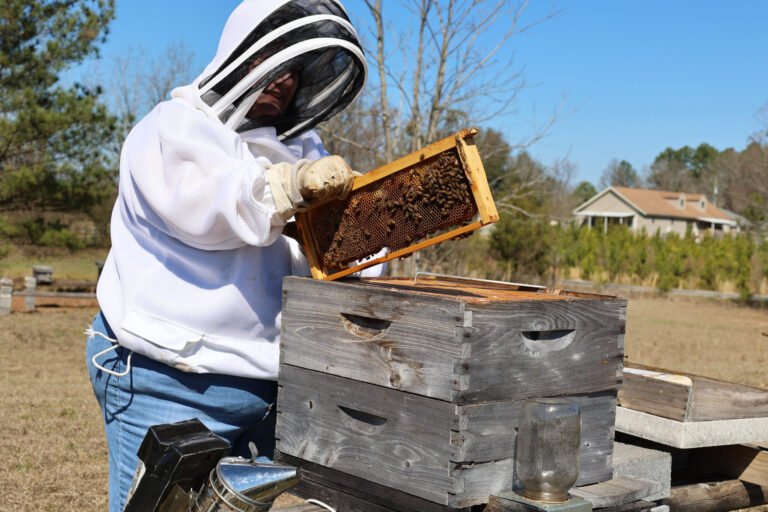
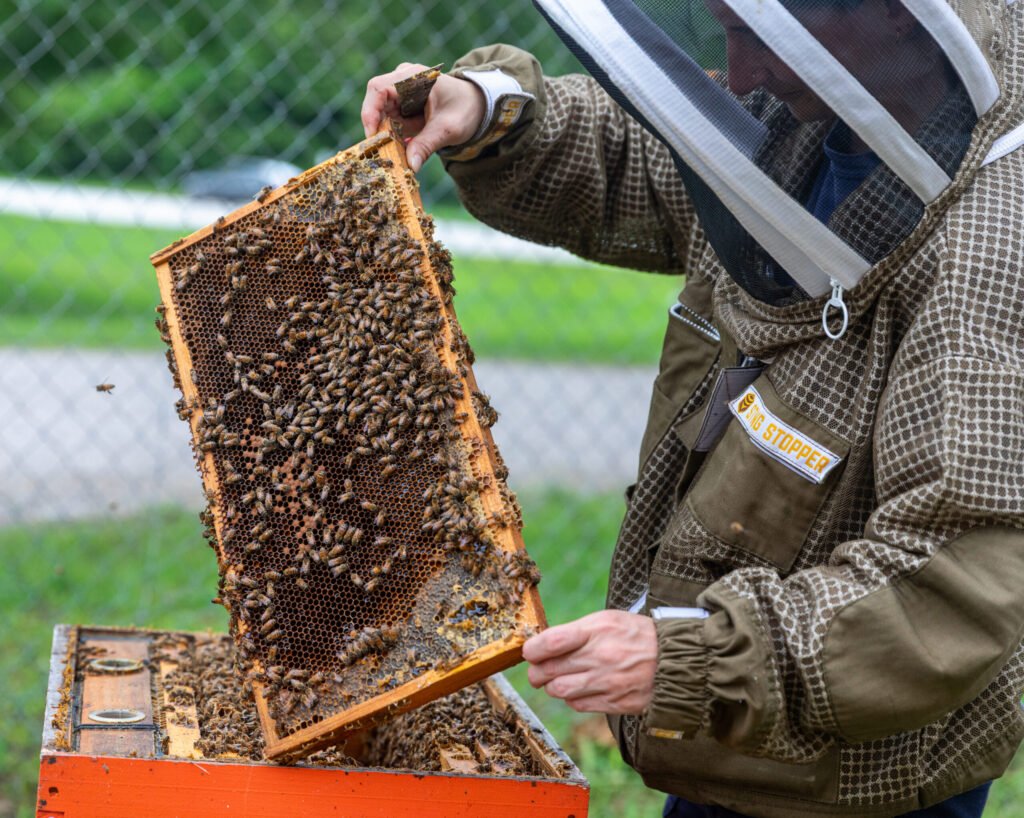
If your household actually keeps bees, these books work best paired with real hive time rather than as a substitute for it — a picture book explaining wax comb hits differently for a child who’s just watched a frame of drawn comb come out of a real hive versus one who’s only ever seen it on a page. For younger children specifically, consider reading a book like “The Honey Makers” or “Bee: A Peek-Through Picture Book” before a supervised, protected-distance hive viewing, so they arrive with a basic mental model of what they’re about to see rather than encountering an active, buzzing hive with zero context. Pair this with our beekeeping safety rules for kids guide before any actual hive visit. For middle-grade and teen readers already comfortable around the hive, a book like “The Last Beekeeper” can be a genuinely good entry point into conversations about real-world pollinator decline and colony collapse, connecting a fictional stakes-driven story to the actual environmental concerns their own family’s beekeeping practice addresses. Our homeschooling with bees curriculum guide has more structured ways to build on that connection.
Frequently Asked Questions
What’s a good first book about bees for a toddler?
“Bee: A Peek-Through Picture Book” by Britta Teckentrup uses interactive lift-flap pages suited to ages 3-7.
Is “The Honey Makers” by Gail Gibbons accurate for classroom use?
Yes, it’s a widely used, classroom-tested nonfiction picture book known for accurate, clearly illustrated explanations of hive structure and honey production.
Is there a middle-grade novel actually about beekeeping, not just bees in general?
Yes, “The Last Beekeeper” by Pablo Cartaya centers its entire plot on saving the last known beehive.
Is “Keeper of the Bees” a realistic book about beekeeping?
No, it’s a young-adult supernatural fantasy novel that uses a bee-themed curse as its central premise, not a realistic beekeeping story.
What age is “Bees: A Honeyed History” written for?
Roughly ages 6 to 9, though its detailed illustrations and depth make it enjoyable for older kids and adults too.
Related Reading
For more on this topic, see the EPA's pollinator protection and bee safety resources, or Publishers Weekly's own roundup of children's books about bees for further reading recommendations.
Image credits: Photo: Robert Engelhardt., CC BY-SA 3.0, via Wikimedia Commons.