Last Updated September 15, 2026
Most advice about beekeeping with kids focuses on gear — suits, veils, gloves — but the equipment is actually the easy part. The rules that keep a child genuinely safe around an active hive are behavioral: how close they stand, how they move, what they’re allowed to do at each age, and when a parent needs to call the whole thing off for the day. A properly fitted suit doesn’t protect a child who runs at a hive, swats at a bee, or wanders too close during an inspection — the behavior matters as much as the equipment, and it’s the part most beginner guides skip past quickly on their way to a gear checklist. This guide focuses specifically on that behavioral side, since a genuinely useful gear breakdown already exists elsewhere and repeating it here would just distract from the rules that actually determine whether a hive visit with kids goes smoothly.
This guide covers age-appropriate involvement levels, the specific behavioral rules that actually prevent stings, how to handle a child who panics near bees, allergy screening before a child’s first hive visit, and when to say no to bringing a child into the apiary at all.
Key Takeaways
- Behavior — calm movement, appropriate distance, no swatting — prevents more stings than gear alone, even with a properly fitted suit.
- Most sources suggest starting supervised involvement around age 5 to 7, with tasks and proximity scaled to the child’s demonstrated ability to stay calm.
- A child should never work a hive alone, lift heavy boxes, or be present without direct adult supervision, regardless of age.
- Allergy testing or at least an honest conversation with a pediatrician about sting risk is worth doing before a child’s first real hive exposure, not after a reaction.
- Some days and some children simply aren’t a good match for hive proximity — recognizing that in the moment matters more than sticking to a plan made in advance.
Table of Contents
- What’s Age-Appropriate at Each Stage
- Specific Tasks by Age Band
- The Behavioral Rules That Actually Prevent Stings
- Supervision Is Non-Negotiable, Regardless of Age
- Checking Allergy Risk Before the First Visit
- If a Child Panics Near an Active Hive
- Recognizing When to Say No for the Day
- A Note on Gear
- Frequently Asked Questions
What’s Age-Appropriate at Each Stage
Thinking in stages rather than a single fixed age gives families room to move at the pace that actually fits their specific child, rather than forcing a rigid timeline that may not match how a particular kid actually responds to being near an active hive.
Most sources suggest close, supervised involvement can reasonably begin around age 5 to 7, though the right age depends far more on a specific child’s temperament than on a birthday. A calm, instruction-following 5-year-old may be ready for supervised, up-close observation before a more excitable 8-year-old is. In practice, involvement should scale gradually: watching from a safe distance first, then closer supervised observation, then simple assisted tasks once a child has demonstrated they can follow calm-movement rules consistently, well before ever being handed a hive tool or asked to help with an actual inspection. Resist the temptation to rush this progression just because a child is eager – eagerness and the ability to stay genuinely calm around an agitated colony are two different things, and only one of them actually keeps a child safe.
Specific Tasks by Age Band
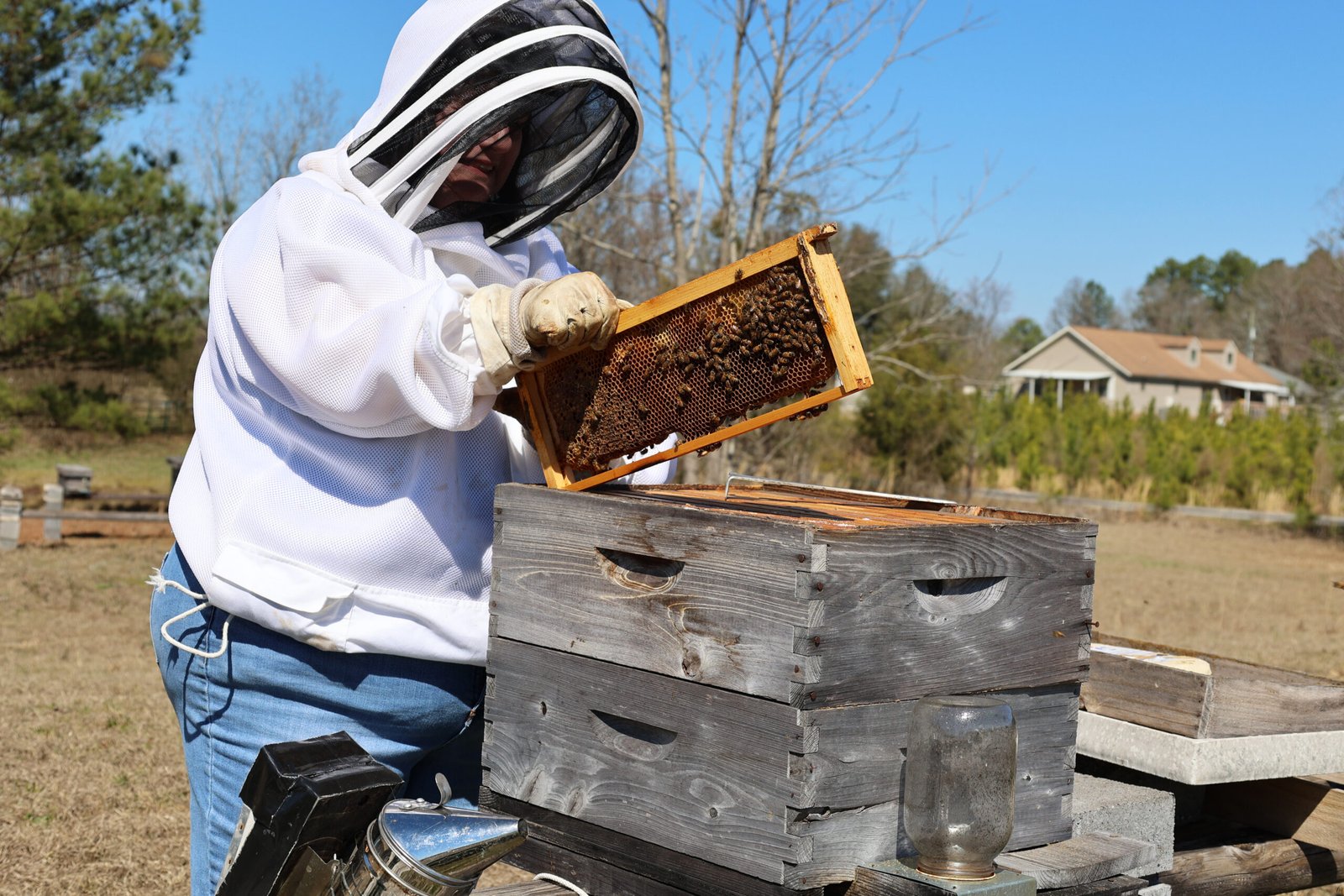
Putting concrete tasks against each stage makes the general progression above easier to actually apply. Under age 5, keep a child entirely away from open hive work — watching from a safe distance and naming tools and parts of the hive is plenty, along with simple non-bee jobs like sorting clean equipment or fetching a towel. Around age 5 and up, once a child has shown they can follow calm-movement rules consistently, genuinely simple, closely supervised tasks become reasonable — holding a smoker with an adult’s hands guiding theirs, or painting hive boxes away from an active colony. From roughly age 10 up, and only with a track record of calm behavior, a child can take on more involved supervised roles — helping with a frame check, learning to recognize a normal brood pattern, or looking for signs of a queen cell alongside an adult who’s doing the actual handling. At every stage, the adult remains the one opening the hive and controlling the pace — the child’s role is to participate at a level that matches their demonstrated ability to stay calm, not their eagerness to help.
The Behavioral Rules That Actually Prevent Stings
These rules work precisely because they’re simple enough for a young child to remember and apply consistently, rather than a long list of situational judgment calls that only an experienced adult could reasonably be expected to make in the moment.
The core behavioral rules are simple to state and worth repeating before every single hive visit, not just the first one: move slowly, never run near the hive, never swat at a bee that lands nearby, and stay at whatever distance the supervising adult sets for that specific day. Establishing a consistent “bee calm” habit — deliberately slow movements, quiet voices, hands kept still — gives a child a concrete behavior to practice rather than a vague instruction to “be careful,” which is much harder for a young child to actually apply in the moment. Kids should also understand, in age-appropriate terms, that a bee flying near them investigating isn’t the same as a bee about to sting, so they don’t panic and swat reflexively at ordinary foraging behavior. Practicing this distinction away from the hive – pointing out a bee on a flower in the yard and narrating calmly what it’s doing – gives a child a low-stakes way to build familiarity before ever standing near an actual colony.
Supervision Is Non-Negotiable, Regardless of Age
No matter how experienced or calm a child has become, direct adult supervision during any hive interaction remains a firm rule, not a training-wheels stage that gets removed once a child seems ready. A child should never lift heavy hive boxes, never open or work a hive alone, and never be left near an active apiary without an adult present who can intervene immediately if bee behavior changes. This isn’t a reflection of doubting a specific child’s maturity — colony temperament itself can shift day to day based on weather, a recent disturbance, or seasonal factors entirely outside anyone’s control, which is exactly the kind of situation that calls for an adult’s judgment in real time. Even a beekeeper with years of experience reading their own colonies’ typical temperament should treat every visit as its own independent judgment call when a child is present, rather than assuming a normally calm hive will behave the same way it always has.
Checking Allergy Risk Before the First Visit
This conversation is worth having even for a family with no history of allergic reactions at all, simply because it’s far easier to think clearly about a plan before an emergency than to improvise one during it.
Before a child’s first real exposure to an active hive, it’s worth having an honest conversation with a pediatrician about sting-allergy risk, particularly if there’s any family history of severe allergic reactions to insect stings. Formal allergy testing isn’t always necessary or recommended before a first sting for a child with no relevant history, but knowing the plan in advance — who to call, where the nearest emergency care is, whether an epinephrine auto-injector should be on hand — matters more for a child than for an adult, since children can’t always articulate developing symptoms as clearly or as quickly. A young child experiencing the early stages of a systemic reaction may describe feeling “weird” or “funny” rather than naming specific symptoms like dizziness or throat tightness, which means an adult present needs to watch for physical signs – flushing, unusual quietness, or a change in breathing – rather than waiting for a child to clearly report a problem.
If a Child Panics Near an Active Hive
Preparing for this scenario is not the same as expecting it to happen – most calm, well-supervised hive visits with kids go entirely smoothly, but the preparation itself is what makes that smooth outcome far more likely.
A calm, practiced response from the supervising adult matters more in this moment than almost any other part of hive-side parenting. If a child starts to panic near bees, the right response is a calm, quiet instruction to walk — not run — away, while the adult positions themselves to shield and guide the child rather than reacting with visible alarm themselves, since a child will generally mirror the adult’s emotional state faster than they’ll process a verbal instruction. Practicing this response away from the hive, as a simple “if this happens, we do this” conversation before ever standing near an active colony, makes it far more likely a child actually follows it in the moment rather than freezing or running. Some families find it useful to physically walk through the response once, away from bees entirely – simulating the calm walk, the direction to head, and where to regroup – so the movement itself becomes familiar rather than something a child has to figure out for the first time under stress.
Recognizing When to Say No for the Day
Some days simply aren’t right for bringing a child near the hive, and recognizing that in the moment is a genuinely important parenting skill in this context, separate from any general safety plan made in advance. A recently disturbed colony, an unusually defensive mood, a child who’s overtired or overstimulated that day, or weather conditions that tend to make bees more irritable are all good reasons to simply postpone rather than push through a planned visit. Treating “not today” as a normal, expected part of beekeeping with kids — rather than a failure or disappointment to avoid — keeps the activity genuinely safe over the long run rather than just safe on the days everything happens to go smoothly. A child who learns early that “not today” is a normal, unremarkable outcome – rather than a sign something went wrong – also tends to develop a healthier, more realistic relationship with the hobby overall, one built on genuine respect for the bees rather than either fear or overconfidence.
A Note on Gear
Proper protective equipment is still a real part of keeping a child safe around bees — it’s simply not the part that does the most work. A well-fitted kids’ bee suit, veil, and gloves reduce the consequences of the behavior rules above being imperfectly followed, rather than replacing the need for those rules in the first place. Our guide to kids’ bee suits covers sizing, fit, and what to actually look for when buying protective gear for a young beekeeper.
Frequently Asked Questions
What age can a child start being involved in beekeeping?
Most sources suggest supervised involvement can begin around age 5 to 7, though a specific child’s temperament matters more than their exact age.
What tasks are appropriate for a young child versus an older one?
Under 5, keep kids away from open hive work entirely — observation and simple non-bee jobs only. Around 5+, closely supervised tasks like holding a smoker with an adult’s hands guiding theirs are reasonable. From about 10 up, with a track record of calm behavior, a child can help with supervised frame checks alongside an adult who’s doing the actual handling.
Can a child work a hive without an adult present?
No. Direct adult supervision should remain a firm rule regardless of how experienced or calm a child has become.
Does a child need allergy testing before their first hive visit?
Not always necessary for a child with no relevant history, but a conversation with a pediatrician and a clear emergency plan is worth having in advance.
What should I do if my child panics near an active hive?
Give a calm, quiet instruction to walk (not run) away, and stay visibly calm yourself, since children tend to mirror an adult’s emotional state.
Is it okay to skip a planned hive visit with kids sometimes?
Yes. A recently disturbed colony, unusually defensive mood, or an overtired child are all good reasons to postpone rather than push through.
Related Reading
For more on this topic, see the EPA's pollinator protection and bee safety resources.
Image credits: Photo: QuillOrbit7, CC BY-SA 4.0, via Wikimedia Commons.