Last Updated September 16, 2026
India has committed roughly ₹500 crore (about $60 million) to a national beekeeping program explicitly named for the goal it’s chasing: a “Sweet Revolution.” The National Beekeeping and Honey Mission has already registered over 10,000 beekeepers and beekeeping firms representing 1.6 million honeybee colonies, while a parallel government initiative works to fix a genuinely serious problem — the traceability and adulteration issues that have periodically undermined confidence in Indian honey both domestically and in export markets.
This guide covers India’s National Beekeeping and Honey Mission and the National Bee Board that administers it, how registration and scheme participation actually work, the mandatory FSSAI registration required to sell honey commercially, India’s honey-traceability initiative aimed at fighting adulteration, and how the country’s two managed honey bee species and state-level forest rules shape beekeeping in practice. India’s beekeeping sector is explicitly framed by policymakers as part of the country’s Integrated Farming System — a model that treats beekeeping not as a standalone hobby industry but as one component of a broader rural livelihood strategy alongside crop and livestock farming, which is part of why the national program invests so heavily in infrastructure, training, and market access rather than focusing narrowly on registration and compliance alone.
Disclaimer: This guide is for educational purposes only and is not legal advice. Beekeeping regulations change over time — always confirm current requirements directly with your local or national agricultural authority before acting.
Key Takeaways
- The National Beekeeping and Honey Mission (NBHM), a ₹500 crore central government scheme launched under the Atmanirbhar Bharat Abhiyaan, is administered through the National Bee Board (NBB) and organized into three Mini Missions covering production, post-harvest management, and research.
- More than 10,000 beekeepers, societies, and firms representing 1.6 million honeybee colonies have registered with the National Bee Board.
- Selling honey commercially in India requires FSSAI (Food Safety and Standards Authority of India) registration, mandatory for any food business including honey sellers.
- India has approved and begun implementing a honey and beehive-product traceability system specifically to help control adulteration, a persistent challenge for the industry’s domestic and export credibility.
- India manages two honey bee species commercially — the native Apis cerana and the introduced Apis mellifera (established in the country since 1964) — and some states, including Uttarakhand and Himachal Pradesh, require advance notice before placing hives in forest areas.
Table of Contents
- The National Beekeeping and Honey Mission: India’s “Sweet Revolution”
- Registering With the National Bee Board
- FSSAI Registration for Selling Honey Commercially
- Honey Testing Labs and Specialty Products
- Fighting Adulteration: The Honey Traceability Initiative
- Two Bee Species and State-Level Forest Rules
- Frequently Asked Questions
The National Beekeeping and Honey Mission: India’s “Sweet Revolution”
The Indian government approved ₹500 crore in funding for the National Beekeeping and Honey Mission (NBHM), launched as part of the Atmanirbhar Bharat Abhiyaan (self-reliant India campaign) and implemented through the National Bee Board under the Ministry of Agriculture & Farmers Welfare. The mission’s explicit goal is a “Sweet Revolution” — promoting the holistic growth of India’s beekeeping industry for income and employment generation, enhancing agriculture and horticulture production through pollination, and building infrastructure including Integrated Beekeeping Development Centres, honey testing labs, and bee disease diagnostic labs. The mission operates through three Mini Missions: Mini Mission-I covers production and productivity through scientific beekeeping and pollination support; Mini Mission-II covers post-harvest management, including collection, processing, storage, marketing, and value addition of beehive products; and Mini Mission-III funds research and technology generation in beekeeping. Sixteen Integrated Beekeeping Development Centres have been commissioned across states including Haryana, Punjab, Uttar Pradesh, Uttarakhand, Himachal Pradesh, Tamil Nadu, and Karnataka, functioning as regional role models for scientific beekeeping practice.
Registering With the National Bee Board
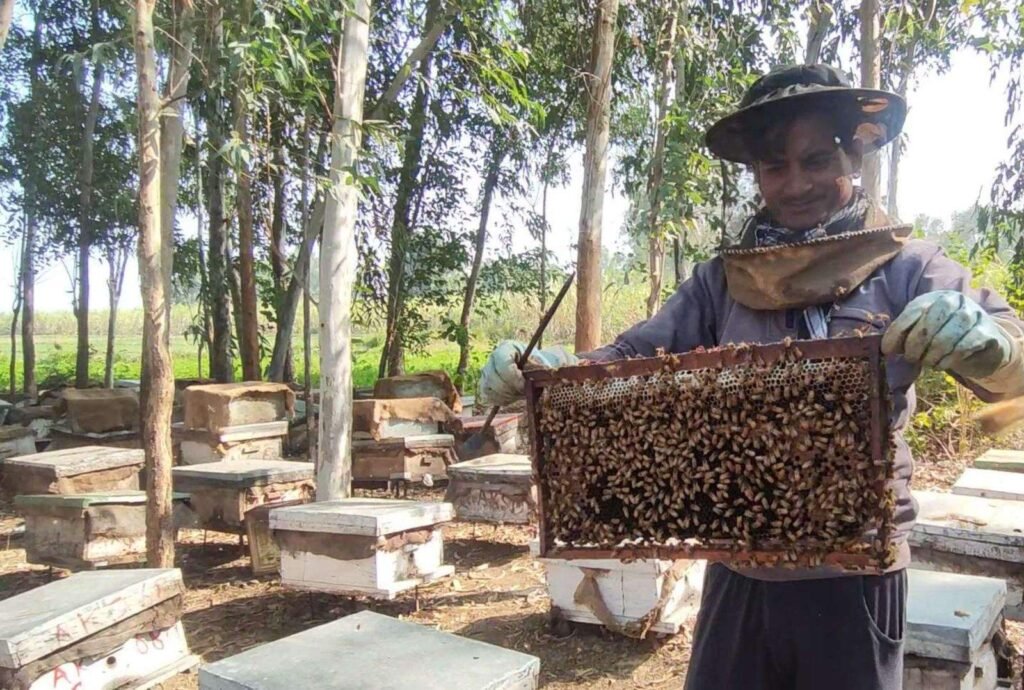
More than 10,000 beekeepers, beekeeping societies, firms, and companies — representing roughly 1.6 million honeybee colonies — have registered with the National Bee Board as part of the NBHM rollout. This registration functions primarily as the gateway to scheme participation and infrastructure access — training in scientific beekeeping, specialized equipment for producing high-value products like royal jelly and bee venom, and connection to the newly established honey testing labs — rather than as a universal legal mandate covering every beekeeper in the country the way apiary registration works in many countries covered elsewhere on this site. India has also supported the formation of Farmer Producer Organizations (FPOs) specifically for beekeepers and honey producers in states including Bihar, Uttar Pradesh, Madhya Pradesh, Rajasthan, and West Bengal, giving registered beekeepers collective market access they wouldn’t have individually. The scale of NBHM’s ambition is reflected in the industry’s actual growth over the mission’s early years: national honey production rose from roughly 76,150 metric tons in 2013-14 to about 120,000 metric tons in 2019-20, a 57.58% increase, a trajectory the government explicitly credits to the combination of scientific-beekeeping training, infrastructure investment, and registration-linked scheme access the NBHM rollout has provided.
FSSAI Registration for Selling Honey Commercially
Separate from National Bee Board registration, anyone selling honey commercially in India must register with the Food Safety and Standards Authority of India (FSSAI), which is mandatory for any food business, honey sellers included. FSSAI also sets the specific testing parameters that determine whether a honey sample meets India’s quality and purity standards — parameters the government’s newly established honey testing labs, including one at Anand, Gujarat, accredited by the National Accreditation Board for Testing and Calibration Laboratories, now test against directly. For personal or genuinely small-scale beekeeping without commercial sale, no formal FSSAI registration is required, but the moment honey moves into commercial sale, FSSAI compliance becomes mandatory regardless of NBB registration status.
Honey Testing Labs and Specialty Products
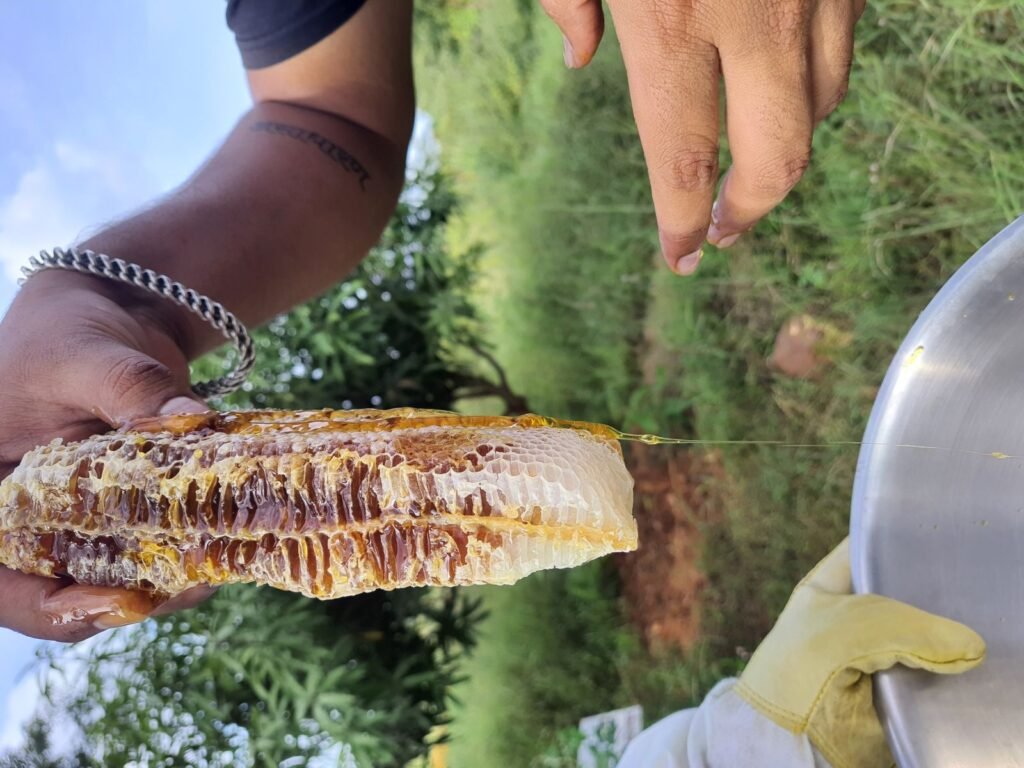
As part of NBHM’s infrastructure push, the government has set up world-class honey testing labs, including one at the National Dairy Development Board in Anand, Gujarat, and another at the Indian Institute of Horticultural Research in Bengaluru, Karnataka. The Anand facility has been accredited by the National Accreditation Board for Testing and Calibration Laboratories and now tests honey samples against all parameters notified by FSSAI. The mission has also funded research and farmer training around high-value specialty beehive products beyond ordinary honey — royal jelly, bee venom, comb honey, bee pollen, and propolis — along with studies exploring the potential of high-altitude honey and specific regional specialty honeys, including production in Kannauj and Hathras districts of Uttar Pradesh.
Fighting Adulteration: The Honey Traceability Initiative
India has approved and begun implementing a system for developing traceability of the source of honey and other beehive products, a project specifically aimed at controlling adulteration — a problem that has periodically damaged confidence in Indian honey both domestically and among export buyers. The government’s Madhukranti portal now handles online registration and traceability specifically so a sample’s source can be tracked back to the registered beekeeper or firm that produced it. On the testing side, FSSAI has taken a different technical path than many other food-safety regulators: rather than mandating Nuclear Magnetic Resonance (NMR) testing for domestic honey — which the agency has said almost no food regulator worldwide currently requires, citing high equipment cost and the lack of a comprehensive Indian floral-honey reference database — FSSAI instead mandates that any honey sold domestically test “Absent” for a compound called 2-AFGP, a marker that exists only in rice syrup and never occurs naturally in honey, making it a direct test for exactly the adulteration method most commonly implicated in Indian honey cases. NMR testing remains mandatory only for honey intended for export, coordinated through APEDA and required since August 1, 2020. The traceability push sits alongside this testing infrastructure as part of a coordinated national effort to verify that honey sold as pure, single-origin, or specialty product genuinely is what its label claims. This matters for India’s trade position too: honey exports grew from roughly 28,378 metric tons in 2013-14 to 59,537 metric tons in 2019-20, a 109.8% increase, making credible purity verification a genuine trade-competitiveness issue and not merely a domestic consumer-protection concern. The NBHM itself has also been extended: originally structured to run FY2020-21 through FY2025-26, the mission was extended for a further three years with roughly ₹370 crore remaining from its original allocation as of the most recent Press Information Bureau update, meaning the infrastructure and registration push described above is an active, ongoing program rather than a completed one.
Two Bee Species and State-Level Forest Rules
India’s commercial beekeeping industry centers on two managed honey bee species: Apis cerana, native to the region and traditionally reared in India, and Apis mellifera, the European honey bee, successfully introduced into Indian beekeeping in 1964 after earlier attempts dating back to 1880. Both species are actively managed commercially today, giving Indian beekeepers a choice most countries with only a single dominant managed species don’t have. Beyond the national NBHM/NBB and FSSAI frameworks, individual Indian states layer their own additional rules on top — Uttarakhand and Himachal Pradesh, for example, require advance notice before placing hives in forest areas, reflecting how much Indian beekeeping, especially migratory beekeeping following seasonal blooms, depends on access to forested public land rather than purely private agricultural acreage. Other states, including Madhya Pradesh and Tamil Nadu, have gone the opposite direction and designated specific apiary zones to actively support beekeeping rather than simply regulate it. This state-by-state variation means a beekeeper’s actual day-to-day obligations in India depend heavily on location in a way the national NBHM and FSSAI frameworks alone don’t fully capture — a migratory beekeeper moving colonies between states for seasonal pollination may need to satisfy several different sets of state-level forest-access or apiary-zone rules within a single season, on top of the consistent national registration and food-safety requirements that apply everywhere.
India’s Two Managed Honey Bee Species
| Apis cerana | Apis mellifera | |
|---|---|---|
| Origin | Native to the region | European; introduced 1964 (earlier attempts from 1880) |
| Traditional role | Long-established traditional species | Now the dominant species in commercial/scientific beekeeping |
| Commercial status today | Actively managed commercially | Actively managed commercially |
Both species remain in active commercial use today, giving Indian beekeepers a choice of managed species most single-species countries don’t have.
Frequently Asked Questions
What is the National Beekeeping and Honey Mission?
A ₹500 crore Indian government scheme aimed at promoting scientific beekeeping and boosting rural income, administered through the National Bee Board.
Do I need to register my hives with the National Bee Board?
Registration isn’t universally mandatory, but it’s required to access NBHM scheme benefits like training, equipment support, and testing lab access.
Do I need FSSAI registration to sell honey in India?
Yes, if you sell commercially — FSSAI registration is mandatory for any food business, including honey sellers; personal or small-scale non-commercial beekeeping doesn’t require it.
Why is honey traceability such a big focus in India?
To combat adulteration, which has damaged confidence in Indian honey both domestically and among export buyers, and to support India’s growing honey export market.
Which honey bee species are used in Indian beekeeping?
Apis cerana, native to the region, and Apis mellifera, introduced successfully in 1964 — both are managed commercially today.
Related Reading
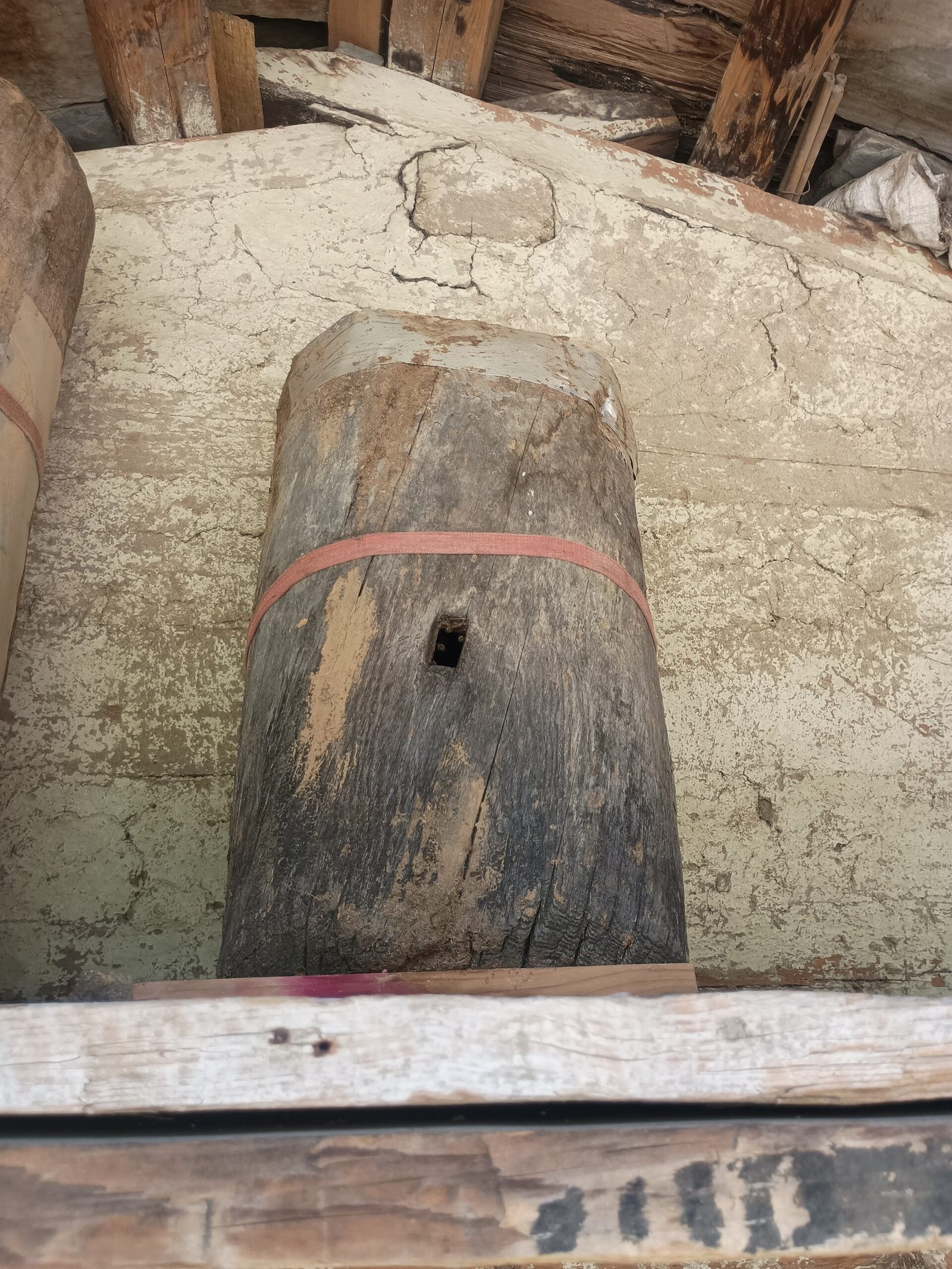
Image credits: Photo: Rajani Gairshail, CC BY-SA 4.0, via Wikimedia Commons; Photo: Traditional household beekeeping in Kullu district, Himachal Pradesh, India. Photo by Rajani Gairshail, CC BY-SA 4.0.