Last Updated September 16, 2026
Germany assigns every registered beekeeper a distinctive twelve-digit registration number — built from the official municipality code plus a four-digit operation number — and enforces one of the strictest American foulbrood quarantine regimes covered anywhere on this site. Before an outbreak is even officially confirmed, German law already freezes what can be moved in or out of a suspected apiary; once confirmed, an infected site falls under a formal lockdown with rules covering everything from disinfection procedures to which hive materials must be burned outright.
This guide covers Germany’s mandatory beekeeper registration under the Bee Disease Ordinance (Bienenseuchen-Verordnung), the veterinary health certificate required to move colonies between locations, the posting requirement for migratory apiaries, the country’s detailed American foulbrood quarantine procedure, hygiene rules for commercial honey-handling operations, and the new EU-wide honey labelling requirements taking effect in mid-2026. The Bienenseuchen-Verordnung itself dates back to 1972, most recently republished in a consolidated 2004 version and last amended in 2014 — a long-standing regulatory backbone that predates Germany’s EU membership obligations and continues to operate alongside newer EU-wide rules like the 2026 labelling directive rather than being replaced by them.
Disclaimer: This guide is for educational purposes only and is not legal advice. Beekeeping regulations change over time — always confirm current requirements directly with your local or national agricultural authority before acting.
Key Takeaways
- Anyone keeping bees in Germany must notify the competent authority at the latest when starting the activity, reporting colony count and location, and receives a twelve-digit registration number built from the municipality’s official code and a four-digit operation number.
- Moving bee colonies to a new location requires a veterinary certificate from the colony’s origin confirming freedom from American foulbrood — the certificate cannot be older than nine months, and cannot have been issued before September 1 of the preceding calendar year.
- Before American foulbrood is even officially confirmed at a suspected apiary, German law already prohibits moving colonies, bees, combs, wax, honey, or equipment in or out of the site.
- After official confirmation, the apiary falls under formal quarantine: live bees can only be salvaged into uninfected hive boxes through an artificial swarm procedure, straw hive boxes must be burned, and all other equipment must be disinfected under official veterinary supervision.
- From June 14, 2026, EU-wide rules require blended honey to list every country of origin on the label in descending order by weight, with each country’s percentage share shown.
Table of Contents
- Mandatory Registration and the Twelve-Digit Number
- Moving Bee Colonies: The Veterinary Certificate
- Migratory Apiaries: The Posting Requirement
- The American Foulbrood Quarantine Regime
- Quarantine at a Glance: Before vs. After Confirmation
- Hygiene Rules for Commercial Honey-Handling Facilities
- Selling Honey: New EU Labelling Rules for 2026
- Frequently Asked Questions
Mandatory Registration and the Twelve-Digit Number
Under Germany’s Bienenseuchen-Verordnung (Bee Disease Ordinance, BienSeuchV), anyone wanting to keep bees must notify the competent authority at the latest by the time they begin the activity, stating the number of colonies and their location. The regulation itself is direct on this point:
“Wer Bienen halten will, hat dies spätestens bei Beginn der Tätigkeit der zuständigen Behörde unter Angabe der Anzahl der Bienenvölker und ihres Standortes anzuzeigen.”
— Bienenseuchen-Verordnung, § 1a (“Anyone wishing to keep bees must notify the competent authority no later than when beginning the activity, specifying the number of bee colonies and their location.”)
The authority records the reported beekeeping operation and issues a registration number — a distinctive twelve-digit identifier built from the official municipality code (drawn from the Federal Statistical Office’s municipality key directory) plus a four-digit facility number specific to that operation. This structure means a German beekeeper’s registration number itself encodes exactly which municipality the operation is registered in, a more information-dense identifier than a simple sequential registration number would provide.
Moving Bee Colonies: The Veterinary Certificate
When bee colonies are moved to a new location, the owner or caretaker must present a certificate from the official veterinarian at the colony’s place of origin to the authority responsible for the new location, immediately upon arrival. The certificate must confirm that the bees have been found free of American foulbrood and that the place of origin isn’t located within a foulbrood restricted zone. Germany applies unusually specific timing rules to this certificate: it cannot have been issued before September 1 of the preceding calendar year, and cannot be older than nine months at the time of the move — a fixed-calendar-date rule rather than a simple rolling window, which beekeepers planning any relocation need to plan around carefully. For colonies moved only temporarily, the authority records the location and dates of the move directly on the certificate, along with any bee diseases found at the temporary site, before returning it to the owner once the colonies leave that authority’s district.
Migratory Apiaries: The Posting Requirement
An owner whose bee colonies are only temporarily moved to another location must post a sign at that site showing their name, address, and the number of colonies present, in clear and durable lettering, visible at the apiary. The owner must also ensure the colonies can be examined by the official veterinarian, in the owner’s presence or that of an authorized representative, whenever such an examination is needed for disease-control purposes. This requirement specifically targets Germany’s migratory beekeeping practice — moving hives seasonally to follow blooms — ensuring temporary sites remain just as identifiable and inspectable as permanent registered locations.
The American Foulbrood Quarantine Regime
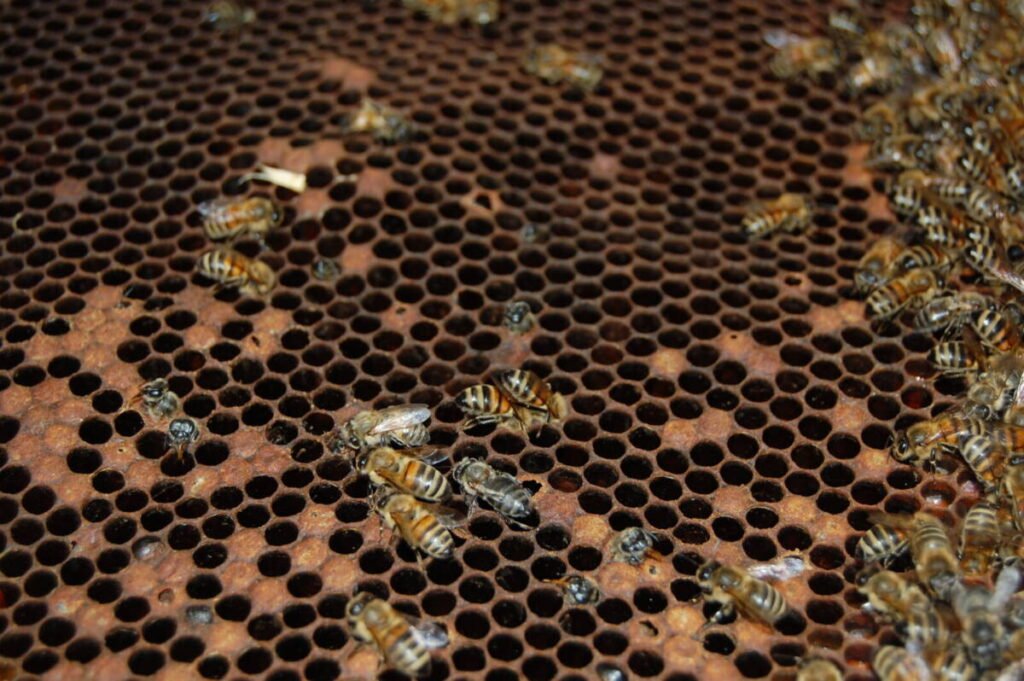
Germany’s foulbrood-control procedure operates in two distinct phases. Before an outbreak or suspected outbreak is officially confirmed, no changes may be made at the apiary at all: colonies, live or dead bees, combs, comb parts, wax, honey, feed stores, hive equipment, and tools cannot be removed from the site, and no new colonies or bees can be brought in — access is limited to the owner, their representative, designated caretakers, veterinarians, and officials. Once American foulbrood is officially confirmed, the apiary falls under a formal quarantine with considerably more detailed rules: nothing may be removed from the site except dead bees, which may only be taken for safe disposal per the official veterinarian’s instructions; live bees can only be salvaged by transferring them into uninfected hive boxes at the same site through an artificial swarm procedure (Kunstschwarmverfahren) — combs and feed stores from infected colonies cannot be moved this way; honey harvested on-site cannot be fed back to bees; removed combs and any containers or equipment that have had contact with honey must be stored where bees can’t access them; dead bees, brood, and hive waste must be disposed of per veterinary instruction; and hive stands and boxes — except those made of straw, which must be burned outright — along with equipment, must be cleaned and disinfected under official veterinary supervision.
Quarantine at a Glance: Before vs. After Confirmation
| Before official confirmation | After official confirmation | |
|---|---|---|
| Removing anything from the site | Prohibited entirely | Prohibited, except dead bees for supervised disposal |
| Saving live bees | N/A | Only via artificial swarm procedure (Kunstschwarmverfahren) into uninfected boxes |
| Combs and feed stores from infected colonies | Cannot be moved | Cannot be moved with the salvaged bees |
| Straw hive boxes | N/A | Must be burned |
| Other equipment | N/A | Cleaned and disinfected under veterinary supervision |
| Site access | Owner, representative, caretakers, veterinarians, officials only | Same, under formal quarantine |
Hygiene Rules for Commercial Honey-Handling Facilities
Operations that commercially store or process honey, manufacture foundation wax for bee combs, or process disease-contaminated wax fall under direct oversight by the competent authority. In facilities that commercially process honey, any container or tool used for storing, processing, filling, or transporting honey must, after use, either be thoroughly cleaned with boiling water, exposed to at least 230°C for a minimum of 20 minutes, or stored where bees cannot reach it — and the facility’s work areas themselves must be kept bee-proof. Honey from such a facility can only be disposed of in a way that keeps it inaccessible to bees. Operations using honey commercially to make feed dough for bees must treat that honey with a process that kills pathogens of transmissible bee diseases before using it, and the competent authority can extend similar bee-proofing and disinfection requirements to foundation-wax and disease-wax processing facilities specifically to prevent the spread of American foulbrood. These commercial-facility rules exist as a distinct layer on top of the individual beekeeper’s own quarantine obligations described above — a beekeeper’s own apiary and a commercial honey-processing operation they might sell to are each independently regulated, meaning a disease-control failure at either point in the supply chain is addressed by its own dedicated set of rules rather than relying on a single upstream safeguard to catch every risk.
Selling Honey: New EU Labelling Rules for 2026
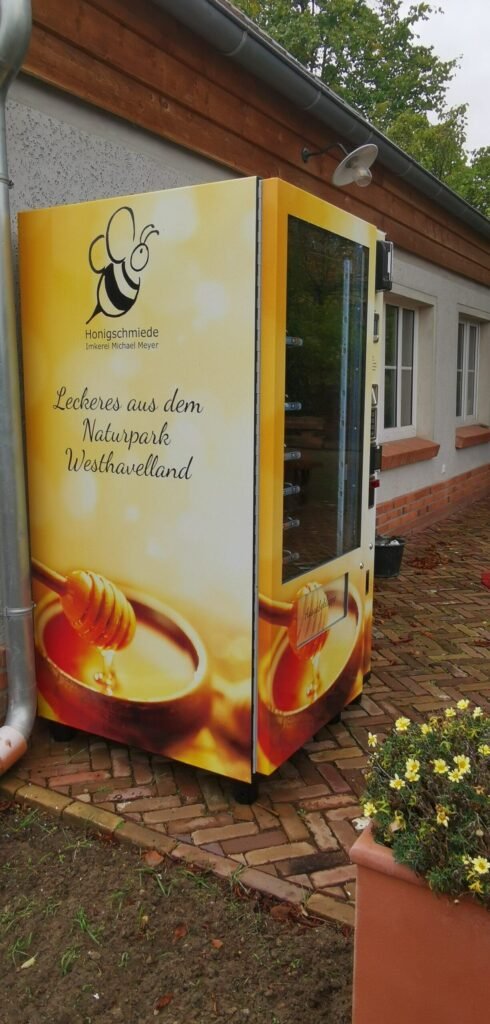
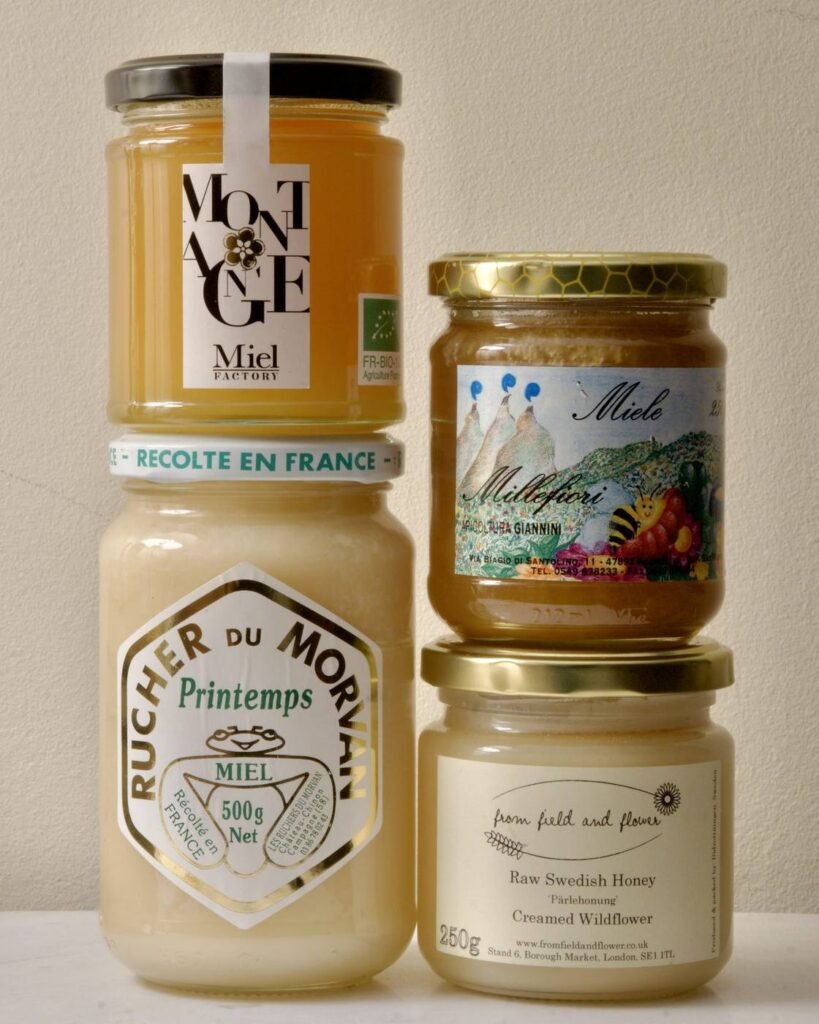
Honey sold in Germany, like honey sold across the rest of the EU, is subject to Directive (EU) 2024/1438, which came into force in mid-2024 and begins applying from June 14, 2026. This directive updates the EU’s honey composition and labelling rules specifically to increase supply-chain transparency and reduce fraudulent blending practices — the headline change requires honey blended from multiple countries to list every country of origin on the label in descending order by weight, along with the percentage each country contributes, replacing the previous, vaguer practice of labelling multi-origin honey simply as a blend without country-specific detail. German beekeepers and honey packers selling blended honey should have updated, compliant labelling ready well before the June 2026 application date, since this is EU-wide binding law, not optional national guidance.
Frequently Asked Questions
Do I need to register as a beekeeper in Germany?
Yes, you must notify the competent authority at the latest when you start keeping bees, and you’ll receive a twelve-digit registration number.
What do I need to move my bee colonies to a new location in Germany?
A veterinary certificate from the origin confirming the bees are free of American foulbrood and not from a restricted zone, issued no earlier than the preceding September 1 and no older than nine months.
What happens if American foulbrood is confirmed in my apiary?
The apiary enters formal quarantine: nothing can be removed except dead bees for safe disposal, live bees can only be saved via an artificial swarm procedure, straw hive boxes must be burned, and everything else must be disinfected under veterinary supervision.
Do I need to post a sign at a temporary migratory apiary site in Germany?
Yes, showing your name, address, and colony count, clearly and durably displayed.
What changes with the new EU honey labelling rules in 2026?
From June 14, 2026, blended honey must list every country of origin by weight-descending order with each country’s percentage share.
Related Reading
For more on this topic, see the full text of the Bienenseuchen-Verordnung on Germany’s official law portal.
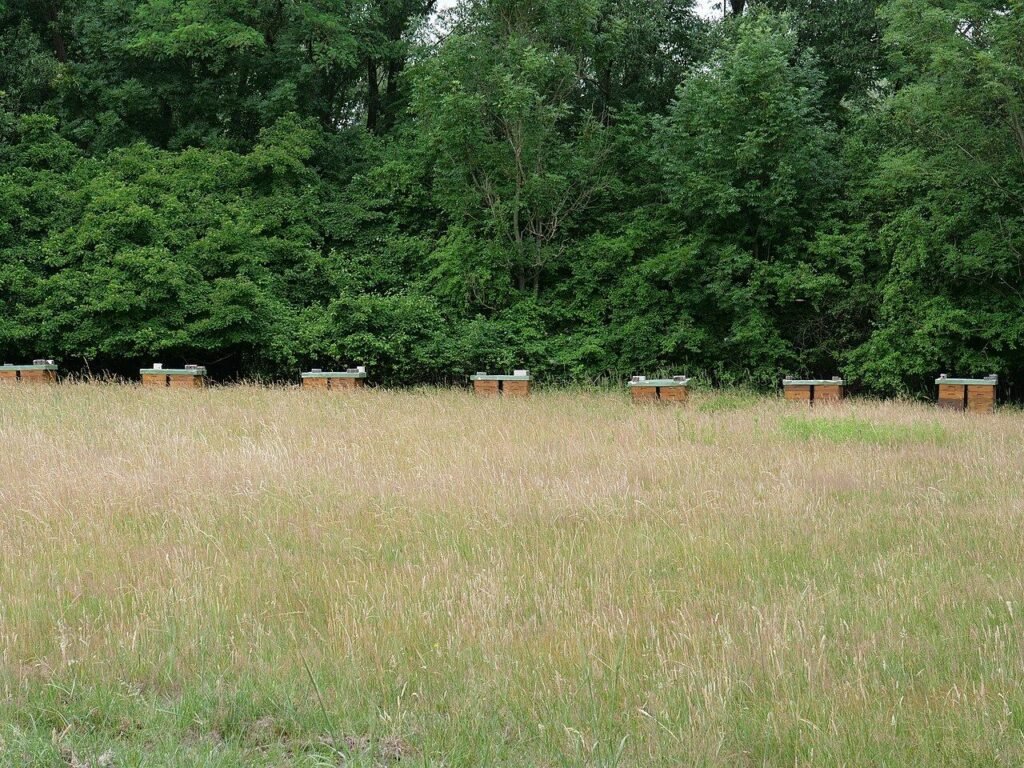
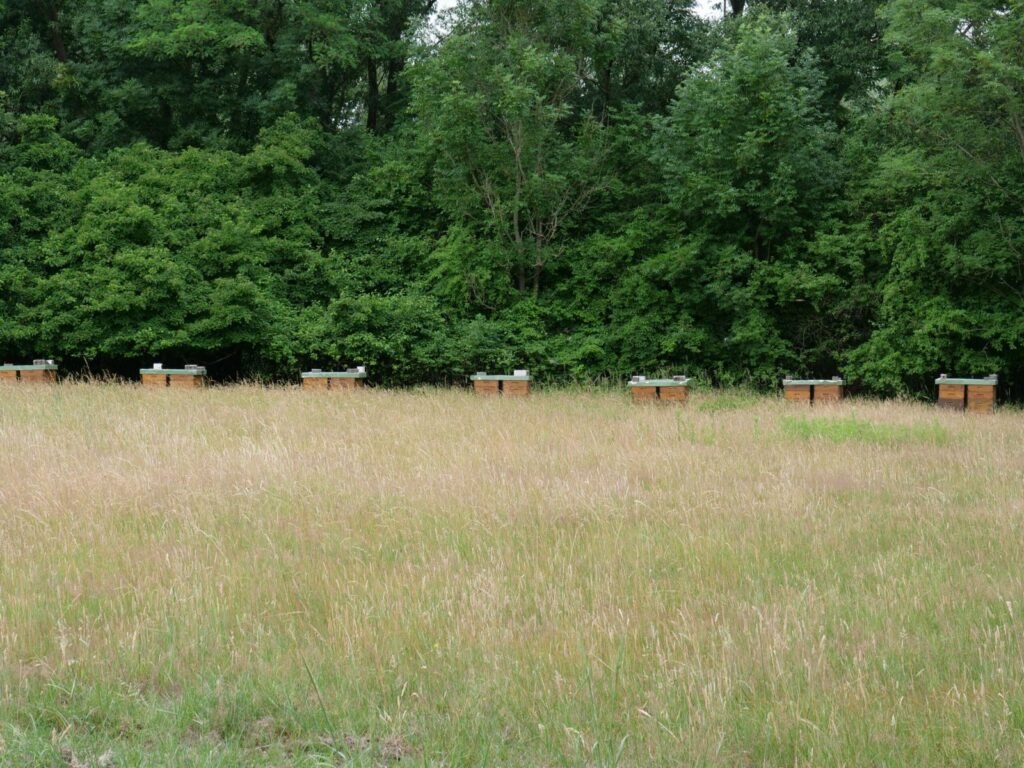
Image credits: Photo: Beehives at Landesgartenschau Zülpich, Germany, 2014. Photo by Achim Raschka, CC BY-SA 4.0.