Last Updated September 16, 2026
Canada has no single national beekeeping law — each province regulates beekeeping independently, with its own Act, its own Provincial Apiarist, and its own registration system. A beekeeper in Alberta and a beekeeper in Ontario are following genuinely different legal frameworks, even though both provinces share the same basic goals: mandatory registration, disease reporting, and permits to move bees or equipment across provincial lines. Understanding Canadian beekeeping law means understanding this provincial structure first, then layering the federal rules that govern imports and honey sales on top.
This guide covers how provincial registration works using Alberta and Ontario as detailed examples, Ontario’s statutory siting-distance rules, the permit system for moving bees between provinces, the federal CFIA import framework for bringing bees into Canada from abroad, and how Canada’s Safe Food for Canadians Regulations and honey grading system apply to selling honey.
Disclaimer: This guide is for educational purposes only and is not legal advice. Beekeeping regulations change over time — always confirm current requirements directly with your local or national agricultural authority before acting.
Key Takeaways
- Beekeeping law in Canada is set provincially, not federally — each province has its own Bee Act (or equivalent) and Provincial Apiarist administering registration and inspection.
- Alberta, home to roughly 40% of Canada’s honey bee colonies, requires beekeeper registration by June 30 each year and a 2-week-advance permit with an inspection report to move bees into the province.
- Ontario’s Bees Act sets a statutory 30-metre setback from dwellings, community centres, and parks, and a 10-metre setback from highways, for where colonies can be placed.
- Importing honey bees into Canada from another country requires a CFIA import permit, an approved country of origin, and a health certificate issued within 30 days of export.
- Honey sold in Canada falls under the federal Safe Food for Canadians Regulations and can be graded Canada No. 1, No. 2, or No. 3, though most small-scale, intra-provincial direct sales fall outside federal licensing requirements.
Table of Contents
- Why Canada Has No National Beekeeping Law
- Alberta: Registration and the Bee Health Assurance Program
- Ontario: Registration, Siting Rules, and Disease Reporting
- Moving Bees Between Provinces
- Importing Bees Into Canada From Abroad
- Selling Honey: Federal Standards and Grading
- Frequently Asked Questions
Why Canada Has No National Beekeeping Law
Agriculture is a shared federal-provincial responsibility under Canada’s constitution, and beekeeping regulation specifically has landed almost entirely on the provincial side. Rather than one national beekeeping act, every Canadian province maintains its own legislation — commonly called a Bee Act — administered by a Provincial Apiarist or equivalent office. This means the core questions any beekeeper needs answered — do I need to register, is there a fee, what diseases must I report, where can I place a hive — have province-specific answers rather than one uniform national answer. The federal government’s role kicks in at the borders: importing bees from outside Canada and, to a lesser extent, honey sold across provincial or international lines fall under federal jurisdiction through the Canadian Food Inspection Agency (CFIA), while day-to-day apiary regulation stays provincial.
Alberta: Registration and the Bee Health Assurance Program
Alberta has the largest beekeeping industry in Canada, representing roughly 40% of the country’s honey bee colonies — over 300,000 colonies are served by the province’s Bee Health Assurance Program, mandated through the Bee Act and its regulation. Any person keeping honey bees or beekeeping equipment in Alberta is required by law to register by June 30 of each year, and as of May 1, 2025, this registration and ongoing communication with the Bee Health Assurance Team happens through a secure online portal. Alberta requires antibiotic treatments for honey bees to be prescribed by a licensed veterinarian — a requirement in place since December 2018 — meaning beekeepers need an established vet-client-patient relationship in place before a foulbrood outbreak happens, not after.
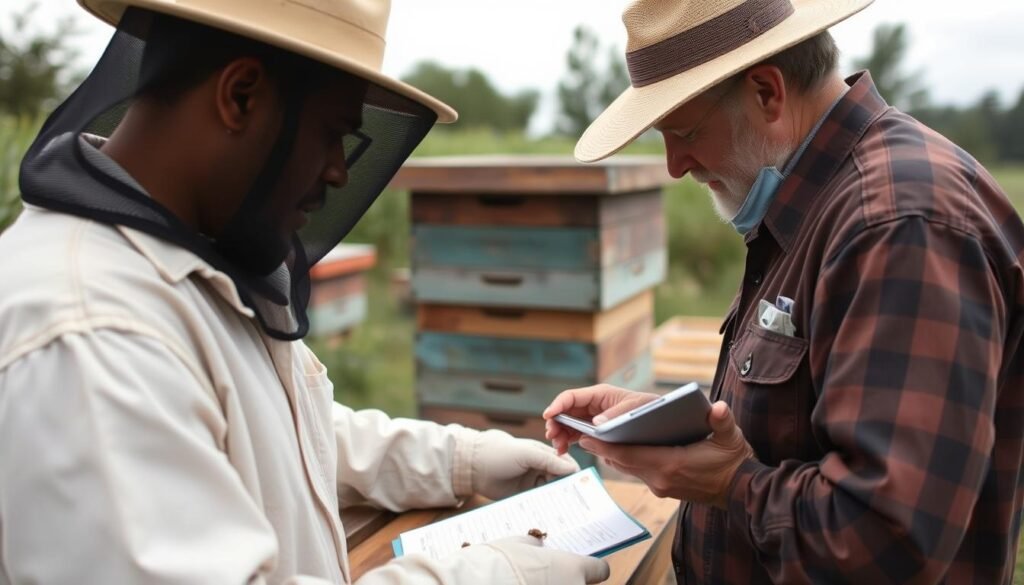
“Any person keeping honey bees or beekeeping equipment is required by law to register by June 30 of each year.”
Ontario: Registration, Siting Rules, and Disease Reporting
Ontario regulates beekeeping under the Bees Act, administered by the Ministry of Agriculture, Food and Rural Affairs’ (OMAFRA) Apiary Program. Anyone who owns or possesses honey bees or used beekeeping equipment in Ontario needs a valid certificate of registration from OMAFRA, and the Provincial Apiarist maintains a full register of Ontario beekeepers to support the province’s inspection program. Where Ontario stands out is its statutory siting rule: honey bee colonies cannot be placed within 30 metres of a property line separating the hive site from land occupied by a dwelling, community centre, public park, or other space used for public assembly or recreation, and colonies cannot be placed within 10 metres of a highway. This is a specific, provincewide statutory distance — a notable contrast to the US pattern covered elsewhere on this site, where hive-setback rules are almost always left to individual municipalities rather than set at the state level. Ontario also imposes a direct reporting obligation: beekeepers who find a named pest or disease (American foulbrood, European foulbrood, small hive beetle, or high-level varroa mite infestation) must immediately report it to a local apiary inspector, and are legally barred from concealing the presence of a pest or disease, transporting a known pest within Ontario, or exposing infected honeycomb or honey to bees. An inspector who finds reasonable grounds that a pest or disease is present can order treatment, disinfection, quarantine, or destruction by a specified date.
Moving Bees Between Provinces
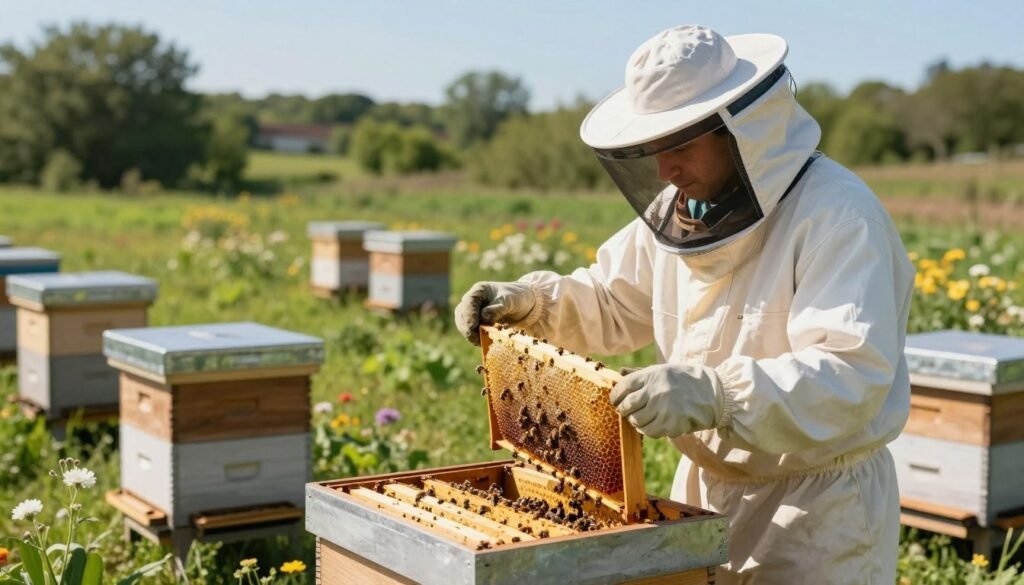
Because each province runs its own disease-control system, moving bees, queens, or used equipment across a provincial border in Canada isn’t as simple as driving across the line. Alberta, for example, requires beekeepers planning to move bees into the province to submit a permit request along with an inspection report from the exporting province at least two weeks before the desired transport date. Disease geography genuinely varies by province, which is exactly why this matters in practice: British Columbia, Quebec, and Ontario all have documented small hive beetle populations, so Alberta applies special import considerations specifically for colonies coming from those provinces. Ontario similarly requires a valid apiary permit to sell live honey bees or used equipment within the province, whenever ownership changes, or to import bees from another Canadian province or internationally — meaning a beekeeper moving colonies from, say, Ontario to Alberta needs to satisfy both provinces’ permit systems, not just one.
Importing Bees Into Canada From Abroad
Bringing honey bees into Canada from another country requires an import permit from the CFIA, arranged with the local CFIA office before the bees are actually imported. The bees must originate from an approved country and be accompanied by a CFIA-recognized health certificate — for shipments from the United States, this export documentation must be issued within 30 days of export by a USDA APHIS inspector or an APHIS-designated inspector, and it must reference the CFIA import permit number directly. Depending on the pest and disease status of the origin country, additional certifications may be required — for example, packing and shipping locations may need to be certified free of small hive beetle by a federal or state apiary inspector within 90 days prior to export. If the disease status of the country of origin changes between when the permit is issued and when the shipment actually arrives, Canada can refuse entry or require additional quarantine and testing, with the cost falling on the importer. The original permit and all required documentation must be available for inspection at the first Canadian port of entry.
Selling Honey: Federal Standards and Grading
Honey sold in Canada falls under the Food and Drugs Act, the Food and Drug Regulations, the Safe Food for Canadians Act, and the Safe Food for Canadians Regulations (SFCR) — collectively requiring that honey be safe, truthfully represented, and properly labelled. Canada uses a formal grading system unlike most individual US states’ honey rules: honey can be graded Canada No. 1, Canada No. 2, or Canada No. 3, with the specific requirements for each grade set out in the Canadian Grade Compendium, Volume 6 – Honey. Whether the SFCR’s licensing, preventive-control, and traceability requirements actually apply to a given beekeeper depends on the specific activities involved — generally, businesses that import, export, or trade honey across provincial or international lines fall squarely within CFIA’s licensing framework, while most small-scale beekeepers selling honey directly to consumers within their own province operate mainly under provincial and municipal food-safety rules instead of the federal licensing system. Any honey label using the term “pure” or “natural” is also subject to specific CFIA guidance on what those terms are actually allowed to mean on a Canadian honey label.
Canada Beekeeping Law At a Glance
| Requirement | Detail |
|---|---|
| National beekeeping law | None — regulated provincially, each with its own Bee Act |
| Alberta registration | Mandatory annually by June 30, via online BHAP portal |
| Ontario hive setback | 30m from dwellings/parks, 10m from highways |
| Interprovincial movement | Permit + recent inspection report generally required |
| International imports | CFIA import permit + health certificate within 30 days of export |
| Honey grading | Canada No. 1, No. 2, or No. 3 under the federal SFCR |

Frequently Asked Questions
Is there one national beekeeping law that applies across all of Canada?
No, beekeeping is regulated provincially — each province has its own Bee Act and Provincial Apiarist, though federal rules apply to international imports and cross-border honey trade.
When do I need to register as a beekeeper in Alberta?
By June 30 of each year, through Alberta’s online Bee Health Assurance Team portal.
How close to a house can I place a beehive in Ontario?
Ontario’s Bees Act requires at least 30 metres from a property line bordering a dwelling, community centre, or public park, and 10 metres from a highway.
Can I move my bees from one Canadian province to another without a permit?
No, most provinces require a permit and often a recent inspection report from the originating province before bees can cross provincial lines.
Do I need a federal licence to sell honey from my own apiary in Canada?
Generally not for small-scale, intra-provincial direct sales to consumers — federal SFCR licensing mainly applies to import, export, and interprovincial trade activities.
Related Reading
For more on this topic, see the CFIA’s honey bee producer biosecurity guide.