

Reviewed by Thomas B. · How we review
This article offers a clear how-to guide for U.S. stakeholders who plan to export, partner, relocate, or benchmark against EU systems.
Readers will find practical steps on operational setup, labeling shifts, and registry duties that affect market access and recordkeeping.
The revised Honey Directive (2001/110) strengthened quality and labeling rules on June 13, 2024, and set up a Honey Platform for authenticity controls and traceability.
We explain how EU-level rules interact with national systems such as a national electronic registry, why hive registration and colony reporting matter, and how single-origin versus blended honey labels must be handled ahead of 2026 changes.
Greece is highlighted as a major producer within the EU landscape, and the guide previews CAP Strategic Plans 2023–27 funding for advisory services, disease control, breeding, transhumance, labs, and quality upgrades.
Key Takeaways
- Understand EU directive updates and their impact on labeling and testing.
- Prepare registry, hive, and colony records to secure market access.
- Plan packaging and supply-chain docs now for 2026 origin rules.
- Leverage CAP funds for disease control, labs, and quality projects.
- Align early with traceability and authenticity expectations to ease compliance.
Understanding the scope: who needs to comply and why it matters
U.S. exporters, investors, and analysts must map how EU product rules and national hive controls affect market access. This short guide clarifies who to watch, what touches the supply chain, and which actions pay off before key compliance dates.
User intent from the United States: exporting, relocating, partnering, or benchmarking
Who should care? U.S. exporters shipping honey to EU markets, firms relocating operations or opening subsidiaries, partners forming joint ventures with local beekeepers, and analysts benchmarking standards all need to act.
These users must align labels, supplier contracts, and lot-level traceability to satisfy buyers or authorities.
Compliance touchpoints: hives, products, labeling, and movement of colonies
- Value-chain checks: register hives and colonies where operations occur; ensure product composition meets EU criteria.
- Origin & authenticity: prepare for tightened origin rules and harmonized authenticity testing through the relevant period.
- Data readiness: keep lot traceability, lab results, supplier statements, and movement records to respond to audits.
- Logistics & planning: document transhumance, align retail and bulk labels, and coordinate testing expectations with importers.
- Capacity building: plan training for beekeepers and staff, and run a gap analysis to prioritize label, record, and colony updates.
EU legal framework at a glance: Honey Directive and market standards
From June 13, 2024, the Honey Directive revision gives the European Commission tools to tighten composition, labelling, and fraud detection for honey. The update applies across EU countries and frames how member states must market product at the retail and wholesale level.
Revised Directive in force since June 13, 2024
The Directive mandates origin labelling and creates a Honey Platform to advise the Commission. It also empowers the Commission to adapt composition criteria to prevent overheating and to ban pollen removal that undermines origin claims.
Composition, authenticity and harmonized testing
The Commission has a three-year administrative arrangement with its Joint Research Centre to develop harmonized methods to detect adulteration with exogenous sugars. This research aims to give labs common tools for reliable results across member states.
- Traceability push: feasibility work explores an EU-wide backbone to track honey from beekeeper or importer to consumer.
- Operator needs: validated lab methods, clear handling guidance to avoid cross-contamination, and strong documentation to meet enforcement consistently.
Treat 2024–2026 as a development runway to upgrade quality systems, verification steps, and supplier agreements in anticipation of harmonized controls and higher market integrity.
Origin labeling rules: how to label single-origin and blends correctly
Origin claims must be clear, verifiable, and consistent with the 2026 timeline.
Single-origin jars should state the country of harvest and, when relevant, the floral variety. This keeps labels simple and supports product quality claims.
Blends from 2026 must list countries of origin in descending order with percentage shares for each. EU members may allow showing percentages for only the four largest shares when those shares total more than 50% of the blend.
- Example: a U.S.–EU blend must list each country by share; if four countries exceed 50%, percentages for those four may be used.
- Example: a Greek-origin single variety should be labeled as one country plus variety where applicable.
- Example: an EU packer using non-EU sources must combine supplier data to compute batch percentages.
Practical tips: keep supplier certifications, batch-level data, and audit trails. Phase label changes by SKU to avoid wasted printed stock, and coordinate with importers and packers on national flexibilities. Train labeling and quality staff and review artwork with legal counsel to ensure compliance.
The Honey Platform: what it does and why beekeepers should care
The Honey Platform collects field and lab evidence to build a common approach for verifying product origin and detecting adulteration. It aims to turn scattered findings into clear recommendations that operators and authorities can use at scale.
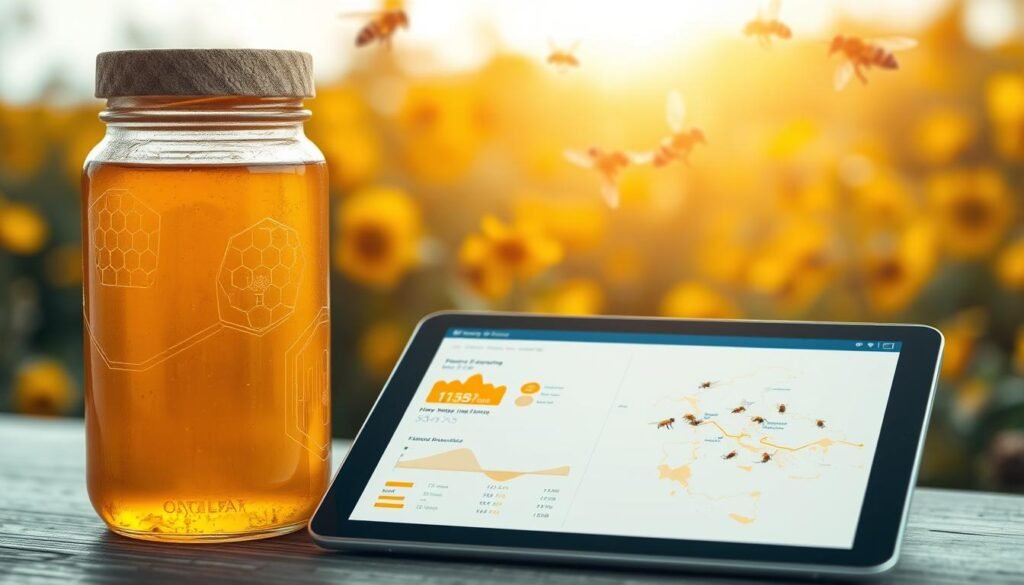
Data gathering for adulteration detection and traceability recommendations
Scope: the Platform builds an evidence base for harmonized authenticity methods and advises on options to trace honey back to the harvest producer or importer.
Members include national competent authorities, designated laboratories, supply-chain stakeholders, civil society, academia, and experts appointed personally by the european commission.
Potential updates to composition criteria and creation of a reference lab
Collected data supports development of validated testing protocols. That reduces disputes over lab results and raises the consistency of enforcement across countries.
- Operators should prepare for method validation, proficiency testing, and tighter internal QA aligned with reference lab expectations.
- Possible composition updates—such as caps on overheating or stricter pollen retention rules—would affect processing and documentation at packers and exporters.
- Recommendations may lead to a Union reference laboratory, standard operating procedures, and performance criteria for tests used at the EU level.
| Platform Function | Who Participates | Operational Impact |
|---|---|---|
| Evidence collection and harmonization | National bodies, labs, academia | Common test methods and shared databases |
| Traceability options | Supply-chain stakeholders | Recommendations for producer/importer linkages |
| Quality criteria review | Civil society and experts | Potential processing and labelling changes |
Action for beekeepers and exporters: monitor Platform outputs, join national associations to share practical knowledge, and align on QA steps now to ease later compliance. The article’s research and development focus means practical changes could come at any level; staying informed keeps operations resilient.
CAP Strategic Plans 2023-27: funding and support for apiculture
Since January 1, 2023, apiculture interventions are embedded in national CAP Strategic Plans for the 2023–27 period. This change makes targeted support mandatory across EU countries and shapes local programming, funding rounds, and technical assistance for operators.
Seven eligible actions under Article 55(1) cover practical measures: advisory, training, and networking; investments to fight varroa and adapt to climate; restocking, breeding, and transhumance support; lab capacity for product testing and loss analysis; measures to preserve or increase hive numbers; cooperation on research; and promotion, quality upgrades, and market monitoring.
Annual EU sector funding rose from €40m (2019) to €60m from 2021, with member states co-financing 50–70% of national allocations. Budget planning should account for co-financing and application timing.
Use the online CAP catalogue to filter for apiculture, find each Strategic Plan’s section 3.5.2 (sector overview) and 5.2 (interventions), and check eligibility, support rates, and required baseline population and hive data.
Connect with national bodies, labs, and universities to access research cooperation funds and to stay updated on calls and deadlines. Accurate baselines help secure grants and measure future improvements in honey production and colony population.
How CAP measures translate to beekeeper actions
CAP support funnels technical assistance, lab services, and capital upgrades directly to apiary operations to reduce losses and boost survival.
Accessing advisory services and training
Enroll in funded advisory programs that teach disease control, productivity methods, and quality rules tied to EU market access. Practical courses help a beekeeper adopt monitoring schedules and recordkeeping that importers expect.
Investments for disease control, climate adaptation, breeding, and transhumance
- Prioritize diagnostics and evidence-based varroa treatments and use labs to verify infestation levels and efficacy.
- Use grants to fund shade, water points, and forage planning to improve colony survival and reduce seasonal losses.
- Support selective breeding or restocking to raise population resilience of Apis mellifera and reduce collapse risk.
- Rationalize transhumance with funded route planning, permits, and documentation to ease seasonal stress on bee colonies.
- Build a grant-ready roadmap that ties equipment purchases to KPIs—colony counts, productivity, and reduced losses.
Engage labs for routine analyses of honey and to investigate sudden drops in productivity. Document results to meet reporting rules and strengthen future funding bids. For practical examples and program listings, see the CAP best-practice portal and seasonal task guides.
CAP best-practice portal · seasonal task guides
Main market dynamics in the EU honey sector
The EU is the world’s second-largest honey producer while also relying on imports to meet demand. This mix affects pricing, supply stability, and the intensity of authenticity checks across member countries.
Production footprint and southern strengths
Major producing countries include Romania, Spain, Hungary, Germany, Italy, Greece, France, and Poland.
Southern climates favor longer foraging seasons, which support steady production and unique varietal honey that adds market value.
Market drivers and research priorities
Consumer interest in origin and varietal character pushes firms to improve labeling and traceability.
Research on colony population trends and productivity informs policy and funding at national and EU levels.
- Import reliance raises authenticity scrutiny and import-control responses.
- Promotions and emergency measures can stabilize supply and prices temporarily.
- Producers must track colony-level indicators and reinforce quality assurance to meet retailer standards.
| Market Factor | Impact | Producer Action |
|---|---|---|
| Domestic production vs imports | Price volatility; supply complexity | Improve batch traceability and origin records |
| Southern climate advantages | Longer season; distinct varietals | Market varietal character and plan transhumance |
| Demand for authenticity | Higher testing and labeling standards | Adopt QA protocols and lab verification |
Operational note: seasonal swings require flexible production plans, coordinated transhumance timing, and risk buffers to protect colony health and supply commitments.
Beekeeping regulations and licensing in Europe / Greece
How EU rules meet national practice. The EU sets market standards for honey sold across member states, while national systems handle on-the-ground oversight of apiary operations and hive records. This split creates a two-tier compliance model that U.S. operators must map before market entry.
From EU-wide rules to national implementation: how competences are split
Division of responsibilities: the European Commission issues marketing and labelling standards that apply across countries. Member states then run registries, identify producers, and enforce reporting on colonies and hive locations.
This means EU law sets the objectives; national systems deliver the operational controls that prove compliance.
Key compliance themes: traceability, labeling, and authenticity
Operators should focus on three core themes:
- End-to-end traceability — link colony and hive records to batch documentation.
- Origin labeling correctness — prepare for the post-2026 blend disclosure rules and ensure supplier proofs match labels.
- Alignment with authenticity testing — expect harmonized methods from the Honey Platform and keep lab results tied to hive data.
Practical step: foster knowledge sharing between beekeepers and packers so upstream colony data aligns with downstream product claims. Cross-border operators must validate practices against both EU marketing rules and national reporting cadences for colonies to avoid audit gaps.
Greece’s National Electronic Beekeeping Registry: who must register
The National Electronic Beekeeping Registry creates one digital record to track apiary operators, farms, and the national stock of Apis mellifera. It acts as the authoritative database for identifying owners, farm locations, and the total number of hives and bee colony units nationwide.
Legal basis, purpose, and scope of the Register
Purpose: centralize identity and stock data so inspections, CAP support, and traceability connect clearly to each operator. Registration assigns an official number that links persons and locations to hive counts and colony records.
Who qualifies as an Active Beekeeper (natural or legal persons)
An Active Beekeeper is any natural or legal person with full legal capacity who keeps hives within national territory as owner, manager, or possessor and who is registered. Foreign-owned entities must supply legal representative details and national ID information to ensure compliance.
- Hive definition: a hive contains an Apis mellifera colony used for honey, reproductive material, offshoots, or pollination. It includes biotic elements (queen, adult bees, eggs, larvae, nymphs) and abiotic parts (brood chamber, honey chamber, comb frames and combs).
- Practical step: prepare entity info, hive counts, and precise locations and update records to reflect any change in number during the year.
“Registering creates an official linkage that supports inspections, funding eligibility, and traceability across the supply chain.”
Greek legal definitions that affect compliance
Greek law frames how a hive and a colony of apis mellifera are defined for audits, funding, and traceability. Definitions link physical elements—brood chambers, honey chambers, and comb frames—to measurable indicators used by inspectors.
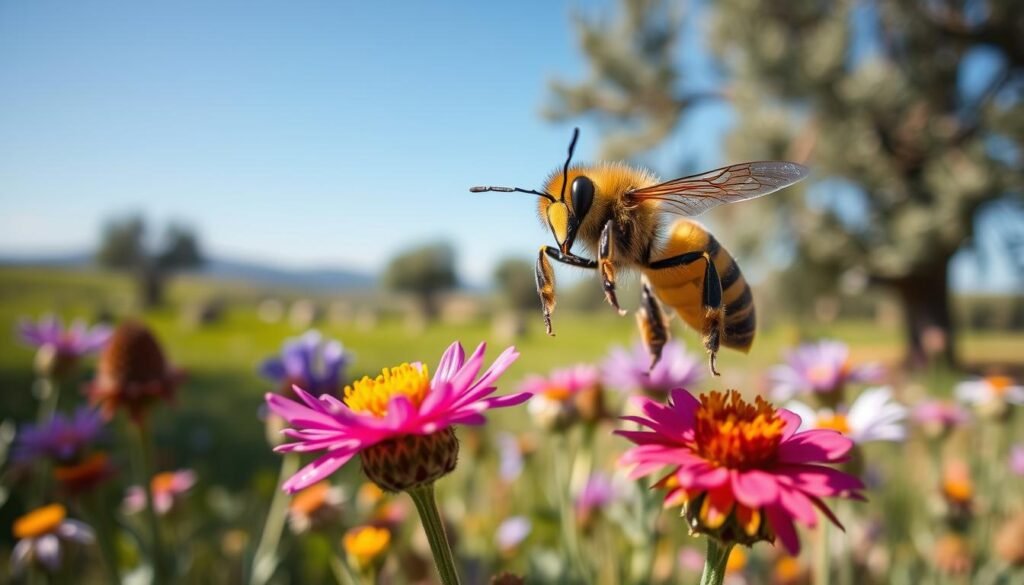
Hive and bee colony elements and functions
A hive must include brood chambers, honey chambers and combs with contents. Combs may contain brood, sealed honey, pollen, and food cells. These elements establish a hive’s functional status for pollination and honey production.
Occupied Hives: thresholds, health indicators, reporting
Occupied hives are defined as units with a mature population covering at least five frames. Frames must show pollen, sealed honey, healthy brood and food cells.
All occupied hives kept within national territory must be declared. Changes in hive numbers must be reported as required by Article 7 to keep registry records accurate.
Offspring (nucleus colonies): queen quality and growth
Offspring or nucleus colonies cover at least two frames with a queen laying normally. Brood should cover at least half the surface on each frame. With proper handling, a nucleus can develop into a normal colony.
“Precise, measurable definitions reduce dispute during inspections and support eligibility checks for funding.”
- Action: create SOPs to verify frame coverage, brood health, and feed reserves before registry updates or grant claims.
- Why it matters: accurate counts link on-farm facts to audits and CAP support decisions.
How to register and keep your Greek records up to date
Start your registry process by gathering official ID, precise apiary locations, and baseline counts for every site you operate. The Register sets procedures to develop, organize, and operate the national database for beekeepers and beekeeping capital.
Initial enrollment steps and required information
What to provide: legal entity name, contact details, proof of legal capacity in-country, and a mapped list of places of operation. Include baseline counts of hives and colonies at each location.
Declaring occupied hives and reporting changes in hive numbers
Occupied hives must be declared per Article 7. Confirm the five-frame population threshold and note brood, pollen, and honey indicators before reporting.
Update the registry during the period when numbers change. Report splits, offspring establishment, seasonal movements, and losses promptly to keep the record current.
| Record action | When to report | Required evidence |
|---|---|---|
| Initial enrollment | Before first operation | Entity ID, contact, baseline hive and colony counts |
| Declare occupied hives | At enrollment or when status changes | Frame coverage photos, inspection notes, brood presence |
| Periodic updates | During the period of change | Movement logs, split declarations, offspring details |
| Year-end reconciliation | Annually / end of year | Apiary stock lists, inspection logs, reconciliation statement |
Practical tips: keep dated inspection logs, photos of frame coverage, and a standard checklist for colony attributes. Reconcile registry numbers with on-farm population counts at year end to avoid audit mismatches.
“Name a responsible beekeeper or compliance manager to submit updates and act as the liaison for audit queries.”
Product categories and labeling nuances in Greece
This section clarifies how floral nectar varieties differ from forest honey, and what label claims U.S. partners should expect when sourcing Greek product.
Floral versus forest honey: sensory and shelf implications
Floral varieties (thyme, citrus) come from nectar. They tend to crystallize faster and show light, floral notes.
Honeydew or forest honey forms indirectly from conifer sap via Marchalina hellenica. It binds less, resists crystallization, and offers a robust, malty flavor prized by some buyers.
Labels, composition rules, and market positioning
Greek labels must follow EU composition rules: no pollen removal, no overheating. State varietal claims accurately and cite the place of harvest when single-origin is asserted.
- Use lab verification to support varietal claims and premium pricing.
- Keep trace documentation that links apis mellifera stock and bee colonies to batch results.
- Present honeydew traits—low crystallization, bold taste—clearly to educate consumers.
| Category | Sensory | Label focus |
|---|---|---|
| Floral nectar | Light, aromatic; faster crystallization | Varietal name, single-origin where applicable |
| Honeydew (forest) | Dark, robust; slow crystallization | Category claim, origin details, supporting lab data |
| Packer practice | Consistent flavor profiling | Traceability sheets, test certificates for retailer QA level |
“Documented testing and clear origin claims build buyer trust and protect premiums.”
Disease control, bee losses, and survival: compliance and best practices
A data-driven approach ties lab diagnostics to field actions that reduce losses and raise survival across apiaries. CAP funds support advisory visits, lab analysis, and projects that target varroa and other threats to apis mellifera.
Structured varroa control plan
Monitor regularly with standard thresholds and keep simple logs for each colony. Alternate approved treatments to limit resistance and match actions to seasonal cycles.
Diagnostics, labs, and adaptive management
Use CAP-backed labs to confirm causes of losses and to measure treatment efficacy. Feed lab findings into SOPs for hygiene, hygienic requeening, and brood interruption.
- Nutrition planning: provide supplemental food during dearths to boost resilience.
- Biosecurity: isolate new colonies, sanitize equipment, and record movements.
- Environment measures: shade, water access, and ventilation reduce heat stress and improve survival.
“Record losses, investigate root causes with labs, and update management protocols for continuous improvement.”
Engage in research and proficiency testing to keep methods current. Share SOPs and lab-backed results with buyers and auditors to show compliance and steady development.
Transhumance, environment, and climate: managing movement of hives
Planned transhumance links bloom timing to logistics, protecting colony health and final product quality. Use seasonal calendars to map where floral and honeydew flows occur, then schedule moves to match peak forage while avoiding extreme weather windows.
Rationalizing transhumance under CAP interventions
CAP funding can cover fuel, route planning, and coordination with landowners to reduce transport stress on colonies. Document movement permits and keep joint plans with grazers or farmers to smooth access and legal checks.
Adapting to microclimates and preserving product quality
Microclimate differences across a place allow producers to diversify varietals and spread risk. Move to higher elevations or coastal sites when heatwaves or drought threaten lowland forage.
- Plan routes and timing to match bloom periods and honeydew flows while minimizing transit times.
- Use CAP support for fuel, logistics, and documented agreements with landowners and authorities.
- Mitigate climate risks—install shade, ensure water provisioning, and choose sheltered apiary siting.
- Keep simple records linking place, year, yields, colony counts, and survival to refine future moves.
Post-movement checks are essential. Inspect queen status, run varroa monitoring, and assess feed reserves within 72 hours of arrival. Treat and feed as needed to stabilize bee colonies and protect survival.
“Well-documented transhumance plans cut losses, preserve product character, and make grant claims easier.”
For practical route-planning and climate-adaptive methods, see this guide on managing apiaries across climates.
Compliance checklist for US stakeholders working with Greece and the EU
“Build a single-source file that combines supplier statements, lab certificates, and movement logs for quick review.”
Build a single, searchable compliance pack that links each lot to on-farm evidence. This file speeds audits and reduces friction with importers.
Traceability and documentation readiness for audits
Create a document checklist that includes supplier declarations, lab certificates for composition and authenticity, batch records, and colony and hive number lists by state of operation.
Keep dated movement logs, photos of frame coverage, and versioned inspection notes. Align lab partners with EU-recognized labs and note any Honey Platform research outputs used to support test methods.
Origin labeling timelines and packaging updates ahead of 2026
Map labeling changes to the 2026 deadline now. Use simple version control on artwork and keep calculations that verify percentage shares in blends.
- Align SOPs with european commission guidance on composition criteria, temperature handling, and pollen retention.
- Define roles and train beekeepers and QA staff on evidence collection and audit responses, with lab partnerships for verification.
- Set development milestones: quarterly traceability reviews, mock audits, and packaging readiness gates to track progress.
- Interface plan: keep correspondence with importers and member state authorities on file and record any approvals or clarifications.
“A clear paper trail and trained staff turn compliance risk into a commercial advantage.”
Conclusion
Since 2024, policy updates have tied field records to retail claims. This creates a clear pathway from colony data to market-ready honey labeling and stronger authenticity checks.
Operational priorities are simple: disciplined varroa plans, tight documentation, and packaging updates ahead of 2026 origin rules. These steps protect survival and support steady production.
Stay engaged with Platform outputs and national guidance. Use Greece’s microclimates and varietal strengths as part of a resilient supply plan. For larger operations—such as those with 150 colonies—formal gap analysis, staff training, lab partnerships, label validation, and aligned CAP funding applications will speed improvements in survival and commercial development.
FAQ
Who must register in Greece’s National Electronic Beekeeping Registry?
All natural or legal persons keeping Apis mellifera colonies for production, pollination services, or commercial sale must register. The Registry covers active beekeepers who manage occupied hives and those receiving CAP support. Registration ensures traceability, access to subsidies, and compliance with health measures.
What are the core EU rules on honey composition I should know?
The Revised Honey Directive (2001/110, updated 2024) sets composition criteria such as moisture, sugar profiles, and limits on overheating. It also requires retention of pollen for authenticity checks. These standards protect consumer trust and support harmonized testing methods led by the Joint Research Centre.
How will origin labeling change for blends by 2026?
For blended products, mandatory disclosure of origin shares will phase in by 2026. Labels must list countries in descending order by percentage. There is flexibility: when four or fewer countries exceed 50% combined, producers may list only the top four with their shares instead of every origin.
What practical steps should U.S. exporters take when shipping honey to the EU?
Ensure composition tests meet EU limits and maintain pollen evidence. Update labels to meet origin disclosure rules, prepare traceability documents, and verify packaging meets food contact standards. Work with an EU-based importer familiar with local market checks and the Honey Platform’s guidance.
How does the Honey Platform affect small producers and quality control?
The Platform gathers data to detect adulteration, recommends traceability improvements, and may push updates to composition criteria. It could also support a reference laboratory network. Small producers benefit from clearer testing methods and stronger market integrity.
What CAP supports are available for apiculture 2023–27?
Regulation (EU) 2021/2115 allows seven types of apiculture interventions, including advisory services, disease control investments, training, breeding programs, and aid for transhumance. Member states co-finance these measures and list them in national CAP Strategic Plans and online catalogues.
Which actions under CAP help control Varroa and reduce colony losses?
Funded actions include targeted treatments, improved veterinary diagnostics, training on integrated pest management, and investments in hygienic breeding lines. Labs and research programs supported by CAP help refine diagnostics and productivity techniques to improve survival rates.
How are competencies split between the EU and member states on enforcement?
The EU sets harmonized market and labeling rules, while member states implement them through national law, inspections, and registries. Greece operates its electronic beekeeping register and enforces traceability, health controls, and CAP-related measures locally.


