Published September 9, 2026
Whether beekeeping is tax deductible comes down to one question the IRS takes seriously: are you running a business, or pursuing a hobby? If beekeeping is a hobby, any honey or nuc sales still count as taxable income, but you currently can’t deduct your equipment, feed, or treatment costs against it. If it rises to the level of a legitimate business, most of those same expenses become deductible on Schedule C. On top of that federal income-tax question, several states — Texas most notably — let beekeeping qualify a property for a very different kind of tax break: an agricultural valuation that can cut a landowner’s property tax bill by thousands of dollars a year.
This guide walks through both angles: how the IRS actually distinguishes a beekeeping business from a hobby, what that distinction means for your deductions, and how beekeeping-specific agricultural property tax exemptions work in states that offer them. As with any tax topic, the specifics of your situation matter — this is general information, not personalized tax advice, so a CPA or tax professional familiar with your state is worth consulting before you file. The rules covered here reflect current federal law and well-established state programs, but tax law changes regularly, and your own record-keeping and income history will ultimately matter more than any general guide.
Key Takeaways
- Current federal law (following the Tax Cuts and Jobs Act and the One Big Beautiful Bill Act) permanently disallows hobby expense deductions — hobby income must still be reported, but hobby expenses can’t offset it.
- If beekeeping qualifies as a legitimate business, most ordinary expenses become deductible on Schedule C.
- The IRS presumes an activity isn’t a hobby if it shows a profit in 3 of the last 5 tax years — but missing that mark doesn’t automatically reclassify it as a hobby, it just invites closer scrutiny.
- Several states, most notably Texas, let beekeeping qualify land for an agricultural property tax valuation that can reduce a landowner’s tax bill by thousands of dollars a year.
- Texas specifically requires the qualifying land to be between 5 and 20 acres and devoted to agricultural use, including beekeeping, for 5 of the preceding 7 years.
Table of Contents
- Hobby vs. Business: Why the IRS Cares
- What Happens If Beekeeping Is Classified as a Hobby
- What You Can Deduct If Beekeeping Is a Business
- The Three-of-Five-Years Profit Test
- Operating “Businesslike” Actually Matters
- The Other Tax Angle: Agricultural Property Valuation
- How Texas’s Beekeeping Ag Exemption Works
- Do Other States Offer Similar Exemptions?
- Why This Is a Good Topic to Get Professional Advice On
- Frequently Asked Questions
Hobby vs. Business: Why the IRS Cares
The IRS draws a hard line between a hobby and a business because the tax treatment on each side is genuinely different, not just a matter of paperwork. A business is an activity carried on with a real intent to make a profit; a hobby is something you do primarily for personal enjoyment, even if it occasionally brings in some income. Beekeeping can sit on either side of that line depending on how you actually run it — the same set of hives can be a hobby for one beekeeper and a legitimate business for another, based on intent and operation rather than the activity itself. A beekeeper with two backyard hives who occasionally gives away or sells a few jars of honey looks very different, from a tax perspective, than someone running twenty colonies, selling nucs every spring, and keeping careful books.
What Happens If Beekeeping Is Classified as a Hobby
If your beekeeping is classified as a hobby, any income from it — selling honey, nucs, or queens — still has to be reported. What changed significantly in recent years is the expense side: the Tax Cuts and Jobs Act suspended the deduction for hobby expenses starting in 2018, and the One Big Beautiful Bill Act made that suspension permanent. In practical terms, that means a hobbyist beekeeper currently can’t deduct the cost of hives, protective gear, feed, or mite treatments against hobby income the way a business owner can, even though that income is still fully taxable. This asymmetry – taxable income with no offsetting deductions – is precisely why so many small-scale beekeepers who sell modest amounts of honey each year have an incentive to understand exactly where the hobby-versus-business line falls for their own situation.
What You Can Deduct If Beekeeping Is a Business
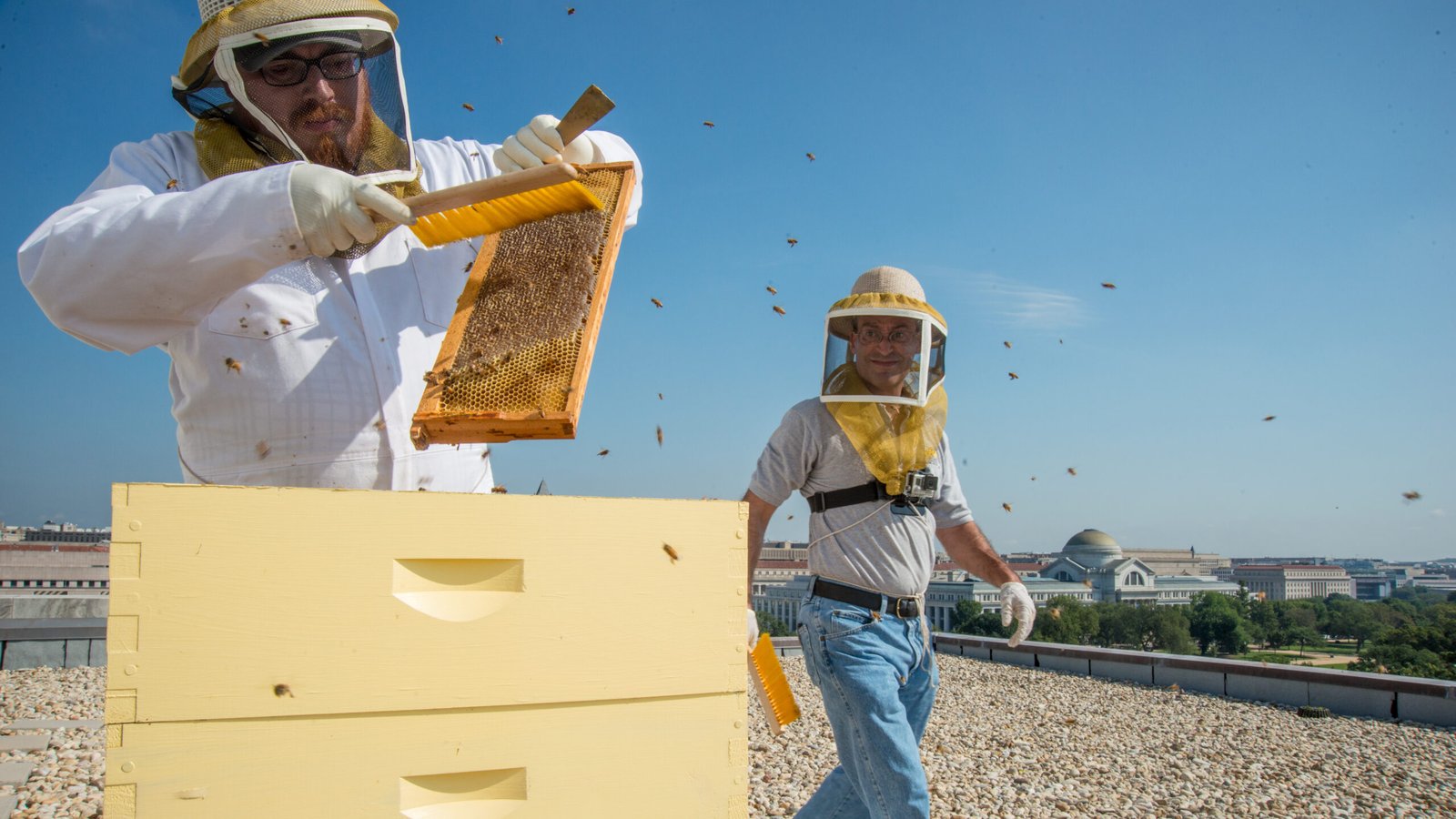
If beekeeping rises to the level of a legitimate business, the picture changes considerably. Business income and expenses are generally reported on Schedule C, and most ordinary, necessary costs of running the operation — hive equipment, protective clothing, treatments, replacement queens, extraction equipment, even a portion of vehicle mileage for apiary visits — become deductible against that income. This is exactly why the hobby-versus-business distinction matters so much financially: the same $2,000 in annual equipment spending either offsets your beekeeping income directly, or it doesn’t, entirely depending on which side of that line the IRS believes you fall on. Common deductible categories for a genuine beekeeping business include hive bodies and frames, protective suits and gloves, smokers and hive tools, mite treatments, replacement queens, extraction and bottling equipment, and a reasonable share of mileage driven specifically for apiary visits or honey deliveries.
The Three-of-Five-Years Profit Test
The IRS applies a general presumption, not an absolute rule: an activity is presumed not to be a hobby if it shows a profit in at least 3 of the last 5 tax years (2 of 7 years for activities involving horses). This presumption is a helpful shortcut in your favor if you meet it, but it isn’t the whole test — failing to show a profit in 3 of 5 years doesn’t automatically mean the IRS will reclassify your beekeeping as a hobby, it simply means the burden shifts more toward demonstrating genuine profit motive through other evidence, such as the businesslike operating habits described in the next section.
Operating “Businesslike” Actually Matters
Beyond the profit test, the IRS looks at how the activity is actually run when deciding whether it reflects genuine business intent. Keeping accurate books and records, maintaining a separate bank account for beekeeping income and expenses, tracking time and effort invested, and making changes to improve profitability when something isn’t working are all the kinds of practical, businesslike habits that support a business classification — the same recordkeeping discipline that happens to make you a better beekeeper, as it turns out, also happens to be exactly what the IRS wants to see. Beekeepers who treat their operation seriously enough to track hive inspections, treatment schedules, and harvest yields already have much of the documentation a business classification requires, almost as a byproduct of good beekeeping practice rather than tax planning.
The Other Tax Angle: Agricultural Property Valuation
Separately from the federal income-tax question, several states let beekeeping qualify a property for agricultural valuation on property taxes — a completely different mechanism that can produce much larger savings for landowners with enough acreage. Agricultural appraisal lets qualifying land be taxed based on its agricultural productivity value rather than its full market value, and because those two numbers can differ enormously, especially near fast-growing suburban and exurban areas, the resulting tax savings from qualifying can be genuinely substantial.
How Texas’s Beekeeping Ag Exemption Works
Texas is the state most beekeepers associate with this strategy, and for good reason: since a 2012 amendment to Texas Tax Code Section 23.51, keeping bees for pollination or for producing honey and other marketable products explicitly qualifies as an agricultural use. To qualify, the land generally must be between 5 and 20 acres and must have been devoted principally to agricultural use, including beekeeping, for 5 of the preceding 7 years. The Texas Apiary Inspection Service notes that state export and intrastate movement permits, which beekeepers are already required to have to transport hives, can help document that agricultural-use history. Because agricultural appraisal typically taxes land at a small fraction of its market value, qualifying Texas landowners commonly report annual property tax savings in the thousands of dollars, which is why the strategy has become popular enough that entire businesses now exist specifically to help landowners establish qualifying apiaries on otherwise underused acreage.
Do Other States Offer Similar Exemptions?
Texas isn’t alone — Florida is another state that explicitly recognizes beekeeping as a qualifying agricultural use for property tax purposes, and agricultural exemptions of some kind exist in nearly every state, though the specific rules, acreage minimums, and application processes vary widely by state and even by county assessor. Beekeeping tends to be one of the more accessible ways to qualify a smaller parcel for agricultural valuation compared to traditional livestock or row-crop farming, simply because it requires less land and infrastructure — but confirming the specific requirements with your own county appraisal district or assessor’s office is essential, since rules genuinely differ from one jurisdiction to the next even within the same state, and an appraisal district that approves an application in one county may apply a stricter standard than a neighboring county would for a seemingly identical setup.
Why This Is a Good Topic to Get Professional Advice On
Both the hobby-versus-business classification and any state agricultural exemption involve real money and real paperwork, and getting either one wrong can mean either missing out on legitimate savings or, worse, claiming deductions or an exemption you don’t actually qualify for. A CPA or tax professional can review your specific recordkeeping, income history, and property situation and tell you with much more confidence than a general guide like this one where you actually stand — that conversation is genuinely worth having early, well before your beekeeping operation grows large enough for the financial stakes to really matter.
Frequently Asked Questions
Can I deduct beekeeping equipment on my taxes?
Only if your beekeeping qualifies as a business rather than a hobby. Business expenses are generally deductible on Schedule C, while hobby expenses currently cannot be deducted under federal law.
Do I have to report income from selling honey even as a hobbyist?
Yes. Hobby income must still be reported as taxable income even though the related expenses currently can’t be deducted against it.
What’s the profit test the IRS uses for hobby vs. business?
The IRS presumes an activity isn’t a hobby if it shows a profit in 3 of the last 5 tax years, though failing that test doesn’t automatically mean it will be classified as a hobby.
Can beekeeping lower my property taxes?
In some states, yes. Texas and Florida both explicitly recognize beekeeping as a qualifying agricultural use for property tax valuation purposes, which can significantly reduce a landowner’s tax bill on qualifying acreage.
How much land do I need in Texas to qualify for the beekeeping ag exemption?
Generally between 5 and 20 acres, with the land needing to be devoted principally to agricultural use, including beekeeping, for 5 of the preceding 7 years.
FAQ
Can I deduct beekeeping equipment on my taxes?
Only if your beekeeping qualifies as a business rather than a hobby. Business expenses are generally deductible on Schedule C, while hobby expenses currently cannot be deducted under federal law.
Do I have to report income from selling honey even as a hobbyist?
Yes. Hobby income must still be reported as taxable income even though the related expenses currently cannot be deducted against it.
What’s the profit test the IRS uses for hobby vs. business?
The IRS presumes an activity isn’t a hobby if it shows a profit in 3 of the last 5 tax years, though failing that test doesn’t automatically mean it will be classified as a hobby.
Can beekeeping lower my property taxes?
In some states, yes. Texas and Florida both explicitly recognize beekeeping as a qualifying agricultural use for property tax valuation purposes.
How much land do I need in Texas to qualify for the beekeeping ag exemption?
Generally between 5 and 20 acres, with the land devoted principally to agricultural use, including beekeeping, for 5 of the preceding 7 years.