Relocating a hive demands careful planning to protect every colony’s health. In 2025, Mark Williams stressed that transporting a full hive of comb and honey is a major task that calls for professional care.
Start by cleaning equipment and following strict biosecurity steps. Plan the process for early morning or late night so the entire colony is inside the box before you load it.
Choose a secure site at the new location and confirm ventilation and strap security on the truck. Make sure brood boxes are stable and entrances are blocked appropriately to reduce stress during transit.
For a step-by-step approach and expansion tips, see beekeeping expansion guide. Follow these professional guidelines to keep your hives healthy and your operation sound.
Key Takeaways
- Plan timing: move at dawn or night so the colony is contained.
- Sanitize gear: clean equipment and use biosecurity measures.
- Secure transport: use straps, ventilation, and steady brood boxes.
- Choose site wisely: confirm distance, spot, and hive entrance placement.
- Follow expert advice: professional methods protect your colonies and honey.
Understanding the Risks of Moving Bees
Shifting a hive on the road exposes the colony to heat, stress, and potential loss of stores. Ventilation matters: insects can suffocate quickly if airflow is restricted during transport. Even a cool day can turn hot inside a sealed box.
Potential for Overheating
The biggest threat is overheating. Confined insects panic and generate internal heat that raises the temperature fast.
To lower that risk, place an empty shallow box on top of the brood box or super. That extra space helps air circulate and gives the colony a buffer against temperature spikes.
Stress and Vibration
Vibration is unavoidable but harmful. Constant jostling stresses workers and can harm brood and the queen.
When bees struggle to escape, they may abandon or spill honey stores. Proper management of the hive environment—secure frames, good ventilation, and gentle driving—helps keep colonies calm and healthy.
- Provide headspace with an empty shallow box.
- Ensure vents are open to prevent suffocation.
- Minimize jolts and sudden stops to protect the brood.
The Golden Rule for Moving Bees Between Apiaries Without Spreading Disease
A simple rule protects foragers: place a hive less than three feet from its original stand or take it more than three miles away. This prevents the colony from returning to the wrong spot.
“Bees learn the hive entrance as a fixed GPS point,”
Mark Williams emphasized that the hive entrance acts like a coordinate. If you shift a hive a bit, workers do not notice. If you shift it far, the colony will reorient. But distances in the middle create fatal confusion.
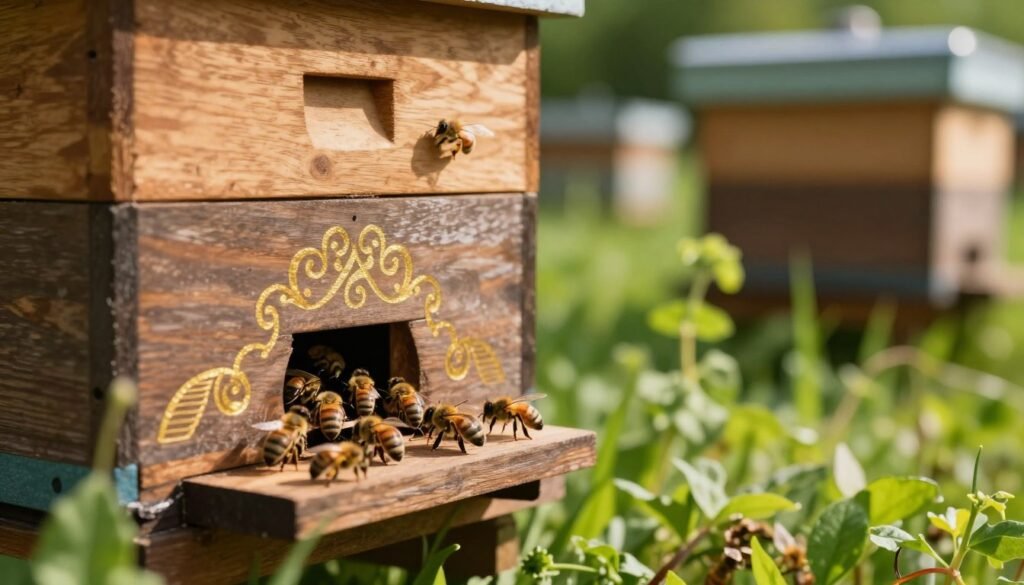
Make sure you pick the correct way to relocate. Leave the hive in the new spot for a few days so the colony can settle. Check ventilation and brood after the move.
| Distance | Effect on Foragers | Recommended Action |
|---|---|---|
| Foragers return normally | Place hive nearby; minimal disturbance | |
| 3 feet–3 miles | High confusion; lost workers | Avoid this range; do not use intermediate spots |
| >3 miles | Colony reorients over time | Move to new location; allow several days to settle |
| After arrival | Colony stabilizes | Monitor brood, ventilation, and honey stores |
For practical steps on how to move a hive safely, see how to move a hive. Follow this method to keep your operation strong.
Assessing Colony Health Before Relocation
A thorough health check of the hive is the best insurance before you change its site. Inspect the colony several days ahead and again on the day you plan to move a hive.
Open the top box and scan brood frames. Look for even brood patterns and an active queen. Check honey and pollen stores so the colony has enough food for the trip and first days at the new location.
Make sure the beekeeper documents any unusual signs. Remove weak or sick frames unless the hive will go to a quarantine site. A strong colony handles transit stress and recovers faster after arrival.
- Brood health: consistent, no odd spotty areas.
- Food stores: adequate honey and pollen for several days.
- Colony strength: plenty of workers and a laying queen.
- Boxes secured: frames tight and ready for transport.
Inspecting the site and the colony first prevents common pitfalls. A careful assessment is the method every professional beekeeper uses to protect colonies and ensure a successful move to a new location.
Essential Tools for a Smooth Transition
A reliable tool makes hauling a heavy hive over rough ground far safer for both the colony and the keeper. Proper gear reduces jolts that harm brood and preserves comb alignment.
Using a Hivebarrow
Buster is a good example of a purpose-built hivebarrow that professionals use when routes get wet or narrow.
Choose a model with a level platform so you can roll a heavy hive and keep the frames stable inside the box. A level carrier cuts the need for constant lifting and lowers physical strain on the beekeeper.
- Stable transport: a level platform helps prevent frames from shifting and crushing bees.
- Terrain handling: sturdy wheels on Buster ease work across flooded fields or tight bridges.
- Worker safety: the right equipment keeps the hive steady and reduces colony stress.
- Efficiency: fewer lifts speed the process and protect the box and comb.
For more on professional gear and colony care, see thriving hives essentials.
Preparing the Hive for Transport
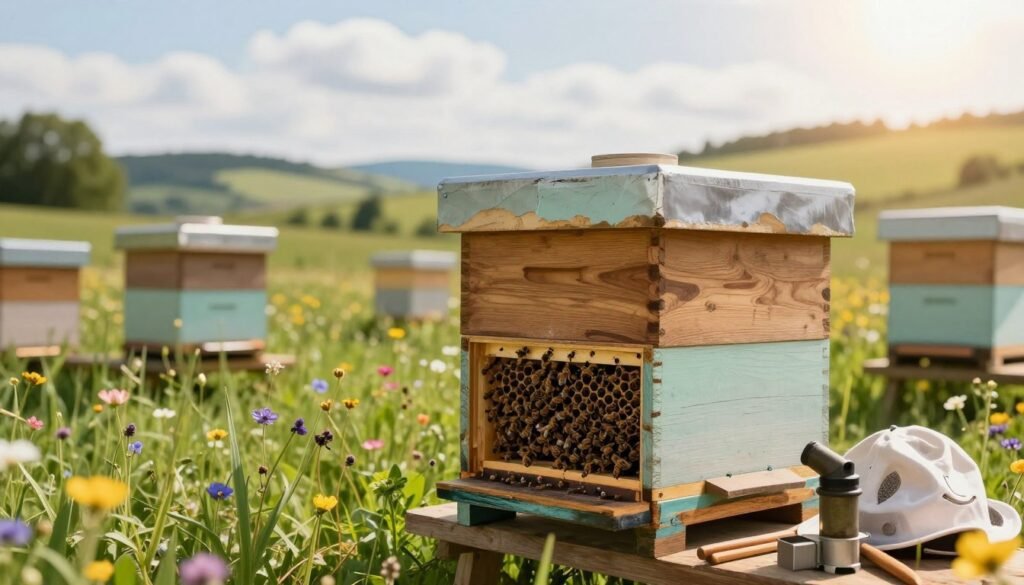
Prepare the hive for transit the night before by securing boxes, checking vents, and planning your timing.
After dusk or in the early morning, wait until most foragers are home at the entrance. Then gently block the opening with foam or dried grass to keep the colony contained.
Make sure the brood box and any supers are fastened with sturdy straps. Tight frames and a level box reduce jolts that can harm brood or spill honey.
Ventilation matters. A good beekeeper confirms airflow before sealing the entrance so the colony does not overheat during transit.
- Block the entrance after foragers return home in the night or before dawn.
- Use foam or dried grass as temporary blocks that are easy to remove.
- Secure brood box and supers with straps to prevent shifting.
- Check vents and add headspace if needed to avoid heat buildup.
Follow this method and consult a trusted backyard beekeeping guide for extra tips on preparing hives and managing the process safely.
Managing Hive Ventilation During Transit
Swap the crown board for a travel screen to provide steady airflow and avoid heat buildup inside the box. A travel screen keeps air moving while still containing the colony during a journey.
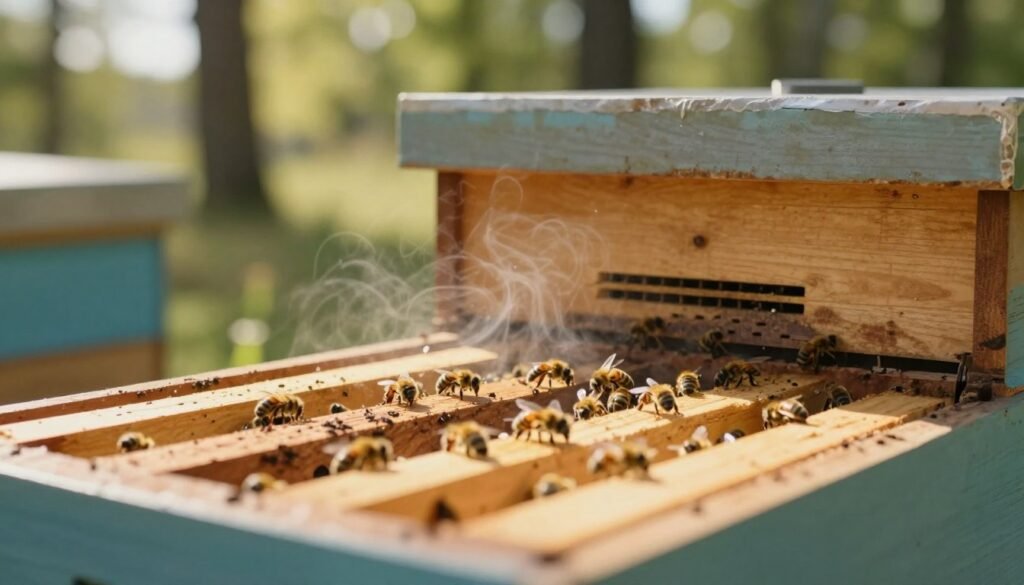
Travel Screens
Travel screens replace the top board and let warm air escape. This small change prevents the brood and honey from overheating. It also lowers agitation and protects the queen.
Airflow Requirements
Raise a hive slightly if you use an open mesh floor so air can circulate beneath the brood box. Proper ventilation matters because confined bees generate heat fast and can suffocate without enough air.
- Use a travel screen: allows cooling while keeping the entrance secure.
- Raise mesh floors slightly: ensure free air movement under the box.
- Manage the entrance: screen the opening so the colony gets fresh air and stays calm.
- Keep ventilation consistent: professionals agree this is the best way to protect honey and the hive on long trips.
For guidance on vehicles and controlled systems, review controlled ventilation systems.
Selecting the Optimal Time of Day
A precise early-morning start helps keep the colony clustered and easier to handle. Many experienced keepers aim for a 6am departure so the hive holds most workers inside the box.
Cool air in the morning or late evening lowers heat risk and reduces stress on the bees. Plan the move for a low-activity hour so the full hive travels together to the new location.
Always check the forecast before you go. Avoid hot, windy, or rainy windows that can harm brood or complicate ventilation during transit.
Timing also affects distance strategy. If you shift a hive just a few feet, foragers may return home. If you go miles, the colony will eventually reorient. Picking the right time minimizes lost workers and helps the colony settle in the days after arrival.
| Preferred Time | Benefit | Action |
|---|---|---|
| Around 6am | Foragers are at home; cooler air | Load quietly and secure the box |
| Evening after dusk | Reduced activity; cooler temperatures | Block entrance gently and transport |
| Midday (avoid) | High flight activity; heat risk | Reschedule for morning or night |
- Plan for a calm hour: ensures the entire hive is present.
- Check weather: optimal ventilation and safe temperatures matter.
- Allow settling time: monitor the colony at the new spot for several days.
Navigating Short Distance Moves
Short shifts inside the same yard keep orientation cues intact and cut the risk of lost foragers. When you move a hive less than three feet, local landmarks and scent remain familiar, so workers easily find the entrance.
Pay close attention to the hive’s orientation. Keep the entrance facing the same way and secure the box so frames do not shift. This reduces stress and keeps the colony calm during the change.
If you must adjust position, do it slowly over several days. Shift the hive a few inches per day until you reach the final spot. Professionals use this method to fine-tune placement inside a garden.
Choose the right time of day for each move. Early morning or late evening helps because most foragers are home and activity is low. After the shift, monitor the colony for a few days to confirm workers return home.
Strategies for Intermediate Distance Relocation
Relocate with intention: a three-week rotation forces a colony to re-learn its surroundings safely.
This method sends a hive more than three miles to a staging site for three weeks. The time allows workers to establish new flight maps so they do not return to the original home.
The approach is labor-intensive but reliable. During active summer months the colony adapts faster. A beekeeper should plan for repeated checks of ventilation and brood while the hives sit at the distant site.
The Three Week Rotation Method
Key steps include transporting the box to the distant site, leaving it undisturbed for three weeks, then moving the hive to the final location. This forces reorientation and reduces worker loss that occurs with intermediate hops.
“A staged rotation resets the colony’s internal map and protects foraging workers.”

| Step | Action | Benefit |
|---|---|---|
| Stage 1 | Move hive >3 miles to staging site | Breaks homing cues |
| Stage 2 | Leave for 21 days; monitor ventilation and brood | Colony reorients to new site |
| Stage 3 | Relocate to final spot; allow settling | Workers adopt new entrance and resume normal foraging |
- Consider time and effort: the method works but needs planning.
- Summer advantage: active colonies adapt more quickly.
- Monitor closely: check brood, honey, and ventilation during the rotation.
Long Distance Transport Considerations
Long-distance transfers demand a sturdy vehicle and careful packing to keep colonies level and calm. When you move a hive more than three miles, the colony loses local landmarks and must reorient to the new location.
Use a reliable truck that keeps boxes steady and level for the entire trip. Secure each box with straps and padding so frames do not shift during transit.
Ventilation is critical. Fit travel screens or vents and add headspace to avoid heat buildup on warm days. Check air flow before loading and again during stops.
Professional keepers send hives long distances to prevent workers returning home. This strategy reduces lost foragers and protects colony productivity at the new site.
- Move hives >3 miles to break homing cues.
- Fasten straps and use a level platform in the truck.
- Maintain steady speed and minimize sudden braking to protect brood and the box.
- Monitor ventilation and temperature over the days after arrival.
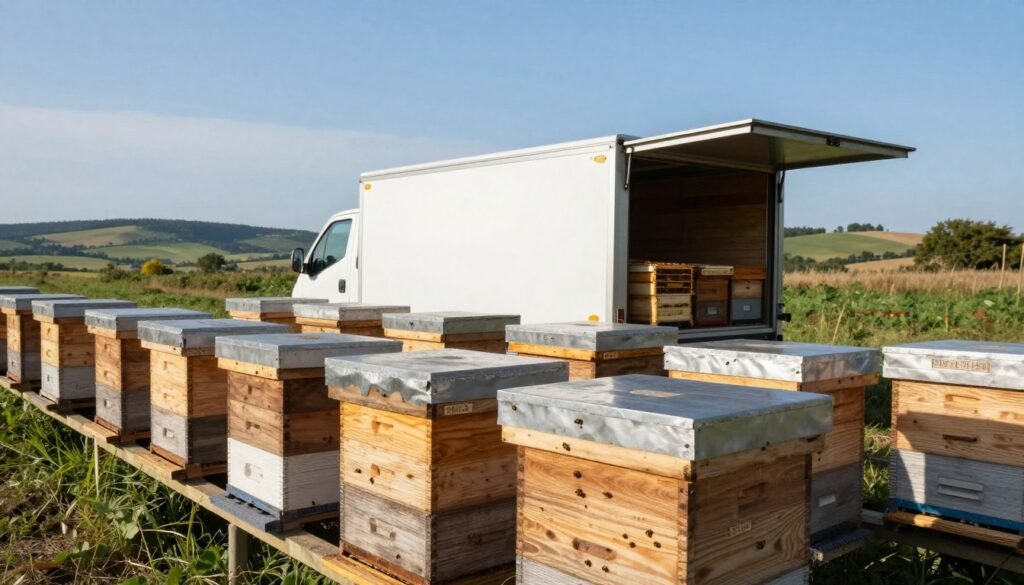
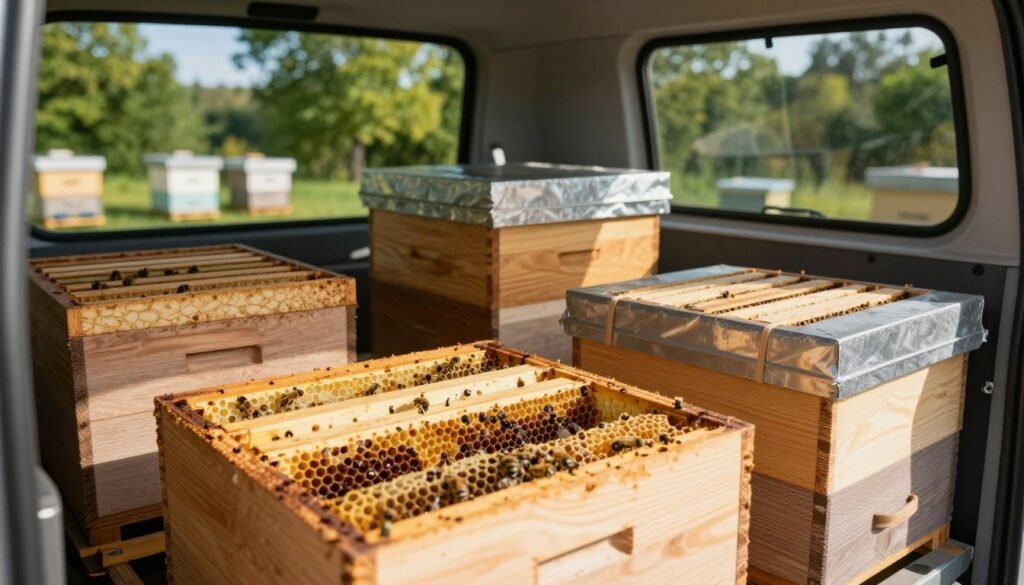
Securing Frames for Vehicle Travel
Align frames longitudinally so the top bars point in the direction of travel. This prevents frames from concertinaing during sudden stops and protects comb integrity.
Place the hive on a level surface in the truck and make sure boxes sit flat. A level box reduces jolts and lowers stress on the colony during the trip to the new location.
Use two sturdy straps, ratcheted firmly around the sides of the box. Tight straps keep boxes bound together and stop frames from shifting if the truck brakes hard.
- Top bars forward along the truck’s axis.
- Center the box on a level deck to avoid tilting.
- Ratcheted straps on both sides for even pressure.
“Secure frames protect brood and stores and help the colony arrive ready to work.”
After loading, do a final check of the entrance and the straps. If you plan to move hives often, review best practices on how to move hives safely so each trip takes only a few careful steps over the next days.
Managing Foraging Bees During the Move
Ensure every worker is home after dusk before you start to move the hive. Do this to keep the colony together and reduce the risk of lost foragers.
R.O.B. Manley warned that hauling a hive with an open entrance during the day causes chaos when the vehicle stops. If you travel in daylight, workers will try to fly out and get disoriented.
Block the entrance with dried grass or a fine mesh so workers remain in the box while in transit. This simple step secures brood and honey and keeps ventilation manageable on the road.
Before you load, make sure the hive entrance is sealed and check vents for airflow. Confirm the colony has enough stores for a few days so stress is minimal after arrival.
- Shut in at night: wait until most workers are home.
- Block entrance: use grass or mesh to contain the colony.
- Avoid day stops: daytime pauses cause mass flights and confusion.
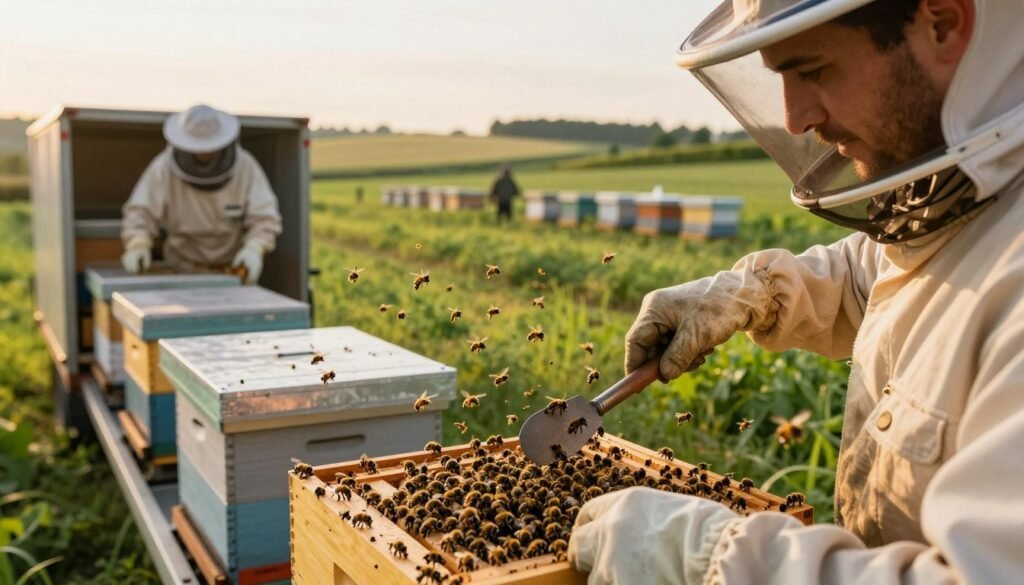
Unloading and Placing Hives at the New Site
Unload the hive gently and set it on firm, level ground as soon as you reach the site. A level base keeps the box steady and protects comb alignment in the brood box and supers.
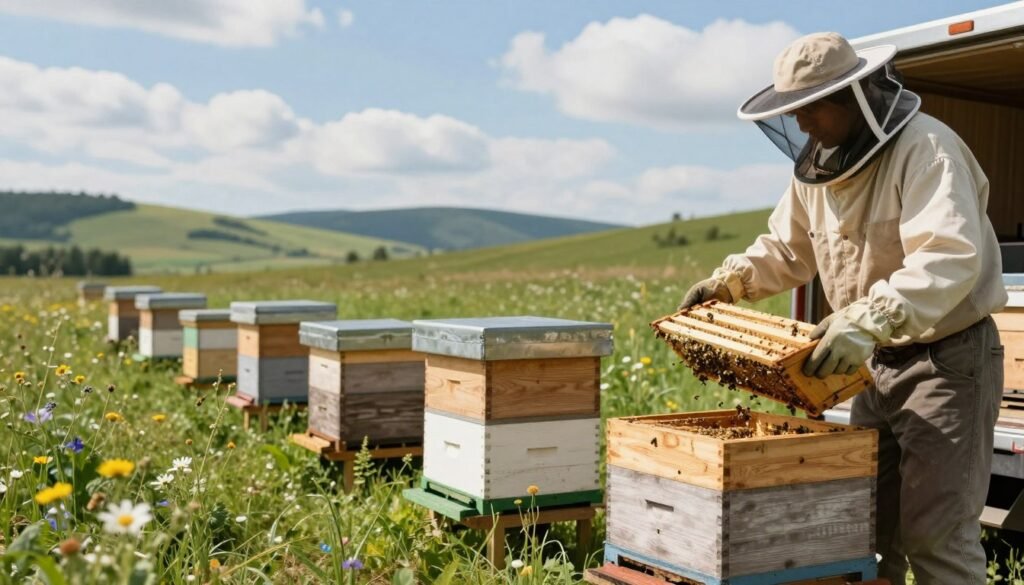
Use a trolley or hivebarrow to move the box from the truck to the final spot. This reduces jolts and makes the process safer for the colony and the beekeeper.
Do not remove the entrance block until the hive is in its permanent position. Only unblock the entrance after the box is properly oriented and ventilation is checked.
“Careful placement at first contact lets the colony reorient quickly and lowers stress.”
- Level ground: prevents comb sag and queen injuries.
- Orientation: face the entrance consistently for easy return home.
- Final checks: confirm straps, vents, and the brood box are secure before unblocking.
| Step | Action | Benefit |
|---|---|---|
| Unload | Use a trolley; place on firm, level spot | Protects frames and reduces physical strain |
| Position | Orient entrance; check ventilation | Helps colony find home and stay cool |
| Release | Remove entrance block after placement | Allows safe reorientation over the next days |
For practical step-by-step guidance on how to move a hive and place it safely, consult this how to move a beehive guide.
Helping Bees Reorient to Their New Location
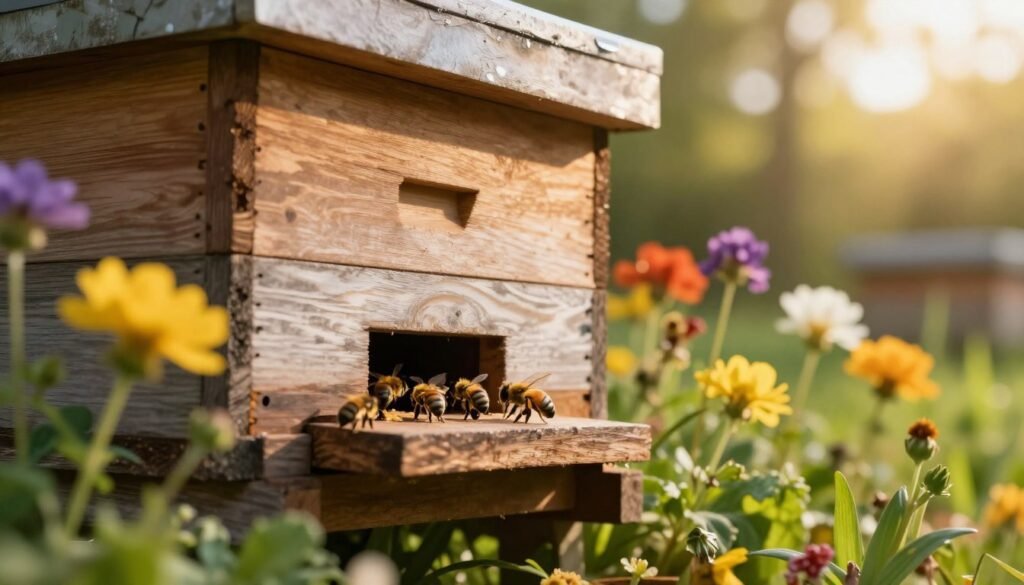
A painted landing board gives the colony a clear landmark at the new site. Visual cues cut confusion when workers first leave and return. That first flight helps the colony record new coordinates in its internal map.
Using Landing Boards
Bright, contrasting colors on a landing board make the hive entrance easy to spot from a distance. Place the board below the flight hole so returning foragers can land and orient quickly.
Leave the hive alone for a few days after you move hive boxes. During this time, workers clean damaged comb and settle the brood. Check only after several days unless you spot obvious problems.
- Mark the entrance: bright paint or a numbered tag helps recognition.
- Give time: allow the colony several days to reorient naturally.
- Use consistency: keep the board in the same spot and orientation in the garden.
Professional keepers rely on clear visual signals to speed adjustment. Proper cues help the colony stay strong and productive at its new location.
Monitoring Colony Recovery After the Move
Watch the hive closely for at least thirty minutes after you set it down so the workers do not “boil out” of the entrance and create chaos. A short settling period helps the colony cluster and reduces risk of mass flights that scatter foragers.
Expect agitation at first, but note that most colonies calm within a few days as they adjust to the new location. Professional keepers check the box several times during the first week to catch issues early.
Key signs to watch:
- Activity at the entrance: steady traffic after the first 30 minutes is a good sign.
- Calm behavior over the next few days: agitation should ease as orientation completes.
- Weather response: at low temps (around 3°C) workers staying inside indicates warmth and safety.
- Food and brood checks during the week: ensure stores and brood look healthy.
If you need deeper inspection methods, consult professional inspection tool guides or swarm prevention resources such as inspection tools and swarm prevention best practices.
Conclusion
Finish each relocation with a short checklist. Confirm ventilation, straps, and entrance orientation so the colony can settle at the new location. A calm approach on the day of transfer reduces stress.
Remember the golden rule: keep hives under three feet or send them beyond three miles to let workers reorient. Inspect again after a few days and at one week to track recovery.
With planning, the right gear, and careful timing you can safely move hive stock and protect your bees. Follow these steps and monitor for several days to help colonies thrive in their new location.