
This guide helps U.S. beekeepers align tasks with bloom, nectar flow, and local weather so you make sure critical work happens at the right time.
Order packages or nucs in January or February to secure availability, and use winter downtime to repair equipment and watch colonies without opening boxes. In some places, aim for about 100 lb per hive by November to ensure stores.
Remove honey supers in late August to prioritize fall buildup and allow timely varroa treatment before winter bees are raised. Manage condensation by venting the outer cover; wrap when daily highs drop below ~50°F and close screened bottoms when nights fall near 40°F.
Throughout the year, this guide ties brood cycles, queen performance, and colony growth to honey production and winter readiness. You’ll find region-by-month plans, IPM pillars, and harvest timing. For feeding timing and practical tips, see this concise feeding timeline from a trusted source: feeding calendar and timing.
Key Takeaways
- Plan by biology, not dates: shift tasks 2–4 weeks by local weather.
- Order bees early and use winter to repair and record keeping.
- Remove honey supers late summer to enable mite treatment and fall build-up.
- Control moisture and ventilation to protect winter cluster health.
- Track colony weight and queen performance to judge winter readiness.
Why seasonal timing beats the calendar for U.S. beekeepers
Bees respond to bloom and warmth, so your calendar must bend to nature’s cues. Timing by bloom, nectar flow, and temperatures keeps inspections and additions aligned with colony growth.
Aligning work with nectar flow, temperature, and bloom
When maples, willows, fruit trees, or dandelions open, colonies shift into build-up. Inspections, feeding, and adding boxes timed to that flow prevent congestion and wasted syrup.
Shifting tasks 2–4 weeks based on local weather patterns
As a rule of thumb, move actions 2–4 weeks later when spring lags; move earlier in mild areas. Watch daily highs, night lows, and several consecutive warm days before the first full inspection.
“First warm stretches beat dates — let consecutive mild days guide your first checks.”
- Avoid opening on marginal days to prevent chilling brood.
- Add syrup or treatments when daytime temperatures allow flight activity.
- Read late-season goldenrod and asters as fall flow signals.
Practical tip: Use local bloom notes and the seasonal beekeeping tasks checklist to shift timing for microclimates, elevations, and forage density. This mindset lowers swarming risk and boosts honey yield.
Understanding U.S. regions: Cold/North, Moderate/Central, Warm/South
Regional weather patterns drive queen egg-laying, nectar availability, and the timing of key interventions.
Cold / North
Long winters mean later spring checks and higher winter stores targets. In states like Maine and Minnesota, move spring actions 2–4 weeks later.
Priorities: secure heavy food reserves, limit inspections early, and plan for short honey windows and repeated dearths.
Moderate / Central
These zones have shoulder seasons and intermittent nectar flow. Foraging can be variable and windy.
Priorities: flexible supering, wind protection, and watching brood curves as temperatures swing.
Warm / South
Early spring buildup and long summer heat lead to early swarming and extended dearth periods.
Priorities: entrance management, constant water, and earlier spring checks tied to the first steady warm spells.
| Feature | Cold / North | Moderate / Central | Warm / South |
|---|---|---|---|
| Spring timing | 2–4 weeks later | Variable, watch blooms | Earlier, rapid buildup |
| Winter focus | Heavy stores, insulation | Balanced feeding | Minimal insulation, ventilation |
| Summer risks | Short honey window | Intermittent flows, wind | Long dearth, swarming |
| Key management | Limit inspections, heft hives | Flexible supers, wind breaks | Water supply, entrance control |
Tip: Match actions to local bloom notes and rainfall. Use a month-by-month checklist like the 2026 month-by-month calendar to shift tasks precisely by temperatures and observed nectar flow.
Pre-season planning to future‑proof your beekeeping year
A winter checklist wins warm-season time back — order early and prepare gear now.
Order packages and nucs in January or February to avoid sellouts. Choose Langstroth hives as the common USA standard to keep parts and boxes interchangeable.
Use cold months to build, paint, and repair woodenware and equipment so you can act quickly when nectar arrives. Confirm local ordinances and registrations now to prevent delays mid-season.
Site, water, and entrance basics
Pick sites with morning sun and some afternoon shade. Put reliable water nearby and locate hives away from foot traffic and livestock.
Stage entrances to face away from neighbors and prevailing winds. This protects flight paths and reduces complaints.
“Plan your stock, site, and schedule in winter so spring is about growth, not scrambling.”
| Pre-season task | Why it matters | When to finish |
|---|---|---|
| Order packages / nucs | Secures stock and queen options | Jan–Feb |
| Standardize hive type | Simplifies equipment swaps | Winter |
| Inventory gear & PPE | Scale quickly during flow | Late winter |
Checklist tip: Pre-label boxes, block time on your calendar around expected flows, and create a plan for splits, queen replacement, and mite treatments tied to local bloom and temperature windows to make sure the year starts with momentum.
Late winter readiness: cluster care, food checks, and ventilation
When nights stay cold, small, targeted actions can keep bees fed and dry without breaking the winter cluster.
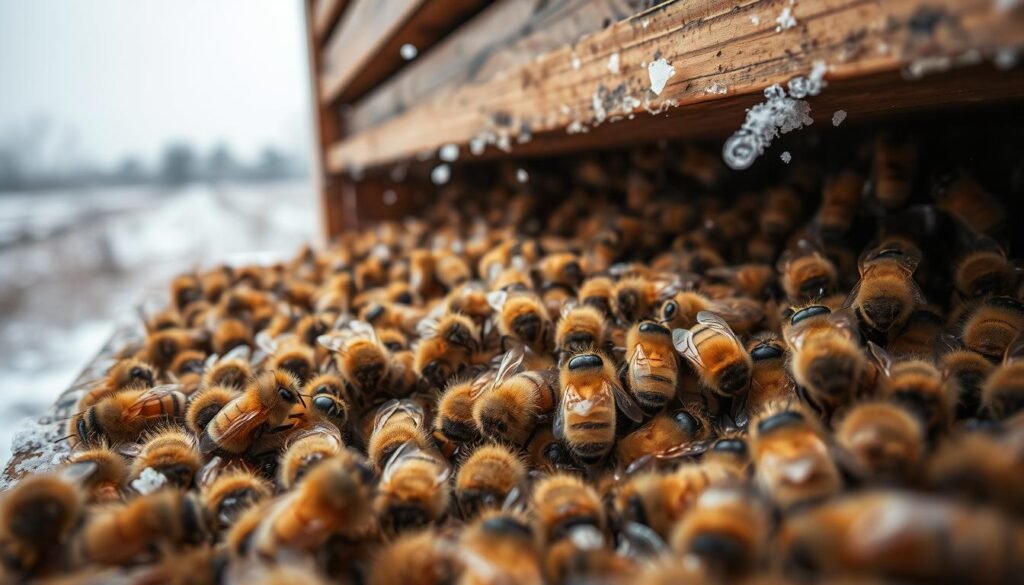
Heft first, open only when safe. Lift the back of the box briefly to judge weight. If light, add fondant or a candy board rather than a heavy opening that chills the cluster. Preserve core warmth while restoring food access.
Hefting, emergency sugar, and moisture control
Heft to estimate stores and record weights. Deploy solid sugar or fondant in very cold weather; syrup risks chilling or freezing the bee mass. On mild days, give quick emergency syrup if temperatures permit flight.
Upper ventilation versus heat loss: stopping drip on the cluster
Prop the front edge of the outer cover a finger-width to vent moisture upward. This prevents condensation from forming and dripping onto the cluster.
Close screened bottoms when overnight lows fall near 40°F and wrap boxes if daily highs drop below about 50°F. Check the entrance on warmer days to clear ice, dead bees, or packed snow so flight remains possible.
| Action | Trigger | Why it matters |
|---|---|---|
| Heft hive | Any suspected light stores | Quick gauge of food without full opening |
| Add fondant / candy | Below-freezing nights | Safe, solid feed that won’t chill bees |
| Prop outer cover | Moist, thawing days | Stops condensation and protects cluster |
Record each weight and feeding. Notes help plan rapid feed shifts once spring temperatures allow regular syrup feeding.
Early spring build-up: brood, queen assessment, and 1:1 syrup
Early spring calls for small, focused checks that set the year’s growth trajectory for each colony. Schedule inspections on at least two consecutive warm days above 50–55°F to avoid chilling brood.
First warm-day inspection protocol
Look for eggs and evaluate brood pattern quality quickly. Count and note the number of solid frames of stores around the brood nest.
If stores are light, begin 1:1 sugar syrup feeding to stimulate buildup, and stop once natural nectar appears.
Pollen substitute strategy
Add pollen patties only to strong colonies when natural pollen lags. Weak colonies that receive patties risk pests and brood complications.
Installing packages and nucs
Order packages and nucs early and stage equipment: painted boxes, feeders, and extra frames ready and dry.
Avoid adding too much space in cool weather; maintain thermal stability around brood to prevent chilling.
“Document a spring baseline for each colony — weight, brood frames, and queen signs — to guide equalizing and splits.”
- Queen checklist: visible eggs, uniform brood pattern, consistent laying rate; plan replacement if spotty or drone-laden.
- Tie feeding to hefts and entrance activity; shift or stop syrup once foragers return in force.
- Adjust timing regionally and watch early swarm signs in warmer areas; add space before congestion if needed.
| Action | Trigger | Notes |
|---|---|---|
| First warm-day inspection | Two consecutive days >50–55°F | Quick check: eggs, brood pattern, frames of stores |
| 1:1 syrup feeding | Forage scarce, light heft | Stimulates buildup; stop when nectar flow starts |
| Pollen patties | Natural pollen lag + strong colony | Use sparingly to avoid pests |
| Install packages/nucs | Stable warm period and prepared equipment | Stage feeders and frames; avoid overexpansion |
For a concise feeding timeline that complements this plan, see the feeding calendar and timing.
Spring swarm prevention and space management before nectar flow
Preventing swarms starts with timely brood moves and adding room before colonies crowd the nest. Keep checks focused and brief so you do not chill young bees. Weekly inspections during peak buildup let you spot queen cells early and act fast.
Reversing, splits, and equalizing to redirect growth
Reverse double deeps on a schedule that keeps the brood center stable while encouraging vertical expansion. This small trick often delays swarm impulse without a full split.
Use splits to reduce pressure and boost apiary numbers. Only use strong colonies as donors after disease checks. Transfer frames of emerging brood and nurse bees to stabilize weak colonies.
Timing, inspections, and adding supers
Inspect weekly during swarm-prone days to catch queen cups on frame edges and bottoms. Add the first supers just before major nectar arrives to relieve congestion and stop brood backfill.
- Stage spare frames and boxes at the apiary for quick response.
- Adjust entrances and ventilation to keep traffic moving during rapid growth.
- Decide to cull or redistribute queen cells based on whether you want more colonies or want to keep current queens.
“Calm, methodical actions beat hurried handling during peak build-up.”
| Action | Trigger | Notes |
|---|---|---|
| Reverse boxes | Early brood expansion | Keeps brood central and encourages vertical comb use |
| Weekly checks | Swarm season | Spot queen cells before they mature |
| Make splits / equalize | Strong colonies present | Use clean frames of brood and nurse bees; donor must pass disease check |
| Add first supers | Before main nectar flow | Relieves crowding and protects brood area |
Nectar flow tactics: honey supers, queen excluders, and airflow
Watch early morning forager loads and a steady return of pollen to know when nectar flow has truly begun. Add honey supers as frames show nectar and the hive gains weight over several sunny days. This prevents brood backfill and keeps stores clean.
Reading the flow: when to add, rotate, and remove supers
Visual cues: glistening nectar, capped cells, and heavy frames.
Weight cues: heft hives weekly; a steady gain means add a super or rotate a full one with an empty.
Use queen excluders if you want brood-free honey boxes; remove them if you need rapid space during a strong flow.
Entrance adjustments for cooling, traffic, and robbing control
Widen entrances and open screened bottoms when high temperatures demand cooling and airflow. Narrow entries and reduce openings when flows taper to deter robbing.
Provide reliable water close to the apiary so bees cool the nest and sustain brood rearing during heat.
“Plan super inventory before the main bloom to avoid shortfalls at peak time.”
| Action | Trigger | Timing |
|---|---|---|
| Add first super | Visible nectar + steady pollen returns | When weight rises over 3–7 days |
| Rotate full with empty | Super >70% filled or many capped frames | Every 5–10 days during peak flow |
| Adjust entrance | High temperatures or robbing signs | Widen in heat; narrow as flow ends |
| Remove supers | Declining forager returns and little uncapped nectar | Immediately after flow ends before mite treatments |
Regional note: Southern areas often see earlier, longer flows; northern zones get shorter, intense windows. Good planning of supers and quick rotation leads to cleaner honey, less stress on bees, and a smoother harvest.
For a handy checklist to align these tasks with bloom and temperatures, see spring and summer checklists.
Varroa IPM throughout the seasons: testing, treatments, and timing
A regular testing cadence gives beekeepers the data needed to choose safe, timely treatments. Keep checks simple and repeatable so you can act before loads spike.

Alcohol/sugar roll cadence and action thresholds
Use an alcohol or sugar roll monthly during buildup and more often during peak brood rearing. In spring, Ontario-style thresholds are about 2% (≈6 mites per 300 bees). In fall, treat at ~3%.
Choosing treatments by season and temperature windows
Match treatments to label temperature ranges and withdrawal periods. Never treat with honey supers on. Remove honey supers by late August to allow a strong fall treatment before winter bees develop fat bodies.
Rotating miticides and protecting winter bees’ fat bodies
Rotate active ingredients to limit resistance and always verify efficacy with post-treatment checks. Use frames and brood assessments to decide on brood breaks or drone brood removal as complementary tactics.
“Document mite loads, treatments, dates, and results to improve IPM each year.”
| Task | When | Why |
|---|---|---|
| Monthly alcohol/sugar roll | Spring–fall | Detect rising mite levels early |
| Treatment selection | Match label temp window | Protect bees and honey withdrawal limits |
| Late-summer treatment | Immediately after supers removed | Shield winter bees’ fat bodies |
| Post-treatment check | 2–4 weeks after | Confirm efficacy and adjust plan |
Summer hive care: heat, water, brood nest balance, and supers
Mid-summer demands attention to heat, water access, and how brood and storage share the same space.
Provide clean, reliable water. Place shallow dishes with landing stones or corks so bees can drink without drowning. Change water daily to prevent mosquitoes and algae. Position sources near the apiary but away from flight lanes to limit nuisance.
Shade and ventilation without inviting pests
Use dappled shade or a simple shade cloth to lower temperatures. Avoid trapping humidity under covers; keep upper vents clear to let warm, moist air escape.
Monitor for small hive beetles — shaded, humid spots can encourage them.
Balancing brood space and honey storage
Rotate full supers with empties so the queen keeps laying and frames don’t backfill. Keep frequent, quick checks of super fill during peak flow to prevent congestion and late-season swarm impulses.
“Adjust entrances and upper ventilation in heat, then narrow them if a dearth triggers robbing.”
| Issue | Summer action | Why it matters |
|---|---|---|
| Water access | Shallow trays with landings | Prevents drowning and stabilizes cooling |
| Shade | Dappled or removable cloth | Reduces heat without trapping humidity |
| Supers | Rotate full with empties often | Keeps brood space open and prevents backfill |
| Ventilation | Prop outer cover; widen entrance in heat | Dissipates heat; narrow when robbing risk rises |
Keep monthly mite checks during brood peaks and before harvest. In the warm South, watch for weather-driven dearths by July; aggressive behavior and reduced stores may mean temporary feeding if no supers are present.
For a practical calendar that aligns summer tasks with local weather and bloom, see the beekeeping calendar.
Harvest windows and post-harvest protocols for strong colonies
Harvest when most frames show capped cells and moisture readings point to stable honey. This simple rule guides timing and protects quality.
When cappings and moisture tell you to pull frames
Pull frames when roughly 70% of the comb is capped and a moisture meter reads in the safe range. Visual checks across several frames reduce the chance of sticky, fermenting honey.
Replacing boxes and late‑summer timing
If the flow continues, replace removed supers with empties to avoid bottlenecks and keep the colony productive. Many beekeepers remove honey supers by late August to shift resources toward fall buildup and timely varroa treatments.
Post-harvest handling, IPM, and storage
Clear bees with gentle brushing, a bee escape, or timed removal early in the day to minimize stress and robbing. Handle frames carefully to protect wax and avoid contamination before extraction.
- Run mite tests immediately after supers are off and treat in the label window.
- Monitor hive weight weekly and feed until target winter weights are met (example: ~100 lb by November in higher elevations).
- Store extracted supers sealed in clean, pest‑proof racks and rotate stock to prevent wax moth and beetle damage.
“Stage equipment and label lots to ensure traceability and food‑grade sanitation from apiary to extractor.”
Fall flow and feeding: heavy hives, 2:1 syrup, and entrance reducers
Late season work is about feeding smart, defending against robbers, and making sure colonies finish strong.
Set weight targets. Aim for 80–100+ lb in cold areas and adjusted minimums in milder zones. Check hive weight weekly and top up while daytime temps still let syrup be processed.
When to use 2:1 syrup and when to switch
Feed 2:1 sugar syrup in fall to pack stores efficiently. Use thicker syrup while nectar flow remains or days are warm enough for processing.
As nights chill, stop liquid syrup and shift to fondant or sugar boards. This prevents chilling and keeps bees fed when flights are rare.
Combining weak colonies and winter preparation
After disease and varroa checks, combine weak colonies into stronger units. Consolidation stabilizes the population and concentrates food for winter bees.
Reduce entrances to cut robbing risk as forage declines. Keep a reliable water source and maintain upper ventilation so curing syrup does not create damp inside.
“Finish late-season treatments and feed while bees can still process syrup; then switch to solid stores before cold nights.”
- Remove extra supers once stores are secured; leave brood boxes and needed reserves.
- Inspect minimally—only on mild days—to avoid chilling the cluster.
- Record weights, feed dates, and treatment outcomes to improve next year’s fall plan.
For additional references and reading on planning and resources, see beekeeping resources and books.
Winter preparation: insulation, moisture management, and security
Good winterization balances insulation with ventilation so bees stay warm without trapping damp air. Start when daily highs dip toward 50°F and complete a final check before sustained freezes arrive.
Wrapping options, screened bottoms, and wind breaks
Use breathable wraps or insulated wraps that shed wind but allow vapor to escape. Install wind breaks—fences or bales—on the windward side to cut drafts and reduce heat loss.
Close or partially cover screened bottom boards when overnight lows sink near 40°F to keep the cluster stable. Open them again in mild spells to aid mite checks or ventilation.
Mouse guards, entrance size, and robbing deterrence
Fit entrance reducers and mouse guards to block rodents while allowing cleansing flights on warm days. Narrow the entrance to deter robbing, but keep a tiny gap for traffic and ventilation.
Top ventilation, stores arrangement, and storm security
Prop the outer cover slightly to give an upper vent. That exhausts moist air and prevents condensation from dripping onto the cluster.
Place frames of honey and stores above or adjacent to where the cluster will move so bees can climb to food as they shift upward in cold periods.
Strap lids and weigh or secure boxes to stop wind damage. Add fencing or heavier hardware where predators or livestock may tip equipment.
- Confirm stores and position top food before freezes.
- Install mouse guards and entrance reducers.
- Wrap or insulate the exterior and set wind breaks.
- Close screened bottoms on cold nights; prop covers for ventilation.
- Strap lids and secure stands; perform a final external check only.
“Minimal disturbance preserves the winter cluster; rely on external checks unless a true emergency appears.”
Final pre-winter checklist: confirm covers, wraps, entrances, food placement, water access nearby, and secure fastenings. These steps give each hive the best chance to carry the cluster through cold months with minimal intervention.
Record-keeping, gear maintenance, and seasonal equipment cycles
Good records and staged gear save frantic trips when a sudden nectar flow starts. Keep a short pencil and a clear log: inspection date, brood status, queen notes, weight, and mite counts.
Schedule equipment cycles by months so boxes, supers, and frames are cleaned, repaired, and staged before peak time. Buy equipment before the season and keep spare frames and boxes in the apiary.
Rotate 1–3 old dark frames each spring to reduce pathogen load and keep comb healthy. Scorch or replace damaged wood during off-season maintenance and repaint or seal as needed.
“A short pencil is better than a long memory.”
- Log treatment dates, withdrawal periods, and harvest batches.
- Use digital tools or a simple notebook with photos for quick comparisons across the year.
- Align preventive maintenance with seasonal lulls so you are ready before flows.
Run an end-of-year review to refine budgets and protocols. For a template to track inspections and results, see the beekeeping records guide.
Seasonal Hive Care for U.S. Regions
Map each month to simple benchmarks — weights, brood frames, and mite checks — so actions match colony needs.
Month-by-month benchmarks from January through December
Jan–Feb: heft hives, add fondant if light, and disturb colonies minimally. Order stock early.
Mar–Apr: do first warm-day inspections, begin 1:1 syrup if needed, and assess brood and queen health.
May–Jun: add supers as nectar flow ramps; inspect every 7–10 days and test for mites.
Jul–Aug: harvest capped honey; remove supers by late August to allow varroa treatments.
Sep–Oct: feed 2:1 syrup to reach winter weight targets; finish treatments and reduce entrances.
Nov–Dec: secure ventilation, add wraps if needed, and plan equipment staging for the next year.
Region-specific shifts and brood-driven timing
Shift actions 2–4 days per week-equivalent of climate delay: colder zones move tasks 2–4 weeks later; warm zones move earlier. Let brood cycles guide splits, supering, and treatment windows so winter bees develop strong fat bodies.
“Use monthly checkpoints tied to brood and weather — not dates — to stay ahead of moths, mites, and swarms.”
| Phase | Key actions | Varroa / mite window | Goal |
|---|---|---|---|
| Late winter | Heft, fondant, order stock | Test if opening | Secure stores |
| Spring | Inspections, 1:1 feed, prevent swarm | Monthly rolls | Strong brood & queen |
| Summer/Fall | Supers, harvest, 2:1 feed | Treat after supers off | Target winter weight |
| Winter prep | Ventilation, wraps, staging gear | Post-treatment check | Survive cold season |
Common pitfalls and pro tips for beekeepers adapting year over year
Small, focused habits each season save time and protect colony productivity when weather shifts. Use brief, goal‑driven checks during heavy flows and keep notes that guide next year’s planning.
Over‑inspecting, mites, and late feeding
A long inspection during peak activity chills brood and costs honey. Limit visits to specific goals: queen check, stores, or mite testing.
Make sure mite monitoring runs on schedule. Underestimating mites or delaying varroa treatment drives fall losses and winter failure.
Bloom notes and spring planning
Capture local bloom dates, flow intensity, and odd weather events. These notes predict when to stage supers and order equipment.
- Watch population trends and brood patterns so actions are timely.
- Read entrance behavior: frantic activity can signal robbing, dearth, or queen trouble.
- Use frame rotation to prevent backfilling and maintain brood space during peak flow.
“Small, repeatable records beat vague memories — season after season.”
Pro tip: combine or cull poor performers early to protect strong colonies. Share notes with local clubs and mentors so treatment efficacy and flow timing improve across the apiary.
Conclusion
Tuning actions to local nectar and temperatures builds stronger colonies and better harvests. Across spring, summer, fall, and winter, letting bloom and brood guide your schedule reduces surprises and lifts honey yields.
Use the 2–4 week regional shift as a rule of thumb so inspections, splits, and supering stay aligned with actual forage and weather. Plan IPM right after you remove supers so treatments protect winter bees and their fat bodies.
Make sure records, staged gear, and regular weight checks drive feeding decisions and avoid last‑minute scrambles. Manage moisture with top ventilation and small entrance adjustments to safeguard the cluster.
Refine practices each year with notes on bloom, flows, and treatment results. Confident, season‑smart beekeeping keeps bees healthy, stabilizes brood cycles, and delivers more reliable honey at harvest time.
FAQ
How do I time inspections to match nectar flow instead of a calendar?
Watch local bloom, temperature, and daily foraging activity. Start inspections on the first warm, sunny days when bees fly actively. Shift major interventions 2–4 weeks earlier or later based on how quickly plants bloom and nectar appears, not strictly by date.
When should I add or remove honey supers during a strong flow?
Add a super when bees start filling the top brood boxes and returning with pollen and nectar. Remove supers when most cells are capped or when flow wanes for several warm days. Rotate or add frames to give space without crushing brood cycles.
What Varroa monitoring schedule works year‑round?
Test with alcohol or sugar rolls in early spring, mid‑summer, and early fall. Increase frequency during peak brood periods. Use a 2–3% threshold for action in spring/summer and lower thresholds before winter to protect winter bees’ fat bodies.
Which mite treatments are safe during nectar flow and winter prep?
Choose treatments approved by the EPA and label instructions. Apply oxalic acid vapor or dribble during broodless windows, and formic acid or thymol products during gaps in flow if temperatures fit label ranges. Rotate chemistries annually to limit resistance.
How much sugar syrup or fondant should I feed in late season?
Target regionals hive weights; a general plan uses 2:1 syrup in fall to bulk stores, then switch to fondant or dry sugar when temperatures drop. Feed only until hives reach the recommended weight for your zone or when bees stop consuming syrup.
What are quick signs my queen is failing during spring build‑up?
Spotty brood patterns, large areas of uncapped brood, and low egg numbers on warm inspection days indicate issues. Consider requeening or introducing a nuc if the colony can’t recover quickly before major flows.
How do I prevent swarming without disrupting honey production?
Manage space by reversing boxes, adding supers before congestion, and performing timely splits on strong colonies. Use timed inspections to remove queen cells but avoid over‑manipulating during peak nectar collection.
What water setup keeps bees hydrated without attracting pests?
Provide a shallow waterer with landing pads or floating stones. Place it near shade and away from hive entrances to reduce congestion. Change water frequently and avoid standing puddles that attract wasps or ants.
When is the best time to combine weak colonies or make nucs?
Combine weak colonies in late summer or early fall if they cannot reach target winter weight. Make nucs in spring when resources allow brood rearing. Timing depends on local flow and the colony’s population trends.
How should I manage ventilation to reduce condensation in winter?
Provide a small top ventilation or quilt box to allow moisture to rise without causing drip on the cluster. Insulate or wrap only if needed for your region’s temperatures; screen bottom boards help in summer but can increase cold airflow in winter.
What are best practices for robbing control during low nectar periods?
Reduce entrance size, remove excess honey frames, minimize exposed brood during inspections, and avoid leaving open syrup. Use entrance guards and relocate robbed frames to a secure area until bees calm down.
How often should I clean or replace equipment and frames?
Rotate combs every 3–5 years, depending on brood disease history and comb condition. Clean or replace damaged frames and sterilize tools after disease events. Maintain spare bottom boards, inner covers, and tops before peak seasons.
How do regional differences affect month‑by‑month tasks?
Cold northern areas delay spring checks and need heavier winter stores. Central zones have variable shoulder seasons and may require wind protection. Southern growers start earlier and manage extended summer heat and dearths with supplemental feeding and shade.
What metrics show a colony is strong enough for harvest?
Look for sustained population, multiple frames of sealed brood across boxes, and supers nearing cap coverage. Ensure post‑harvest there’s enough brood and stores for fall buildup before removing too many honey resources.
How should I rotate miticides and why does it matter?
Alternate active ingredients each treatment cycle and combine non‑chemical methods like drone brood removal. Rotation prevents mite resistance and protects winter bees. Always follow label windows for temperature and application timing.
When should I switch from syrup to fondant or dry sugar in fall?
Move to fondant or dry sugar when nighttime temperatures consistently fall near freezing or when bees’ syrup consumption slows. Solid feeds reduce fermentation and are easier to store in cold periods.
How can I predict nectar flow using local bloom notes?
Track first bloom dates of major nectar sources and compare yearly shifts. Note local frost dates and peak pollen reports from extension services or clubs. Use that data to pre‑position supers and time splits.
What emergency measures help a collapsing colony mid‑season?
Provide frames of brood and nurse bees from a strong colony, feed 1:1 syrup to stimulate recovery, and consider requeening. Treat for mites immediately if levels are high, and combine with a nearby healthy hive if recovery looks unlikely.
How do I set action thresholds for mites before winter?
Lower thresholds in late summer and fall—aim for near‑zero mite counts before cold sets in. Use a sugar or alcohol roll; treat if counts exceed the regional safe level (often 2–3% in late season) to protect overwintering bees.