With the traditional Boy Scouts beekeeping merit badge long discontinued, 4-H’s beekeeping project has become the most structured, widely available path for a young person to learn apiculture seriously — and unlike a badge, it’s a genuine multi-year curriculum with real progression, not a single afternoon workshop. This guide covers what the 4-H beekeeping project actually involves, how the three divisions build on each other, what it costs, and how to find your local program.
For a family weighing 4-H beekeeping against other youth beekeeping options, it helps to know where this program actually fits: it’s more structured and long-term than a single workshop, but it’s also a real commitment measured in years rather than a weekend activity – understanding that upfront helps set realistic expectations before a young member gets partway through Division I and loses momentum.
Key Takeaways
- The 4-H beekeeping project is structured in three progressive divisions — Understanding the Honey Bee, Working with Honey Bees, and Advanced Beekeeping — typically taking multiple years to complete.
- The program is open to members roughly ages 8-18, and the first division doesn’t require owning any bees yet, making it genuinely accessible to a complete beginner.
- Youth are matched with (or encouraged to find) an experienced adult beekeeper mentor, since the manuals are designed as a guide for hands-on learning rather than a standalone self-study workbook.
- A required annual project/record book (often around $15) tracks colony care, expenses, and learning progress, and is typically required for state fair exhibition eligibility.
- 4-H beekeeping programs are run at the county and state level, so specific requirements, costs, and available mentorship vary meaningfully by location — check your local county extension office directly.
Table of Contents
- The Three Divisions: How the Project Progresses
- Division I: Understanding the Honey Bee
- Division II: Working with Honey Bees
- Division III: Advanced Beekeeping
- Why a Mentor Matters for This Project
- Record Books and State Fair Exhibition
- How to Find Your Local Program
- Frequently Asked Questions
The Three Divisions: How the Project Progresses
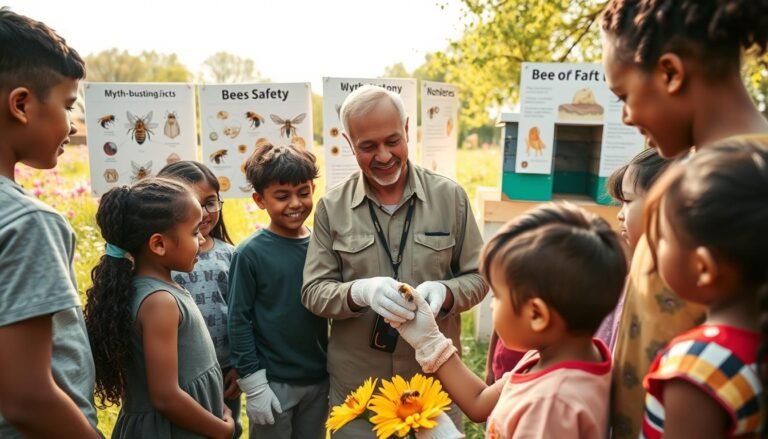
Unlike a single-badge or single-session program, 4-H’s beekeeping project is a genuine multi-year curriculum divided into three progressive levels, each building directly on the last. Per Ohio State University’s 4-H Youth Development program, the project is open to members roughly 8 to 18 years old, and the manuals are explicitly designed as a guide for learning alongside a facilitator or mentor rather than a purely self-directed workbook — this is hands-on education built around real hive work, not classroom-only material.
This progressive structure is a meaningful contrast to how many people picture youth beekeeping education – a single workshop, a merit-badge-style checklist, or a one-off farm visit. 4-H’s approach is closer to a genuine apprenticeship model spread across multiple years, which also means it’s a real time and family commitment, not something to sign up for expecting a quick, one-season activity.
Division I: Understanding the Honey Bee
The first division, Understanding the Honey Bee, covers foundational knowledge: bee types and castes, honey and wax production, bee-friendly plants, and the equipment a beekeeper needs — all without requiring the young person to actually own a colony yet. This is a genuinely important accessibility feature: a family or child curious about beekeeping can start the program and build real foundational knowledge before committing to the cost and responsibility of an actual hive, which removes a common barrier that keeps interested kids from ever starting.
This first division typically covers honey bee anatomy and the differences between the queen, workers, and drones, the basics of the waggle dance and hive communication, an introduction to the major hive types in use today, and safety fundamentals – what protective equipment is for and why it matters – before a young member ever opens a real hive. Completing this division thoroughly gives a genuinely solid foundation, not a rushed introduction, for the hands-on work that follows in Division II.
Division II: Working with Honey Bees
The second division is where the project becomes genuinely hands-on: youth acquire a colony and learn to manage a real beehive throughout a full season, including basic operations that lead to producing extracted, chunk, or cut-comb honey. This is the point where the family needs to have made a real decision about hosting a hive — whether on their own property (subject to the same local zoning and HOA considerations covered in our HOA and zoning guide) or through an arrangement with a mentor’s or relative’s apiary.
Division II is also where the real financial commitment begins – a starter hive, protective equipment, and a package or nuc colony represent genuine upfront cost, on top of the annual record book fee. Some 4-H clubs and county programs maintain shared equipment or club apiaries specifically to reduce this barrier for families not ready to invest in a full personal setup right away, so it’s worth asking your local program directly whether such resources exist before assuming a complete individual setup is required from day one.
Division III: Advanced Beekeeping
The third and most advanced division is intended for a young beekeeper already experienced and knowledgeable in basic hive care, covering more advanced topics: increasing colony numbers through splits, boosting honey production, producing specialty honey types, disease management, and a deeper dive into colony social structure. This division represents genuine, substantive apiculture knowledge — not a simplified youth version of the subject, but a real progression toward the kind of knowledge an adult hobbyist beekeeper would need.
Members who complete Division III often become informal mentors themselves for younger 4-H beekeeping members joining the program, and some go on to pursue more formal recognition – state and national 4-H beekeeping competitions and presentations exist in many programs, giving advanced members a genuine showcase for the depth of knowledge and hands-on skill this multi-year project builds.
Why a Mentor Matters for This Project
Because the 4-H beekeeping manuals are designed as a facilitated learning guide rather than a standalone curriculum, having an experienced adult beekeeper involved — a parent, relative, 4-H volunteer leader, or a connection made through a local beekeeping association — genuinely shapes how much a young member gets out of the project. If your family doesn’t already have a beekeeping connection, your county extension office or local beekeeping association is usually the best starting point for finding a volunteer leader or mentor willing to work with a 4-H beekeeping member specifically.
Some counties formally pair members with mentors as part of the program structure; others rely on informal connections through the local beekeeping community. If your area doesn’t have an established mentor-matching process, reaching out through a beekeeping internship or apprenticeship program often works just as well – many experienced beekeepers are genuinely enthusiastic about working with a motivated young person and will make time for it even without a formal 4-H connection prompting them.
Record Books and State Fair Exhibition
4-H beekeeping members are typically required to complete an annual project and record book — tracking colony care, management decisions, and expenses — every year the beekeeping project is taken, with a different record book corresponding to each division level. These record books commonly cost in the range of $15 and are usually a prerequisite for exhibiting at a county or state fair, which is often a genuinely motivating milestone for younger members working through the program. Specific record-keeping requirements and fair exhibition rules vary by state and county, so checking your local 4-H program’s current requirements directly is worth doing before assuming a neighboring county or state’s rules apply identically to yours.
Beyond the fair itself, a well-maintained beekeeping record book becomes a genuinely useful document later – it’s the kind of concrete, sustained project history that stands out on a 4-H portfolio, a college application, or a scholarship essay years down the line, since it demonstrates real sustained responsibility and skill development rather than a single short-term activity.
How to Find Your Local Program
4-H beekeeping programs are administered at the county and state level through the Cooperative Extension System, meaning availability, specific curriculum materials, and support resources vary by location. Search for your state’s 4-H program plus “beekeeping” (for example, “Ohio 4-H beekeeping” or “Colorado 4-H beekeeping”) to find your specific state’s project manuals and county contact information, or start with your local county extension office directly, since they can connect you with the closest active beekeeping club or volunteer leader rather than requiring you to organize a project entirely independently.
It’s also worth checking whether your state runs any dedicated youth beekeeping field days, workshops, or summer camps outside the standard 4-H structure, since many state beekeeping associations run their own youth-focused events that pair well with the 4-H curriculum rather than competing with it. These events are often a good low-commitment way to gauge a child’s genuine interest before committing to the full multi-year project, and several state programs specifically coordinate with 4-H extension offices to cross-promote both opportunities.
Frequently Asked Questions
Do I need to already own bees to start the 4-H beekeeping project?
No — Division I, Understanding the Honey Bee, is specifically designed to build foundational knowledge before a member acquires a colony, making the project accessible to complete beginners.
What age can join the 4-H beekeeping project?
Typically around 8 to 18 years old, though exact age ranges can vary slightly by state 4-H program.
How long does it take to complete all three divisions?
This is a genuine multi-year curriculum, not a single-session program — most members progress through the divisions over several years of active participation.
Do I need a mentor to do the 4-H beekeeping project?
It’s strongly encouraged rather than strictly mandatory in all programs, since the manuals are designed as a guide for hands-on, facilitated learning rather than pure self-study.
How much does the 4-H beekeeping project cost?
Record books commonly run around $15 per year, plus the separate cost of actual beekeeping equipment and a colony once a member reaches Division II, which varies based on your existing setup.
FAQ
Do I need to already own bees to start the 4-H beekeeping project?
No, Division I builds foundational knowledge before a member acquires a colony.
What age can join the 4-H beekeeping project?
Typically around 8 to 18 years old, varying slightly by state program.
How long does it take to complete all three divisions?
Most members progress over several years, not a single session.
Do I need a mentor to do the 4-H beekeeping project?
Strongly encouraged, since the manuals are designed for facilitated learning.
How much does the 4-H beekeeping project cost?
Record books run around $15/year, plus separate equipment and colony costs.