Published September 3, 2026
Every explanation of the honeybee waggle dance on this site, and on virtually every other beekeeping resource, traces back to one Austrian zoologist who spent decades patiently watching bees dance on glass-walled observation hives. Karl von Frisch didn’t simply describe or notice the waggle dance in passing — he painstakingly decoded it as a genuine, functional language, a discovery genuinely significant enough to win a Nobel Prize and to remain, more than half a century later, one of the single most cited and most thoroughly tested findings in the entire field of animal behavior science.
Table of Contents
- Who Was Karl von Frisch?
- His Earlier Discovery: Bees Can See Color
- Decoding the Waggle Dance
- The Round Dance for Nearby Food
- The Glass Observation Hive Method
- His Research Beyond Bees
- Surviving Nazi-Era Racial Laws
- The 1973 Nobel Prize
- The Dance Language Controversy
- His Legacy in Modern Research
- Von Frisch vs. His Co-Nobel Laureates
- Common Misconceptions
- Frequently Asked Questions
Who Was Karl von Frisch?
Karl von Frisch (1886-1982) was an Austrian ethologist and zoologist who spent much of his career at the University of Munich, alongside earlier academic posts at Rostock, Breslau, and Graz. He is remembered today primarily as the scientist who deciphered honeybee communication, but his research career spanned a considerably broader range of animal sensory biology before that signature discovery took shape.
His Earlier Discovery: Bees Can See Color
Before his famous work on the dance, von Frisch made another genuinely foundational discovery: he demonstrated experimentally that honeybees can perceive color, including ultraviolet light invisible to humans, rather than seeing only in shades of gray as had been previously assumed by some researchers. This early color-vision research, conducted in the 1910s, laid essential groundwork for his later dance-language work, since understanding how bees perceive their environment was a necessary foundation for understanding how they communicate about it — a connection covered in more depth in the bee vision and communication content already on this site.
Decoding the Waggle Dance
Von Frisch’s central, defining discovery was decoding the meaning of the waggle dance — the distinctive figure-eight movement pattern a successful forager bee performs on the comb after returning to the hive. Through careful, sustained observation, he determined that the dance encodes both the direction and distance of a food source relative to the hive and the sun’s position, allowing other worker bees watching the dance to fly out and locate the same resource without having witnessed it directly themselves. This was a genuinely radical finding for its time: proof that an insect could communicate abstract spatial information symbolically, something previously assumed to be far beyond insect cognitive capability.
The Round Dance for Nearby Food
Von Frisch also documented a second, simpler dance pattern used for food sources very close to the hive: the round dance, a simpler circular movement lacking the directional waggle component of the more elaborate dance used for distant sources. Distinguishing these two distinct dance types, and correctly identifying which piece of information each one communicated, was itself a significant part of his broader decoding work rather than a minor footnote to the more famous waggle dance discovery.
The Glass Observation Hive Method
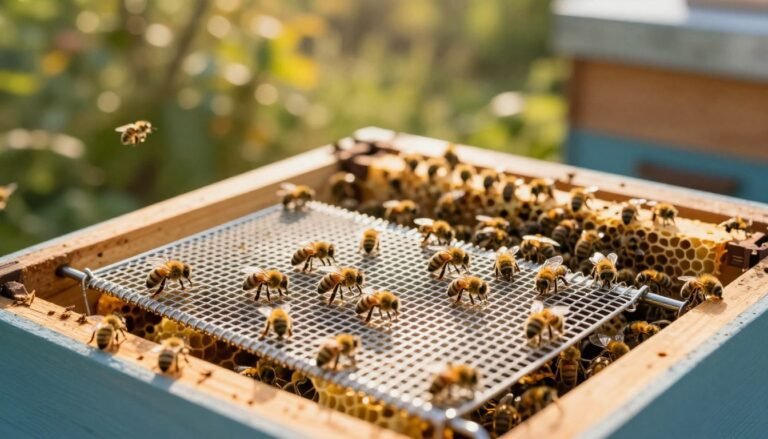
Von Frisch’s research depended heavily on specially built observation hives with glass walls, allowing him to watch individual marked bees perform their dances in real time without disturbing normal colony behavior. This methodological innovation was itself genuinely important to the discovery’s credibility: rather than working from indirect inference, von Frisch could directly, repeatedly observe the same behavior across many individual bees and food-source scenarios, building the kind of sustained empirical evidence base that made his eventual conclusions difficult to dismiss.
His Research Beyond Bees
While bees are what von Frisch is remembered for today, his broader scientific career also included genuine, foundational work on fish sensory biology, including research demonstrating that fish can hear and possess a functional sense of taste, at a time when these capabilities weren’t widely assumed or well documented. This broader body of sensory-biology work reflects a consistent research theme across his career: carefully, rigorously testing what animals could actually perceive rather than assuming the answer based on human intuition, a scientific approach that carried directly into his later bee research.
Surviving Nazi-Era Racial Laws
A genuinely significant and less commonly discussed part of von Frisch’s biography: during the Nazi era in Germany, his academic position came under direct threat due to racial laws targeting individuals with Jewish ancestry, since he had a Jewish great-grandparent. His university ultimately petitioned successfully for an exemption, citing the practical agricultural value of his bee research, particularly work relevant to combating bee diseases affecting the food supply, allowing him to continue his position and, eventually, his dance-language research through this genuinely precarious period in his career.
The 1973 Nobel Prize
In 1973, von Frisch shared the Nobel Prize in Physiology or Medicine with Konrad Lorenz and Nikolaas Tinbergen, awarded for their collective discoveries concerning the organization and elicitation of individual and social behavior patterns in animals. Von Frisch’s specific contribution recognized by the prize centered on his honeybee communication research, making his work on the waggle dance one of the relatively rare instances of an insect-focused discovery earning this level of top-tier scientific recognition.
The Dance Language Controversy
Worth addressing honestly: von Frisch’s dance-language interpretation didn’t go unchallenged. Beginning in the 1960s, researcher Adrian Wenner and colleagues argued that bees might rely primarily on scent cues to locate food rather than genuinely decoding the dance’s spatial information, sparking a real, extended scientific debate within the field. This “dance language controversy” was substantially resolved in von Frisch’s favor through later research, including experiments using robotic dancing bees by James L. Gould and, still later, direct flight-path tracking of real bees using harmonic radar technology, which confirmed bees genuinely do use the dance’s encoded directional information rather than relying on scent alone. This honest history matters: it shows von Frisch’s conclusion held up under genuine scientific scrutiny rather than simply being accepted uncritically.
His Legacy in Modern Research
Von Frisch’s dance-language discovery continues to influence research well beyond traditional entomology, including work in swarm intelligence and distributed robotics, where engineers have studied honeybee communication patterns as a model for how simple agents can share spatial information efficiently across a decentralized group. This ongoing relevance to fields far outside classical zoology is a genuine marker of how foundational his original discovery turned out to be, rather than remaining a narrow historical curiosity confined to bee biology alone.
Von Frisch vs. His Co-Nobel Laureates
| Scientist | Primary Discovery | Study Subject |
|---|---|---|
| Karl von Frisch | Waggle dance communication, color vision | Honeybees |
| Konrad Lorenz | Imprinting behavior | Birds (notably geese) |
| Nikolaas Tinbergen | Instinctive behavior patterns, ethology methodology | Various animals, including gulls and fish |
Common Misconceptions
The most common misconception is assuming von Frisch simply observed and described the waggle dance rather than genuinely decoding its meaning, when his actual contribution was demonstrating, through careful experimentation, that the dance encodes specific, usable directional and distance information rather than being a decorative or incidental behavior. A second common misconception is assuming the dance-language interpretation was universally accepted immediately and without challenge, when the genuine scientific controversy described above shows a considerably more contested, and ultimately more scientifically robust, path to acceptance.
How did von Frisch mark individual bees to track them for his research?
He used small dots of paint applied to individual bees, allowing him and his research team to visually distinguish and follow specific individuals across repeated observations, a simple but genuinely essential technique for connecting a particular bee’s dance to its actual foraging trip and food source location.
Are there any of von Frisch’s original observation hives or research materials preserved today?
Various academic and museum archives associated with his university affiliations preserve documentation, publications, and materials related to his research career, though this article can’t point to one single definitive physical collection open to general public viewing without further specific verification.
Did Adrian Wenner’s challenge to the dance language theory ever get fully resolved in the scientific literature?
Yes, later research, particularly harmonic radar tracking studies that directly followed the flight paths of recruited bees, provided direct, hard-to-dispute evidence that bees genuinely use the dance’s encoded directional information to locate food, substantially settling the debate in von Frisch’s favor decades after it was first raised.
Was von Frisch the first person to ever notice bees performing a dance-like movement?
Earlier naturalists had noted unusual movement patterns in returning foragers before von Frisch’s work, but he was the one who systematically decoded what that movement actually communicated, transforming a previously noted but unexplained curiosity into a genuinely understood communication system.
Does the waggle dance work the same way across all honey bee species, not just the Western honeybee von Frisch studied?
Research on other Apis species has found broadly similar dance-based communication, though with genuine variation in specific details between species, meaning von Frisch’s core discovery established a communication framework that later researchers have extended and compared across the wider honey bee genus rather than one confined only to the species he originally studied.
What happened to von Frisch’s academic career after the war ended?
He continued his research and academic work in the postwar period, ultimately going on to receive the Nobel Prize decades later in 1973, reflecting a research career that continued and matured well beyond the specific wartime threat to his position described earlier in this article.
Do beekeeping textbooks and courses still teach von Frisch’s original findings today?
Yes, the waggle dance remains a standard topic in beekeeping education and general biology curricula, and von Frisch’s core findings, refined and confirmed by later research, continue to be presented as the accepted explanation for how foraging bees share resource location information within a colony.
Did von Frisch personally coin the term “waggle dance,” or did that name come later?
The specific English terminology used to describe the dance, including “waggle dance,” reflects translation and terminology conventions that developed as his German-language research was translated and discussed internationally, rather than necessarily being his own original English phrasing from the outset.
Is it possible to observe waggle dance behavior firsthand as a hobbyist beekeeper?
Yes, with a suitable observation hive setup similar in principle to the one von Frisch used, a patient beekeeper can genuinely watch returning foragers perform the dance on the comb, making it one of the more directly observable pieces of advanced honeybee behavior available to anyone willing to build or buy the right equipment and spend time watching closely.
How does von Frisch’s work connect to the broader field of animal cognition research today?
His demonstration that an insect could communicate abstract spatial information helped open the door to broader scientific interest in insect cognition generally, an area of research that has since expanded considerably to examine learning, memory, and problem-solving in bees and other insects well beyond the specific dance-language question he originally set out to answer.
Did anyone conduct serious scientific hive observation before von Frisch’s era?
Yes, decades earlier the Swiss naturalist François Huber, despite losing his sight in adolescence, conducted foundational honeybee research through a devoted assistant’s careful observation, establishing the kind of rigorous, empirical tradition von Frisch’s own later work built directly upon.
Frequently Asked Questions
When exactly did Karl von Frisch discover the meaning of the waggle dance?
His dance-language research developed over an extended period, with his major synthesis work, including the book “The Dance Language and Orientation of Bees,” published later in his career, reflecting decades of accumulated observation rather than a single sudden discovery moment.
Is the waggle dance discovery still considered scientifically valid today?
Yes, despite the genuine mid-20th-century controversy over the theory, later research using more advanced tracking technology confirmed that bees do use the dance’s directional information, and von Frisch’s core discovery remains a well-established, widely cited finding in animal behavior science.
Did Karl von Frisch work alone on this research?
While von Frisch is the primary name associated with the discovery, like most significant scientific research it involved students, colleagues, and successive researchers building on and testing his findings over time, including those involved in the later controversy and its resolution.
Why does this history matter for beekeepers today?
Understanding that the waggle dance is a genuinely decoded communication system, not just an interesting curiosity, helps explain foraging efficiency and colony behavior that beekeepers observe directly, and it’s a foundational piece of the honeybee biology that much of modern beekeeping science builds on.