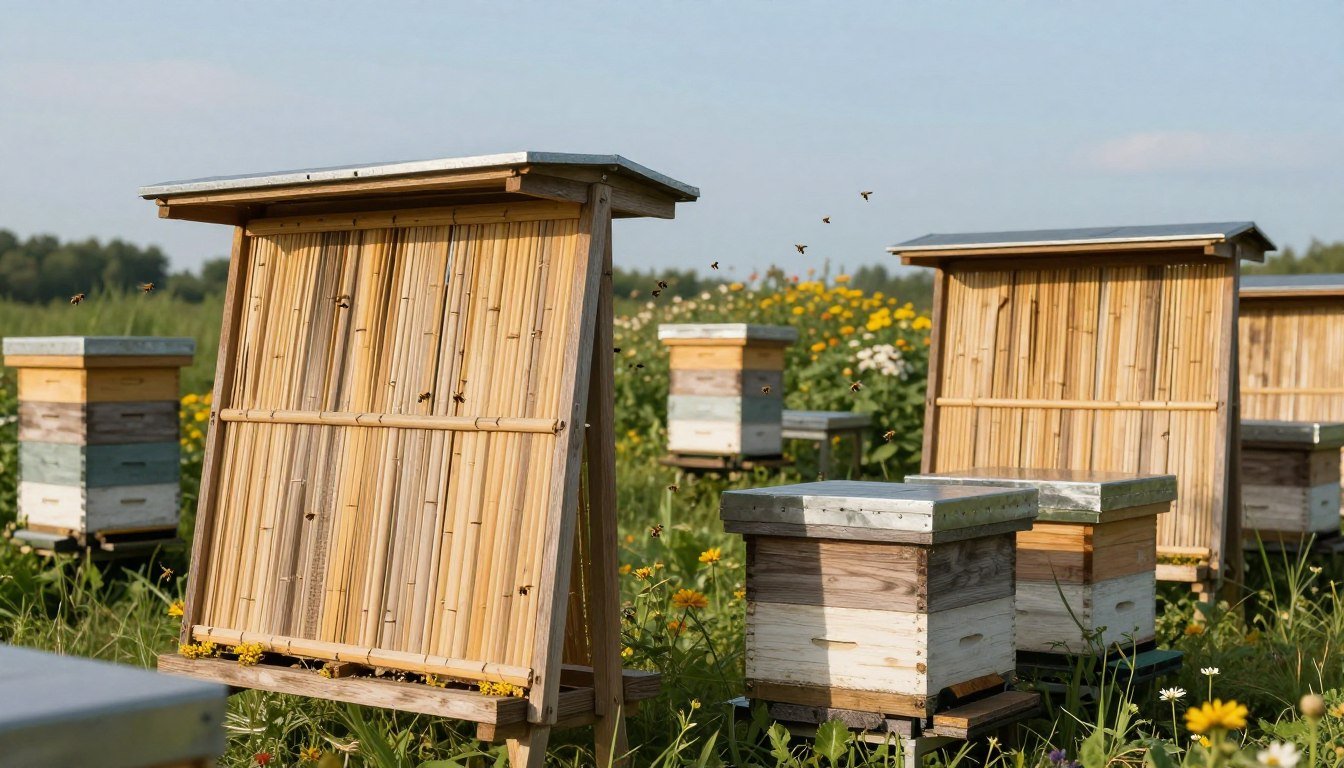
Protecting colonies means creating a stable shelter that keeps hives warm and calm during harsh weather. A well-placed barrier reduces heat loss and limits damaging gusts that stress bees and harm brood.
Professional-grade solutions help beekeepers mimic the shelter bees find in natural settings. Using durable materials and smart siting, you can manage the microclimate around each hive and improve winter survival rates.
Quick adjustments like stacking bales or securing upright pallets offer affordable, effective results. For step-by-step DIY methods and insulation tips, see a practical guide on building protective structures at DIY winter projects.
Site placement matters. Position barriers on the windward side and anchor them securely to reduce shifting in high winds. Learn more planning strategies at windbreak strategies.
Key Takeaways
- Reliable shelter lowers heat loss and protects brood.
- Durable structures boost colony survival in winter and spring.
- Affordable options like pallets or straw can work well.
- Place barriers on the windward side and secure them tightly.
- Professional or DIY solutions both improve apiary microclimates.
Why Windbreak Panels for Open Apiaries are Essential
A properly designed barrier stops high-speed air and prevents the chill that harms developing bees.
In field tests this panel reduced over 95% of wind velocity. That level of reduction keeps snow from swirling above like a solid wall would. The result is drier, more stable conditions near each hive.
Like structures used to protect livestock, these units give animals and insects a trusted refuge. When animals stay close to protective screens, stress falls and productivity improves. Bees show similar benefits with calmer surrounds.
- Consistent air control: controlled airflow prevents drifts and keeps hive entrances clear.
- Durable design: engineered to stand up to farm-grade environmental loads.
- Temperature stability: reduces cold-pressure on hive interiors to support overwintering.
- Configurable layout: easy to place for access and inspection while maximizing shelter.
For step-by-step installation ideas and insulation tips, see a practical guide on DIY protection at DIY winter projects.
Technical Specifications and Durable Design
Engineered steel assemblies deliver reliable stability and predictable performance when wind speeds rise.
Steel Gauge and Construction
These units use a 2 7/8″ drill stem pipe frame paired with 22 gauge steel decking. The outside frame is 1 1/2″ x 3″ x 14 gauge tube to resist bending and wear.
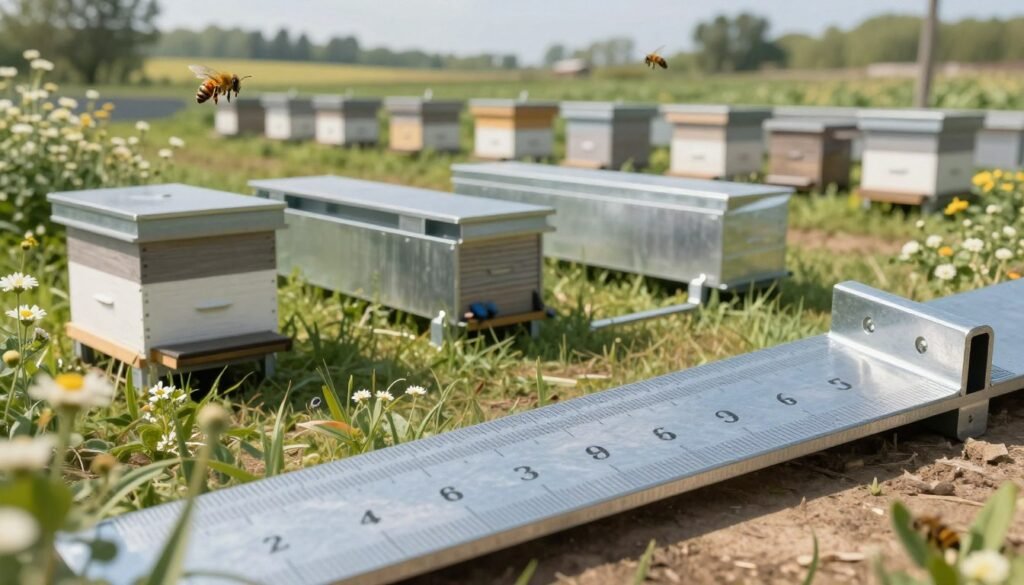
The face sheets are 20 gauge galvanized-punched metal with 1 5/8″ holes. Corrugated to 3″, the perforations give a 21% open area. This measured opening balances airflow and protection.
Wind Velocity Reduction
Design and mass matter. A 7′ x 12′ unit has a total weight of 225 lbs. Each 12′ sheet weighs 54 lbs, so these heavy, well-built components stay put during storms.
- Built with drill stem pipe and 22 gauge steel decking for long life.
- The corrugated, punched sheets provide structural strength and proven wind control.
- An outside frame of 14 gauge tube adds stability used in agricultural and livestock settings.
- This specific design reduces wind velocity by over 95% while allowing measured airflow.
To learn how to protect hives from high gusts, see our guide on how to protect hives from high winds.
Installation and Versatility for Your Property
A fast, one-person setup transforms site layout in minutes, letting you reposition shelter where bees need it most.
Portable Setup and Maintenance
Install in five minutes. One person can place a panel with no tools and no bolts. That speed reduces labor and downtime during seasonal moves.
These panels made to be moved by dragging or lifting. Tractor pallet forks can carry five heavy duty units at once, easing large installations.
- Some 25′ sections have a weight near 1,000 lbs yet stand freely or connect to livestock buildings.
- Units hook to existing structures or work as standalone protection, giving a modular layout.
- Maintenance is minimal; rugged construction keeps them safe and long-lasting.
Scalable logistics: whether a small yard or a larger farm, the design simplifies seasonal moves and protects colonies. Learn more about travel options with portable hives.
Conclusion
Investing in engineered windbreak panels yields clear, measurable benefits. A well-built unit adds stability through its weight and design, limits wind impact, and keeps colonies calmer during winter.
Choose equipment rated for livestock use to get durability that stands up to U.S. farm conditions. Portability and proven construction make these options practical for both small yards and larger operations.
Want practical placement tips or winter care steps? See our guide on protecting hives in winter and advice on managing colonies in gusty sites. Contact us today to discuss custom solutions that fit your property and help your colonies thrive come spring.
FAQ
What are these panels and how do they protect bee colonies?
These metal shields create a controlled shelter around hives to reduce direct wind exposure and sudden gusts. By breaking airflow, they lower hive stress, help maintain stable internal temperatures, and reduce the risk of colony losses during cold or windy periods.
What material and gauge are used in durable designs?
Most high-quality models use galvanized or powder-coated steel with common gauges between 18 and 14. Thicker gauge steel increases rigidity and longevity while coatings prevent rust. Look for welded seams and reinforced edges to resist bending and heavy weather.
How much wind reduction can I expect?
Properly placed screens can cut wind speed by 30–60% immediately behind the barrier, depending on height and porosity. A semi-permeable design offers the best balance: it dissipates gusts while avoiding turbulence that could stress hives.
Can I move these barriers seasonally or between yards?
Yes. Many versions are made for portable setup with interlocking sections or stand legs. Lightweight steel or framed models allow a single person to reposition panels. Anchoring options like ground spikes or ballast keep them secure once placed.
How do I maintain the panels to ensure longevity?
Inspect coatings yearly and touch up chips with appropriate rust-inhibiting paint. Tighten fasteners, clear debris that traps moisture, and store removable components indoors during extended inactivity. Routine checks prevent corrosion and structural issues.
Will these barriers affect hive ventilation or bee flight paths?
When installed a few feet from hive entrances and with staggered openings or angled placement, barriers reduce wind without obstructing flight lanes. Maintain clear approach paths of at least 24–36 inches to keep normal foraging patterns.
Are there options that also protect livestock or garden areas?
Yes. Some steel-framed models serve dual roles by shielding small livestock pens, seed beds, or young trees from wind. Choose heavier-gauge units and secure anchoring if you plan to use them in multi-purpose settings.
What should I consider when choosing panel height and length?
Match panel height to the typical wind profile and the size of the hives. Shorter units work for low, consistent breezes; taller assemblies handle stronger gusts. Longer continuous runs reduce edge effects, so combine sections to cover prevailing wind directions.
Do panels require permits or meet zoning rules?
Rules vary by locality. Most small, low-profile barriers do not require permits, but taller or permanent installations might. Check local building codes and neighborhood covenants before installing fixed foundations or using heavy-duty anchors.
How do I choose between solid and slatted designs?
Solid sheets give maximum shelter but can create turbulent air around edges. Perforated or slatted panels reduce pressure build-up and perform better in very windy sites. For beekeeping, semi-permeable slats often offer the best protection with stable airflow.