American foulbrood ranks among the most devastating diseases for honey bees, demanding swift action from every professional beekeeper. Its resilient spores can survive for decades, so handling contaminated wax and frames is a crucial part of protecting an apiary and nearby colonies.
This short guide outlines clear steps for identifying infected brood, containing spread in affected hives, and making the difficult decision about destroying contaminated comb. It also highlights essential safety and equipment tips for safe disposal of infected frames and wax.
Understanding the bacteria lifecycle and how spores persist helps beekeepers limit damage and keep honey bees productive. Practical protocols, plus careful monitoring, will support healthy colonies and safeguard your honey, larvae, and hives over the coming years.
For a detailed procedural reference on safe hive destruction and sterilization methods, consult this practical manual on hive disposal and handling: guidance for infected hives.
Key Takeaways
- Act fast: prompt removal of infected material limits spread among colonies.
- Spores last: contaminated wax and frames can remain infectious for many years.
- Know the signs: inspect brood and larvae carefully to spot early infection.
- Use safe methods: follow approved disposal and sterilization steps for equipment and frames.
- Protect the apiary: strict protocols help preserve honey bee health and hive productivity.
Understanding the Threat of American Foulbrood
Paenibacillus larvae poses a long-term threat in apiaries, since hardy spores persist on wax and equipment for decades and travel with normal hive activity.
The Lifecycle of Paenibacillus Larvae
The bacterium targets very young larvae within cells before capping. A single infected larva can produce up to 100 million spores, making infections explosive once established.
Nurse bees spread the pathogen while feeding food to brood. A one-day-old larva may be infected by as few as 35 spores, so early exposure is often fatal.
How Spores Spread Between Colonies
Spores move on frames, wax, and honey. Robbing behavior and shared equipment let contaminated honey reach healthy colonies fast.
“The resilience of afb spores means old wax and used frames can be a source of infection for years.”
Beekeepers must treat hive sanitation seriously. For practical handling guidance on infected hives and safe disposal, consult this hive disposal manual. For cleaning plastic foundation after colony loss, see this cleaning guide.
Identifying Symptoms and Diagnostic Procedures
A sharp eye and simple field tests help a beekeeper separate suspicious cells from healthy brood fast. Inspect brood frames for greasy, sunken cappings and a sour, sulfurous odor that often signals advanced disease.
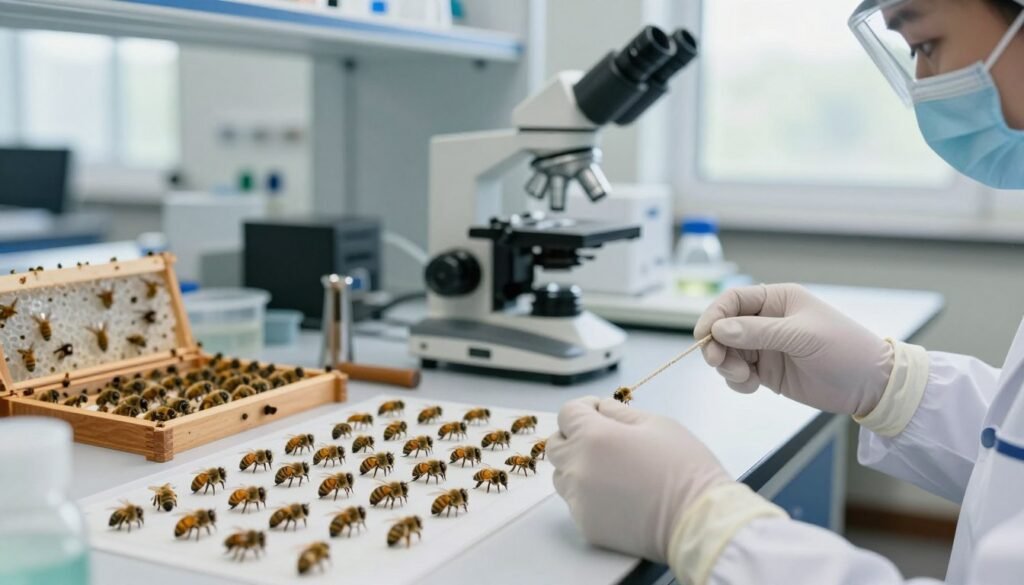
The Rope Test and Laboratory Confirmation
The rope test is a classic field check. Use a clean toothpick and pull dead larvae from cells. If the remains stretch into a string up to 2.5 cm, this is a strong indicator of infection.
Other diseases can mimic these signs. Laboratory confirmation is the only way to be certain the bacterium is present. Send a properly collected sample for testing rather than relying solely on field checks.
- Use a short video demo first, so sampling does not spread spores to healthy cells.
- Look for stringy, brown larval residue and contaminated honey or wax.
- When in doubt, isolate the frame and follow guidance on safe disposal and handling at discarding infected material.
“Field tests are useful, but lab confirmation protects healthy colonies and informs legal reporting and cleanup steps.”
When to Burn Comb After American Foulbrood
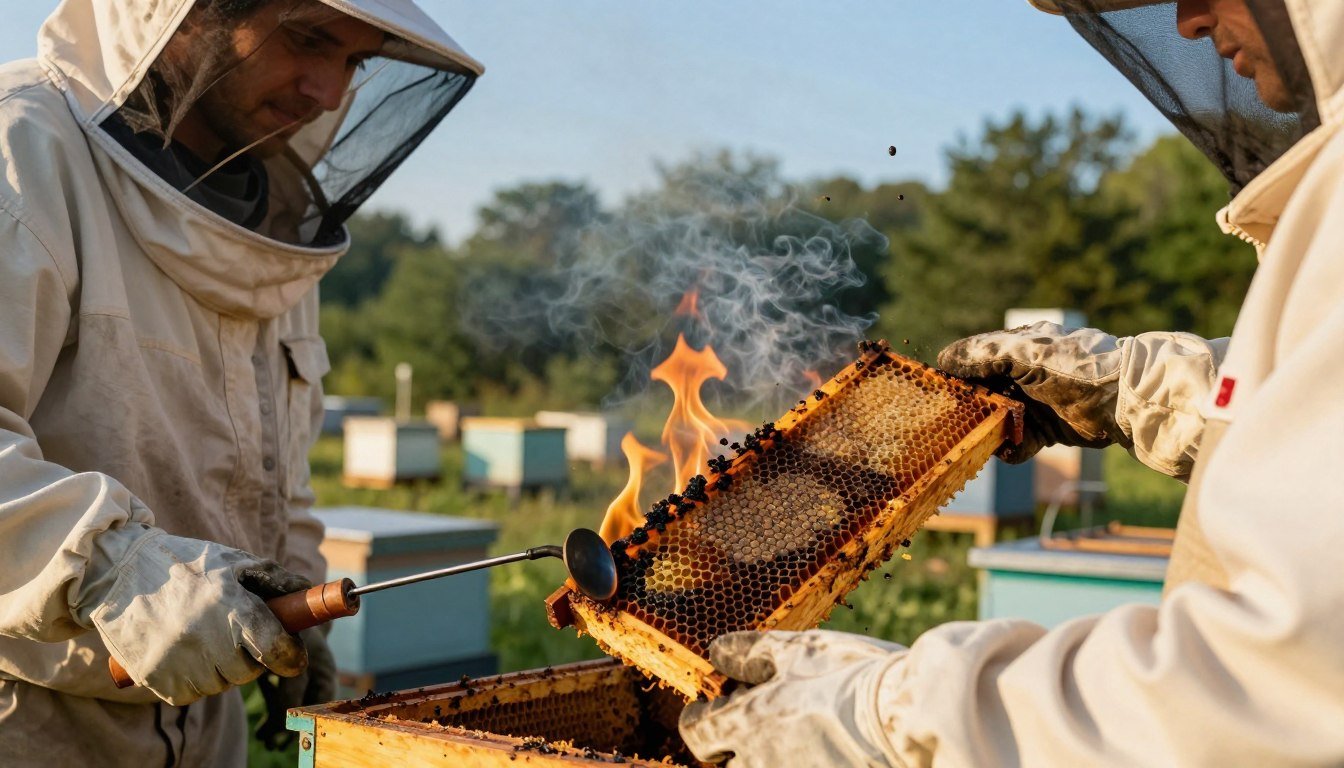
If lab tests confirm infection, destroying contaminated frames is the single most reliable step to stop spread. This rule applies when the diagnostic shows the pathogen is present in brood or honey stores.
Paenibacillus spores resist heat, cleaning, and many chemical treatments. They can survive in wax and wooden frames for decades and reinfect nearby colonies.
- Act immediately: isolate infected hives and block access so healthy bees cannot take contaminated honey or frames.
- Confirm first: make the destruction decision only after a positive lab test or clear field confirmation.
- Complete destruction: every frame, piece of wax, and contaminated equipment must be fully consumed so viable spores are eliminated.
For practical handling and broader context on the threat, see a concise review at the threat of foulbrood. If woodenware is damaged during removal, consult guidance on repair at repair damaged hive boxes.
“Rapid, confirmed action removes the main reservoir of spores and protects the rest of the apiary.”
Safe Euthanasia and Hive Containment
A deliberate euthanasia and tight containment plan stops infected bees from carrying spores across an apiary.
Perform euthanasia after dark so all forager bees are inside the hive and cannot spread contaminated honey or frames. Use a large bottle of rubbing alcohol poured slowly down seams for a quick, merciful end to the colony.
Seal every entrance on the hive and any nearby hives that may be affected. Proper containment prevents escaped bees from visiting other colonies and moving spores on their bodies or in honey stores.
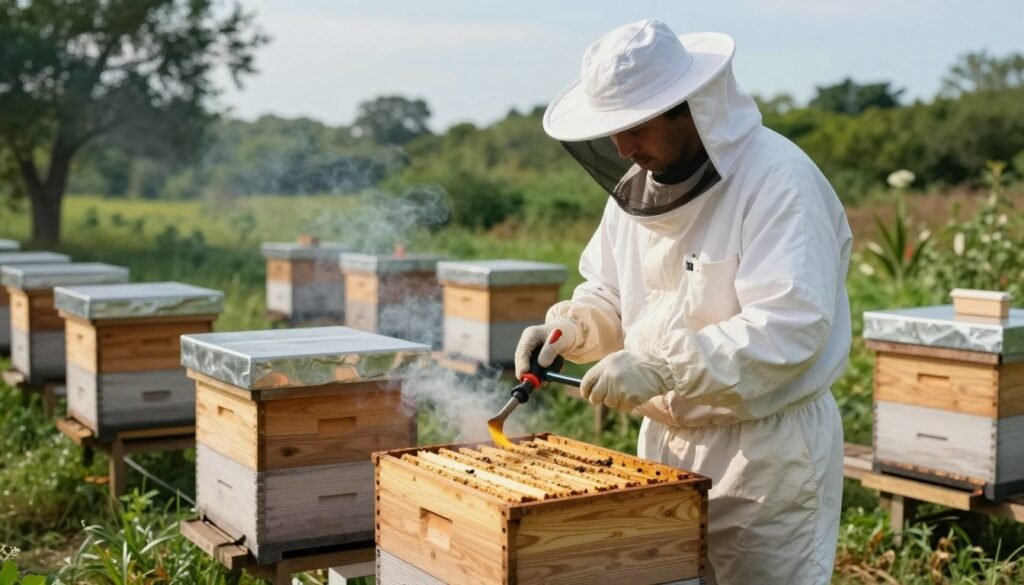
Once the colony is euthanized, treat all wood, frames, and honey as infectious material. Prepare the full hive for immediate incineration or professional disposal so viable spores cannot persist in equipment or wax.
- Night timing: wait until after dark before handling the hive.
- Humane kill: pour rubbing alcohol down seams for a swift outcome.
- Full containment: seal entrances and isolate the structure.
- Dispose all materials: arrange certified disposal or incineration of frames, honey, and equipment.
“Rapid, humane action and strict containment stop the spread of spores across an apiary.”
For formal euthanasia guidance see the euthanasia guidance, and for post-disposal cleaning advice consult this cleaning equipment resource.
Disinfecting Woodenware and Equipment
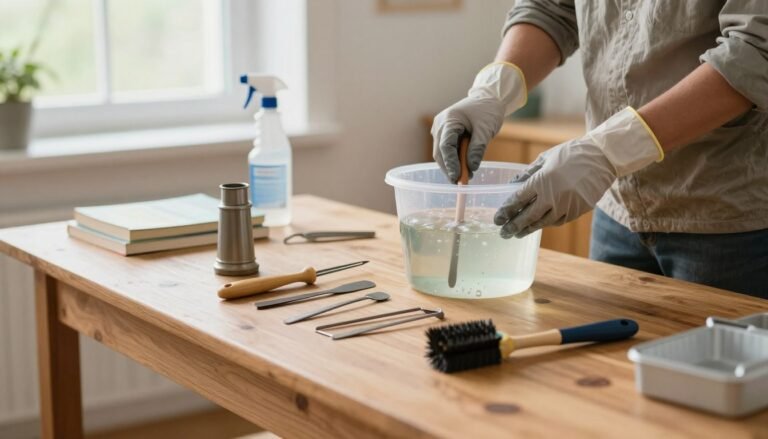
Effective woodenware disinfection cuts the reservoir of spores that threaten nearby colonies. Clean wood and frames before any reuse. Remove wax, propolis, and debris by scraping. This reduces surface load and helps chemical action reach crevices.
Chemical and Irradiation Methods
Bleach soak: soak woodenware in a solution of one part bleach to five parts water for 20 minutes. Rinse and dry fully in sunlight.
- Irradiation limits: irradiation may fail to eliminate spores in honey and bee bread, so many beekeepers regard burning as the only safe option for heavily contaminated wax.
- Antibiotic control: since Jan 1, 2017, antibiotics require veterinary prescription in the U.S., and resistance can reduce effectiveness.
- Best practice: if frames or wax show heavy contamination, remove and replace rather than risk persistent infection of brood and larvae.
Proper disinfection of hive bodies and tools is essential. For a detailed protocol on cleaning and sterilisation, consult this hive cleaning and sterilisation.
“Thorough cleaning and decisive disposal stop the cycle of AFB and EFB and protect bees across an apiary.”
Preventing Future Outbreaks in Your Apiary
Smart management keeps spores out: avoid risky supplies and keep hive strength high. Simple rules reduce the chance that disease will move through your colonies.
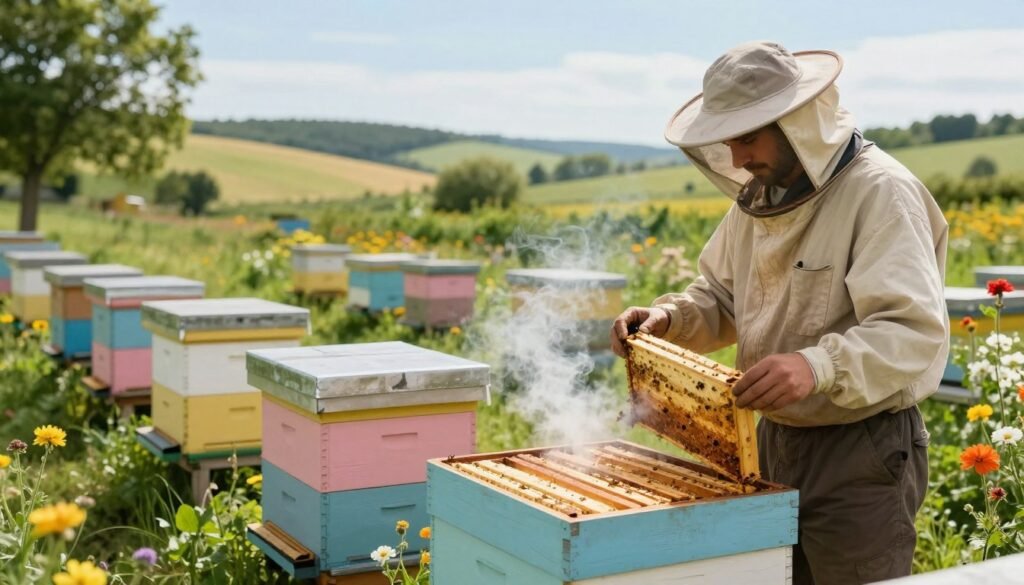
Avoiding Used Equipment
Used frames and wax can hide dormant spores for years. Never bring unknown woodenware into a healthy apiary without full cleaning or heat treatment.
If in doubt, replace frames and foundation rather than risk infection.
Risks of Commercial Honey
Commercial honey often contains afb spores at high rates. Do not feed store-bought honey to bees; this introduces disease into a hive quickly.
Use white sugar syrup for feeding and fresh water instead. This eliminates a major source of infection during soft seasons.
- Buy new or certified-clean equipment only.
- Keep colonies strong with a productive queen and many nurse bees.
- Test and inspect regularly so problems are found early.
“Preventive thrift costs less than replacing infected hives and protects neighboring colonies.”
| Risk | Action | Benefit |
|---|---|---|
| Used frames | Replace or sterilize | Reduces dormant spores for years |
| Commercial honey | Feed sugar syrup instead | Stops introduction of spores |
| Weak colony | Requeen and boost nurse bees | Improves resistance against disease |
For more on safe tool handling and flame sterilization, see sterilize hive tools with flame. Regular testing and careful purchasing protect your apiary and give your bees the best chance at long-term health.
Distinguishing American Foulbrood from European Foulbrood
Paenibacillus larvae causes one disease, while Melissococcus plutonius causes the other. This bacterial difference drives how larvae decay and which signs appear in a hive.
Key field contrast: larvae affected by the first bacterium usually die after the cell is capped. In the second, larvae often perish before capping, leaving open, sunken, or twisted cells.
Both diseases can produce a spotty brood pattern and stressed colonies. The rope test, however, is specific for detecting the first bacterium: a stringy larval residue on probing strongly suggests its presence.
European foulbrood is often less severe. Strong requeening and good hive care can let some colonies recover. The first disease tends to be far more destructive and may require strict disposal of contaminated equipment and frames.
“When in doubt, send a sample to a diagnostic lab; accurate testing protects nearby colonies and informs legal reporting.”
| Feature | Paenibacillus larvae | Melissococcus plutonius |
|---|---|---|
| Larval death timing | After capping | Before capping |
| Rope test | Often positive (stringy residue) | Usually negative |
| Typical severity | High; long-lived spores | Lower; often manageable |
| Common response | Strict destruction or certified disposal | Hive management and requeening |
Conclusion
A confirmed diagnosis should trigger clear steps that remove infection risk across an apiary. Rapid, decisive action limits spread of foulbrood and protects neighboring hives from long-lived spores.
Understand the lifecycle of the bacteria and the durability of spores. Use new frames and refuse commercial honey for feed to keep your bees healthy.
When lab results show american foulbrood, destroying infected material is the most reliable method to protect each colony. Vigilance, accurate testing, and professional beekeeping standards give your operation the best chance to prevent recurrence.