Detecting an odd odor can unsettle any keeper. When Joe (MrMojoRising) noticed a sour scent after feeding 2:1 sugar syrup in his Illinois apiary, he stayed calm and opened the colony for a careful inspection.
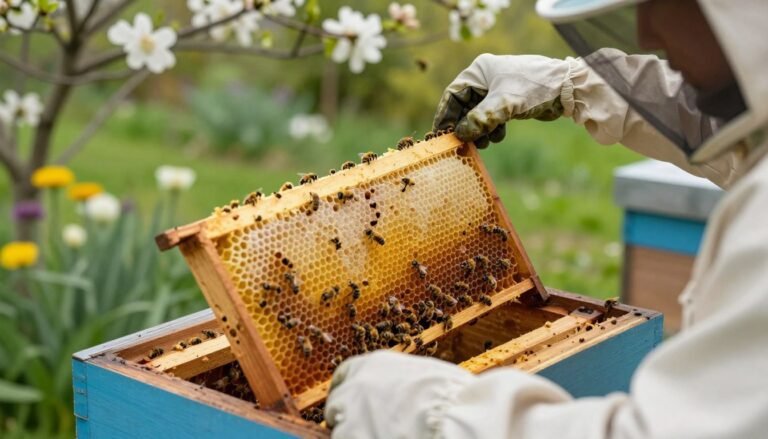
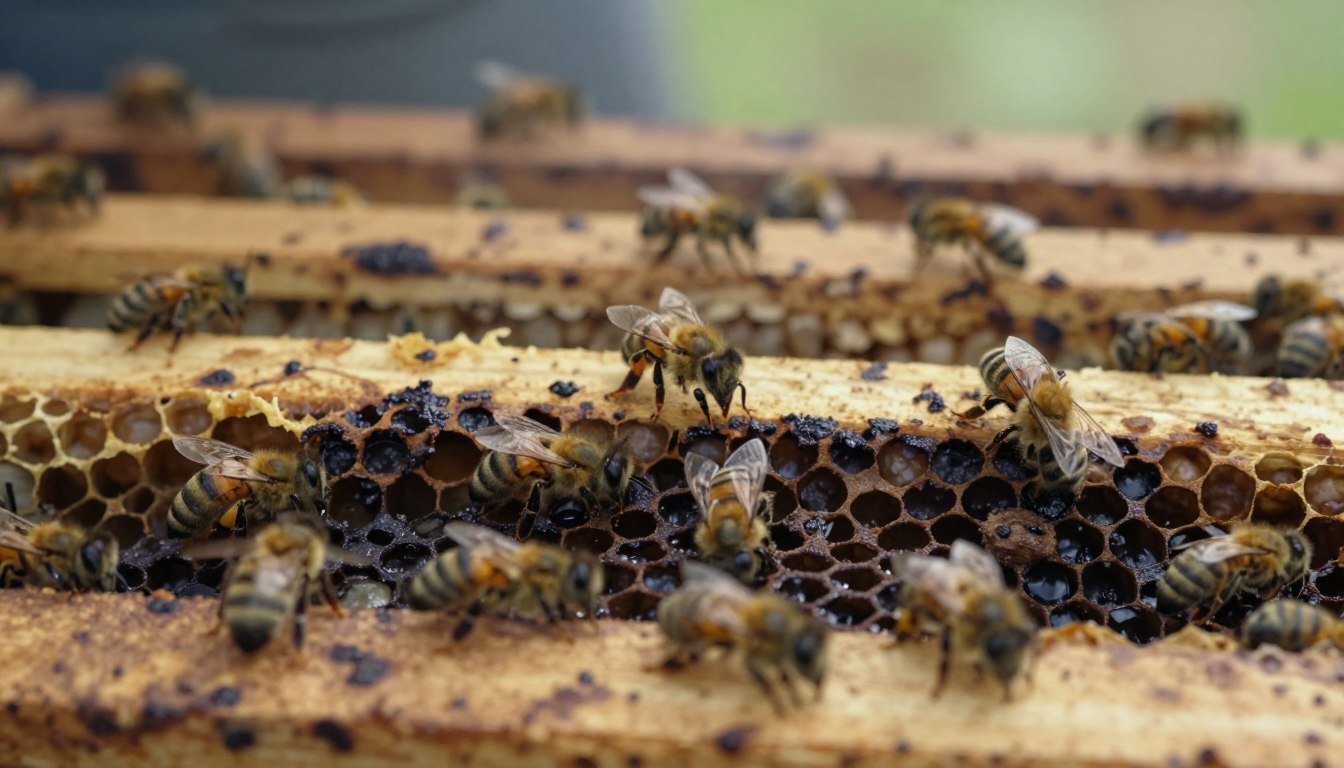
Start by checking frames for queen activity. Look for a consistent laying pattern and pearly white larvae. Uneven brood patterns, dead or discolored young, and changes in honey stores can point to stress or disease.
Some odors are harmless, from forage or stored syrup. Others hint at bacterial problems that need prompt action. Learn to spot signs that require treatment and when to replace comb or consult resources like the guidance on European foulbrood at European foulbrood advice.
Key Takeaways
- Remain calm and perform a methodical colony inspection.
- Verify queen laying and healthy, pearly white larvae.
- Differentiate harmless scents from signs of infection.
- Monitor honey stores and overall colony health regularly.
- Replace suspect comb and reduce colony stress when needed.
- Use winter and moisture management tips from winterizing guidance to support strong colonies.
Understanding the Sour Brood Smell in a Hive
A healthy colony usually greets the inspector with the warm, waxy scent of comb and sweet notes of stored honey. That baseline helps beekeepers tell normal from troubling odors during routine checks.
Seasonal nectar flows and floral sources change the aroma throughout the year. New keepers often worry when they first notice an unfamiliar hive smell, but many cases are simply bees processing late-season flowers or fermenting syrup.
If the brood looks healthy and workers remain active, the scent is most likely part of normal colony activity. Regular inspections build your memory of each beehive’s baseline, making odd odors easier to spot.
When you do see concerning signs alongside an off odor—discolored larvae, spotty frames, or lethargic bees—take action quickly. For shared experiences and community advice, consult the forum thread on funny hive smells. For guidance on chilled brood and related issues, read the notes at identifying chilled brood.
- Learn the pleasant baseline: warm wax, sweet honey, fresh wood.
- Distinguish seasonal scent shifts from true disease cues.
- Use consistent inspections to recognize normal hive smell for each colony.
Identifying Benign Causes of Hive Odors
Late-summer forage can change the colony aroma without signaling disease.
The Role of Goldenrod Nectar
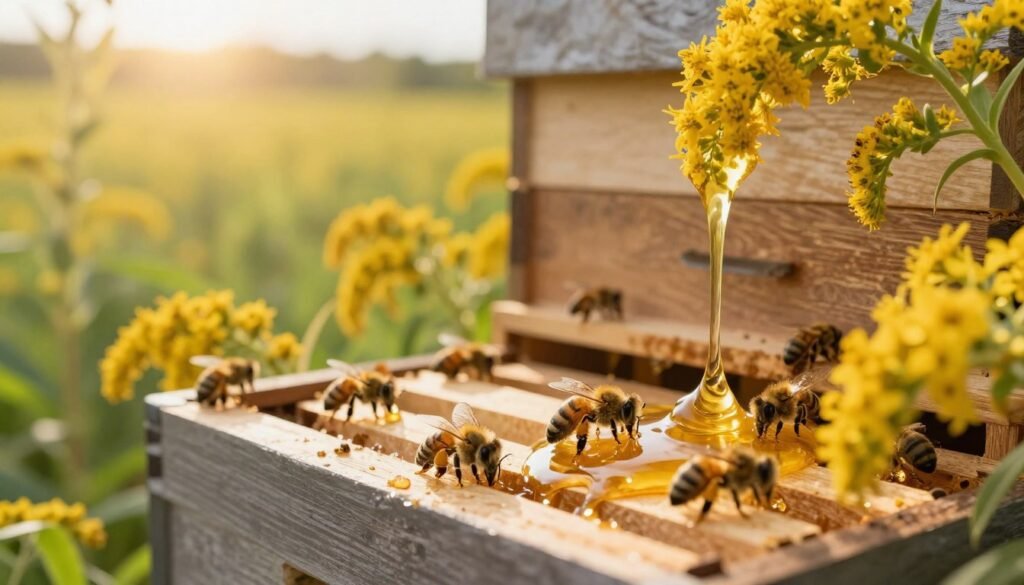
Goldenrod (Solidago) blooms late in the year and offers rich nectar. Bees collect that nectar and work to reduce moisture. During curing, the stores can give off a strong scent that many keepers notice.
The brood and comb usually stay healthy. Workers draw wax, fill cells, then cap stores despite the pungent note.
Fermentation in Feeders
Fermented syrup or standing water in feeders can produce odors like cheap beer or fruit. If syrup ferments, move the feeder, empty it, then clean the parts with bleach and fresh water.
Most often the scent is temporary. Once bees finish curing the nectar or finish stores, the odor fades. For feeder best practices see feeding bees without causing robbing, and learn about stored pollen at benefits of fermented pollen.
| Cause | Typical Sign | Action |
|---|---|---|
| Goldenrod nectar | Strong, gym-sock like scent; capped cells | Monitor; no immediate treatment |
| Fermented syrup | Beer-like odor; active bees at feeder | Remove feeder; clean with bleach and water |
| Standing water | Musty notes near entrance | Replace water; clean container |
Recognizing Signs of Serious Brood Disease
When a keeper detects a sharp, rotten odor during inspection, act quickly to separate normal causes from dangerous infection.
American Foulbrood (AFB) is highly contagious and gives off a putrid, necrotic scent like rotting meat or dead fish. That foul note differs from the sweet Nasonov pheromone workers release to guide bees back to the beehive.
The matchstick test is the field standard for suspect cells. Gently probe any sunken or punctured brood cells with a matchstick and pull the stick straight out.
The Matchstick Test for American Foulbrood
If decaying larvae form a ropy string of about an inch or more, this indicates serious disease. Pair that result with spotty brood patterns and greasy, sunken cappings for confirmation.
- Perform the test on suspicious cells and document time and location.
- Check feeders and syrup or water sources to rule out false cues.
- Contact your local bee inspector immediately to stop spread of spores; follow regulations and guidance at American Foulbrood guidance.
For routine seasonal checks and advice on managing colonies during spring, review the spring beekeeping checklist.
Conclusion and Best Practices for Hive Health
Regular checks help beekeepers tell harmless seasonal scents from signs of trouble. As Melissa Comb noted on March 1, 2026, most foul odors are natural and resolve over time.
Prioritize routine inspections to confirm healthy brood patterns, ample honey stores, and active bees. Keep wax clean, rotate old frames, and requeen with resistant stock when needed.
If unsure about any smell, remember goldenrod nectar and fermenting syrup can be normal this time of year. For mold prevention and moisture control use these best practices from mold prevention guidance.
Report suspicious signs promptly to local inspectors and review treatment recommendations at regional treatment guidance. Consistent monitoring and education protect hives through winter and beyond.