Keeping a healthy hive in mid-summer means protecting your colony from intense sun and soaring temperatures. This short guide outlines practical ways to help your bees manage internal heat and keep honey production steady.
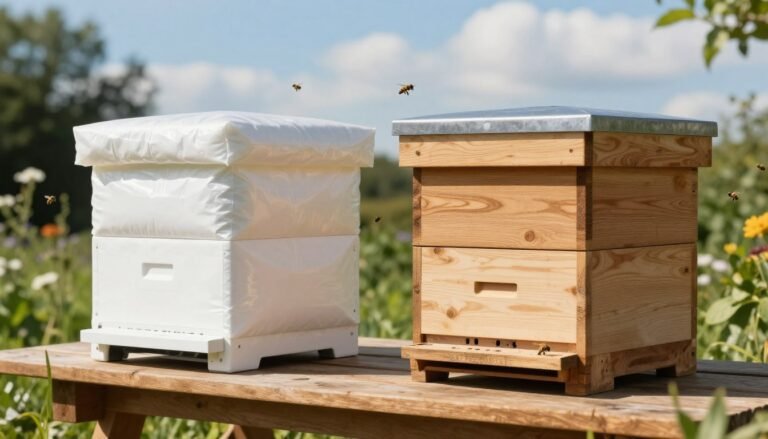
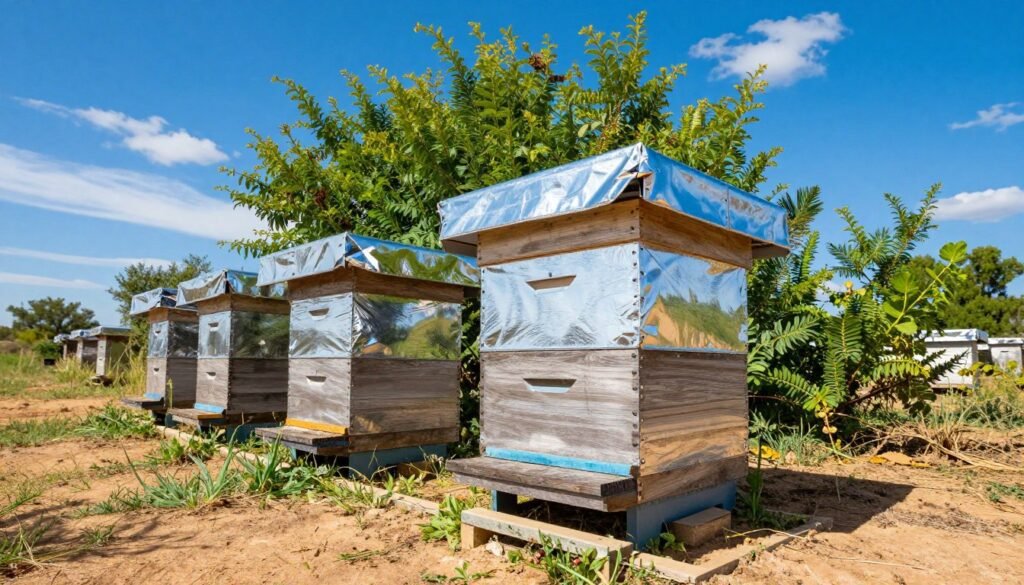
Professional beekeepers often use simple tactics to reduce heat stress. Elevating hives, adding ventilation, and choosing reflective roofs all help. Good placement and routine checks with a thermometer make a big difference.
Learn practical steps like orienting entrances to morning sun and using nearby trees or adjustable sails to temper afternoon sun. For more detailed designs and measurements, see a focused guide on summer heat protection.
Key Takeaways
- Protecting the colony from heat keeps bees productive and prevents absconding.
- Simple changes—ventilation, elevation, and light-colored roofs—cut hive temperatures.
- Place hives for morning sun and afternoon relief to aid brood health.
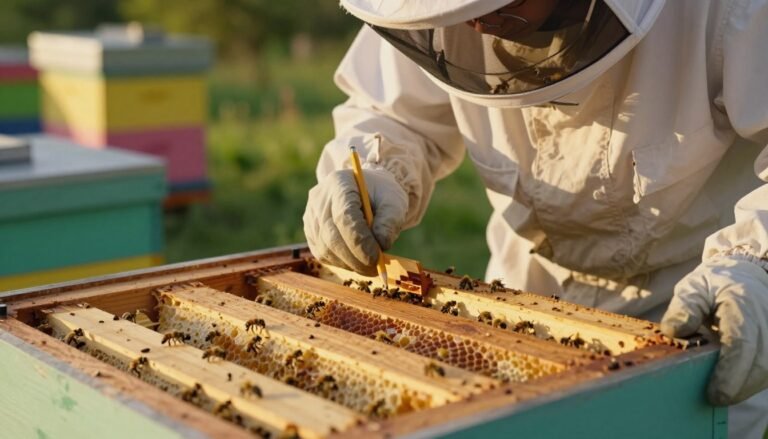
- Monitor with a thermometer and adjust shade or vents as needed.
- Use passive methods first, and add active cooling only if necessary.
Understanding Heat Stress in Bee Colonies
When temperatures climb, colonies shift behavior to protect the brood, and a few clear signs tell you when stress is rising.
Signs of Overheating
Workers will cluster outside the beehive in a behavior called bearding when internal temperature becomes unsafe. This visible gathering signals the nest is struggling to shed heat.
Fanning and water collection are common coping tactics. Bees deposit tiny water droplets on combs and fan them to cool the brood nest through evaporation.
The Impact on Brood Production
Brood rearing needs a steady 33–36°C (91–97°F). If the internal temperature exceeds this window, the colony may halt brood production to protect existing young.
Shutdown of brood reduces future worker numbers and lowers honey production. In extreme heat, colonies can abandon the site or suffer collapse.
Monitor the entrance air with a thermometer to gauge what the colony pushes out. For placement and broader site tips, see climate-based placement strategies.
Effective Hive Shade Cover Options for Hot Climates
A few smart roofing tweaks can cut internal temperatures and keep colonies productive during long summer heat spells.

Double-level roofs act as a solar shield. Research shows a two-tier roof can keep the area below near 31.4°C (88.5°F) while a metal top reaches 46.7°C (116°F).
Placing tree branches over a box is a quick, temporary fix. That simple step can lower roof temperature by about 3.4°C to roughly 34.9°C (95°F) during a heatwave.
Metal tops conduct heat rapidly. Replacing or adding a light-colored secondary roof and improving ventilation helps maintain stable air and boosts honey production.
- Create an air gap with a raised roof.
- Add midday shade near the post or tree line in southern states.
- Use durable frames rather than loose branches for long summers.
| Method | Effect on Roof Temp | Best Use |
|---|---|---|
| Double-level roof | -15°C under top in tests | Long-term protection |
| Branch screening | -3.4°C | Temporary relief |
| Replace metal roof | Varies; reduces conduction | Permanent solution |
Combine these measures with smart placement and routine checks. For detailed DIY plans and climate advice, see keeping hives cool and guidance on adapting your apiary.
Optimizing Hive Ventilation for Airflow
A clear path for rising air is one of the easiest ways to protect a colony from overheating. Proper ventilation lets warm air escape while fresh air cycles through the brood area.
Installing Upper Entrances
Adding a small upper entrance near the top gives hot air a direct exit. This simple modification eases temperature stress and helps bees keep honey stores cool.
Practical steps:
- Cut a modest opening high on the box to let warm air rise out.
- Cover the opening with screened mesh if you worry about robbing; it keeps airflow but shields honey.
- Use a screened bottom board to increase cross flow and pull cooler air in through the lower opening.
Monitor the results by checking internal temps and bee behavior during midday. If air becomes stagnant, these changes often restore steady circulation.
For more techniques and detailed layouts, see supplemental cooling advice in this supplemental cooling techniques and a full beehive ventilation guide.
Managing Internal Hive Temperatures with Insulation
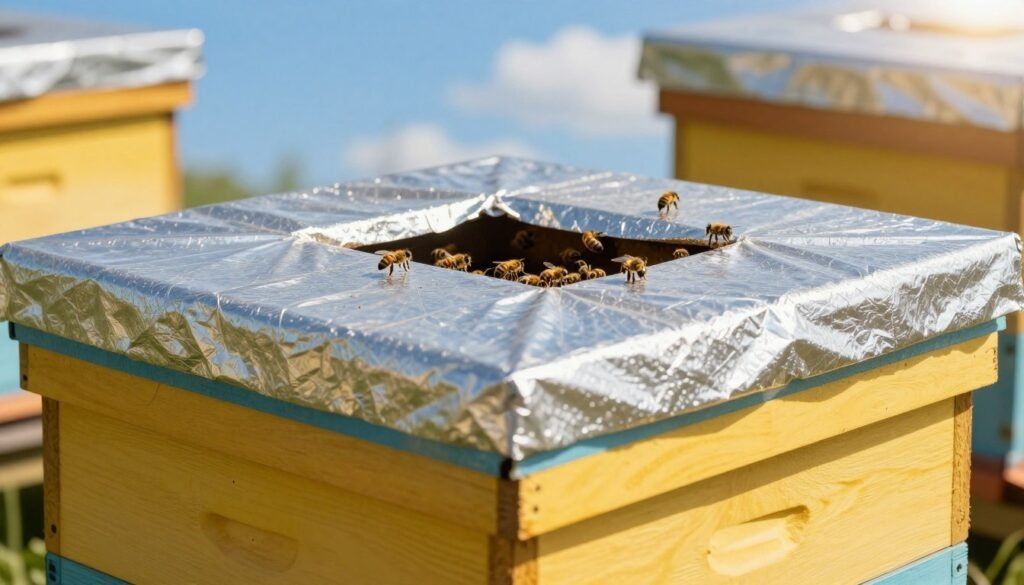
Adding targeted insulation at the top of a colony is one of the most reliable ways to stabilize internal temperatures. Keeping the top layer managed prevents extreme swings that stress the brood and reduce honey flow.
Using Quilt Boxes
Quilt boxes sit beneath the roof and add a breathable buffer of insulation and moisture control. They moderate peak daytime temperature and retain warmth at night.
Benefits of Corflute Materials
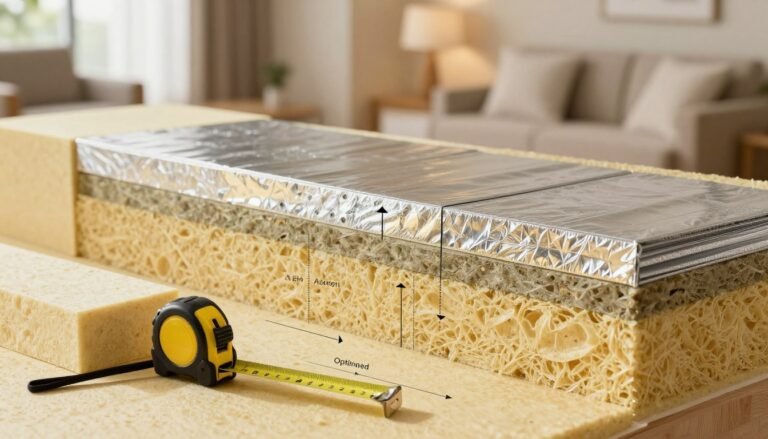
Corflute panels contain tiny air pockets that slow thermal transfer. This lightweight option lowers conduction from a metal roof and is easy to fit to existing roofs.
Painting Metal Roofs White
Painting a metal roof white is a proven practical solution. Tests show white latex reduces roof surface temps to about 38.3°C (101°F) versus 46.1°C (115°F) unpainted.
Quick takeaways:
- Paint metal roofs white to reflect sunlight and cut internal heat.
- Place insulation or a quilt box at the top to protect the brood and nest from swings.
- Use Corflute where a light, air-pocketed material is helpful for long-term insulation.
| Measure | Effect | Best Use |
|---|---|---|
| Quilt box | Stabilizes internal air; manages moisture | Year-round temperature control |
| Corflute panels | Reduces conduction; lightweight insulation | Retrofits metal roofs quickly |
| White paint on metal | Lowers roof surface temp (≈38.3°C) | Cost-effective reflective solution |
For step-by-step painting tips that improve insulation and longevity, see this practical guide on painting metal roofs for better insulation.
Providing Essential Water Sources for Foraging Bees
Reliable water near your hive is crucial during warm months. Bees may collect several liters each day to cool the brood and make food.
Build a simple bee pond by filling a shallow container with water and placing stones so insects can land safely. This prevents drowning and keeps trips short.
Place the water source in the shade of a tree when possible. Cooler water is more attractive and helps bees evaporate moisture more efficiently.
“Providing nearby water reduces flight time and helps colonies focus energy on honey production.”
- Short foraging trips conserve worker energy.
- Stones or floating corks give safe landing spots.
- Keep the area clean and topped up daily.
| Setup | Benefit | Placement |
|---|---|---|
| Shallow dish with stones | Safe landing; less drowning | Near hive, under tree |
| Floating corks or wood | Easy access for small bees | Within 5–10 feet of apiary |
| Drip feeder or tray | Continuous supply; low maintenance | Protected from sun and predators |
For additional tips on keeping bees productive in humid areas, see practical tips for humid areas. To learn more about signs of heat stress and bearding, review bees bearding in heat.
Implementing Emergency Cooling Measures
In a sudden heatwave, act fast to protect brood and stored honey. A quick step can save bees from dangerous temperatures.
Practical emergency steps:
- Place a sealed bucket of ice on top of the hive box to draw heat away from the roof. Never put ice inside the brood chamber.
- Drape wet towels over the lid and rewet them every 20–60 minutes. Use a fan to increase evaporation and cool rising air.
- Ensure nearby water sources are full so foragers can bring cooling water back to the colony.
Remember: these measures are short-term. Proper ventilation and insulation remain the best long-term defense. Use emergency cooling only when other methods fail or when temperatures are extreme.
| Method | When to Use | Notes |
|---|---|---|
| Ice bucket on roof | Sudden extreme heat | Sealed container; never inside hive |
| Wet towels + fan | Heatwave with limited shade | Rewet often; fan increases evaporation |
| Water station | Ongoing summer high temps | Close to hive; provide landing stones |
For structural fixes that reduce the need for emergency action, review beehive ventilation hacks. Proper air flow at the entrance and good insulation will lower the chance you’ll need these temporary solutions.
Conclusion
Summer pressure tests colonies, and timely action helps protect brood and honey stores. Quick, steady steps make a measurable difference in hive health.
Use ventilation, insulation, and reliable water sources to keep internal temperature steady and reduce stress on bees. Prepare your equipment before extreme heat arrives so you are not reacting when weather turns severe.
Stay proactive: monitor internal temperatures, inspect often, and adapt methods to local needs. Read real-world observations in this heatwave experiment to refine your approach and keep colonies productive through summer and into winter.