Last Updated September 16, 2026
A condo or co-op board can ban beekeeping through its own house rules even in a city that explicitly allows it — this is a genuinely different situation from our existing guide to single-family HOA approval, since a shared building’s board governs common areas (a shared roof, a courtyard) rather than a covenant on one owner’s private yard. Understanding that distinction upfront changes how you actually approach getting a hive approved.
Rooftop and shared-building beekeeping has become genuinely more common in dense urban areas over the past decade, as more properties embrace green-roof and sustainability initiatives that a well-managed apiary fits naturally alongside. This growing familiarity works in a resident’s favor when approaching a board today compared to even a few years ago, since board members are increasingly likely to have already encountered the concept, even if their own building hasn’t hosted a hive before.
This guide covers how condo and co-op board authority actually works, what a realistic approval proposal includes, the specific structural and practical requirements a rooftop hive adds, and what your real options are if the board says no.
Disclaimer: This guide is for educational purposes only and is not legal advice. Condo, co-op, and HOA governing documents vary by building and by state — always confirm current requirements directly with your board and your municipality before acting.
Key Takeaways
- Condo and co-op boards have real, independent authority to prohibit or restrict beekeeping through house rules, regardless of what city or state law otherwise allows.
- A realistic approval proposal includes a hive management plan, proof of liability insurance, and a reference to your city’s specific beekeeping ordinance — not just a verbal request.
- Rooftop hives add structural considerations private-yard beekeeping doesn’t: engineering approval for roof load (a fully loaded hive can weigh 80-120 lbs), a flyway barrier at the roof edge, and an accessible water source.
- A dedicated beekeeping liability insurance rider (roughly $150-300/year) is worth carrying regardless of whether the building requires it, since it directly addresses the board’s most likely concern.
- If a board says no outright, a formal variance request, a trial period with a removal clause, or relocating the hive to a property outside the association’s jurisdiction are the realistic next steps.
Table of Contents
- How Condo and Co-Op Board Authority Actually Works
- Building a Realistic Approval Proposal
- Rooftop-Specific Structural Requirements
- Insurance: Whose Liability Is It?
- If the Board Says No
- Frequently Asked Questions
How Condo and Co-Op Board Authority Actually Works
Condo and co-op boards have genuine, independent authority to adopt and enforce their own house rules, generally reviewed against a “reasonableness” standard tied to safety, security, and the welfare of other owners — a governance structure that Community Associations Institute, the leading national trade organization for community associations, addresses directly in its public policy guidance on how boards develop and enforce rules. This means a board can restrict or prohibit beekeeping through its own rules even in a city where beekeeping is otherwise explicitly legal — the city ordinance sets a floor, not a guarantee, and a board’s own house rules can be more restrictive. New York City is a real example of that city-level floor: honeybees were removed from the city’s prohibited-animals list in 2010, and beekeeping there is now governed by Health Code Article 161 — but an individual building’s board can still say no regardless of that citywide permission. This is meaningfully different from the single-family HOA scenario covered in our existing guide to HOA approval, where the relevant document is typically a recorded covenant tied to a private yard — a condo or co-op board instead governs shared common areas like a roof or courtyard, which changes both who has to approve a hive and what standard they’re applying.
This also means the approval process itself typically looks different. A single-family HOA covenant violation is usually handled directly between the homeowner and the association, often through a fine or a formal appeal. A condo or co-op board, by contrast, is making a decision about a shared resource that every other resident has some claim to, which is why a formal board vote – sometimes preceded by a comment period where other residents can weigh in – is the more common process rather than a simple staff-level approval or denial.

Building a Realistic Approval Proposal
A verbal request rarely gets a beekeeping proposal approved in a shared building. A realistic proposal includes a written hive management plan (who maintains it, how often, what happens if the beekeeper moves out), proof of liability insurance specifically covering beekeeping activity, and a direct reference to your city’s beekeeping ordinance to establish that the activity is legally permitted at the municipal level even before the board weighs in on its own rules. Checking your building’s specific bylaws before purchasing any equipment is worth doing first, since some buildings’ governing documents already address (or explicitly prohibit) beekeeping without it ever needing to reach a board vote at all. Getting any approval in writing — an email plus a formal written request — creates documented protection that persists even if building management changes, which a purely verbal agreement with a current board member doesn’t.
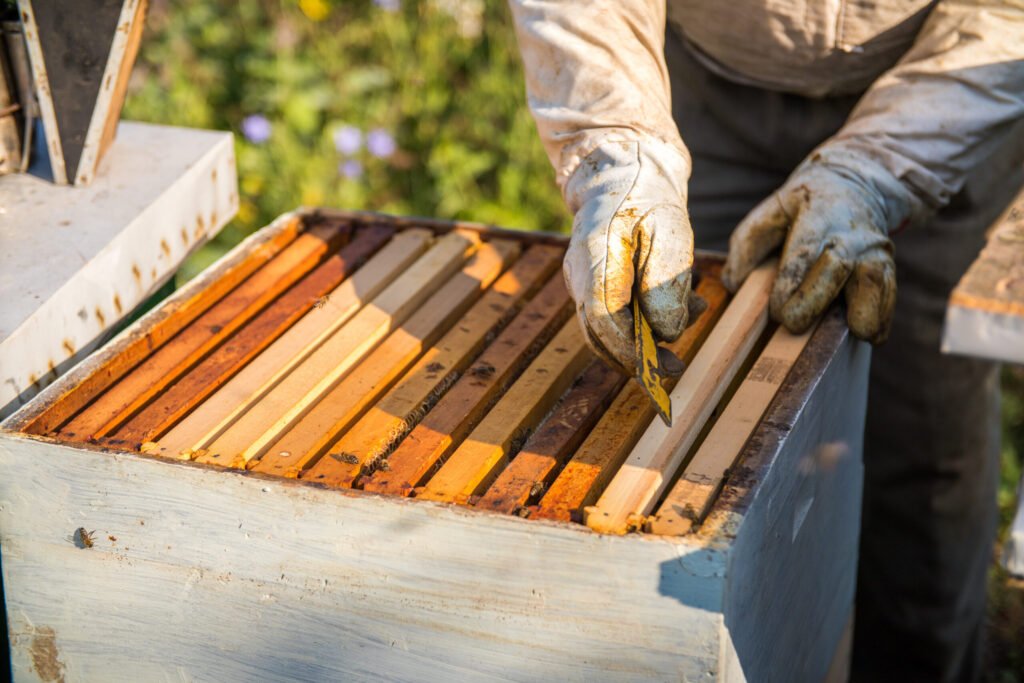
Including photos or a simple diagram of the proposed hive location, along with a realistic honey-sharing offer (a jar or two for board members or interested neighbors each season), can meaningfully improve how a proposal is received – it’s a small, low-cost gesture that reframes the hive as a shared community benefit rather than purely one resident’s personal project imposed on everyone else’s shared space.

Rooftop-Specific Structural Requirements
A rooftop hive in a shared building introduces practical requirements a private backyard hive doesn’t need to address. Structural engineering approval confirming the roof can safely support a fully loaded hive’s weight — commonly 80 to 120 pounds per hive once full of bees, comb, and honey — is a genuine prerequisite most buildings will require before approving rooftop placement. A flyway barrier at the roof edge, directing bee flight paths upward and away rather than down toward neighboring windows, balconies, or street-level foot traffic, addresses the most common source of neighbor complaints in a dense, shared-building context. A reliable water source on the roof and written consent from the building owner or board, documented rather than assumed, round out the baseline requirements most buildings expect before a rooftop apiary moves forward.
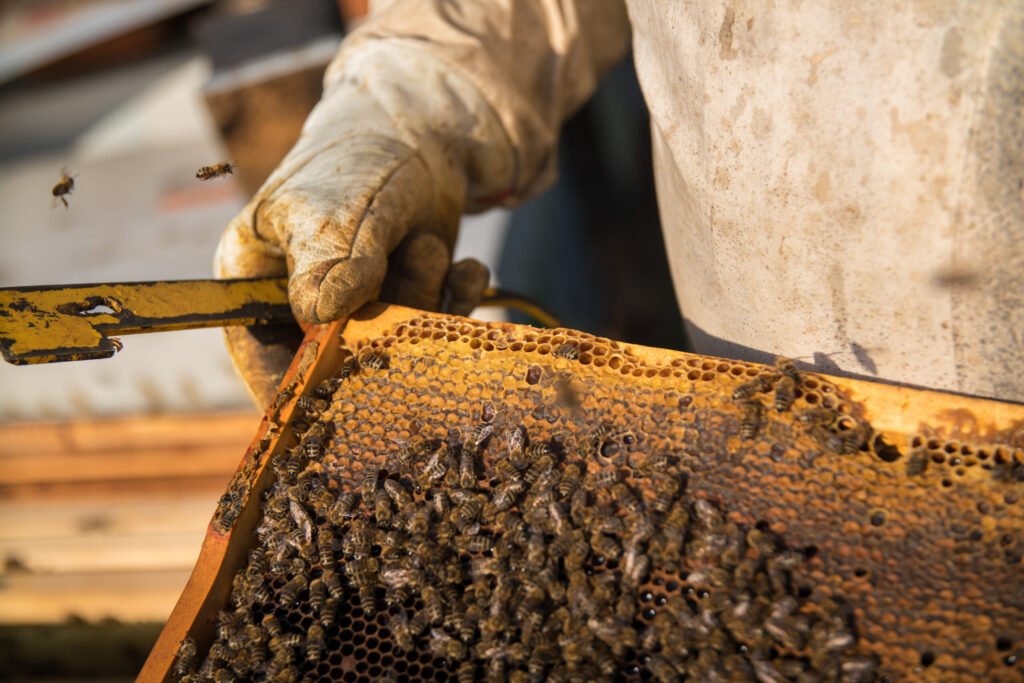
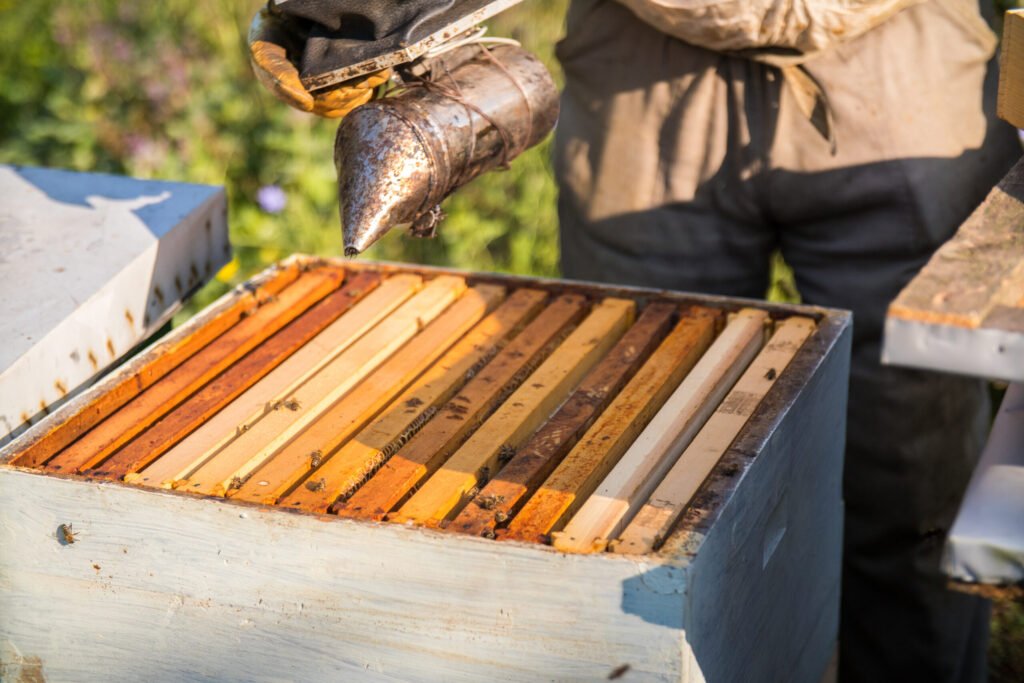
Access logistics deserve real thought too, since a rooftop hive typically means carrying full honey supers, equipment, and sometimes a smoker up through a building rather than simply walking out a back door. Confirming elevator access to the roof (not every building’s roof access is elevator-served) and getting explicit permission for the specific times and methods you’ll use to move equipment avoids a conflict with building staff or other residents that has nothing to do with the bees themselves but can still derail an otherwise well-planned program.
Insurance: Whose Liability Is It?
A useful clarification: for beekeeping conducted entirely on private property (a single-family yard), the liability generally falls on the individual property owner rather than any HOA’s master policy. A condo or co-op rooftop hive is a different situation, since the roof itself is typically a shared common area rather than any one owner’s private space — which is exactly why boards tend to ask for individual proof of insurance before approving a hive in this context, rather than assuming it falls entirely outside their concern the way a private backyard hive might. A dedicated beekeeping liability rider, commonly running $150 to $300 per year, is worth carrying regardless of whether the specific building requires it, since it directly and proactively addresses the exact concern most boards raise first when a beekeeping proposal comes up. The American Beekeeping Federation’s own beekeeper insurance page is a reasonable starting point for comparing options.
| Aspect | Condo/co-op board | Single-family HOA |
|---|---|---|
| What’s governed | Shared common areas (roof, courtyard) | A private yard under a recorded covenant |
| Approval process | Formal board vote, sometimes a comment period | Direct homeowner-to-association review |
| Liability expectation | Individual rider expected for shared-area risk | Generally falls on the individual property owner |
| Structural requirements | Roof-load engineering, flyway barrier, water source | None specific to a structure |
| If denied | Variance, trial period, or relocate off the property | Similar appeal and variance options |
It’s worth asking the board directly whether the building’s own master policy has any exclusion specific to livestock, agriculture, or beekeeping, since some master policies contain broad exclusions that predate any beekeeping conversation and would apply regardless of whose personal insurance is in place. Surfacing this question early, rather than assuming your individual rider automatically resolves every insurance concern, avoids a late-stage surprise after a board has otherwise tentatively agreed to the proposal.
If the Board Says No
A denied proposal isn’t necessarily the end of the conversation. A formal variance request — a specific, documented exception to standing house rules — is one path, though boards generally set a high bar for granting them. Proposing a defined trial period (six months is a common structure) with an explicit understanding that a substantiated complaint results in immediate hive removal can make a board more comfortable saying yes to something time-limited and reversible than to an open-ended commitment. If the board remains firm, relocating the hive to a property outside the association’s jurisdiction — a community garden, a willing relative’s yard, or a host-a-hive arrangement on someone else’s land — remains a genuinely viable option rather than abandoning beekeeping entirely.
Some condo and co-op residents also find success by approaching the conversation collectively rather than as a single individual’s request – if even one or two other residents share interest in a building apiary, a shared proposal for a jointly-managed hive can read very differently to a board than a single resident’s personal hobby request, since it distributes both the ongoing responsibility and the perceived risk across multiple owners rather than concentrating it in one person’s hands.
Boards usually ask about weight; see engineering and load for roof hives.
Frequently Asked Questions
Can my condo board ban beekeeping even if my city allows it?
Yes — condo and co-op boards have independent authority to adopt house rules more restrictive than city or state law, including prohibiting beekeeping entirely.
What does a condo beekeeping approval proposal need to include?
A written hive management plan, proof of liability insurance, and a reference to your city’s beekeeping ordinance — a verbal request alone rarely succeeds.
Does a rooftop hive need structural engineering approval?
Yes, most buildings require confirmation the roof can support a fully loaded hive’s weight (commonly 80-120 lbs) before approving rooftop placement.
Who’s liable if a rooftop hive stings someone in a shared building?
Since the roof is typically a shared common area, boards generally expect the individual beekeeper to carry their own liability coverage rather than relying on the association’s master policy.
What can I do if my condo board denies my beekeeping proposal?
A formal variance request, a proposed trial period with a removal clause, or relocating the hive to a property outside the association’s jurisdiction are realistic next steps.