Accurate temperature readings are vital to maintain colony health and steady hive activity. Good monitoring prevents stress during cold snaps and hot spells, and it helps beekeepers act quickly when conditions shift.
Modern devices pair precise sensors with clear displays and long battery life. Many models add app connectivity and remote tracking to log temperatures and humidity over time. Choose a device by weighing accuracy, probe type, and ease use to match your apiary’s layout.
Regular calibration and following manufacturer instructions keep readings reliable. Whether you prefer an infrared option or a wired probe, pick the design that fits your hive covers and storage setup. For a practical overview of instant-read options and winter tests, see this instant-read hive thermometer guide.
Key Takeaways
- Precise readings support bee health and reduce hive stress.
- Look for accurate sensors, clear displays, and easy use.
- App connectivity and long battery life aid continuous tracking.
- Infrared or probe designs suit different hive setups.
- Calibrate and follow instructions to maintain consistent results.
Understanding the Importance of Hive Climate Control
Consistent internal conditions let a colony concentrate on growth instead of constant repair. Small shifts in temperature can stall brood development and raise stress across the hive.
Why Temperature Matters
Stable temperature supports proper brood rearing and worker activity. When temps drop or spike, larvae may fail to develop and the queen’s laying rate can change.
Humidity and Bee Health
Humidity works with temperature to shape hive health. Excess moisture encourages mold and pathogens. Too dry air disrupts bees’ capacity to manage brood humidity.
- Stable climate reduces stress and improves survival in winter.
- Monitoring both temperature and moisture helps keep the queen productive.
- Active control allows beekeepers to maintain steady hive conditions year-round.
| Factor | Recommended Range | Impact on Colony |
|---|---|---|
| Brood temperature | 33–36°C (91–97°F) | Optimal larval development and pupation |
| Ambient hive humidity | 50–65% RH | Reduces mold growth; supports metabolism |
| Short-term fluctuations | ±2–3°C | Minimizes stress and task disruption |
For more on how moisture affects curing and storage, see humidity effects on honey curing.
Top Picks for the Best Digital Thermometer for Honey Rooms
Selecting the right device means fewer surprises and steadier internal conditions across your storage area. Choose models that balance accuracy, durability, and easy use so you get consistent readings without extra hassle.
Accurate monitoring helps maintain ideal temperature levels and protects product quality. Each listed thermometer was evaluated under typical apiary conditions to ensure performance where it matters most.
We focused on models with clear displays, reliable probes, and solid battery life. These traits make daily checks faster and reduce the chance of missed fluctuations.
“A reliable device will deliver steady data, letting you act quickly when conditions change.”
- Accuracy: Consistent readings are the priority.
- Durability: Built to handle humid and variable environments.
- Ease of use: Simple setup and clear alerts save time.
- Value: Features and price balanced for beekeepers in the United States.
Below we list top-rated options that meet these standards. Each entry highlights why that model excels at keeping temperature and moisture in check.
Weewooday Mini Digital Temperature Humidity Meter Review
Built for field use, the Weewooday unit balances a rugged probe with a clear, fast-updating display. The meter covers -58°F to 158°F and 10%–99% RH. This range helps track environmental shifts that affect colony health.
Durability and Probe Design
The stainless steel probe resists outdoor wear and delivers accurate readings over time. The LCD refreshes every 10 seconds to show current temperature and humidity readings.
Care and longevity: store the unit in dry places when not in use. Proper storage extends the probe’s life and the meter’s overall accuracy. Users report that occasional calibration keeps results reliable over long periods.
- Compact design gives reliable temperature and humidity monitoring.
- Stainless probe built to handle outdoor exposure and protect hive health.
- Fast updates provide near real-time data to guide hive management decisions.
- Simple maintenance and dry storage lengthen device life and accuracy.
Two Pack Mini Digital Hygrometer Thermometer Gauge
A paired setup makes it easy to compare temperature and humidity between different hive zones. These two compact units measure -58°F to 158°F and 10%–99% RH. Each sensor reads within ±2°F and ±5% RH, which suits general hive monitoring.
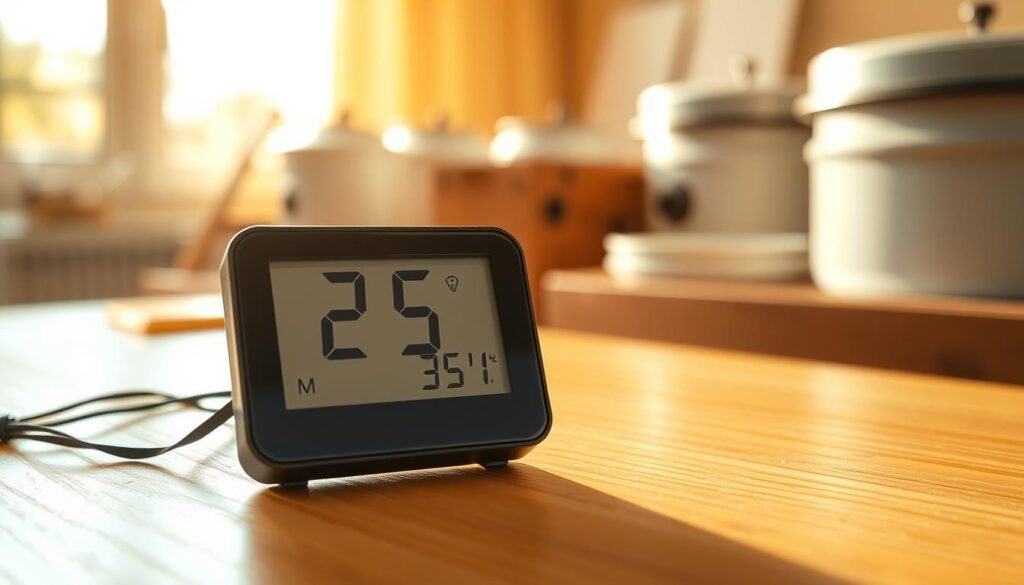
The 59-inch cable and slim probe let users place the sensor in the ideal spot inside a bee box. The display updates every 10 seconds, so you see quick shifts in conditions as they happen.
Small design, big impact: the pair gives flexible placement and simple tracking across two locations. Many users praise the set for supporting colony health with consistent readings over time.
- Value: Monitor multiple hive areas without extra purchases.
- Placement: Long probe cable reaches the brood chamber or entrance with ease.
- Reliability: Quick update intervals help catch short-term swings in temperature and humidity.
“A two-pack is a practical way to expand monitoring without complex setup.”
To see a full-featured Wi‑Fi-capable option, check the GoveeLife two-pack.
ThermoPro TP50 Digital Hygrometer Features
A compact, magnet-backed unit, the ThermoPro TP50 mounts easily on hive lids or metal tools. It weighs just 2.7 ounces, so you can move the device between boxes without hassle.
The TP50 updates every 10 seconds to deliver near real-time temperature and humidity readings. This quick refresh is valuable when small shifts can affect colony health.
- Easy use: magnetic backing speeds placement and storage.
- Reliable accuracy: ±2–3% RH supports consistent monitoring.
- Comfort indicator: display shows “Dry” or “Wet” to flag potential issues.
- Lightweight: means portable checks across multiple hives.
| Feature | Specification | Benefit |
|---|---|---|
| Weight | 2.7 oz | Portable between hive boxes |
| Refresh rate | 10 seconds | Fast readings to spot short-term swings |
| RH accuracy | ±2–3% | Supports informed decisions about colony health |
“Quick, clear feedback helps you act before small issues grow.”
VIVOSUN Temperature and Humidity Sensor Probe
Durable and weatherproof, the VIVOSUN sensor probe is built to keep reliable data flowing in outdoor apiaries. Its IP65 rating guards against rain, dust, and splashing water, so the unit keeps working through wet conditions and wind.
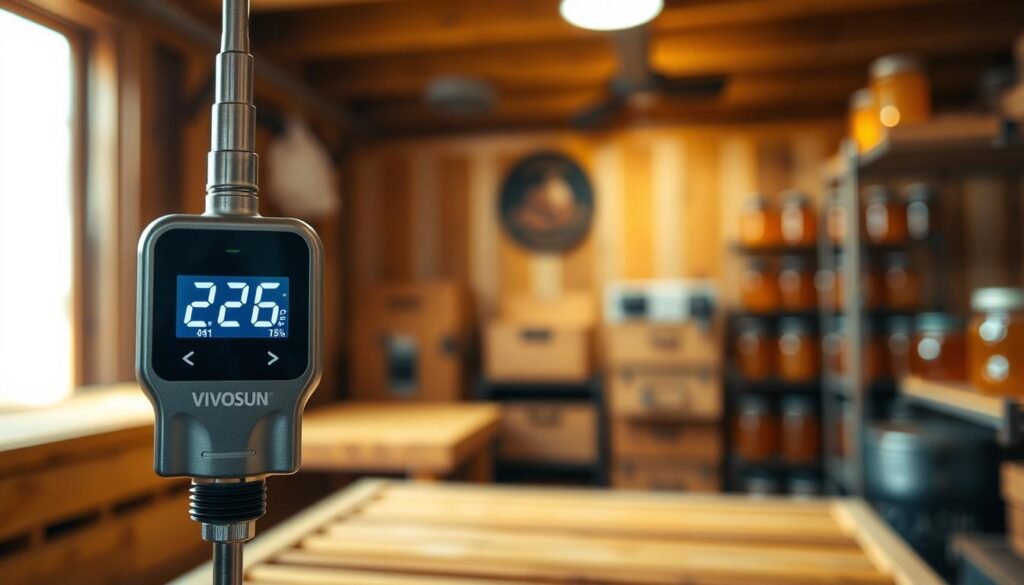
The stainless steel probe reads a wide range of temperatures from -40°F to 257°F. This span helps protect colony health by tracking both freezing snaps and hot spells without losing accuracy.
With a 12-foot reach, placement is flexible. You can monitor distant boxes or brood chambers and still transmit real-time data through the gold-plated 2.5mm plug to compatible controllers.
Waterproof Ratings for Outdoor Use
IP65 protection means the sensor sheds water and resists dust ingress. That durability improves long-term use in variable weather and delivers consistent readings over time.
- Robust outdoor protection keeps the probe working in rain and dust.
- Long cable reach supports large apiaries without sacrificing accuracy.
- High-temperature range preserves reliable results across seasons.
“A weatherproof probe that maintains connection quality reduces the risk of lost data during critical periods.”
GoveeLife WiFi Hygrometer Thermometer Performance
GoveeLife pairs Swiss-made accuracy with cloud tracking to keep hive temperature and humidity under steady watch. The sensor reports temperature within ±0.54°F and humidity within ±3% RH, giving dependable readings that support long-term colony health.
The system includes a gateway that connects up to 10 devices, so you can monitor several boxes without extra hubs. In the app you set thresholds and receive instant alerts when conditions stray, saving time and reducing surprise issues.
The compact design includes a lanyard for unobtrusive placement near brood areas. Data stores for 20 days, making it simple to review trends and plan interventions based on past readings.
- Remote monitoring: check hive temperature and status from anywhere.
- High accuracy: Swiss calibration improves confidence in each reading.
- Scalable: the gateway supports multiple devices for larger apiaries.
“Real-time alerts and twenty-day tracking help users protect colony health with minimal effort.”
ThermoPro Digital Hygrometer for Brood Chambers
A tight-tolerance sensor and quick refresh make the ThermoPro model ideal for brood monitoring.
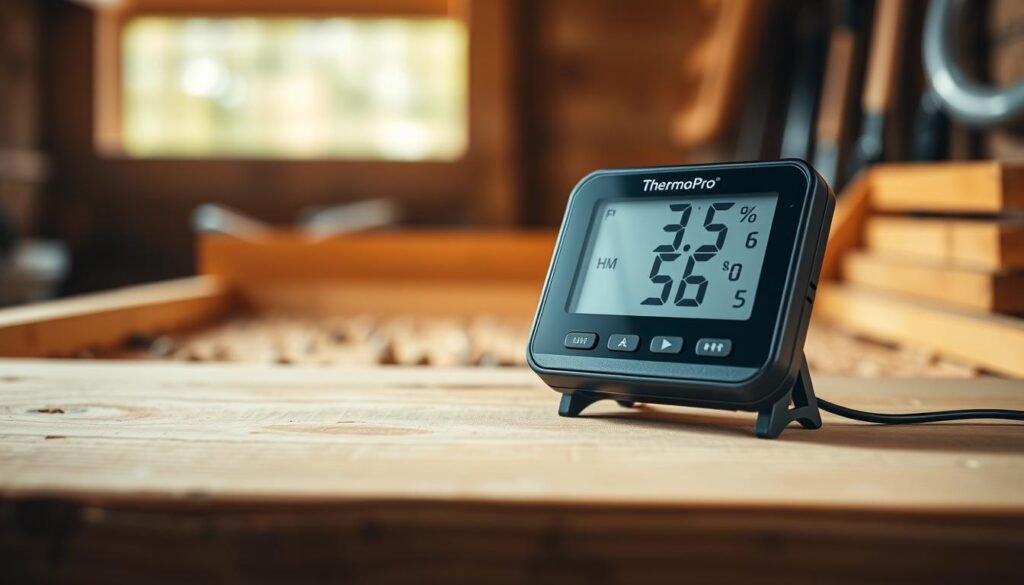
High precision comes from ±1°F/°C and ±2–3% RH specs. Those figures deliver the accuracy you need to protect developing bees and maintain colony health.
The unit shows clear data on a compact display and updates every 10 seconds so you get near real-time readings. The comfort indicator flags “Dry” or “Wet,” helping you decide when to adjust covers or ventilation.
- Portable: weighs just 35 grams for easy placement on a hive stand.
- Trusted: 4.6-star rating from 76,000+ reviews attests to steady performance.
- Practical: fast refresh and clear cues support swift action in changing conditions.
| Feature | Specification | Benefit |
|---|---|---|
| Temperature accuracy | ±1°F / ±1°C | Precise control of brood chamber temp |
| Humidity accuracy | ±2–3% RH | Reliable moisture tracking to protect health |
| Refresh rate | 10 seconds | Timely readings to catch short swings |
| Weight | 35 g | Easy to move between boxes |
“Quick feedback and clear comfort cues make routine checks faster and more effective.”
THIRDREALITY Zigbee Temperature and Humidity Sensor
The THIRDREALITY Zigbee sensor is a compact, hub-ready tool that blends long runtime with tight measurement specs. It reports temperature with ±0.3°C accuracy and humidity within ±2% for dependable readings.
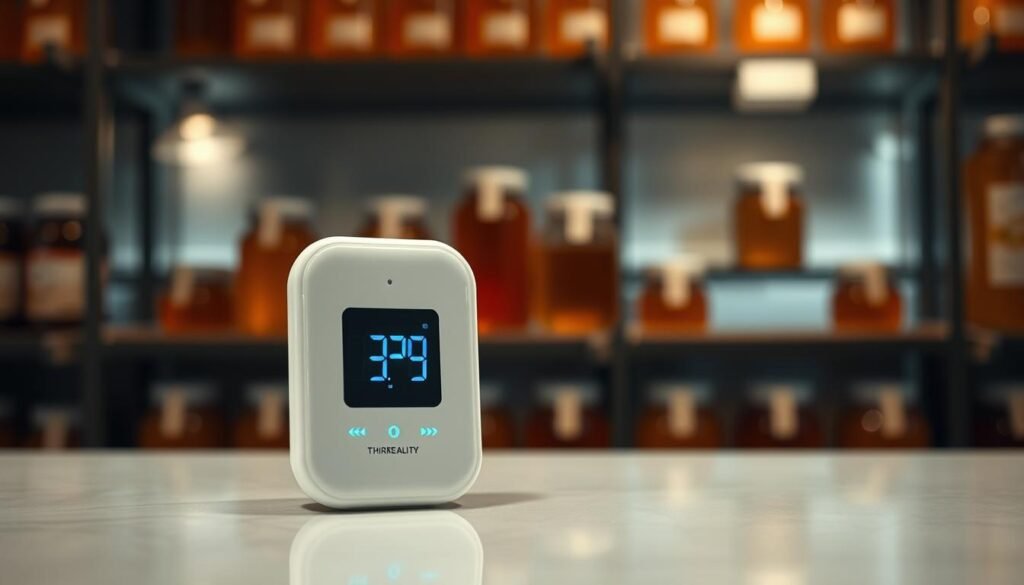
The unit runs on two AAA batteries and can last up to two years. That low-maintenance power setup helps keep monitoring simple across seasons.
Smart home compatibility lets you link the device to Echo and other Zigbee hubs. Remote alerts mean you see changes in hive climate without a site visit.
- Precise measurements: tight accuracy supports colony health and quick action.
- Long battery life: two-year runtime reduces upkeep.
- Easy integration: simple design fits existing smart home setups for better monitoring.
| Feature | Specification | Benefit |
|---|---|---|
| Temperature accuracy | ±0.3°C | Reliable readings to protect brood and overall health |
| Operating range | -15°C to 50°C | Suitable across common hive temperatures and seasons |
| Power | 2 × AAA (up to 2 years) | Low-maintenance choice for steady monitoring |
| Connectivity | Zigbee (Echo compatible) | Remote alerts and smart home integration |
“A compact, accurate sensor that pairs solid runtime with smart alerts.”
As a practical choice, the THIRDREALITY unit is a precise tool to add remote visibility to your apiary. For small accessory ideas that support field work, see this handy gadgets under $20.
Antonki Digital Room Thermometer Analysis
The Antonki two-pack offers a wide temperature range of -58°F to 158°F, making it versatile for cool cellars and warm summer days. The dual units let you compare conditions in a brood box and another location without extra gear.
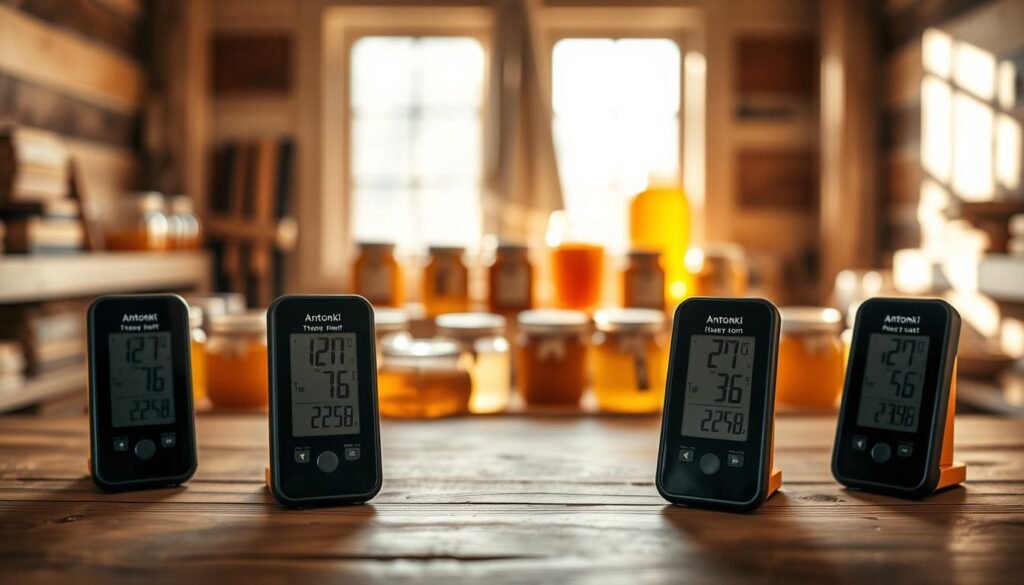
The large LCD gives clear readings even in dim basement light, so routine checks are fast. Users note that batteries may need replacing every few months to keep the display and sensor performance steady.
Key advantages include a simple design and a low price, which make this pack an accessible choice to protect colony health. Its dual-sensor setup supports practical placement and ongoing use across several boxes or storage areas.
- Wide range covers both cold and hot conditions.
- Large display improves readability in low light.
- Two units let you monitor multiple hive zones at once.
- Periodic battery changes maintain consistent readings.
“A straightforward tool that helps keep temperature and basic monitoring affordable and reliable.”
For a Wi‑Fi capable alternative, consider the GoveeLife two-pack when remote alerts and cloud logging are needed.
Govee WiFi Thermometer Hygrometer H5179
The Govee H5179 pairs Swiss-made accuracy with rapid updates to protect colony health. Its sensor reports temperature to ±0.54°F and humidity to ±3% RH. That tight tolerance gives you confidence in each reading.
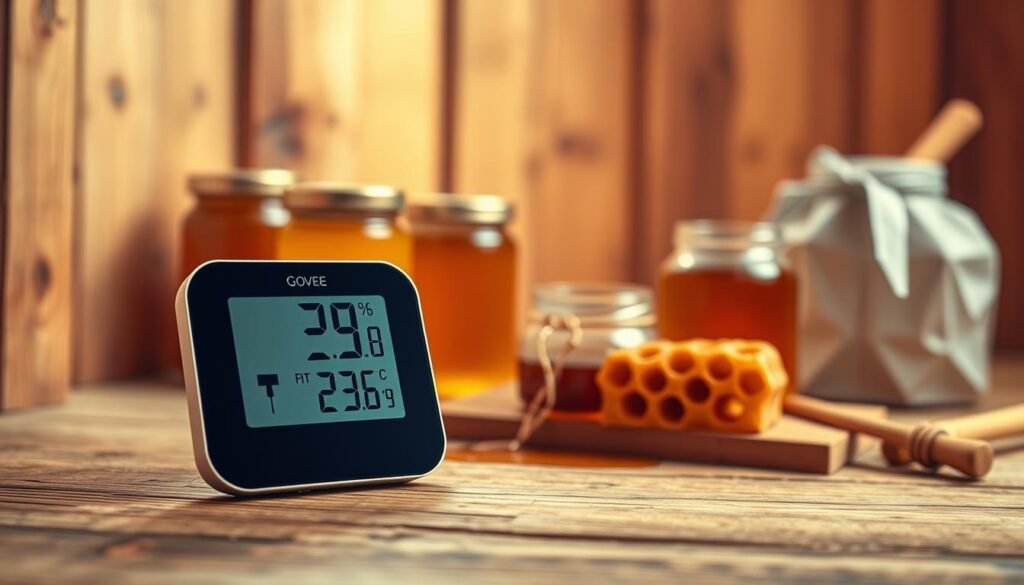
The unit refreshes every 2 seconds, so brief swings do not go unnoticed. Fast updates let you catch issues early and act before they harm brood or stores.
The free app lets you set thresholds and receive instant alerts when conditions change. Remote monitoring and alerts save trips to the yard and reduce surprise problems.
Data tracking and storage support trend analysis: 20 days of online storage and up to two years of historical logs. Long-term records reveal patterns and help plan seasonal care.
“Real-time insight with reliable accuracy gives beekeepers the window they need to protect colony health.”
- High-precision sensor: Swiss calibration for trusted temperature and humidity readings.
- Fast refresh rate: 2-second updates keep you current in crucial moments.
- App alerts and tracking: set thresholds and review trends remotely.
- Low-maintenance: batteries last up to a year for steady, worry-free use.
Govee Bluetooth Hygrometer Thermometer Capabilities
Govee’s Bluetooth sensor packs Swiss-grade accuracy into a compact design that fits tight hive spaces and storage nooks.
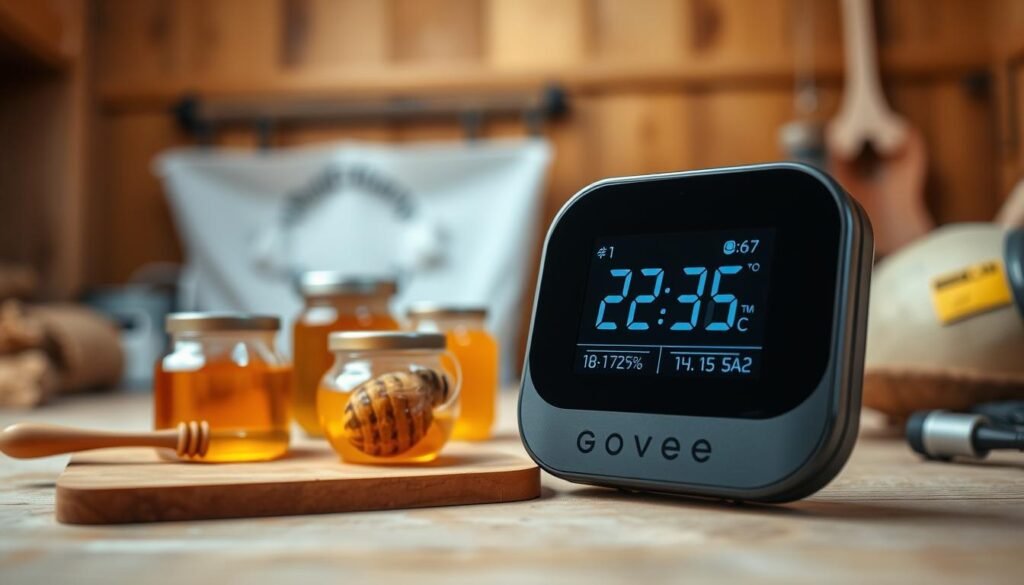
Long-range wireless coverage lets you act without walking every box. With a 262 ft range, the unit works like a personal weather station across an apiary. The Swiss-made sensor reports temperature within ±0.54°F and humidity to ±3% RH to protect colony health.
The device updates every 2 seconds, giving near real-time readings that help you spot short swings. It stores 20 days of local data that you can export to CSV for deeper analysis in spreadsheets or apps.
- Versatile tool: precise environmental data for routine monitoring and quick checks.
- Reliable power: CR2477 batteries deliver long runtime for season-long tracking.
- App integration: set alerts, view trends, and export logs from the mobile app.
Compact size and clear data make this thermometer an effective choice when you need steady temperature tracking and straightforward storage of past readings.
Essential Factors When Choosing Sensors for Your Apiary
A practical sensor balances power draw, connectivity, and simple controls. Pick a unit that fits how often you visit the yard and how much remote tracking you need.
Battery life is a primary concern. Devices with low-power modes can run many months on a single charge or set of batteries. That reduces trips to change cells and keeps your tracking uninterrupted during critical times.
Battery Life Considerations
Look for published runtimes and real-world reports from users. A sensor that lasts several months eases maintenance and lowers the chance of data gaps.
Tip: swap batteries before long cold snaps or high-activity seasons to avoid missed readings.
Connectivity Options
Choose WiFi, Bluetooth, or Zigbee based on range and app needs. WiFi and cloud-linked systems support remote alerts and longer-term storage via an app.
Bluetooth suits short-range checks and local export. Zigbee and gateways work well when you have many devices to manage.
- Modes and features: low-power mode, alert thresholds, and exportable logs.
- Ease of use: simple setup and clear instructions save time in the field.
- Device count: factor how many sensors you need and expected battery life over months.
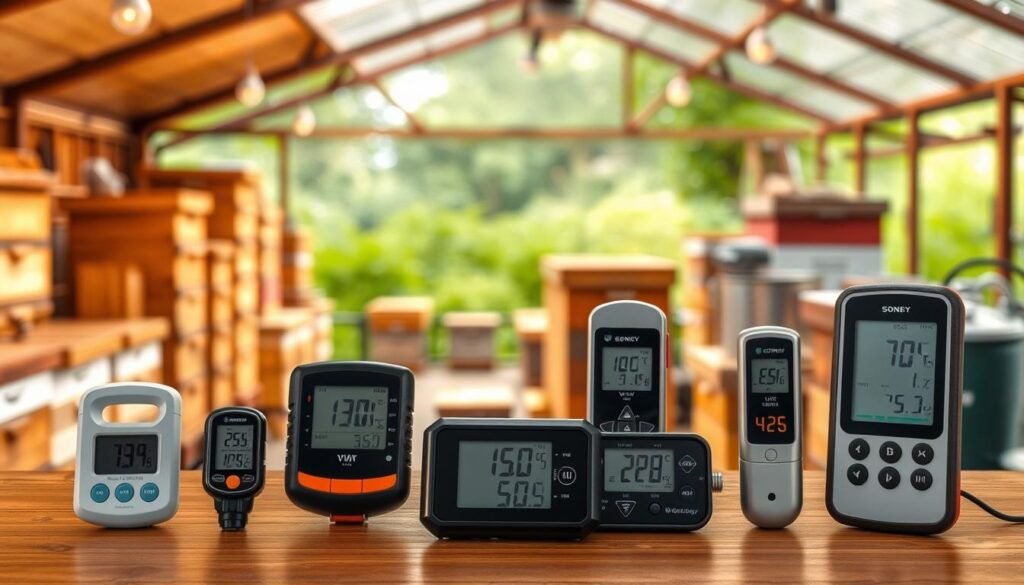
“Select connectivity and power that match your routine to keep continuous, accurate monitoring.”
| Factor | What to check | Why it matters |
|---|---|---|
| Battery life | Runtime (months), low-power mode | Reduces maintenance trips and avoids data loss |
| Connectivity | WiFi / Bluetooth / Zigbee | Determines remote alerts and range of monitoring |
| Modes & features | Alert thresholds, export, power-saving | Supports control and trend tracking via an app |
For research on long-term monitoring methods and sensor performance, see these monitoring conference abstracts. Follow manufacturer instructions to get the best results from any thermometer or probe option.
Maintaining Accuracy Through Regular Calibration
Routine checks keep sensor outputs consistent and prevent slow drift over seasons. Regular calibration is essential to maintain accuracy and ensure you get reliable results from every reading.
A simple salt test is a reliable way to check humidity accuracy. Place a sealed cup with a saturated salt solution near the sensor and compare readings after 8–12 hours. This quick check flags drift before small errors become big problems.
Even high-quality models can shift over time. Periodic testing helps you trust the display and the underlying sensor data when making hive-care decisions.
Also, ensure fresh batteries. Low power can degrade sensor performance and affect the display. Consistent calibration and basic maintenance give you steady data and protect colony health.
“Calibrate on a schedule and check power first — reliable numbers make better hive choices.”
- Keep accurate readings: schedule calibrations every 3–6 months.
- Salt test: use it to verify humidity sensors.
- Battery check: swap cells before critical seasons.
Best Practices for Sensor Placement in Bee Boxes
Good sensor placement captures the hive’s real conditions instead of one-off readings. To get reliable tracking, make sure the sensor sits where it represents the colony’s average environment.
Place the probe near the brood area when possible, since steady temperature control there matters most to the ones inside. Consider the box design and where vents or gaps create drafts that skew readings.
Follow the manufacturer instructions when using an infrared thermometer to get consistent results during inspections. Check the device display and choose a location that gives easy use without disturbing bees.
- Probe position: a mid-depth placement near brood gives truer temperatures than edges.
- Power & modes: inspect batteries and sensor mode regularly so monitoring runs for months without gaps.
- Test run: perform short trials to confirm your placement yields accurate results before long-term tracking.
Minimize handling time when installing sensors to reduce stress on the colony. For complementary equipment ideas, see our note on smart hive counters.
Conclusion
, A concise recap makes it easier to pick a model that fits your apiary routine. Focus on a clear display, a reliable sensor, and the features that match your work flow.
Whether you choose an infrared thermometer or a probe-style unit, weigh app alerts, battery life, and operating mode. Regular checks and calibration deliver consistent results that protect brood and stores.
Use the linked study on digital beekeeping promises to explore broader sensor adoption in modern apiaries. Thoughtful choice and steady monitoring improve hive health and home apiary success.